


How To Get Pee Stain Out Of A Mattress Without Ruining It
Accidents happen, often at the least convenient time. Maybe your potty-training toddler had a setback at 2 a.m., your senior dog forgot to wait for the morning walk, or you are caring for a loved one with incontinence. You walk into the bedroom and see it: a wet, yellow stain on the mattress and that unmistakable smell. On top of the frustration, there is a real worry that the mattress might be permanently ruined or unsafe to sleep on.
Urine in a mattress is more than a cosmetic problem. If it is not cleaned thoroughly, it can lead to lingering odors, discoloration, dust mite attraction, and in some cases mold or mildew inside the foam. According to the Sleep Foundation, mattress hygiene plays a real role in sleep quality, because allergens and odors can trigger congestion and nighttime awakenings that chip away at deep, restorative sleep. When you combine that with the fact that many quality mattresses are a major investment, it is easy to feel stressed about making the wrong move while cleaning.
You are not alone, and this situation is very fixable. With the right steps, most fresh and even dried urine stains can be removed, and the smell can be neutralized so you feel comfortable using the mattress again. You will learn how to treat a fresh accident before it sets, what to do about older yellow stains, how to safely tackle smell, which products are safe for different mattress types, and when it is more practical to protect or replace. Along the way, we will also talk about how to prevent the next accident from turning into a crisis.
My perspective here comes from two decades of helping people choose, care for, and sometimes rescue their mattresses. With a little patience and the right approach, you can almost always save the bed, protect your investment, and get back to sleeping instead of scrubbing.
Urine + Mattresses 101: Why Fast, Gentle Action Matters
Before grabbing a cleaner, it helps to understand what you are dealing with and why timing makes such a difference. Human urine is mostly water, but it also contains urea, salts, and organic compounds that can oxidize and turn yellow as they dry. Pet urine, especially from cats, can be even more concentrated and pungent. Once these compounds soak into the porous layers of a mattress, they are much harder to remove and can keep releasing odor whenever the bed warms up under your body.
Mattress materials are also more delicate than many people realize. Memory foam and latex are basically sponges with tiny air pockets that hold onto both moisture and odors. Innerspring and hybrid mattresses have fabric quilt layers on top that can stain, with deeper layers that are hard to fully dry if they become saturated. The Mayo Clinic and other health organizations note that chronic moisture in soft furnishings can contribute to dust mite growth and, in some environments, mold. That is why we want to clean effectively, but without soaking the mattress like a towel in a sink.
Fast action helps in two major ways. First, you remove as much liquid as possible before it seeps deeper into the comfort layers. Second, you prevent the chemical reaction that causes deep yellow or brown staining and strong ammonia-like odors. Cleaning a fresh accident usually takes a few hours and a simple routine. Cleaning dried or repeatedly soaked spots can take more time and sometimes more than one round.
Gentle action is the other key. Harsh chemicals, steam cleaners, and aggressive scrubbing can damage foams, void warranties, or push urine deeper. According to Consumer Reports, many mattress warranties specifically caution against saturating the bed or using strong chemical cleaners, because they can break down adhesives or fabrics over time. A careful, surface-focused clean that allows for thorough drying is far safer for both the mattress and your health.
If you keep those two principles in mind, you can choose the right method for your situation and feel confident that you are helping, not harming, the mattress.
How To Get Fresh Pee Out Of A Mattress Step By Step
Fresh accidents are the easiest to fix, as long as you move fairly quickly. Even if it has been an hour or two, you can still prevent most staining and lingering odor with a calm, methodical approach. Think in terms of three phases: remove, treat, then dry.
Start by stripping all bedding, including any protector or topper, and placing it in a separate area so it does not drip onto other surfaces. Take a moment to visually map out the wet area on the mattress. Sometimes, the original puddle underestimates how far the liquid has spread under the ticking fabric, especially on pillow top designs. Gently touch around the obvious wet spot with the back of your hand to find the full boundary, then focus your efforts slightly beyond that perimeter.
Next, you want to remove as much liquid as you can by blotting, not scrubbing. Use clean, dry towels or thick layers of paper towels and press them firmly into the surface. Replace them as they become damp. The goal is to draw urine upward into the towel, not push it sideways or deeper. This simple step alone reduces both stain and odor potential dramatically and sets you up for success when you apply a cleaning solution.
Once blotting has pulled up most of the surface moisture, you are ready for a gentle cleaner. For human urine on most mattress types, a diluted white vinegar solution is a safe, effective choice that many cleaning experts recommend. The acidity of vinegar helps neutralize the alkaline components of urine and acts as a mild disinfectant. Mix equal parts distilled white vinegar and cool water in a spray bottle. Lightly mist the affected area until it is damp but not soaked, then let it sit for 10 to 15 minutes to do its work.
After the dwell time, blot again with fresh towels to lift out both the cleaning solution and remaining urine. This back and forth of light application and blotting is what keeps the mattress from being over saturated. If odor is already strong, you can follow with a generous sprinkle of baking soda over the damp area and let it sit for several hours. Baking soda is excellent at absorbing both residual moisture and odor compounds from fabrics.
When the baking soda has dried into a light crust, vacuum it thoroughly with an upholstery attachment. At this point, the mattress should feel only slightly cool or faintly damp to the touch. Allow it to air dry completely with good airflow before remaking the bed. Ceiling fans, a box fan, or opening windows can shorten that drying time and reduce the chance of trapped moisture.
“My twin’s mattress looked hopeless after a 3 a.m. accident, but following Mia’s blot, vinegar, and baking soda routine twice got rid of both the stain and the smell. I was ready to spend $600 on a new mattress and ended up just adding a protector from Sleepology instead.” – Sarah T., November
Removing Dried Or Old Pee Stains From A Mattress

Sometimes you do not discover the problem while it is fresh. Maybe it is a guest room that does not get used often, a lower bunk you did not check for a few days, or a pet who quietly claimed a corner. When you find a dried yellow patch and that stale smell, the cleaning job changes, but the mattress is often still salvageable.
Dried urine has already set into the surface fibers, so you are working less on liquid removal and more on dissolving and lifting those residues. The key is patience, since older stains often respond better to several gentle treatments than one aggressive blitz. According to the Sleep Foundation, repeated light applications of mild cleaners and thorough drying cycles are safer for most mattress materials than soaking and scrubbing, especially on memory foam.
Begin by vacuuming the area to remove dust, skin cells, and any loose debris. This may seem counterintuitive, but it gives cleaners direct access to the stained fibers instead of having to fight through surface grime. It also helps if the mattress has been in a humid environment, since dust can hold odor-causing compounds. After vacuuming, lightly mist the stained area with your vinegar and water solution, again avoiding saturation. You want the surface just damp enough that the stain darkens evenly.
Let this first application sit for 15 to 20 minutes, then blot thoroughly with clean towels. Because the stain is older, you may notice a stronger smell as the compounds are rehydrated. This is normal and often a sign that they are becoming mobile and easier to remove. Once the surface feels only slightly damp, cover the area with a thick layer of baking soda and work it in gently with your fingertips so it reaches the valleys of the fabric or foam pattern.
Allow the baking soda to sit for at least 8 hours, ideally overnight. During this time it will pull moisture and urine residues toward the surface. Vacuum it up completely and reassess. If you still see discoloration or notice odor, repeat the cycle. This is not wasted effort; each pass removes more material. In many cases two or three rounds will significantly fade the stain and reduce odor to a level that is barely noticeable during sleep.
For very stubborn yellowing on light-colored mattress covers, some people reach for hydrogen peroxide. A diluted solution can help on certain fabrics, but it is important to be cautious. Hydrogen peroxide can discolor or weaken some mattress ticking and can damage memory foam or latex. If you choose to use it, patch test a hidden area first, use a low concentration, and apply sparingly with a cloth rather than soaking the bed.
Special Considerations: Pet Urine Versus Human Urine
Not all pee is created equal. Pet urine, especially from cats and intact male dogs, can contain higher levels of uric acid and other compounds that produce a strong, persistent odor. If your nose tells you that one corner of the mattress smells like a litter box even after cleaning, you are dealing with those more stubborn molecules. Pets are also more likely to return to any spot that still smells like urine, which turns one accident into a recurring problem.
For pet accidents, an enzyme cleaner is usually your best ally. These cleaners contain biological agents that break down the specific proteins and uric acid crystals that give pet urine its potency. Veterinary and allergy specialists often recommend enzyme-based formulas on soft furnishings because they neutralize both stain and odor in a way that simple deodorizers cannot. Look for one labeled as safe for use on mattresses or upholstery and free of added ammonia, which can smell like urine and confuse pets.
The basic process is similar to the vinegar method, but you substitute the enzyme cleaner as your active solution. After blotting up as much fresh urine as possible, you apply the enzyme cleaner according to the product directions, typically enough to thoroughly dampen the affected area. It usually needs a longer dwell time, often 15 to 30 minutes or more, to fully digest the odor-causing components. Once that time has passed, you gently blot again to remove excess moisture.
You can still finish with baking soda to absorb remaining dampness and help with any residual smells. Just be sure to give the enzyme cleaner time to work first, since covering it too quickly can interfere with its activity. Some brands recommend leaving the area undisturbed for several hours before adding anything on top. If your pet is very sensitive to scents, choose a formula without heavy perfumes and skip essential oils, as some can be irritating or toxic to animals.
If your pet has had multiple accidents in the same area, be prepared to repeat the enzyme treatment several times over a few days. Those deeper layers can hold onto odor, and each round lets the cleaner penetrate a bit further. In my experience, patient repetition is much more effective than going in once with an overly wet, aggressive clean that risks damaging the mattress.
“Our senior cat kept choosing the same corner of our guest bed. The first cleaner I tried just made it smell floral and funky. The enzyme cleaner routine Mia recommended, plus a waterproof protector from Sleepology, finally stopped the cycle and saved our guest room mattress.” – David L., October
Cleaning Safely For Different Mattress Types
The right pee-removal method also depends on what kind of mattress you own. A sturdy, traditional innerspring behaves differently from a slow-responding memory foam bed or a bouncy hybrid. Using the same approach on every material can lead to disappointing results or even damage over time.
Innerspring mattresses with a quilted top are usually the most forgiving, because the coil system underneath does not absorb liquid in the same way foam does. Your main focus is the top comfort layers and fabric. For these beds, careful blotting, diluted vinegar, and baking soda are usually safe choices as long as you avoid flooding the area. If the mattress is older and has deep body impressions, pay attention to those valleys, since urine can pool there and be harder to blot out completely.
All foam and memory foam mattresses require extra caution with moisture. Foam acts like a sponge and dries more slowly, which can increase the risk of trapped odor or, in very humid climates, microbial growth if the mattress never fully dries. For these beds, I recommend applying cleaning solutions more sparingly and extending the drying time. Keep the room well ventilated, use fans, and if possible, prop the mattress on its side for a few hours so air can circulate around the cleaned zone. The Cleveland Clinic notes that moisture management in foam products is especially important for people with allergies or asthma, since damp foam can harbor dust mites more readily.
Latex mattresses sit somewhere in between. Natural latex does not like harsh chemicals at all, and hydrogen peroxide or strong solvents can degrade it. Mild vinegar solution, enzyme cleaners approved for latex, and plenty of air drying are the safest path. Avoid steam cleaning across all mattress types. While steam might seem like a quick disinfecting solution, the combination of heat and deep moisture can break down adhesives, warp foam, and void warranties from major brands.
Hybrid mattresses combine foam comfort layers with coil support systems. Treat them as you would foam beds at the top, avoiding oversaturation and focusing on surface blotting and gentle solutions. Because hybrids tend to be thicker and heavier, enlist help if you need to tilt the mattress briefly for airflow. And always check your mattress manufacturer’s care tag or website for any cleaning warnings or restrictions before you begin.
If you are ever unsure, it can help to call a trusted retailer like Sleepology. Our team spends time with actual mattresses every day and can quickly tell you whether the materials you own can tolerate a particular cleaner or need a more conservative approach.
Odor Removal: When The Smell Lingers After Cleaning
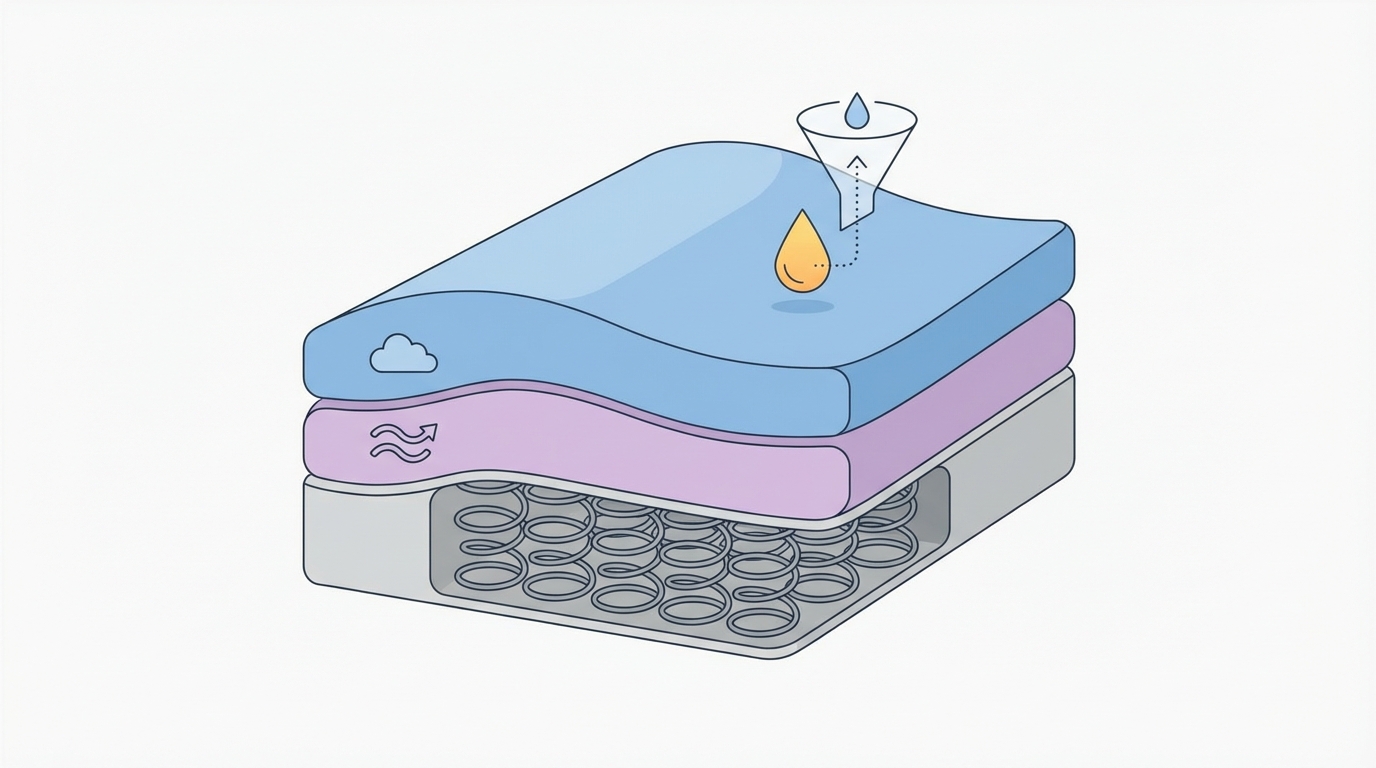
Sometimes the visible stain fades nicely, but every time you walk into the bedroom or lay down, you still catch that faint whiff of urine. Odor tends to be the most stubborn part of the problem, especially if the mattress has seen multiple accidents or if the first cleanup attempt relied only on covering smells instead of neutralizing them.
True odor removal is a two step job. First, you need to neutralize the odor-causing molecules chemically, which is where vinegar or enzyme cleaners shine. Second, you need to physically remove and absorb moisture and residues, which is where blotting and baking soda come in. If either part is cut short, the smell can return, particularly in warmer or more humid weather when volatile compounds become more active.
For human urine, repeating a vinegar and baking soda cycle a second time is usually enough. Make sure that between treatments, the mattress is allowed to dry fully. If the middle of the bed still feels cool or damp to the touch, waiting another 12 to 24 hours can make a big difference. If you live in a climate where you can safely place the mattress near a sunny window, indirect sunlight can help, since UV light has mild natural disinfecting properties, a fact often noted in textile care research.
With pet urine, lingering odor almost always means there are still uric acid crystals or related compounds in the layers. This is where a dedicated enzyme cleaner, used exactly as directed and repeated as needed, often solves what other cleaners could not. Avoid layering perfumes, air fresheners, or heavily fragranced sprays on top of an untreated odor. They may make the room smell nicer for a day, but they can also irritate sensitive noses and make it harder to tell if the underlying problem is really gone.
If you have done two or three full, careful clean and dry cycles and still notice a strong smell, ask yourself how old the mattress is. If it is already near the end of its natural lifespan and has deep body impressions or other issues, it may not be worth heroic odor removal attempts. The Better Sleep Council and similar organizations often note that mattresses older than 8 to 10 years are more likely to harbor an accumulation of moisture, skin cells, and dust mites that affect sleep and allergies. In those cases, it can be healthier and more economical to replace the mattress and protect the new one properly from the first night.
The One Checklist To Remember During A Midnight Accident
In the middle of the night, when everyone is tired and maybe a little emotional, it is easy to forget steps or overreact. Having a simple mental checklist can turn a stressful moment into a manageable routine. Think of it as your emergency pee plan that you can walk through half asleep without second guessing.
First, reassure the person it happened to, whether that is a child, partner, or parent. Shame and panic never help cleanup and can actually make future accidents more likely if someone is scared to tell you. Next, get the person into dry clothes and a temporary sleeping spot, even if that is just another bed or the sofa with fresh sheets. Once everyone is warm and calmer, you can focus on the mattress itself without someone shivering nearby.
Then, follow this basic sequence for the bed:
- Strip all bedding and put it in a separate laundry basket or plastic bin
- Blot the wet area firmly with towels until they stop picking up moisture
- Lightly apply your chosen cleaner (vinegar solution for human urine, enzyme cleaner for pets)
- Allow the solution to sit for the recommended time, then blot again thoroughly
- Cover the area with baking soda and let it sit while you go back to sleep or start your day
- Vacuum the baking soda completely and allow the mattress to air dry before remaking the bed
Once the mattress is drying, turn your attention to laundry. Use the warmest water and appropriate detergent for the bedding fabrics, and if odor is strong, an extra rinse with a bit of white vinegar often helps. When the mattress is fully dry, remake it with a mattress protector in place so the next accident, if it happens, is much less of an ordeal.
Having this sequence in mind means you are less likely to reach for bleach, pour a bucket of water onto the bed, or fire up a steam cleaner in a panic. Calm, consistent steps give you much better results and protect the mattress in the long run.
“Our daughter struggled with nighttime accidents for months. Once we followed Sleepology’s advice and treated it like a calm routine instead of an emergency, cleanup got easier and she was less embarrassed. The checklist really saved us on more than one school night.” – Jenna R., December
Protecting Your Mattress From Future Pee Stains
Once you have gone through a full mattress rescue, you understand how valuable prevention really is. You cannot always prevent accidents, but you can absolutely prevent most of the damage they tend to cause. According to the Sleep Foundation, using a quality, breathable mattress protector significantly reduces allergen buildup and makes cleanup after spills and accidents far quicker, which in turn supports better long term sleep hygiene.
A waterproof mattress protector is the first line of defense. The key is choosing one that balances protection with comfort and breathability. Cheap vinyl covers can feel hot and crinkly and sometimes trap moisture next to the body, which leads people to quietly remove them. Higher quality protectors use thin, waterproof membranes bonded to soft, stretchy fabrics that feel like a normal sheet but stop liquids from ever reaching the mattress. For example, a cooling protector like the TEMPUR-Breeze Mattress Protector – Cooling, Waterproof, Breathable Cover is designed to shield the bed from spills and accidents while also helping hot sleepers feel more comfortable.
If you or a family member deals with regular bedwetting, incontinence, or frequent nighttime spills, consider pairing a fitted protector with a second, washable waterproof pad placed on top of the fitted sheet in the main risk area. That way, in the middle of the night you can often just strip the smaller pad, replace it with a spare, and get back to sleep without fully remaking the bed. For kids, having two or three washable pads in rotation makes life much easier.
It is also worth thinking about the rest of your sleep setup. Mattress toppers can add plush comfort but are harder to clean than sheets. If you love the feel of a topper, choose one that can be protected as well. A breathable option like the Tempur-Pedic Mattress Topper - Pillow Travel and Guest Bundle can be reserved for guests or adults while you keep kids’ beds a bit simpler and fully protected during the more accident prone years.
Finally, wash protectors and bedding regularly, following care labels, so the waterproof layer stays effective and the sleep surface remains fresh. Many high quality protectors are designed to withstand frequent washing without degrading their barrier. A little bit of ongoing care keeps you from having to repeat deep mattress cleaning nearly as often.
When A Pee Stain Means It Might Be Time For A New Mattress
Even the best cleaning routine cannot turn an exhausted, sagging mattress into a supportive, hygienic sleep surface forever. There comes a time when a urine accident is less of a one time event and more of the final straw, especially if the bed is already older, uncomfortable, or harboring multiple stains and smells. Knowing when to keep cleaning and when to consider replacement helps you spend your time and money wisely.
Age is the first factor. Most mattresses perform well for about 7 to 10 years, depending on materials, use, and body weight. If your mattress is already near or beyond that range and you are battling new odors or stains on top of ongoing discomfort, upgrading can often solve several problems at once. Industry groups and sleep researchers point out that worn out mattresses are linked with more nighttime awakenings, stiffness, and back pain, which all add up to poorer sleep quality overall.
The second factor is the extent of contamination. One localized accident, even if it is large, is often manageable with thorough cleaning. Repeated soaking over months or years, especially in the same general area, can saturate deeper layers in ways that home cleaning cannot fully resolve. If your mattress smells musty or sour even after multiple careful clean and dry cycles, or if you see evidence of mold or mildew spots, replacement becomes more of a health decision than a cosmetic one.
Comfort and support matter just as much as cleanliness. If you find yourself waking up with aches, rolling toward the middle of the bed, or dreading sleep because the mattress feels lumpy or unforgiving, that is your body telling you that the internal structure has likely broken down. In that case, a newer, supportive design such as a Sealy Posturepedic Pro Soft Mattress – Dupont II Euro Pillow Top can both improve your sleep and give you a fresh, clean start with proper protection from day one.
When you do decide to replace, it is smart to choose a mattress that matches your body type and sleep style, since the right fit will stay comfortable and supportive longer. Collections like The Best Foam Mattresses and The Best Hybrid Mattresses at Sleepology are curated with durability and real sleeper feedback in mind. Add a high quality protector such as the TEMPUR-Adapt Mattress Protector – Waterproof Mattress Cover, Hypoallergenic, and you have a setup that is much easier to keep clean even if life gets messy again.
Comparing Common Mattress Types For Cleanup And Protection
When you are thinking long term about both comfort and ease of cleaning, the type of mattress you own or plan to buy makes a real difference. Some designs are naturally more forgiving during accidents, while others demand a more careful approach but offer unique comfort benefits. A quick comparison can help you set realistic expectations.
Below is a simple overview of how different common mattress types behave when it comes to urine cleanup, odor retention, and the importance of using protectors.
| Mattress Type | How It Handles Pee Accidents | Odor Retention Risk | Protection Priority |
|---|---|---|---|
| Traditional Innerspring | Liquids mostly affect top quilt; coils stay dry if not heavily soaked | Moderate, especially in pillow top quilting | High, but cleanup is usually straightforward |
| All Foam / Memory Foam | Foam readily absorbs liquid; must avoid oversaturation | Higher, due to porous structure and slower drying | Very high, protector strongly recommended |
| Hybrid (Foam + Coils) | Top foam layers affected; deeper coil core less so | Moderate to higher, depending on foam thickness | Very high, similar to all foam beds |
| Latex | Repels some moisture but still has absorbent quilting on top | Moderate, usually less than memory foam | High, avoid harsh chemicals, use gentle protection |
This does not mean one type is “better” than another in every way. It simply means that your cleanup strategy and your choice of protector need to fit the mattress. If you love the hug of memory foam, prioritize a breathable, fully waterproof protector and be extra careful with moisture during cleaning. If you prefer the buoyant support of a hybrid like the Sealy Posturepedic Plus Soft Hybrid Mattress – Paterson II, know that most urine issues will be confined to the comfort layers and can be managed well with good surface protection and prompt attention.
Tying It All Together: Clean Mattress, Calmer Nights
Learning how to get pee stains out of a mattress is really about protecting your sleep, your health, and your investment. Urine accidents are an ordinary part of life with kids, pets, aging parents, or even just the occasional stomach bug. They do not have to mean ruined beds, lingering embarrassment, or hundreds of dollars in unplanned replacement costs. With a calm routine, the right cleaners, and plenty of airflow, most stains and smells can be removed to the point that you can lie down and not think about them again.
The big themes to remember are simple. Acting promptly keeps liquids from seeping deep into foams and quilting. Gentle, surface-focused cleaners like diluted vinegar for human urine and enzyme formulas for pet urine neutralize odors without damaging materials. Thorough blotting, patient use of baking soda, and complete drying are what make those cleaners effective. When odor or staining persists despite several careful attempts, it is worth stepping back to consider the age and condition of the mattress as a whole and whether replacement might give you better sleep and a cleaner environment.
Most importantly, putting a reliable, comfortable barrier in place changes the story from crisis to quick fix. A breathable, waterproof protector, well chosen mattress, and reasonable washing habits mean the next accident is likely a sheet change, not a full mattress rescue. If you are unsure about your mattress type, how to clean it safely, or whether it is time to upgrade, the Sleepology team is here to talk through your specific situation and help you feel confident about your next step.
Frequently Asked Questions
How do I get pee stains out of a mattress without baking soda?
You can still make good progress without baking soda by focusing on prompt blotting and a gentle cleaning solution. Start by pressing clean, absorbent towels into the wet area until you are no longer collecting moisture. Then mix equal parts distilled white vinegar and cool water in a spray bottle, lightly mist the stained zone, and let it sit for 10 to 15 minutes. Blot again thoroughly with fresh towels to lift out both the urine and the cleaner. While baking soda is especially good at absorbing residual odor, repeating the vinegar and blotting cycle and allowing the mattress to dry fully with good airflow will still significantly reduce both staining and smell.
What is the fastest way to get a pee smell out of a mattress so I can sleep on it tonight?
Speed and airflow are your best friends if you need the bed back the same night. As soon as you discover the accident, strip the bedding and blot up as much liquid as you can. Apply a light spray of diluted vinegar or an appropriate enzyme cleaner, let it sit for 10 to 15 minutes, and blot again hard. Then cover the damp area with a layer of baking soda and leave it for several hours while you do other things. Just before bedtime, vacuum the baking soda thoroughly and feel the mattress. If any cool dampness remains, run a fan across the area for another 30 to 60 minutes. As long as the surface feels dry to the touch and the odor is only faint, you can put a clean, waterproof mattress protector and fresh sheets on and sleep comfortably.
Is it safe to use hydrogen peroxide on a memory foam mattress pee stain?
Hydrogen peroxide can lighten some set in stains, but it comes with real risks on memory foam and colored fabrics. It acts as a mild bleaching agent, which means it can discolor or weaken the ticking fabric and may degrade the foam underneath if it seeps in. If you decide to try it on a stubborn stain, use a low concentration, test it first on a small, hidden area, and apply it sparingly with a cloth rather than saturating the surface. For most memory foam mattresses, a combination of repeated vinegar or enzyme treatments, baking soda, and thorough drying is safer and usually effective enough.
How should I clean a mattress after my dog or cat pees on it?
Pet urine is best handled with an enzyme based cleaner designed specifically for pet messes. After blotting up as much fresh urine as possible with towels, apply the enzyme cleaner to the affected area following the manufacturer’s instructions, usually enough to dampen the spot fully without soaking the mattress. Allow it to sit for the recommended dwell time, which may be 15 to 30 minutes or more, so the enzymes can break down the odor-causing compounds. Then blot again to remove excess moisture. Once the area feels only slightly damp, sprinkle baking soda over it and leave it for several hours before vacuuming. You may need to repeat this routine more than once for strong cat or dog urine, but it is usually far more effective than standard household cleaners at stopping repeat marking.
Can an old pee stain on a mattress cause health problems if I just cover it with a sheet?
A single old stain that has been thoroughly cleaned and fully dried is unlikely to be a direct health hazard, especially if there is no smell. However, a mattress that has absorbed a lot of moisture over time from repeated accidents, sweat, or spills can become a better environment for dust mites and, in some cases, mold or mildew. Organizations like the Cleveland Clinic and allergy specialists point out that these issues can aggravate asthma, allergies, and nighttime congestion. If your mattress still smells strongly of urine even after multiple careful cleanings, or if you see dark or fuzzy spots suggesting mold, it is not a good idea to simply cover it and ignore the problem. In that situation, either a more intensive professional cleaning or replacing the mattress and protecting the new one is the safer route.
Will a waterproof mattress protector make my bed feel hot or noisy?
Not if you choose the right kind. Older or very inexpensive protectors often used thick vinyl that felt hot, stiff, and crinkly. Modern, higher quality protectors use thin, breathable membranes bonded to soft, stretchy fabric, so they feel much more like a normal fitted sheet. Options such as the TEMPUR-Breeze Mattress Protector – Cooling, Waterproof, Breathable Cover are specifically designed to protect against spills and accidents while also helping regulate temperature. If you tend to sleep warm, look for words like cooling, breathable, or moisture wicking in the description and read reviews that mention noise or feel to ensure you are getting protection without sacrificing comfort.
How do I know if it is finally time to replace a mattress that has been peed on several times?
Ask yourself three questions. First, how old is the mattress, and is it already sagging or uncomfortable? If it is approaching 8 to 10 years or you wake up sore and unrested, replacement may already be due, regardless of accidents. Second, does the bed still smell or show visible staining after two or three careful clean and dry cycles using appropriate cleaners? Persistent odor or discoloration suggests urine has reached deeper layers that are difficult to treat at home. Third, are there any signs of mold, mildew, or an overall musty smell when you walk into the room? If the answer to any of these is yes, replacing the mattress, choosing a durable option from curated lines like The Best Hybrid Mattresses, and protecting it properly from day one is usually the healthiest and most cost effective long term decision.