


How To Get Pee Smell Out Of A Mattress: A Sleepologist’s Complete Guide
Waking up to a pee-soaked mattress is one of those moments that can make you want to throw the whole bed out and start over. Whether it was a child’s accident, a pet mishap, or an adult bladder surprise, you are probably looking at the stain and wondering if your mattress is ruined. You might also be torn between wanting it fixed right now and being afraid you will make it worse with the wrong cleaner. If you feel overwhelmed, embarrassed, or just tired, you are not alone. I talk to people about this every single week.
The truth is that urine is tough. It seeps into layers, carries salts and proteins that stick around, and can leave a smell that keeps resurfacing just when you think you got it. Left untreated, it can also contribute to bacteria growth and allergens that quietly chip away at your sleep quality. According to the Sleep Foundation, mattress cleanliness is one of the overlooked factors that affects sleep quality and comfort, especially for people with allergies or asthma. When the place you should feel safest and most relaxed smells like a restroom, your nervous system never fully settles.
The good news is that you usually do not need to replace your mattress, at least not right away. With the right approach, you can remove fresh pee, tackle old stains, and neutralize that lingering odor without damaging delicate foams or fabrics. We will walk through science-backed cleaning methods, what actually works on human versus pet urine, when to attempt a deep rescue and when to let a mattress go, and how to protect your bed so this is a rare emergency instead of a recurring nightmare.
By the end, you will know exactly how to get pee smell out of a mattress step by step, how to adapt your approach for memory foam and hybrids, and how to keep your bed fresher and more hygienic for the long term. Most importantly, you will feel more in control, with a clear plan instead of panic and guesswork.
Understanding Urine, Mattresses, And Odor: Why It Smells So Stubborn
Before you grab the nearest bottle of bleach, it helps to understand what you are fighting. Human and pet urine are mostly water, but they also contain urea, uric acid, salts, and organic compounds that bacteria love to break down. As these compounds decompose, they release ammonia and other volatile compounds that your nose registers as that sharp, sour urine smell. This is especially noticeable once the liquid has dried and then gets reactivated by humidity or body heat.
Mattresses, especially modern foams, are very absorbent. Memory foam and polyfoam are open cell materials, which means they act a little like a sponge. They pull the liquid down into the structure, which is helpful for comfort but frustrating during cleanup. Traditional innerspring mattresses may not soak quite as deeply in the comfort layers, but once urine reaches the padding around the springs, it is still tricky to fully dry and sanitize. Hybrid mattresses combine coils and foams, so they sit somewhere in between.
The type of urine matters too. Pet urine, especially cat urine, tends to be more concentrated with higher levels of uric acid and stronger odor. Many pet accidents also go unnoticed longer, which gives more time for bacteria to multiply and odors to lock in. That is why enzyme-based cleaners are often recommended by veterinarians and pet behavior experts for fabric and carpet. For mattresses, they can be helpful, but they have to be used carefully so you are not oversaturating the foam.
From a sleep health standpoint, the Cleveland Clinic notes that irritants and lingering odors in the sleep environment can contribute to nighttime awakenings, headaches, and even respiratory irritation in sensitive individuals. When you pair that with the mental stress of worrying about stains or repeated accidents, you can see how a single incident can spiral into ongoing sleep problems if it is not handled well. The goal is not only to remove the visible stain, but also to neutralize odor and restore the mattress to a state that feels safe, clean, and relaxing.
“I was honestly ready to give up on our mattress after a series of nighttime accidents during potty training. After following Mia’s step-by-step approach and then adding a waterproof protector from Sleepology, we saved a mattress that would have cost us over $1,000 to replace.” – Tanya R., November
Step One: Act Fast On Fresh Pee Without Making It Worse
When the accident is fresh, you have the best chance of getting rid of the smell completely. The key is to move quickly but gently. The first reaction many people have is to start scrubbing, but scrubbing pushes urine deeper into the foam and spreads the stain. That is the opposite of what you want. Instead, the goal is to lift as much liquid as possible from the surface before you introduce any cleaning solution.
Start by stripping all bedding, including sheets, mattress protector if you have one, and any blankets or comforters that were affected. Wash these items separately on the hottest temperature that their care labels allow, ideally with a heavy duty detergent. The Mayo Clinic notes that hot water combined with an appropriate detergent is most effective at breaking down organic stains and reducing bacteria in fabrics, which is exactly what you need here. If the mattress protector did its job and absorbed most of the liquid, you may be relieved to see little to no staining underneath.
Next, use clean, highly absorbent towels to blot the wet area of the mattress. Press firmly, replacing towels as they become saturated. Do not rub or scrub. The more urine you remove now, the less you will have to break down chemically later. You can even stand or kneel on the towel to apply pressure and help pull moisture upward. Continue until the area feels only slightly damp to the touch, not soaked. This step alone can dramatically reduce how deeply the urine penetrates.
If the accident is very large or if the mattress is all foam, you may want to angle a fan toward the bed while you work to keep air circulating. Avoid using a hair dryer or directed heat, because that can set stains and damage foam. Once blotting is complete, you are ready to move into odor and stain treatment, which will differ a bit depending on whether you prefer a gentler vinegar based solution or a slightly stronger hydrogen peroxide solution for more stubborn marks.
Safe Cleaning Solutions: What To Use And What To Avoid
It is tempting to reach for the strongest cleaner in the house, but some products can quietly ruin your mattress. Bleach, harsh solvents, and products with high levels of fragrance can break down foam cells, discolor fabrics, and leave behind chemical residues you do not really want close to your nose for eight hours a night. Most mattress manufacturers, along with organizations like the Sleep Foundation, actively warn against using bleach on mattresses because of these risks and the potential for respiratory irritation.
Instead, for most households, a simple mixture of distilled white vinegar and water is a safe starting point for fresh stains. Vinegar helps break down uric acid crystals and has mild antibacterial properties, and when it dries, the vinegar scent dissipates. For many fresh human urine accidents, especially with children, this alone combined with baking soda afterward is enough to remove both the stain and the smell. It is also inexpensive and readily available in most kitchens, which helps in middle of the night emergencies.
Hydrogen peroxide based solutions can be very effective for older, dried stains or deeper yellowing, but they come with caveats. Hydrogen peroxide is a mild bleaching agent, and as consumer testing organizations like Consumer Reports often note, it can lighten or alter dyes in fabrics. On memory foam and latex, it can also degrade the material if used heavily or repeatedly. If you choose to use a peroxide solution, always spot test in an inconspicuous area first, use the lowest effective concentration, and apply only as much as needed.
Enzyme based cleaners are particularly useful for pet urine, because they contain biological agents that break down the proteins and uric acid that cause lingering odor. Many veterinarians and pet behaviorists recommend these for carpets and upholstery. On mattresses, they can be used, but sparingly, because over soaking enzyme cleaners into foam can lead to a new problem: trapped moisture. The goal is always to keep moisture as surface level as possible and give the mattress ample time to dry completely.
How To Get Pee Smell Out Of A Mattress: Fresh Stains, Step By Step

When the stain is recent and still damp, you can usually handle it with gentle, household ingredients. This approach is suitable for most mattress types, including traditional innerspring, hybrid, and memory foam, as long as you avoid oversoaking and follow with thorough drying time. Think of this as the standard response protocol whenever you catch an accident quickly.
Begin with the blotting and bedding removal you already completed. Once the area is mostly damp rather than wet, prepare a spray bottle with a solution that is roughly one part distilled white vinegar to one part cool water. If you are particularly sensitive to smells, you can dilute the vinegar a bit more, but avoid adding essential oils at this stage because those can sometimes stain or leave their own stubborn scent in foam. Lightly mist the affected area with the solution, focusing on the center and working slightly beyond the visible boundaries of the stain since moisture tends to spread underneath.
After applying the vinegar solution, use clean towels again to blot the area. You are not trying to dry it completely yet, just remove excess liquid while allowing the vinegar to work its way into the upper layers of the mattress fabric. Once the surface feels only lightly damp, sprinkle a generous layer of baking soda over the entire treated area. Baking soda acts as a desiccant and odor absorber, drawing out remaining moisture and neutralizing acidic smell compounds as it sits.
Allow the baking soda to remain on the mattress for as long as you reasonably can, ideally at least 8 to 10 hours. This often means leaving the bed uncovered for the day and planning to sleep elsewhere if needed. When the baking soda is completely dry and crumbly, use a vacuum with an upholstery attachment to remove it thoroughly. Move slowly and pass over the area multiple times so you do not leave powder behind. In many cases, you will find that both the visible stain and the odor are drastically reduced after one full cycle.
If a faint stain or mild odor remains, you can repeat this process a second time. Each round pulls a bit more residue out of the mattress. If you are doing this on a very absorbent memory foam bed, check periodically from the sides to make sure the foam is not staying soggy or discolored. If the stain is particularly stubborn or older than you realized, you may need to step up to a peroxide based solution, which we will cover next.
“Our four year old had a regression and I was worried I’d have to throw out our hybrid mattress. After using the vinegar and baking soda method twice and then adding a waterproof protector from Sleepology, there is zero smell. You honestly cannot tell where the accidents happened.” – Bryce L., October
Deep Cleaning Old Or Set Stains: When Pee Has Dried
Old urine stains are more challenging because the liquid has already evaporated, leaving behind concentrated salts and organic compounds. These often appear as darker yellow or brownish patches and can emit a persistent, slightly sour or ammonia scent every time the mattress warms up. At this stage, you often need a stronger active ingredient to break apart the residue that is clinging to the fibers.
A modest hydrogen peroxide based solution is one of the most effective home approaches for set stains, as also noted by cleaning guides from sources like The Spruce and other housekeeping experts. To minimize risk, use standard 3 percent hydrogen peroxide that you can buy at any pharmacy, and consider diluting it with an equal part of water if your mattress cover has printed or dark fabrics. You can combine roughly one cup of hydrogen peroxide with a few tablespoons of baking soda and a small drop of gentle liquid dish soap, then stir gently to dissolve. Avoid shaking vigorously, which can cause pressure to build in a closed spray bottle.
Before applying the mixture to a large area, test it in a less visible spot. Dab a small amount on, let it sit, then blot dry and check for any lightening or texture changes. If the test patch looks fine, lightly spray or dab the solution over the stained area, again slightly beyond the visible edge. The stain will usually darken as it becomes wet, and then gradually lighten as the solution works. You do not need to soak the mattress; a thin, even layer is usually enough.
Allow the solution to sit undisturbed until it dries fully. As it dries, a fine residue of baking soda will typically form on the surface. Once everything is completely dry, vacuum away the residue. The stain should be noticeably lighter or completely gone, and the odor significantly reduced. For very stubborn spots, you can repeat the process, but give the mattress adequate time to dry between treatments. If at any point you notice foam becoming brittle, discolored, or crumbly, stop using peroxide and switch back to gentler surface methods.
If you are dealing with repeated accidents in the same area over months or years, there can be deeper saturation that home cleaning will not fully resolve. In that case, part of your strategy might be deciding whether the mattress is worth saving or whether it is time to replace it and start fresh with better protection. We will cover that decision and how to choose a more resilient mattress a bit later.
Pet Urine Versus Human Urine: Special Considerations For Cats And Dogs
If you share your bed with a dog or cat, you are probably already aware that pet accidents feel different. The smell is often sharper and more lingering, especially with unneutered male cats or older pets with kidney issues. Pet urine is typically more concentrated and may have higher levels of uric acid, which crystallizes and clings tenaciously to fabrics and foam. This is why odor can flare up again when the weather is humid or after you thought you had cleaned the spot.
Veterinary and behavior sources frequently recommend enzyme based cleaners for pet urine because they contain proteins that break down the molecules responsible for smell, not just cover them up. When used correctly, these cleaners can be very helpful on mattress surfaces. Start the same way: remove bedding, blot thoroughly, and use towels to lift as much urine as possible. Then, following the instructions on the enzyme cleaner, lightly apply it to the stained area. Most products will tell you to let it sit for a certain period so the enzymes can work before blotting again.
The critical thing with mattresses is volume control. You want enough enzyme cleaner to fully contact the urine residue, but not so much that you are soaking the foam below. After the product has sat for the recommended duration, blot again to remove excess, then apply a light layer of baking soda to help absorb remaining moisture and any residual odor. Once dry, vacuum thoroughly. If your pet has a habit of reusing the same spot, this combination of enzymatic breakdown and odor removal can help reduce remarking behavior.
Some pet owners also choose to add an extra protective layer on mattresses that pets use often. A waterproof protector is essential, but in homes where accidents are frequent, adding a removable mattress topper can provide a sacrificial layer that is easier and cheaper to replace. For instance, a washable protector combined with a comfy topper such as the Tempur-Pedic® Mattress Topper - Pillow Travel and Guest Bundle can create a plush, pet friendly surface that takes the brunt of spills while preserving the core mattress underneath.
Mattress Type Matters: How Foam, Hybrid, And Innerspring Beds Handle Urine
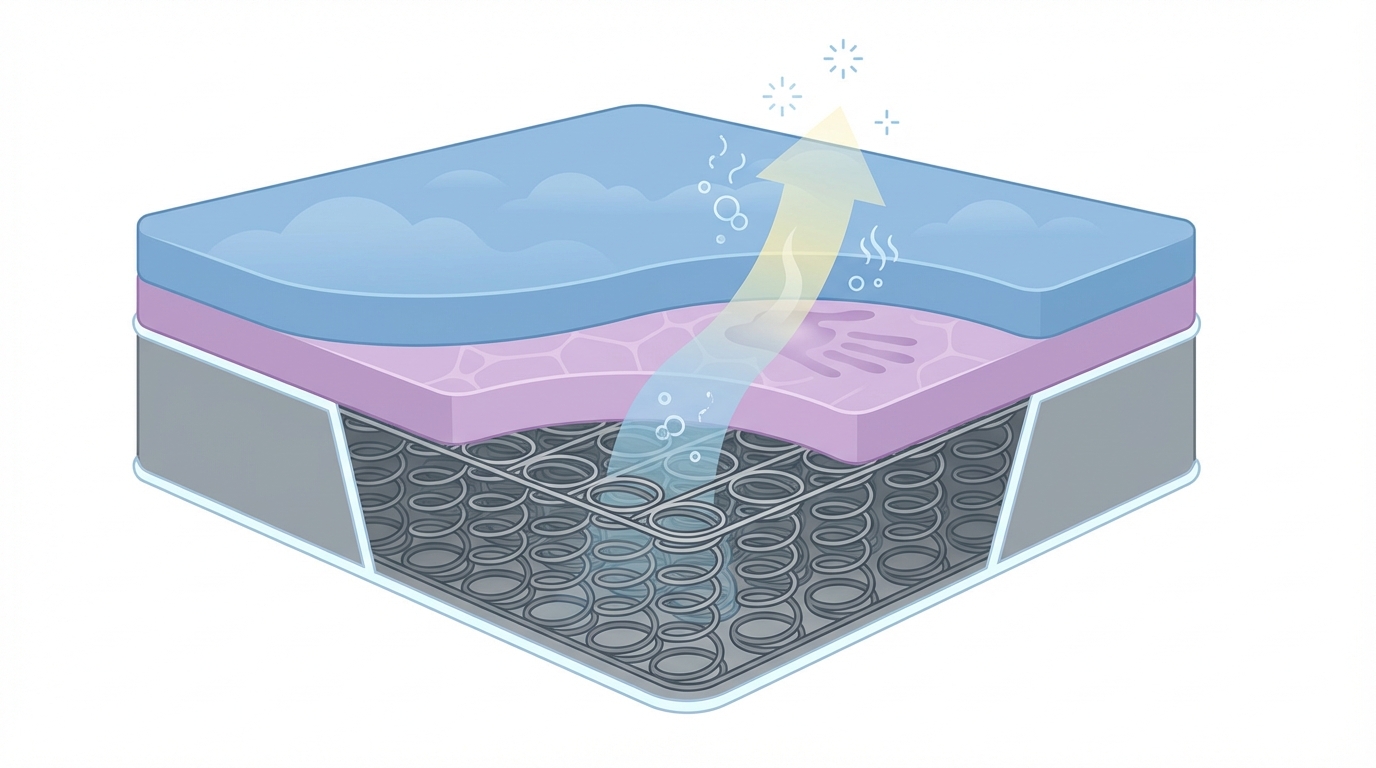
Not every mattress responds to accidents in the same way. The structure, materials, and construction method all influence how quickly urine absorbs, how deeply it penetrates, and how realistic it is to restore the bed to a like new condition. Understanding these differences can help you adjust your cleaning strategy and also guide you when it is time to invest in a new mattress that will be easier to maintain.
All foam mattresses, including memory foam and polyfoam beds, have a continuous foam core. When liquid lands on the surface, it can soak straight down through the open cells. This allows for great pressure relief, but it also means you have a smaller margin of error before urine travels deeper than home cleaning can easily reach. For foam beds, blotting quickly and avoiding excess liquid in cleaning solutions is even more important. If you are a household with young kids or pets and you love the feel of foam, pairing the mattress with a high quality waterproof protector is non negotiable.
Hybrid mattresses combine foam comfort layers with coil support cores. The top layers can still absorb urine, but the presence of a coil unit with insulating pads can slow down absorption. The design sometimes allows for slightly better airflow and drying compared to solid foam. For example, a plush hybrid like the Sealy Posturepedic Elite Soft Hybrid Mattress – Brenham II offers deep contouring comfort with a coil support system that promotes breathability, which can help the mattress dry more efficiently after a well handled accident.
Traditional innerspring mattresses often have quilted tops with fiberfill and thinner foam layers over robust coil units. These can sometimes be a bit more forgiving with surface stains because a smaller volume of foam is involved, but if urine seeps into the fiber padding around coils, lingering odor can be difficult to remove. Regardless of type, repeated, heavy saturation in the same area may eventually compromise internal cushioning and support.
To help you compare, here is a quick side by side look at how the three main mattress types handle urine and cleaning.
| Mattress Type | How Quickly It Absorbs Urine | How Hard It Is To Deodorize | Best Protective Strategy |
|---|---|---|---|
| All Foam (memory foam, polyfoam) | Absorbs quickly and deeply into foam cells | More difficult, risk of trapped moisture and odor if not treated fast | High quality waterproof protector, consider an additional washable topper |
| Hybrid (foam + coils) | Moderate absorption in comfort layers, better airflow for drying | Moderate, often easier to dry than solid foam if treated promptly | Waterproof protector plus breathable sheets, ideal for mixed sleeper households |
| Traditional Innerspring | Surface fibers absorb, deeper padding can be affected in big spills | Varies, surface stains manageable, deep saturation is challenging | Waterproof protector, regular inspection for older mattresses |
When choosing a new mattress after repeated accidents, it can be helpful to look at both feel and practicality. Collections like The Best Foam Mattresses at Sleepology include models that pair contouring foams with removable, washable covers or robust protectors, while The Best Hybrid Mattresses give you that responsive support with materials that are a bit more forgiving when life gets messy.
“We upgraded to a Sealy Posturepedic hybrid from Sleepology after our old mattress absorbed one too many pet accidents. The difference in how quickly it airs out and how confident I feel with a protector on it is night and day.” – Marcus D., December
When To Clean And When To Replace: Knowing If Your Mattress Is Too Far Gone
It is natural to want to save an expensive mattress, but there comes a point where constant cleaning is throwing good energy after bad. Knowing how to evaluate your mattress objectively can help you make a decision you feel at peace with, instead of guessing or feeling guilty about replacing it. The calculus is part hygiene, part structural integrity, and part mental peace of mind.
First, consider the age and overall condition of the mattress. Most high quality mattresses last around 7 to 10 years for the average sleeper, according to multiple industry surveys and guidance from organizations like the Sleep Foundation. If your mattress is already sagging, has deep body impressions, or causes you to wake up sore, repeated urine accidents may be a nudge that it is time to replace it soon regardless. In those cases, overinvesting in deep cleaning is usually not the best use of your time or money.
Next, evaluate the frequency and severity of accidents. An isolated incident that you catch quickly is very different from monthly or weekly accidents in the same spot over several years. If the mattress has a persistent, noticeable odor even after repeated enzyme or peroxide treatments, or if you see signs of mold, mildew, or dark spots that spread over time, those are red flags. Mold exposure in the sleep environment is a serious concern. The Mayo Clinic and other health organizations note that chronic exposure to mold spores can aggravate asthma, allergies, and other respiratory issues.
Also pay attention to how you feel emotionally when you get into bed. If the memory of stains or the faint smell of urine makes you tense or uncomfortable, your body will not truly relax at night. Part of healthy sleep hygiene is feeling that your sleep space is clean and comforting. Once that trust is broken and cannot be restored with reasonable effort, there is value in starting over with a fresh, well protected mattress. For many people, investing in a new mattress and a reliable waterproof protector ends up saving money and stress over the long run, compared with constantly battling stains and odors.
Drying The Mattress Properly: Preventing Mold, Mildew, And Musty Smells
Whatever cleaning method you use, drying is just as important as the cleaning itself. Trapped moisture that lingers deep in the mattress can lead to musty odors and, in the worst cases, mold and mildew growth. A mattress that feels dry to the touch on the surface may still be damp internally, especially if heavy liquid was used for cleaning. Patience at this stage protects both your health and the lifespan of the mattress.
Once you have applied your chosen cleaning solution and used baking soda as an absorber, resist the urge to cover the mattress right away. Leave it completely uncovered and, if possible, elevate it slightly to allow air to circulate around as much surface area as you can. Position a fan so that it blows air across the wet area, and open windows if the weather is dry and not too humid. In some cases, using a dehumidifier in the room can speed the drying process and pull extra moisture out of the air and mattress.
Avoid direct heat sources such as space heaters or hair dryers aimed at a single spot. Concentrated heat can damage foams, cause shrinkage or hardening, and in rare cases create a safety hazard. Instead, think in terms of steady, gentle airflow and time. For heavier cleanings or deep stains, it may be wise to give the mattress a full 24 hours before putting bedding back on, even if that means camping out on the couch or in a guest room. This may feel inconvenient, but it dramatically reduces the chances of waking up to a damp patch and a stale smell the next morning.
If you use an adjustable base, you can sometimes take advantage of its positions to help with airflow. For example, raising the head slightly on a foundation like the TEMPUR-ERGO® Smart Base Adjustable Mattress Foundation or the more advanced TEMPUR-ERGO EXTEND® ProSmart Base Adjustable Mattress Foundation can allow air to circulate more effectively around the cleaned area compared to a flat bed on a solid base.
Essential Tools And Supplies: Building A Mattress Rescue Kit
Because accidents tend to happen at the worst possible times, it is worth assembling a small “mattress rescue kit” that you can grab quickly. Having the right supplies on hand can be the difference between a manageable cleaning job and a permanent stain. You do not need anything fancy, but a little preparation goes a long way when you are half awake at two in the morning.
At a minimum, keep a set of highly absorbent cotton or microfiber towels reserved for spills and accidents so you are not scrambling through the laundry pile. A spray bottle or two clearly labeled for vinegar solution or peroxide solution is helpful so you are not mixing things in a rush. Store a box of baking soda in the bedroom or nearby linen closet, rather than in the kitchen, so you do not lose precious minutes going up and down stairs while the mattress soaks.
For households with pets, an enzyme based cleaner that is specifically labeled safe for use on upholstery and mattresses is a smart addition. If anyone in the home has sensitive skin or respiratory issues, choose fragrance free or low fragrance formulations. You may also want to keep a pair of rubber gloves and a dedicated small upholstery attachment for your vacuum, so you can clean the mattress thoroughly without transferring pet hair and debris from other household surfaces onto your bed during vacuuming.
Here is a simple checklist you can use as a reference when assembling your kit:
- Highly absorbent towels or microfiber cloths
- Distilled white vinegar
- Baking soda
- 3 percent hydrogen peroxide (optional for set stains)
- Gentle liquid dish soap
- Enzyme based cleaner for pet urine
- One or two labeled spray bottles
- Rubber or nitrile gloves
- Vacuum with upholstery attachment
- Spare waterproof mattress protector and fitted sheet
Once you have this kit in place, store it in a consistent, easy to access spot. The less thinking you have to do when an accident happens, the better you will execute these steps, and the more likely you are to fully remove the stain and odor on the first or second attempt.
Protecting Your Mattress Long Term: Waterproof Layers And Smart Bedding
No cleaning method is as effective as preventing urine from reaching the mattress in the first place. Whether you are potty training a child, caring for an aging parent, or co sleeping with pets, a waterproof barrier is your first line of defense. High quality protectors today are much more breathable and comfortable than the crinkly plastic covers many of us remember from childhood. They can be almost undetectable beneath your sheet while still forming a reliable shield against liquids.
Look for a protector that is specifically labeled waterproof, not just water resistant. It should encase the top and sides of the mattress and be machine washable and dryable. A good example is a cooling, breathable style like the TEMPUR-Breeze Mattress Protector – Cooling, Waterproof, Breathable Cover, which combines a liquid proof barrier with a comfortable, temperature friendly surface. This kind of protector is especially helpful on premium mattresses like the Sealy Posturepedic and Tempur-Pedic models carried at Sleepology, where you want to protect a significant investment.
In homes with frequent accidents, layering can be a smart strategy. You might use a waterproof protector directly on the mattress, followed by a washable mattress pad or thin topper, then your fitted sheet. If an accident happens, often just the top one or two layers absorb most of the liquid, and you can strip and wash them without the mess reaching the protector. For extra coverage during potty training or illness, some families also use washable waterproof pads on top of the sheet in the primary accident zone.
Choosing breathable, moisture wicking bedding materials can make a difference too. Natural fibers like cotton and some performance fabrics help move moisture away from the body, reducing the chance that a small leak will sit in one spot unnoticed for hours. Sleepology’s curated Pillows, Sheets, Toppers, Protectors collection includes options selected for comfort, durability, and real life practicality, which makes it easier to build a sleep system that handles both spills and everyday sweat gracefully.
Special Scenarios: Kids, Bedwetting, And Overnight Guests
Urine accidents are a normal part of childhood, yet parents often feel embarrassed or ashamed when they happen. From a sleepologist’s perspective, it is important to normalize these experiences and also to plan for them so they disrupt everyone’s sleep as little as possible. Pediatricians and sleep experts recognize that occasional bedwetting can be developmentally typical well into elementary school years. The focus should be on supportive routines and smart protection, not punishment or panic.
For children who are still in the thick of night training or who occasionally sleep so deeply they do not wake to a full bladder, outfitting their mattress with a high quality waterproof protector is essential. On top of that, many parents find it helpful to use double sheeting: protector, fitted sheet, waterproof pad, second fitted sheet. If an accident occurs in the middle of the night, you can quickly strip the top sheet and pad, revealing a clean, dry sheet underneath, which means less disruption for everyone.
For overnight guests, especially older relatives or friends who might have medical conditions, having a discreet waterproof layer already on the guest bed is an act of hospitality. It removes any anxiety they might feel about having an accident on a host’s mattress. Pairing the mattress with comfortable, supportive options like the Sealy Posturepedic Pro Medium Mattress – Dupont II Euro Pillow Top gives guests both physical comfort and peace of mind, while you know cleanup will be straightforward if needed.
If accidents are frequent, especially in older children or adults, it may be worth talking with a healthcare provider. Bedwetting, sudden onset of nighttime accidents, or increased nighttime urination can sometimes be linked to medical issues or medications that deserve attention. Addressing the underlying cause will help everyone sleep better and reduce stress around the mattress itself.
How A Clean, Odor Free Mattress Supports Better Sleep
A mattress that smells even faintly of urine can subtly undermine your ability to relax. Smell is deeply tied to memory and emotion. If every time you lie down you catch a hint of ammonia or mustiness, your body can stay in a slightly alert state, scanning for problems instead of sinking into deep sleep. Over time, that low level stress can contribute to fragmented sleep, more awakenings, and difficulty falling back asleep in the middle of the night.
Sleep medicine research increasingly recognizes the importance of environment in sleep quality. Studies cited by organizations such as the Sleep Foundation and academic sleep labs highlight that a clean, comfortable, and pleasant smelling bedroom environment is associated with better sleep satisfaction and fewer complaints of insomnia. While many people focus on light and noise, odor is another sensory input that your brain processes even when you are drowsy. A neutral or pleasant scent tells your nervous system that the space is safe.
Mattress hygiene also interacts with allergies and respiratory conditions. Dust mites, molds, and bacteria thrive in damp, warm environments with organic material to feed on. Urine accidents that are not fully cleaned and dried create exactly that kind of microenvironment inside your mattress. For individuals with asthma, allergic rhinitis, or chronic sinus issues, this can mean more congestion, coughing, or wheezing at night. Keeping the mattress dry, clean, and protected is part of an overall approach to sleep health, right alongside choosing the right firmness level or pillow height.
When you take time to restore your mattress after an accident, you are not just being “clean” in a superficial way. You are actively caring for your sleep system and sending your body a powerful signal of safety. That makes it easier to let go at bedtime and trust that the place you are lying is fresh, healthy, and supportive, which is exactly what you deserve.
Conclusion: Regaining Control After A Mattress Accident
A pee soaked mattress can make any day feel like a disaster, but it does not have to be the end of the story for your bed or your sleep. Once you understand how urine behaves, how different mattress materials respond, and which cleaning approaches actually work, you can move from panic to a clear, step by step plan. Blot quickly, treat thoughtfully with safe solutions, dry thoroughly, and protect proactively. Those are the pillars of rescuing and maintaining a clean, odor free mattress.
If you find that you are repeating this process over and over, it may be a sign that it is time to upgrade your sleep setup. A well chosen mattress combined with a truly waterproof, breathable protector and sensible bedding layers can turn future accidents into minor blips instead of major emergencies. Whether you prefer the hug of foam, the bounce of a hybrid, or the familiar feel of a traditional innerspring, there are options at Sleepology that balance comfort, support, and real life practicality.
Most importantly, remember that accidents happen to every household at some point. There is nothing to be ashamed of. With a bit of knowledge and the right tools, you can solve the smell, save your mattress when it makes sense, and create a sleep space that feels fresh and reassuring again. If you are unsure whether your mattress is salvageable or you want help choosing a new one that fits your life, the team at Sleepology is always here to talk through your situation and help you make a confident, informed choice.
Frequently Asked Questions
How do I get strong pee smell out of a mattress if vinegar and baking soda did not work?
If you have already tried a vinegar and baking soda treatment and the smell is still strong, you are likely dealing with an older or deeper stain. In that case, a stronger approach such as a diluted hydrogen peroxide solution can help break down remaining odor causing compounds, as long as your mattress materials can tolerate it. Mix a small amount of 3 percent hydrogen peroxide with water, a bit of baking soda, and a drop of gentle dish soap, test on an inconspicuous area, then apply lightly to the stained zone. Let it dry completely, vacuum the residue, and repeat if the fabric and foam show no damage. For pet urine, an enzyme based cleaner followed by baking soda is often more effective than vinegar alone.
Is it safe to use an enzyme cleaner on a memory foam mattress?
Enzyme cleaners can be used on memory foam with care, but you must avoid over saturating the foam. Apply the product sparingly according to the label directions, focusing only on the affected area instead of soaking a wide radius. After the enzymes have had time to work, blot thoroughly with towels to remove as much moisture as possible, then use baking soda and plenty of airflow to help the foam dry. If your memory foam mattress manufacturer provides cleaning guidance, follow those recommendations first, since some may prefer specific products or caution against certain ingredients.
Can I sleep on my mattress the same night after cleaning pee out of it?
You can sleep on your mattress the same night only if you are absolutely sure it is completely dry, both on the surface and internally. A mattress that still feels cool or slightly damp to the touch likely has moisture trapped inside, and putting sheets back on too soon can trap that moisture and encourage musty odors or even mold. If you had to use a significant amount of cleaning solution or if the accident was large, plan for the possibility that the mattress will need overnight drying time, and arrange a temporary sleeping spot just in case. It is better to sacrifice one night on the couch than risk long term damage to your mattress.
How do I get cat pee smell out of a mattress specifically?
Cat urine is particularly pungent because it is more concentrated and often contains higher levels of uric acid. Start by blotting and lifting as much liquid as possible with towels, then use an enzyme based cleaner formulated for cat urine, being careful not to oversoak the foam. Let the enzymes work for the recommended time, blot again, and then cover the area with baking soda to absorb remaining moisture and odor. Once dry, vacuum thoroughly. You may need to repeat the enzyme treatment more than once for strong odors. It is also wise to use a waterproof protector going forward, since cats are more likely to reuse spots that retain even a faint scent.
Will a mattress protector really stop pee from reaching my mattress?
A true waterproof mattress protector with an intact barrier layer is very effective at preventing urine from reaching the mattress surface. When fitted properly, it acts as a shield so that accidents remain in the bedding layers you can strip and wash. Not all protectors are equal, though, so look for products that specifically state waterproof rather than water resistant, and choose materials that are breathable so you do not feel hot or sticky. Regularly inspect and wash the protector according to the care label, and replace it if you notice cracking, peeling, or loss of waterproof performance.
How do I know if my mattress has mold after repeated urine accidents?
Signs that your mattress may have mold include dark or irregular spots that grow over time, a musty or earthy odor that does not improve with cleaning, and increased respiratory symptoms such as coughing, wheezing, or congestion when you are in bed. If you suspect mold, especially after multiple heavy accidents or improper drying, it is usually safest to replace the mattress rather than try to salvage it. Mold can spread internally where you cannot see it, and exposure may aggravate allergies or asthma. When in doubt, consult a healthcare professional about symptoms and consider starting fresh with a new, well protected mattress.
How often should I replace my mattress if we have frequent accidents at home?
Accidents alone do not dictate replacement timing, but they can accelerate wear and raise hygiene concerns. In general, many people find that 7 to 10 years is a reasonable lifespan for a well cared for mattress, as suggested by various sleep and consumer organizations. If your mattress is younger but has been heavily saturated multiple times, smells persistently bad despite thorough cleaning, or shows signs of structural breakdown like sagging or lumps, it may make sense to replace it sooner. Pairing a new mattress with a reliable waterproof protector and sensible bedding layers will help extend its life even in a household with kids, pets, or medical needs.