

How To Get Cat Pee Smell Out Of A Mattress Without Ruining It
You walk into your bedroom, expecting the usual cozy calm, and instead you are hit with that sharp, unmistakable smell. You pull back the sheets and there it is: a wet spot, or worse, a dried ring you somehow missed earlier. Whether it came from your cat having a one time accident or a repeat offender who has decided your bed is the new litter box, it feels stressful, embarrassing, and a little overwhelming. You are not just worried about the smell, you are worried your mattress might be ruined.
Cat urine is stubborn, and if you have already tried a quick spray of regular cleaner or a scented detergent and nothing helped, you are not imagining it. Cat pee chemistry makes it much more persistent than many other household odors. If it is not handled correctly, the smell can linger for months, and your cat may keep coming back to the same spot. As sleep experts, we also know that a mattress that smells bad or feels damp is not just annoying, it actually makes it harder to relax and get deep, restorative sleep.
Here at Sleepology, we spend our days on the intersection of real life and real mattresses. Kids have accidents, pets get sick, elderly cats have bladder issues, and it all tends to land right on the most expensive thing in the bedroom. You deserve clear, step by step guidance that works in real homes with real schedules and budgets. You also deserve to know when a mattress can be saved and when it is time to think about replacing it, so you do not waste money or sleep on something that is no longer hygienic.
You are in the right place if you want to actually remove cat pee smell from your mattress, protect your health and sleep, and prevent this from becoming a recurring drama. We will walk through safe, science backed cleaning methods, explain what to do for fresh versus old stains, help you decide whether your current mattress is still worth saving, and show you how to protect both your bed and your sleep long term.
Why Cat Pee On A Mattress Is So Hard To Get Out
Cat owners often tell me they feel embarrassed or frustrated that they cannot get the smell out, as if they are somehow failing at cleaning. The reality is that cat urine is uniquely tricky. Veterinarians and pet health resources point out that as cat urine dries, it goes through chemical changes that make the odor stronger over time, not weaker. Pet MD describes how bacteria break down components in the urine and release compounds called mercaptans, the same odor family that makes skunk spray so intense. That is why a faint accident in the morning can smell ten times worse by evening.
Mattresses add another layer of difficulty. Unlike a hardwood floor or tile, your mattress is thick, porous, and made of absorbent materials like foam and fibers. According to the Sleep Foundation, foam in particular can pull liquid deep into the interior, which makes lingering smells more likely if the stain is not handled quickly and correctly. Once urine sinks into the comfort layers and even the core, you are no longer dealing with a surface spill, you are dealing with contamination inside the bed.
There is also a behavioral piece that matters. Cat health experts emphasize that as long as a cat can smell previous urine, it may be more likely to re use the same spot. Even if you feel like you only catch a faint whiff, your cat’s nose is far more sensitive. That is why “masking” the odor with fragrance rarely works and can sometimes backfire. The goal is true neutralization, not just covering things up.
Finally, there is your sleep health to consider. Organizations like the Mayo Clinic and Cleveland Clinic highlight how bedroom air quality and cleanliness influence sleep quality, allergy symptoms, and even headaches. A mattress that smells like ammonia or is harboring dried urine is not just unpleasant, it can contribute to irritation, poor sleep hygiene, and reluctance to go to bed. If you have been sleeping poorly since the accident, your mattress may be playing a bigger role than you realize.
“I was ready to throw our mattress out after our cat started peeing on it during a stressful move. Mia walked me through what was actually salvageable and what to watch for. We were able to save the mattress with enzyme cleaner and a protector, and I avoided dropping another $1,500 right before the holidays.” – Jenna K., November
Step One: Act Fast And Avoid Common Mistakes
When you first discover the cat pee, what you do in the next ten minutes can make a huge difference in how hard this will be to fix. The priority is to stop the urine from soaking deeper into the mattress and to avoid any products that might set the stain or invite repeat accidents. This is where a lot of people unintentionally make things worse, even when they are trying to help.
The first instinct is usually to scrub, especially if you can see a yellow stain forming. Scrubbing, especially in a circular motion, forces liquid deeper into foam or fibers. Instead, think “lift, do not push.” Use thick towels or paper towels and press firmly to blot. You may need to replace the towels several times to keep pulling moisture out. If the accident just happened and the mattress is still quite wet, even a dry hand towel wrapped in a plastic bag, then pressed with your weight, can make a difference.
Avoid reaching for bleach, ammonia based cleaners, or heavy duty disinfectants that advertise “hospital strength.” Cleaning guides from both Sleep Foundation and veterinary sources warn that harsh chemicals can damage mattress materials and leave residues that may release fumes while you sleep. Pet experts also caution against ammonia based cleaners, because ammonia is a natural component of urine. To a cat, an ammonia smell can feel like an invitation to mark that spot again.
Heat is another hidden problem. Steam cleaners, hot hair dryers, or putting a still damp mattress near a heater can set stains and odors. Heat can cause proteins in urine to bond more stubbornly to fabric and foam. It can also trap moisture inside, which raises the risk of mildew. Let the cleaning solutions and air do the work, even if that means claiming the couch for a night.
If the mattress has a removable cover and your manufacturer allows it, you can carefully unzip and launder the cover separately. But many foam and hybrid mattresses are not designed for their covers to be removed, and doing so can void warranties. Tuft & Needle, for example, advises against removing the mattress cover for cleaning. When in doubt, stick to surface cleaning of what is clearly meant to be removable, and focus your efforts on methods that draw the urine upward instead of driving it deeper.
How To Get Fresh Cat Pee Out Of A Mattress

Fresh accidents are stressful, but they are also your best case scenario for full recovery. When urine is still wet, you can prevent a lot of long term damage by following a calm, systematic approach. You do not need a cabinet of specialty chemicals. In many cases, white vinegar, baking soda, and patience are enough to make a big difference.
Start by stripping the bed completely. Sheets, mattress protector if you had one, blankets, and any comforter that may have absorbed liquid all need to come off. Wash bedding as soon as you can with regular detergent, plus either a cup of white vinegar or a pet safe enzymatic laundry additive if you have one. Avoid hot water or a high heat dryer cycle on the first wash, as these can set any lingering odor into fabrics. Air drying or a medium setting is a safer first pass.
Once the bedding is off and the bulk of the liquid has been blotted, mix a solution of equal parts distilled white vinegar and cool water in a spray bottle. Vinegar is mildly acidic, and resources like PetMD explain that it helps neutralize the alkaline salts that form as cat urine dries. Lightly spray the affected area, enough to dampen it but not so much that you saturate the mattress. Let it sit for a few minutes, then blot again. You are not trying to soak the bed in vinegar, you are trying to loosen the urine so you can lift it out.
After you have blotted the vinegar solution, sprinkle a generous layer of baking soda over the entire affected area, extending a few inches beyond any visible stain. Baking soda works like an odor sponge, pulling smells out as it dries. For best results, you really do want to leave it alone for at least eight hours. Many cleaning experts, including Sleep Foundation, recommend letting baking soda sit all day or overnight to get deep into the surface. This is a good day to open a window or run a fan to help things dry thoroughly.
Finally, vacuum the baking soda thoroughly using a clean upholstery attachment. Move slowly so you do not leave powder behind. If you still notice a smell, you can repeat the vinegar and baking soda cycle once more. Most fresh accidents respond well to one or two rounds of this method. If you still smell a strong ammonia or musky odor after that, you are likely dealing with a deeper penetration or an especially strong marking event, which is where enzyme cleaners come in.
“Our senior cat started having accidents at night, and I panicked the first time it hit our hybrid bed. The vinegar and baking soda routine Mia recommended worked better than the random cleaner I grabbed before. We could not smell anything after two rounds, and we ordered a protector the same week.” – Marcus T., October
How To Remove Old Or Dried Cat Pee From A Mattress
Dried cat urine is in a different category. At this stage, the moisture is mostly gone, but the salts, proteins, and odor molecules are very much still there. They are also often deeper in the mattress, because they had more time to sink in before you noticed them. Old stains require more patience and sometimes a slightly stronger approach.
The first step is to identify all the affected areas. Sometimes the most obvious stain is not the only one. If you suspect repeat incidents, a black light made for pet stain detection can help. In a dark room, cat urine will often fluoresce, revealing faint rings you might have missed. This might feel like bad news at first, but it is actually helpful. If you only treat part of the problem, lingering odor in another area can keep your cat returning to the bed.
For older stains, many mattress cleaning guides, including those used by testing organizations like Consumer Reports, suggest a hydrogen peroxide based solution for stubborn discoloration. A common mixture used on traditional fabrics is one cup of 3 percent hydrogen peroxide, three tablespoons of baking soda, and a small amount of mild dish soap. This solution can be effective, but you need to use it cautiously on mattresses, especially all foam or latex models, because hydrogen peroxide can act like a mild bleach. Always spot test on a hidden area first, and avoid dark or patterned covers that could lighten.
If your mattress is memory foam or latex, or if you are not comfortable using peroxide, focus instead on enzyme cleaners designed specifically for pet urine. PetMD notes that these products contain enzymes that actually break down the odor causing components of urine, rather than simply covering them. Choose a cleaner labeled for cat urine, follow the directions carefully, and resist the urge to over soak. It is better to apply multiple light applications and blot than to drench the mattress all at once.
Whichever method you choose, the principle is the same. Apply, allow dwell time, then blot and dry thoroughly. Old stains may require several cycles spread over a few days. The key signal that you are making progress is that each time the mattress dries fully, the odor is weaker. If the smell returns at full strength every time the bed dries, you may be dealing with contamination deep in the core. In that scenario, we will talk later about how to assess whether the mattress is still salvageable.
During this process, plan your sleep arrangements so you are not tempted to put sheets back on a damp bed. According to the Sleep Foundation’s cleaning guidance, trapping residual moisture under bedding can encourage mold and mildew, which then adds a second odor problem on top of the first and introduces respiratory irritants. If you can, rotate to a guest room, a quality air mattress, or a sofa for a night or two while your primary bed completely airs out.
Why Enzyme Cleaners Are Your Best Friend For Cat Pee
If you live with cats, having a good enzyme cleaner on hand is almost as essential as having litter. These products sound technical, but their purpose is simple. Instead of trying to cover up the smell of cat pee with fragrance, they use biological enzymes to break apart the actual molecules that cause odor and staining. This approach aligns with what veterinarians and pet behaviorists recommend for long term success.
Pet focused resources like PetMD emphasize that enzyme cleaners are particularly effective for cat urine because they target uric acid crystals and other organic components that linger even after the spot looks dry. Once broken down, these components are easier to remove during blotting and evaporation, and there is less left behind for your cat to smell. That second part matters, because if the mattress smells neutral to your cat, it is less likely to become a repeat litter box.
When choosing an enzyme cleaner, look for a few key points. First, make sure it explicitly mentions use on soft furnishings or mattresses, not just hard surfaces. Second, choose a formula that is marked as non toxic and safe for use around pets and people once dry. Third, pay attention to the directions. Many enzyme products specify a dwell time, such as 10 to 15 minutes, during which the area should remain damp but not soaking. Short cutting this time usually means short cutting the results.
Use a gentle approach on the mattress. Start by blotting any remaining moisture, then apply the enzyme cleaner to the stained area and just beyond its edges, since urine can spread slightly under the fabric. Let it sit as recommended, then blot again with clean, dry towels. Avoid scrubbing, which can pull fibers and push residue deeper. If the directions say to allow the area to air dry without rinsing, follow that guidance. The enzymes often continue working while the spot dries.
Finally, know that stubborn or older spots nearly always require more than one application. Think in terms of rounds, not miracles. If you are noticing steady improvement and less smell after each full dry down, you are on the right track. If, after several enzyme treatments and full drying cycles, the odor is still sharp and strong, the urine may have penetrated further into the mattress than topical treatments can reasonably reach. At that point, evaluating replacement is a smarter, more hygienic option than endlessly spraying and hoping.
“We tried three random cleaners before I called Sleepology. Mia explained why an enzyme cleaner mattered specifically for cat urine. We did three rounds over a long weekend and for the first time since adopting our rescue cat, our bedroom actually smells like nothing at all. Best feeling.” – Rob S., January
Protecting Different Mattress Types From Cat Pee Damage

Not all mattresses respond to accidents in exactly the same way. Part of being realistic about cleaning and future prevention is understanding how your specific mattress type behaves with moisture. In , hybrid beds continue to be popular because they combine foam comfort layers with coil cores, while all foam models remain a staple for people who like more contouring. Each has its quirks when it comes to cat pee.
All foam mattresses, including memory foam and latex, are highly absorbent. Foam has countless tiny air pockets. Those pores are wonderful for pressure relief, but they also act like a sponge when liquid lands on the surface. Cleaning guides from the Sleep Foundation and several major mattress brands point out that foam can retain moisture deep in the core if it is not dried thoroughly, which means lingering odor and a risk of mold. This is why you want to avoid drenching foam with cleaning solutions or water, even when you are desperate to rinse things out.
Innerspring or coil based mattresses with thinner comfort layers are generally a bit more forgiving because the top layers are often less absorbent and the coil unit allows more airflow. That said, if the comfort foam over the coils is thick, urine can still get trapped there. Pillow top models, especially those with plush, fiber filled tops, act almost like cushions and can be hard to fully dry if heavily saturated. These beds may tolerate a little more solution than pure foam models, but you still want to prioritize blotting and minimal moisture.
Hybrid mattresses sit in the middle. They pair foam or latex on top with a pocketed coil support core underneath. Well designed hybrids, such as the Sealy Posturepedic Elite Soft Hybrid Mattress – Brenham II, have breathable covers and targeted support zones that help with airflow and temperature. That same airflow can help drying after a spill, as long as you do not over saturate the comfort layers. If your hybrid has a removable zip cover, check manufacturer guidance before washing it; some are removable for shipping, not for laundering.
Toppers and pads add another variable. If you were using a foam topper or fiber filled pad on top of your mattress, treat that layer as its own project. It may take the brunt of the damage, which is good for your mattress but means you might decide it is simpler and more hygienic to replace the topper rather than fight with it. This can be a good moment to upgrade to a waterproof protector or even a thin mattress pad that is easier to launder, like those found in Sleepology’s pillows, sheets, toppers, and protectors collection.
Quick Checklist: Emergency Response When Your Cat Pees On The Bed
Before we go deeper into long term solutions, it helps to have a simple, repeatable mental checklist for those “oh no” moments. Having a go to plan reduces panic and protects your mattress while you gather supplies.
Here is a concise emergency sequence to follow whenever you discover a fresh accident:
- Strip all bedding immediately and start a cold or warm wash cycle with detergent and either vinegar or an enzymatic laundry additive
- Blot the wet area of the mattress thoroughly with towels, replacing them until they come up only slightly damp
- Lightly apply a water and vinegar solution or a pet specific enzyme cleaner, following label directions
- Blot again to remove excess moisture and prevent liquid from sinking deeper
- Cover the spot with a generous layer of baking soda and allow it to sit undisturbed for at least 8 hours
- Vacuum the baking soda thoroughly and evaluate smell and staining, repeating treatment if needed
- Allow the mattress to air dry completely before putting fresh, clean bedding back on
This process is simple enough to remember under stress but structured enough to align with what sleep and pet care experts recommend. Over time, keeping a small caddy of supplies nearby, like a spray bottle of diluted vinegar, baking soda, and a preferred enzyme cleaner, can turn an overwhelming crisis into a manageable cleanup.
Once the immediate issue is handled and the mattress is dry, you can shift your focus from damage control to prevention by looking at protectors, mattress type, and your cat’s health and behavior.
Comparison: How Different Mattress Types Handle Cat Pee
When cat pee is a recurring risk, the type of mattress you own or plan to buy is not just a comfort decision. It becomes a maintenance and hygiene decision too. Some constructions are easier to clean and recover after accidents than others.
Below is a simple comparison of common mattress types and how they typically fare when cats are part of the household:
| Mattress Type | How It Handles Cat Pee | Cleaning Difficulty | Best For Cat Owners Who… |
|---|---|---|---|
| All Foam (memory foam, polyfoam) | Highly absorbent, urine can sink deep into foam layers | Higher, requires careful, minimal moisture and lots of drying time | Want strong pressure relief and are committed to using a high quality waterproof protector |
| Latex Foam | Naturally more resistant to dust mites and some moisture, but still absorbent | Moderate, can be damaged by harsh chemicals or strong peroxide | Prefer a bouncy, natural feel and will be proactive with protectors and quick cleanup |
| Innerspring (traditional coil with thin comfort layers) | Less absorbent surface, more airflow through coils | Lower to moderate, easier to dry if accidents are small and caught quickly | Want a more traditional feel and simpler cleanup in case of occasional accidents |
| Hybrid (foam over coils) | Middle ground, absorbent comfort with breathable coil core | Moderate, can recover well with protectors and prompt treatment | Want contouring plus support and are willing to invest in protection and pet management |
If you already know accidents are likely, pairing a cat friendly mattress construction with a reliable protector is often more effective than chasing stain removers after the fact. For example, a supportive hybrid like the Sealy Posturepedic Pro Medium Mattress – Dupont II Euro Pillow Top offers cushioning and airflow, and when combined with a waterproof protector it becomes far more resilient to spills and pet mishaps.
When To Replace A Mattress After Cat Pee Damage
No one wants to hear that a mattress might be past saving, especially when beds are a major investment. At the same time, there are real health and hygiene reasons not to hang on indefinitely to a heavily soiled mattress. The goal is to give you clear, practical criteria so you can make a confident decision instead of living in the land of “maybe it is fine” while holding your breath every night.
Start by assessing the extent and depth of the damage. If you are dealing with a single, small accident that was handled quickly and no smell lingers after thorough cleaning and drying, replacement is almost never necessary. On the other hand, if your cat has been using the mattress as a bathroom for weeks or months without you realizing it, or if a large area is soaked repeatedly, urine can penetrate deeply into the core. At that point, topical treatments only touch the surface, and there may be ongoing bacterial growth and odor inside that you cannot fully reach.
Next, pay attention to smell after the mattress is completely dry and has sat uncovered for at least a full day. If you still notice a strong ammonia or musky odor when you first walk into the room, or if it gets stronger when you lie on the bed and compress the area, that is a sign that deeper layers remain contaminated. According to sleep hygiene guidance from organizations like the Sleep Foundation, persistent odors from biological contamination are a valid reason to consider replacement, especially if you have allergies, asthma, or headaches that worsen in the bedroom.
Also consider structural wear. If the mattress was already sagging, lumpy, or older than eight to ten years, cat pee may simply be the tipping point. Mayo Clinic and other health organizations emphasize that supportive sleep surfaces are important for spinal alignment and pain prevention. If you are already experiencing back or neck discomfort, and now the bed also has odor issues, directing cleaning effort and funds toward a new, well protected mattress is often the better long term investment.
Finally, think about your peace of mind. If you find yourself constantly sniffing, worrying guests will notice, or feeling slightly grossed out every time you get into bed, your sleep quality is already compromised. Sleep is not just about hours, it is about feeling safe, relaxed, and comfortable. In many consultations, I have seen people’s shoulders literally drop in relief once they choose a fresh, clean mattress and commit to a protector and a plan for their cat. When that time comes, exploring durable options such as the Sealy Posturepedic Elite Firm Hybrid Mattress – Brenham II or the plush Sealy Posturepedic Plus Soft Hybrid Mattress – Paterson II can give you a solid new foundation.
Mattress Protectors: Your Best Defense Against Future Accidents
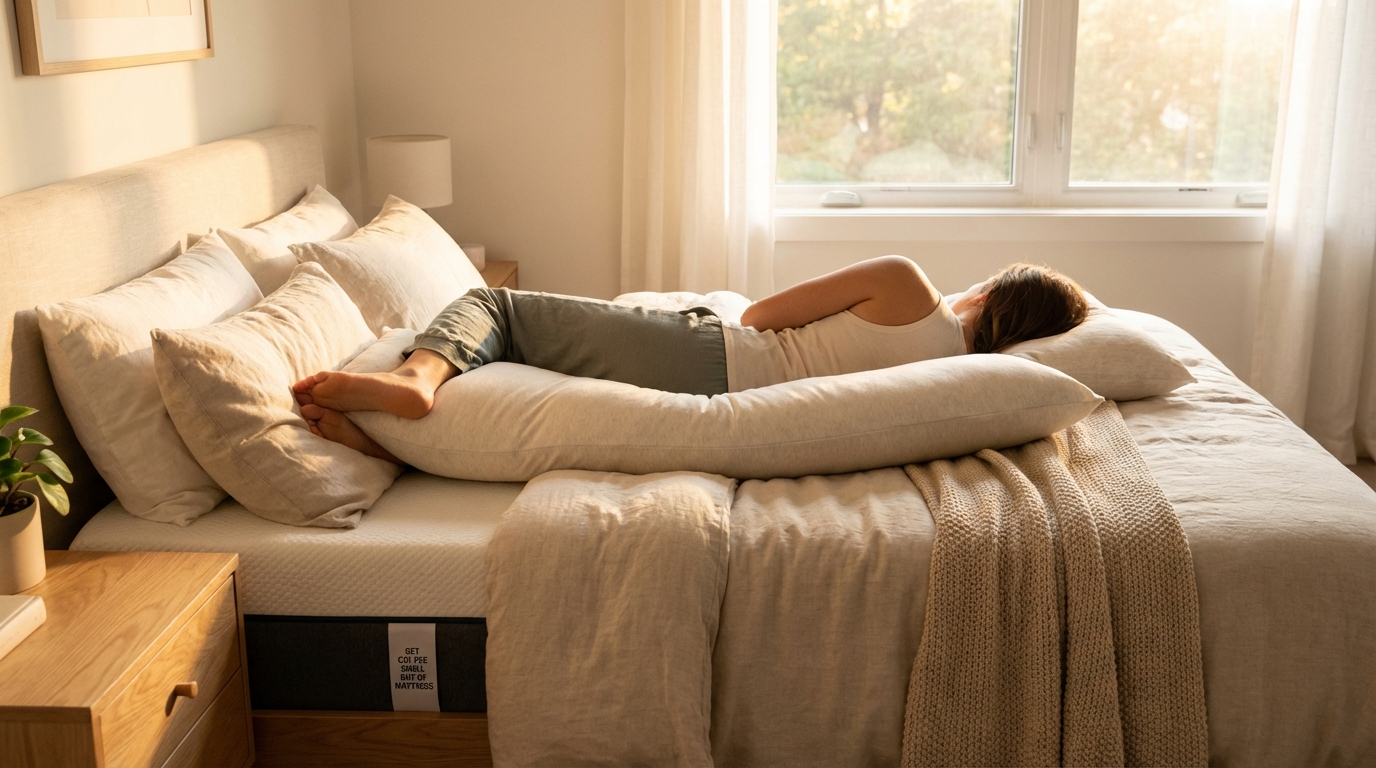
Once you have lived through a full cat pee cleanup, the idea of protecting your next peaceful night becomes very motivating. The single most impactful step you can take is to use a truly waterproof, breathable mattress protector. This layer creates a barrier that stops urine and other spills from reaching the mattress foam or coils in the first place, turning what could be a mattress emergency into a simple laundry day.
Many people confuse mattress pads and protectors, but they serve different purposes. Pads are usually lightly quilted and focus on adding a bit of extra cushioning. They may offer “water resistance,” which means they can slow down a spill, but they are not meant to contain a full accident. Waterproof protectors, on the other hand, typically combine a soft fabric top with a thin, impermeable backing that blocks liquid entirely when maintained properly. Look for descriptors like “fully waterproof” and “encasement” if you want coverage around the sides as well as the top.
Quality matters here. Cheaper protectors can crinkle, trap heat, or peel after a few washes. A well made protector fits snugly, feels soft under your sheets, and allows airflow so you do not wake up sweaty. Sleepology’s pillows, sheets, toppers, and protectors selection includes options designed to complement both foam and hybrid mattresses, so you can protect investments like the Sealy Mattress Base Boxspring Foundation | Standard 9 inch height and your mattress itself without compromising comfort.
When accidents happen on top of a protector, your cleanup process is much simpler. Strip sheets and the protector, rinse off any solid or heavy liquid, and launder according to the care label, usually in warm water with detergent and an enzyme additive if needed. Check that the backing remains intact after washing. If you see cracking, peeling, or separation, it is time to replace the protector so you are not relying on a compromised barrier.
For households with frequent accidents, whether from pets, young children, or medical conditions, consider doubling up. Using a thin, washable pad or second protector over your primary waterproof layer means you can strip the top layer in the middle of the night and still have a protected, reasonably comfortable surface underneath. This small layering strategy can be the difference between swapping a sheet in five minutes and facing a full mattress intervention at 2 a.m.
Supporting Your Sleep Health After A Cat Pee Incident
Even after the mattress is cleaned or replaced, many people notice that their sleep feels different for a while. You might feel more hyper aware of smells, more anxious about letting your cat into the bedroom, or simply more on edge in a place that used to feel like a sanctuary. A big part of recovery is restoring your sense of safety and calm around bedtime.
Sleep medicine experts point out that our brains form associations quickly. If your bed is linked with stress, frustration, or the smell of ammonia, it can take some intentional effort to reset those associations. According to the Sleep Foundation, consistent routines before bed, such as a warm shower, gentle stretching, or a quiet reading ritual, help signal to your body that it is time to wind down. Pairing a fresh, clean mattress with those routines can help override the memory of the incident.
Air quality is another piece of the puzzle. Even if the mattress is clean, it can be helpful to air out the bedroom thoroughly, open windows if possible, and perhaps use an air purifier for a while. Cleveland Clinic notes that good bedroom air quality supports deeper sleep, reduces nasal irritation, and can improve how rested you feel in the morning. Fresh, neutral air also gives your nose a clean slate to confirm that the cat pee smell is truly gone.
Finally, be gentle with yourself and your cat. Accidents often come from health issues, stress, or territorial feelings, not spite. Evaluating litter box cleanliness, location, and number, and checking in with your veterinarian if accidents are new or frequent, will address the root causes. Once those are under better control, you can revisit how much freedom your cat has on the bed. Some people choose to keep cats out of the bedroom entirely for a while. Others compromise with a cozy cat bed or blanket near the foot of the human bed, reinforced with a solid protector underneath.
Conclusion: You Can Save Your Sleep, Even If Your Cat Peed On The Bed
Finding cat pee on your mattress feels like the exact opposite of a restful night, but it does not mean your sleep space is permanently ruined. Between prompt blotting, gentle vinegar solutions, baking soda, and targeted enzyme cleaners, many mattresses can be brought back to a clean, neutral state, especially when accidents are caught early and handled with patience. Understanding the science behind why cat urine smells so strong gives you both realistic expectations and confidence in the steps you are taking.
When damage is extensive or chronic, it is okay, and sometimes necessary, to choose a fresh start with a new mattress that truly supports both your body and your peace of mind. Pairing that new bed with a high quality waterproof protector and thoughtful cat management gives you far more control over what happens next. Your bed should be a place where you exhale, not where you brace yourself for the next surprise.
If you are still unsure whether your current mattress can be saved, or you want help choosing a cat friendly replacement and the right protector to go with it, Sleepology is here to guide you. With access to carefully tested options, from the best foam mattresses to supportive hybrid designs, you do not have to figure it all out alone. A little expert input now can protect your comfort, your budget, and your sleep for years to come.
Frequently Asked Questions
How many times should I treat my mattress to get cat pee smell out?
There is no one size fits all number, but most fresh accidents respond within one or two full treatment cycles using vinegar, baking soda, and possibly an enzyme cleaner. Older or larger stains often need several rounds over a few days, with complete drying between each round. The key sign you are making progress is that the odor becomes noticeably weaker with each cycle, and eventually disappears when the mattress is dry and uncovered. If, after three to four thorough treatments, the smell is still strong and returns quickly, the urine may be too deep in the mattress to be fully removed.
Can I use hydrogen peroxide to remove cat urine from every mattress?
Hydrogen peroxide can help lighten stains and break down some components of dried urine on certain fabrics, but it is not ideal for every mattress. It can discolor dark fabrics and damage foams, especially memory foam and latex. If you want to try it, always use a dilute 3 percent solution, spot test a hidden area first, and avoid soaking the mattress. Many experts recommend using peroxide very sparingly or not at all on all foam beds, and relying instead on enzyme cleaners formulated for pet stains. When in doubt, treat a small, inconspicuous corner before using it on the main stain.
Is my mattress safe to sleep on after an accident if the smell is gone?
If you handled the accident quickly, cleaned thoroughly, allowed the mattress to dry completely, and cannot detect any odor after it sits uncovered in a ventilated room, it is generally fine to continue using it. The absence of smell suggests that remaining urine components are minimal. Make sure there is no residual dampness, because trapped moisture can lead to mold, which is a separate health concern. If you have respiratory conditions or chemical sensitivities, and you used strong cleaners, you may want to air the mattress a little longer or use more neutral products for future cleanups.
Should I keep my cat out of the bedroom after they pee on my mattress?
At least temporarily, limiting bedroom access can help you protect your mattress while you clean and while you address the cause of the accident. Cats often return to the same spot if they can still smell previous urine, so giving yourself time to neutralize odor and adjust litter box management is helpful. Long term, whether your cat is allowed back on the bed depends on their health, behavior, and your comfort level. Many people successfully reintroduce cats to the bedroom once medical issues are addressed, litter boxes are optimized, and a waterproof mattress protector is in place.
Can a mattress protector really stop cat pee from soaking into the bed?
A properly designed waterproof protector is very effective at stopping liquids, including cat urine, from reaching the mattress surface beneath. The key is choosing a protector with a true waterproof backing, not just “water resistant” marketing language, and making sure it fits snugly without cracks or peeling in the barrier layer. When accidents happen, the protector and sheets may be soaked, but the mattress underneath should remain dry. That said, protectors are not indestructible, so inspect and replace them if the backing shows wear or damage, especially in households with frequent spills.
How do I know if cat pee has caused mold inside my mattress?
Visible mold on the surface is an obvious sign, but internal mold can be harder to spot. Warning signs include a persistent musty or earthy smell that is different from ammonia, respiratory symptoms that worsen when you are in bed, or dark spotting that slowly spreads under the fabric. If a large area of the mattress was heavily soaked and stayed damp for days, especially in a humid environment, the risk of mold is higher. Because mattresses are difficult to inspect internally, ongoing musty odor or health symptoms are strong indicators that replacement is the safer option.
Does the type of mattress I buy matter if my cat has frequent accidents?
Yes, both the mattress type and the protection you use matter when accidents are likely. All foam mattresses provide great pressure relief but can be more vulnerable to deep liquid absorption if not protected. Innerspring and hybrid models may dry more easily, but their comfort layers can still hold urine without a barrier. If you live with a cat who frequently has accidents, choosing a mattress that supports your body well and pairing it with a high quality waterproof protector from day one is the best combination. That way, cleanup stays on the surface, and your mattress investment remains safer in the long run.