


How To Get Blood Stain Out Of Mattress Without Ruining It
You wake up, pull back the sheets, and your stomach drops. There it is, a dark rust colored blotch on your mattress from a nosebleed, period leak, or small cut you did not realize was still bleeding. It feels unfair, because mattresses are expensive, and the internet is full of conflicting advice that can make you afraid to touch the stain at all. If you are staring at your mattress wondering whether you just ruined it, you are not alone and you are not stuck.
Getting blood out of a mattress is absolutely possible, but it is also different from cleaning most other stains. Blood is protein based, so the wrong approach can set the stain permanently or even damage the materials inside your mattress. On the other hand, a few smart moves and a bit of patience can save your mattress, your warranty, and your peace of mind. According to organizations like the Sleep Foundation and Mayo Clinic, a healthy mattress and a clean sleep environment support deeper sleep and better overall health, so this is about more than cosmetics.
Here you will learn exactly how to treat both fresh and dried blood stains, which common household ingredients to trust, and which viral hacks to avoid. You will also see how to protect your mattress going forward, when it might be time to call a professional, and how to tell if repeated stains are a sign that it is time to upgrade to a more supportive, easier to maintain mattress. My goal is to walk you through each step like I would if you were standing in a Sleepology store with photos of your mattress pulled up on your phone.
By the end, you will know how to act calmly in those first stressful minutes, how to match the method to your specific mattress type, and how to keep this from becoming a recurring headache. You deserve to feel confident that when accidents happen, you can handle them without panic and still sleep well the same night.
First Things First: Act Fast And Protect Your Mattress
When it comes to blood stains, the clock truly matters. Fresh, still damp blood behaves very differently from blood that has had a chance to oxidize and set. On a living room tee shirt you might get a second chance, but on a mattress, the porous foams and fibers can pull blood deeper where it is harder to reach. The fastest wins usually come from people who notice the stain early and respond gently but quickly.
As soon as you see blood, strip the bed so you can see exactly what you are working with. Pull off sheets, mattress pad, and any topper. If the blood is still wet, you might notice the stain is smaller on the mattress than it looked on the sheets, which is good news. Toss your bedding into cold water to soak in a sink or washer, but keep your focus on the mattress for the moment. The longer blood sits on that surface, the more it binds to the fibers.
It is also important to pause for a quick safety and warranty check. If the blood comes from a serious injury, prioritize medical care first. Once everyone is safe, glance at your mattress warranty paperwork or the tag on the mattress if you have it handy. Many manufacturers advise against harsh chemicals like bleach, strong solvents, or steam cleaning, which can void the warranty or break down certain foams. Keeping your cleaning methods within those guidelines protects your long term investment.
One more mental reset helps a lot here. You are not trying to make the mattress look showroom perfect in five minutes. Your goal in the first phase is to gently lift as much of the blood as possible without spreading it or forcing it deeper. Think blot, wick, and lift instead of scrub and attack. That mindset shift alone often leads to better results, because you stay patient and avoid damage.
“I was convinced our mattress was ruined after a bad nosebleed on our 8 year old’s bed. I called Sleepology in a panic and Mia walked me through the exact steps over the phone. We followed her cold water and blotting method, and by the next day the stain was barely visible. We saved the mattress and at least 600 dollars we had feared we would spend replacing it.” – Sarah L., November
Understanding Blood Stains: Fresh Versus Dried
Before you grab any cleaners, it helps to understand what you are actually working against. Fresh blood is mostly water with proteins like hemoglobin. As long as those proteins have not been heated or allowed to dry, they are still relatively mobile and can be diluted and blotted away. Once blood dries, oxygen in the air changes its chemical structure, which is why older stains shift from bright red to brownish or rust colored. That oxidized protein clings much more stubbornly to fabric and foam.
Temperature plays a big role. Hot water, hot air, or aggressive steam can essentially cook the proteins in blood and lock them into the fibers, similar to what happens when you overcook an egg. This is why almost all expert sources, including the Sleep Foundation and Consumer Reports cleaning guides, emphasize using cold water for blood stains. Cold temperatures keep the proteins from setting so you have more time to coax them out.
The age of the stain also determines which tools make sense. With fresh stains, you can often get impressive results with nothing more than cold water and a clean cloth if you start promptly. For dried stains, you usually need chemistry on your side. That might mean oxygen based cleaners, diluted hydrogen peroxide, or enzyme based stain removers that break blood down at the molecular level. Academic research on protein stains backs this up, showing that enzymatic action is especially powerful on dried biological stains when used correctly.
Your mattress type matters as well. Dense memory foam, bouncy innerspring, and hybrid designs all respond a little differently to moisture and cleaners. Foam can be more easily over saturated, which risks slow drying and potential odor or mold. Innerspring models can tolerate slightly more moisture on the surface but still need thorough drying. Hybrids sit in the middle. Knowing which you own helps you decide how much liquid to use and how aggressively to rinse. We will talk more about that in a dedicated section so you can adapt these methods to your exact bed.
Finally, it is worth adjusting your expectations. A well treated mattress stain is often virtually invisible in normal bedroom lighting, even if you can still spot a ghost outline under a flashlight at just the right angle. From a hygiene and lifespan perspective, what matters most is that the blood is lifted, the area is fully dry, and the mattress continues to perform as intended for support and comfort.
How To Get Fresh Blood Stain Out Of Mattress

Step One: Blot, Do Not Rub
If the blood is still wet or damp, you have an excellent chance of preventing a long term stain. Your first move should be blotting with something absorbent. Use a clean white cloth, microfiber towel, or even paper towels if that is what you have. White is best because it lets you see how much blood you are lifting and prevents dye transfer from colored cloths.
Gently press the cloth onto the stain and let the fabric drink up as much blood as possible. Lift and rotate the cloth to a clean section as it becomes saturated, and keep working until you are no longer picking up much color. Avoid scrubbing or circular motions, which push blood deeper into the mattress and spread it outward. Think of it like wicking up a spill: pressure straight down, then off, not side to side.
Once you have removed the bulk of the liquid, take a breath and assess the size and depth of the mark. If you feel the area with the back of your hand and it is only slightly damp rather than soaking, you are ready for controlled rinsing. At this point you have already greatly improved your odds, simply by minimizing how much blood penetrated the comfort layers of the mattress.
If the stain is very small, for example a single drop from a scab or minor cut, this blotting step alone may be almost enough. Finish with a bit of cold water on the cloth and another round of blotting and you might never think about this again. More often though, there is still a visible ring that needs extra help, which is where cold water comes in.
Step Two: Rinse With Cold Water The Right Way
Cold water is your friend, but you want to be smart about how you use it on a mattress. Instead of pouring water directly onto the stain, dampen a clean cloth with cold tap water and wring it out so it is wet but not dripping. Then gently dab and press into the stained area. The goal is to rehydrate any blood that is already starting to dry and to dilute the proteins so you can blot them back up.
Alternate between a damp cloth to deliver a little water and a dry cloth to lift the diluted blood. As the dry cloth picks up color, switch to a clean section. Continue this see saw of damp and dry until the stain noticeably lightens. If water alone is working well, keep going. There is no need to jump straight to stronger products if you are seeing steady improvement.
Pay attention to how deep the moisture travels. If the area ever feels squishy or extremely wet, pause and press down with several folded towels to draw water back out. Mattresses need to dry thoroughly, and over saturating them, especially in the center, can cause slow drying times and potential microbial growth. Short sessions with small amounts of water are much safer and usually just as effective when repeated.
Most of the time, diligent blotting with cold water over ten to fifteen minutes will reduce a fresh stain to a very faint shadow. If you stop here, position a fan near the bed and let the area dry completely before putting the sheets back on. If there is still noticeable discoloration after it dries, you can move to the next level of treatment, which uses mild cleaning agents.
How To Get Dried Blood Stain Out Of Mattress
Dried blood asks for a little more strategy. By the time you notice that rust colored patch, the blood has already bonded to the fibers of your mattress cover and possibly to the top layer of foam. That does not mean you are powerless. It simply means you need a combination of moisture, time, and the right kind of chemistry to break up those bonds.
Start by doing a dry prep. Lightly brush or vacuum the area with an upholstery attachment to remove any loose surface debris. This does not remove the stain itself, but it helps any cleaner you use later work more directly on the blood rather than on dust or lint. Do not use stiff bristles or aggressive scrubbing here, because you do not want to rough up the mattress fabric.
Next, you want to gently rehydrate the stain. Dampen a cloth with cold water and lay it on the area for a few minutes, then lift and gently blot. Your goal is to soften the dried blood so a cleaner can penetrate more effectively. Resist the urge to soak the mattress. Light, repeated applications will serve you better than one big one.
At this stage, most people choose between three broad categories of cleaners: diluted hydrogen peroxide, a baking soda based paste, or an enzyme based stain remover that is safe for upholstery. The Cleveland Clinic and other medical sources often recommend hydrogen peroxide for blood stains on washable fabrics, but on a mattress, you have to be more cautious because it can discolor some textiles or weaken certain fibers if used too strong or too frequently. Always do a patch test on an inconspicuous corner of the mattress cover before treating a visible area.
If you are nervous about stronger agents, starting with a gentle baking soda and water paste is a reasonable first step. If that does not give enough improvement, you can graduate to a carefully diluted peroxide solution, and finally to an enzyme cleaner for the most stubborn, fully set stains. We will walk through how to use each safely so you can choose what fits your risk comfort and the value of the mattress you are saving.
Cleaning Methods That Actually Work
Mild Household Method: Baking Soda And Cold Water
Baking soda is a good first line of defense for stains that are light to moderate. It has a mild alkalinity that can help lift discoloration, and it also acts as a gentle deodorizer. Unlike harsh chemicals, it is unlikely to damage your mattress cover when used in small amounts and removed thoroughly.
To use this method, mix a few tablespoons of baking soda with just enough cold water to form a thick, spreadable paste. You want it closer to toothpaste than soup, so it sits on the surface of the mattress instead of running into the seams. Apply the paste directly over the blood stain in a thin, even layer using a spoon or gloved fingers. Do not grind it in; simply lay it on top and press lightly so it makes contact.
Let the paste sit for at least 30 minutes. As it dries, it can draw some of the stain into itself. Once dry or mostly dry, gently scrape away the bulk of the residue with a dull edge, then follow with a slightly damp cloth to lift the remainder. Blot, do not rub, and use as little water as possible so you do not undo your work by moving the diluted blood outward.
After you have removed the baking soda, inspect the spot in good lighting. If you are happy with the improvement, allow the area to air dry completely, ideally with a fan moving air across the surface. If you still see significant discoloration, you can repeat the process once more or move on to a stronger method. Many people find that this gentle approach paired with initial cold water blotting is enough to handle smaller or moderately aged stains.
“I had a set blood stain on our guest bed that was at least a few weeks old. I followed Mia’s recommendation to start with baking soda before anything stronger, and it surprised me how much it faded. We only moved to an enzyme cleaner for the faint outline, and the mattress looks clean again. Sleepology saved us from feeling embarrassed when guests visit.” – Daniel P., October
Targeted Method: Diluted Hydrogen Peroxide
Hydrogen peroxide can be very effective on blood because it reacts with the iron in hemoglobin, which helps break up the stain. According to home care recommendations from health organizations like the Mayo Clinic, peroxide is a common first aid stain remover for blood on many fabrics. On mattresses, you simply want to dilute it and control the contact time to lower the risk of bleaching or fiber damage.
Use a standard 3 percent hydrogen peroxide from the pharmacy and dilute it with equal parts cold water in a small bowl or spray bottle. For example, mix half a cup of peroxide with half a cup of water. Test a few drops on an unseen part of the mattress cover, let it sit 10 minutes, then blot and check for any lightening or rough texture after it dries. If the fabric looks unchanged, you can proceed.
Rather than pouring this mixture straight on the mattress, apply it to a clean white cloth. Dab the stain lightly, focusing on the darker areas. You may see a bit of gentle foaming as the peroxide reacts with the blood. Allow it to sit for about 5 minutes, then blot with a dry cloth to lift both the moisture and any loosened stain. Repeat this cycle a few times instead of one long soak, which gives you more control.
If the stain is responding, it will gradually lighten with each pass. Do not aim for perfection in a single session, and do not over saturate the mattress. Two or three short rounds are safer than one heavy application. Once you are satisfied, finish by blotting with a cloth dampened only with cold water to remove any remaining peroxide, then blot dry.
If you see no improvement after several rounds, or if the fabric shows any signs of lightening beyond the stain itself, stop and switch to a different method. Peroxide is a tool, not a magic eraser, and respecting its limits helps protect your mattress. Always allow the area to dry completely before judging the final result, because damp fabric can exaggerate shadows.
Heavy Duty Method: Enzyme Based Cleaners
For stains that have been present for months, or that have soaked deeply due to a larger spill, enzyme based cleaners are often your best bet. These products, sometimes labeled as enzymatic or bio enzyme cleaners, use proteins that specifically target organic matter like blood, sweat, and other bodily fluids. Many professional upholstery and carpet cleaning protocols rely on similar chemistries.
When choosing an enzyme cleaner, read the label to ensure it is safe for fabric and upholstery, not just hard surfaces. Follow the product directions closely. Most manufacturers instruct you to apply the cleaner to a cloth, not directly to the mattress, then dab it onto the stain. This keeps you from over wetting a concentrated area and gives more even coverage.
Because enzymes need time to work, you will usually let the solution sit on the stain for 10 to 15 minutes, or whatever duration the maker suggests. During that time, avoid scrubbing. Afterward, gently blot with a clean, damp cloth to remove residue, then blot dry. Some products require a second application for fully set stains, and that is normal. Patience pays off more than aggression here.
If you have asthma or chemical sensitivities, ventilate the room while you work and consider wearing gloves. While many enzyme cleaners are marketed as pet or family friendly, they still contain active ingredients. If your mattress has a strong off gassing odor from earlier cleaning attempts with vinegar, ammonia, or other chemicals, it is especially important not to mix products. Wait until the previous cleaner is fully gone and the mattress is dry before introducing something new.
For extremely valuable mattresses or stains covering a large area, professional cleaning is sometimes the safest path. Many cleaning companies with experience in mattress care use commercial grade enzyme formulations and extraction tools that can reach deep stains while removing most of the moisture they introduce. If your mattress is a higher end hybrid or memory foam model, ask whether they are familiar with that specific construction before scheduling a service.
What Not To Do: Common Mistakes That Make Stains Worse

When you are stressed and staring at a stain, it is tempting to throw every cleaner in your house at the problem. Unfortunately, many popular hacks circulating online are not friendly to modern mattresses. Knowing what to avoid is just as important as knowing what to use, especially if you want to preserve your warranty and your mattress performance.
Avoid hot water, steam cleaners, and hair dryers on high heat directly on the stain. Heat can permanently set blood, making it nearly impossible to remove later, and sustained high heat can damage adhesives or foam structures inside your mattress. Organizations like the Sleep Foundation and Consumer Reports are very consistent on this point when they discuss protein stains on bedding: cold or at most cool temperatures are safer and more effective.
Steer clear of chlorine bleach and harsh oxidizing cleaners. While bleach can whiten cotton sheets in a washing machine, on a mattress cover it is unpredictable. It can leave yellow rings, weaken fibers so they are more prone to tearing, and create stiff or brittle spots. Bleach fumes are also not something you want trapped in the core of a mattress you sleep on for years.
Mixing cleaners is another risky habit. Combining ammonia based products with bleach, for example, can release toxic gases. Even if you avoid that specific dangerous pairing, layering vinegar, peroxide, scented detergents, and mystery sprays can create residues that irritate skin or respiratory systems. The Mayo Clinic and similar health authorities frequently remind consumers to use one cleaning system at a time and to ventilate well.
Finally, resist heavy mechanical scrubbing with stiff brushes. Aggressively working a stain might relieve your frustration for a moment, but it often roughs up the knit or woven fabric on your mattress, leaving pilled, fuzzy, or thinned patches that are more vulnerable to future wear and tear. Gentle blotting, light dabbing, and soft bristles, if any, are sufficient. Your mattress fabric is not denim, and it responds better to a kinder touch.
Matching Your Method To Your Mattress Type
Memory Foam Mattresses
Memory foam mattresses are especially sensitive to moisture. Their open cell structure can hold liquid like a sponge if you are not careful, making it harder for the core to dry and increasing the risk of odors. At the same time, the slow response foam can make it easier to keep your cleaning efforts on the surface if you stay controlled.
For memory foam, focus on surface treatments with minimal liquid. Blot up fresh blood quickly, then use barely damp cloths for cold water rinsing. Baking soda paste tends to be a good fit here, because it sits on top of the cover and only gradually transfers moisture. If you choose to use diluted hydrogen peroxide or enzyme cleaner, keep the quantities small and apply them to a cloth instead of spraying the mattress directly.
After any wet cleaning on memory foam, drying is critical. Open windows if weather allows, place a fan so air moves across the mattress surface, and if possible, stand the mattress partially on its side for a few hours so air can circulate around it. Avoid putting a memory foam mattress back into a tightly fitted waterproof protector immediately after cleaning, because trapped humidity can linger. Give it time to fully release moisture first.
If your current foam mattress has seen repeated spills or stains and you find yourself constantly spot treating, it may be worth considering a more protective setup. Pairing a new foam model from a collection like the best foam mattresses with a high quality waterproof protector reduces the risk of future deep soaking and simplifies clean up to surface level only.
Innerspring And Hybrid Mattresses
Innerspring and hybrid mattresses, which combine coils with foam or pillow tops, can usually tolerate slightly more moisture during cleaning because air flows more easily through the coil system. That does not mean you want to soak them, but you have a bit more margin when working on stubborn stains. These models often have quilted covers that can hide minor residual shadows while still feeling smooth.
Start the same way: blot fresh blood, then use cold water sparingly. For moderate to heavy stains, a baking soda paste followed by an enzyme cleaner applied thoughtfully can work well. The quilting on the surface can trap some of the cleaner, so make sure you spend time blotting and lifting residue rather than letting it dry into the tufts. A handheld upholstery vacuum can be helpful after the area is fully dry to restore the texture.
Drying is again essential. Because hybrids and innersprings are heavier, rotating or tipping them can feel more intimidating, but even a small tilt that lifts one long side off the foundation can help airflow. If your bed sits on an adjustable base, like the TEMPUR-ERGO EXTEND ProSmart adjustable foundation, you can gently raise the head or foot to create space for air to circulate around the cleaned area without wrestling the whole mattress.
One additional consideration with these constructions is long term body support. If you are dealing with a blood stain on a mattress that is already sagging or causing discomfort, it might be time to look at this as a nudge toward replacement rather than a purely cosmetic emergency. Models like the Sealy Posturepedic Plus Firm Paterson II Euro Pillow Top or the Sealy Posturepedic Pro Soft Dupont II Euro Pillow Top offer updated support systems that are easier to protect from future stains with modern covers.
Quick Comparison: Cleaning Approaches For Different Situations
Sometimes it helps to see your options side by side when you are deciding how to treat a stain. Here is a simple comparison to guide your choice.
| Situation / Priority | Gentlest Effective Option | Strongest Safe Option For Most Mattresses |
|---|---|---|
| Fresh, small blood stain | Cold water blotting | Light baking soda paste plus cold water |
| Older, light to moderate stain | Baking soda paste and careful blotting | Diluted hydrogen peroxide with patch test |
| Large, fully dried or stubborn stain | Repeated baking soda treatments with patience | Upholstery safe enzyme cleaner, possibly pro help |
| Very expensive or delicate mattress | Minimal moisture, baking soda, professional input | Professional mattress cleaning with enzyme tools |
Use this table as a starting point rather than a strict rulebook. Your own comfort working with cleaners, the severity of the stain, and the construction of your mattress all matter. When in doubt, start on the gentle left side and only move right if you truly need more power.
How To Dry Your Mattress Safely After Cleaning
Drying is the quiet hero of successful stain removal. Even if you do a beautiful job lifting the blood itself, leaving residual moisture in a mattress can create its own problems, including musty odors, mildew risk, and a shorter lifespan for foams and upholstery. Good drying habits are non negotiable, and fortunately, they are simple once you know what to look for.
Start with mechanical moisture removal. After each round of cleaning, use clean, dry towels to press firmly into the damp area. Fold the towel so you have multiple layers, and shift to fresh sections as they become moist. This step often pulls out much more water than you expect, especially from quilted or tufted covers. If you have a small wet dry vacuum designed for upholstery, you can use it cautiously on low suction to assist.
Next, focus on airflow. Position an oscillating fan so that it blows across the mattress surface, not directly into one spot at high speed. If you can, crack windows to let in fresh air. In humid climates, running a dehumidifier in the room can also speed drying. The more you can create a gentle, continuous flow of air around the damp zone, the faster it will return to its natural state.
If your mattress rests on a solid platform without slats, consider temporarily moving it to a frame that allows air underneath, or prop it gently against a wall during the day. Mattresses dry much more efficiently when air can circulate on all sides. Adjustable bed bases from collections like adjustable bed frame and base can be especially convenient because they let you lift the head or foot to encourage air circulation without heavy lifting.
Do not rush the process by putting sheets back on a mattress that still feels cool and slightly tacky to the touch. That coolness often signals trapped moisture deep inside. Wait until both the surface and the underlying layers feel dry and neutral in temperature. If it is evening and you absolutely must make the bed, at least use breathable cotton sheets and avoid mattress protectors that could trap moisture until you can give it more airing time the next day.
Preventing Future Blood Stains On Your Mattress
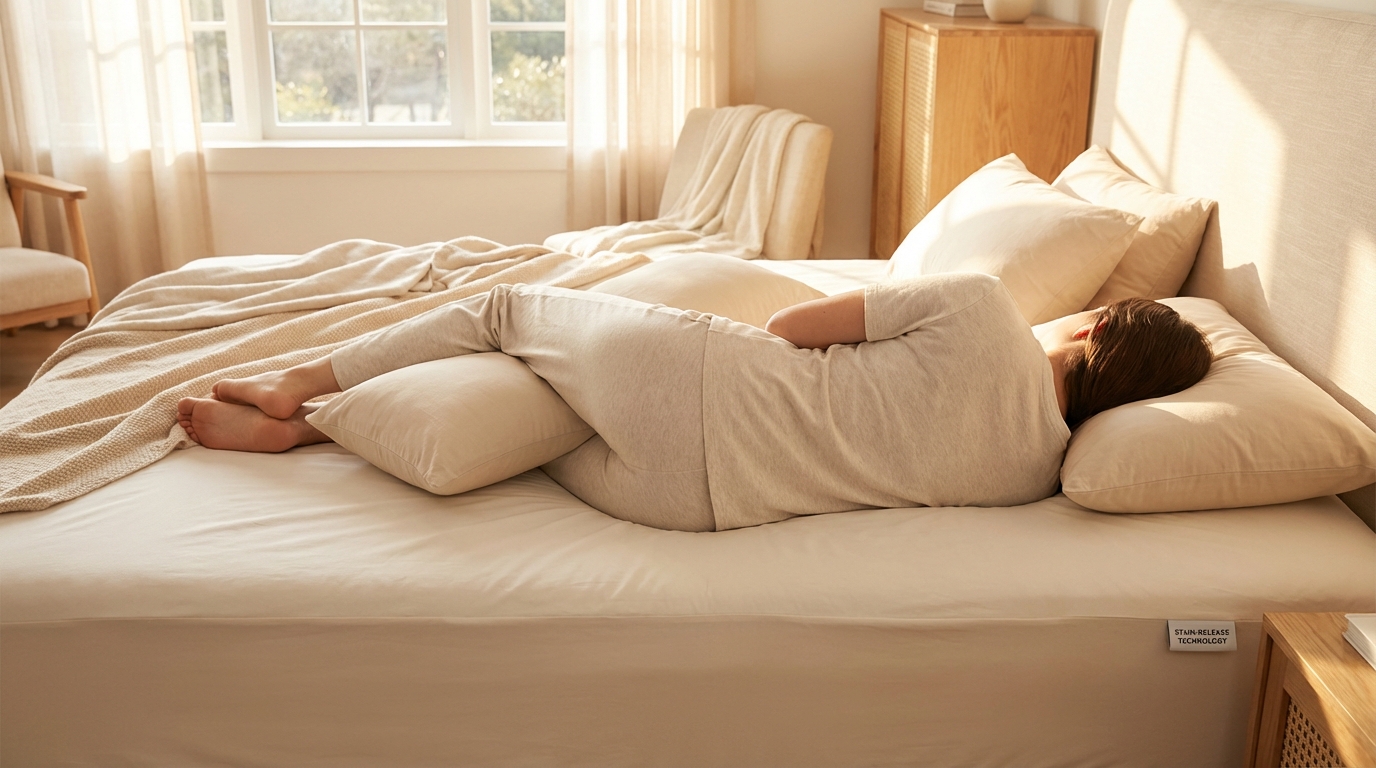
Once you have invested time and energy into saving your mattress from a blood stain, it makes sense to add a few layers of prevention so you do not have to go through that process again. The simplest and most effective tool is a true waterproof mattress protector. Unlike a basic pad or topper, a protector with a waterproof barrier creates a physical shield between bodily fluids and the mattress core.
Look for protectors that are breathable, quiet, and deep pocketed enough to fit your mattress snugly without bunching. Products like the TEMPUR-Adapt waterproof hypoallergenic mattress protector or the cooling TEMPUR-Breeze waterproof mattress protector are designed specifically to block liquids while maintaining comfort and airflow. They also zip off or pull off easily for machine washing, which makes dealing with the occasional stain a laundry issue instead of a mattress emergency.
Beyond protectors, consider your overall bedding setup. Using an absorbent mattress pad or topper, along with high quality sheets, gives blood one or two extra layers to encounter before it ever reaches the mattress. The more layers that can go straight into the wash, the less you will need to worry about deep cleaning. Exploring curated options in a collection like pillows, sheets, toppers, and protectors can help you build a sleep system that is both comfortable and practical.
It can also help to understand patterns. If menstrual leaks are a recurring issue, think about doubling up protection on the nights when your flow is heaviest, using period underwear, a towel over the protector, or extra absorbent pads. If you or a loved one experiences frequent nosebleeds, a cool mist humidifier and saline nasal sprays, as suggested by ENT specialists at institutions like the Cleveland Clinic, may reduce how often they happen in the middle of the night. For children with occasional nighttime accidents or skin picking, simple measures like trimmed nails and bandaged scrapes before bed can make more of a difference than you might expect.
“We finally invested in mattress protectors on every bed after one too many late night cleanups. Sleepology recommended a cooling model because my husband runs hot, and it honestly feels just like a normal sheet. Last month I had a bad period leak and everything stayed on the protector. I tossed it in the wash in the morning and our expensive hybrid mattress was totally untouched.” – Melissa J., December
When A Stain Signals It Might Be Time For A New Mattress
Sometimes a blood stain is just a small cosmetic issue on an otherwise healthy mattress. Other times, it is the moment you realize how old or uncomfortable your current bed has become. If you are already noticing sagging, waking up sore, or finding it harder to get comfortable at night, a difficult stain can be the nudge that helps you reassess your sleep surface.
From a sleep health perspective, most quality mattresses perform well for about 7 to 10 years, according to guidance from sleep organizations and consumer testing groups. After that, foams lose resilience, coils soften, and support can become uneven. If your mattress is in that age range or older and you are battling stubborn stains, it may not be the best use of your energy to fight for perfection on a surface that is already past its prime.
Think about your recent sleep. Are you waking up with more back, hip, or shoulder discomfort than a few years ago? Are you rolling toward the center of the bed or noticing visible body impressions that do not bounce back during the day? These signs suggest that your mattress is not supporting spinal alignment as well as it used to. No amount of stain removal can fix that underlying support problem.
In , hybrid mattresses continue to be a popular choice for people who want the pressure relief of foam with the structure of coils. Models like the Sealy Posturepedic Pro Medium Dupont II Euro Pillow Top or the Sealy Posturepedic Plus Medium Paterson II Euro Pillow Top are designed with zoned support and durable comfort foams, which not only feel better but are easier to keep fresh with modern protectors. If your current mattress is a decade old, putting stain removal energy into a new, well protected surface often returns more value in comfort and hygiene.
If you sleep with a partner and you are both dealing with discomfort, it might be worth considering a king size as part of the upgrade. A larger surface, like those in the king sized mattresses collection, gives each sleeper more space, which can reduce accidental jostling, nosebleeds from elbow bumps, and other minor nighttime mishaps.
Conclusion: You Can Save Your Mattress And Your Sleep
Finding blood on your mattress never feels good, but it also does not have to mean the end of your bed. With calm, quick action and the right methods, most people can significantly reduce or completely remove both fresh and dried stains. Starting with cold water and gentle blotting, then moving up through baking soda, diluted hydrogen peroxide, or enzyme cleaners as truly needed, gives you a clear roadmap instead of guesswork.
Your mattress is a big part of your sleep health. Organizations like the Sleep Foundation remind us that most adults need 7 to 9 hours of quality sleep each night, and sleeping on a clean, well supported surface makes that easier to achieve. Protecting your mattress from stains and replacing it when it no longer offers proper support is not vanity, it is self care that ripples into your energy, mood, and long term wellness.
If you feel overwhelmed, remember that you do not have to tackle any of this alone. At Sleepology, we talk people through these exact scenarios every week, from parents handling middle of the night nosebleeds to adults managing heavy menstrual cycles or post surgical bleeding. Whether you choose to rehabilitate a current mattress with better protection going forward, or you decide that this is the right time to invest in a new sleep setup, you have options and support.
Most importantly, give yourself grace. Accidents happen on mattresses because they are where real life happens: sleep, recovery, intimacy, parenting, and aging. With a bit of knowledge and a few well chosen tools, you can handle the messes, protect your investment, and get back to what your bed is really for, resting well.
Frequently Asked Questions
How do I get period blood out of a mattress fast?
For fresh period blood, speed and cold water matter most. Strip the bedding, then blot the stain gently with a clean white cloth to lift as much blood as possible without rubbing. Follow with small amounts of cold water applied to a cloth, alternating damp and dry cloths until the stain lightens. If some color remains, apply a thin baking soda and water paste, let it sit for about 30 minutes, then remove and blot again. Finish by thoroughly drying the area with towels and a fan before replacing your sheets.
Will hydrogen peroxide ruin my mattress?
Hydrogen peroxide can lighten or weaken some fabrics if used undiluted or left on too long, but when diluted properly and patch tested, it is generally safe on many mattress covers. Mix equal parts 3 percent hydrogen peroxide and cold water, test on an unseen area of the mattress, and wait for it to dry. If there is no discoloration or texture change, you can dab the diluted solution onto the stain using a cloth, let it work for a few minutes, then blot dry. Avoid soaking the mattress, and always finish with a water only blot to remove residue and promote even drying.
Can I use bleach to get blood out of my mattress?
It is best to avoid bleach on mattresses. While chlorine bleach can whiten some washable fabrics in a machine, on mattress covers it often causes yellowing, fiber damage, and stiff, uncomfortable patches. Bleach fumes can also linger in the foams or padding beneath the surface, which is not ideal for something you sleep on for hours each night. Gentler methods like cold water, baking soda, diluted hydrogen peroxide, or upholstery safe enzyme cleaners are safer and usually effective when used correctly.
How long does it take a cleaned mattress to dry?
Drying time depends on how much liquid you used, your mattress type, and the airflow in your room. Light spot treatments on the surface of an innerspring or hybrid mattress may feel dry in a few hours, while deeper cleaning on memory foam can take most of a day to fully release moisture from the core. As a general rule, plan for 6 to 24 hours of drying, using fans and good ventilation. Do not put tightly fitted protectors or heavy bedding back on until the mattress feels completely dry and no longer cool or damp to the touch.
When should I call a professional to clean a blood stain?
It is worth calling a professional if the stain covers a large area, if it has soaked deeply because of a major spill, or if the mattress is high value and you are worried about voiding the warranty. Professional upholstery and mattress cleaners have commercial enzyme solutions and extraction tools that can remove both stains and excess moisture more effectively than home methods. Before booking, confirm that they have experience specifically with mattresses and with your type of bed, such as memory foam or hybrid.
Is it safe to sleep on a mattress after cleaning a blood stain?
Yes, as long as the stain has been properly treated, the area is fully dry, and you have not used any harsh chemicals that leave strong odors or residues. Blood itself is not inherently dangerous once removed, but sleeping on a damp mattress can promote mold or bacteria growth, which is not healthy. Make sure there is no lingering moisture by pressing into the cleaned area with a dry hand and checking for coolness or dampness. Using a freshly laundered mattress protector and clean sheets adds an extra barrier and helps your bed feel fresh.
How can I keep blood from reaching my mattress in the future?
The most effective step is to use a quality waterproof mattress protector that fully covers the sleep surface and sides. These protectors create a barrier that keeps blood, sweat, and other fluids from seeping into the mattress core while still feeling comfortable to sleep on. Pairing a protector with absorbent bedding, such as a mattress pad and good quality sheets, gives you additional washable layers of defense. For recurring issues like heavy periods or frequent nosebleeds, combine bedding protection with medical or lifestyle strategies recommended by your healthcare provider, such as humidifiers or period specific sleepwear.