

How To Clean Cat Pee From A Mattress: A Step By Step Guide That Actually Works
Waking up to the sharp smell of cat pee in your bed is one of those moments that can flip your mood in an instant. Maybe your cat is stressed, missed the litter box, or chose your mattress as a statement. Either way, you are left staring at an expensive sleep surface that suddenly feels ruined. On top of the smell, you might also be worried about stains, lingering odors, and whether you will ever feel comfortable sleeping there again.
That reaction is completely understandable. According to the Sleep Foundation, a clean and supportive mattress is one of the core building blocks of healthy sleep, and poor sleep quality is linked with daytime fatigue, mood changes, and even long term health issues. When a mattress is soaked with urine, it is not just a cosmetic problem, it can interfere with your ability to relax, feel safe, and fall asleep comfortably night after night. For many people, the bed is their main place to recharge, so protecting it matters.
The good news is that cat urine is stubborn, but it is not unbeatable. With the right approach and a little patience, you can remove both the stain and the smell, protect the inner layers of your mattress, and decide confidently if your bed is still worth keeping. You will also learn how to prevent repeat accidents so you are not repeating this process every few weeks. As someone who spends every day helping people choose and care for mattresses, I can tell you that most “ruined” beds are a lot more salvageable than people think.
In the next sections, you will learn how fresh cat pee behaves inside different mattress types, the safest science backed cleaning methods, what to avoid so you do not accidentally damage foam or coils, and when it is reasonable to call it quits and replace your mattress. You will also see where mattress protectors, toppers, and high quality sleep surfaces from Sleepology can help you both fix the immediate problem and strengthen your long term sleep setup so one accident does not cause a full blown sleep crisis.
Understanding Cat Urine And Your Mattress
Cat urine is not just “stronger smelling pee.” Compared to human urine, it is more concentrated and contains additional compounds such as urea, uric acid, fats, and proteins that can crystallize and cling tightly to fabric and foam. Once these crystals set, they are very difficult to remove with standard cleaning products. The longer the urine sits, the more those crystals harden and the deeper the liquid travels into the mattress layers, which is why quick action is so important.
Another key difference is odor. When cat urine dries, bacteria break down urea into ammonia compounds that produce the sharp, eye watering smell many cat owners know too well. If any of those crystals remain in the mattress, humidity and body heat can reactivate the odor months later. That is why surface cleaning that only removes the visible stain often fails. You need a process that also breaks down and flushes out the deeper organic material, not just covers up the scent.
Your mattress construction plays a big role in how cat urine behaves. In traditional innerspring designs, urine often pools closer to the top layers because the quilting and fiber fill slow down penetration. In memory foam or hybrid mattresses, the foam can act like a sponge, absorbing liquid more quickly and spreading it out horizontally. That does not mean a foam mattress is automatically “ruined,” but it does mean you need to be more careful with moisture, dwell time, and drying so you do not leave dampness trapped inside.
From a health perspective, the Cleveland Clinic notes that damp, contaminated materials can increase the risk of mold and bacteria growth, especially if drying is rushed or incomplete. That is another reason to treat cat pee quickly and thoroughly. Your goal is not only to remove odor, but to restore a clean, dry sleep environment that supports your immune system and aligns with the 7 to 9 hours of restorative sleep per night that the Sleep Foundation recommends for most adults. When you understand how cat urine behaves and how your mattress is built, you can choose a cleaning strategy that is firm, safe, and effective.
“I was convinced my hybrid mattress was a goner after my cat soaked one corner while I was traveling. With Mia’s step by step process, I got the smell out completely and avoided spending over $1,500 on a replacement.” – Jenna R., November
First Response: What To Do The Moment You Discover Cat Pee
Your first actions in the minutes after you discover cat urine on the bed have an outsized impact on how well you can restore the mattress. Speed matters, but so does technique. Scrubbing, soaking randomly, or grabbing the harshest cleaner in the cabinet can all push urine deeper or damage the materials. A calm, systematic response works better than panic cleaning.
Start by stripping the bed completely. Remove sheets, blankets, and any mattress protector or topper so you can see the full extent of the damage. Put the bedding straight into the washer on a cold cycle. The Sleep Foundation and many textile experts note that cold water helps prevent proteins from setting, while hot water can “cook in” certain stains. You can always run a second wash with an enzymatic laundry additive if odor persists, but for now the mattress is your primary concern.
Next, focus on absorbing as much liquid as possible before it migrates deeper. Use clean, dry, absorbent towels or paper towels and press firmly into the wet area. Blot, do not rub. Rubbing drives liquid sideways and down into the comfort layers and can stretch or pill the fabric. Stand or kneel on folded towels to use your body weight to draw urine up and out. Replace towels as they become saturated, and continue until you are no longer getting significant moisture transfer.
If the accident is large or you suspect it has already started to soak inward, a wet dry vacuum set to extract (no cleaning solution added yet) can be helpful. Gently press the nozzle over the area to pull liquid upward. Avoid using a standard household vacuum on wet surfaces, as this is unsafe for the machine and often ineffective for liquids. Once the surface feels only damp, not wet, you are ready for targeted cleaning with solutions that break down the urine compounds instead of simply diluting them.
At this early stage, it is also worth opening windows or turning on a fan to support airflow, but resist the urge to aim a high heat blow dryer directly at the damp area. The Mayo Clinic and other health organizations emphasize that slow, complete drying is better than high, uneven heat, which can harden stains and create warm pockets inside the mattress where microbes thrive. Your priority is controlled absorption and preparation for deep cleaning, not just making the top feel dry quickly.
The Science Of Cleaning Cat Pee: Why Enzymes And pH Matter
Before jumping into exact recipes, it helps to understand the two broad categories of cleaners that work well on cat urine: enzymatic cleaners and acidic or basic household solutions. Cat urine contains proteins, fats, and uric acid crystals that are not easily lifted by simple soap and water. According to veterinary and textile science research, enzymes specifically formulated for urine are among the most effective tools for fully breaking down those organic components.
Enzymatic cleaners typically contain proteases, lipases, and other biological catalysts that essentially “digest” the proteins and fats in urine. When used correctly, they do not just perfume over the smell, they dismantle the odor causing molecules into smaller, non smelly pieces that can be blotted away. This is why many veterinarians and pet behavior experts recommend enzymatic products for urine marking issues. For mattresses, you want a cleaner labeled safe for upholstery or bedding, without added bleach or strong oxidizers that could harm foam.
Household solutions, on the other hand, rely on pH shifts to disrupt urine compounds. White vinegar is mildly acidic and can help neutralize alkaline urine salts and reduce odor. Baking soda is mildly basic and excels at absorbing moisture and capturing residual smells. When used in sequence, vinegar and baking soda can significantly reduce visible staining and day to day odor, especially when the accident is caught relatively early. However, they may be less complete than a true enzymatic cleaner for deep, long set stains.
The trick is to use these tools thoughtfully so you are not over saturating the mattress. Too much liquid of any type can seep down to inner foam or coil layers and take a long time to dry. The National Sleep Foundation and several mattress manufacturers warn that repeated heavy soaking can shorten mattress life and increase the risk of sagging or clumping. In practice, that means you want enough solution to penetrate to the full depth of the stain, but not so much that it creates a lake inside your bed.
Safety also matters. Bleach, high concentrations of hydrogen peroxide, and harsh general purpose disinfectants are not good choices for mattresses. They can weaken adhesives, break down foam cells, and leave behind chemical residues that you continue to breathe every night. For most cat urine incidents, enzyme cleaners and carefully used vinegar or baking soda solutions provide more than enough cleaning power without those risks.
Step By Step: How To Clean Fresh Cat Pee From A Mattress

When the accident is less than a few hours old, you have the best chance of restoring the mattress fully. Think of this as a three phase process: absorb, treat, then dry. You already handled the initial absorption in your first response, so now it is time to treat the contaminated area thoroughly enough that odor does not return the next time humidity goes up or your cat curls into that spot.
Begin by choosing your primary cleaning method. If you have a pet specific enzymatic cleaner on hand that is labeled safe for fabric and mattresses, this is usually the best first line for cat urine. Generously spray the affected area, extending slightly beyond the visible boundary of the stain because liquids often spread invisibly under the surface. Allow the product to soak in according to the manufacturer’s dwell time, which is often 10 to 20 minutes for fresh stains. During this time, avoid blotting, as the enzymes need moisture and contact to do their work.
If you do not have an enzymatic cleaner available right away, a vinegar solution can bridge the gap. Mix about one part white vinegar with two parts cool water in a spray bottle. Lightly mist the area until it feels evenly damp, but not dripping. Vinegar has a strong smell at first, but it typically fades as it dries and helps break down some of the urine compounds. After 10 to 15 minutes, gently blot with clean towels to lift out as much liquid as possible. You can follow with an enzymatic cleaner later once you have access to one, which is often a good idea for cat incidents.
Once you have treated with either enzymes or vinegar and blotted up the excess liquid, it is time to address residual moisture and odor with baking soda. Sprinkle a generous layer of dry baking soda directly over the damp area. It should look lightly coated, not buried under inches of powder. The baking soda will gradually absorb moisture and bind to volatile odor molecules as the mattress dries. Leave it undisturbed for at least 8 hours, and ideally closer to 10 or 12 if your schedule allows. This is usually an overnight process, so plan on sleeping in another bed or on a sofa for one night.
After the baking soda has had time to work, vacuum it up using a hose or upholstery attachment. Move slowly, overlapping passes so you capture as much powder as possible. Inspect the area for any lingering odor by smelling close to the surface and pressing your hand into the fabric, then sniffing your hand. If you still detect a noticeable cat pee smell, repeating the enzymatic cleaner followed by baking soda cycle one more time is often enough to eliminate what remains. Once you are satisfied, let the mattress air dry bare for several more hours before remaking the bed.
“I followed the fresh accident steps and was shocked at how much the baking soda darkened as it pulled the urine out. After vacuuming the next day, there was zero smell and no crunchiness in the foam. It honestly felt like a brand new bed.” – Marcus L., October
How To Tackle Old Or Dried Cat Pee Stains
Old cat pee is an entirely different challenge. By the time you notice, the visible stain may be faint or yellow, but the smell can be overwhelming, especially in warm or humid weather. At this stage, uric acid crystals are likely well established inside the mattress fibers, and surface level cleaners alone will not be enough. You need a process that reaches the full depth of the stain without over saturating the entire mattress.
Start by identifying the exact boundaries of the affected area. Sometimes you can see a halo of discoloration, but more often you will need to use your nose and your hand, gently pressing different areas and smelling to detect where odor intensifies. Some pet stores sell UV flashlights that can make dried urine fluoresce slightly, which can be helpful for older, hard to see stains. Mapping the stain helps you avoid treating the entire bed unnecessarily and reduces the risk of adding excess moisture.
For dried cat urine, an enzymatic cleaner designed specifically for pet stains is far more effective than basic vinegar alone. Generously apply the cleaner across the full mapped area, keeping in mind that you need enough volume for the enzymes to penetrate to the same depth the urine reached. This may mean using a bit more solution than you would for a fresh incident, but you still want to avoid soaking everything through to the bottom of the mattress. A slow, repeated application is usually safer than dumping a large amount all at once.
After saturating the stain with enzymatic cleaner, cover the treated area lightly with a clean, breathable cotton towel or cloth and let it sit for several hours. Some people like to use a loose sheet of plastic to slow evaporation and give the enzymes more time to work, but it is important not to trap moisture for days on end. For most mattresses, 4 to 8 hours of covered dwell time, followed by 12 to 24 hours of open air drying, strikes a good balance between effectiveness and safety. During the drying period, a fan circulating room air can help, but again, avoid directed high heat.
Once the area is mostly dry to the touch, sprinkle baking soda across it and leave it in place overnight. Vacuum it up the next day and reassess. It is common to need two or three full enzyme plus baking soda cycles for deeply set cat urine in a mattress, especially if the stain is weeks or months old. Patience is your ally here. Each cycle typically reduces the odor significantly, and by spacing them out you give the mattress time to dry fully between treatments, which protects the internal structure.
If, after several thorough treatments, you still notice a strong odor, it may be a sign that the urine has penetrated down to inner foam or coil layers that are extremely difficult to clean without professional extraction tools. In severe cases, especially with older mattresses that are already sagging or poorly supportive, replacement becomes the more realistic option. When that happens, choosing a new mattress with durable materials and pairing it with a waterproof protector can give you a fresh start and far better resilience against any future pet accidents.
Cleaning Different Mattress Types Safely
Not all mattresses respond the same way to moisture, cleaners, and drying times. Understanding how your specific bed is built helps you customize your approach and avoid unintended damage. Broadly, most modern mattresses fall into three categories: innerspring, memory foam or all foam, and hybrid designs. Each has its own quirks when it comes to cat pee clean up.
On a traditional innerspring mattress with a quilted top, the upper comfort layers are typically made from fiber fill and thin foam over a network of metal coils. Urine often saturates the quilting and immediate foam, but may be slower to reach the deeper core, especially if the spill is caught early. These mattresses tend to breathe relatively well, which can help with drying. At the same time, heavy scrubbing can easily break down quilting fibers and cause premature body impressions. For innerspring beds, prioritizing blotting, moderate enzyme application, and ample air drying time usually works well.
All foam and memory foam mattresses are more absorbent and can hold onto liquids longer. The open cell structure that allows foam to contour so well around your body also allows urine to travel downward and outward. According to several manufacturers and sleep research organizations, repeatedly soaking foam with liquid cleaners can reduce its structural integrity and create soft spots. If your mattress is a memory foam or foam core design, it is essential to keep solutions as controlled as possible, apply in stages, and extend drying times. In some cases, elevating the mattress on its side for a few hours in a well ventilated room can encourage gravity assisted drainage away from the surface.
Hybrid mattresses fall between those two extremes, combining coils with thicker foam comfort layers on top. Because Sleepology carries many hybrids like the Sealy Posturepedic Elite Soft Hybrid Mattress – Brenham II, we see firsthand how they perform in real homes. In practice, hybrids clean similarly to foam beds, but often dry a bit faster due to airflow around the coils. Still, the same principles apply: blot thoroughly, use enzyme cleaners thoughtfully, avoid over saturation, and give the bed plenty of time to dry before covering it again.
Regardless of type, you should avoid using steam cleaners on mattresses affected by cat urine. While steam can seem appealing because it is hot and feels “sanitizing,” the process forces extremely hot moisture deep into the mattress, then traps it as the outer fabric cools first. This can drive urine further inward and create perfect conditions for mold growth. The Mayo Clinic warns that indoor mold exposure can aggravate allergies and asthma, which is the last thing you want from a surface you spend one third of your life on.
Quick Comparison: Cleaning Fresh vs Dried Cat Pee On Different Mattress Types

To bring these points together, here is a simple comparison that highlights how your approach may shift depending on stain age and mattress construction:
| Mattress Type | Fresh Cat Pee Approach | Dried Cat Pee Approach | Special Caution |
|---|---|---|---|
| Innerspring | Fast blotting, moderate enzyme or vinegar, baking soda overnight, vacuum | Repeat enzyme soaks with careful blotting, extended air drying, baking soda cycles | Avoid aggressive scrubbing that can break quilting |
| Memory Foam / All Foam | Very thorough blotting, light to moderate enzyme application, long drying, baking soda | Multiple enzyme cycles with limited liquid, fan assisted drying, baking soda between rounds | Do not oversaturate foam or use steam |
| Hybrid (Coils + Foam) | Similar to foam, but slightly easier drying, enzyme cleaner plus baking soda | Enzyme soaks with careful depth control, 24+ hour drying, baking soda | Support mattress well if you stand it on edge to dry |
Once you know where your mattress falls in this table, you can adjust your expectations and your cleaning plan accordingly.
Dealing With Lingering Odors After Cleaning
Sometimes, even after a careful enzyme and baking soda routine, you walk into the bedroom and still catch a faint whiff of cat urine. Odor is tricky because it is influenced by room temperature, humidity, air circulation, and your own sensitivity. The key question is whether the smell is coming from the mattress itself or from surrounding textiles that absorbed vapors over time.
First, isolate the mattress. Remove all bedding, pillows, and nearby fabrics like bed skirts or throws. Step away for a few minutes, then re enter and smell the bare mattress up close in multiple spots. If the odor is now very faint or absent, you may need to wash or replace nearby soft goods rather than continuing to treat the mattress. Pillows, for example, can hold onto odors even if they were not directly peed on, simply because they share the same air space in a small bedroom.
If the mattress itself is still the obvious source, consider whether the smell is localized to one small area or more diffuse. When odor is localized, another targeted round of enzymatic cleaner followed by a long baking soda dwell is often effective. For more widespread, low level odor that persists despite cleaning, you can also try a “refresh” treatment on the whole sleep surface. Lightly mist the entire top with a highly diluted enzyme or vinegar solution, let sit briefly, then apply a very thin dusting of baking soda, wait several hours, and vacuum.
You may also want to improve room ventilation more generally. The American Academy of Sleep Medicine notes that bedrooms with stale air, high humidity, or strong odors can interfere with perceived sleep quality and make it harder to fall asleep. Running a HEPA air purifier, using a dehumidifier in damp climates, and opening windows periodically can help clear residual smell molecules from the air, even after you have cleaned the mattress itself. Over a few days, as both the mattress and the room environment stabilize, faint odors often fade significantly.
If you share your bed with your cat, you should also think about behavioral follow up. Many cats are drawn back to spots where they have peed before, even after cleaning, especially if stress, medical conditions, or litter box issues remain unaddressed. Working with your veterinarian to rule out urinary tract problems and making litter boxes more appealing are essential parallel steps. No amount of mattress cleaning can keep up if your cat sees the bed as a secondary litter box.
Safety Mistakes To Avoid When Cleaning Cat Pee From A Mattress
When you are dealing with a strong, unpleasant smell, it is tempting to use the harshest cleaners you own or to scrub until your arms are sore. Unfortunately, some instinctive responses can actually make things worse, either by setting the stain or by damaging the mattress and creating health concerns. Knowing what not to do is just as important as knowing what works.
One of the biggest mistakes is using chlorine bleach or high strength oxidizers directly on a mattress. While bleach does have disinfecting properties, it is aggressive on textiles and foam. It can break down fibers, weaken stitching, alter fabric color, and degrade polyurethane foam cells that give your mattress its support and pressure relief. The residual fumes can also irritate your eyes and airways while you sleep. Health organizations like the Mayo Clinic recommend limiting exposure to strong cleaning fumes in enclosed spaces, especially bedrooms.
Another common error is over saturating the mattress in an effort to “rinse out” the urine. Pouring buckets of water, using a carpet shampooer on flat mode, or repeatedly soaking the same area with solution can drive contaminants deeper while leaving the core wet for days. Inside that damp environment, bacteria and mold can flourish, and you may end up with a bed that smells musty or sour on top of the original problem. Always think in terms of controlled moisture plus thorough drying, rather than open ended soaking.
Scrubbing aggressively with stiff brushes or abrasive pads is also risky. While it might feel satisfying, it can rough up the mattress ticking, create pilling that collects more dust, or even tear the surface in spots. Once the cover fabric is compromised, it is easier for future spills, dirt, and body oils to reach the inner layers, shortening the useful life of the mattress. Gentle blotting, pressing, and light circular motions with a soft cloth are usually all the mechanical action you need.
Finally, do not remade the bed too soon. Many people understandably want their bed back as quickly as possible and put sheets back on as soon as the surface feels dry to the touch. However, moisture can still be trapped deeper down, and covering the mattress slows evaporation significantly. Giving your mattress a full, uncovered drying period of at least 12 to 24 hours after your final cleaning round is one of the simplest ways to support both hygiene and longevity.
“The first time my cat peed on our mattress, I scrubbed it with a strong cleaner and ended up with a crunchy, discolored patch that felt awful. After talking with Sleepology, I realized I had damaged the foam. The second time, I followed their gentle, enzyme based method and the mattress felt and smelled normal again.” – Oscar M., December
When It Is Time To Replace Your Mattress Instead Of Saving It
While most single incidents of cat urine can be managed with good cleaning, there are times when replacing the mattress is the healthier and more practical choice. This is especially true if the bed is already near the end of its lifespan. The Sleep Foundation notes that many mattresses perform best for about 7 to 10 years, depending on materials and usage. If yours is sagging, lumpy, or no longer supportive, a severe cat accident can be the nudge that helps you move on.
One clear indicator that replacement might be wiser is persistent odor after multiple careful cleanings. If you have gone through several full enzyme plus baking soda cycles, allowed ample drying time, improved ventilation, and still smell cat urine strongly every time you walk into the room, it suggests the contamination is deep and widespread. At that point, you have to weigh the ongoing time, effort, and stress against the benefits of starting fresh with a clean, supportive mattress.
Structural changes are another red flag. If the area where the urine soaked in now feels softer, spongier, or more compressed than the rest of the bed, or if coils in that zone have started to rust or squeak, the integrity of the mattress may be compromised. Sleeping on a distorted surface can increase pressure points in your shoulders, hips, and lower back. Over time, that can contribute to morning pain and restless sleep, which undermines the whole reason for having a quality mattress.
When you do decide to replace, it is worth thinking through your sleep needs and lifestyle to choose a bed that will serve you well for years. Many pet owners appreciate the balanced support and motion control of hybrids, which combine responsive coils with pressure relieving foam. At Sleepology, options like the Sealy Posturepedic Elite Firm Hybrid Mattress – Brenham II are popular with households who share their bed with pets but still want robust edge support and targeted back alignment.
Even if you prefer the enveloping feel of a pillow top, your new mattress does not have to be fragile. For example, models such as the Sealy Posturepedic Pro Medium Mattress – Dupont II Euro Pillow Top are designed to combine plush surface comfort with a supportive core that stands up well to everyday life. Paired with the right protective accessories, a new mattress can handle the occasional pet mishap far better than an older, already worn out bed.
Mattress Protectors, Toppers, And Other Long Term Defenses
Once you have invested time, effort, or money into rescuing or replacing a mattress, it makes sense to add a layer of insurance against future accidents. Waterproof protectors, well chosen toppers, and thoughtful bedding can dramatically reduce the impact of any future cat urine incidents and make cleanup significantly easier.
A quality waterproof mattress protector is your first line of defense. Unlike basic mattress pads that focus on cushioning, protectors are designed to create a barrier against liquids, dust, and allergens. The best versions use breathable, thin waterproof membranes that block urine from reaching the mattress while still allowing air to pass so you do not feel clammy. When a cat accident happens on a protected bed, you often only need to launder the protector and sheets, not treat the mattress itself.
At Sleepology, our collection of pillows, sheets, toppers, and protectors includes options specifically designed for spill prone households. Choosing a protector with deep pockets that fully encase the mattress and secure elastic edges reduces the risk of liquids sneaking in at the sides. It is a relatively small investment compared to the cost of the mattress underneath and can save you hours of cleaning over the lifespan of your bed.
Toppers can also play a helpful role, especially if you want to adjust the feel of your mattress while adding a semi sacrificial layer between your cat and your core comfort system. For example, if your existing mattress is still structurally sound but feels a bit too firm, adding a plush foam topper over a protector can soften the surface. If your cat has an accident on the topper, it is usually easier and less expensive to replace or deep clean than a full mattress, especially when the underlying bed is something you rely on for back support.
Do not underestimate the psychological comfort of these layers. Knowing your mattress has a waterproof shield can reduce anxiety if you have an older cat with kidney issues, a new kitten in training, or multiple pets sharing your bed. When your brain is not half listening for the sound or smell of an accident, it is easier to relax fully and transition into deeper, more restorative sleep stages.
Sleep Impact: Why A Clean, Odor Free Bed Matters
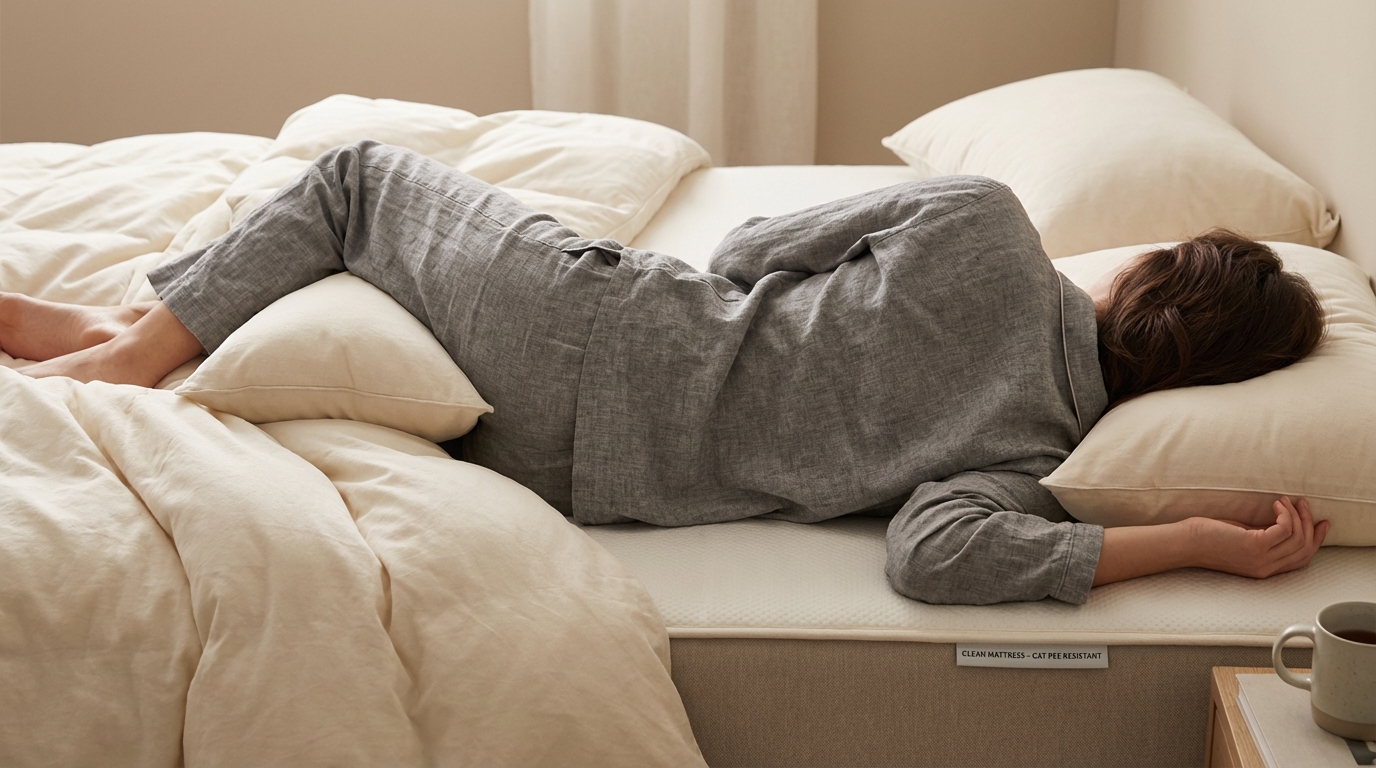
It is easy to treat cat pee on the mattress as a purely practical cleaning problem, but it is also an emotional and physiological one. The bed is a place of rest, intimacy, and vulnerability. When it smells like urine or feels slightly damp or gritty, your nervous system stays on alert. According to sleep experts, including those at the American Academy of Sleep Medicine, environmental comfort plays a major role in how quickly you fall asleep and how deeply you stay asleep throughout the night.
Unpleasant odors can subtly increase stress hormones, even if you “get used” to the smell over time. Your brain continues to register scent as an environmental cue, and in the case of cat urine, that cue is usually associated with cleaning, frustration, or worry. That is the opposite of the calm, safe associations you want your brain to have with your pillow and mattress. Over days and weeks, those micro disruptions can add up, leaving you feeling less refreshed in the morning.
Physical comfort is also impacted. If a section of your mattress feels slightly different after cleaning, you may unconsciously avoid that area, crowd a partner, or sleep at an awkward angle to stay away from the “pee spot.” Over time, that can strain your neck, shoulders, or lower back. Working with a supportive, even sleep surface matters, and high quality mattresses like the Sealy Posturepedic Plus Soft Hybrid Mattress – Paterson II are engineered to provide that kind of uniform support, especially when protected from moisture damage.
Research from organizations such as the Sleep Foundation reinforces that consistent, good quality sleep supports everything from mood and immune function to weight management and cognitive performance. That is why taking the time to fully address cat pee on your mattress is not overreacting, it is a form of self care. You deserve to crawl into a bed that smells clean, feels supportive, and signals to your whole body that it is safe to relax deeply.
Coordinating With Your Cat’s Health And Behavior
No guide on cleaning cat pee from a mattress would be complete without a brief look at why it happened in the first place. While one off accidents can happen in otherwise healthy, well adjusted cats, repeated incidents on the bed often point to underlying medical or behavioral issues. Addressing those root causes is essential to protect both your sleep and your mattress.
From a medical standpoint, urinary tract infections, bladder stones, kidney disease, diabetes, and arthritis can all lead cats to avoid the litter box or be unable to reach it in time. Many veterinary clinics and the American Veterinary Medical Association stress that any sudden change in urination habits warrants a prompt vet visit. Cats are experts at hiding discomfort, and urinating on a soft, easily accessible surface like a bed may be one of the few signs you get that something is wrong.
Behaviorally, cats may mark beds due to stress, anxiety, or conflict with other pets. Major changes such as a move, a new baby, construction noise, or even changes in your work schedule can unsettle a sensitive cat. Working with a feline behaviorist or a vet who is experienced with environmental enrichment can help you identify triggers and create a more secure routine. Simple steps such as adding extra litter boxes, improving box cleanliness, and giving your cat safe, high perches can reduce stress related urination.
You can also adjust your bedroom setup to make the bed feel less attractive as a bathroom. Using a waterproof protector that does not retain odors, laundering bedding regularly, and occasionally closing the bedroom door when you are not home are all reasonable strategies, especially while you are in the diagnostic phase with your vet. Sharing your sleep space with a cat can be deeply comforting, and many people find it improves their sleep subjectively, but it should not come at the cost of chronic accidents.
When your mattress is clean, well protected, and your cat’s needs are addressed, everyone sleeps better. Your bed returns to being a place of rest and connection, not a battleground between cleaning products and stubborn odors.
Conclusion: Turning A Frustrating Mess Into A Manageable Moment
Cat pee on a mattress can feel like a disaster at first, especially when you think about the cost of your bed and how central it is to your nightly routine. It is normal to feel frustrated, embarrassed, or overwhelmed. The important thing to remember is that in most cases, you have more control than it first appears. With fast blotting, the right enzyme based cleaning, patient drying, and smart use of baking soda, you can usually remove both stain and smell to the point where your mattress feels trustworthy again.
Along the way, you also have an opportunity to upgrade your sleep environment. Adding a high quality waterproof protector, considering a topper that fine tunes your comfort, or even replacing an aging bed with a more supportive hybrid or foam model can pay off in deeper, more restorative sleep for years. When you combine that with attention to your cat’s health and stress levels, you create a home where both you and your pet can rest more peacefully.
If you are unsure whether your current mattress is worth saving, or you are thinking about an upgrade after a particularly bad accident, the team at Sleepology is here to make the decision less stressful. We work with you to understand how you sleep, how you live with your pets, and which mattresses and accessories will give you the best mix of comfort, durability, and peace of mind. A single messy night does not have to define your sleep story. With the right steps and support, you can get back to a clean, calm, and comfortable bed sooner than you think.
Frequently Asked Questions
How fast do I need to act when my cat pees on the mattress?
You will get the best results if you start blotting within minutes, but anything within the first couple of hours is still worth treating as a “fresh” accident. The sooner you absorb excess liquid, the less it can seep into deeper layers and form stubborn uric acid crystals. Even if you discover the accident later in the day, begin with thorough blotting before applying any cleaners, then follow the fresh stain steps, understanding that you may need more than one round.
Can I use hydrogen peroxide to clean cat pee from my mattress?
Low concentration hydrogen peroxide is sometimes used in DIY urine cleaners, but it comes with risks, especially for colored fabrics and certain foams. It can lighten or discolor the mattress cover and, in higher concentrations, may weaken foam cells over time. For cat urine specifically, enzymatic cleaners designed for pet stains are generally safer and more effective. If you do choose to use a peroxide based solution, spot test an inconspicuous area first and use it sparingly.
How do I know if the urine has penetrated too deeply to clean?
Signs that urine has penetrated deeply include a strong, persistent odor even after several enzyme and baking soda treatments, a noticeable change in the feel or support of the affected area, and sometimes a faint smell that intensifies when you lie on the spot or when the room is warm and humid. If you have allowed ample drying time between treatments and still cannot significantly improve the smell or feel, the inner layers may be saturated, and replacement might be the more realistic option.
Will a mattress protector really stop cat pee from reaching the mattress?
A well made waterproof mattress protector is very effective at blocking liquids, including cat urine, from reaching the mattress as long as the urine lands on the protected surface. The key is choosing a protector that fully covers the sleep surface, has secure edges, and uses a continuous waterproof membrane. Products from collections like Sleepology’s pillows, sheets, toppers, and protectors are designed for this kind of protection. Very heavy or repeated accidents may still find a path around the edges if the protector is not fitted correctly, so checking fit and coverage is important.
How long should I let my mattress dry before putting sheets back on?
After your final round of cleaning and vacuuming up baking soda, allow your mattress to air dry uncovered for at least 12 hours, and ideally up to 24 hours, in a well ventilated room. Even if the surface feels dry to your touch, deeper layers may still be slightly damp. Giving the mattress this extra uncovered time helps prevent trapped moisture, which can lead to musty odors or, in worst cases, mold growth. Using a fan to keep air moving across the surface can help speed evaporation without the risks of direct high heat.
Can my cat sleep on the bed while the mattress is drying or being treated?
It is better to keep your cat off the bed while the mattress is damp or treated with cleaners. This protects your pet from ingesting cleaning residues through grooming and prevents them from re marking the same area while it is still in flux. Once the mattress is fully dry, the odor is gone, and any protectors or clean bedding are back in place, you can gradually reintroduce your cat to the bed if you choose, ideally after you have also addressed any underlying medical or behavioral issues with your veterinarian.
Is there a mattress type that is better for homes with cats?
No mattress is truly “cat proof,” but some are more forgiving than others. Hybrids and well constructed foam mattresses with durable, tightly knit covers and strong edge support tend to hold up well in households with pets. At Sleepology, many pet owners gravitate toward models like the Sealy Posturepedic Elite Soft Mattress – Albany II Euro Pillow Top or the Sealy Posturepedic Medium Mattress – Medina II Euro Pillow Top because they balance comfort, support, and durability. Regardless of type, pairing your mattress with a waterproof protector is what truly makes the biggest difference for cat related accidents.