

How To Clean A Mattress Topper: A Complete, No‑Stress Guide From A Sleepologist
You are not the only one who has suddenly noticed mystery stains on a mattress topper and thought, "How on earth do I clean that without ruining it?" Mattress toppers quietly take the brunt of sweat, spills, and everyday wear, and because they sit under sheets, it is easy to ignore them until there is a spill or a smell you can no longer pretend is not there. By the time most people go looking for help, they are juggling questions about odor, stains, and whether they just wrecked a fairly expensive topper.
Keeping your topper clean is not only about appearances. Over time, sweat, skin cells, dust mites, and allergens accumulate in that extra layer of cushioning you sleep on every night. According to organizations like the Sleep Foundation and the American Academy of Sleep Medicine, a clean sleep environment supports better sleep quality, especially for people with allergies or asthma. When a topper gets overloaded with debris and moisture, it can flatten faster, trap heat, and make you feel less comfortable, which directly affects how deeply you sleep and how rested you feel.
The good news is that you do not need professional equipment, complicated chemicals, or a giant laundry room to take care of a mattress topper properly. You mostly need the right method for your specific material, a little patience for drying time, and a routine that fits realistically into your life. Once you understand what your topper is made of and what that material can tolerate, cleaning shifts from intimidating to very manageable.
In the guide that follows, you will learn how to do quick refresh cleanings, true deep cleanings, and targeted stain removal for different topper types, along with how often to clean, what to absolutely avoid, and how to protect your topper so you have to clean less often. Along the way, I will flag the situations where you should pause and read the care label before you do anything else, and I will point you toward Sleepology products that help you keep your whole sleep system fresher and more comfortable over the long term.
Why Mattress Topper Cleaning Matters For Sleep And Health
Before we get into the "how," it helps to appreciate why this chore is worth your time. Researchers at places like the Mayo Clinic and Cleveland Clinic regularly point out that bedroom allergens, especially dust mites, can aggravate allergies and asthma, leading to more nighttime awakenings, congestion, and even worsening snoring. Dust mites thrive in warm, humid environments and feed on skin flakes, which makes a plush mattress topper a perfect habitat if it is never cleaned.
On top of that, sweat and body oils slowly oxidize and can discolor foam and fabrics, which is why you often see yellowing on older toppers. While discoloration alone is not dangerous, trapped moisture can create a musty smell, and in more extreme cases can support mildew. Even if you are not sensitive to allergens, most people sleep better when the bed smells fresh and feels dry, so maintaining a clean topper is part of creating a sleep setting your body can truly relax in.
There is also a clear comfort and longevity angle. A topper full of compacted dust and moisture loses loft and responsiveness, which means it stops doing the job you bought it for in the first place. For example, a memory foam topper that once relieved pressure at your shoulders may start to feel flat and hot. By keeping it clean and dry, you help the material recover properly and extend its useful life. That matters whether you invested in a premium foam topper for your main bed or you are using an affordable topper on a guest room mattress you are not quite ready to replace.
From a budget perspective, caring for your topper is almost always cheaper than replacing it early. I have had plenty of Sleepology customers come into the shop convinced they needed a whole new mattress, only for us to discover a neglected topper was the real issue. After a thorough cleaning and an upgraded protector, their mattress felt and smelled dramatically better. A clean topper lets your underlying mattress, whether it is an innerspring, a best‑in‑class foam mattress, or a supportive hybrid design, actually shine.
Finally, hygiene is simply part of taking care of yourself. According to the Sleep Foundation, most adults need 7 to 9 hours of sleep per night, and sleep efficiency improves when your environment is comfortable and low in irritants. When you are breathing closer to a clean surface and lying on materials that are free from built up grime, your nervous system gets one more subtle signal that it is safe to sink into deeper sleep.
“I was embarrassed by the state of our old foam topper and figured we had to toss it. I followed a careful deep clean and added a waterproof protector from Sleepology, and it honestly feels and smells like new. We put off buying a new mattress and probably saved at least $800.” – Jenna R., November
Start Here: Know Your Topper Type Before You Clean
Different mattress toppers behave very differently with moisture, heat, and friction, so the very first step is to identify what you are working with. If you skip this and treat a wool or memory foam topper like a cotton blanket, you can warp, shrink, or even destroy it. So before grabbing the spray bottle, slow down and do a two minute diagnosis.
Most mattress toppers fall into one of a few broad categories. There are foam toppers, especially memory foam and gel infused foam, that contour closely but do not like being soaked. There are latex toppers, which are responsive and bouncy but can degrade with harsh chemicals or direct high heat. Then you have fiber or down toppers made with polyester fill, down, feathers, or wool. Some newer toppers combine materials, such as a foam core wrapped in a quilted down alternative cover.
The care tag sewn into a side seam is your best friend here. It will usually specify the main material, whether the cover is removable and machine washable, and what temperatures or solvents are safe. If the tag is missing or illegible, you can often tell by feel. Memory foam is slow to recover when you press a hand into it, latex is springier, down and down alternative feel fluffy and light, and wool toppers feel dense, slightly weighty, and may have a faint natural wool scent.
It is also important to separate the topper itself from any removable cover. Many higher quality toppers have zippered covers designed to be washed routinely while the core is spot cleaned only as needed. If your topper is from a brand like Tempur‑Pedic, the enclosed instructions are very specific about what is washable and what is not. Some travel and guest bundles, similar to the Tempur‑Pedic Mattress Topper and Pillow Travel and Guest Bundle we carry at Sleepology, are intentionally designed to be more portable and easier to care for.
Once you know your material, you can match it to the right cleaning method. The big dividing line is whether your topper can go in the washing machine at all. Most foam and latex toppers cannot, and attempting it can lead to tearing or permanent deformation. Many down and down alternative toppers can be machine washed on gentle, but only if they fit loosely inside the drum and your machine can handle the weight when wet. Wool is in its own category, where too much water or agitation can cause felting and shrinkage. When in doubt, under‑clean instead of over‑soaking, and rely on vacuuming, spot cleaning, and fresh air.
“Mia helped me figure out that our ‘mystery topper’ was actually latex with a removable cotton cover. I had almost thrown the whole thing into the washer. Following latex‑safe steps and washing just the cover made all the difference, and I avoided a costly mistake.” – Carlos T., October
How Often Should You Clean A Mattress Topper?

One of the most common questions I hear at Sleepology is not how to clean, but how often. There is no universal schedule that works for every bedroom, but we can set some practical ranges, then adjust for your household. Think of topper care like dental checkups and daily brushing: you have regular maintenance and then special cleanups when something spills.
For routine cleaning, aim to do a light refresh of your topper 3 to 4 times per year. This usually means removing the bedding, vacuuming the topper surface slowly with an upholstery attachment, and using baking soda to absorb odors, then letting it air out thoroughly. This aligns with many expert recommendations that suggest quarterly cleaning to keep dust mites and odors under control without overhandling sensitive materials. Some people like to coordinate this with seasonal bedding changes, such as swapping to flannel sheets in the fall and lighter sheets in the spring.
If someone in your home has allergies, asthma, or eczema, you may want to increase the frequency of vacuuming and airing. Allergists often recommend encasements and regular cleaning of all sleep surfaces to reduce exposure to dust mites and pet dander. In these cases, a breathable, waterproof protector like the TEMPUR‑Breeze Cooling Waterproof Mattress Protector over your topper can be a game changer, because you can wash the protector more often while disturbing the topper less.
Deep cleaning is not something you should do monthly, especially for foam or wool. Reserve deeper cleanings for when you notice clear signs that they are needed: persistent odors even after airing and baking soda, visible spills or stains, increased humidity issues in the bedroom, or a topper you realize has not been thoroughly cleaned in several years. For many households, a gentle deep clean once a year is enough, provided you are doing light maintenance and using a protector.
There is one more category to keep in mind: emergency cleaning after accidents. Urine, vomit, blood, or large drink spills need attention as soon as possible, ideally within minutes, because bodily fluids can soak into absorbent materials and set stains that are very hard to remove. These situations do not wait for a schedule. The key is to treat the affected area quickly without flooding the topper. We will walk through specific stain strategies later, but know that fast action is more important than a perfect technique.
The Safe, Step‑By‑Step Way To Surface Clean Any Mattress Topper
Step 1: Strip The Bed And Check For Damage
Surface cleaning is your go to method when the topper is not heavily stained but you want to remove dust and general odors. Start by stripping all the bedding off the bed, including the fitted sheet, flat sheet, and any mattress protector that sits over the topper. Take a moment to look the topper over in good light. You are checking for tears, thinning areas, large seams that are coming loose, or any signs of mold, such as dark spots that look freckled and do not brush away.
If you see true mold growth, especially if the topper smells strongly musty even after airing, it may be a health risk to keep using it. In that case, it is often safer to replace the topper, and sometimes to inspect the underlying mattress as well. This is one of the rare situations where scrubbing is not the answer. If you are unsure, a quick call to a healthcare provider or an allergist can help, since they frequently counsel patients about indoor mold exposure.
Assuming the topper is structurally sound, gently lift it off the mattress and lay it flat on the bed frame or, if it is light enough, on a clean floor. This makes it easier to work across the whole surface, especially the edges where dust tends to accumulate. If you use an adjustable base, like the ones from our Adjustable Bed Frame and Base collection, make sure it is in the flat position before laying the topper back down.
Step 2: Vacuum Thoroughly Without Stretching The Fabric
Next, use a vacuum with a clean upholstery or soft brush attachment to slowly vacuum the entire surface of the topper. Move in overlapping strokes, just like you would when vacuuming carpet, but keep the suction at a moderate setting so you are not pulling and stretching the fabric or foam. The point here is to lift dust, crumbs, pet hair, and loose debris that has filtered through your sheets. According to sources like the American Lung Association, removing dust regularly is an effective way to reduce exposure to dust mite allergens in the bedroom.
Pay special attention to the areas where your torso and hips rest, since those zones tend to be the warmest and can collect more sweat and oils. If you share your bed with a pet, give extra passes to the side they favor. Flip the topper carefully if it is designed to be used on both sides, and vacuum the underside too. Foam toppers that are not flippable can still be vacuumed on the bottom to remove any dust that accumulated between the topper and the mattress.
Step 3: Deodorize With Baking Soda, Then Air It Out
Once the dust is removed, sprinkle a light to medium coating of baking soda over the top of the topper. Baking soda is a safe, non reactive deodorizer that helps absorb lingering odors and moisture. The Sleep Foundation and many cleaning experts recommend it specifically for mattresses and toppers, because it works without soaking the material or introducing harsh perfumes that could bother sensitive sleepers.
Let the baking soda sit for at least a few hours. If you can, choose a time when you can open windows or run a fan to increase airflow in the room. If your topper is small enough and the weather is dry, you can even place it in a shaded outdoor area for a couple of hours, which helps with fresh air circulation. Avoid placing foam or latex toppers in direct, hot sun for long periods, because ultraviolet light and heat can prematurely age those materials.
After the baking soda has had time to work, vacuum the topper again thoroughly to remove it. This is where taking your time matters, since you do not want leftover powder trapped under your sheets. Once vacuumed, allow the topper to rest uncovered for at least 1 to 2 more hours so any residual moisture can evaporate before you reassemble the bed.
At this point, your topper should smell fresher and feel a bit more buoyant. If you notice that the topper still carries a strong odor once you have followed these steps, that is your cue that a deeper spot clean of problem areas or a full deep clean may be warranted.
“We live in a humid climate, and I was constantly battling a vaguely ‘damp’ smell in our bedroom. Mia suggested a quarterly vacuum and baking soda treatment for our topper along with running a fan while it aired. The difference after a single weekend was huge, and my husband’s morning congestion has improved too.” – Dana L., January
Deep Cleaning A Mattress Topper Without Ruining It
Surface cleaning handles dust and light odors, but sometimes you need to go further. Deep cleaning means you are actively introducing a small amount of liquid cleaner to break down tougher grime and odor at the top layer of the material, then giving the topper ample time to dry. The trick is to use as little moisture as possible while still being effective.
For foam and latex toppers, deep cleaning almost always means spot cleaning specific sections instead of dunking or hosing the entire topper. These materials act like sponges, holding onto water in their internal cells. If they get saturated, they can take so long to dry that they become a breeding ground for mold or permanently lose their structure. Down and down alternative toppers are more forgiving but can clump if they are not dried thoroughly. Wool, again, is the most delicate when it comes to water and friction.
The safest general strategy is to use a mild, diluted cleaning solution, apply it sparingly with a spray bottle or damp cloth, blot instead of scrub, and follow with plenty of air drying time. Always test any cleaner on a small, inconspicuous corner first. If you see discoloration, stiffness, or damage after it dries, do not use that cleaner on the rest of the topper.
In addition, try to stack your to do list so that you start deep cleaning early in the day. Many people underestimate how long drying really takes. Even with a fan or gentle airflow, it is common for thicker foam or wool toppers to take an entire day or more to dry completely. Plan for a backup sleeping arrangement for that night if your topper is very thick or if you live in a humid area with low ventilation.
How To Clean Different Types Of Mattress Toppers

Cleaning Memory Foam Mattress Toppers
Memory foam toppers are popular because they relieve pressure so well, but they do require a gentle hand when it comes to cleaning. Memory foam is very absorbent and does not like heat, bleach, or strong solvents. Harsh treatment breaks down the open cell structure that gives it that slow sinking feel.
For routine deep cleaning, start with the vacuum and baking soda steps described earlier. Then, for areas that still look or smell dirty, prepare a solution of cool water and a small amount of mild liquid detergent or a 1 to 2 ratio of white vinegar to water. Many foam cleaning guides, including those used by major mattress brands, favor diluted vinegar because it helps neutralize odors and some bacteria without leaving a soapy residue, and a study cited in the National Library of Medicine found vinegar based solutions useful for household surface disinfection when used correctly.
Use a spray bottle to lightly mist the problem area rather than soaking it. The goal is to dampen the surface, not saturate the foam all the way through. Then, using a clean white cloth, gently blot the area, lifting rather than pushing the moisture deeper. Repeat as needed until the visible stain has lightened and the odor has improved. Avoid scrubbing, twisting, or wringing, which can tear the foam.
Once you are satisfied with the cleaning, blot again with a separate cloth dampened with plain water to lift any residual cleaner. Then blot dry as much as you can, and allow the topper to air dry completely in a well ventilated room. A fan blowing across the surface, not directly into the foam, can speed things along. Do not use a hairdryer or place the topper near a space heater, since concentrated heat can damage memory foam.
Cleaning Latex Mattress Toppers
Latex, whether natural or blended, behaves differently from memory foam. It is springier and more resilient, and it generally holds less odor because it does not absorb oils quite as readily. However, it can be sensitive to direct sunlight, ozone, and harsh chemicals like bleach or solvents, which can cause it to crumble or develop cracks over time.
For latex toppers, you can follow a similar vacuum and baking soda routine, then spot clean using a solution of cool water and a very mild detergent. Avoid using vinegar on latex unless your care tag explicitly approves it, because acidic solutions can, over time, contribute to material degradation. Instead, mix a small amount of gentle dish soap with water until it is lightly sudsy, then dip a cloth into the suds only, not the liquid. Use that cloth to gently work on surface grime, then follow with a separate cloth dampened with plain water to rinse.
As with memory foam, keep moisture to a minimum and dry the topper flat, away from direct sun. Never fold or bend wet latex sharply, since it is more vulnerable to tearing when damp. Many latex toppers have removable covers, which are designed to be the main washable layer. In that case, focus most of your cleaning energy on the cover, and reserve direct contact with the latex for true emergencies.
Cleaning Down And Down Alternative Mattress Toppers
Down and down alternative toppers are more similar to a thick comforter. They tend to be encased in cotton or microfiber shells and filled with feathers, down clusters, or synthetic fibers. They are usually more tolerant of washing, but water can still cause clumping if you cut corners on drying.
If your care tag says machine washable, use a large capacity front loading washer if possible. Select a gentle cycle with cool or warm water and a small amount of mild detergent. Overloading the washer can prevent thorough rinsing and increase stress on seams. If your home machine is too small, consider a laundromat washer, which can handle the volume more comfortably.
Drying is where patience pays off. Use a large capacity dryer on low heat or air dry. Toss in a few clean dryer balls or tennis balls wrapped in clean socks to help fluff the fill and break up clumps. Pause the cycle periodically to manually break apart any bunching. The topper must be completely dry before you put it back on the bed, otherwise you risk a musty smell or, in worst cases, mildew inside the fill. Some people prefer to air dry outdoors in a shaded, breezy spot after a partial machine dry.
If your down or fiber topper is not machine washable, or you simply want to refresh it between washes, you can still vacuum, spot clean, and use baking soda, just as you would with foam. The main advantage of these toppers is that liquids do not soak in quite as deeply as they do with solid foam, so stains tend to be more superficial.
Cleaning Wool Mattress Toppers
Wool toppers are wonderful at temperature regulation. Wool fibers naturally absorb and release moisture vapor, which helps keep you more consistently comfortable through the night. Organizations like the International Wool Textile Organization have highlighted wool’s ability to buffer humidity around the body, which is one reason some hot sleepers love wool pads and toppers. The tradeoff is that wool is easily damaged by too much water, heat, and agitation.
The safest plan for wool is frequent airing and very cautious spot cleaning. Shake out the topper gently, lay it flat, and let it breathe in a dry, shaded place whenever you wash your sheets. For spots, mix a small amount of wool safe detergent with cool water, dip a cloth, squeeze out excess moisture, and dab at the stain. Avoid rubbing, which can cause felting and roughen the surface. Use a second cloth with plain water to gently blot away detergent, then press with a dry towel to remove as much moisture as possible.
If your wool topper becomes heavily soiled, especially with protein stains like urine or vomit, it may be worth consulting a professional cleaner who has experience with wool bedding. Some wool toppers are labeled dry clean only for exactly this reason. If the cost of professional cleaning approaches replacement cost, you can also talk with a Sleepology consultant about whether replacing the topper might be the more practical route, particularly if your mattress itself is ready for an upgrade to something like a Sealy Posturepedic Plus medium or soft Euro pillow top.
Comparison: Cleaning Needs By Topper Type
To make the differences clearer at a glance, here is a simple comparison across the most common topper materials.
| Topper Type | Can It Be Machine Washed? | Moisture Tolerance | Typical Deep Cleaning Approach |
|---|---|---|---|
| Memory foam | No | Low, dries slowly | Vacuum, baking soda, light spot clean |
| Gel or polyfoam | No | Low to moderate | Same as memory foam |
| Latex | No | Low, avoid harsh chemicals | Vacuum, mild detergent spot clean |
| Down / down alt | Often yes, check care tag | Moderate, needs full drying | Gentle machine wash, low heat dry |
| Wool | Rarely, often dry clean or spot | Low, avoid soaking and heat | Airing, very gentle spot cleaning |
Even though this table simplifies the landscape, always treat your specific care label as the final authority. Manufacturers test their exact constructions, so if they tell you machine washing is acceptable, you can follow that with more confidence. If they say spot clean only, assume there is a good structural reason behind that instruction.
Removing Common Mattress Topper Stains Safely
Even the most cautious sleepers have accidents. Kids wet the bed, pets get sick, coffee tips over, and our bodies sweat. The cleaning approach changes slightly depending on what you are dealing with, but the core principles are the same: act quickly, blot instead of scrub, use the mildest cleaner that will get the job done, and avoid saturating the topper.
Protein based stains like blood, urine, and vomit are some of the most stubborn. They respond best to cool water and targeted enzymatic or oxygen based cleaners. The University of Illinois Extension’s well known Stain Solutions guide, for example, recommends treating urine stains with a combination of cool water, mild detergent, and, if needed, diluted vinegar or hydrogen peroxide on colorfast fabrics, followed by thorough rinsing. On foam and wool toppers, you must modify that advice by keeping liquids on the surface and avoiding peroxide unless the manufacturer clearly allows it, because peroxide can bleach and weaken certain foams.
Sweat and body oil stains show up as yellowing over time. These are more about long term oxidation than a single incident, so you often will not erase them completely, but you can lighten them and reduce associated odors. A mix of cool water and mild detergent or vinegar, applied sparingly and followed by baking soda, can help. Keep your expectations realistic here: a slightly yellowed topper that is clean and odor free is not a problem, and you do not need to chase cosmetic perfection at the risk of overwetting.
Food and drink stains are a mixed bag. Clear spills like water are usually only an issue if they are large enough to soak deep into foam or wool. Sugary drinks, wine, or greasy foods require a combination of gentle detergent and blotting. Colored beverages are particularly prone to leaving faint marks even after cleaning. Protectors are especially valuable if you like to snack or drink in bed, since it is much easier to remove stains from a machine washable cover than from the topper itself.
Persistent pet accidents are one area where commercial enzyme cleaners can be worth using. Enzyme formulas are designed to break down the proteins and uric acid crystals in urine that cause lingering odor and encourage pets to re soil the same spot. Many veterinary and cleaning resources recommend these cleaners for pet messes. On toppers, the key is to pick a formula labeled safe for upholstery or mattresses, use the smallest effective amount, and test it first. After treatment, follow with baking soda and extended air drying.
It is important to give yourself permission to say "good enough" once an area is hygienically clean, smells neutral, and is fully dry. Over cleaning a topper, especially with repeated wetting and drying cycles, can be more damaging than living with a faint shadow of a stain under your sheets.
One Strategic Checklist: What To Do Immediately After A Spill
When a major spill or accident happens, it is easy to panic. Having a simple mental checklist can keep you from making the kind of rushed decisions, like grabbing a steam cleaner or soaking the foam, that cause more harm than good. Use the following as your go to sequence for fresh messes.
- Remove all bedding and any protector as quickly as possible, setting them aside for separate washing.
- Blot the spill on the topper with clean, absorbent towels, working from the outside of the spill toward the center to avoid spreading it.
- If the topper is foam or wool, continue blotting until you are no longer lifting moisture, then pause to consider spot treatment; if it is a washable fiber or down topper, check the care label to see whether a full wash is appropriate.
- Apply a small amount of the right cleaner for the stain type (cool water and mild detergent or vinegar solution for most, enzyme cleaner for pet accidents) using a spray bottle or damp cloth, and gently blot again.
- Sprinkle baking soda generously over the cleaned area to absorb residual moisture and odor, and leave it in place for several hours.
- Vacuum away the baking soda and allow the topper to air dry completely, using a fan for airflow and avoiding heat sources.
- Do not remake the bed or put on fresh sheets until you are certain the topper is fully dry deep inside, not just at the surface.
Running through this sequence calmly will address the vast majority of household topper emergencies. It also reinforces why having a waterproof but breathable protector on top can save you a great deal of time and stress.
Once you have handled the immediate situation, you can evaluate whether a more thorough cleaning is necessary or whether the topper now looks, smells, and feels acceptable. If you find yourself dealing with frequent accidents, especially at night, it may be worth talking with a pediatrician, primary care clinician, or veterinarian, depending on the cause, to address the root issue while your topper stays safeguarded under a high quality protector.
Protecting Your Mattress Topper So You Clean Less Often
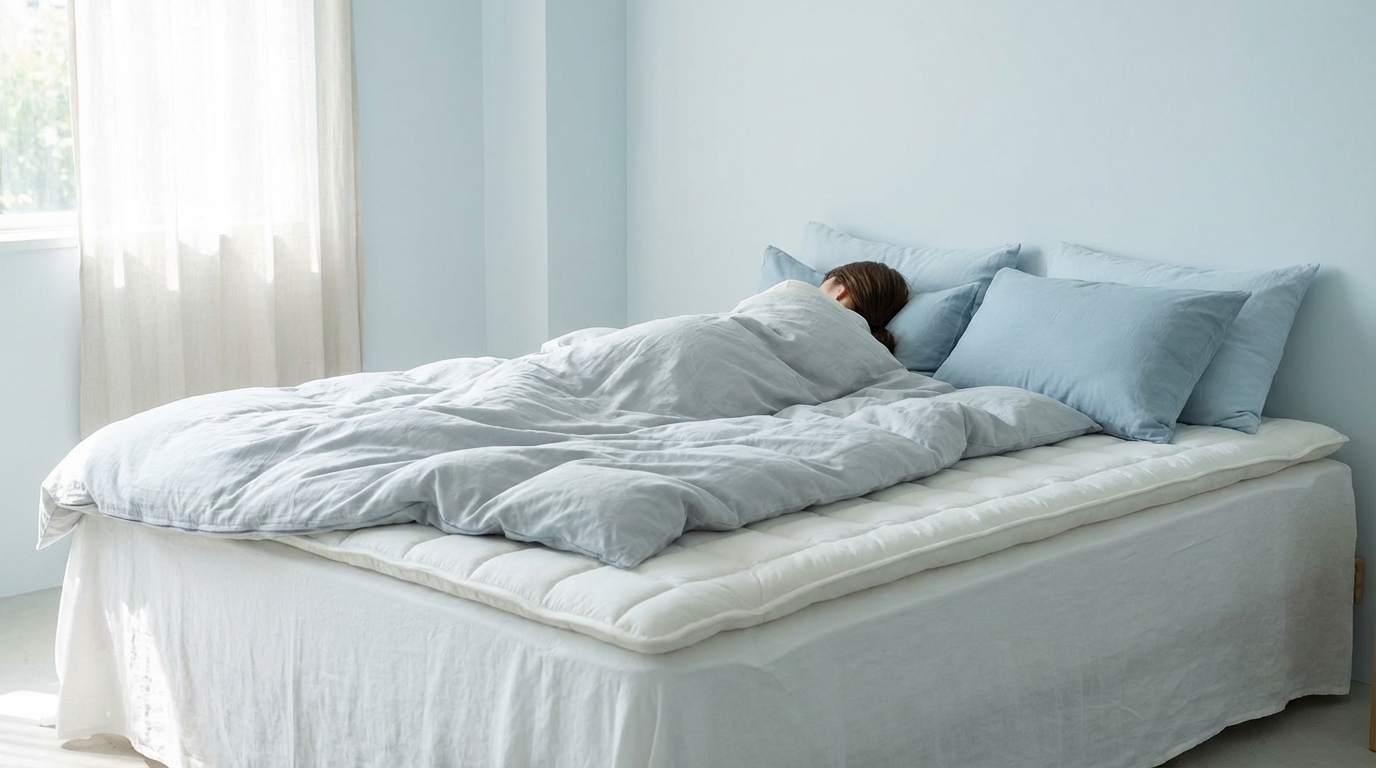
The easiest mattress toppers to care for are the ones that rarely get dirty in the first place. That does not mean keeping your bed in museum condition. It does mean building a simple protection and maintenance system so you are not wrestling with deep stains every few months. Think of it as "topper insurance."
The single most powerful tool here is a good mattress protector. A waterproof, breathable protector placed over your topper acts as a sacrificial layer. It takes on the spills, sweat, and pet mishaps, and because it is thin and usually machine washable, you can launder it as often as needed without disturbing your topper. The key is breathability. Older vinyl style protectors often felt hot and crinkly, but modern designs, like the TEMPUR‑Breeze Cooling Waterproof Mattress Protector, combine cooling fabrics with waterproof membranes that quietly block liquids while still allowing air circulation.
Sheets are the next line of defense. High quality sheets that fit well create an additional washable barrier. Natural fibers like cotton, TENCEL lyocell, and bamboo based fabrics can help regulate temperature and moisture at the surface, which indirectly reduces sweat penetrating deeper layers. This is also where personal comfort and style come in. Our Pillows, Sheets, Toppers, Protectors collection includes a mix of textures so you can dial in both feel and practicality.
Regular airing makes a bigger difference than many people realize. Simply pulling back the duvet and top sheet for 20 to 30 minutes each morning, instead of making the bed tightly right away, allows residual body moisture to evaporate rather than remain trapped. On laundry day, letting your bare topper sit in a well ventilated room or near an open window for a couple of hours adds another layer of freshness before you remake the bed.
Finally, good overall bedroom humidity control protects both your topper and your mattress. Many indoor air quality experts suggest keeping bedroom relative humidity around 40 to 50 percent when possible. Too high, and dust mites and mold are more likely to thrive. Too low, and fabrics and foams can become brittle. A simple hygrometer can tell you where you stand. If levels are consistently high, a dehumidifier may be worth considering, especially in basements or very humid climates.
When Cleaning Is Not Enough: Signs You Should Replace The Topper
Even with meticulous care, mattress toppers do not last forever. At some point, you cross a line where more cleaning will not restore support, comfort, or hygiene, and it becomes more sensible to replace the topper. Recognizing these signs early can save you from weeks or months of compromised sleep while you keep battling a topper that has simply aged out.
One straightforward indicator is deep, permanent body impressions or flattening that do not spring back after the topper has been aired out. Foam toppers, in particular, can develop lasting dips where your hips and shoulders rest. If those indentations exceed about an inch in depth and you wake up with new pressure points or back discomfort, it is a signal that the material is fatigued. No amount of cleaning will change the underlying structure at that point.
Odor is another red flag. If you have done a full cleaning, including baking soda treatments and extended airing, and the topper still carries a strong, unpleasant smell that returns quickly after each wash, there may be breakdown or contamination inside the material that is not accessible to surface cleaning. This is more common with older toppers that have seen years of heavy use, especially in humid environments.
Allergy and respiratory symptoms can also guide you. If you notice that your nighttime congestion, sneezing, or skin irritation improves significantly when you sleep away from home on a different bed, and your own topper is older and has not been encased, it may be harboring enough allergens that replacing it is kinder to your body. Some allergy organizations specifically recommend replacing older, heavily used bedding components to reduce dust mite loads.
At Sleepology, I often ask customers a few questions about their whole sleep system when they come in describing topper issues. Sometimes, we discover that the real need is not a new topper, but a better matched mattress, such as a Sealy Posturepedic Elite or Pro soft Euro pillow top that already has the cushioning they are trying to recreate with an aftermarket topper. In other cases, a high quality topper is still the right answer, particularly for guest rooms or for adding a little pressure relief to a still supportive mattress.
There is no shame in deciding that a well used, well loved topper has reached the end of its road. If you have gotten five to seven years of regular use from a topper in a main bedroom, or even longer from a lightly used guest room topper, that is already good mileage. Retiring it in favor of something clean, supportive, and better suited to your current needs is part of taking care of your future self.
“We tried to keep a very old feather topper alive for too long. After Mia walked us through the signs of material breakdown, we finally upgraded to a new mattress and a slim protector instead of another thick topper. My lower back feels noticeably better, and I am no longer waking up to fluff and shake the bed every morning.” – Leonard P., December
Conclusion: A Cleaner Topper, A Calmer Night
A mattress topper sits right in the middle of your sleep ecosystem. It is close enough to your body to collect sweat and skin cells, yet big and bulky enough that many people avoid cleaning it until there is no choice. Once you understand the basic principles, though, topper care stops feeling like a mystery and becomes one more manageable step in maintaining a healthy, comfortable bedroom.
You now know that identifying your topper material, respecting its moisture limits, using vacuuming and baking soda as core tools, and cleaning on a reasonable schedule can prevent the vast majority of problems. You have a plan for those "uh oh" moments when coffee spills or a child or pet has an accident. You also know when to step back, listen to what your topper is telling you about its age and condition, and give yourself permission to replace it when cleaning is no longer enough.
If you are unsure where your own topper stands, or you are debating whether to invest in a new topper, a new mattress, or simply better protection, you do not have to figure it out alone. At Sleepology, our team lives in this world every day. We look at the whole picture, from your mattress and topper to your protector, sheets, and pillows, and help you choose the combination that supports deeper, easier sleep. When your bed is clean, supportive, and well protected, you can let go of worries about stains and smells and focus on what your sleep is supposed to deliver: real rest.
Frequently Asked Questions
How do I know if my mattress topper can go in the washing machine?
The only reliable way to know is to check the care tag attached to your topper. If the tag explicitly says machine washable and specifies settings like gentle cycle and water temperature, you can follow those directions, typically for down, down alternative, or some fiber filled toppers. If the tag says "spot clean only," "do not machine wash," or mentions materials like memory foam, gel foam, latex, or wool without clear wash instructions, assume the core should not go in the washer. When in doubt, err on the side of caution and limit machine washing to removable covers, treating the inner topper by vacuuming, deodorizing, and careful spot cleaning instead of full immersion.
What is the safest way to clean urine from a memory foam topper?
For fresh urine on memory foam, act quickly by stripping bedding and blotting as much liquid as possible using clean, absorbent towels, working from the edges inward. Mix a solution of cool water and white vinegar or a small amount of mild detergent, and lightly mist the affected area, then continue blotting to lift the urine without saturating the foam. After you are satisfied with the cleaning, sprinkle baking soda generously over the damp area to absorb remaining moisture and odor, let it sit for several hours, then vacuum it up and allow the topper to air dry completely with good airflow. If odor persists, a second light treatment with an enzyme cleaner labeled safe for upholstery, followed by more baking soda and thorough drying, can help, but always test any cleaner on a small hidden spot first.
How long does it really take a mattress topper to dry after deep cleaning?
Drying time depends on material, thickness, and room conditions, but for most foam and wool toppers you should allow at least a full day, and sometimes up to 24 to 48 hours, for complete drying. While the surface may feel dry within a few hours, moisture can remain trapped deeper in the material, especially if you used more cleaning solution than planned. To speed drying safely, place the topper flat in a warm, low humidity room with plenty of airflow, use a fan to move air across the surface, and flip or rotate the topper periodically if the construction allows. Avoid using direct heat sources like hairdryers or heaters, and do not put sheets back on until you are confident the topper is dry all the way through, since trapped moisture can lead to mildew and lingering odors.
Is it okay to use a steam cleaner on a mattress topper?
Steam cleaners are generally not recommended for most mattress toppers, particularly memory foam, gel foam, latex, and wool, because the combination of intense heat and moisture can damage the structure of the material and drive water deep into layers that dry very slowly. Steam can also weaken glues, break down foam cells, or cause wool fibers to felt and shrink. On some synthetic fiber or down alternative toppers, light steaming at a distance to refresh the surface might be tolerated, but it still carries the risk of leaving hidden moisture behind. Safer options are vacuuming, spot cleaning with minimal liquid, and thorough air drying, supported by a washable protector on top that takes the brunt of daily wear and can be laundered more aggressively.
What kind of mattress protector should I use over a topper?
Look for a protector that specifically notes compatibility with toppers or deep mattresses, since you need a pocket depth that can comfortably fit over both the topper and the mattress without straining the elastic. For everyday use, a protector that is waterproof yet breathable is ideal, because it blocks spills and accidents from reaching the topper while still allowing air and moisture vapor to pass through, so the bed does not feel overly hot or clammy. Modern designs like the TEMPUR‑Breeze Cooling Waterproof Mattress Protector pair cooling fabrics and quiet, flexible membranes with deep skirts that stay in place, offering protection without the plasticky feel of older styles. Wash your protector as often as you wash your sheets if you are managing allergies or frequent spills, or at least every couple of weeks for routine use.
How can I tell if my topper is making my allergies worse?
If you notice that you wake up with more nasal congestion, sneezing, itchy eyes, or coughing when you sleep on your own bed, but that those symptoms improve noticeably when you sleep away from home, your bedding, including your topper, may be contributing. Dust mites and their droppings are common allergens, and they accumulate in porous materials like toppers, mattresses, and pillows over time. Keeping your topper encased in a protector, vacuuming and airing it regularly, and washing associated bedding in hot water, as recommended by organizations such as the American Academy of Allergy, Asthma & Immunology, can significantly reduce allergen loads. If symptoms persist despite these steps, or if you have asthma or serious allergies, it is wise to speak with an allergist, who may suggest additional environmental controls or, in some cases, replacing older, heavily used bedding components.
Should I use a topper if my current mattress is already quite soft?
If your mattress feels too soft and you are waking with back or hip pain, adding a thick, plush topper often makes the situation worse by increasing sinkage instead of improving support. In that scenario, using a topper primarily for comfort is not the best strategy; instead, you may want to evaluate whether your mattress needs to be replaced with something more supportive, such as a Sealy Posturepedic Elite soft hybrid mattress that combines cushioning at the surface with a stronger support core. On the other hand, if your mattress is a bit too firm but still structurally sound, a topper can be a good solution to add pressure relief while preserving underlying support. Either way, a clean, well protected topper that fits your body and sleep style should complement, not compensate for, the condition of the mattress underneath.