


How To Clean A Mattress That Has Been Peed On: A Calm, Step‑By‑Step Guide That Actually Works
You walk into the bedroom, pull back the sheets, and your stomach drops. The bed is wet, it smells, and all you can think is, "Is my mattress ruined?" Whether the accident came from a potty‑training toddler, a sick pet, or an older loved one, it is stressful, inconvenient, and usually happens at the worst possible time. You are not alone, and you absolutely can save your mattress in many cases.
Urine in a mattress is more than just a cosmetic issue. Mattresses are thick, absorbent, and hard to dry, which means odor, bacteria, and even mold can become long term problems if you do not manage the cleanup correctly. Since we spend roughly a third of our lives in bed, what lives inside your mattress really does matter for your health, comfort, and sleep quality. According to the Sleep Foundation, both mattress condition and bedroom environment directly influence how easily you fall asleep and stay asleep, which means ignoring stains and smells can keep you up at night in more ways than one.
The good news is that with the right steps and a little patience, you can clean fresh or dried urine from most mattresses without harsh chemicals or expensive services. You will learn how to respond immediately to a fresh accident, how to tackle old set‑in stains and odors, when to use home ingredients versus specialty cleaners, and how to protect your mattress so the next accident is no big deal. Along the way, we will look at when it makes sense to stop scrubbing and start considering a replacement, and which kinds of mattresses and protectors make life easier.
You are in the right place if you feel overwhelmed, short on time, and worried you will make it worse. I will walk you through what to do, what to avoid, and how to decide whether your current mattress is worth saving or if this might be the push you needed to upgrade to something cleaner, more supportive, and better protected.
First Things First: Is Your Mattress Ruined?
Before you start mixing solutions and grabbing towels, it helps to understand what you are dealing with. Different types of urine, mattress constructions, and timelines change the cleaning strategy and the likelihood of success. Fresh urine from a one‑time accident on a fairly new mattress is usually very treatable. Repeated accidents over years on an older mattress with no protector often point to deeper saturation and lingering odor that will be harder to fix.
Human urine, especially from healthy children and adults, is usually easier to remove than pet urine. Veterinary research has shown that cat and dog urine is more concentrated and contains additional odor compounds that bond more stubbornly to fabrics and foam. This is why veterinary hospitals and pet trainers often recommend enzyme‑based cleaners rather than just soap and water for pet messes. You can use the same principles at home on your mattress.
The age and construction of your mattress also matter. Older innerspring mattresses with thin padding can sometimes be easier to dry because there is more airflow, but the comfort layers can still harbor stains and smells. All foam and memory foam beds absorb liquid quickly and deeply, which makes urgent action crucial. According to Consumer Reports, foam density and the thickness of comfort layers affect how easily moisture penetrates and how long it takes to dry, so a deep, plush foam surface may need more time and care than a firmer, thinner design.
You will also want to be honest about how many accidents have happened in the same spot. If there have been ongoing nighttime accidents or pet marking in the same area for months, the liquid has likely reached deep into the core. At that point, even if you remove surface staining, the internal layers may continue to off‑gas odor every time the mattress warms up under body heat. That does not always mean an automatic replacement, but it does mean you should be realistic about results and consider whether a new, properly protected mattress might be the healthier long term choice.
“I was ready to drag our eight‑year‑old mattress to the curb after my son’s bedwetting phase, but the step‑by‑step cleaning and honest guidance helped me figure out what was salvageable. We ended up doing one last deep clean, then upgraded to a hybrid at Sleepology with a good protector so we never had to panic again.” – Rachel P., November
Immediate Response: What To Do When You Discover Fresh Urine
When the accident is fresh, your first goal is to stop the urine from spreading deeper into the mattress. Urine moves quickly through fabric and foam, so every minute counts. Even if you feel tired or frustrated, a careful ten minutes now can save you hours of work later and give you a much better chance of a clean, odor free bed.
Start by stripping the bed completely, including sheets, mattress protector, and any toppers. Toss everything washable into the laundry right away and run a cold rinse cycle before a warm wash. According to Mayo Clinic guidance on biological stains, cold water helps prevent protein‑based stains from setting, and an extra rinse helps flush out residue. If you use a topper for added comfort, set it aside to address after the mattress itself, since those layers can also harbor odor and moisture.
Next, gently blot the wet area on the mattress with clean, highly absorbent cloths or paper towels. The key word here is blot, not scrub. Press straight down firmly to soak up as much liquid as possible, then move to a dry part of the towel and repeat. Scrubbing or rubbing in circles can push urine deeper and spread it outward, making the stain larger. Keep blotting until you are not lifting much moisture. If the accident is large or has soaked through a protector, this step might take several minutes.
Once you have removed as much liquid as you can, you do not want to reach for strong chemicals or steam. Both the Sleep Foundation and mattress manufacturers caution against using bleach or high heat on mattresses because these can degrade foams, damage fabrics, and potentially release fumes you do not want to breathe while you sleep. Instead, your next step will be a targeted cleaning solution that breaks down urine compounds while being safer for both you and your mattress materials, which we will cover in detail in the next section.
“My daughter has sensory issues and strong smells really bother her, so I was terrified the urine odor would never go away. Following Mia’s instructions to blot, then use a gentle solution instead of harsh cleaners, made a huge difference. The smell was gone by the next night and we avoided a costly mattress replacement.” – Daniel S., October
Cleaning Solutions That Work: Household Ingredients vs Enzyme Cleaners

Now that the surface moisture is under control, it is time to treat the stain and odor. You have two main categories of cleaners to choose from: simple household mixtures and specialized enzyme products. Both approaches can work well when used correctly, but they shine in slightly different situations. The right choice depends on the type of urine, the age of the stain, and the type of mattress you have.
Household solutions typically rely on distilled white vinegar, baking soda, and sometimes a small amount of mild dish soap or hydrogen peroxide. Vinegar is mildly acidic, which helps neutralize the alkaline ammonia compounds in urine and reduce odor. Baking soda is a gentle base that absorbs moisture and smells. Multiple sleep and cleaning resources, including the Sleep Foundation, describe vinegar and baking soda as effective first line tools for fresh urine on many mattress types. These ingredients are also inexpensive, accessible, and relatively safe when used in moderation.
Enzyme cleaners work a bit differently. They contain biological agents that break down the proteins and uric acid crystals in urine at a molecular level, which is particularly important for pet accidents. Research published in veterinary and textile journals has shown that enzyme formulations remove more odor compounds from feline and canine urine than standard detergents alone. For human accidents, especially if they are recurring due to bedwetting or incontinence, enzyme sprays can also provide a deeper clean and help prevent lingering smells that reappear when the mattress warms up.
No matter which cleaner you choose, it is essential to spot test in an inconspicuous area first. Some mattress fabrics, particularly those with delicate knit covers or natural fibers, can discolor or weaken if a solution is too strong. Memory foam and latex can be especially sensitive to hydrogen peroxide, which acts as a mild bleach. Many manufacturers suggest limiting peroxide use to light colored, synthetic fabrics and only if other methods fail. When in doubt, keep your solution mild, use less liquid rather than more, and dab rather than saturate.
How To Mix A Gentle DIY Cleaning Solution
For many households, the simplest starting point is a diluted vinegar solution paired with baking soda. This combination is easy to assemble quickly after an accident, and when applied correctly it does not leave a strong scent behind. It is important not to pour these ingredients directly onto the mattress. You want controlled, light saturation so the liquid can work on the stain without soaking down into the deeper layers.
Mix one part distilled white vinegar with one part cool water in a clean spray bottle. You can optionally add a small drop of mild dish soap to help with oily residues if the accident involves other bodily fluids, but avoid overdoing it so you do not end up with a soapy film. Lightly mist the stained area until it feels damp but not dripping. Let this sit for 10 to 15 minutes so the vinegar can interact with the urine compounds and loosen them from the fibers. Then gently blot again with clean, dry cloths to remove as much of the solution as you can.
Once the area is only slightly damp, sprinkle a generous layer of baking soda over the treated zone. You should not be able to see the fabric through the powder. The baking soda will slowly draw out remaining moisture and absorb odor as it dries. Plan to leave it in place for at least eight hours, or ideally overnight. This is the part many people rush, but time is what allows the powder to pull liquid from deeper inside the foam and padding up to the surface.
When To Choose An Enzyme Cleaner Instead
If you are dealing with pet urine, repeated accidents in the same spot, or a stain you discovered long after it dried, an enzyme cleaner may be the smarter first choice. Look for a product specifically labeled for urine on upholstery or soft surfaces, and read the directions carefully. Many brands recommend generous application followed by a longer dwell time, sometimes up to 15 to 30 minutes, to give the enzymes time to break down odor causing molecules.
To use an enzyme cleaner on a mattress, start with the same initial steps: strip the bed, blot any remaining moisture, and spot test. Then spray the affected area until it is damp but not heavily soaked. Allow it to sit undisturbed for the full recommended time on the label. Afterward, blot the area to lift away excess liquid. You can still follow with a light layer of baking soda to help with drying and to capture any remaining odors.
For some foam mattresses, especially those made from high density memory foam, manufacturers caution against heavy saturation that could trap moisture deep inside. If your bed falls into that category, you can still use enzyme solutions, but you will want lighter application and more thorough blotting. If you are not sure, check any care tags on the mattress or the brand’s website. Some brands even publish specific cleaning instructions that prioritize enzyme based products for biological stains, particularly on memory foam and hybrid models.
“We have an older cat who suddenly started having accidents on our guest bed, and the smell was intense. Vinegar helped a little but it kept coming back. Switching to an enzyme cleaner the way Mia suggested, plus leaving baking soda on overnight, finally cleared it. We also invested in a waterproof protector from Sleepology so we are not stressing about surprises anymore.” – Melissa K., December
Fresh vs Dried Accidents: Adjusting Your Approach
Cleaning a mattress that is still damp from a recent accident is very different from tackling a stain you discover hours or days later. Fresh urine is mostly water, with dissolved salts and organic compounds that have not yet fully bonded to the fibers. Dried urine, on the other hand, has left behind concentrated crystals and pigments that cling tightly and can repeatedly reactivate odor whenever humidity rises. Your strategy should match what you are working with.
With a fresh stain, quick blotting followed by your chosen cleaning solution usually gives you the best odds. The liquid is still mobile enough that blotting can remove a surprising amount before it soaks in deeply. You also have more flexibility to use milder solutions, because you are essentially chasing something that is still near the surface. If you respond within minutes, you may catch most of the moisture before it sinks below the top comfort layers of the mattress.
When urine has dried, you are working backward. The moisture has already gone, but the residue has stayed behind. In this case, you do not need a long blotting step at the beginning, but you do need more patience with your cleaning agents and more willingness to repeat the process. Many people see some improvement after the first attempt and assume that is the best they can do, when in reality, a second or third round on a dried stain often yields additional results.
For dried stains, it helps to start with a slightly stronger vinegar solution, such as a ratio of two parts vinegar to one part water, or a targeted enzyme cleaner. Apply it, let it sit longer, and then follow up with baking soda for an extended period, such as a full day if possible. According to home hygiene research referenced by the Cleveland Clinic, allowing enough contact time between cleaning agents and bio‑based stains is one of the main factors that determines whether protein and odor molecules fully break down or simply lighten at the surface.
If the dried stain is very old or has been partially cleaned with harsh chemicals before, the fabric itself may have been affected. Some people notice yellowish ghost stains that never fully disappear, even when the odor is gone. In that case, your goal shifts from cosmetic perfection to hygiene and smell control. A small amount of discoloration that does not smell and is fully dry is more of an aesthetic concern than a health one, especially if you use a quality protector and sheets on top.
When Repeat Cleaning Is Worth It
You may be wondering how many times it is reasonable to repeat a cleaning cycle before calling it quits. As a rule of thumb, if each round produces noticeably less odor and the stain continues to lighten, repeating the process two to three times over several days is reasonable. Make sure the mattress dries thoroughly between sessions, with good airflow and, when possible, natural light or a fan to speed evaporation.
However, if you notice no improvement after two properly executed attempts, or if the smell intensifies again as soon as someone sleeps on the mattress, it is a sign that the urine has penetrated deeply into layers you cannot effectively reach. In those cases, you can continue spot treating to reduce surface odor, but it is worth starting to consider the mattress’s age, overall condition, and whether a replacement would serve you better in terms of sleep quality and hygiene. We will walk through how to weigh that decision a bit later on.
Another important consideration is who is using the bed. If the mattress belongs to a child or an adult with asthma, allergies, or a compromised immune system, lingering biological contaminants may pose more of a concern. The American Academy of Sleep Medicine notes that respiratory irritants in the sleep environment can worsen symptoms for people with existing conditions. If deep mattress odors are persistent despite your best efforts, upgrading to a new mattress and a truly waterproof protector may be the safest and simplest long term solution.
Mattress Material Matters: How To Clean Different Mattress Types
Not all mattresses react the same way to liquid. The design, density, and materials inside your bed determine how fast pee soaks in and how safely you can clean it. Understanding your mattress type will help you avoid damage and choose the most effective, least risky cleaning approach. At Sleepology, we see everything from basic innersprings to high end memory foam and hybrids, and small tweaks to the process can make a big difference.
Traditional innerspring mattresses have a coil core with padding above and below. The comfort layers are often made of polyfoam, fiberfill, or quilting foam. Because the core is largely metal and air, liquid tends to concentrate in the upper layers. This can be helpful, since it means your cleaning solutions can access most of the affected material. However, you still do not want to saturate the mattress, since excess moisture can travel along the padding and create broader damp zones that are slow to dry.
All foam mattresses, including memory foam and latex models, are more absorbent than traditional innersprings. Their entire support system is made of foam, with no open coil network to promote airflow. Memorial foam, in particular, has tiny pores that can wick liquid downward quickly. That does not mean you cannot clean them, but it does mean you should prioritize minimal liquid, thorough blotting, and extended drying time. According to several leading memory foam manufacturers, harsh chemicals, steam cleaning, and high heat can all damage foam structure, so a gentle, low moisture approach is key.
Hybrid mattresses combine coils with thicker foam comfort layers on top. Many of the best hybrid mattresses sold at Sleepology use breathable, zoned support systems and substantial top layers designed for pressure relief. When these beds get wet, the liquid initially saturates the top foam, then may eventually reach the coil layer if there is a large spill. You will generally follow a similar process as with all foam beds, but you may have a bit more airflow helping your drying step if the bed uses pocketed coils.
To help you visualize how different mattress types respond to urine and cleaning, here is a concise comparison.
| Mattress Type | How It Absorbs Urine | Cleaning Considerations | Drying Time & Difficulty |
|---|---|---|---|
| Innerspring | Mostly in top padding, less in coil core | Avoid over soaking, focus on surface layers | Moderate, decent airflow |
| All Foam / Memory Foam | Quickly wicks into deeper foam layers | Use minimal liquid, no harsh chemicals or heat | Slower, needs extended air drying |
| Hybrid (Coils + Foam) | Top foam absorbs first, coils secondarily | Gentle cleaning, careful not to oversaturate | Moderate, better airflow from coils |
| Pillow‑top Innerspring/Hybrid | Thick upper quilting holds a lot of liquid | Requires patience, may need repeat cleanings | Slower, thick top can trap moisture |
If you are already considering a new mattress, an accident can be a practical moment to reassess your needs. Many of our guests who have struggled with older, stained beds find enormous relief when they upgrade to a modern hybrid like the Sealy Posturepedic Plus Soft Hybrid Mattress, Paterson II. Its combination of targeted coil support and pressure relieving foams not only improves sleep comfort but can also be paired with a reliable waterproof protector to handle future spills with far less stress.
Safe Drying: Getting Moisture Out Without Damaging Your Mattress
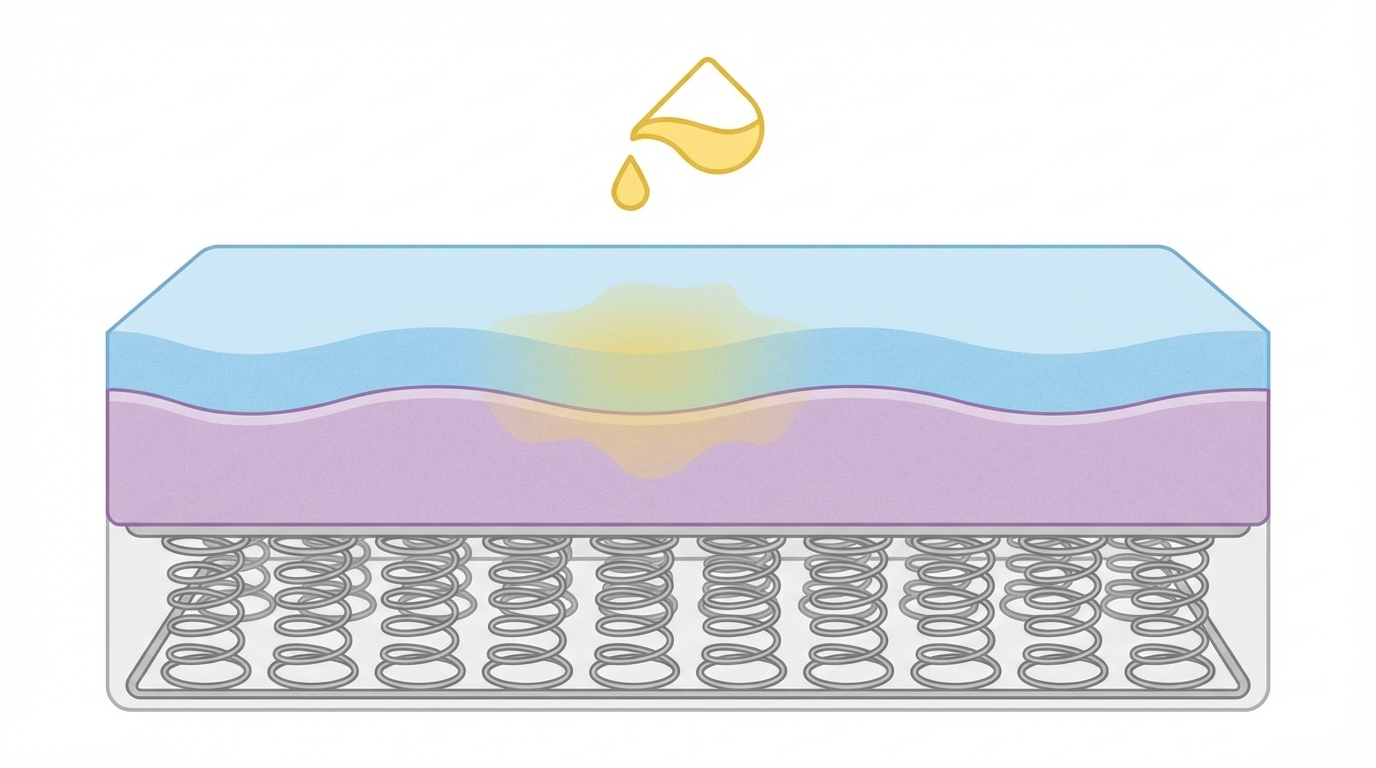
Once you have treated the stain and applied baking soda, fully drying the mattress is your next critical step. A mattress that seems dry at the surface can still harbor moisture deeper inside, which can contribute to mold, mildew, and persistent odor. The trick is to remove as much moisture as possible while staying within the safety limits of your mattress materials.
After you have allowed the baking soda to sit for several hours or overnight, vacuum it up thoroughly using an upholstery attachment. Move slowly over the treated area and slightly beyond the edges of the stain to pick up all the powder and any loosened debris. A handheld vacuum can work in a pinch, but a full size vacuum with good suction often does a better job. Vacuuming is also a good opportunity to freshen the rest of the sleep surface so the clean area does not stand out.
Next, create the best drying environment you can. If the weather allows, open windows to increase cross ventilation and bring in fresh air. Position a fan to blow across the surface of the mattress, not directly down into it. Moving air helps water evaporate from the fabric and foam without forcing it deeper. If you have a dehumidifier, running it in the room can speed drying by pulling moisture out of the air as it evaporates, which encourages more water to leave the mattress.
Some people are tempted to use hair dryers, portable heaters, or even steam cleaners to rush the process. While a hair dryer on a cool or very low warm setting, held several inches away and kept moving, can be safe for short periods, you should avoid high heat or steam on most modern mattresses. The Sleep Products Safety Council and multiple manufacturers warn that excessive heat can warp foams, weaken adhesives, and potentially affect fire barrier materials, so it is best to stick with gentle airflow and time.
You will know your mattress is ready to be remade when it feels completely dry to the touch, does not feel cool or clammy under the fabric when you press your hand into it for 30 seconds, and does not release a damp smell when you bring your nose near the surface. For thicker or all foam mattresses, this can take a full 24 hours or longer after a major accident. As difficult as it is to be without your bed for that length of time, allowing complete drying is one of the most important things you can do to protect both the mattress and your health.
Odor Control: When The Smell Lingers
Sometimes, even after careful cleaning and thorough drying, a faint urine odor remains. This can be especially true with pet accidents, repeated bedwetting, or older mattresses that have absorbed multiple spills over time. Odor molecules can lodge deep in layers of foam and fabric, and heat from your body can re activate them when you lie down, even if the surface looks clean.
If the smell is mild, repeating the earlier process with vinegar or an enzyme cleaner plus baking soda is often enough. The first round may have lifted much of the residue, and a second or third application can reach what remains. Make sure to give each cycle a full chance to work, including long contact time and proper drying. Odor removal is rarely instant. It is more like slowly pulling color out of a fabric in stages.
For stubborn pet odors, enzyme cleaners are particularly important. Veterinary behaviorists point out that if an animal can still smell its own urine in a spot, it is more likely to return to that area and re mark. Using an enzyme product specifically formulated for dog or cat urine, and applying it according to the label instructions, can make the difference between a one time accident and a new routine. After an enzyme treatment, sprinkling a light layer of baking soda and vacuuming again can help remove any residual smell.
Some people consider adding essential oils or scented sprays to mask any remaining odor. While a light, mattress safe fabric spray can make a freshly cleaned bed feel pleasant, it is crucial that you address the underlying odor first. Strong fragrances can mix with lingering urine smell and create an even more noticeable scent. For sleepers with allergies, asthma, or scent sensitivities, heavy fragrance can also be irritating. Both Mayo Clinic and the American Lung Association suggest limiting strong fragrances in the sleep environment for people with respiratory conditions.
If, after multiple careful cleaning attempts, the odor remains strong, you have to weigh whether continuing to work on the mattress is worth your time and energy. Factors like the age of the mattress, visible wear, sagging, and overall comfort should factor into your decision. A ten year old mattress that smells, sags, and no longer supports you well is often not worth rescuing. Replacing it with a new, supportive model plus a high quality waterproof protector can transform both your sleep and your peace of mind around future accidents.
Prevention Is Powerful: Keeping Future Accidents From Ruining Your Mattress
Once you have done the hard work of cleaning a mattress that has been peed on, prevention suddenly feels very attractive. While no mattress is spill proof on its own, the right layers and habits can turn future accidents into minor laundry events instead of full scale cleanups. Prevention is especially important in homes with young children, pets, or anyone managing incontinence or mobility challenges.
The single most effective line of defense is a truly waterproof mattress protector. A good protector creates a barrier that stops liquids before they ever reach the mattress surface, while still allowing air to circulate. Look for protectors that specify waterproofing, breathability, and secure fit. For example, a breathable protector like the TEMPUR‑Breeze Mattress Protector combines a waterproof membrane with cooling, moisture wicking fabric, which keeps the sleep surface comfortable and dry while shielding the mattress from spills and accidents.
In homes where accidents are frequent, it can be smart to have two protectors on hand. That way, if one is in the wash, you can immediately replace it with a clean backup. Some families also layer a washable pad or towel over the protector in the area where accidents most often happen, such as under a child’s hips. This extra layer catches smaller leaks and can be swapped out quickly in the middle of the night without fully stripping the bed.
For pets that like to sleep on the bed, regular potty breaks, veterinary care for any new urination issues, and training to discourage marking behavior are all important. The American Veterinary Medical Association notes that sudden changes in urination patterns can signal medical conditions like urinary tract infections or kidney disease. Addressing health issues early not only helps your pet feel better but may reduce accidents on furniture and bedding. Even with a healthy pet, maintaining a protector on any bed they access is simply good insurance.
Upgrading your bedding can also contribute to easier cleanup and better sleep. Investing in quality, machine washable sheets and encasements from a curated collection like pillows, sheets, toppers, and protectors at Sleepology makes it simpler to strip and refresh the bed after minor spills, sweat, or everyday wear. When your entire sleep system is built around layers that can be washed and dried, the mattress itself has a much better chance of staying clean and fresh for years.
“Our older dog started having nighttime accidents, and we were constantly doing emergency cleanups. The Sleepology team walked us through protectors and helped us pick a cooling Tempur cover that actually blocked everything. After one more thorough clean, our hybrid mattress still feels like new and cleanup is now just tossing the protector in the wash.” – Lauren T., January
When Cleaning Is Not Enough: Signs It Is Time To Replace Your Mattress
Even with excellent cleaning techniques, there comes a point where a mattress has simply reached the end of its useful life. Persistent urine stains and odors can be part of that story, but they are often not the only clues. Recognizing when to stop investing time and effort in an old bed and move toward a replacement can protect your health, improve your sleep, and ultimately save money by avoiding diminishing returns.
Age is a major factor. Many sleep experts, including the Sleep Foundation, suggest that most mattresses should be evaluated for replacement around the seven to ten year mark, depending on quality and usage. If your mattress is in that range or older and has multiple urine incidents, surface wear, or sagging, it is less likely that deep cleaning will restore a like new sleeping environment. Materials naturally break down over time, and liquids can accelerate that process.
You should also pay attention to how your body feels. If you wake up with more aches, stiffness, or numbness than you used to, and those issues improve when you sleep elsewhere, your mattress may no longer be supporting you properly. Urine accidents on a bed that is already unsupportive can tip the balance toward replacement. Upgrading to a thoughtfully designed hybrid such as the Sealy Posturepedic Elite Soft Hybrid Mattress, Brenham II or a medium Euro pillow top like the Sealy Posturepedic Pro Medium Mattress, Dupont II Euro Pillow Top can address both comfort and cleanliness when paired with a strong protector.
Another sign it may be time to move on is recurring odor that returns quickly after cleaning, especially if multiple areas of the mattress have been affected. If you notice a general mustiness or a combination of urine smell and mildew, that suggests moisture has penetrated deeply and created an environment where microbes flourish. According to the Cleveland Clinic, prolonged exposure to damp, moldy environments can aggravate respiratory conditions and allergies. Sleep is when your body should be recovering, not coping with irritants.
Financially, it helps to look at the big picture. If you find yourself contemplating professional cleaning services, repeated purchases of specialized products, or adding multiple layers to mask odor and sagging, you may actually be better off putting that money toward a new mattress that supports your body, stays cleaner, and is properly protected from day one. At Sleepology, guests are often surprised by how much better they feel after transitioning from a tired, stained bed to a fresh, well matched model, even before adding premium bedding or an adjustable base for more customized comfort.
Supporting Better Sleep After Accidents: Comfort, Confidence, And Routine
Cleaning up mattress accidents is only part of the story. The emotional side, especially for children, older adults, or anyone feeling embarrassed, deserves just as much care. Sleep plays a crucial role in emotional regulation, learning, and physical health, as emphasized by organizations like the American Academy of Sleep Medicine. If someone begins to worry about having an accident at night or feels ashamed of past incidents, they may start avoiding sleep, waking often to check, or sleeping restlessly.
One way to restore confidence is to create a visible, tangible layer of protection that everyone can trust. When a child sees a waterproof protector being put on their newly clean mattress, you can frame it as a superhero shield that keeps their bed safe. For adults managing incontinence, having a discreet, breathable protector and perhaps an extra washable pad can reduce anxiety about damaging the mattress or burdening a partner. Knowing that any future leaks are manageable laundry tasks can help people relax enough to sleep more deeply.
You can also support better sleep by making sure the bed is comfortable and tailored to the sleeper’s needs. A clean, supportive mattress combined with appropriate pillows and toppers from curated collections like The Best Foam Mattresses and comfort enhancing toppers can reduce tossing and turning, which may in turn reduce nighttime accidents triggered by difficulty reaching the bathroom in time. For some sleepers, especially older adults or those with mobility challenges, pairing the mattress with an adjustable base can make it easier to get in and out of bed quickly and safely.
Finally, work with healthcare professionals when needed. If a child is having frequent bedwetting episodes past the typical developmental age, or if an adult suddenly begins experiencing nighttime accidents, a pediatrician or primary care provider can help identify underlying causes and treatment options. According to Mayo Clinic, underlying conditions such as urinary tract infections, sleep apnea, hormonal imbalances, or medication side effects can contribute to nocturnal enuresis. Addressing those factors can help protect sleep quality and reduce stress for everyone involved.
Conclusion: Your Mattress Is Important, But Your Peace Of Mind Matters More
Discovering that someone has peed on your mattress can feel like a crisis in the moment, but it does not have to mean the end of your bed. When you understand how different mattress materials handle moisture, how to respond quickly to fresh accidents, and how to choose the right cleaning solutions, you regain control of the situation. Blotting instead of rubbing, using gentle but effective cleaners, and allowing plenty of time for baking soda and air drying can rescue many beds that initially seem ruined.
Equally important is knowing when to step back and look at the bigger picture. A heavily stained, aging, or chronically smelly mattress may be sending you a clear message that it is time for an upgrade. Replacing a tired bed with a supportive, well protected model can dramatically improve your nightly comfort and make future accidents nothing more than simple laundry. The right combination of mattress, protector, and washable bedding, paired with good health and sleep routines, creates a sleep environment that is both practical and inviting.
Most of all, remember that accidents happen, often to the people we love most. Handling them calmly, with good information and the right tools, helps everyone feel more secure. Whether you choose to rehabilitate your current mattress or explore a fresh start with expert guidance from Sleepology, you are taking meaningful steps toward a cleaner, healthier, more restful night’s sleep.
Frequently Asked Questions
How do I clean a mattress that has been peed on if I cannot get to it right away?
If you discover the accident hours later and the area is already dry, skip the initial heavy blotting and go straight to applying a cleaning solution. For human urine, start with a diluted vinegar mixture or a gentle enzyme cleaner, letting it sit for 15 to 30 minutes before blotting and applying baking soda. Since dried urine is more stubborn, you will likely need to repeat this process two or three times, allowing full drying between rounds. Even if you cannot act immediately, thorough treatment and patience can still significantly reduce both staining and odor.
Can I use bleach or strong disinfectants on a urine stained mattress?
It is best to avoid bleach and harsh chemical disinfectants on mattresses. These products can degrade foams, discolor fabrics, weaken stitching, and potentially create fumes that are not safe to breathe while you sleep. Many mattress manufacturers and organizations like the Sleep Foundation recommend milder options such as diluted vinegar, gentle detergents, and enzyme cleaners instead. If you are worried about germ control, remember that allowing the mattress to dry completely in a well ventilated space, and ideally some natural sunlight, is an important part of reducing microbial growth.
What is the fastest way to dry a mattress after cleaning up pee?
The fastest safe drying method combines airflow, time, and lower humidity. After vacuuming any baking soda, set the mattress in a room with open windows if possible, use one or two fans to move air across the surface, and run a dehumidifier if you have one. A hair dryer on a cool or low warm setting can be used briefly, held several inches away and kept moving, but you should avoid high heat or steam. For thick, plush, or all foam mattresses, expect a full 24 hours or more for complete drying after a large accident.
How can I tell if my urine stained mattress is still safe to sleep on?
A mattress is generally safe to sleep on once it is fully dry throughout, free of strong odor, and shows no signs of mold or mildew such as dark spots or musty smell. Press your hand firmly into the cleaned area and hold it for about 30 seconds. If it feels completely dry and does not release a damp or sour scent when you bring your nose close, that is a good sign. If you or your family members have allergies, asthma, or weakened immune systems and the mattress continues to smell or feel questionable after repeated cleaning, it is wise to consider replacing it for health reasons.
Do I really need a waterproof mattress protector if I already have good sheets?
High quality sheets are helpful, but they are not designed to be waterproof. Liquids can soak through even thick cotton or linen quickly, reaching the mattress surface before you realize there is a problem. A true waterproof protector, like the TEMPUR‑Adapt Mattress Protector, includes a thin barrier layer that blocks liquids while still allowing air to circulate. Used under your sheets, it keeps sweat, spills, and accidents from ever reaching the mattress, which simplifies cleanup and can significantly extend the life of your bed.
How many times should I try cleaning a urine stain before giving up and buying a new mattress?
In most cases, two or three thorough cleaning cycles are enough to tell you whether you are making meaningful progress. If each round results in a lighter stain and less odor, it is worth finishing the process. If there is little to no improvement, or the smell quickly returns when someone sleeps on the mattress, you are likely dealing with deeper saturation that home methods cannot fully reach. Combine that information with the age, comfort, and overall condition of the mattress. If it is older, sagging, or already uncomfortable, putting your effort and budget toward a replacement is usually the more sensible choice.
Are memory foam mattresses harder to clean when they have been peed on?
Memory foam mattresses are more absorbent than traditional innersprings, so urine can penetrate deeper into the foam if accidents are not caught quickly. This makes minimal liquid, gentle cleaners, and extended drying especially important. You should avoid harsh chemicals, high heat, and heavy saturation that can damage the foam structure. Many sleepers find that pairing a memory foam mattress with a high quality waterproof protector from day one is the best way to enjoy its pressure relief benefits without the stress of difficult cleanups when accidents happen.