

How To Buy A Mattress In That You Will Actually Love Sleeping On
If you are typing "how to buy a mattress" into a search bar, there is a good chance you are tired of waking up sore, staring at a hundred confusing options, or second guessing an expensive purchase from a few years ago. You are not alone. I talk to people every day who feel overwhelmed by foam vs hybrid, firm vs plush, and endless "sale ends tonight" banners. It can start to feel like if you guess wrong, you are stuck with years of bad sleep and a dent in your budget.
Your mattress choice really does matter. The Sleep Foundation notes that most adults need 7 to 9 hours of sleep per night, and mattress comfort and support play a direct role in how deeply you sleep and how often you wake up. Poor sleep has been associated with increased pain sensitivity, lower mood, and reduced focus during the day, so this is about much more than just feeling cozy. The right mattress supports your spine, cushions pressure points like shoulders and hips, and helps your body move through healthy sleep cycles instead of fighting with your bed all night.
Learning how to buy a mattress is less about memorizing brand names and more about understanding a few key principles. Once you know how your sleep position, body type, and pain points interact with mattress type and firmness, shopping becomes surprisingly straightforward. You can quickly rule out options that will never work for your body and focus on a small shortlist that truly fits.
In this guide, I will walk you step by step through the decisions that actually matter, share what to ignore, and give you practical tools you can use both online and in-store. I will also point you toward specific Sleepology mattresses when they are a good fit, so you can move from theory to action with confidence. By the end, you should feel capable of choosing a mattress that supports your health, your comfort, and your budget without needing a degree in sleep science.
Step 1: Get Clear On How You Sleep And What You Need
Buying a mattress starts long before you look at a price tag or brand name. The first and most important step is understanding how you actually sleep at home, not how you imagine you sleep when you see a pretty showroom display. That means paying attention to your natural sleep position, how often you move around at night, and where you tend to feel stiff, sore, or numb in the morning.
Most people fall into one of three primary sleep positions, even if they occasionally switch around. Side sleepers usually need more pressure relief around shoulders and hips, since those areas sink deeper into the mattress. Back sleepers generally do best with a surface that gently cradles the natural curve of the spine without letting the hips sag. Stomach sleepers need more support across the entire torso to avoid overarching the lower back. If you share a bed, it is also important to notice whether you and your partner have different sleep styles, since that may influence your choice of mattress type or firmness compromise.
Your body type is the next major factor. A petite person under about 130 pounds will not sink as deeply into the same mattress as a person over 220 pounds. That means the exact same "medium" mattress can feel quite firm to a lighter person and quite plush to a heavier person. Heavier bodies usually need stronger underlying support from coils or denser foams, while lighter bodies may need a bit more cushioning on top to avoid feeling like they are sleeping on a board. This is one reason why generic recommendations like "everyone should sleep on a firm mattress" are so misleading.
Finally, take stock of any pain, medical conditions, or sensitivities. The Mayo Clinic emphasizes that back pain, arthritis, and conditions like sciatica often improve when the spine is well aligned and pressure points are minimized during sleep, but there is no single perfect mattress for all back pain. Many people with back discomfort feel best on something in the medium firm range that supports them without feeling rock hard. If you sleep hot, you will want to make cooling a priority. If you have allergies or asthma, you may want to look for materials and certifications that reduce chemical exposure or dust mite accumulation.
A simple way to pull this together is to write a short sleep profile for yourself. For example: "Side sleeper, 5'4" and 130 pounds, wakes with shoulder pain, sleeps a bit hot, shares bed with a partner who is a back sleeper and heavier." Bring this mental snapshot with you while shopping, and you will find it much easier to evaluate whether a particular mattress is truly designed for people like you, rather than relying on generic marketing terms.
“Mia asked me a few simple questions about how I sleep and within ten minutes we had narrowed it down to three mattresses instead of twenty. I went from feeling totally overwhelmed to feeling like I had a custom plan, and two weeks later my shoulder pain was already better.” – Karla D., November
Step 2: Understand The Main Mattress Types
Once you are clear on your sleep needs, the next step is understanding the basic mattress categories and what they are naturally good at. Knowing the strengths and tradeoffs of each type helps you immediately see which designs are more likely to work with your body and preferences.
All Foam Mattresses
All foam mattresses are built entirely from foam layers, often using a combination of memory foam, polyfoam, and sometimes latex foam. These beds are popular for their pressure relief and motion isolation. When you lie down, the top layers contour around your curves, distributing weight more evenly, which can be especially comforting for side sleepers or anyone with tender pressure points around the shoulders, hips, or knees. If you are easily disturbed by a partner changing positions at night, foam is also excellent because it absorbs movement instead of transferring it across the bed.
The tradeoff is that some foams, especially older dense memory foams, can trap heat around your body. Modern designs often work to improve this by using open cell foams or gel infusions, but it is still wise to pay attention if you already sleep hot. Foam mattresses can also feel "slow responding," so if you like to move freely or sleep near the edge of the bed, you want to look for firmer edges or foams that are not overly soft. According to the Sleep Foundation, all foam beds tend to perform well in pressure relief but vary widely in durability depending on foam quality, so it pays to choose brands that use higher density, well tested materials instead of chasing the lowest price.
If you are a side sleeper or smaller framed back sleeper who values hug and pressure relief, or if you live in an apartment where motion control is crucial, an all foam mattress from a curated selection like our best foam mattresses collection can be a strong starting point. For back or stomach sleepers with heavier builds, a pure foam design might still work, but you will want to pay close attention to firmness ratings and support layers so your hips do not sink too deeply.
Innerspring Mattresses
Traditional innerspring mattresses use a network of metal coils as the primary support system, with thinner layers of foam or fiber on top for comfort. These beds tend to feel bouncier and more responsive, making it easier to change positions or sit on the edge. The open coil structure allows a lot of airflow, which helps many people sleep cooler than they might on a thick foam mattress. According to long standing reports from Consumer Reports and similar testing organizations, innersprings generally have strong support and temperature regulation, but can be less effective at isolating motion unless they use individually wrapped coils instead of a connected coil grid.
The feel of an innerspring is heavily influenced by both the coil design and the comfort layers above. A basic, inexpensive model might have a thin layer of basic foam over a connected coil unit, which can feel firm, bouncy, and sometimes a bit uneven over time. Higher quality innersprings use individually pocketed coils that respond more precisely under each part of your body, and they often layer multiple foams, quilting, or pillow tops above for better cushioning. This is where you will also see plush pillow top versions for side sleepers and firmer tight top versions for back and stomach sleepers.
If you grew up on traditional mattresses and like that "sleeping on" rather than "sleeping in" feeling, a well built innerspring or coil based bed can be a comfortable and familiar choice. Back and stomach sleepers in particular may appreciate the buoyant support an innerspring provides. When shopping at Sleepology, firm yet cushioned choices like the Sealy Posturepedic Plus Firm Mattress – Paterson II Euro Pillow Top give you the linear coil support of a traditional design, paired with a more luxurious top that eases pressure without losing stability.
Hybrid Mattresses
Hybrid mattresses combine a coil support core with thicker foam or latex layers above, aiming to capture the best aspects of innerspring and foam designs. In and recent years, hybrids have become many shoppers' favorite category because they offer a balanced feel: supportive and responsive through the coils, yet pressure relieving and quieter through the foams. The coils below also allow airflow that helps disperse heat, while the comfort layers above fine tune the firmness and contour.
A typical hybrid will use individually pocketed coils with zones that are slightly firmer under the middle of the bed and more forgiving near the shoulders. Above that you might see memory foam, gel infused foam, or specialty foams designed for cooling or extra pressure relief. Because hybrids have so many tuning options, they can be tailored for almost any sleeper type. Side sleepers might love a plush Euro pillow top hybrid that cradles the shoulders, while a back sleeper might prefer a medium firm hybrid that keeps the spine in a neutral curve.
For many of my clients, hybrids are the most forgiving category because they support couples with different needs and work well across a range of body types. Models like the Sealy Posturepedic Elite Firm Hybrid Mattress – Brenham II or the Sealy Posturepedic Pro Firm Hybrid Mattress – Dupont II give that modern, stable, "held up but cushioned" feel that often solves both back support and comfort at once.
Latex Mattresses
Latex mattresses use latex foam, which can be either natural, made from rubber tree sap, or synthetic. Latex has a unique feel that many people describe as buoyant or springy, with faster response than slow sinking memory foam. It contours to your body for pressure relief, but it does not hug quite as deeply, which makes it easier to move and can feel more supportive under heavier areas. Latex is also naturally breathable and resistant to dust mites and mold, which is why the Cleveland Clinic notes that latex beds can be helpful for some people with allergies when properly encased.
Pure latex beds or latex hybrids often appeal to sleepers who want a more "on top of the bed" sensation while still avoiding the bounce of a traditional innerspring. Because of the material cost, latex beds tend to sit at a higher price point, but they are also known for durability and long term resilience when properly constructed. If you are concerned about chemicals, many natural latex mattresses carry third party certifications for material purity and emissions.
Even if you do not choose a full latex mattress, you will often see latex layers included within hybrids to add a bit of spring and airflow to the comfort system. When you evaluate mattresses, treat latex as one more tuning ingredient that can help you reach your ideal blend of contour and support.
Step 3: Compare Mattress Types Side By Side

At this point, it can be helpful to see the main types next to each other. While every brand is a little different, the broad patterns below hold true across most quality mattresses:
| Mattress Type | Typical Feel | Best For | Watch Outs |
|---|---|---|---|
| All Foam | Contouring, hugging, motion absorbing | Side sleepers, couples sensitive to motion, people with sharp pressure points | Can sleep warmer if not well ventilated, edges may be softer on cheaper models |
| Innerspring | Bouncy, responsive, more "on top" | Back and stomach sleepers, hot sleepers, people who like traditional feel | Less motion isolation unless using pocketed coils, very basic models may feel uneven over time |
| Hybrid | Balanced, supportive with cushioning | Most couples, combination sleepers, those wanting support plus comfort | Quality varies widely, so pay attention to coil count, foam density, and zoning |
| Latex or Latex Hybrid | Buoyant, quick response, slightly firmer surface | Hot sleepers, people who move a lot, those wanting more natural materials | Higher price points, feel is different from memory foam and not everyone prefers it |
This comparison is not meant to lock you into one category, but to narrow the field. For example, if you are a side sleeper who sleeps hot and shares the bed with a restless partner, you might quickly cross basic innersprings off your list and focus on either a breathable foam or a cooling hybrid. If you are a back sleeper with a history of lower back pain, you might prioritize a properly zoned hybrid or an innerspring with targeted lumbar support.
Once you have a "shortlist" of one or two categories that make sense on paper, the next steps will help you fine tune feel, firmness, and price within those categories.
“Seeing the differences laid out like that made everything click. We realized we had been trying to force ourselves to like foam when a medium hybrid was exactly what we needed. The Sleepology team pointed us toward a hybrid in our price range and it has been a game changer for my husband’s back.” – Daniel K., October
Step 4: Choose The Right Firmness For Your Body
After mattress type, firmness is the next piece of the puzzle. Firmness describes how hard or soft a bed feels at the surface, not how supportive it is deep down. Support is about keeping your spine aligned, while firmness is about what you feel when you first lie down. This distinction matters because a mattress can be comfortably plush on top and still very supportive at the core, or it can be quite firm on the surface but poorly constructed underneath.
Most brands describe firmness as soft, medium, firm, or sometimes ultra firm or extra plush, though there is no universal standard. In lab testing, organizations often use a numerical scale from 1 to 10 where 1 is extremely soft and 10 is extremely firm, and many sleepers fall somewhere between 4 and 7. A study cited frequently in back pain research found that people with chronic back pain tended to do best on something described as medium firm, as long as it felt subjectively comfortable for them. That reinforces what I see in practice: extremes often cause problems, while a well designed medium or medium firm tends to support the widest range of bodies.
Your ideal firmness depends on your sleep position, weight, and preferences. Side sleepers usually prefer soft to medium, so their shoulders and hips can sink enough to keep the spine straight. Back sleepers land around medium to medium firm, depending on body weight and whether they like a more floating or more hugged sensation. Stomach sleepers almost always need at least medium firm to firm, since too much sinking under the hips can strain the lower back. Heavier individuals often experience the same mattress as softer than lighter individuals, so they may need to lean a step firmer than the label would suggest.
When you are trying mattresses, give each one enough time to let your muscles relax. The Original Mattress Factory and similar retailers recommend lying on a contender for at least 10 to 15 minutes in your usual sleep positions, and I agree. Pay attention to how your lower back feels, whether your shoulders feel jammed or cushioned, and whether you feel any numbness or tingling. If you are a back sleeper, you might find great alignment on a medium surface like our Sealy Posturepedic Pro Medium Mattress – Dupont II Euro Pillow Top, while a strict stomach sleeper might do better on a firmer choice such as the Sealy Posturepedic Firm Hybrid Mattress – Medina II.
For many shoppers, the fear is that a softer mattress will be bad for their back and that "firm is always better." In reality, a mattress that is too firm can force your spine to arch unnaturally and create pressure points that cause you to toss and turn, which disrupts sleep quality. The key is finding the sweet spot where you feel cradled enough to relax but not so sunk in that it is hard to move or your body bows.
Step 5: Pick The Right Size For Your Space And Lifestyle
Mattress size affects both your comfort and the way your bedroom functions. While mattress dimensions are standardized in the United States, how that size feels in real life depends on your height, whether you share the bed, and how large your bedroom is. It helps to think about both nighttime comfort and daytime usability before you commit.
If you sleep alone and have a smaller bedroom, a twin or full size may be appropriate. Twin mattresses are common for children, teens, and very compact spaces. Full mattresses add extra width and can work for single adults or very cozy couples, but you may find them cramped if either of you moves around a lot. Queen tends to be the most popular size for couples since it balances floor space with sleep space, offering enough room for two without overwhelming a typical bedroom.
King and California king sizes are best suited to larger rooms. A king gives each partner roughly the width of a twin mattress, which often reduces disturbances from movement and gives extra space for kids or pets that like to sneak into bed. California king is slightly narrower but longer, which tall sleepers often love for the extra legroom. The Sleep Foundation suggests making sure you have at least a couple of feet of walking space around the bed if possible, so you are not squeezing past corners or banging shins in the dark.
Couples should seriously consider upsizing if budget and room dimensions allow. Many partners underestimate how much better they will sleep when they are not battling for space. Our king sized mattresses collection includes options across firmness levels and materials, so you can enjoy that extra width without sacrificing your preferred feel. Just remember that larger mattresses are heavier and more cumbersome to move, so think about stairways, doorways, and long term plans, especially if you rent or move frequently.
Size is also tied to accessories and cost. Larger mattresses require larger frames, sheets, and mattress protectors, which can add up. When planning your budget, it is smart to account for these extras so you do not feel surprised at checkout. If you already own a high quality queen frame and bedding, staying with queen might free up more money for a better mattress, which often matters more for your sleep quality than upgrading to a king with a more basic bed.
Step 6: Decide What Features Actually Matter (And What To Ignore)
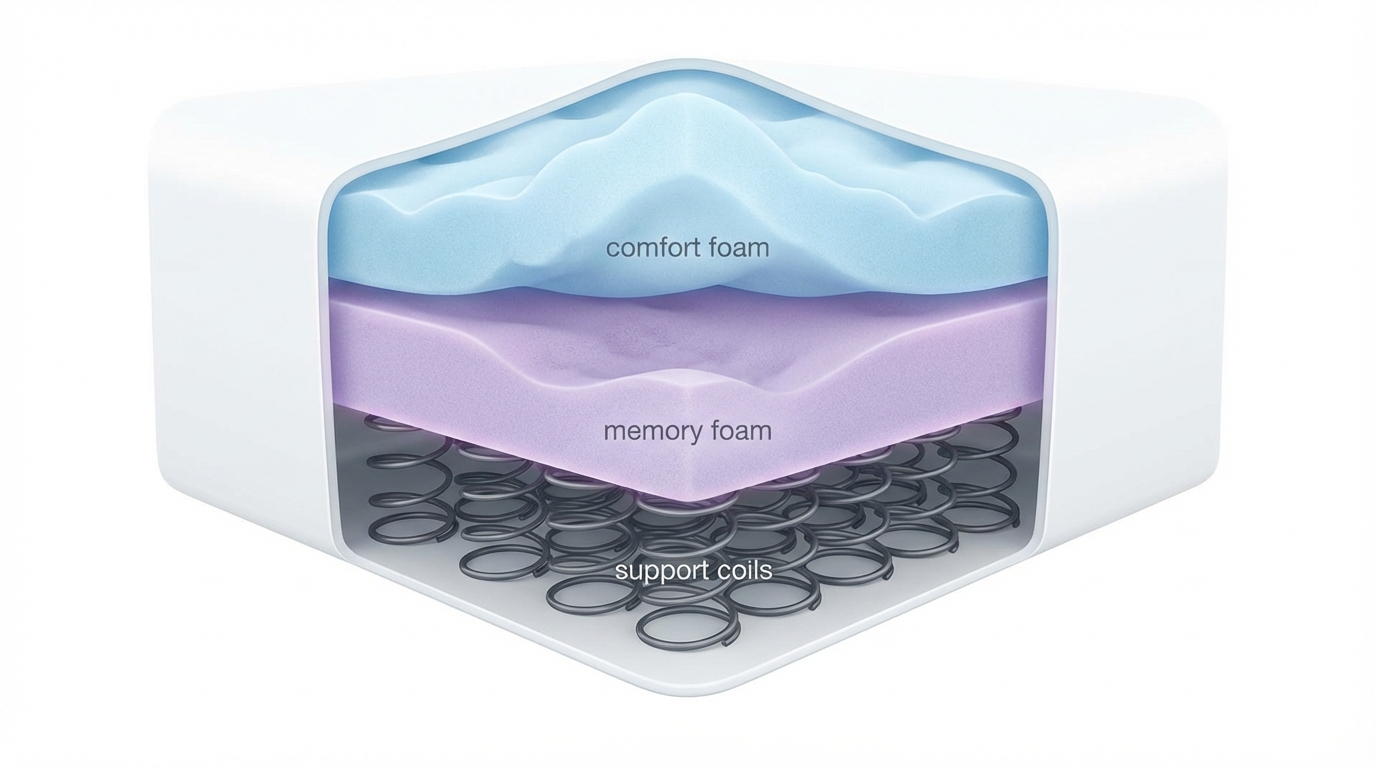
Mattress marketing in is full of buzzwords, and it can be hard to know which features translate to real world comfort. Instead of chasing every innovation, focus on a few proven factors that affect performance over time: support system quality, foam density, temperature regulation, edge support, and motion isolation.
Support system quality refers to the coils or core foams that form the "skeleton" of your mattress. In coil based beds, look for individually pocketed coils rather than open coil grids, and pay attention to coil count and zoning. More coils, especially when zoned, typically mean finer tuned support and better durability. In foam beds, ask about foam density. High quality memory foam usually has a higher density than bargain models, which helps resist early sagging. Consumer testing organizations have repeatedly found that some of the most durable mattresses are not necessarily the most expensive, but they almost always use better base materials.
Temperature regulation is crucial for many sleepers. Research from various sleep labs, including academic centers, shows that a slight drop in core body temperature helps signal your body that it is time to sleep, while overheating can fragment sleep and reduce time spent in deeper sleep stages. If you run hot, prioritize breathable covers, airy coil structures, and cooling foams, and consider lighter, moisture wicking bedding from a quality collection like our pillows, sheets, toppers, and protectors to help complete the system. Edge support also matters if you sit on the side of your bed often or sleep close to the edge, especially on smaller sizes.
On the flip side, it can help to consciously ignore a few things. Thickness alone is not a sign of quality. A very thick mattress can feel luxurious, but those extra inches could be lower grade foams that compress quickly. Gel prints and decorative quilting patterns are not guarantees of cooling or support. And price by itself is not a direct indicator of comfort. Excellent mattresses exist at moderate price points, and ultra high price tags are sometimes driven more by brand positioning than meaningful performance differences.
Once you know what truly matters, you can scan mattress descriptions much more efficiently. You will start to automatically home in on coil type, foam density, and comfort layers instead of being distracted by every marketing claim. And when a mattress hits the right notes for your sleep profile, features, and budget, that is your signal to give it a serious, real world test.
“I used to think more expensive automatically meant better. Mia walked me through why coil design and foam density matter more than the fancy names on the tag. We ended up choosing a Sealy hybrid on sale and saved about $800 compared to what we almost bought elsewhere.” – Jason L., December
Step 7: Set A Realistic Budget Without Overpaying
Money is often the part of mattress shopping that causes the most anxiety. You might wonder if a lower price means you are sacrificing your health, or if a high price is simply good marketing. The goal is to structure your budget so that you get the sleep support you need without either overspending or having to replace a poor quality bed in just a few years.
For many shoppers, a healthy budget for a queen size mattress lands in the mid range. Extremely low prices often require compromises in foam quality, coil design, or warranty support. Those beds may feel fine for the first few months but can sag or lose support much sooner, especially for heavier bodies. At the other end, ultra premium mattresses may include features like organic textiles, elaborate hand tufting, or adjustable bases that are lovely but not strictly necessary for spinal support.
Instead of fixating on a specific dollar amount first, decide what you need in terms of type, firmness, and size, then look at how those needs line up across several price levels. For instance, a queen hybrid with strong coil support and a medium comfort feel can often be found at an approachable price, especially during promotional periods. Soft or firm variations, like the Sealy Posturepedic Pro Soft Mattress – Dupont II Euro Pillow Top or its medium counterpart, give you options within similar price bands so you can choose the best feel without dramatically moving your budget.
When planning, remember to factor in a mattress protector, which helps keep your warranty valid and your mattress hygienic, as well as any delivery or old mattress removal fees if those are not included. A high quality protector and proper support system underneath the mattress can significantly extend the life of your purchase. It is usually better to budget for a slightly better mattress plus these essentials, rather than stretching to the absolute top of your price comfort zone for the mattress alone and then skimping on protection.
Finally, think about cost per night instead of the sticker price alone. If you spend a modest amount more on a mattress that keeps your back comfortable and helps you sleep better for eight to ten years, that investment quickly pays for itself in daily comfort and energy. On the other hand, there is no reason to strain your finances for luxury details you do not truly value. A knowledgeable Sleepology associate can help you line up your sleep needs and your budget honestly, without pressure.
Step 8: Test Mattresses The Right Way In Store
Trying a mattress in person can be incredibly helpful, but only if you test it in a way that reflects how you actually sleep. Sliding onto the edge for thirty seconds in your daytime clothes gives you very little information. With a bit of intentionality, you can turn a showroom visit into a powerful decision tool instead of a confusing blur of similar beds.
Start by wearing comfortable clothing and shoes that are easy to remove. Plan enough time so you are not rushed. Choose three to five mattresses that fit your type, firmness, and budget shortlist, rather than lying on every bed in the store. A good sleep consultant can help you quickly eliminate options that are clearly wrong for your body type or pain points so you do not exhaust yourself testing too many.
When you get onto a mattress, lie down in your normal sleep positions, not just on your back. Stay there for at least 10 minutes. This allows your muscles to relax so you can feel whether your lower back is fully supported, whether your shoulders feel jammed or gently cradled, and whether you feel any pressure building under your hips or knees. If you are a side sleeper, check that your spine looks fairly straight when viewed from behind. If you are a back sleeper, notice if your lower back feels either arched up or collapsed downward, which can signal that the firmness is off.
Pay attention to small details that might become big annoyances at 2 a.m. Do you feel your partner's movement if you both lie down and shift around a bit? Do the edges feel secure when you sit or roll near them, especially important on smaller sizes? If you tend to sleep hot, notice whether you feel warm quickly or whether air seems to move around you. Honest answers to these questions often point clearly toward one or two mattresses that feel noticeably better suited to your body.
Take notes as you go, even if they are just quick impressions like "Mattress A: great shoulders, slightly soft hips; Mattress B: perfect on back, a little firm for side." These short observations are invaluable if you go home to think about your options or if you want to compare a similar model online.
Step 9: What To Know If You Are Buying A Mattress Online
Many people now prefer to buy mattresses online for convenience, comparison shopping, or access to specific brands. The good news is that you can absolutely make a smart, successful choice without ever stepping into a store, as long as you are methodical. The key is to replace a short in person test with deeper research, clear return policies, and realistic expectations about the initial break in period.
First, make sure the website clearly specifies materials, thickness of each layer, coil type and count for hybrids, foam densities if possible, and firmness descriptions. Vague descriptions like "premium foam" without any detail can be a red flag for cost cutting. Look for trusted third party certifications around foam safety, such as CertiPUR US, especially if you have chemical sensitivities. Reputable brands and retailers will generally share this information openly.
Second, pay close attention to the trial period and return policy. Many online mattresses offer a trial window, often around 90 to 120 days, during which you can sleep on the bed at home and return it if it is not right for you. Understand whether returns are truly free, whether there are pickup or restocking fees, and whether you are required to keep the bed for a minimum number of nights before deciding. According to consumer surveys, knowing that you can return a mattress with minimal hassle if it does not work out significantly reduces purchase anxiety and leads to higher overall satisfaction.
When your new mattress arrives, give it time. Most quality mattresses, whether rolled and boxed or delivered flat, will feel a bit different after the first few weeks. Foams relax slightly, and your body also needs time to adjust from the posture habits created by your old mattress. In my experience, committing to at least 2 to 4 weeks of consistent sleeping on the new bed gives you a much more accurate sense of whether it is truly a fit than making a judgment based on the first two nights alone.
Finally, read reviews wisely. Look for patterns from reviewers who share your sleep position and body type, rather than getting lost in conflicting opinions. For example, you might notice many side sleepers praising the pressure relief of a particular model in our best mattresses for back sleepers collection, while heavier back sleepers mention finding it a bit soft. Those patterns can guide you toward or away from certain models more reliably than any single glowing or negative review.
Step 10: Do Not Forget About Bedding, Bases, And Protectors

A great mattress does most of the heavy lifting for your sleep, but what you put around and under it can either help or hinder its performance. I often think of a sleep system as an ecosystem: mattress, foundation or base, bedding, temperature in the room, and your own sleep habits. When those pieces work together, your body can relax more easily and stay comfortable throughout the night.
Your mattress must sit on an appropriate support system. Most modern mattresses are designed to work on either a matching foundation, a platform bed with solid or closely spaced slats, or an adjustable base. Slats that are too far apart can let the mattress sag between them over time, reducing support and potentially voiding the warranty. If you upgrade your mattress but place it on an old, flexing box spring or wobbly frame, you may never get the full benefit of the new bed, and you might mistakenly blame the mattress for problems caused by the base.
Bedding also matters more than many people realize. Heavy, heat trapping comforters or non breathable sheets can make even a well ventilated mattress feel warm. Breathable cotton, linen, or modern moisture wicking fabrics help regulate surface temperature and wick away sweat, which is especially valuable for hot sleepers or anyone in a warm climate. A well chosen pillow that matches your sleep position is the finishing piece, keeping your neck aligned with your spine. Side sleepers often need a thicker, firmer pillow than back sleepers, whose pillows can be slightly lower to avoid chin tilting.
A waterproof but breathable mattress protector is a non negotiable in my book. It shields your mattress from spills, sweat, skin oils, and allergens, all of which can degrade foams over time. Many manufacturers require a clean, stain free surface to honor warranty claims, so a protector is inexpensive insurance. Some protectors also have cooling features or quiet quilted tops that add a bit of extra softness without changing the fundamental feel of the mattress.
When you think of your mattress as the centerpiece of a complete sleep system rather than a stand alone purchase, it becomes easier to allocate your budget wisely. You might choose a high value hybrid mattress, pair it with a supportive foundation and breathable bedding from our pillows, sheets, toppers, and protectors collection, and end up sleeping better than you would on a more expensive mattress with mismatched accessories.
Conclusion: Turning Mattress Confusion Into Confident Choices
Choosing a mattress does not have to be a guessing game or a stressful negotiation with sales jargon. When you start with your own body and sleep patterns, then work outward to mattress type, firmness, size, and features, the options naturally narrow to a handful of very good fits. You can quickly sort through marketing claims, focus on proven design principles, and use both in store testing and online research in a structured way.
The most important lesson is that the "best" mattress is the one that keeps your spine neutral, relieves your pressure points, and helps you stay asleep in your real life environment. That will look different for a petite side sleeper, a tall stomach sleeper, and a couple with very different needs. By using the steps in this guide, you can align your purchase with your unique sleep profile instead of chasing trends or one size fits all rules.
If you feel ready to explore specific options, you might start with a curated category that matches your needs, such as our best foam mattresses for pressure relief or king sized mattresses for couples who want more room. And if anything still feels unclear, remember that getting expert guidance is part of the process, not a sign you are doing it wrong. At Sleepology, our role is to translate your sleep story into a short, smart list of mattresses that truly make sense for you.
Most of all, give yourself permission to take this decision seriously. Good sleep is foundational to your health, mood, and relationships. A thoughtfully chosen mattress is not a luxury, but a tool you use every night to support your life. When you lie down on a bed that fits you, and your body quietly relaxes instead of bracing, you will feel exactly why this decision was worth getting right.
Frequently Asked Questions
How often should I replace my mattress?
For most people, a quality mattress will last around 7 to 10 years, though this can vary by construction, body weight, and how well you care for it. Signs that it is time to replace your mattress include visible sagging, deep body impressions, new or worsening back or neck pain that improves when you sleep elsewhere, and waking up feeling stiff or unrested despite adequate sleep time. The Sleep Foundation notes that even if a mattress looks fine visually, materials can break down in ways you feel more than see, particularly in the support layers. If you are over 8 years into the life of your bed and are regularly uncomfortable, it is worth seriously considering a replacement.
Is a firm mattress better for back pain?
Not always. While very soft mattresses can allow your hips to sink too far and strain your lower back, extremely firm mattresses can create pressure points and force your spine into an unnatural position. Research often points to medium firm mattresses as a good starting point for many people with back pain, but the key is how that firmness interacts with your specific body weight and sleep position. A medium firm hybrid or innerspring that supports your hips and shoulders while allowing a bit of contour around the waist can be ideal. If you have significant or ongoing back pain, it is always wise to discuss your sleep setup with a healthcare provider as well.
How do I know if my mattress is too soft or too firm?
If your mattress is too soft, you may notice your hips or midsection sinking noticeably lower than your shoulders and legs, especially when lying on your back or stomach. You might wake with lower back pain or feel like you are "fighting" the bed to move or get out. If it is too firm, you are more likely to notice sore shoulders and hips as a side sleeper, tightness in your upper back, or numbness and tingling in arms or legs. Pay attention after spending at least 10 to 15 minutes in your usual sleep positions; early aches during this window often predict how you will feel after a full night.
What is the best mattress for couples with different sleep preferences?
When partners have different sleep styles or firmness preferences, hybrids are often the best compromise because they can offer strong support with a cushioned surface that works for multiple positions. Look for models with zoned coils so each of you gets good support where you need it, and consider slightly medium feels that neither partner experiences as extreme. If one of you is a very light sleeper, prioritize motion isolation so you are not waking each other up all night. In some cases, using a larger size, such as a king, gives each partner enough space to feel like they have their own sleep zone even on a shared mattress.
Are expensive mattresses always better?
Price and quality are related, but they are not the same thing. Very low cost mattresses often cut corners on foam density, coil design, or edge support, which can lead to faster wear and less comfort. However, once you reach a solid mid range level for construction quality, additional price increases may reflect luxury materials, branding, or extras rather than dramatically better support. Your goal is to invest where it matters most, in the support core and comfort layers, and then make thoughtful decisions about whether secondary features are worth the additional cost to you personally.
Do I need a box spring with my new mattress?
Not necessarily. Many modern mattresses are designed for solid platforms, slatted bases with closely spaced slats, or adjustable bases. Traditional box springs with a lot of flex can be incompatible with certain foam and hybrid mattresses because they allow too much movement underneath, which can reduce support and void warranties. Always check the manufacturer's guidelines and make sure your support system provides a stable, even surface. If you are unsure whether your current frame or foundation is appropriate, ask a Sleepology associate to review it with you.
Will a mattress topper fix an uncomfortable mattress?
A mattress topper can finely tune comfort, such as adding a bit of plushness to a bed that feels slightly too firm, or providing a temporary solution for a guest bed. However, it cannot correct fundamental support issues. If your mattress is sagging, lumpy, or lacks proper underlying support, a topper will usually only mask problems for a short time. If you consistently wake with pain and your mattress is older or visibly worn, investing in a new mattress that supports you properly will almost always be a better long term solution than layering more foam on top of a failing base.