

How Often To Replace Your Mattress: A Complete, No‑Stress Guide To Knowing When It Is Time
If you are wondering how often to replace a mattress, chances are something already feels off. Maybe you are waking up more stiff than rested, or you sleep fine at a hotel but toss and turn at home. You might also be staring at a saggy spot in the middle of your bed and thinking, “Is this normal, or is my mattress just done?” That uncertainty is frustrating, especially when a new mattress is a real investment of both money and energy.
Your mattress quietly affects almost everything about your days. When it supports you well, you fall asleep faster, move less at night, and wake up with more mental clarity and fewer aches. When it is past its prime, the effects can creep in slowly: more back pain, more allergy flares, more caffeine just to feel like yourself. According to the Sleep Foundation, most adults need 7 to 9 hours of sleep per night, and mattress quality directly affects how much of that time is truly restorative sleep, not just hours in bed.
You deserve a clear, practical answer about how often to replace your mattress, without scare tactics or pressure. The reality is that there is a general “lifespan range,” but the right timing also depends on the materials, how you sleep, and what your body needs right now. That is what we will unpack together. You will learn typical lifespans by mattress type, the specific signs that mean you should not wait, and how to stretch more life out of a bed that is still in good shape.
By the end, you should feel confident answering two big questions. First, is my current mattress still serving me, or is it quietly holding me back. Second, if it is time, what kind of mattress will last longer and actually feel good for the way I sleep. As a Sleepology guide, my goal is not just to get you into a new mattress, but to help you recognize the right time and the right choice so you can sleep better for years, not months.
The Simple Rule Of Thumb: How Often Should You Replace Your Mattress?
Most people have heard the “every 8 years” rule, and that is not far off. For the average adult sleeper, a quality mattress typically lasts around 7 to 10 years before performance drops enough that you should strongly consider replacing it. Healthline and the Sleep Foundation both place the usual range in that 7 to 10 year window for most modern beds, with shorter life for basic innersprings and potentially longer for premium latex or high density foam designs.
It helps to remember that time alone does not tell the whole story. Two mattresses can be the exact same age and feel completely different. One might be sagging badly because it started as an inexpensive innerspring and has been supporting two adults and a large dog every night. The other might be a well made hybrid that has seen only occasional use in a guest room and still feels supportive. Age is a useful flag, not a verdict.
A better way to think about “how often” is to combine the calendar with your daily experience. If your bed is between 6 and 8 years old, you are in what I call the “watchful waiting” phase. This is when you pay closer attention to morning pain, visible wear, and how you sleep on other beds. By 8 to 10 years, most people will benefit from replacing, especially if you have had any weight changes, injuries, or new health conditions that change the support you need.
Where this gets especially important is for anyone with back pain, arthritis, or sleep disorders. The Mayo Clinic notes that chronic pain and poor quality sleep feed each other, and an unsupportive mattress is a common trigger. If you already have underlying issues, you will often need to replace a bit sooner than the average, simply because your margin for error is smaller. Listening to your body matters more than hitting a specific anniversary date.
“I kept telling myself my 12 year old bed was ‘fine’ because I could still fall asleep. Mia helped me connect my morning hip pain and constant mid night position changes to the mattress. I replaced it with a Sealy hybrid and within two weeks I was waking up without that deep ache. It felt like I got five years of mobility back.” – Carla M., November
Mattress Lifespan By Type: How Long Different Mattresses Really Last

Not all mattresses age the same way. The materials inside your bed do most of the work in supporting you every night, and they are also what wear out over time. Understanding the typical lifespan of each type gives you a more realistic idea of when “normal aging” becomes “time to replace.”
Innerspring mattresses
Traditional innerspring mattresses rely on metal coils with thin foam or fiber layers on top. They often feel buoyant and breathable when new, which is why they have been popular for decades. However, research summarized by the Sleep Foundation and Consumer Reports indicates that innerspring beds tend to have the shortest lifespan, often in the range of 5.5 to 7 years for average quality, because coils gradually lose tension and the comfort layers compress.
If you sleep alone, have a lighter body weight, and rotate your innerspring regularly, you can sometimes stretch that to the upper end of the range. On the other hand, couples, heavier sleepers, or families who share the bed with kids and pets usually see noticeable sagging sooner. Once you can feel or hear coils, or you see a hammock like dip where you lie, the internal support system has broken down and cannot really be “fixed,” only masked temporarily.
For customers drawn to a familiar, springy feel but wanting more durability, we usually steer them toward modern hybrids instead of basic innersprings. A well built hybrid uses coils, but in a more supportive way, combined with high quality foams that give you both pressure relief and longevity.
Memory foam and all foam mattresses
All foam mattresses, especially those with higher density memory foam in the support layers, typically fall in the 7 to 10 year lasting range, sometimes a bit longer if they are well made and well cared for. According to the Sleep Foundation and several independent lab tests, higher density foams resist body impressions and maintain support better over time than low density, cheaper foams that can feel great at first but collapse within a few years.
With foam, temperature and weight matter. If you are a hot sleeper, the extra heat can soften the foam more quickly, leading to earlier impressions. Heavier sleepers compress foam more deeply, which means they will often reach that “it is not bouncing back anymore” point sooner than a lighter person on the same mattress. Rotating the mattress 180 degrees a few times a year and using a proper, solid foundation can slow this process considerably.
If you like that deep, cradled feel and motion isolation of memory foam but need strong long term support, look for mattresses that use denser base foam and thoughtful zoning. At Sleepology, options in our best foam mattress collection are built specifically to keep your spine aligned for years rather than flattening out after a couple of hot summers.
Hybrid mattresses
Hybrid mattresses combine a coil support core with thicker layers of foam or latex on top. When designed well, they really can give you the “best of both” feel: the easy movement and airflow of springs, plus the contouring and pressure relief of foam. In terms of longevity, many hybrids land in the 7 to 10 year range, but premium builds can realistically deliver solid support for closer to 10 to 12 years, especially if the coils are tempered steel and the foams are high density.
Casper and other large brands place their hybrid lifespan estimates around 8 to 10 years, assuming average use and basic care. That aligns with what I see in real customers. Hybrids that use pocketed coils and reinforced edge systems tend to age more gracefully, because weight is distributed more evenly rather than focusing all pressure into the same center zone night after night.
Several of our most popular Sleepology beds are hybrids precisely because they stay comfortable across a wider range of body types. For example, the Sealy Posturepedic Elite Firm Hybrid Mattress – Brenham II uses zoned coils under your heaviest areas and durable comfort foams on top. That combination not only feels stable and supportive now, it is engineered to resist premature sagging over the long haul.
“I was nervous spending more on a hybrid, but Mia walked me through why the coils and foams in the Brenham II are built to hold up. My old bed bottomed out after 4 years. This one feels brand new after almost 3, and my husband and I barely feel each other move.” – Jenna L., October
Latex mattresses
Latex, especially natural latex, is generally the most durable mattress material on the market. Multiple sources, including industry reviews and summaries cited by the Sleep Foundation, note that well made latex mattresses can remain supportive for 12 to 15 years or more. Latex is naturally resilient. It springs back after pressure is removed and resists permanent body impressions better than most foams.
The catch is that “latex” is a broad term. Blended or synthetic latex, or very thin comfort layers, will not last as long as thick, high quality natural latex cores. Latex mattresses also tend to cost more up front, which is one reason they are less common in mainstream showrooms. If you are considering one, think of it like buying a more durable appliance. You are effectively prepaying for a longer useful life.
For many Sleepology customers, a hybrid with latex like responsiveness is a more accessible sweet spot. You can still get a buoyant, lifted feel and strong edge support without the full price tag of a thick latex core. What matters most is that the underlying support materials are robust enough that you are not back at this same “do I need a new mattress” question in three years.
Quick Comparison: Typical Mattress Lifespans By Type
To bring all of that together, it can help to see the different mattress types side by side.
| Mattress type | Typical lifespan (years) | What usually wears out first | Best for sleepers who… |
|---|---|---|---|
| Basic innerspring | 5 to 7 | Coils lose tension, top sags | Prefer a traditional feel, lighter body weight |
| All foam / memory foam | 7 to 10 | Foam impressions, softening | Want strong pressure relief and motion isolation |
| Hybrid (coils + foam) | 7 to 10, sometimes 10+ | Comfort layers, then coils | Need balance of support, bounce, and contouring |
| High quality latex | 12 to 15 | Very gradual softening | Want maximum durability and a lifted, bouncy feel |
Where your own bed falls in these ranges depends on build quality, your body, and how the mattress has been used and cared for. The next step is to look at the clearest signs that replacement time is getting close.
Ten Clear Signs It Is Time To Replace Your Mattress
Calendar age is one part of the story. The rest shows up in your body, your sleep, and the way your mattress looks and feels. The Cleveland Clinic and other medical sources consistently point to mattress quality as a key factor in back pain, sleep fragmentation, and even mood. Here are the most common, reliable signs that your mattress is holding you back.
1. You wake up with new or worsening aches and pains
If you are going to bed feeling mostly fine and waking up with back, hip, neck, or shoulder pain that eases after you get moving, that is a classic sign that your mattress is not supporting you properly anymore. This is especially true if the pain is new or has clearly gotten worse while your daily habits have not changed much.
Over time, sagging or softened areas let your heavier parts sink more, while other areas stay higher. That tilting and twisting of the spine night after night can aggravate discs, strain muscles, and irritate joints. The Mayo Clinic notes that inadequate sleep surface support can both trigger and amplify musculoskeletal pain, especially in the lower back. Replacing an unsupportive mattress often reduces these symptoms more than people expect.
If you have a diagnosed condition like arthritis, sciatica, or scoliosis, you may notice even smaller changes more acutely. In those cases, it is reasonable to consider replacing on the earlier side of the lifespan ranges, especially if your doctor or physical therapist has recommended a more supportive sleep surface.
2. You see or feel sagging, lumps, or deep body impressions
Mattresses are not meant to stay perfectly flat forever, but obvious dips or a “trough” where you lie is one of the most direct signs that the internal structure is breaking down. You might see a permanent valley in the middle, a noticeable ridge around the perimeter, or feel yourself roll toward the center even when you try to stay on your side.
Lumps and uneven spots are another red flag. Those bumps usually mean that foams or fiber pads have shifted or compressed in some areas and not others. That translates into unpredictable support for your spine. According to Consumer Reports testing, even one to two inches of sag can significantly change spinal alignment and pressure distribution, which in turn drives more tossing, turning, and next day fatigue.
At that point, flipping or rotating can sometimes redistribute pressure temporarily, but it will not restore the original structure. If you are constantly fighting the shape of your mattress, you are working harder than you should just to feel comfortable.
3. You sleep better away from home
One of the simplest tests I use with Sleepology customers is this: Think about how you sleep in other places. Do you fall asleep faster or wake up less often on a hotel bed, at a friend’s house, or even crashing on a decent guest room mattress. If you consistently feel more rested somewhere else, your home mattress may be the weak link.
This is especially telling when you did not think the other mattress was anything special. Your body is a very honest critic. If you are borrowing sleep from every other bed you encounter, that is a sign you are under sleeping your potential at home. A mattress that really suits you should feel like your best, most restorative place to sleep, not the worst.
4. You toss, turn, and cannot get comfortable
Everyone shifts positions at night. What you want to watch for is the difference between normal repositioning and “restless” sleep where you are constantly hunting for a comfortable spot. If you find yourself waking multiple times to flip over, adjust pillows, or move away from a sagging area, your mattress is likely no longer providing stable, consistent support.
Poor pressure relief can also drive restlessness. When certain areas, like your shoulders or hips, get too much pressure, your body nudges you to move to protect those tissues. Over a whole night, this can add up to dozens of awakenings, even if you do not remember them all. Studies in sleep labs show that uncomfortable bedding increases micro arousals and reduces time spent in deep and REM sleep, which affects memory, mood, and immune function.
Sometimes, people blame themselves. “I must just be a bad sleeper.” Often, a well chosen, fresher mattress quiets that restlessness dramatically, which can feel like getting a calmer nervous system for free.
5. Your allergies or asthma are worse at night or in the morning
Over the years, every mattress collects dust, skin cells, sweat, and, in many cases, dust mites and other allergens. Even with good hygiene, buildup is inevitable. For people with allergies or asthma, that can mean more congestion, sneezing, coughing, or wheezing at night and right after waking.
The American Academy of Allergy, Asthma & Immunology notes that dust mite exposure is a common trigger for nighttime symptoms, which can be reduced with protective covers and, when needed, by replacing older mattresses and pillows. If your mattress is already past its typical lifespan and you notice you always feel more stuffed up in bed than on the couch, it may be time to retire it for both comfort and respiratory health.
Using a breathable, washable protector going forward can slow this cycle down. Sleepology’s pillows, sheets, toppers, and protectors collection includes protectors that help keep new mattresses cleaner so you are not starting the allergy clock over again unprotected.
6. The mattress makes noise or feels unstable
Squeaks, creaks, or clunks when you move are common with aging innerspring and older hybrid beds. Sometimes the culprit is the frame or box spring, which is worth checking. However, if the noise is clearly from within the mattress, that suggests coils are rubbing, shifting, or losing integrity.
Instability can also show up as excessive bounce or motion transfer. If you feel your partner’s every movement much more than you used to, or the mattress feels wobbly instead of steady, the inner support system may be loosening. Over time, that motion disrupts sleep quality and can even contribute to a sense of tension about going to bed together.
Modern hybrids, including the Sealy Posturepedic Plus Medium Mattress – Paterson II Euro Pillow Top, are designed with individually wrapped coils that move more independently, which keeps motion transfer lower for longer and gives you a more grounded feeling even as the mattress ages.
7. There are stubborn odors or stains you cannot resolve
Life happens in bed. Sweat, spills, pet accidents, and regular body oils all find their way into the outer layers of your mattress. Occasional spot cleaning and baking soda can help, but if you notice a persistent musty or sour smell that returns quickly after cleaning, it may indicate deeper moisture, mildew, or bacterial growth inside the mattress materials.
Besides being unpleasant, those unseen changes can degrade foams and fabrics faster. The Mayo Clinic notes that damp environments encourage microbial growth that can contribute to respiratory irritation and allergies, especially in enclosed indoor spaces. If your mattress is also older and showing other signs of wear, lingering odors are a valid reason to opt for a fresh start.
8. Your body or life has changed, but your mattress has not
Sometimes, the issue is not that the mattress is “worn out” in a technical sense, but that it no longer matches you. Weight loss or gain, pregnancy, injuries, surgery, aging, starting or ending a relationship, even switching jobs from active to sedentary can alter what you need from your bed.
For example, someone who used to be comfortable on a very firm surface might find that a bit more pressure relief is necessary once arthritis or hip pain enter the picture. Another person who has taken up strength training might now need stronger lumbar support than their plush, older bed can provide. In these cases, replacing earlier than the typical lifespan can be a smart move in terms of pain prevention and sleep quality.
At Sleepology, I often recommend hybrid options like the Sealy Posturepedic Plus Firm Mattress – Paterson II Euro Pillow Top for people whose bodies are in transition. The robust coil systems adapt better to changing weight distribution while the Euro top eases pressure as your body adjusts.
“I thought my soreness was just ‘getting older.’ After talking with Mia, I realized I had gained about 25 pounds and was still sleeping on a squishy mattress I bought in my twenties. We moved to a firmer Posturepedic and within a month my chiropractor visits dropped in half.” – Daniel K., December
9. You are consistently tired even after a full night in bed
If you are spending eight hours in bed and waking up feeling like you barely slept, and your doctor has ruled out other medical sleep disorders, your mattress deserves a critical review. A worn or poorly matched mattress can reduce sleep efficiency, meaning you get less deep, restorative sleep for the same amount of time in bed.
The Sleep Foundation explains that fragmented sleep, where you are frequently aroused out of deeper stages, reduces the physical and mental recovery that happens overnight. You might not remember many awakenings, but your brain does. When we swap someone into a supportive, well fitted mattress, it is common to hear, “I did not realize how much better I could feel in the morning until now.”
10. It is past the typical lifespan and showing even minor warning signs
If your mattress is 8 to 10 years old or more and you are seeing even a couple of the signs above, it is reasonable to assume you will get better sleep on a replacement. You do not have to wait for it to become dramatically uncomfortable or visibly broken. Being proactive tends to mean you transition before problems become severe, which is easier on your body and usually easier on your budget because you can shop thoughtfully instead of urgently.
Factors That Shorten Or Extend Mattress Life
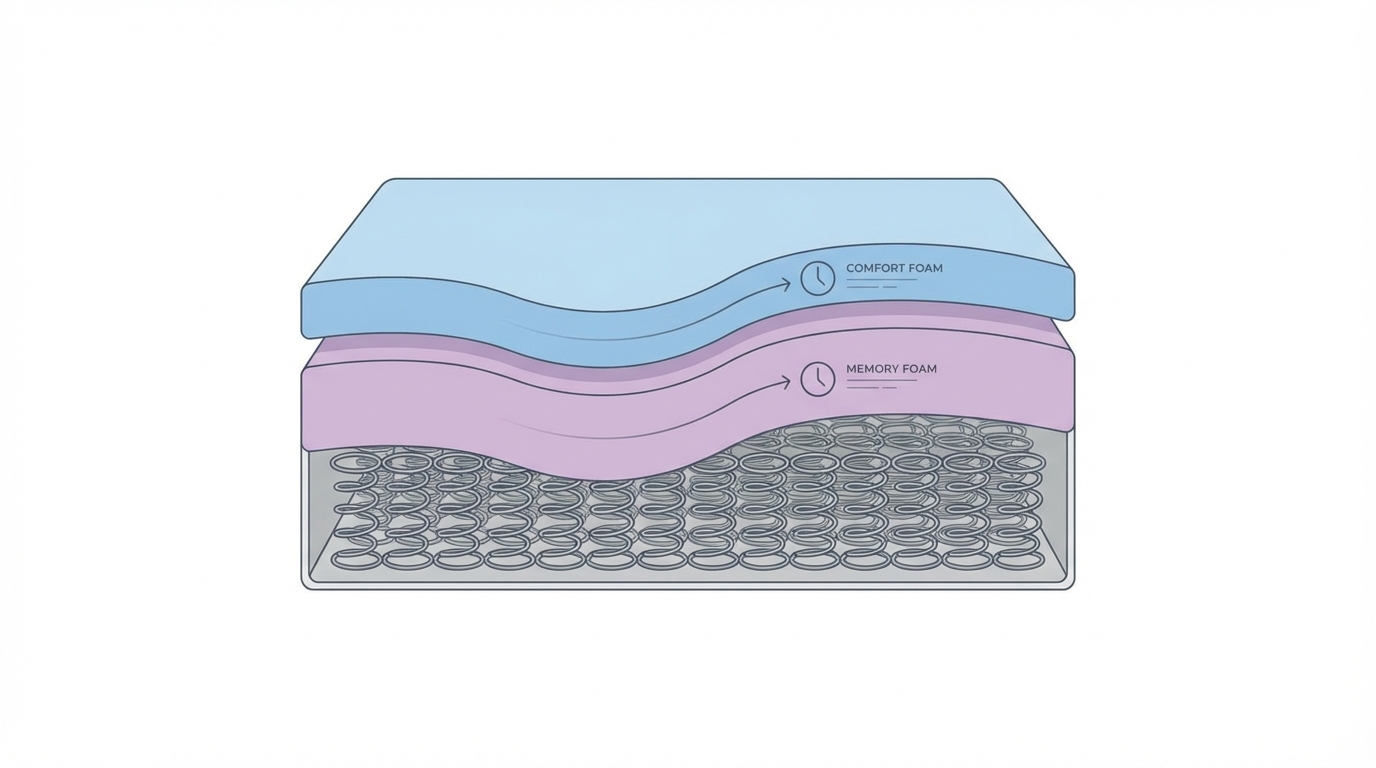
Two people can buy the same mattress on the same day and experience very different lifespans. Beyond the basic construction, your sleeping habits, environment, and care routine have a huge influence on how often you will need to replace your mattress.
Your body type and how many people share the bed
Weight and weight distribution matter because they directly affect how much pressure the mattress has to absorb every night. Heavier individuals compress foams and coils more deeply, which accelerates wear. Couples or families sharing one bed naturally put more total load on the same surface area compared with a single sleeper.
This does not mean you need to be anxious about every pound. It simply means it is worth choosing a mattress that is engineered for the way you actually live. For instance, firmer hybrids with robust coil counts, like the Sealy Posturepedic Elite Firm Hybrid Mattress – Brenham II, tend to resist sagging better under higher combined weights than very soft, low density foam beds.
Sleep position and movement patterns
Side sleepers concentrate more pressure into narrower zones, primarily shoulders and hips. That means softer comfort layers in those areas will show impressions sooner if they are not designed with resilient materials or zoning. Back and stomach sleepers distribute weight across a larger area, but they place more stress on lumbar support. If the central third of the mattress softens, low back pain is more likely.
Active sleepers who move a lot at night effectively “use” more of the mattress surface, which can be a good thing for even wear. Couples who both gravitate to a tight center area, on the other hand, can wear a trough into that zone faster. Being mindful of rotation and occasionally shifting midline sleepers a bit can delay that effect.
Foundation and frame quality
A mattress can only perform as well as the surface underneath it. A sagging box spring, unsupported slats, or a frame that lacks a center support bar on queen and king sizes will allow dips that stress the mattress and shorten its life. Many manufacturers specify the types of bases required to maintain warranty coverage.
If you are investing in a higher quality mattress, I usually recommend pairing it with a solid, supportive base or an adjustable frame that is compatible with the bed. Sleepology’s adjustable bed frame and base collection includes options that not only protect your mattress but also let you fine tune head and foot positions, which can relieve snoring and back pain on top of extending mattress life.
Environment, humidity, and cleanliness
High humidity, lack of airflow, and poor cleaning habits all work against your mattress. Moisture encourages mold and mildew, especially in closed foam structures, while dust and debris attract dust mites and can degrade fabrics. The National Sleep Foundation suggests using a breathable mattress protector, laundering bedding weekly, and vacuuming the mattress surface a few times a year to keep the sleep environment healthier and extend mattress life.
If your bedroom tends to be humid, especially in basements or coastal areas, good ventilation and a protector become even more important. Never place a mattress directly on the floor in these settings, since that traps moisture and heat and dramatically increases the risk of premature damage.
Kids, pets, and life’s little accidents
Jumping on the bed, wrestling, spilled drinks, pet accidents, and the constant little impacts of family life absolutely count as “use.” They put more stress on coils, foams, and edges and introduce more moisture and contaminants. This does not mean you have to ban fun from your bedroom, but it does mean you should be realistic about mattress expectations in a busy household.
If your mattress is a family hub, budget for slightly more frequent replacement or choose models that are built sturdier from the start. Using a good quality waterproof protector is one of the easiest, most cost effective ways to keep mattresses in kid and pet friendly homes from aging prematurely.
How To Extend The Life Of A Mattress You Already Own
If your mattress is still relatively young and mostly comfortable, a few practical habits can help you get the full value out of it before replacement time arrives. These steps will not restore a truly worn out mattress, but they can slow normal wear and keep a good bed feeling great longer.
First, rotate your mattress regularly unless the manufacturer explicitly advises against it. For most foam and hybrid models, rotating 180 degrees every 3 to 6 months helps spread body impressions and weight loads across a wider area. For older two sided innersprings that are designed to be used on both sides, flipping in addition to rotating can double the usable life. Always check your care guide to make sure flipping is appropriate for your specific mattress.
Second, protect it from spills, sweat, and allergens with a well fitting, breathable mattress protector. A protector is not the same as a mattress pad or topper. It is a thin, often waterproof or water resistant barrier that goes directly over the mattress and under your sheets. This simple layer can dramatically reduce staining, odor, and allergen buildup. It also helps keep warranty coverage intact, since many warranties exclude damage from liquids or unsanitary conditions.
Third, keep the sleep surface and surrounding area clean and well ventilated. Strip bedding regularly and give your mattress surface a quick vacuum pass now and then, especially if you have pets. If possible, let the mattress air out for a few hours with no sheets once every month or two. This helps moisture evaporate and can reduce mustiness. If you do need to spot clean, follow manufacturer instructions and avoid soaking the interior.
Finally, be thoughtful about how you use the bed outside of sleep. Sitting on the same edge every morning to put on shoes or using one corner as a step stool accelerates wear and can cause that area to collapse faster. If you like to read or work in bed, an adjustable base can support you comfortably without folding and stressing the mattress in awkward ways.
It is worth repeating that these tips are preventive, not curative. If your mattress is already sagging, causing pain, or significantly affecting your sleep, no amount of rotation or protection will reverse that. In those cases, your energy is much better spent planning a smart replacement.
How Often Should You Replace A Mattress: Bringing It All Together
By now, you have seen that there is no single, magic number of years that applies to every mattress and every person. Still, we can pull all of this into a clear, practical guideline that you can actually use.
For most adults sleeping nightly on a decent quality mattress, replacing every 7 to 10 years is a healthy default. Innerspring beds tend to push you toward the earlier side of that range, while well built hybrids and latex mattresses pull you toward the later side. All foam beds generally land somewhere in between, depending on foam densities and design.
What matters just as much as age is how your body and brain feel. If you are waking up with pain that fades after you get moving, noticing sagging or lumps, sleeping better away from home, or dealing with more nighttime allergies and fatigue, those are all reliable signs that your mattress is no longer doing its job, even if it is technically “young.” If you have had major life or body changes, it is fair to shorten your replacement cycle so your mattress can keep up.
On the flip side, if your mattress is within its typical lifespan, still looks and feels level, and you wake up comfortable and refreshed, there is no need to replace it just because a calendar flipped. Use rotation, protection, and a solid foundation to help it age gracefully. Save your budget and energy for the point where a new mattress will actually move the needle on your health and comfort.
When you do reach that point, choosing a replacement that is aligned with your sleep style and durability needs is the best way to avoid repeating the cycle too soon. Many Sleepology customers find long term value in thoughtfully engineered hybrids like the Sealy Posturepedic Pro Medium Mattress – Dupont II Euro Pillow Top, which blend strong coil support with body contouring comfort foams. Others prefer the cradling feel of high quality foam options in our best foam mattresses collection.
However you lean, the goal is the same: a mattress that helps you fall asleep comfortably, sleep deeply, and wake up ready to live your life, not one that forces you to work around its limitations.
Conclusion: Your Next Step Toward Better Sleep
Knowing how often to replace a mattress is really about recognizing when your bed has stopped supporting the life you want. On paper, the numbers are fairly straightforward. Most mattresses serve you well for somewhere between 7 and 10 years, with some going shorter or longer depending on materials and care. In reality, the decision becomes clear when you connect those numbers to your own mornings, aches, restlessness, and energy.
If your mattress is within its expected lifespan, feels supportive, and your body is happy, you can feel confident focusing on good maintenance and a healthy sleep routine. If you see several of the warning signs we have talked through, especially combined with an older age, that is your cue that replacing is not an indulgence. It is a practical step toward reducing pain, improving sleep quality, and often even boosting your mood and productivity.
At Sleepology, you do not have to figure this out alone. Whether you are leaning toward a contouring foam bed, a supportive hybrid like the Sealy Posturepedic Elite Medium Mattress – Brenham II Euro Pillow Top, or a complete refresh with new bedding and an adjustable base, we are here to translate the science and the specs into everyday language. When your mattress finally matches what your body and life need, “How often should I replace this” stops being a worry, and “How good I feel when I wake up” becomes the real metric that matters.
Frequently Asked Questions
How do I know if I should replace my mattress or just add a topper?
A topper is helpful when your mattress is still structurally sound but feels a bit too firm or slightly uneven on the surface. It can improve comfort and pressure relief, especially for side sleepers. If you are dealing with clear sagging, deep impressions, motion transfer that has worsened, or pain that lines up with where your mattress dips, a topper will only mask the problem briefly. In those cases, the support core has already broken down, and replacing the mattress is the better long term solution.
Can a good mattress really last 15 years, or is that unrealistic?
A small number of high quality latex or very robust hybrid mattresses can stay supportive for 12 to 15 years, particularly for lighter, single sleepers who rotate regularly and use a solid foundation. However, for the average person or couple, planning around the 8 to 10 year mark is more realistic. Thinking of 15 years as a possible bonus for premium builds, rather than a guarantee, will help you avoid holding on to a mattress that is quietly undermining your sleep.
If my mattress is only 5 years old but I am in pain, is it too soon to replace it?
Not at all. The age ranges you see online are averages, not promises. If a mattress is low quality, poorly matched to your body, or has been heavily used, it may reach the end of its useful comfort life well before 7 years. Your pain and sleep quality are more important than the calendar. If you consistently wake up sore, feel yourself sag into the bed, or sleep better on other mattresses, replacing at 5 years can be absolutely appropriate.
How often should I rotate my mattress to make it last longer?
Most foam and hybrid mattresses benefit from being rotated 180 degrees every 3 to 6 months. This helps distribute wear more evenly across the surface, so one area does not develop a deep body impression while others stay unused. Innerspring mattresses that are two sided, which are less common now, may also be flipped according to manufacturer guidance. Always check your specific care instructions, since some specialty designs are not meant to be rotated or flipped.
Does using an adjustable base shorten a mattress’s lifespan?
A compatible adjustable base should not shorten a mattress’s life, and can even extend it by providing better support while you are sitting up to read or watch TV. The key is choosing a mattress that is designed to flex with an adjustable base, usually all foam or hybrid models. Pairing an adjustable system with a mattress that is not built for bending, like many older innersprings, can strain the materials and potentially reduce lifespan. When in doubt, ask whether your specific mattress and base are a good match.
Is replacing my box spring enough, or do I need a new mattress too?
If your box spring or foundation is damaged, squeaky, or sagging, replacing it is important, but it rarely solves issues that are already coming from inside the mattress. You can test this by placing your mattress temporarily on a flat, supportive surface such as a platform with closely spaced slats. If the sagging, pain, or discomfort persists, the mattress itself has likely worn out and needs replacing along with or instead of the box spring.
What is the best type of mattress if I want it to last as long as possible?
If maximum durability is your top priority, high quality latex and well engineered hybrids are typically your best bets. Latex is known for its resilience and long lifespan, while hybrids that use tempered steel coils and dense comfort foams offer a strong balance of support and comfort over many years. That said, “best” also has to include how it feels to you. A mattress that technically lasts 15 years but does not suit your body is not really a good investment. At Sleepology, we often find that mattresses in our best hybrid mattresses collection hit a sweet spot between longevity, support, and everyday comfort for a wide range of sleepers.