

How Often To Change Your Mattress: An Expert Guide To Knowing When It Is Really Time
You are not imagining it if your bed suddenly feels less comfortable than it did a few years ago. Maybe you find yourself rolling into a dip in the middle of the mattress, waking up with a stiff lower back, or sleeping great in a hotel but not at home. Those little clues are easy to ignore, especially when replacing a mattress feels like a big project. Still, your body keeps the score every morning when the alarm rings and you stand up.
How often to change a mattress is one of the most common questions I hear as a sleepologist. People worry about wasting money by replacing too soon, or harming their sleep and health by waiting too long. There is a lot of vague advice out there, usually some version of "every 7 to 10 years," which is only part of the story. The real answer depends on what your mattress is made of, how you sleep, and what your body has been telling you lately.
Your mattress is not just furniture. According to the Sleep Foundation, adults need 7 to 9 hours of sleep per night for optimal health, and mattress comfort and support significantly affect how much of that time is actually restorative sleep. When a mattress quietly wears out under you, it can contribute to chronic pain, higher stress, daytime sleepiness, and even worsened allergy or asthma symptoms. Knowing when to replace it is less about a calendar date and more about understanding clear, practical signals.
You are in the right place if you want more than generic rules. We will look at how long different mattress types usually last, specific red flags to watch for, how to stretch the life of a mattress you like, and how to make your next purchase more future proof. Along the way, I will point out real world examples from customers I have worked with at Sleepology and practical options from our lineup that fit different needs and budgets.
The Real Answer To “How Often Should You Change Your Mattress?”
Most people have heard that you should get a new mattress every 7 to 10 years. That guideline is a helpful starting point, but it is not a hard rule. Research summarized by organizations such as the Sleep Foundation and WebMD notes that typical mattress life spans vary widely by material and quality, and many people wait too long to replace a bed that is no longer supporting them well. The calendar matters, but your comfort, sleep quality, and health matter more.
For an average adult, a well made mattress that is used nightly will gradually lose both comfort and support as foams soften, coils fatigue, and materials compress. That change is slow, which makes it easy to adapt to it and blame your back, your age, or your stress level instead of the mattress. Yet several clinical and chiropractic studies have linked upgrading to a newer, more supportive mattress with improvements in back pain, sleep quality, and perceived stress. The benefits are not just about feeling “cozier” but about how your spine and nervous system recover at night.
A useful way to think about replacement timing is to combine a general lifespan window with a short checklist of personal signals. If you are within the 7 to 10 year range on most hybrid and memory foam mattresses, or 5 to 7 years on a basic innerspring, you should be actively evaluating how you feel in the morning, how the mattress looks and sounds, and how you sleep when you are away from home. If your mattress is older than these ranges and you are also noticing aches, dips, or restless sleep, you are likely past due.
There is also the question of health and hygiene. Studies cited by organizations like the Mayo Clinic and the American Academy of Allergy, Asthma & Immunology highlight that mattresses accumulate dust mites, skin flakes, and moisture with time, which can aggravate allergies and asthma. Even with good cleaning habits, there is a point where the internal materials simply cannot be refreshed. If you are waking up stuffy, congested, or itchy and your mattress is approaching or beyond the typical lifespan, that is another strong reason to move a replacement up your priority list.
Finally, remember that your life changes even if your mattress does not. Weight changes, injuries, pregnancy, new medical conditions, and even just getting older can all change what “supportive and comfortable” means for your body. You might technically still be within the expected lifespan of your current mattress but find it no longer fits. In that case, your body’s needs override the calendar, and an upgrade can be a powerful step toward better sleep and less pain.
“I kept telling myself my 9 year old mattress was still ‘fine’ because it wasn’t sagging much. Mia walked me through a few questions, and I realized my morning hip pain always went away when I slept on vacation. We ended up replacing it with a hybrid, and within a week, I felt the difference. It was like turning down the volume on my aches.” – Laura P., November
Mattress Lifespan By Type: How Long Different Beds Usually Last
Typical Lifespan Ranges You Can Actually Use
To make sense of how often to change a mattress, it helps to start with realistic lifespan ranges by type. Sleep industry data and reviews from organizations like the Sleep Foundation and Consumer Reports broadly line up on what you can expect, assuming normal nightly use and basic care.
Latex mattresses often top the list for durability, commonly lasting 10 to 15 years when made from high quality natural latex and paired with a proper foundation. Their cellular structure is resilient, so they resist deep body impressions better than many foams. However, true latex mattresses are a smaller part of the market and tend to be pricier, so many people opt for memory foam or hybrid designs instead.
Memory foam mattresses typically fall in the 7 to 10 year range. Denser, higher quality foams closer to the top of that range hold up better than ultraplush low density foams. According to the Sleep Foundation, foam quality, density, and construction layers all contribute to long term performance. When memory foam wears out, you often see permanent impressions where your body lies and less pressure relief around shoulders and hips.
Hybrid mattresses, which combine coils with comfort foams, usually last about 7 to 10 years as well. They can offer a good balance of pressure relief and support, and the coil systems in better hybrids are designed to resist sagging for longer than many traditional innersprings. At Sleepology, many of our guests choose hybrids like the Sealy Posturepedic Elite Firm Hybrid Mattress – Brenham II specifically because they want that mix of long term spine support with cushioning.
Traditional innerspring mattresses without much comfort foam tend to have the shortest lifespans, often around 5 to 7 years. Over time, coils can lose tension, foundations can weaken, and you may start noticing pressure points and squeaks. Though they can be budget friendly upfront, they may need replacement more frequently, especially for heavier sleepers or couples.
Why Material Is Only Half The Picture
While these ranges are helpful, material alone does not dictate how long your mattress will feel supportive. Within any mattress category, design details such as coil gauge, number of springs, edge reinforcement, foam density, and quilting workmanship all make a real difference. A carefully built hybrid with robust edge coils and high density foams can easily outlast a bargain latex blend or an all foam mattress made from softer, low density materials.
Your body weight and sleeping position matter as well. Heavier individuals and side sleepers tend to compress materials more deeply, which can shorten the comfortable life of softer designs. Stomach sleepers, on the other hand, often feel support break down sooner because any loss of firmness allows the hips to dip and strains the lower back. Sharing the bed with a partner, kids, or pets also increases the nightly load and movement, which accelerates wear and tear.
Room conditions play a role too. High humidity environments can be rough on materials, particularly on older innerspring and lower quality foam mattresses, which can be more prone to mildew or odor over time. Poor support from an aging box spring or a frame that does not match the mattress size can also lead to uneven sagging. According to WebMD’s guidance on mattress replacement, visible wear, new discomfort, and worsening sleep are often intertwined in this way.
When I evaluate whether someone’s mattress is “too old” during a Sleepology consult, I rarely rely just on the purchase date. Instead, I ask how it feels in different areas, how they sleep in other beds, and what their body is telling them in the first 30 minutes after waking. That practical picture is far more helpful than simply counting birthdays for your bed.
Clear Signs It Is Time To Replace Your Mattress

Physical Clues From The Mattress Itself
Your mattress does not come with an expiration date sticker, but it does show its age physically if you know what to look for. The most obvious sign is sagging, especially in the areas where you and your partner usually sleep. This can show up as a dip in the middle of the bed, a hammock shape that pulls you toward the center, or body impressions that never bounce back even after the bed is empty for hours.
Lumps, ridges, or noticeable soft spots are also red flags. When internal foams or pads shift, you might feel firmer spots under your shoulders and softer areas under your hips, which throws off spinal alignment. Frayed seams, torn fabric, and worn quilting indicate that the overall structure has taken a beating, and what you see on the surface usually mirrors what has happened inside over the years.
Noise is another overlooked clue. If your mattress or its foundation squeaks, creaks, or pops every time you turn over, the support core has likely started to fail. According to WebMD’s review of mattress replacement warning signs, consistent noises when you move are associated with worn coils or an aging base, and they often go hand in hand with reduced support. This is especially common in older innerspring beds or when the box spring is long past its prime.
Odor can be a late stage signal. A musty or stale smell that does not disappear after laundering your bedding may point to moisture buildup, bacteria, or even mold within the mattress. At that point, deep cleaning rarely solves the underlying structural issues, and replacement becomes a health decision as much as a comfort one.
Signals From Your Body And Your Sleep
Your body is often the first to know that your mattress is past its best years. Morning aches that ease as you move around are a classic sign. If your lower back, hips, shoulders, or neck feel stiff or sore for the first 30 to 60 minutes of the day, and that pattern repeats, your mattress may no longer be supporting natural alignment. Clinical research cited by WebMD and chiropractic journals has shown that upgrading to a newer, supportive mattress can reduce morning pain and improve sleep quality for many people.
Pay attention to whether you sleep better away from home. If hotel beds, guest room mattresses, or even your couch give you a more comfortable night of rest than your own bed, your current mattress is not meeting you where you are anymore. This comparison is particularly telling because it controls for stress, schedule, and many other variables: your body simply feels the difference.
Worsening allergies or nighttime congestion can also be linked to an aging mattress. Over years, beds collect dust, skin flakes, and dust mite debris. For many people with allergy tendencies, this can translate into waking up stuffy, sneezing, or with itchy eyes. The Sleep Foundation and allergy organizations note that older mattresses often harbor more allergen load than almost any other item in the bedroom, which is why allergy relief can be a valid reason to consider replacement.
Lastly, look at your overall sleep continuity. If you are waking frequently without a clear reason, struggling to find a comfortable position, or feeling restless even when your room is dark and quiet, your mattress might be undermining your ability to reach deeper sleep stages. The Cleveland Clinic emphasizes that restorative sleep is not just about total hours but about unbroken stretches of quality sleep. A worn mattress introduces microarousals you may not consciously remember but still feel the next day.
“What convinced me was a one night experiment. Mia suggested I sleep on our guest bed for a couple of nights. I woke up with almost no shoulder pain on that older mattress, even though it was technically cheaper than my main bed. That was enough proof for me that my everyday mattress had to go.” – Daniel K., October
How Often To Change Your Mattress By Type And Use
Matching Lifespan Guidelines To Real Life
Once you understand the general durability of each mattress type, the next step is tailoring those ranges to your specific situation. Instead of a single answer, think of a recommended window and factors that move you toward the earlier or later end of that window.
For memory foam mattresses, 7 to 10 years is the broad rule. If you are a single sleeper under about 180 pounds, rotate your mattress twice a year, and keep a mattress protector on it, you may feel good closer to year 10. If you are a heavier individual, a couple, or someone who prefers a very soft feel, your foam will compress faster, and replacement closer to 7 or 8 years often makes sense.
Hybrid mattresses with quality pocketed coils and high density comfort layers follow a similar pattern, with many people finding 8 to 10 years realistic under normal use. Hybrids like the Sealy Posturepedic Plus Medium Mattress – Paterson II Euro Pillow Top or the Sealy Posturepedic Elite Medium Mattress – Brenham II Euro Pillow Top are engineered for that kind of longevity. Couples, combination sleepers, and people with back issues often appreciate that hybrids maintain better edge support and alignment over the years compared with basic innersprings.
Traditional innerspring mattresses generally need replacing sooner, around 5 to 7 years, especially if they have a thin pillow top that compresses quickly. If you can feel or hear coils, see visible dips, or wake up sore even if your mattress is “only” five years old, do not let the calendar talk you out of believing your body.
Guest room beds, daybeds, or lightly used mattresses can be safe to keep longer as long as they still look and feel supportive. A guest mattress that is slept on a few nights each month might still perform well after 10 or more years. Even then, take a moment to lie on it as if you were a guest. If you feel springs, sloping edges, or uneven support, it may be time to upgrade for your visitors’ comfort and your peace of mind.
Special Cases: Kids, Teens, And Changing Needs
Children and teenagers have unique mattress timelines. For young kids transitioning from a crib to a twin or full mattress, the limiting factor is often growth rather than material wear. A durable mattress can sometimes carry a child from early elementary years through middle school. However, by the time a teen is approaching adult height and weight, the mattress may feel too soft or too small, and updating becomes more about fit and support than age alone.
For teens, a supportive mattress can make an outsized difference, because this life stage already comes with irregular schedules and higher sleep needs. Many families find that investing in a quality foam or hybrid, such as a medium feel from our The Best Foam Mattresses or The Best Hybrid Mattresses collections, provides better long term value than repeatedly buying low cost, low support options.
Life transitions for adults also shift mattress needs. Pregnancy, weight loss or gain, major injuries, or new diagnoses like arthritis or sleep apnea may make your previously “fine” mattress suddenly less supportive. In these situations, the question is less about whether the mattress has officially “worn out” and more about whether it matches your current body. A firmer, zoned support design like the Sealy Posturepedic Plus Firm Mattress – Paterson II Euro Pillow Top can be a helpful upgrade when you need more structure under your spine.
I also encourage people to think in terms of total cost per night. If you invest in a mattress that costs a bit more upfront but stays supportive for 9 or 10 years, that nightly cost is often less than a cup of coffee. Framed this way, replacing at the right time feels less like a splurge and more like basic maintenance for your health and energy.
Comparison: Mattress Types And How Long They Typically Last
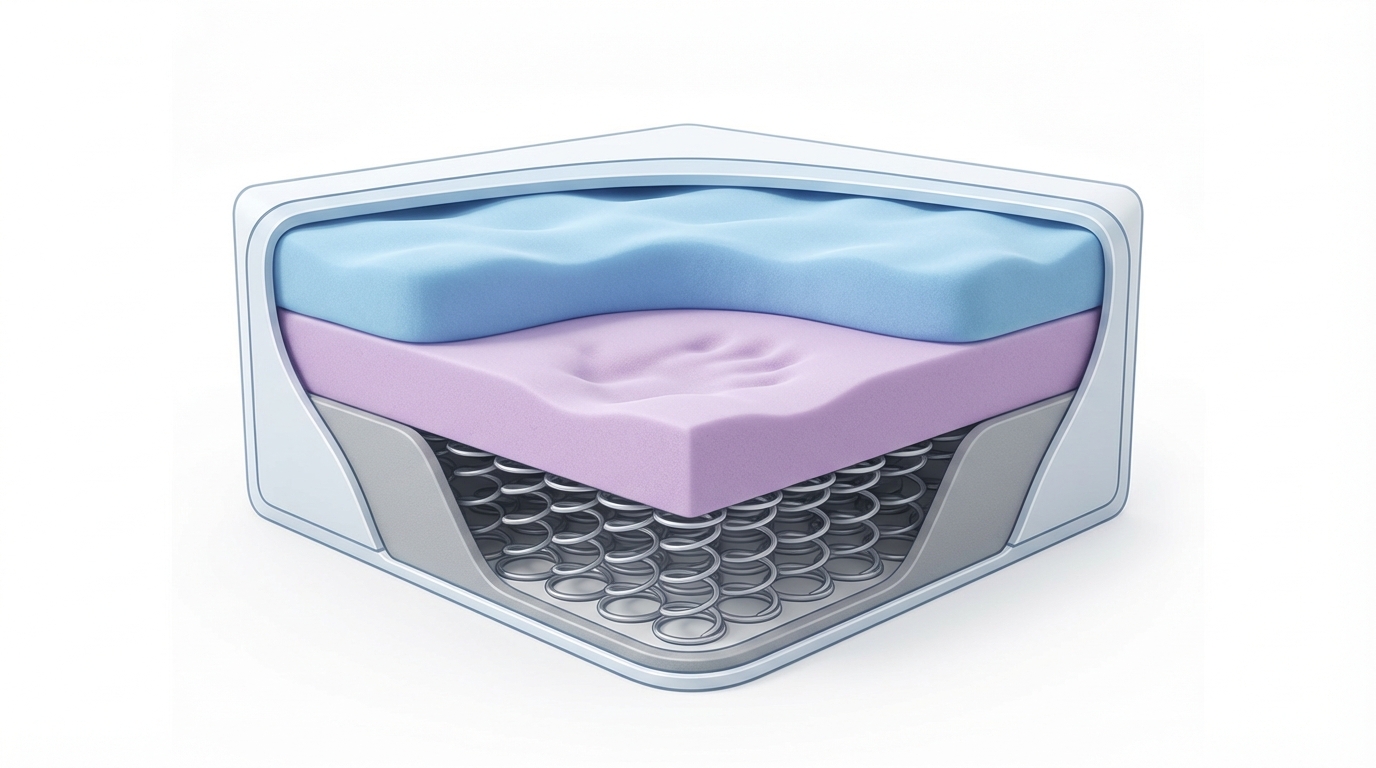
When trying to decide whether to hang on to your current mattress or invest in a different type next time, a side by side view can help. The table below compares common mattress categories across expected lifespan, typical support feel, and who they tend to suit best in terms of replacement timing.
| Mattress Type | Typical Lifespan (Years) | Support & Feel Over Time | Best For Replacement Timing Decisions |
|---|---|---|---|
| Traditional Innerspring | 5 to 7 | Bouncy at first, prone to sagging and squeaks | Budget shoppers, guest rooms, those ok with more frequent replacement |
| Memory Foam | 7 to 10 | Contouring, may develop body impressions | Side sleepers, people with pressure points, couples who value motion isolation |
| Hybrid (Coils + Foam) | 7 to 10 | Balanced support and cushioning, good edges | Most couples, combination sleepers, people wanting both bounce and pressure relief |
| Latex (Natural or Blend) | 10 to 15 | Buoyant, responsive, resists deep sagging | Eco focused shoppers, those wanting longest potential lifespan and strong support |
This comparison is not about declaring a winner, but about matching your priorities to each type’s strengths. If you want to stretch the time between replacements and prefer a more responsive feel, latex or a robust hybrid is often a better fit than a budget innerspring. If deep contouring and motion isolation matter most, a quality memory foam or hybrid will likely serve you well for many years as long as you care for it properly.
After you have narrowed down your preferred type and feel, we can layer in details like cooling features, lumbar zoning, and compatibility with an adjustable bed frame or base so your new mattress continues working with you through different seasons of life.
How To Extend The Life Of A Mattress You Already Own
Smart Protection And Basic Care
If you like your current mattress and it still supports you reasonably well, a few smart habits can help you delay replacement and get better value from it. One of the simplest is using a breathable mattress protector. This thin barrier sits under your sheet and shields your mattress from sweat, spills, skin oils, and dust, all of which break down foam and fabrics over time. According to guidance from the Sleep Foundation, protectors also help reduce allergen buildup, which can be especially valuable for sensitive sleepers.
Rotating your mattress head to foot every 3 to 6 months is another powerful, low effort step. Rotation distributes wear more evenly, helps prevent deep body impressions, and can be particularly important for memory foam and hybrid designs. Some mattresses are also flippable, but many modern pillow top and hybrid constructions are one sided. Always check your specific model’s care instructions so you rotate correctly without flipping a mattress that is not designed for that.
Keeping the mattress on a solid, supportive base is equally important. A sagging box spring, slatted frame with wide gaps, or mismatched size foundation can all undermine the mattress’s integrity. If you are noticing new dips or squeaks, it is worth inspecting your base and upgrading to a compatible foundation or adjustable base before blaming the mattress alone. Pairing your bed with a sturdy frame from our adjustable bed frame and base collection can also improve comfort and longevity by letting you customize your sleep position.
Vacuuming the surface of your mattress a few times a year with an upholstery attachment helps remove dust and potential allergens from the top layers. If you have local spills, spot clean gently according to the manufacturer’s instructions instead of saturating the mattress. Excess moisture that penetrates deeply is difficult to dry fully and can lead to odor or mildew.
When Accessories Help And When They Do Not
Sometimes a mattress topper or new pillow can buy you a little more time with a bed that is “almost right.” A high quality foam or fiber topper can soften a mattress that feels too firm, and in some cases, it can smooth over minor surface unevenness. The key is to use toppers as fine tuning tools, not as a Band Aid for major structural problems. If your mattress is deeply sagging or lacks core support, adding more foam on top will not correct the underlying issue.
Upgrading your pillows and bedding can also dramatically change your nightly comfort, especially for side and back sleepers. Proper pillow height and firmness help maintain neck alignment, which interacts with how your mattress supports your shoulders and upper spine. Many Sleepology customers are surprised at how much better their existing mattress feels after pairing it with new pillows or breathable sheets from our pillows, sheets, toppers, protectors collection.
There is a tipping point, however, where continued investment in accessories around a failing mattress no longer makes sense. If you have cycled through several toppers, layered mattress pads, and still wake uncomfortable or in pain, it is typically more cost effective and beneficial for your body to redirect that budget toward a new mattress. When the support core is done, it is done.
“I had stacked two different toppers trying to ‘fix’ my old bed. Mia helped me realize I was fighting the mattress instead of working with it. We replaced it with a Sealy Posturepedic Elite Soft Mattress – Brenham II Euro Pillow Top and simplified the setup to one breathable protector and good sheets. The difference in both comfort and how neat my bed looks is night and day.” – Cynthia J., December
Health, Hygiene, And Sleep Quality: Why Timing Matters
The Sleep Health Connection
Replacing your mattress at the right time is not only about comfort or aesthetics. Quality sleep has a direct, documented impact on physical and mental health. The Mayo Clinic notes that chronic sleep deprivation can contribute to weight gain, heart disease, weakened immunity, and mood disorders. While many factors influence sleep, the surface you spend one third of your life on is a core piece of that puzzle.
Research published in sleep and chiropractic journals has found that upgrading older bedding systems to newer, supportive mattresses can reduce back pain and improve perceived sleep quality and stress levels. These changes are meaningful because they can set off a positive ripple effect: less pain leads to easier movement, improved mood, and more energy to engage in healthy habits.
Spinal alignment is a central concept here. When a mattress is appropriately matched to your body and sleeping position, it supports the natural curves of your spine. You should be able to lie down and feel your muscles gradually let go instead of bracing against pressure points. When support breaks down, your body has to “hold itself” all night, which often shows up as tight hip flexors, sore shoulders, stiff neck, or lower back ache.
Allergies, Asthma, And Clean Sleep
On the hygiene side, mattresses gradually collect dust, skin flakes, and other particles that dust mites feed on. For many people, this is a nonissue as long as they use protectors and keep bedding clean. For others, especially with allergies or asthma, the accumulated allergen load inside an older mattress can worsen symptoms. Allergy and sleep organizations caution that if you consistently wake up congested, with watery eyes, or wheezing, your mattress might be contributing.
Even if you clean regularly, there is a limit to how deeply you can refresh a mattress once moisture, oils, and microscopic debris have saturated the interior foams and fibers. At that point, replacement is often the safest route. When you do purchase a new mattress, pairing it with a washable protector from our pillows, sheets, toppers, protectors selection is a smart way to help keep your fresh start truly fresh for years.
I like to remind people that replacing a mattress is not about striving for perfection but about removing an unnecessary source of strain on your body. If you have been doing everything else right, from limiting late caffeine to sticking to a regular bedtime, yet still feel worn down, your bed deserves a closer look.
How To Choose Your Next Mattress So It Lasts
Matching Support To Your Body And Sleep Style
Once you have decided it is time to change your mattress, choosing the right replacement is the next big step. The goal is not just to feel good on night one but to pick a design that will continue supporting you through everyday use over many years. Start with three key questions: your dominant sleep position, your body type, and any recurring pain or medical considerations.
Side sleepers usually need more pressure relief at the shoulders and hips so that the spine can remain roughly straight while lying on one side. Medium to medium soft feels in memory foam or hybrid designs are often ideal here, especially those with targeted zoning in the middle third of the mattress. A mattress like the Sealy Posturepedic Pro Soft Mattress – Dupont II Euro Pillow Top combines cushioning with underlying support, which can reduce the chance of waking with numb arms or sore hips as the mattress ages.
Back and stomach sleepers generally do better on medium firm to firm options that keep the pelvis from sinking and overextending the lumbar spine. Zoned coil systems and slightly firmer foams help maintain that alignment over time. A model such as the Sealy Posturepedic Plus Firm Mattress – Paterson II Euro Pillow Top is built specifically for people who prefer a stable, more structured feel but still want some quilted comfort on top.
Heavier individuals and couples benefit from mattresses designed with higher density foams, stronger coils, and reinforced edges. These details are not always obvious at a glance, which is where working with a knowledgeable guide, in store or by phone, can help. A bed that feels similar to a lighter person on day one may compress faster if it does not have adequate support layers for a heavier body.
Planning For Your Future Needs
It is wise to think beyond your current situation and consider what might change in the next decade. If you are planning to use an adjustable base now or in the future, make sure your mattress is compatible from the start. Most modern foam and hybrid mattresses pair well with adjustable frames, and options from our adjustable bed frame and base lineup can ease snoring, reflux, and back strain by allowing slight head and foot elevation.
Consider temperature preferences as well. If you tend to sleep hot, look for breathable covers, ventilated foams, and coil systems that allow airflow. Multiple sleep health sources, including the Sleep Foundation, suggest that a slightly cool sleep environment supports deeper, more restful sleep, and your mattress plays a role in how heat dissipates around your body.
Finally, review the warranty and trial policies, but do not use them as the only measure of quality. A long warranty typically covers manufacturing defects, not normal softening. Still, it can be a sign that the manufacturer is confident in their construction. What matters more is how the mattress feels to your body during the trial period and whether it aligns your spine comfortably across multiple nights, not just during a five minute test.
When we help someone at Sleepology choose a mattress, we are always thinking in terms of “how will this feel in year five or year eight” rather than just “does this feel good right now.” If you would like that kind of long view, you can always call us at 877-631-8383 and talk with a sleep specialist who does this every day.
Conclusion: Listening To Your Mattress And Your Body
Knowing how often to change a mattress is less about a magic number of years and more about recognizing the conversation between your bed and your body. Most quality memory foam and hybrid mattresses will give you about 7 to 10 years of solid performance, while basic innersprings often top out sooner and latex mattresses can sometimes last longer. Within those ranges, your weight, sleeping position, room conditions, and how you care for your bed shape its real world lifespan.
If you are waking up sore, sleeping better away from home, noticing visible sagging or noise, or battling nighttime allergies, those are strong signals that your mattress is no longer doing its job, no matter what the calendar says. Extending the life of a mattress you like with a protector, rotation, and a proper base makes good sense, but stacking toppers on a clearly worn out bed is usually throwing good money after bad. At some point, replacing your mattress becomes one of the most direct ways to protect your sleep, your spine, and your overall health.
You do not have to navigate that decision alone. Whether you are ready to explore supportive hybrids like the Sealy Posturepedic Elite Medium Mattress – Brenham II Euro Pillow Top, prefer the contour of a foam design, or simply want help interpreting what your body has been trying to tell you, the Sleepology team is here to guide you without pressure. A well chosen mattress is not a luxury, it is a tool that quietly supports every part of your day. When you treat it that way, changing it at the right time feels less like a chore and more like a meaningful investment in how you live and feel.
Frequently Asked Questions
How often should you really change your mattress?
Most people should plan to change their mattress about every 7 to 10 years for memory foam and hybrid designs, and every 5 to 7 years for basic innerspring models. Latex mattresses can sometimes last 10 to 15 years. These ranges assume nightly use and basic care. However, if you notice sagging, new aches and pains, or worsening sleep quality earlier than that, it is wise to replace the mattress based on those signs rather than waiting for an arbitrary anniversary.
Is a 20 year old mattress always too old, even if it feels okay?
In practical terms, yes, a 20 year old mattress is far beyond the useful lifespan of modern materials. Even if you are not seeing obvious sagging, internal foams and fabrics will have broken down, and the bed is likely harboring significant allergen buildup. Organizations like WebMD and the Sleep Foundation generally suggest 6 to 10 years as a reasonable replacement window for most beds, so at the 20 year mark, you are well past what is considered healthy and supportive for nightly sleep.
How do I know if my mattress is causing my back pain?
A helpful test is to notice how your back feels on different surfaces. If your morning back pain improves when you sleep on a different mattress, such as in a hotel or your guest room, there is a good chance your everyday mattress is contributing. You can also lie down on your bed and ask someone to look at your spine from the side. If it curves or dips significantly instead of looking relatively straight, your mattress may be allowing your hips or shoulders to sink too deeply. Persistent pain should always be discussed with a medical professional, but changing an unsupportive mattress is often part of the solution.
Can a mattress topper replace the need for a new mattress?
A topper can fine tune the feel of a mattress that is slightly too firm or add a bit more cushioning, but it cannot fix a mattress that is structurally worn out. If your mattress has deep sagging, coils you can feel, or major dips, adding more foam on top will usually just mirror those issues. In that case, investing in a new, supportive mattress, possibly with a softer comfort layer like the Sealy Posturepedic Pro Medium Mattress – Dupont II Euro Pillow Top, will be a far better long term solution.
Does rotating my mattress really make it last longer?
Yes, rotating your mattress head to foot every 3 to 6 months can help distribute wear more evenly and delay the formation of deep body impressions, especially for memory foam and hybrid designs. This simple habit means you are not compressing the same exact spot every night for years. Just be sure to follow your manufacturer’s instructions, since some mattresses are one sided and should never be flipped, only rotated.
How do allergies relate to how often I should replace my mattress?
Over time, mattresses collect dust, skin flakes, and dust mite debris, which can trigger or worsen allergies and asthma. If you frequently wake up with congestion, sneezing, or itchy eyes, and your mattress is older, it may be contributing. Using a washable mattress protector and laundering bedding regularly can help, but at a certain age, the internal allergen load becomes hard to manage. In that case, replacing the mattress and protecting the new one properly is often the most effective way to create a cleaner sleep environment.
Is it worth spending more on a mattress if I plan to replace it every 8 to 10 years anyway?
In many cases, yes. A well constructed mattress that maintains its support and comfort closer to the 9 or 10 year mark can deliver a lower cost per night than a bargain bed that feels worn out after 3 to 5 years. Higher quality materials, better coil systems, and thoughtful zoning also reduce the risk of pain and poor sleep, which has real value in your daily life. The key is to choose a mattress that fits your body, sleep style, and long term needs, not just the lowest price tag.