

How Often Should You Replace Your Mattress? A Sleepologist’s Guide To Knowing For Sure
If you are staring at your bed and wondering whether it is secretly the reason you wake up stiff, tired, or stuffy, you are not alone. Most people hang on to a mattress for years longer than they should, often because replacing it feels expensive, confusing, or like one more chore to put off. At the same time, you might feel guilty for even thinking about a new mattress if yours still looks “okay” on the surface. That tension between your body’s signals and your brain’s logic is exactly where many shoppers get stuck.
The truth is that your mattress has more influence on your daily life than almost any other piece of furniture you own. It affects how deeply you sleep, how well your muscles and joints recover, and even how patient you feel with your family or coworkers the next day. According to the Sleep Foundation, most adults need 7 to 9 hours of quality sleep per night, and sleep quality is directly tied to the comfort and support of your mattress. When your bed starts working against your body instead of with it, everything from focus to mood to pain levels can slowly shift in the wrong direction.
Understanding how often you should replace your mattress is not about memorizing a single magic number. It is about knowing the typical lifespan of different mattress types, learning the early warning signs of wear, and understanding how your age, weight, health, and sleep style all influence the timeline. Once you see the full picture, the decision to keep or replace your mattress becomes much clearer and far less stressful.
As a Sleepologist at Sleepology, I will walk you through how long various mattresses usually last, how to read the “symptoms” your bed is giving you, and how to extend the life of your next mattress without sacrificing your health in the process. You will also find practical recommendations for when it truly is time to upgrade and how to choose a replacement that will serve you well for years, not just months.
Mattress Lifespan Basics: The Short Answer vs Your Reality
Most people have heard the classic advice that you should replace a mattress every 7 to 10 years. That guideline is useful as a starting point, but it is far from the whole story. Just as two people the same age can be in very different health, two mattresses of the same calendar age can perform very differently. Materials, build quality, how you sleep, and how you care for the mattress all change how long it will feel supportive and comfortable.
Reputable organizations like the Sleep Foundation explain that innerspring mattresses tend to land on the shorter end of the range, while latex and high quality hybrids last longer on average. In practice, I often see a three tiered pattern. Budget innerspring or low density foam beds struggle to make it past 5 to 6 years. Mid range hybrids and quality memory foam options are usually comfortable for 7 to 9 years. Well built latex or premium hybrid designs can stay supportive for 10 years or more when properly cared for.
It helps to separate the idea of “technically still intact” from “functionally good for your body.” A mattress can survive physically for many years after it has stopped holding your spine in neutral alignment. You may not notice the change day by day, but you might slowly add another pillow under your knees, shift around more at night, or wake up with stiffness that was not there a few years ago. That gap between structural life and true comfort life is what most shoppers underestimate.
Your own body also acts like a magnifying glass on wear and tear. If you carry more weight, have chronic pain, share the bed with a partner or pet, or sleep in the same spot every night, you will naturally compress materials faster than a lighter solo sleeper who alternates positions. That does not mean anything is wrong with you or your mattress. It simply means your replacement timeline might be closer to the low end of the range for your mattress type rather than the high end.
Finally, your environment matters more than people realize. High humidity, for example, can speed up foam breakdown and encourage dust mite or mold growth, while very dry climates can make some fabrics and foams feel firmer and more brittle over time. If your mattress lives near big temperature swings, open windows, or rooms with poor ventilation, expect the upper edge of the lifespan range to be optimistic.
“I thought my mattress would last at least 12 years because the salesperson said it was ‘high quality.’ Mia helped me realize that between my weight, sleeping with a dog, and never rotating it, I was asking too much of it. At 8 years I upgraded to a hybrid she recommended and my back pain eased within a week.” – Jason L., February
How Long Do Different Mattress Types Really Last?
To make a smart decision about when to replace your mattress, you need realistic expectations for each type of construction. Below is a practical look at typical lifespans based on material, not marketing promises.
Innerspring Mattresses
Traditional innerspring mattresses use steel coils as the main support system with layers of padding or foam above. Consumer and nonprofit testing organizations, including Consumer Reports and Sleep Foundation, often find that entry level innerspring beds have the shortest lifespan, typically in the 5 to 7 year range for most sleepers. The steel coils gradually lose tension, and the comfort layers compress and form body impressions.
What I see most often with aging innersprings is a familiar “hammock” effect. You might notice a dip right where you sleep, or feel like you roll toward the middle of the bed. Even if the sagging does not seem huge by the numbers, that curve is enough to pull your lower back out of neutral alignment. If you are a back or stomach sleeper, this is especially problematic because your core muscles work all night to prevent your spine from bowing.
Build quality also varies dramatically. A high coil count with thicker gauge steel and better edge support can stretch the usable life, while thinner coils and less dense padding wear out faster. If your innerspring mattress is in the 6 to 8 year range and you are noticing new aches or sagging, it is wise to start evaluating it critically rather than waiting for a dramatic failure.
Memory Foam Mattresses
Quality memory foam mattresses usually last longer than budget innersprings, but they are not immune to wear. Denser foams, especially in the core support layers, tend to hold up better than low density foam that feels very plush at first but collapses more quickly. Sleep research groups and mattress testing labs often list 7 to 10 years as a realistic range for memory foam, with heavier sleepers trending toward the lower half of that spectrum.
Over time, memory foam experiences compression fatigue, which means it slowly loses its ability to fully rebound back to its original height. The first sign is usually a body impression that does not bounce back during the day the way it used to. You may also notice you feel more “stuck” in one position and have to use a bit more effort to turn over, which can lead to fragmented sleep. A topper can mask the feel temporarily, but if the core support foam has softened significantly, no add on can restore proper alignment.
If you love that contouring, pressure relieving feel, look for options that use high density support foam underneath. Many of the best foam mattresses at Sleepology are built this way, pairing plush comfort layers with sturdy bases so you get both initial softness and lasting structure. That combination gives you a better chance of staying in the comfortable window for a full decade.
Latex Mattresses
Latex is often the durability champion. Natural latex, made from rubber tree sap, is resilient and bouncy, and resists body impressions better than most foams. Industry data and clinical sleep resources like the Cleveland Clinic often note that high quality latex can perform well for 10 to 15 years, sometimes longer for lighter sleepers who rotate their mattress regularly.
There are nuances, though. Natural latex typically lasts longer than synthetic or blended latex. The density and firmness level also matter. Softer latex feels wonderful for pressure relief but will compress more over time than a firmer, denser formulation. You may not see dramatic sagging, but if you notice a subtle trench where you sleep or a feeling that you bottom out more quickly, it is a sign your latex is approaching the end of its ideal comfort life.
Because latex is naturally resistant to dust mites and mold compared to many conventional foams, people with allergies sometimes try to keep these beds far beyond their supportive years. Remember that even if the material is still hygienic, your body’s needs may have changed, especially as you age or experience new pain conditions. Treat the 12 to 15 year mark as a ceiling, not a guarantee.
Hybrid Mattresses
Hybrid mattresses combine a coil support core with significant layers of foam or latex above. Many of today’s most popular beds fall into this category, and for good reason. They offer the responsiveness and airflow of coils with the pressure relief of foam. In my experience and in line with Sleep Foundation guidance, well built hybrids generally last 7 to 10 years for most adults, with some premium designs performing well closer to that upper limit.
The coils inside many modern hybrids are individually wrapped, which helps with motion isolation and more targeted support than older interconnected systems. These coil units often remain strong even after the comfort foams have softened. That is why you might see a hybrid that still feels firm at the core but no longer cradles your shoulders or hips properly. When you are evaluating an aging hybrid, look and feel for dips in the top layers as much as classic sagging across the entire bed.
If you want a hybrid that is designed to handle real world use from couples, kids, or pets, choose one that uses robust coils and quality foams rather than ultra thin comfort layers. For example, the Sealy Posturepedic Elite Firm Hybrid Mattress – Brenham II combines strong zoned coils with durable cushioning, which helps distribute weight and slow down the formation of body impressions.
Quick Comparison: Typical Mattress Lifespans by Type

To put the different mattress types side by side, here is a simple comparison table that reflects what most sleepers can realistically expect with normal use and average care.
| Mattress Type | Typical Comfort Lifespan | Common First Signs Of Aging | Best Fit For |
|---|---|---|---|
| Innerspring | 5 to 7 years | Sagging, squeaks, feeling coils | Shoppers who like a bouncy, traditional feel and lower upfront cost |
| Memory foam | 7 to 10 years | Body impressions, feeling “stuck” | Pressure relief seekers, couples needing motion isolation |
| Latex (natural) | 10 to 15 years | Subtle impressions, gradual softening | Durability focused shoppers, allergy conscious sleepers |
| Hybrid (coil + foam) | 7 to 10 years | Top layer dips, reduced pressure relief | Most sleepers, especially couples or combination sleepers |
Treat these ranges as guidelines, not guarantees. The clearest verdict comes from how your body feels overnight and in the first hour after you get out of bed.
“We had a hybrid that technically was only 6 years old, so I felt silly replacing it. Mia helped us compare the feel against a new Sealy Posturepedic Elite Soft Hybrid Mattress – Brenham II, and the difference was night and day. My hip pain eased within a week and I finally wake up before my alarm feeling rested.” – Erica P., November
Calendar Age vs Body Cues: Which Should You Trust?
Many people fixate on the age of their mattress and ignore what their body is telling them. Others go by feel alone and forget that even a bed that seems “fine” may no longer be ideal after a decade. The best approach lives in the middle. Use the calendar as a checkpoint, then let your body confirm whether the mattress still serves you.
Once your mattress hits about the 5 year mark, it is smart to do a quick self audit every 6 to 12 months. Ask yourself whether you wake with more stiffness than you did a couple of years ago, whether you sleep better on hotel or guest beds, and if you are adding more pillows as a workaround. If the honest answer is yes to any of those and your mattress is older than 7 years, you are probably living with a bed that is quietly undermining your sleep.
Medical organizations like Mayo Clinic and the American Academy of Sleep Medicine emphasize that waking with pain that improves within an hour of moving around is often related to your sleep surface or position rather than a structural spine problem. If your discomfort fades after you have been up and walking, that is a strong hint to evaluate your mattress. On the other hand, persistent pain that does not ease may warrant a discussion with a healthcare provider, alongside a mattress check.
There is also a psychological trap to be aware of. Humans are good at adapting to “normal,” even if that normal is not healthy. If you have been waking tired or stiff for months, it can start to feel like “this is just how my body is now.” Spending a few nights on a different surface, such as a guest room bed or even a supportive air mattress, can be very revealing. If you feel noticeably better elsewhere, your primary mattress is likely a major contributor.
Finally, consider life stage changes. A mattress that worked well when you were 30 and pain free may not be adequate at 45 with a sore lower back or after a joint surgery. Pregnancy, weight changes, new partners, and menopause all influence what feels comfortable and supportive. Even if your mattress is technically within the “right” age range, do not hesitate to replace it sooner if your health or comfort needs have shifted.
7 Reliable Signs It Is Time To Replace Your Mattress
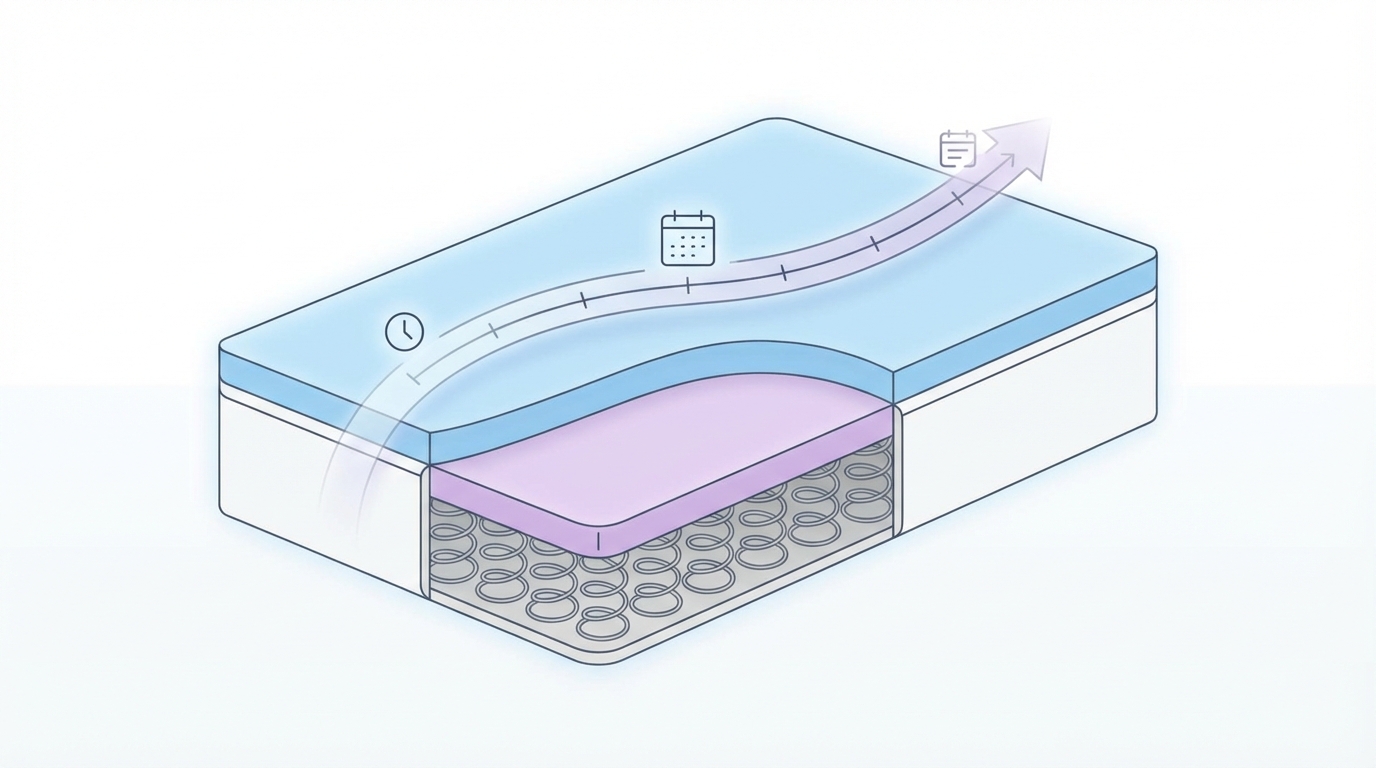
While there is no expiration date stamped on the bottom of your bed, there are clear patterns I see over and over again in mattresses that are ready to retire. Here are seven of the most reliable signs, plus what they feel like in everyday life.
1. Visible Sagging, Dips, or Lumps
When you look at your bed without sheets, the surface should appear mostly flat and even. A gentle, shallow body impression is normal on plush models, but pronounced valleys or raised ridges indicate that materials inside have broken down. If you can see a dip where you sleep or feel your body rolling toward the middle, your spine is almost certainly out of neutral at night.
You can do a simple check by laying a straight object, like a broom handle or long level, across the mattress and looking for gaps. If you see a sunken area of more than about an inch, especially in the lumbar region, that is usually beyond what a topper or rotation can fix. Even when sagging looks modest, side sleepers often feel increased pressure in shoulders and hips, and back sleepers may notice more strain in the lower back.
Structural sagging is one of the few issues that clearly separates a mattress that needs replacing from one that can be tuned up. While adding a topper or changing your pillow can tweak comfort, no accessory can restore integrity once foam has collapsed or coils have lost their spring.
2. You Wake Up Achy, But Feel Better After Moving
If the first 20 or 30 minutes of your day feel like you are “walking off” your back or hip pain, your mattress is a prime suspect. This is especially true if those aches are new within the last one or two years, but nothing significant about your job, exercise routine, or health has changed.
A mattress that no longer supports your curves properly forces your muscles and ligaments to work at night. For example, if your hips sink too far on your side, your spine bends sideways and the small stabilizer muscles in your back hold tension for hours. According to research on sleep and musculoskeletal pain published in journals such as Spine, suboptimal sleep surfaces can aggravate chronic pain conditions or even contribute to new discomfort over time.
One helpful experiment is to track your pain on days after you sleep in a different bed. If you stay at a hotel or with family and notice that your morning stiffness is significantly better, you have gathered pretty solid evidence that your own mattress is a contributor, independent of your body’s overall health.
3. You Sleep Better Away From Home
Most people expect to sleep worse away from their own bed. So if you consistently sleep more deeply at a friend’s house, in a vacation rental, or even on a high quality sofa, consider that your home base may be the problem. I hear this pattern all the time during sleep consultations.
Pay attention to how you feel after two or three nights somewhere else. If you wake more refreshed, with fewer night awakenings, or with less pain, ask what kind of mattress you slept on. It may not be your dream bed, but it is a valuable data point. On the flip side, if you sleep worse in hotels and always crave your own mattress, that is a sign your current bed might still be working fairly well for you.
Remember to separate novelty from consistency. One extremely bad night on an unfamiliar bed does not mean your old mattress is perfect. Look for repeat patterns rather than one off experiences.
4. Allergies or Asthma Symptoms Worsen Overnight
Over the years, mattresses naturally accumulate dust mites, dead skin cells, and other microscopic debris. These are normal byproducts of human life, but in an older bed that has never been well protected, they can reach levels that genuinely bother your respiratory system. Health resources like the American Lung Association and National Institutes of Health note that dust mites and their waste are among the most common indoor allergens, often worsening nasal congestion, sneezing, and itchy eyes.
If you find that your nose is stuffy, your eyes are irritated, or you are reaching for an inhaler more often at night or first thing in the morning, your mattress could be playing a role. You may have noticed that washing your bedding helps temporarily, only for symptoms to creep back. At a certain point, the allergen load inside an older mattress is hard to meaningfully reverse, even with vacuuming and surface cleaning.
Upgrading to a new mattress and pairing it with a quality, waterproof protector from the start can dramatically change this pattern. For example, protecting a comfortable model like the Sealy Posturepedic Pro Medium Mattress – Dupont II Euro Pillow Top with a good cover helps shield the interior from sweat and dust, so it stays fresher and more supportive for longer.
5. Your Mattress Is Noisy, Or You Feel Every Partner Movement
Squeaks, creaks, and metallic sounds when you change positions are a classic sign that coils or their connections are wearing out. While some noise can come from the foundation or frame, an older innerspring or coil based hybrid that starts groaning is usually headed into retirement territory. The noise itself can fragment your sleep and your partner’s, especially if you are light sleepers.
Alongside noise, pay attention to motion transfer. If you feel like you are on a waterbed every time your partner rolls over, or you wake whenever a pet jumps on or off the bed, the mattress is no longer isolating movement effectively. Modern designs, especially all foam or quality hybrid builds, do a much better job here. Replacing a bouncy, tired innerspring with a stable hybrid like the Sealy Posturepedic Elite Medium Mattress – Brenham II Euro Pillow Top can significantly reduce partner disturbance without sacrificing responsiveness.
6. You Have Tried “Fixes” That Only Help For A Short Time
It is natural to try low cost tweaks before replacing an expensive item. Mattress toppers, extra pillows, new sheets, and even adjustable bases can extend the comfortable window for a bed that is still structurally sound. The key question is whether those fixes provide lasting relief or only a brief honeymoon.
If you add a topper and feel better for a month, then the same pressure points and backache creep back, the underlying support system is probably failing. Likewise, if you constantly rearrange pillows in an attempt to prop up sagging areas, you are compensating for a job the mattress should be doing on its own. At some point, you are layering band aids on a deeper problem.
The exception is when you intentionally upgrade your support system. Pairing a still solid mattress with a sturdy base, such as a Sealy Mattress Base Boxspring Foundation or an adjustable frame, can improve alignment and comfort. But if those changes do not produce a meaningful, lasting improvement, take that as a sign that the mattress itself is past its prime.
7. Your Body Or Life Circumstances Have Changed
Sometimes the mattress has not failed; you have simply outgrown what it was designed to do. Significant weight loss or gain, pregnancy, a new partner, a lingering injury, or even transitioning into older adulthood can change what firmness and support feel best. A bed that felt perfect when you were a 160 pound side sleeper might feel too soft once you are a 210 pound back sleeper, or vice versa.
It is common to feel guilty about replacing a mattress that is “technically fine,” but your body does not care about sunk costs. If your needs have shifted, it is reasonable and wise to seek out a surface that supports the body you have today. In some cases, that might mean moving from a very plush model to a slightly firmer, more supportive one, such as upgrading from a basic pillow top to a more robust option like the Sealy Posturepedic Plus Firm Mattress – Paterson II Euro Pillow Top, which is built to keep spines aligned under more load.
“After my knee replacement, my old mattress just did not cut it anymore. I kept waking up sore and assumed it was part of recovery. Mia suggested a firmer hybrid with better edge support so getting in and out of bed was easier. I went with her recommendation and noticed a 50 percent reduction in pain within two weeks.” – Helen S., October
Factors That Make A Mattress Wear Out Faster (Or Slower)
Two people can buy the same mattress on the same day and have dramatically different experiences six years later. The difference is usually not luck. It is how the mattress is used, who is sleeping on it, and how it is cared for.
Body Weight, Sleep Style, and Bed Sharing
Heavier bodies naturally compress foams and coils more deeply, which accelerates wear. If you are in a higher weight range or share a bed with a partner of similar size, your mattress is working harder every night than it would for a single lighter sleeper. That does not mean you have to replace mattresses constantly, but it does mean you should choose more robust constructions and expect the usable life to track closer to the lower end of general lifespan ranges.
Your sleep position also matters. Side sleepers concentrate weight on smaller areas, specifically shoulders and hips, which can create deeper impressions in those zones. Back and stomach sleepers distribute weight more evenly, but a mattress that is too soft can let the pelvis sink, straining the lower back. Combination sleepers who change positions may spread out the wear more, yet they need a mattress that can accommodate multiple alignments.
Bed sharing with kids or pets adds another set of compressive forces. A large dog that sleeps in the same spot every night can meaningfully contribute to impressions, while kids who jump and play on the bed add stress that mattresses are not designed for. If your mattress is a central family gathering spot, factor that in when you evaluate how soon it might need replacing.
Environment: Humidity, Temperature, and Air Quality
Your bedroom microclimate quietly affects how your mattress ages. High humidity speeds up the breakdown of some foams and fabrics, and encourages dust mites and mold. Warm, moist environments create ideal conditions for microbial growth inside mattresses, especially those without protectors. On the other hand, very dry, hot air can make some materials feel stiffer and may dry out certain latex blends or fabrics over time.
If you live in a humid region or have a bedroom that often feels damp, a waterproof yet breathable protector is almost non negotiable. It acts as a barrier between your body’s moisture and the mattress core. Running a dehumidifier or improving ventilation can also extend your bed’s life and make the sleep environment healthier for your lungs and sinuses.
Indoor air quality matters as well. Smoke, cooking fumes, and pollutants from nearby traffic or industry can settle into fabrics and foams. While regular laundering of bedding helps, a mattress that has absorbed years of airborne contaminants can start to feel stale, smell off, or trigger sensitivities in some people.
Maintenance Habits: Small Actions, Big Impact
How you care for your mattress can add years to its comfortable lifespan. Simple habits like rotating the mattress, using a protector, keeping it clean, and providing proper support underneath make a measurable difference. According to practical guides from Sleep Foundation and Healthline, these maintenance steps help distribute wear and prevent moisture or dirt from shortening a mattress’s life.
Rotating your mattress 180 degrees every 3 to 6 months helps minimize deep body impressions, particularly for side sleepers. This is especially useful for one sided mattresses that cannot be flipped. Cleaning matters too. Vacuuming the surface a few times per year, spot treating spills promptly, and letting the mattress dry completely before remaking the bed all keep the internal materials healthier.
Support from below is an often overlooked factor. A sagging, broken, or mismatched base can cause even a new mattress to develop dips and uneven wear. Always pair your mattress with a foundation or frame that meets the manufacturer’s guidelines. For queen and king sizes, a center support bar or extra legs are usually required to prevent the middle from bowing.
How To Extend The Life Of Your Next Mattress Without Sacrificing Comfort
Once you invest in a new mattress, it is completely reasonable to want the best possible return on that investment. The goal is not to keep it forever, but to enjoy its most comfortable, supportive years for as long as practical. A few smart choices up front, plus consistent habits, can easily add two or more good years to a mattress’s useful life.
One of the most powerful moves is choosing a mattress that starts with the right support for your body, rather than trying to modify a poor fit later. For example, if you are a side sleeper with sensitive shoulders, starting with a balanced plush hybrid like the Sealy Posturepedic Pro Soft Mattress – Dupont II Euro Pillow Top gives you both cushioning and robust coil support from day one. That means you are less likely to feel pressure points early and less tempted to add thick toppers that can trap heat or overcompress the underlying layers.
Your accessory choices matter too. A high quality, breathable mattress protector does more than guard against spills. It blocks sweat, body oils, and allergens from reaching the interior. Pairing your mattress with well chosen pillows and breathable sheets from a curated collection like pillows, sheets, toppers, and protectors at Sleepology rounds out the sleep system, so your mattress can focus on support while other components handle head positioning and temperature control.
If you are open to more adjustability, consider adding an adjustable bed frame. Elevating your head or legs can reduce pressure in vulnerable areas and encourage better spinal alignment, which in turn can help you stay comfortable on a supportive mattress longer. Adjustable bases can also make it easier for older adults or those with limited mobility to get in and out of bed without heavily loading the same edge every time.
Here is a simple checklist of habits that can extend your mattress’s lifespan while keeping your sleep quality high:
- Rotate your mattress 180 degrees every 3 to 6 months, according to the manufacturer’s guidance.
- Use a waterproof, breathable mattress protector from day one and wash it regularly.
- Vacuum the mattress surface a few times per year and spot clean spills promptly.
- Make sure your bed frame or foundation has proper center support for larger sizes.
- Avoid sitting on the same edge every day or letting kids jump on the mattress.
- Manage humidity with ventilation or a dehumidifier, especially in damp climates.
- Reassess your pillow and sleep posture every couple of years, not only the mattress.
By integrating these steps into your routine, you are not just preserving the mattress. You are protecting your own comfort and health, so you are less likely to wake up one morning wondering how your once favorite bed suddenly turned on you.
When A New Mattress Is The Healthier, More Cost Effective Choice
There is a point where trying to stretch a mattress becomes more costly, in terms of your body and your wallet, than replacing it. The challenge is recognizing that moment. Many sleepers assume that holding onto a mattress as long as possible saves money, but if that choice aggravates back pain, reduces sleep quality, or contributes to lost productivity, the hidden costs can easily outweigh the price of a new bed.
Health organizations like Mayo Clinic consistently connect poor quality sleep with higher risks of weight gain, mood disorders, cardiovascular issues, and impaired immunity. While your mattress is not the only factor in your sleep, it is a big, controllable piece of the environment. If you are doing the right things with bedtime routines, caffeine, and screen time, but still waking exhausted, an unsupportive bed may be undermining your efforts.
From a financial perspective, spreading the cost of a quality mattress over its realistic comfort lifespan often paints a clearer picture. For example, investing in a supportive hybrid in the 1,200 dollar range that reliably serves you for 9 years breaks down to about 11 dollars per month. In contrast, replacing a 500 dollar budget innerspring every 4 years because it sags quickly actually costs you more over a decade, while often delivering worse sleep.
A practical approach is to list the specific problems you are experiencing and ask how likely it is that a new mattress would address them. If you are dealing with clear signs like sagging, noise, or pain that improves on other surfaces, odds are high that a replacement will bring real relief. In that case, it is not indulgent to upgrade. It is a smart, health driven decision.
When you are ready, choosing a model aligned with your sleep style and body type is where expert help really matters. Whether you need the firmer support of something like the Sealy Posturepedic Elite Firm Hybrid Mattress – Brenham II for back pain, or the balanced feel of a medium pillow top for couples with different preferences, a guided selection process can save you from guessing and second guessing.
Conclusion: Listening To Your Body And Planning Your Next Upgrade
Knowing how often you should replace your mattress is less about the number on the calendar and more about how well your bed is supporting the life you want to live. Typical lifespan ranges are useful as guardrails. Innersprings tend to give you 5 to 7 good years, memory foam and hybrids often stretch closer to 7 to 10, and latex can last a decade or more when it is well made and well cared for. Within those windows, your body, habits, and environment tell the real story.
If you are seeing visible sagging, waking stiff and sore but loosening up as the morning goes on, sleeping better anywhere other than your own bed, or noticing that allergies and partner movement are sabotaging your nights, it is worth considering that your mattress may have already crossed its prime. Tweaks like toppers and pillows can buy you some time, but once the core support has broken down, replacing the bed is the only honest fix.
Planning ahead, rather than waiting for a crisis, makes the transition smoother. As your mattress approaches that 7 to 10 year range, start paying closer attention, budget for a replacement, and spend some time learning which constructions fit your body best. Exploring curated options, such as Sleepology’s best hybrid mattresses or top performing foam models, can turn a stressful chore into a confident decision.
Above all, trust that you deserve a sleep surface that helps you wake up feeling more like yourself, not less. When your mattress and your body are no longer on the same team, giving yourself permission to upgrade is one of the most caring choices you can make for your long term health and daily happiness.
Frequently Asked Questions
How often should you replace your mattress on average?
For most adults, a realistic replacement window is every 7 to 10 years, depending on the mattress type and how it is used. Innerspring beds often need replacing closer to 5 to 7 years, while quality memory foam and hybrids can be comfortable for 7 to 10 years. Latex mattresses stand out for durability and can sometimes perform well for 10 to 15 years. Instead of treating those numbers as rules, use them as checkpoints and let your body’s feedback confirm whether your bed is still doing its job.
Can a mattress topper help you avoid replacing a worn out mattress?
A topper can improve the comfort of a mattress that is too firm or has minor surface unevenness, but it cannot repair serious sagging or a broken support core. If your mattress has deep dips, you feel coils through the surface, or you wake with pain that goes away when you sleep elsewhere, a topper will only mask the problem briefly. In those situations, replacing the mattress is healthier and more cost effective than stacking foam on top of a failing base.
Does a heavier person need to replace a mattress more often?
Heavier sleepers typically compress mattress materials more deeply, so they often reach the end of the comfortable support window sooner than lighter sleepers on the same model. That means a mattress that might comfortably serve a 150 pound solo sleeper for 9 years could feel worn out for a 230 pound sleeper in 6 or 7 years, especially if they are a side sleeper or share the bed with a partner. Choosing higher density foams, stronger coils, and well built hybrids can help slow this process, but it is still wise to expect the low to mid range of the usual lifespan estimates.
What are the clearest signs it is time to replace your mattress?
The strongest indicators are visible sagging or lumps, waking with back or joint pain that eases after you get up, sleeping better away from home, worsening allergies or asthma at night, and noticeable creaking or motion transfer when you or your partner move. If your mattress is past the 7 year mark and you recognize several of these signs, it is very likely that a new bed would significantly improve your sleep comfort.
Is an expensive mattress always going to last longer?
Price and longevity are related, but not perfectly. Higher priced mattresses often use better quality foams, denser latex, and stronger coil systems, which can extend the comfortable lifespan. However, some expensive models prioritize plushness or trend driven features over durable construction. Conversely, a mid range mattress built with thoughtful design and solid materials can outlast a fancier competitor. Looking at what is inside the mattress and how it is engineered, ideally with guidance from an expert, is more important than price alone.
How do I know if my back pain is from my mattress or something else?
If your back feels worst right when you wake up, then improves significantly within the first hour of moving around, and you notice that it feels better when you sleep on a different surface, your mattress is a strong suspect. On the other hand, pain that persists all day, is associated with leg weakness or numbness, or does not change with different sleep surfaces needs medical attention regardless of the mattress. In many cases, addressing both your sleep surface and working with a healthcare provider yields the best outcomes.
Will rotating or flipping my mattress really make a difference?
Rotating a one sided mattress 180 degrees a few times per year helps spread out wear so that the same spots are not bearing your full weight night after night. For double sided mattresses that can be flipped, following a regular flip and rotate schedule can almost double the usable life. These habits do not freeze time, but they can noticeably postpone the point where impressions and sagging become uncomfortable, especially for side sleepers and heavier bodies.