

How Often Should You Get a New Mattress? A Sleepologist’s Complete Guide
You probably remember the day your mattress was delivered, how tall and plush it looked, and that first “ahh” when you finally lay down on it. What most people do not notice is the slow shift from supportive and comfortable to saggy, noisy, or just not quite right anymore. If you are waking up stiff, sleeping better in hotels, or lying there wondering how often you should get a new mattress, you are not alone. I talk to people every week who feel guilty for “complaining” about an old bed that still technically works, even though their body is clearly telling a different story.
Your mattress quietly shapes almost every part of your day. When it is doing its job, you wake up with energy, a clear head, and a body that does not argue with you before your first cup of coffee. When it is worn out or simply wrong for you, aches linger, focus dips, and your patience shrinks. According to the Sleep Foundation, most adults need 7 to 9 hours of sleep per night, and mattress comfort and support play a major role in how restorative those hours actually are. When that foundation stops working, it is not a minor annoyance, it is a health issue.
You are here because you want a straight answer, not marketing fluff. You will learn the real lifespan of different mattress types, how to tell if yours is “expired” even if it still looks fine, what affects how long it lasts, and how to stretch a good mattress as far as it can reasonably go. Just as important, you will see how to match your replacement timeline to your body, your sleep style, and your budget, so you are not replacing too soon or suffering too long. Along the way I will point out specific mattress options from Sleepology that line up with what you might need next.
By the end, you should feel clear on when to let an old bed go, how to choose the right kind of replacement for your sleep, and what simple habits will help your next mattress stay comfortable and supportive for years. If you are already dreading bedtime or eyeing that dent in the middle of your mattress, you are in exactly the right place to figure out your next step with confidence.
The Real Answer: How Often Should You Get a New Mattress?
Most people have heard the rule of thumb that says “every 7 to 10 years,” and as a general starting point, that is not far off. For many modern mattresses, that time frame is a reasonable expectation, especially if you have taken decent care of it and paired it with the right base. The catch is that this is an average, not a guarantee, and it applies very differently to a bargain innerspring than it does to a high quality hybrid or foam mattress.
Health organizations like the Cleveland Clinic and Mayo Clinic consistently highlight that sleep quality directly affects immune function, mood, and chronic pain, and an unsupportive mattress is a common trigger for poor sleep. That means your body should always have the final say over the calendar. If your back, hips, or shoulders started complaining at year five, and you have ruled out medical causes, it is perfectly reasonable to think about a replacement earlier than that classic 7 to 10 year window. On the other hand, a guest room mattress that sees a few nights a month of use and still feels supportive may comfortably stretch beyond that range.
I encourage people to treat the “how often” question as a combination of age plus evidence. Age tells you when to start watching more closely. Evidence tells you when it is actually time. As your mattress moves past about year five, you want to check in with yourself regularly. Are you sleeping as well as you did when it was new, or have you quietly adjusted to worse sleep because you assume this is just what getting older feels like? If your answer leans toward the second, your mattress has probably already done its job and earned retirement.
Another important nuance is that a mattress can be “too new” to replace if the problem was a poor match from the start. If you bought something that felt great for ten minutes in a store but never truly agreed with your body at home, you do not have to wait seven years to move on. In those cases, working with a knowledgeable guide to find a better fit now will give you back years of good sleep that you would not get by toughing it out on the wrong bed.
“I thought I had to wait at least ten years before replacing my mattress. Mia walked me through the signs that mine was actually working against me at year six. Once I switched into a medium Sealy Posturepedic Plus Paterson II Euro Pillow Top, my morning back pain eased within a week. I wish I had given myself permission sooner.” – Lauren K., November
How Long Different Mattress Types Usually Last
Understanding how often you should get a new mattress starts with knowing what is inside the one you have now. Materials age differently. An inexpensive continuous coil mattress and a well built hybrid might both be eight years old, but they are rarely aging at the same pace.
According to the Sleep Foundation and Consumer Reports, mattress lifespan varies significantly by construction. Innerspring mattresses, especially lower end models, often show sagging and support loss around the 5 to 7 year mark. Memory foam and higher grade polyfoam mattresses often last closer to 7 to 10 years, while good quality latex and certain hybrids can stretch even longer when cared for properly. These are broad ranges, but they give you a useful lens.
It is also important to remember that within each category, quality matters. A no name foam mattress compressed into the smallest possible box to hit a low price point will not perform like a carefully engineered foam mattress from a reputable brand. The density of the foams, the thickness of the comfort layers, and the design of the support core all affect how soon you will feel that “hammock” effect or notice body impressions that do not bounce back.
So while you can use the categories below as a guide, always pair them with what your body is telling you, and with a quick visual and hands on check of the mattress itself. If you are waking up sore, or you can clearly see dips and ridges that do not smooth out, those signs outweigh any generic lifespan chart.
Innerspring Mattresses
Traditional innerspring mattresses rely on a system of metal coils with padding on top. They often feel bouncy and breathable early on, which is why many people gravitate to them, but their Achilles heel is that the springs and comfort layers tend to lose resilience more quickly than other constructions. Research summarized by the Sleep Foundation shows that many innerspring mattresses last roughly 5.5 to 6.5 years before noticeable sagging and support loss become a problem.
If your current bed is a classic innerspring with a thin pillow top or tight top design, you might notice the first signs of wear as you roll toward the middle or feel pressure points sharply at the shoulders and hips. Creaking or squeaking when you move is another clue that the coil system is breaking down or that the connection between mattress and foundation is no longer solid. In my experience, once you see consistent sagging deeper than an inch or two, no amount of flipping or rotating will truly restore proper support.
For people who love the familiar buoyant feel of springs but want more staying power, a modern hybrid can be a smart move. At Sleepology, for example, a model like the Sealy Posturepedic Elite Firm Hybrid Mattress – Brenham II keeps the coil support you are used to while adding more durable comfort foams and zoned support to resist premature sagging.
Memory Foam and Other Foam Mattresses
Foam mattresses, whether they use memory foam, advanced polyfoams, or a combination, age differently from springs. Instead of coils fatiguing, what you are watching for is foam density and resilience. High density foams tend to hold their shape longer, while lower density foams can develop permanent body impressions or soften to the point where your spine is no longer aligned.
Well built foam mattresses typically deliver about 7 to 10 years of comfortable, supportive sleep. The National Institutes of Health has noted in pain management research that proper spinal alignment and pressure redistribution, both strengths of well designed foam mattresses, can significantly ease back and joint discomfort for many people. That benefit fades once the foam is too compressed to rebound between nights.
Signs a foam mattress is nearing the end of its life include a “stuck” feeling in deep ruts that do not spring back after you get up, or the opposite problem where the surface feels much softer than it used to and you bottom out into the firmer core. If you sleep with a partner, you might notice you both roll toward a shared valley, even if you went to bed on your own sides.
If you like the pressure relief of foam, replacements from our curated best foam mattresses collection are designed with higher quality foams and better zoning, which often gives you more usable years than a budget foam mattress that flattens too quickly.
Hybrid Mattresses
Hybrid mattresses combine a coil support system with foam or latex comfort layers. When well made, they can offer a sweet spot of contouring and support, along with better edge strength and airflow. Because they share traits with both springs and foam, their lifespan often lands around 7 to 10 years, with some high end hybrids comfortably lasting beyond that if cared for and not overloaded.
What I see in the showroom is that hybrids tend to age more gracefully than pure innersprings because the comfort layers do more of the pressure distribution work, so the coils are not taking the entire load night after night. You might notice a gradual softening in the top layers long before you see the dramatic hammocking typical of a tired old spring mattress. That softening is your cue to check in with your body. Are you waking up more achey, or sinking more at the hips than you used to?
For many Sleepology shoppers transitioning from an aging innerspring, a hybrid like the Sealy Posturepedic Elite Soft Hybrid Mattress – Brenham II offers that familiar springy support with a more cushioned, pressure relieving surface. That combination not only feels more luxurious up front, it often gives you more consistent comfort near the back half of the mattress’s life.
Signs It Is Time To Replace Your Mattress (Even If You Are Not Counting Years)

If you only remember one thing, let it be this: your body is the best indicator of when to replace your mattress. Calendars are useful, but your spine, your joints, and your sleep quality will speak up long before you hit a magic anniversary date.
One of the clearest signs is how you feel when you wake up compared to how you felt when you went to bed. If you turn in feeling reasonably okay but consistently wake with stiffness in your lower back, tightness in the neck and shoulders, or new hip and knee discomfort, your mattress may no longer be keeping your body in healthy alignment. The Mayo Clinic notes that poor sleep posture can aggravate existing back pain and even trigger new issues over time, especially when the surface you sleep on is too worn out to support your natural curves.
Another powerful clue is how you sleep away from home. If a few nights on a guest bed or hotel mattress leave you feeling noticeably better rested and less sore, it might not be that the hotel has magical pillows, it might be that your baseline at home has quietly dropped. People often brush this off with “I always sleep better on vacation,” but once they swap to a supportive, well matched mattress at home, that gap shrinks dramatically.
Then there are the more obvious sensory cues. Does your mattress sag in the middle or under your usual sleep spot? Do you feel lumps, ridges, or dips when you run your hand across it? Do you hear squeaks or creaks when you or your partner roll over, even after checking the frame? Those are structural warning signs. No amount of flipping or rotating can truly fix a broken coil system or compressed foam layers; at best it shifts the problem around.
“I kept blaming my desk job for my neck and shoulder pain. After talking with Mia, we realized my 12 year old innerspring had a visible trench down the middle. We upgraded to a Sealy Posturepedic Pro Medium Dupont II Euro Pillow Top, and within a month my chiropractor commented that my posture and muscle tension had improved. I did not change my work, just my mattress.” – David R., October
How Often Should You Replace Your Mattress by Type? A Quick Comparison
Sometimes it helps to have a side by side view to sanity check what you are experiencing. Remember, these are typical ranges for well made mattresses that are properly supported and reasonably cared for. Your personal timeline may be shorter or longer depending on your body, usage, and environment.
| Mattress Type | Typical Lifespan Range | Common “Time to Replace” Signs | Who Often Replaces Sooner |
|---|---|---|---|
| Budget innerspring | 4 to 7 years | Sagging center, noisy coils, pressure points | Heavier sleepers, couples, active kids |
| Quality innerspring | 6 to 8 years | Loss of support, creaks, visible body impressions | Side sleepers with joint pain |
| Foam (memory / polyfoam) | 7 to 10 years | Deep body impressions, “stuck” feeling, softening | Hot sleepers, heavier bodies |
| Hybrid (coils + foam) | 7 to 10+ years | Gradual softening, less pressure relief | People sharing bed with pets or kids |
Use this table as a starting point, then layer your real life signs on top. If your 5 year old hybrid already has a noticeable sag and your back hurts, trust your body. If your 9 year old foam mattress still looks and feels supportive, you are not doing anything wrong by enjoying a couple more good years from it.
Factors That Change How Long Your Mattress Lasts
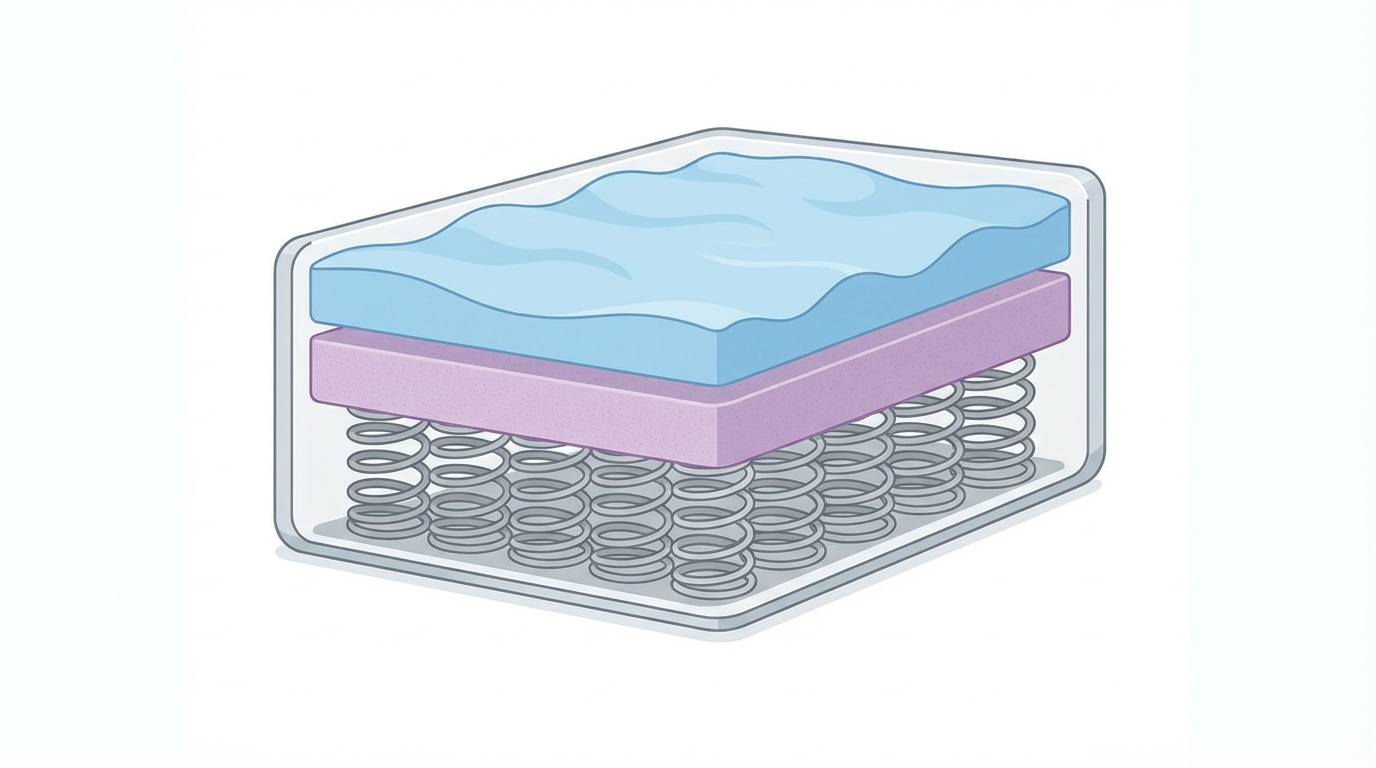
Two people can buy the same mattress on the same day and end up with very different experiences. That is not a defect, it is the result of how differently we all sleep, move, and live. Understanding the key factors that influence mattress lifespan will help you set realistic expectations and decide when replacement makes sense for you personally.
One big factor is body weight and how that weight is distributed. A mattress that works beautifully for a 140 pound solo sleeper may show wear much faster for a 230 pound individual or a couple with a combined weight over 350 pounds. More weight compresses foams and springs more deeply, which can accelerate the breakdown of materials, especially in lower density comfort layers.
Sleep position also plays a role. Side sleepers concentrate more pressure at the shoulders and hips, so those zones can show impressions or soft spots earlier than the rest of the bed. Back sleepers tend to distribute weight more evenly, so some mattresses last a little longer for them. Stomach sleepers often need firmer support to keep the midsection from sinking, and if a mattress softens too much, they may feel the need to replace it sooner to protect their lower back.
Daily Use, Pets, and Kids
Frequency of use matters. The primary bed you sleep on every night experiences far more wear than a guest room mattress that sees company on holidays. If you work night shifts and nap during the day or spend extra hours reading or working in bed, your mattress will reach its useful limit sooner simply because it is doing more hours of “work” each week.
Pets and kids are another big variable. A dog who likes to dig before lying down, a cat who kneads the same corner, or kids who jump on the bed can all put focused stress on particular areas. Accidents, spills, and general roughhousing also increase the likelihood of stains, odors, or damage that shorten a mattress’s practical lifespan. Even if the core materials still technically support you, a mattress that smells musty despite cleaning or has persistent stains may reasonably be ready for retirement.
This is where thoughtful product choices can help. A durable hybrid, like the Sealy Posturepedic Plus Medium Paterson II Euro Pillow Top, paired with a high quality protector and a solid base, often tolerates family life far better than a lightly built, inexpensive mattress without those safeguards.
Environment, Allergies, and Hygiene
Your bedroom environment can quietly affect mattress lifespan too. High humidity, common in many regions, encourages mold and mildew growth if a mattress is not well ventilated or protected, especially on the underside. Excess heat can soften some foams more quickly. Regular exposure to direct sunlight can fade fabrics and warm the top layers unevenly, which is not usually catastrophic but adds up over time.
Then there is what naturally accumulates inside any mattress. Over the years, mattresses collect dust, dead skin cells, sweat, and, if not protected, spills or pet dander. The American Lung Association and allergy specialists often point out that dust mites thrive in this kind of environment and can aggravate allergies and asthma. If you are waking up with congestion, itchy eyes, or a scratchy throat that improves when you sleep elsewhere, your mattress may simply be too old and too saturated with allergens to feel healthy, even if it still seems supportive.
Using a quality, washable protector from day one, like the options in Sleepology’s pillows, sheets, toppers, and protectors collection, goes a long way toward slowing down that build up. But there comes a point where the cleanest solution is a fresh start with a new mattress and fresh bedding.
Health and Comfort: When a “Technically Fine” Mattress Is No Longer Good Enough
One of the hardest scenarios I see is when someone owns a mattress that still looks pretty good but their sleep and health are clearly suffering. They feel guilty about replacing something that is not obviously destroyed, especially if it was a significant purchase. Yet their body is giving all the signals that it needs a better foundation.
The link between chronic poor sleep and health issues is well documented. The National Sleep Foundation notes that insufficient quality sleep is associated with higher risk of hypertension, diabetes, obesity, and depression. An old or unsupportive mattress is not the sole cause of these, of course, but it can be a significant contributor, especially when it is adding nightly pain, micro awakenings, or constant tossing and turning.
If you live with conditions like arthritis, fibromyalgia, sciatica, or chronic low back pain, your threshold for accepting a “good enough” mattress is even lower. Pain management specialists frequently recommend optimizing sleep surfaces for pressure relief and spinal alignment because every bit of strain you remove at night can translate to better function during the day. For many of my clients with these conditions, moving into a thoughtfully chosen hybrid or foam mattress with proper zoning genuinely feels like getting back years of mobility.
This does not mean throwing away a two year old mattress if you develop a new health issue. But it does mean giving yourself permission to reevaluate whether your current bed still fits your body as it is now. Life changes such as significant weight loss or gain, pregnancy, injuries, or surgery can all shift what you need from a mattress. Sometimes a carefully selected topper can bridge the gap for a while, but in many cases, especially when support is the issue, a full replacement is the more effective and cost efficient choice.
“After my hip replacement, my ten year old mattress felt like a rock. I was trying to save money by adding a cheap topper, but I still woke up in pain. The team at Sleepology helped me choose a softer Sealy Posturepedic Pro Soft Dupont II Euro Pillow Top that still had strong support underneath. It was not a small purchase, but I am sleeping through the night again and taking fewer pain meds. That is priceless.” – Carol S., December
How To Extend Your Mattress’s Life (Without Babying It)
A good mattress should fit into your life, not the other way around. You should not have to tiptoe around it, but a few simple habits can delay the day you need to replace it and keep it feeling closer to “like new” for more of its lifespan.
One of the easiest habits is rotating your mattress regularly. For most modern mattresses that are designed to be one sided, rotating head to foot every 3 to 6 months helps even out wear. This is especially helpful if you or your partner tend to sleep in the same spot or if there is a weight difference between you. Always check the manufacturer’s care guidelines, but for most of the mattresses we carry at Sleepology, rotation is encouraged while flipping is not.
Protecting the surface is just as important. A high quality, breathable, waterproof protector is your first line of defense against sweat, oils, spills, and allergens. It is a far better option than trying to deep clean a bare mattress later, which is often only partially successful. According to allergy experts and organizations like the American Academy of Allergy, Asthma & Immunology, encasing your mattress and often your pillows in protective covers is one of the simplest ways to reduce dust mite exposure.
You can also extend the life of your mattress by pairing it with the right base. Mattresses that rest on sagging frames, worn out box springs, or unsupported slats often develop dips and soft spots that are not truly the mattress’s fault. A supportive, well built foundation or an adjustable base from our adjustable bed frame and base collection helps distribute weight evenly and lets the mattress do its job. This is especially helpful if you like to sleep slightly elevated for snoring or reflux, which reduces the habit of stacking pillows and straining the mattress in odd ways.
After you have the basics handled, think in terms of everyday respect rather than strict rules. Avoid jumping on the bed, minimize eating and drinking on it when you can, and periodically vacuum the surface with a handheld attachment to remove dust and debris before it works deeper into the layers. These small acts do not turn a 6 year mattress into a 20 year mattress, but they often mean that by the time you are ready to replace it, it is because your body has changed or you are ready for an upgrade, not because preventable damage cut its life short.
Matching Your Replacement Timeline To Your Sleep Stage And Lifestyle
“How often should you get a new mattress” is not just a technical question, it is also emotional and practical. Your life stage, budget, and plans for the next few years should shape how you think about your current mattress and the next one you choose.
If you are a young adult buying your first “real” mattress, you might be transitioning out of a hand me down bed or a low cost mattress that got you through college. In this stage, I often recommend choosing something durable, supportive, and versatile rather than extremely specialized. A well built foam or hybrid mattress from our best hybrid mattresses collection can carry you through several moves and life changes without needing immediate replacement.
For growing families, timing can be trickier. Pregnancy, postpartum recovery, co sleeping, and kids climbing into bed during thunderstorms all place extra demands on your mattress. It is common for parents to realize their once perfect mattress no longer supports them as well after these changes. If your mattress is over seven years old when you enter this stage and you notice more pain or poor sleep, replacing sooner rather than later is often kinder to your body during a demanding phase of life.
On the other end of the spectrum, if you are approaching retirement or managing age related health issues, your mattress timeline should lean more conservative. You will likely spend more time resting and may need better pressure relief and easier mobility. An adjustable base combined with a supportive medium or medium soft hybrid, like the Sealy Posturepedic Elite Medium Brenham II Euro Pillow Top, can give you more comfort options without needing to replace the mattress as quickly.
Finally, consider your budget and how you prefer to plan. Some people like to invest in a high quality mattress and foundation with the expectation of replacing closer to the 9 or 10 year mark, accepting a higher upfront cost for more consistent performance over time. Others prefer a solid mid range mattress and plan mentally and financially to replace around year 7. Neither approach is wrong. The key is to be intentional rather than waiting until you are miserable and scrambling to make an unplanned purchase.
Putting It All Together: A Simple Framework To Decide If It Is Time
With all of these variables, it can still feel overwhelming to commit to replacing your mattress. When you are on the fence, I like to walk people through a simple three step framework: Age, Feel, and Findings.
Start with Age. How old is your mattress in actual years? If you do not remember the exact date, an approximate age is fine. Under 5 years? Between 5 and 10? Over 10? Use this as your context, not your verdict. Mattresses under 5 years old can be wrong for you and still deserve replacing. Mattresses over 10 years old that somehow still feel decent are living on borrowed time.
Next, move to Feel. For the last 30 days or so, how have you felt when you woke up most mornings? Notice patterns in pain, stiffness, fatigue, or headaches that are worse on workdays versus vacations or nights away. If you consistently feel better when you sleep somewhere else, that is a strong suggestion that your mattress is holding you back, regardless of its age.
Finally, check your Findings. Strip the bed and really look at the mattress. Do you see visible sagging, body impressions deeper than about an inch, or unevenness across the surface? Press down along the middle and the sides. Do you feel consistent support or soft spots and lumps? Listen for creaks when you apply pressure at different points. Check for stubborn odors, stains, or signs of moisture damage that have not responded to cleaning.
If your mattress is more than 7 years old, your body feels worse in the morning than at night, and your visual or tactile findings show clear wear, it is time to start shopping with confidence. If your mattress is younger but you are in significant pain or have a new health condition, it is still worth a serious conversation about whether an earlier replacement could improve your quality of life. And if your mattress looks and feels solid, your sleep is good, and it is under that typical lifespan range, you can stop worrying and enjoy the sleep you are getting.
Conclusion: Your Mattress Should Earn Its Place, Night After Night
Deciding how often you should get a new mattress is not about following a rigid calendar. It is about understanding how materials age, paying attention to your body, and being honest about how well your current bed is really serving you. Most well built mattresses will give you somewhere between 7 and 10 years of good service, but your health, sleep quality, and comfort always matter more than any number you see on a chart.
You deserve to wake up feeling supported, not spent. If your mornings are full of stiffness, if you sleep better anywhere but home, or if your mattress looks tired and uneven, it is reasonable to consider a replacement, even if you are still within that “average” lifespan window. With the right guidance, you can choose a mattress and base that fit how you sleep today and give you many years of reliable comfort, instead of waiting until you are desperate and rushing a decision.
If you are unsure where you fall on this spectrum, that is exactly what we help with every day at Sleepology. Whether you lean toward a foam, hybrid, or a specific Sealy Posturepedic model, you do not have to figure this out alone. A quick conversation about your sleep, your current mattress, and your budget can turn that vague sense of “something is off” into a clear, confident plan. Bedtime should be something you look forward to, not something you negotiate with.
Frequently Asked Questions
How often should you really replace your mattress if you sleep with a partner and pets?
When two adults and one or more pets share a mattress, it often reaches the end of its supportive life a bit sooner. The combined weight and extra movement can accelerate wear, especially if you all tend to cuddle in the same area of the bed. In that situation, many couples find that a good quality hybrid or foam mattress needs replacing closer to every 7 to 8 years rather than pushing for 10. If you start noticing sagging where you both sleep, partner motion waking you more than it used to, or your pets’ favorite corner looking visibly flattened, those are good indicators that your mattress has done its job and is ready to be replaced.
Can a mattress last 15 or 20 years if it still feels okay?
A small minority of high quality latex or hybrid mattresses can physically last that long, but it is uncommon for them to provide optimal comfort and support for two full decades. By the time a mattress is 15 or 20 years old, materials have typically lost significant resilience, and hygiene concerns like dust mite accumulation and deep set allergens become harder to ignore. Even if your mattress “still feels okay,” it is worth checking for subtle signs like more frequent stiffness, lighter sleep, or allergy symptoms. For most people, replacing somewhere within a 10 to 12 year window, or sooner if there are clear problems, is a healthier and more comfortable choice.
Is it normal to need a new mattress sooner if I have back pain or arthritis?
Yes, it is very common for people with back pain, arthritis, or other chronic pain conditions to replace their mattresses more frequently. Your body is less forgiving of even minor misalignment or pressure points, so you will feel the effects of an aging mattress earlier. In practice, that might mean planning for a replacement every 6 to 8 years for optimal comfort, and being open to changing sooner if a medical diagnosis or surgery significantly shifts your needs. Working with a knowledgeable specialist to choose a mattress with proper zoning and support can also help stretch those years by giving your body a better foundation from day one.
Will a mattress topper let me avoid replacing my mattress?
A good topper can absolutely help in some situations, but it is not a cure all. If your mattress is relatively new but a bit too firm, a quality topper can add comfort and pressure relief without sacrificing underlying support. However, if your mattress is sagging, has deep impressions, or the support core is failing, a topper will mostly follow those contours and may even exaggerate them. In those cases, you are usually better off investing in a new mattress and then using a protector and appropriate sheets to fine tune the feel, rather than stacking layers on top of a broken foundation.
How do I know if it is my mattress or my pillow causing neck and shoulder pain?
Neck and shoulder pain can come from either your mattress or your pillow, and often from a combination of both. As a quick test, try sleeping with your usual pillow on a different, firmer surface, such as a guest bed or even a supportive sofa for one night. If the pain improves, your mattress is likely the bigger culprit. If the pain persists, your pillow may not be keeping your neck in neutral alignment. Ideally, your mattress should support your body from the shoulders down, while your pillow fills the space between your head and the mattress without tilting your neck too far up or down. Adjusting both together, sometimes with the help of a sleep professional, usually produces the best results.
Does using an adjustable base change how often I should replace my mattress?
An adjustable base does not automatically shorten or lengthen a mattress’s lifespan, but it can influence how it wears over time. When you use an adjustable base that is compatible with your mattress, it generally helps by offering more positions that reduce strain on your back and hips, which can make the mattress feel comfortable for longer. The key is to pair your mattress with an adjustable base designed to support it properly, like the options in Sleepology’s adjustable bed frame and base collection. Misuse, such as sharply bending a mattress not meant for adjustment, can cause premature damage. Used correctly, an adjustable base is more of a comfort upgrade than a lifespan risk.
Are there any quick checks I can do at home to decide if my mattress needs replacing?
Yes, there are a few simple at home checks that only take a few minutes. First, strip the bed and lay a long straight edge, like a broom handle, across the surface. If you see gaps of more than an inch between the handle and the mattress in the center, that suggests sagging. Second, lie down in your normal sleep position and have someone slide a hand under your lower back or waist. If they can easily move their hand in and out or it feels like your hips sink much deeper than your shoulders, alignment may be off. Third, pay attention to how quickly you fall asleep and how often you wake up over a week. If those checks point to sagging, misalignment, and restless sleep, it is a strong sign that your mattress is ready to be replaced.