

How Often Should You Flip Your Mattress? A Sleepologist’s Guide To Getting It Right
If you are waking up sore, sliding toward a dip in the middle of the bed, or wondering why a fairly new mattress already feels tired, you are not alone. One of the most common questions I hear in the showroom is some version of, “How often should you flip your mattress?” followed closely by, “Wait, am I even supposed to flip it at all?” It is confusing, especially because the advice your parents followed rarely matches how modern mattresses are built in .
This question matters more than most people realize. The way you flip or rotate a mattress directly affects how long it stays comfortable, how well it supports your spine, and how rested you feel in the morning. According to the Sleep Foundation, most adults need 7 to 9 hours of quality sleep per night, and the condition of your mattress plays a major role in whether that sleep is restorative or fragmented. When the mattress is sagging or uneven, your body ends up doing overnight damage control instead of repair.
You are here because you want clear, no nonsense guidance based on how mattresses are really made today, not vague “every few months” rules that may or may not apply to your bed. You also probably do not want to haul a heavy mattress around any more often than you have to. The good news is that once you understand the difference between flipping and rotating, how your specific mattress is designed, and how your body weight and sleep habits come into play, you can follow a simple maintenance schedule that protects both your sleep and your investment.
As a Sleepologist at Sleepology, I have spent two decades watching how different mattresses age in real bedrooms, not just labs. My goal here is to walk you through how often you should flip or rotate your mattress, how to do it safely, how to tell when maintenance is not enough, and how to choose a new mattress that will work with your lifestyle instead of against it. By the end, you should feel confident about exactly what to do next for the bed you already own, and what to look for if it is time to upgrade.
Flip vs Rotate: What Most People Get Wrong
Before we talk about how often, we need to get crystal clear on what we are doing to the mattress and why it matters. Many people use “flip” and “rotate” interchangeably, but they are two very different actions with very different consequences for modern beds.
Flipping means turning the mattress over so the side that used to face the foundation now faces up. This only works safely on a true double sided mattress that has comfort and support layers mirrored on both faces. Classic two sided innerspring mattresses fit this description. Most modern foams, hybrids, and pillow tops do not. Rotating means turning the mattress 180 degrees from head to foot so your head sleeps where your feet used to be, without turning the mattress upside down. Rotation is appropriate for most current designs and is one of the simplest ways to spread out wear on the comfort layers.
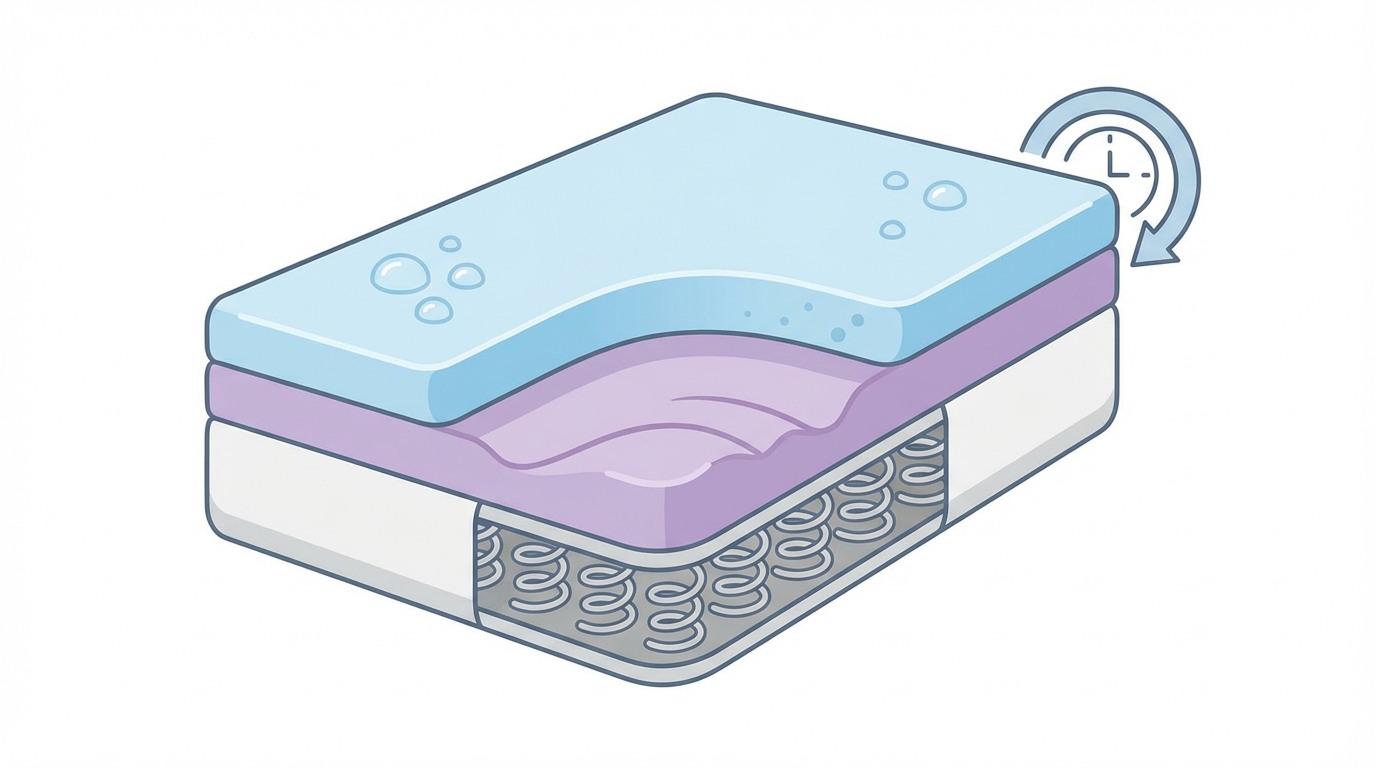
The reason this distinction is so important is how mattresses are engineered now. As the Sleep Foundation explains, most contemporary mattresses are intentionally one sided. They are built like a layer cake, with softer, pressure relieving comfort foams on top and denser support materials underneath. If you flip that structure, you end up lying on the firm support core with the plush layers trapped below, which can feel uncomfortable and actually shorten the mattress’s life instead of extending it.
So when people ask, “How often should you flip your mattress,” a more accurate first question is, “Is my mattress even designed to be flipped?” Once we answer that, we can talk about how rotating fits into the picture. Nearly every mattress benefits from regular end to end rotation, but only a small subset should ever be flipped. Getting this right sets the stage for everything else in your maintenance routine.
“I used to flip my new foam mattress every few months because that is what my parents did. My back started hurting more and I thought I had bought the wrong bed. Mia explained that my model should only be rotated, not flipped. We turned it back the right way, rotated it, and within a week my hips and shoulders felt better. I probably added a couple of years to that mattress just by changing that one habit.” – Lauren P., November
Do You Really Need To Flip Your Mattress?
How Modern Mattresses Changed The Rules
If you grew up helping flip a big double sided spring mattress every six months, it makes complete sense that you would assume the same rule applies now. For decades, flippable designs were the norm, and manufacturers leaned heavily on flipping as a way to distribute wear and extend comfort life. Then the industry shifted. As foams, memory foams, zoned coils, and hybrid constructions became more advanced, brands began building mattresses that clearly had a “right side up.”
Organizations like Sleep Foundation and Consumer Reports now note that the vast majority of mattresses sold in the United States are one sided models that are not meant to be flipped. Instead, they are optimized to be slept on from one direction, with specific layers calibrated to work in order. This is particularly true of pillow tops, Euro tops, and complex hybrid systems that combine foams and coils. Flipping these can distort how the support core and comfort layers work together and potentially void the warranty.
This does not mean flipping is gone altogether. Some brands do still offer flippable mattresses, often marketed as “two sided” or “dual firmness” models. In those designs, each side has a finished sleep surface, and sometimes even a different firmness feel so you can choose between a slightly softer or firmer side. If your mattress falls into this relatively narrow category, then flipping on a schedule can absolutely help keep it feeling even and supportive over a longer period.
For everyone else, the answer is that no, you probably do not need to flip your mattress at all. What you do need is a consistent rotation routine and a clear sense of when mattress care is no longer enough and replacement is the healthier, more cost effective choice. The trick is knowing what you are sleeping on, which we will unpack next.
How Often Should You Flip Or Rotate Different Mattress Types?

Innerspring Mattresses
Traditional innerspring mattresses with uniform coil systems and fiber or foam padding used to be classic flipping candidates. If you own a truly double sided innerspring mattress and the care tag or manufacturer confirms both sides are sleep surfaces, a general rule of thumb is to flip it about twice a year and rotate it every three months. Alternating flipping and rotating helps avoid deep impressions where your hips and shoulders rest and keeps the coils working more evenly.
However, many current innerspring or “classic” coil mattresses are actually one sided with a designated top. If yours has a Euro top or pillow top panel, it is extremely likely to be one sided. In that case, you should never flip it, but you should still rotate it every three to four months in the first few years. According to sleep research published in various orthopedic journals, shoulder and hip pressure is a prime driver of local sagging. Rotating moves that pressure around and can buy you an extra year or more of comfortable use.
At Sleepology, we see this play out in the field all the time. Customers who rotate a one sided innerspring regularly tend to get closer to the upper end of the typical 7 to 8 year lifespan, while those who never rotate often start complaining about dips after three to five years. If in doubt, read the sewn in law label, check the manufacturer’s care instructions, or call us with your model name and we will walk through the design with you.
“We bought a mid range innerspring mattress and were ready to replace it after four years because my husband’s side had a divot. Mia asked if we had been rotating it. We had not. She showed us how and set a phone reminder schedule. Within a month, the mattress felt more even, and we have comfortably stretched that bed to year seven. That saved us at least 800 dollars.” – Mark D., October
Memory Foam Mattresses
Memory foam mattresses respond differently to use than coil systems. The viscoelastic foam is designed to contour and slowly recover, which can create body impressions over time, especially under heavier areas like the hips. According to the Cleveland Clinic and other health organizations that discuss mattress comfort, this contouring can be beneficial for pressure relief, as long as it does not progress to deep, permanent sagging.
Most memory foam mattresses today are single sided, layered constructions that must not be flipped. Flipping would put your body directly on the firmer base foam and trap the pressure relieving layer underneath, which often feels uncomfortably hard and unsupportive. What they do benefit from is rotation. For an all foam or memory foam mattress, I typically recommend rotating every three months for the first two years, then every four to six months as the foams settle.
If you are a single sleeper who tends to stay in one spot, rotation is even more critical because all of your body weight is concentrated on a smaller area of the bed. Couples who share space and move around naturally distribute wear more, but they can still benefit from regular rotation to prevent one partner’s side from breaking down faster if there is a weight difference. Always check the brand’s guidelines, but when in doubt with memory foam, rotate, do not flip.
Hybrid Mattresses
Hybrid mattresses blend coils and foam, so they borrow some maintenance needs from each side of the family. Many of our most popular models at Sleepology are hybrids because they offer a nice balance of bounce, airflow, and pressure relief. The layered construction is almost always one sided, with a carefully tuned stack of foams, comfort materials, and a coil support core.
For hybrids, I find a rotation every three to four months in the first three years keeps them feeling much more consistent. Over time, as the materials settle and your sleep patterns become established, you can shift to rotating every six months as long as you do not see early signs of sagging. Hybrids with zoned support systems, where coils or foams are firmer in the lumbar area and softer at the shoulders, still benefit from rotation because most zoning runs head to toe rather than side to side. If your mattress uses side to side zoning, which is rare, follow the manufacturer’s advice because rotation may interfere with the intended support pattern.
Mattresses like the Sealy Posturepedic Plus Medium Mattress – Paterson II Euro Pillow Top and the Sealy Posturepedic Elite Soft Mattress – Albany II Euro Pillow Top are excellent examples of modern hybrids that are designed to be rotated, not flipped. Their Euro pillow tops and zoned coil systems work best when the top stays on top, and a regular rotation schedule spreads out wear in that plush comfort layer.
Latex Mattresses
Latex mattresses share some traits with foam beds, but the material is generally more resilient and bouncy. Some latex mattresses are fully flippable, especially those built with symmetrical layers of latex on both sides. Others clearly designate a top surface and are meant to be one sided. If your latex bed is flippable, you can usually flip it every six months and rotate it on the same schedule.
For one sided latex designs, rotation every three to six months is usually sufficient. Latex tends to resist deep body impressions better than some other foams, but no material is immune to gravity and repeated pressure. Following a rotation schedule gives you the best chance of enjoying latex’s famous longevity.
Pillow Top And Euro Top Mattresses
Pillow top and Euro top mattresses are the ones I most often see treated incorrectly. Because they look like a traditional mattress with a little extra plushness, many people assume they should be flipped like the older beds they grew up with. In reality, that sewn on top panel is almost always a one sided, comfort focused layer that must stay facing up.
If you flip a pillow top mattress, you end up lying on the back side of that panel and the firmer support core beneath. That combination rarely feels good and can compress the pillow top from the wrong direction. Instead, rotate your pillow top or Euro top every three to four months. This is especially crucial with softer pillow tops like the Sealy Posturepedic Pro Soft Mattress – Dupont II Euro Pillow Top, where deep cushioning is part of the design. Careful rotation helps keep that plush feel from turning into a permanent crater under your favorite sleep spot.
Quick Comparison: Flip And Rotate Recommendations By Mattress Type
To put these guidelines in one place, here is a simple comparison of how often you should flip or rotate different common mattress types. Always confirm with your mattress’s care tag or manufacturer instructions, but this chart captures the general best practices for modern beds.
| Mattress Type | Flip? | Rotate? | Typical Rotation Frequency |
|---|---|---|---|
| Double sided innerspring | Yes, if labeled double sided | Yes | Rotate every 3 months |
| One sided innerspring / pillow top | No | Yes | Every 3 to 4 months |
| Memory foam | No | Yes | Every 3 months initially |
| Hybrid (foam + coils) | No (rare exceptions) | Yes | Every 3 to 4 months |
| Flippable latex or foam | Yes, if designed flippable | Often recommended | Flip and rotate every 6 months |
These are general time frames rather than rigid rules. The real world lifespan of your mattress will depend on how much you weigh, how many people are using the bed, your sleep positions, and even your climate and foundation. Use the table as a starting point, then fine tune based on the signs your body and mattress are giving you, which we will cover next.
Factors That Change How Often You Should Flip Or Rotate
Your Body Weight And Sleep Position
The same mattress ages very differently for a 120 pound side sleeper than it does for a 230 pound combination sleeper. Heavier bodies put more pressure on the comfort layers and coils, which can speed up the development of impressions and soft spots. As a result, I usually recommend that sleepers over about 200 pounds shorten their rotation intervals by a month or two compared with average guidelines.
Sleep position matters as well. Side sleepers tend to create more localized pressure at the shoulders and hips, so they often see deeper impressions sooner, especially on softer beds. Back and stomach sleepers distribute weight a bit more broadly along the spine, but they can still create dips where the pelvis rests. According to guidance from organizations like Mayo Clinic, proper spinal alignment during sleep is essential for reducing back pain, and that alignment depends heavily on your mattress staying reasonably level.
If you are a heavier side sleeper on a plush pillow top, for example, rotating every two to three months rather than every four is a wise move. If you are a lighter back sleeper on a medium firm hybrid, every four to six months may be plenty. Pay attention to how quickly you notice subtle settling where you lie most often and adjust your routine accordingly.
Sleeping Solo Versus Sharing The Bed
Whether you share your mattress also affects how it wears. Couples who use most of the bed’s width, especially if they change positions or sides occasionally, naturally distribute wear more evenly. A solo sleeper who always curls up on the same third of the mattress will create a more concentrated impression over time.
If you sleep alone and rarely change sides, you can effectively mimic the benefits of sharing the bed by rotating more frequently and occasionally sleeping slightly more toward the center or opposite side for a few nights. It might feel odd at first, but it can help rebalance the comfort layers. For couples with a large weight disparity, rotating more often is especially important so that one partner’s side does not permanently sag faster than the other’s.
Guest Rooms, Kids’ Rooms, And Adjustable Bases
Not every mattress in your home sees the same mileage. A guest room mattress that is only used a few times a year will not need rotation as often as your primary bed. In that scenario, rotating once a year is usually plenty, provided the room stays dry and well ventilated. Kids’ mattresses can be trickier. Children are lighter, but they also jump, sit on the edge, and sometimes sleep in unusual positions. A general rotation every six months is a good baseline for kids’ beds, with closer monitoring during growth spurts.
If your mattress is on an adjustable base, like those in our Adjustable Bed Frame and Base collection, rotation is still recommended. The ability to elevate the head and feet does place slightly different forces on the mattress compared with a flat foundation, but the underlying need to spread out body weight over time remains. Just make sure to lower the base to flat before rotating or flipping to avoid stressing the mechanism or the mattress.
“We upgraded to a hybrid mattress on an adjustable base and I assumed the base would stop any sagging. After talking with Mia, I realized we still needed to rotate it on a schedule. We set calendar reminders for every four months. Three years in, the mattress still feels almost new. With my history of back pain, that consistency is worth every penny.” – Denise R., December
How To Rotate Or Flip A Mattress Safely
Preparing The Room And The Mattress
Mattresses are awkward, and I want you to be just as kind to your body as you are to your bed. Before you rotate or flip anything, clear the space around your bed. Move nightstands a bit away from the frame if needed, slide lamps and breakable items back, and ensure there are no rugs you could trip over. Stripping the mattress of sheets, blankets, and the protector reduces bulk and weight and gives you a chance to launder bedding and inspect the mattress surface.
If you have handles sewn into the sides of your mattress, remember that most of these are designed as positioning aids, not full weight bearing straps. Supporting the mattress from underneath rather than yanking on the handles typically extends the life of both the handles and the internal edge support system. Short, controlled movements are your friend here. Rushing and twisting under load is how backs get tweaked.
Step By Step: Rotating A Mattress
Rotating is usually a one or two person job, depending on mattress size and weight. With the mattress bare and the base in a flat position, stand on one side of the bed and gently lift the far corner toward you just enough to slide and pivot the mattress. You are aiming to turn the mattress 180 degrees so what was at the head is now at the foot.
On larger queen and king sizes, having a partner on the opposite side of the bed makes this much easier. You can each guide your side of the mattress in small increments rather than trying to swing the full width at once. Take a moment once the mattress is rotated to make sure the edges are aligned with the frame and nothing is pinched. Then you can remake the bed.
Step By Step: Flipping A Mattress
If you do have a confirmed double sided mattress, flipping is a bit more involved. Lower the base or foundation to flat and strip all bedding. With a partner, slide the mattress toward the edge of the bed on its long side until it is halfway off the frame and resting partly on the floor or supported by both of you. From there, you can gently roll or pivot the mattress over so the bottom side becomes the top.
Once flipped, lift and slide the mattress back onto the frame. Many people find it efficient to combine flipping and rotating in one session, so the mattress is not only upside down, but also end to end reversed from its original position. This combination spreads out wear even more. Again, the key is slow, controlled movements, bending at the knees, and working as a team. If your mattress is extremely heavy or you have mobility concerns, there is no shame in asking a friend or hiring help for an occasional flip.
After flipping or rotating, use this as an opportunity to check your foundation or base. Slats should be no more than about 3 inches apart for most foam and hybrid mattresses, and box springs should not be sagging. A poor foundation can undo all the benefits of good rotation habits.
Signs You Are Not Flipping Or Rotating Often Enough
Changes In Comfort And Support
Your body is often the first indicator that your mattress maintenance routine needs attention. If you are waking up with new or worsening stiffness in your lower back, neck, or hips, yet feel fine later in the day, your mattress may no longer be supporting your spine in a neutral position. This can be due to natural aging or due to uneven wear from not rotating or flipping as recommended.
Pay attention to whether you find yourself gravitating toward the center of the bed to avoid a particular soft spot, or if rolling toward your partner is becoming a nightly pattern. These can both signal that the mattress has developed a trough where you usually sleep. Occasional minor impressions are normal, especially with memory foam and pillow tops, but when they start to affect how you position yourself, it is time to act.
Visible Sagging And Body Impressions
From a visual standpoint, you can perform a quick check by laying a straight object like a broom handle or long yardstick across the surface of the mattress without bedding. Step back and look for gaps or dips beneath the straight edge. A shallow, half inch impression is often considered normal, particularly on softer models, whereas deeper sags approaching one and a half inches or more are usually a sign that materials are breaking down.
Many manufacturers use impression depth as part of their warranty criteria, so it is worth noting what your brand considers normal. Even without a ruler, if you can see a clear hammock shape or lumpy areas where the comfort layers look bunched, the mattress is telling you that it has been loaded in the same spots for too long. Rotating at this point may still help redistribute pressure and slow further change, but it will not magically reverse advanced wear.
When Maintenance Is Not Enough
There comes a point, regardless of how faithfully you have rotated or flipped, when it is healthier to replace the mattress than to try to nurse it along. Sleep Foundation suggests that most mattresses have a useful life of about 6 to 8 years, with some high quality latex and hybrid models lasting a bit longer and some budget beds aging more quickly. If your mattress is within or beyond that range and you are seeing deep sags, waking with pain that resolves when you sleep elsewhere, or noticing increased allergies from accumulated dust, it is time to consider a new bed.
In that case, your excellent rotation and flipping habits are not wasted. They have likely extended the comfortable life of the mattress and given you more value for your money. Now you can take what you have learned about your body’s preferences and commit to a mattress and maintenance routine that will keep you even more comfortable in the next phase.
Building A Simple Mattress Maintenance Schedule
Creating A Rotation Timeline You Will Actually Follow
The best schedule is the one you actually use. Rather than stressing over whether you are rotating every 90 days on the dot, think in terms of seasons and natural reminders. For many Sleepology customers, pairing mattress rotation with quarterly tasks like changing HVAC filters or deep cleaning works well. In a simple framework, that might look like rotating your main mattress at the start of spring, summer, fall, and winter.
You can mark these on a paper calendar, set recurring reminders on your phone, or even leave a small note tucked into the corner of your mattress protector with checkboxes for each rotation. If your mattress manufacturer specifies a different frequency, such as every six months, align your reminders with that instead. The consistency matters more than the exact date.
Guest room mattresses, lightly used daybeds, or mattresses in seasonal homes can go on an annual schedule. Choose a time of year you are usually in that space and make rotation part of your routine opening or closing tasks. Kids’ beds can be rotated at the start of the school year and around spring break. Framing the task around life events makes it more intuitive and less like one more random chore.
One Time Setup: Protectors, Foundations, And Accessories
Maintenance is about more than moving the mattress itself. A breathable, well fitting mattress protector acts like a filter that catches sweat, skin cells, and spills before they soak into the comfort layers. According to guidance from organizations like the Asthma and Allergy Foundation of America, keeping mattresses clean and protected reduces dust mite populations, which can improve sleep for allergy sufferers. Rotating your mattress is the perfect time to wash the protector according to its care instructions and inspect it for wear.
It is also wise to look under the mattress periodically. Slatted frames should have slats close enough together to support the mattress evenly. If you see sagging in the foundation or if you are using an old box spring under a new foam or hybrid mattress, your base may be undermining your rotation efforts. Upgrading to a supportive platform or an adjustable base that is compatible with your mattress can be one of the best long term investments in comfort and longevity.
Finally, consider your pillows and bedding. A well supported neck on an appropriate pillow and breathable sheets that help regulate temperature both contribute to deeper, more restorative sleep. Our Pillows, Sheets, Toppers, Protectors collection includes options that pair well with different mattress feels, and rotation days are a great moment to ask whether your entire sleep setup is still serving you.
“We sat down and mapped out a full bedroom care routine with Mia. Now every quarter we rotate the mattress, wash the protector, and check the slats on the frame. It is maybe 20 minutes of work and our six year old hybrid still looks and feels great. We also added a Tempur topper for our guest room, which suddenly became everyone’s favorite bed.” – Hannah S., January
When It Is Time To Replace Instead Of Flip
Listening To Your Body And Your Mattress
Even the best maintenance plan eventually runs out of runway. If you have been rotating regularly and your mattress is older than about 7 or 8 years, ongoing discomfort is a strong signal that replacement may be healthier than another flip. Nighttime symptoms like numbness in the arms, tingling in the legs, or new pressure points often improve dramatically when people sleep on a newer, more supportive mattress, even for a single night.
You can run a simple test by sleeping on a different bed in your home for a few nights, or even a quality mattress in a hotel. If your pain or stiffness noticeably improves elsewhere and returns on your regular bed, the mattress has likely aged beyond what rotation can fix. An occasional mattress topper can buy you a bit of time, especially in guest spaces, but it will not repair a broken down support core. Think of toppers as comfort refiners, not structural braces.
Persistent allergies, increased sneezing at night, or visible discoloration and odors that do not resolve with cleaning are other reasons to replace. Mattresses accumulate a surprising amount of moisture and biologic material over their lifespans. Even with protectors and rotation, there is a limit to how hygienic an old mattress can remain. When in doubt, your long term health and sleep quality are almost always worth the investment in a new bed.
Choosing A Mattress That Fits Your Maintenance Style
When you are ready to replace, be honest about how much maintenance you will realistically do. If you know you will forget to flip or rotate often, it makes sense to choose a mattress built with durable, high quality materials that tolerate a little less attention. Hybrids and premium foam beds in our Best Hybrid Mattresses and Best Foam Mattresses collections are designed with longevity in mind, especially in medium to medium firm feels.
If you love a plush, enveloping surface, look for a well constructed Euro pillow top like the Sealy Posturepedic Elite Medium Mattress – Brenham II Euro Pillow Top or the Sealy Posturepedic Plus Firm Mattress – Paterson II Euro Pillow Top. Pair those with a simple quarterly rotation routine and a supportive base and you will give the mattress its best chance to stay comfortable for many years.
If you are intrigued by the idea of a flippable mattress because you like the symmetry and the ability to switch firmness, we can help you understand exactly how those designs work and what kind of schedule makes sense. They are less common these days, and for most sleepers a well engineered one sided hybrid or foam mattress with regular rotation strikes the best balance between comfort, ease, and longevity.
Conclusion: A Simple Framework For A Longer Lasting, More Comfortable Mattress
Properly caring for your mattress is not about memorizing a different schedule for every model on the market. It comes down to a few clear principles. First, know whether your mattress is actually designed to be flipped. Most modern mattresses are not, and flipping those can make them less comfortable and shorten their life. Second, nearly all mattresses benefit from regular rotation, especially in the first few years, because it spreads out constant pressure on the same zones of foam or coils.
Third, consider your real world factors, like body weight, sleep position, and whether you share the bed, and adjust your rotation cadence accordingly. Heavier sleepers, side sleepers, and solo sleepers who use a small part of the mattress often need more frequent rotation. Fourth, pair rotation with a quick check of your protector, foundation, and bedding so that your entire sleep system is working together rather than fighting itself.
Most importantly, listen to your body. If pain, stiffness, or sagging persist despite good maintenance and your mattress is approaching or past that 6 to 8 year range, it is likely time to replace instead of flip again. When you are ready, the team at Sleepology is here to help you choose a mattress that matches your body, your sleep style, and your maintenance habits, so you can feel confident that each night’s sleep is genuinely restorative.
Frequently Asked Questions
How often should you flip your mattress if it is truly double sided?
If your mattress is clearly labeled double sided and the manufacturer specifies that both sides are intended for sleeping, flipping it about every six months is a solid starting point. In between flips, rotating the mattress end to end every three months helps prevent deep impressions in the coil and comfort layers. Heavier sleepers or couples may want to tighten that schedule a bit, while lighter single sleepers can sometimes extend it slightly. Always confirm the brand’s guidance, because some flippable mattresses have specific patterns designed to balance wear most effectively.
How often should you rotate a memory foam mattress?
For a memory foam mattress, rotating every three months in the first two years is ideal for most people. This is when the foams are adapting to your body and are most prone to developing early impressions if all the pressure stays in one area. After that break in period, you can often move to a four to six month rotation schedule, as long as you are not seeing significant sagging or feeling new pressure points. Because memory foam mattresses are almost always one sided, you should not flip them unless the manufacturer specifically built yours as a flippable design.
Can flipping a one sided mattress ruin it?
Flipping a one sided mattress will not always “ruin” it in the sense of immediate damage, but it almost always makes it less comfortable and can contribute to premature wear. When you flip a one sided mattress, you are lying on the firm support core that was meant to sit on the foundation, and you are compressing the comfort layers from the wrong direction. This can distort how the materials respond and lead to aches and pains that disappear when you flip the mattress back the right way. The safest approach is to rotate one sided mattresses, not flip them.
How do I know if my mattress is double sided or one sided?
Start by checking the sewn in law tag and any marketing labels on the mattress itself. If the brand describes the mattress as double sided, flippable, or mentions two distinct firmness options on each side, it is likely designed to be flipped. If there is a clear top panel like a pillow top or Euro top, or if the label mentions a specific “sleep surface,” it is almost certainly one sided. You can also feel the underside of the mattress. If it is unfinished, rough, or clearly firmer with no quilting, treat it as one sided. When in doubt, call the retailer or manufacturer with your model name and they can confirm.
Is rotating a mattress really necessary if it still feels fine?
Rotating a mattress while it still feels fine is like changing the oil in a car that is still running smoothly. You are doing it to prevent problems, not just fix them. Even if you do not yet see or feel obvious impressions, your body weight is still compressing the same areas of foam or coils night after night. Regular rotation slows down the development of deeper sags and helps the mattress maintain more even support over time. If your mattress is brand new, starting a rotation habit early gives you the best chance at a long, comfortable lifespan.
Can a mattress topper replace flipping or rotating?
A mattress topper can adjust the feel of your bed by adding softness, support, or pressure relief, and it can sometimes extend the comfortable life of a slightly aging mattress. However, it cannot replace the structural benefits of flipping a double sided mattress or rotating any mattress. The topper simply mirrors whatever the surface beneath it is doing. On a newer mattress, a quality topper like the Tempur Pedic Mattress Topper – Pillow Travel and Guest Bundle can be a great way to fine tune comfort for guests or specific sleepers. On an older, sagging mattress, it may mask discomfort briefly, but it will not restore lost support.
Should I rotate my mattress more often if my partner is much heavier than me?
If there is a significant weight difference between you and your partner, rotating more frequently is a smart idea. The heavier sleeper’s side of the mattress will naturally compress faster, especially in the hip and shoulder zones. Rotating every two to three months in the first couple of years can help even out this differential wear. It is also worth considering a mattress with strong edge support and zoned coils, like the Sealy Posturepedic Medium Mattress – Medina II Euro Pillow Top, which is designed to better handle varied loads across the surface.