

How Often Should You Replace Your Mattress? A Sleepologist’s Guide To Knowing When It Is Time
You are not imagining it if you are waking up stiffer than you went to bed or sleeping better on a guest bed or hotel mattress than you do at home. Those quiet little complaints your body gives you in the morning are often your first real sign that your mattress is getting in the way of restorative sleep. Because mattresses decline gradually, it is very easy to adapt to poorer and poorer sleep without realizing the mattress is the common thread.
Knowing how often to replace a mattress matters more than most people realize. According to organizations like the Sleep Foundation and Mayo Clinic, consistent, high quality sleep is closely tied to immune function, mood, weight regulation, and long term heart and brain health. When the surface you spend roughly one third of your life on is worn out, you are not just dealing with a comfort issue, you are chipping away at your overall health night after night.
You may have heard the old rule that mattresses should be replaced every 7 to 10 years. That is a helpful starting point, but it is not the whole story. Different mattress types have very different lifespans, and your body, your sleep position, your allergies, and even your bedroom climate all change how long the mattress will truly serve you. The trick is learning to read both the calendar and the more subtle signals from your body and your bed.
As a sleepologist who has worked with thousands of shoppers in real showrooms, I can tell you that most people keep their mattress at least a couple of years too long. This guide will walk through how often to replace a mattress by type, the red flag signs that mean you should not wait, how mattress age affects your health, and how to stretch the life of your next bed without sacrificing support. Along the way, I will point you toward specific Sleepology mattresses and accessories that match different situations, so you can move from “I think my mattress is done” to “I know what to do next” with confidence.
How Long Does A Mattress Really Last?
When people ask how often to replace a mattress, they are usually hoping for a single number. In reality, the answer is a range, and it depends heavily on materials, build quality, and how you use the bed. Research summarized by the Sleep Foundation notes that most mattresses fall somewhere between 6 and 10 years of useful life, with some types lasting longer when they are higher quality and properly cared for.
A helpful way to think about mattress lifespan is to separate “functional life” from “calendar life.” Functional life is the period when the bed still supports healthy spinal alignment, relieves pressure points, and allows you to sleep through the night without pain or overheating. Calendar life is the raw number of years you have owned it. Your decision to replace should always be based first on functional life, not just how many birthdays the mattress has seen.
It is also important to remember that the clock starts ticking the day you begin sleeping on the mattress regularly, not the date on the tag. A guest room bed that gets used ten nights a year will outlast a master bedroom mattress by a wide margin, even if they are the exact same model. Body weight, whether you share the bed, and how often you sit on the edge to read or work all change how fast those materials fatigue.
Finally, be honest about how the mattress was treated. If a bed has never had a protector, has seen a lot of spills, or has sat on an unsupportive frame, its realistic lifespan will be shorter than any chart suggests. Even very good foam or hybrid designs can wear prematurely if they were never rotated or were consistently overloaded in a small area of the surface. When you factor all of this in, you start to see why “it depends” is the only honest answer, even as we talk through typical ranges.
Average Lifespan By Mattress Type
Different mattress constructions break down in different ways. Understanding how your current mattress is built gives you a clearer sense of what “normal” looks like for your situation and where you are in that curve.
Innerspring mattresses, the classic coil beds many of us grew up on, tend to have the shortest useful lifespan. The Better Sleep Council and other industry groups often cite a range of 6 to 8 years, and the Sleep Foundation reports that many innerspring models show noticeable performance decline within about 5.5 to 6.5 years in everyday use. Over time, metal coils lose resilience, foam layers compress, and you feel more of the spring system and less of the cushioning.
Foam mattresses, particularly higher density memory foam and premium polyfoam, often last a bit longer. With good care, many pure foam beds can perform well for 8 to 10 years before support and pressure relief are clearly compromised. Consumer testing organizations like Consumer Reports have found that denser foams maintain support better over time, while lower density foams are more prone to deep body impressions and softening.
Hybrid mattresses, which combine coil support systems with foam or latex comfort layers, usually fall in the middle to upper end of that spectrum. A quality hybrid that uses sturdy steel coils and durable foams can often serve comfortably for 8 to 10 years, sometimes more, depending on sleeper weight and usage patterns. Hybrids also tend to resist the “stuck” feeling some people report with all foam beds as they age, since the coil system continues to supply bounce and airflow.
Latex mattresses, especially those made with natural latex, are often the longevity winners. Several sleep research and consumer references note that natural latex can remain supportive for 12 to 15 years in many cases. Latex is inherently resilient, and its open cell structure tends to resist body impressions better than many other foams. That said, few people actually keep a mattress that long without changes in their body or preferences making an update sensible sooner.
At Sleepology, when I look at a shopper’s situation, I often think in ranges like this:
| Mattress Type | Typical Functional Lifespan | Common Replacement Range |
|---|---|---|
| Basic innerspring | 5 to 7 years | 6 to 8 years |
| Higher quality innerspring or entry hybrid | 6 to 8 years | 7 to 9 years |
| All foam (memory or premium polyfoam) | 7 to 9 years | 8 to 10 years |
| Quality hybrid | 8 to 10 years | 8 to 11 years |
| Natural latex dominant | 10 to 15 years | 10 to 12+ years |
These are not hard rules, but they give you a realistic expectation. If you are at or beyond these ranges and noticing any of the signs I will describe next, it is time to seriously consider a replacement rather than trying to “baby” the mattress along for a few more years.
“I kept my old mattress for almost 14 years because it looked fine to me, but I was waking up sore every morning. Mia walked me through what to look for and once I compared how I felt on my old bed versus a new Sealy Posturepedic Elite Firm Hybrid Mattress – Brenham II, it was night and day. I wish I had replaced it 3 years earlier.” – Sarah P., November
The 8 Clear Signs You Should Replace Your Mattress Sooner Than The Calendar Says

While average lifespans are helpful, the most important clues come from your daily experience. Waiting for a hard number of years can keep you in a bed that is quietly undermining your health and comfort. Professional sleep organizations like WebMD and Sleep Foundation emphasize that you should focus on how you feel and how the bed performs, not just its age.
Many of the shoppers I meet feel guilty about “giving up” on a mattress they have only had for five or six years, even when their body is clearly unhappy. The truth is that a lower quality mattress, or one that has been heavily used, can absolutely be “done” by that point. Paying attention to specific signs allows you to make a decision based on evidence, not guilt or guesswork.
In practice, I look for a combination of physical signs in the mattress and physical signs in the sleeper. One or two minor issues might be fixable with a topper or a new pillow. Several stacked together usually mean you are pouring energy into workarounds instead of into actual sleep. Let us walk through the major signals and how to interpret them.
1. Visible Sagging, Dips, Or Lumps
Start with the simplest test you can do without even lying down. Strip the bed down to the bare mattress and really look at it. Is the surface flat and even, or do you see valleys where you usually sleep, raised “hills” where the foam has bunched, or a general hammock shape from head to foot? If you lay a straight object, like a long level or even a broom handle, across the surface, do you see daylight under the middle?
Over time, foams compress and coils lose some of their spring. A small, shallow body impression is normal, especially in cushioned pillow top designs, but deep divots can pull your spine out of neutral alignment all night. WebMD notes that loss of shape and impressions that do not rebound are classic signs of a mattress that is no longer providing proper support. Your muscles then work overtime to keep you stable, which often shows up as stiffness or fatigue.
Uneven wear can also happen if you and a partner have very different body weights or if you tend to sleep in the same exact spot. In those cases, rotating the mattress can buy some time, but once the materials are compressed past a certain point, rotation simply moves the problem rather than solving it. If you can feel yourself “rolling” into a dip each night, or having trouble staying on a flat plane, it is a strong indicator you have passed the point of quick fixes.
2. New Or Worsening Morning Aches And Pains
Next, pay close attention to how you feel within the first 30 to 60 minutes of waking. Occasional soreness after a hard workout is normal. Persistent stiffness in the lower back, neck, shoulders, or hips that reliably improves once you are up and moving is often mattress related. Several studies referenced by the Journal of Chiropractic Medicine have found that upgrading from an older bed to a newer supportive mattress can significantly improve back pain and sleep quality.
What is happening here is fairly straightforward. As the comfort layers of a mattress break down, your heavier areas like the hips and shoulders sink more deeply, while your lighter midsection may be lifted or unsupported, leading to poor spinal alignment. Instead of your spine resting in a neutral curve, you are bent slightly out of shape for hours. Even if you are not fully aware of it during the night, your muscles register the strain.
If you have an existing condition such as arthritis, sciatica, or shoulder issues, an aging mattress can also make those symptoms more noticeable. In my experience, side sleepers are particularly vulnerable to this. When the surface no longer cushions the shoulder and hip properly, they feel jammed and sore. Many find relief with a pressure relieving hybrid like the Sealy Posturepedic Plus Soft Mattress – Paterson II, which balances plush comfort on top with strong underlying support.
“I thought my back pain was just part of getting older, but Mia asked how I felt on vacation when I slept on a newer hotel bed. I realized I had almost no pain there. We switched to a Sealy Posturepedic Plus Medium Mattress – Paterson II Euro Pillow Top and within a week my morning stiffness dropped from an 8 to a 2. I didn’t expect a mattress to make that big a difference.” – Daniel R., October
3. You Sleep Better Anywhere Except Your Own Bed
This is one of the most telling but most overlooked signs. If you consistently sleep better at a hotel, on a relative’s guest bed, or even on your own couch, your body is sending a very clear message. Many people tell me they chalk that up to being on vacation or less stressed, and of course that plays a role. But when you have the same busy brain and still sleep far more soundly away from home, the common denominator is usually the mattress.
There is also a psychological pattern at work. We tend to normalize whatever we experience every day. If your mattress gradually became less comfortable over several years, you may simply accept a mediocre night as “how I sleep.” When you are suddenly on a more supportive surface, your brain notices the relief, even if you cannot put language to it until someone asks the right questions. This is why test lying on a few different feels in a Sleepology showroom can be eye opening.
If you want to check this for yourself before you shop, try a simple experiment. Spend two or three nights on a different mattress if you have access to one, or even on a good quality air mattress or guest bed, and pay attention to how long it takes you to fall asleep and how you feel in the morning. If you feel dramatically better anywhere but your own bed, it is time to give yourself that level of comfort every night, not just on trips.
4. Increased Nighttime Allergies Or Asthma Symptoms
Older mattresses can quietly become a reservoir for dust mites, skin flakes, pollen, and in damp environments, mold and mildew. Health organizations like the Cleveland Clinic and WebMD note that dust mite allergens in bedding are a common trigger for nighttime congestion, sneezing, coughing, and asthma flare ups. If you find yourself reaching for allergy medication more at night than during the day, your mattress and pillows deserve a closer look.
Even diligent cleaning cannot remove all allergens from deep inside old foam or fiber, particularly if the bed was not protected from early on. As you move in the night, those particles can become airborne in the micro environment right around your nose and mouth. A high quality mattress protector can slow this process and protect a newer mattress, but it cannot completely reverse it in a very old one.
If you notice that staying in a different bedroom or sleeping in a recliner significantly calms your symptoms, that is another clear clue. In those cases, I often recommend replacing both the mattress and pillows, then pairing them with breathable protectors from our Pillows, Sheets, Toppers, Protectors collection to keep the new setup fresh for the long term. This combination does more for many allergy sufferers than repeatedly changing medications.
How Often To Replace Your Mattress By Type And Situation
Once you understand both the average lifespans and the warning signs, you can get more specific about how often to replace based on your exact mattress type, your body, and how you use the bed. Think of this as translating general guidelines into a personalized replacement rhythm.
You will notice that the recommended ranges below overlap. That is intentional. Your own mileage will sit toward the shorter or longer end depending on factors like higher body weight, whether kids or pets share the bed, and how consistently you have used protectors and supportive bases. The goal is not to hit a precise anniversary but to avoid the extremes of replacing too soon or holding on far too long.
Foam Mattresses: Memory Foam And Other All Foam Designs
All foam mattresses are popular because they contour closely to the body and isolate motion very well. High quality memory foam and dense polyfoam can keep that feel going for many years, but even the best foams will slowly lose resilience. As they do, you may notice deeper body impressions that no longer rebound during the day.
A realistic replacement window for a well made foam mattress is usually 8 to 10 years, with some premium models comfortably lasting a bit beyond that when used by lighter sleepers and protected properly. Healthline and similar resources often reference that 7 to 10 year range, aligning with what we see in actual Sleepology customers. Lower density foams, especially in budget models, may be closer to 6 to 8 functional years before support is significantly compromised.
If you are a side sleeper who relies on that contouring to keep your shoulders and hips happy, you will probably notice when the foam is aging sooner than a back sleeper might. The body feels more “bottomed out” and you may start waking with pressure point soreness. In those cases, replacing the mattress is usually more effective than layering multiple toppers. Our Best Foam Mattresses collection is curated for durable foam densities, so you get contouring without rapid breakdown.
Innerspring Mattresses: Traditional Coils And Basic Pillow Tops
Traditional innerspring mattresses tend to be the sprinters rather than the marathoners of the mattress world. Their coil systems can provide immediate support and a familiar bounce, but over time, metal fatigue and the settling of thin comfort layers can lead to squeaks, sagging, and pressure points. WebMD suggests considering replacement around the 6 to 8 year mark for many coil based beds, and that matches what I see: a lot of innersprings feel noticeably “tired” just after the six year point for average weight couples.
Because many basic innerspring models use lower density foams and fiber pads on top of the coils, these comfort layers compress more quickly. You might first notice a ridge in the middle of the bed between two sleep zones, or increased motion transfer when a partner moves. Some people try to extend the life by flipping or rotating. While rotation can help, flipping only applies if the mattress was designed to be two sided, which most modern beds are not.
If you love a more traditional feel but want a longer lifespan, this is where upgrading to a hybrid is often a wise move. For example, the Sealy Posturepedic Firm Mattress – Medina II gives you a classic firm innerspring feel with better quality foams on top, while Sealy hybrids in our lineup extend support and comfort even further through reinforced edge systems and thicker comfort layers.
Hybrid Mattresses: A Balanced Middle Ground For Most Sleepers
In , hybrid mattresses continue to dominate many “best mattress” lists because they offer an appealing blend of bounce, support, and contouring. Their coil systems handle the heavy lifting of spinal alignment, while foam or latex layers on top fine tune pressure relief. Because of this division of labor, well engineered hybrids hold their structure and comfort very well over time.
For most Sleepology shoppers, I recommend planning for an 8 to 10 year functional lifespan for a quality hybrid, with lighter individuals sometimes stretching closer to 11 years before a change is truly needed. Industry sources including the Sleep Foundation place hybrids in that same upper tier of durability when compared to basic innerspring models. Wear tends to show up first as slight softening in the top layers rather than catastrophic sagging.
If you have been sleeping on a mattress that is approaching the 8 to 9 year mark and are noticing only mild softening, a short term solution might be a thin, well chosen topper to restore a touch of firmness or plushness. Past that, your best bet is usually a full upgrade into a modern hybrid like the Sealy Posturepedic Elite Medium Mattress – Brenham II Euro Pillow Top, which offers zoned support and reinforced edges that are built for the long haul.
“We replaced a 9 year old hybrid with a Sealy Posturepedic Pro Medium Mattress – Dupont II Euro Pillow Top. The difference in edge support and motion control was huge, and Mia helped us calculate that the cost per night over 10 years came out to less than a cup of coffee a day. That made it feel like an easy health investment, not just a big purchase.” – Lauren T., December
Health And Sleep Quality: Why Waiting Too Long Costs You More Than A New Mattress
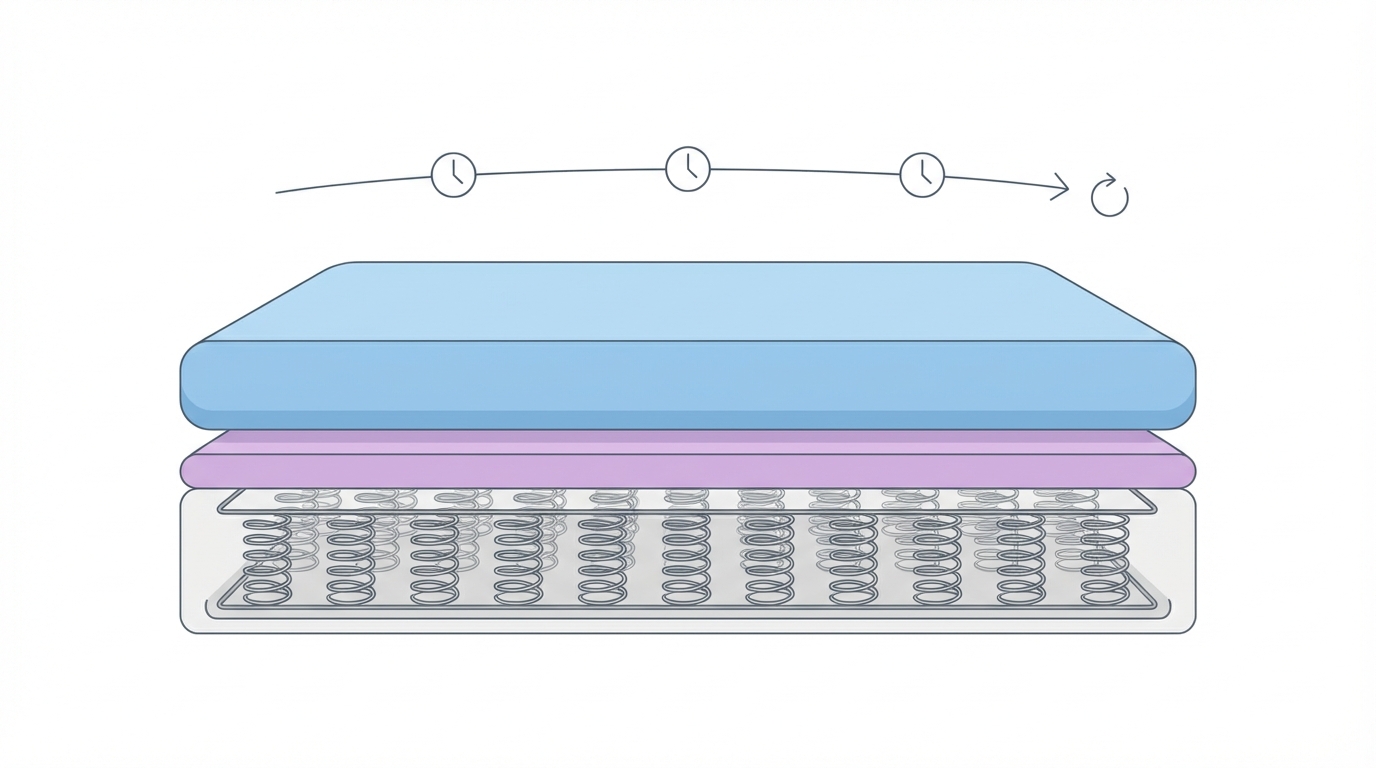
The decision to replace a mattress often gets framed purely as a financial one. It is understandable to worry about the cost of a new bed and the hassle of shopping, delivery, and disposing of the old one. But when you zoom out and look at the health impacts of staying on an unsupportive mattress, the “true cost” of waiting too long becomes much clearer.
Sleep researchers consistently highlight how strongly sleep quality is linked to almost every system in the body. The Sleep Foundation and Mayo Clinic both reference deep, continuous sleep as a pillar of immune strength, metabolic health, and emotional resilience. Chronic sleep disruption, even at low levels, is associated with higher risks of cardiovascular disease, weight gain, depression, and impaired memory and attention. Your mattress does not control everything about how you sleep, but it is the foundation for everything else you do to rest well.
From a musculoskeletal standpoint, years on a bed that fails to support your spine can contribute to or exacerbate chronic back pain. While a single rough night is unlikely to do much harm, repeated nights of misalignment encourage muscles to tighten and small joints in the spine to remain out of their optimal positions. Many of my clients describe feeling “older than their age” in the mornings, only to realize that a properly supportive surface dramatically reversed that feeling within weeks.
Allergy and respiratory health also play into the equation. As mattresses age and accumulate allergens, your nighttime breathing can become more labored. Waking repeatedly to cough, blow your nose, or adjust your position to breathe easier pulls you out of the deeper stages of sleep that are most restorative. For people with asthma, this can mean more nighttime inhaler use and higher baseline inflammation.
There is also a quieter psychological cost. When you dread going to bed because you expect to toss and turn, or because your back hurts by 3 a.m., your brain begins to associate your bedroom with frustration instead of rest. Over time, this can feed into insomnia patterns. Upgrading your mattress is not a magic cure for complex sleep disorders, but it is one major piece you can control. In many cases, a supportive, comfortable bed helps your other good sleep habits work better, whether that is a calming pre sleep routine or a consistent wake time.
When you spread the cost of a quality mattress over its realistic lifespan, it often amounts to just a couple of dollars a night. Compared with the cost of ongoing pain treatments, missed productivity, or long term health risks, that investment looks very different. That is why at Sleepology, we frame mattress replacement not as a luxury, but as essential maintenance for a body and mind that you rely on every day.
How To Extend The Life Of Your Mattress Without Sacrificing Comfort
Once you choose a new mattress, it is natural to ask how you can make it last as long as possible while still performing well. The goal is not to stretch it beyond its useful life, but to help it reach its full potential lifespan while feeling great for as many of those years as possible. A few straightforward habits have an outsized impact.
A properly fitting, breathable mattress protector is one of the simplest and most cost effective tools. According to consumer resources and allergy experts, protectors reduce penetration of sweat, skin cells, spills, and allergens into the mattress core, which slows material breakdown and keeps things more hygienic. Many modern protectors use smooth, quiet fabrics that do not change the feel of the mattress. Pairing your bed with a good protector from our Pillows, Sheets, Toppers, Protectors collection from day one is a habit you will rarely regret.
Rotating your mattress periodically also helps distribute wear more evenly. Most manufacturers recommend turning a non flippable mattress head to foot every 3 to 6 months. This is especially valuable for couples with a noticeable weight difference or for single sleepers who tend to favor one side of the bed. You do not need to be obsessive about the schedule, but putting two reminders a year on your calendar can pay off in how long the surface stays level.
Equally important is the foundation you place your mattress on. An unsupportive or old box spring, broken slats, or a frame that lacks a center support leg under a queen or king can all cause your new bed to sag prematurely. When in doubt, ask a Sleepology specialist whether your existing base is compatible with the mattress you are choosing. If it is time for a new setup, pairing your mattress with an adjustable bed frame and base can improve both longevity and comfort by allowing you to fine tune your sleep position.
A few lifestyle choices also matter. Regularly vacuuming the mattress surface, keeping pets’ claws trimmed if they share the bed, avoiding sitting heavily on the same edge every night, and keeping bedroom humidity in a moderate range all help materials age more gracefully. None of these steps are complicated, but together they support both the cleanliness and structural integrity of your mattress.
Finally, remember that accessories can fine tune feel as your body or preferences change. A quality topper can add plushness if you develop more sensitivity at the hips or shoulders, and a new pillow that properly supports your neck can resolve many complaints that people mistakenly blame on the mattress. The key is to use these tools thoughtfully, not as a way to postpone the inevitable when the mattress is clearly past its supportive life.
Matching Your Replacement Decision To Life Changes
The last piece of the “how often” puzzle is you. Even if your mattress is technically within its expected lifespan, life changes may move you into a different category of support or pressure relief needs. Being willing to reassess your mattress during these transitions can spare you years of poor sleep.
Weight changes, for instance, can alter how you interact with the same mattress. If you have gained or lost a significant amount of weight, the bed that once felt perfectly balanced may now be too firm, too soft, or not supportive enough. Pregnancy, recovery from surgery, or the onset of joint conditions like osteoarthritis can also make previously comfortable surfaces feel inadequate. Health organizations such as the Mayo Clinic often highlight mattress support and pressure relief as key considerations for chronic pain management.
Changes in who is sleeping in the bed matter as well. Adding a partner who is a different size or sleep position, moving from solo sleeping to sharing with kids or pets, or adjusting for a partner’s snoring or reflux can all prompt a different approach. For some couples, the solution is a mattress that handles motion transfer more gracefully, such as a hybrid with zoned coils. For others, pairing a supportive mattress with an adjustable base lets each person find a position that eases their breathing or back pain.
Age is another factor. As we move through our 40s, 50s, and beyond, our tissues tend to become less tolerant of pressure, and we may change positions more often at night. A slightly plusher surface with strong underlying support, like the Sealy Posturepedic Pro Soft Mattress – Dupont II Euro Pillow Top, can be an excellent choice in this stage, especially for side sleepers who wake with hip or shoulder discomfort.
The key idea is that “how often should you replace a mattress” is not only about the mattress aging, but also about you evolving. If your life has shifted significantly since you bought your current bed, give yourself permission to reevaluate. A short conversation with a Sleepology sleepologist can help match where you are now with a mattress that supports the next decade of your life, not the one you were living ten years ago.
Conclusion: A Smarter, Kinder Way To Think About Mattress Replacement
Knowing how often to replace your mattress is really about learning to listen to a combination of signals: your body, your bed, and your calendar. Average lifespans tell you when to start paying closer attention. The real decision point comes when you see clear signs of sagging, persistent morning aches and pains, better sleep away from home, or increasing allergy symptoms. When those show up, they are not inconveniences to be endured. They are useful data that your mattress has likely moved past its best years.
Approaching mattress replacement this way takes some of the stress and guilt out of the process. Instead of clinging to a specific number of years, you can think in terms of supporting your health and quality of life. A good mattress should serve you at your best, not merely survive on the bed frame. When you frame the investment against a decade of more comfortable nights, steadier moods, and fewer aches, it becomes one of the more impactful health decisions you make at home.
If your current mattress is approaching or beyond its typical lifespan and some of the red flags we discussed sound familiar, you do not have to figure out the next step alone. The Sleepology team is here to translate your real world experience into clear recommendations, whether that is a forgiving hybrid from our Best Hybrid Mattresses collection, a resilient foam design, or a simple foundation and protector upgrade. When you give yourself a supportive, well matched mattress, you are not just replacing a piece of furniture. You are rebuilding the foundation of your nights, so your days can feel lighter and more energized.
Frequently Asked Questions
How often should you replace a mattress on average?
Most people should plan to replace a primary bedroom mattress about every 7 to 10 years, but that range is only a starting point. Innerspring beds often fall on the shorter end, around 6 to 8 years, while higher quality foam and hybrid mattresses can remain supportive closer to 8 to 10 years. Natural latex designs sometimes last even longer. The more important question, though, is how you feel. If you notice sagging, morning pain, or better sleep on other mattresses, those are stronger signals than the calendar alone.
Is it really necessary to replace a mattress if it looks fine?
Yes, it can be. Many of the most important changes happen inside the mattress where you cannot see them. Foams slowly lose resilience, coil systems fatigue, and support for your spine can decrease long before the cover shows obvious wear. Health resources like WebMD point out that waking with new or worsening aches, or feeling less rested despite adequate sleep time, are key signs even when the mattress appears visually acceptable. Trust your body more than your eyes.
Can a mattress topper extend the life of my old mattress?
A topper can temporarily improve comfort on a mattress that is slightly too firm or that has minor surface wear, but it cannot fix a bed that has lost its underlying support. If your mattress has significant sagging or if you feel like you are sinking into a hammock, adding more cushioning on top often makes alignment worse. Toppers are best used on relatively new, structurally sound mattresses to fine tune feel. Once core support is compromised, it is time to budget for a replacement instead of stacking more layers.
Does my weight or sleep position change how often I should replace my mattress?
Yes. Heavier individuals and couples place more load on mattress materials, which can shorten the functional lifespan, especially for lower density foams or basic innersprings. Side sleepers tend to notice aging sooner because they rely heavily on pressure relief at the shoulders and hips. Back and stomach sleepers are more sensitive to sagging that allows the midsection to drop. If you are in a higher weight range or sleep mainly on your side, it is wise to lean toward the shorter end of typical replacement ranges and to choose a more robust hybrid or foam construction from the start.
When should I replace the base or foundation that goes with my mattress?
If your foundation or bed frame is older than your mattress, visibly sagging, missing slats, or lacks a center support leg for queen and king sizes, it is time to consider replacing it along with a new mattress. An unsupportive base can cause even a brand new bed to sag or feel uneven, shortening its lifespan. Adjustable bases, platform foundations with closely spaced slats, or high quality box springs designed for your specific mattress all help support the structure of the bed and protect your investment.
How do I know if my allergies are from my mattress and not something else?
If your allergy or asthma symptoms are noticeably worse at night and first thing in the morning, but ease as you move away from the bed during the day or when you sleep elsewhere, your mattress and pillows are likely contributing. Over time, older mattresses accumulate dust mite debris, skin flakes, and sometimes mold in humid environments. Even regular sheet washing cannot fully address allergens deep inside the mattress core. If this pattern sounds familiar, replacing an older bed and using breathable protectors on the new mattress and pillows is often very helpful, especially when combined with general bedroom cleaning.
Is replacing a mattress sooner than 7 years ever a good idea?
It can be, depending on quality and life changes. A low cost mattress with lower density foams may lose comfort and support within 4 to 6 years, especially for heavier sleepers or couples. Major changes such as significant weight gain or loss, a new partner joining you in bed, pregnancy, or the onset of chronic pain can also mean your current mattress no longer meets your needs even if it is not very old. If you are consistently uncomfortable and simple adjustments like a new pillow or topper do not help, it is worth considering a replacement regardless of the mattress’s age.