

How Much Is A Queen Mattress in ? A No Nonsense Guide To Price, Quality, And Value
If you are searching for how much a queen mattress costs, you are probably in that frustrating middle zone. You know your current bed is not working anymore, you are seeing prices all over the place, and you just want a straight answer that does not feel like a sales pitch. It can be confusing to see one queen mattress for under 400 dollars and another for over 3,000 dollars and wonder if you are missing something important in the fine print. You should not need a calculator, a physics degree, and a lie detector to figure out what a fair price really is.
What is at stake here is not only your budget, but your nightly comfort, energy during the day, and even your long term health. According to the Sleep Foundation, most adults need 7 to 9 hours of sleep each night, and mattress quality has a direct impact on how much of that time is actually restorative. If you pick a queen mattress only because it was the cheapest on the page, you may end up paying more over time in back pain, poor sleep, and needing to replace it much sooner. On the other hand, paying top dollar does not automatically mean the mattress is the best fit for your body or your space.
You are in the right place if you want a clear, grounded answer to the question, how much is a queen mattress, along with the why behind those prices. You will see realistic price ranges, what you can expect at each budget level, and how long a queen mattress should last before it becomes a bad investment. You will also learn how to match your budget to your sleep needs, and where it genuinely makes sense to spend more or save more without sacrificing comfort or support.
My goal as a sleepologist is to help you walk away feeling calm, informed, and ready to move forward. By the end, you will not only know what a queen mattress costs in 2026, you will understand what a good value looks like for you, your body, and your bedroom, and you will have concrete examples of mattresses and accessories that can make your decision easier.
Queen Mattress Price Ranges in Explained
When people ask how much a queen mattress costs, they are usually seeing three very different categories in the marketplace. On one side are the low priced promotional beds that look tempting when you are trying to save, in the middle are the better built everyday models that most people end up happiest with, and at the high end are premium and specialty mattresses with advanced materials and long warranties. The gap between these groups is not just about branding. It comes from construction, foam density, coil quality, and how long the mattress will realistically keep supporting your spine.
In , queen mattresses generally fall into a few broad price bands. Entry level promotional queens often start around 250 to 500 dollars. These are usually thinner, use lower density foams, and may not be designed to last more than a few years of nightly use. Mid range queen mattresses typically land between about 800 and 1,500 dollars, which is where you start to see stronger coil systems, higher quality comfort foams, and features like targeted lumbar support that matter for real world comfort. Premium and luxury queen mattresses usually range from about 1,800 to 3,500 dollars or more, often adding advanced cooling materials, more complex coil systems, or specialized memory foams.
The key to making a smart choice is not just asking how much is a queen mattress, but asking what you actually get between, for example, a 600 dollar queen, a 1,200 dollar queen, and a 2,800 dollar queen. According to Consumer Reports testing, better mattresses tend to use higher quality materials that maintain support and resist sagging over time, which directly impacts how you feel when you wake up. When you compare price ranges, it helps to think in terms of cost per comfortable night, not just sticker price, especially since many mattresses are designed to last around 7 to 10 years with proper care.
It is also important to factor in what you need beyond the mattress itself. A queen mattress price may or may not include a foundation, frame, delivery, and old mattress removal, all of which can add to your total out of pocket cost. Some people also benefit from a mattress protector or upgraded sheets, especially if they sleep warm or have allergies. At Sleepology, we are careful to explain each of these pieces in plain language so you are not surprised when everything is tallied.
“I came in thinking I needed to spend at least 2,500 dollars for something decent. Mia walked me through the differences layer by layer and I ended up with a queen hybrid in the 1,300 dollar range that actually felt better on my back. I appreciated that she never pushed the most expensive option, just the right one.” – Mark R., November
What Affects The Price Of A Queen Mattress?
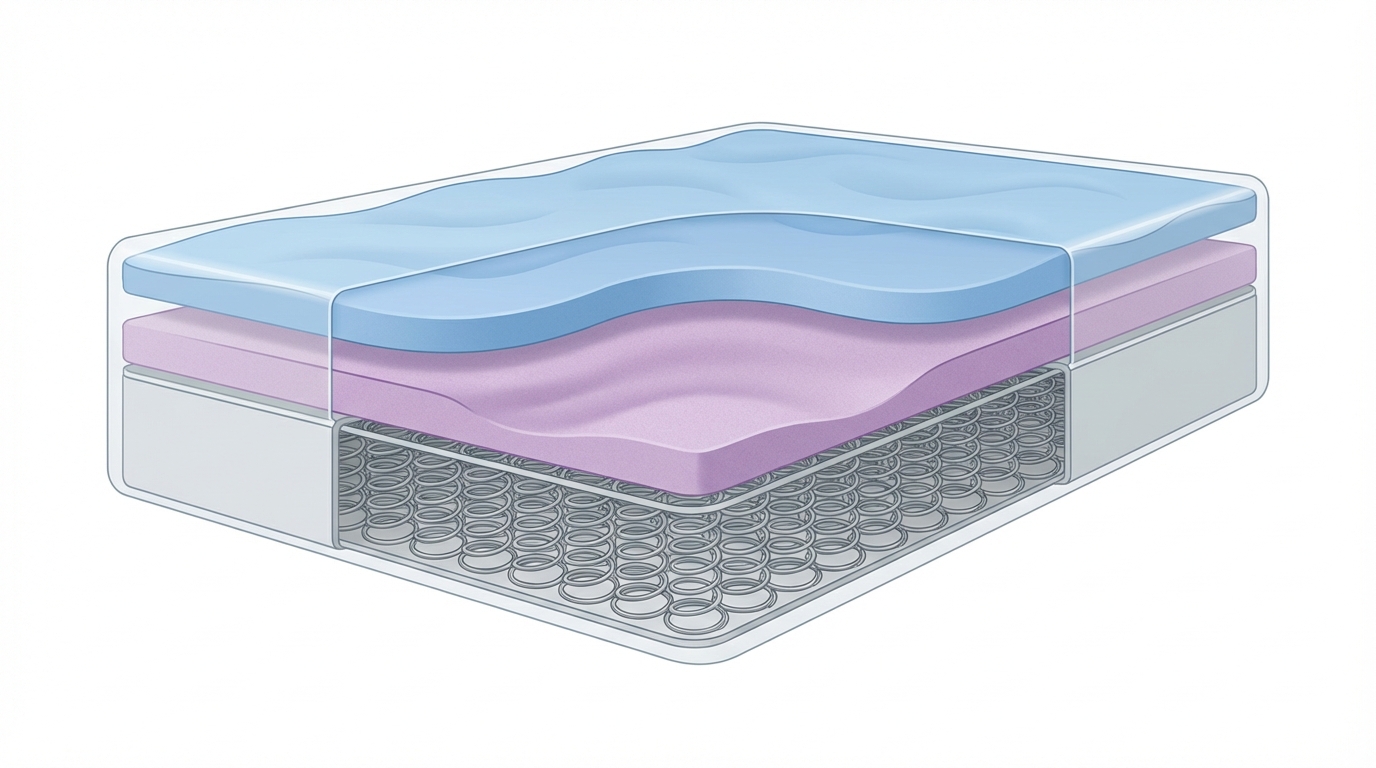
Several core factors work together to determine how much a queen mattress costs, and understanding them helps you see why two queens that look similar on a website can be hundreds of dollars apart. The first big driver is construction type. Innerspring, memory foam, and hybrid mattresses all have different material costs and engineering complexity. Hybrids, for example, combine a coil system with multiple foam layers, so they tend to cost more than a basic innerspring or all foam bed, but they also often deliver a better balance of support and pressure relief.
Material quality within each type matters as much as the category itself. Higher density memory foam, for instance, usually costs more, but it tends to provide better pressure relief and retain its feel longer compared with very soft, lower density foam. Similarly, a queen mattress built with individually wrapped pocketed coils will typically cost more than one with a basic open coil unit because pocketed coils reduce motion transfer and can be zoned for targeted support. According to research shared by the International Sleep Products Association, the overall trend in recent years has been toward more complex, multi layer constructions, especially in mid range and premium price tiers.
Brand reputation and warranty coverage also play a role in cost. Established brands that invest in long term product testing and back their mattresses with 10 to 15 year warranties usually price accordingly. While you do not need to pay only for a name, there is value in knowing you can rely on consistent specifications and support if something goes wrong. Cheaper no name mattresses sold through flash sales or marketplaces may not have the same level of quality control or after sale support.
Finally, retail model and service impact pricing. A mattress that includes professional delivery, setup, and removal of your old bed, plus a real trial period to make sure it works for you, will often cost more upfront than a bed in a box shipped to your doorstep. However, for many customers, especially those dealing with pain or limited time, those services are part of the value equation. At Sleepology, for example, we often bundle a breathable protector like the TEMPUR-Adapt Mattress Protector – Waterproof Mattress Cover, Hypoallergenic with a new queen mattress because it adds years to the life of the bed by protecting it from moisture and stains.
Queen Mattress Types And What You Pay For

Understanding how much a queen mattress costs becomes much easier when you look at pricing by type. Each category has its own sweet spot where you get the best blend of comfort, durability, and value. The three main types you will see most often are innerspring, memory foam, and hybrid, along with a smaller segment of specialty designs like latex or air adjustable beds. Each type can be built cheaply or thoughtfully, so it is the combination of type and quality that really matters.
Traditional innerspring queen mattresses typically start at the lowest prices and can be a good match for guest rooms or lighter use situations. Basic innerspring queens can cost between about 300 and 700 dollars, and at that level you are often getting a simple coil unit with thinner comfort layers on top. As you move into the 800 to 1,200 dollar range, innerspring mattresses often shift to pocketed coils, thicker foams, and reinforced edges, which are worthwhile upgrades for everyday use. For back sleepers who prefer a more classic, supportive feel, a well built innerspring can be an excellent value.
All foam and memory foam queen mattresses cover a wide range of prices. Entry level all foam queens can start near 350 to 600 dollars, but they may use softer, lower density foams that are slower to rebound and more prone to body impressions over time. In the 900 to 1,500 dollar range, you begin to see higher density comfort and support foams, better motion isolation, and more sophisticated layering that balances contouring with spinal alignment. For couples who are easily disturbed by movement or people with pressure sensitive joints, this price band often delivers a noticeable improvement in sleep quality compared with the cheapest foam beds.
Hybrid queen mattresses generally sit in the mid to upper price tiers because they combine a coil core with substantial foam layers, sometimes including specialty materials for cooling or added support. Well constructed hybrid queens commonly range from around 1,100 to 2,500 dollars in 2026, depending on brand and features. A model like the Sealy Posturepedic Pro Firm Hybrid Mattress – Dupont II is a good example of the value you can find in this category, pairing a strong coil system with targeted lumbar support for people who like a firmer feel. For side sleepers who need more cushion at the shoulders and hips, a plush hybrid such as the Sealy Posturepedic Pro Soft Mattress – Dupont II Euro Pillow Top helps justify its price by combining pressure relief and support that cheaper beds often cannot maintain over time.
Specialty latex or air adjustable queen mattresses generally sit at the higher end of the spectrum, often starting around 1,800 to 2,000 dollars and climbing to 4,000 dollars or more. Natural latex is durable and responsive, which means you may get more usable years per dollar, while air adjustable beds focus on customization for couples with very different firmness needs. These make sense for certain sleepers with specific preferences or medical guidance, but they are not necessary for good sleep for most people. It is always worth comparing how each type feels for your body, because comfort and support should drive the final decision more than the label.
Comparing Queen Mattress Types By Cost, Feel, And Longevity
Once you have a sense of the basic types, it helps to see how they stack up side by side. A hybrid might sound ideal in theory, but if you rarely wake up with pressure points and prefer a bouncier surface, a thoughtfully built innerspring could serve you better at a lower price. Likewise, if you are a light sleeper who wakes at every movement, the extra investment in a well designed foam or hybrid mattress can be more than worth it in terms of uninterrupted sleep.
The table below compares common queen mattress types across a few practical attributes. Keep in mind that these are general ranges and there are exceptions in every category, but it gives you a grounded reference point as you think about how much you want to spend and what you are prioritizing.
| Mattress Type | Typical Queen Price Range | General Feel | Relative Longevity |
|---|---|---|---|
| Basic Innerspring | 300 – 900 dollars | Bouncy, traditional, can feel firmer, more motion transfer | 5 – 7 years with regular use |
| Quality Innerspring / Pillow Top | 800 – 1,400 dollars | Supportive with added cushioning, better motion isolation | 7 – 9 years for average user |
| All Foam / Memory Foam | 600 – 1,500 dollars | Contouring, less bounce, very good motion isolation | 6 – 10 years depending on foam density |
| Hybrid (Coils + Foam) | 1,100 – 2,500 dollars | Balanced support and pressure relief, moderate bounce | 8 – 10+ years with quality build |
| Specialty Latex or Air | 1,800 – 4,000+ dollars | Highly responsive or highly adjustable, low motion transfer | 10+ years for quality latex, varies for air systems |
From an investment perspective, many shoppers land in the quality innerspring, foam, or hybrid bands because that is where price, comfort, and longevity intersect nicely for most bodies and sleeping positions. According to Cleveland Clinic sleep specialists, the ideal mattress should keep your spine aligned while relieving pressure at your heaviest points, and that combination often shows up in the mid range and better hybrid designs. A model such as the Sealy Posturepedic Medium Mattress – Medina II Euro Pillow Top sits in this sweet spot by mixing coil support with cushioning that suits many side and combo sleepers.
Remember that longevity numbers assume you are using a proper foundation, rotating the mattress periodically where recommended, and protecting it from spills and moisture. A breathable, waterproof protector like the TEMPUR-Breeze Mattress Protector – Cooling, Waterproof, Breathable Cover adds relatively little to the total cost of a queen mattress and can significantly extend its usable life by keeping the comfort layers clean and dry. When you look at cost spread over 8 to 10 years, even a more expensive queen can work out to less than a dollar per night for a mattress that consistently supports you.
“We almost ordered a cheap foam mattress online, but after trying a few options at Sleepology we realized the hybrid felt night and day better for both of us. Spending about 400 dollars more to move into that mid range feels like one of the best decisions we made this year because we are finally sleeping through the night.” – Jenna S., October
How Your Sleep Position And Body Type Should Shape Your Budget
Knowing the average price of a queen mattress is helpful, but your own sleep style and body type are just as important in deciding whether you should lean toward the lower, middle, or higher end of the range. If you are a smaller person who sleeps alone and is quite gentle on a mattress, you can sometimes get away with a simpler construction without sacrificing long term comfort. On the other hand, if you are a taller or heavier person, share the bed with a partner or pets, or struggle with back or joint pain, investing a bit more in build quality usually pays off clearly in how you feel each morning.
Sleep position is a key part of the equation. Side sleepers tend to need more pressure relief at the shoulders and hips, which often means thicker, higher quality comfort layers. If the foam on top of an inexpensive mattress compresses too much, you may bottom out onto the firmer support layer, which leads to soreness and numbness. This is where mid range or higher end foam and hybrid mattresses can be worth the extra cost, because they use better quality materials that maintain their cushioning longer. For side sleepers, collections like The Best Mattresses For Back Sleepers are still useful because many of those designs also support neutral spinal alignment, which matters even when you sleep on your side.
Back sleepers often do better on something that feels medium firm or firm, with solid lumbar support to keep the spine in a neutral curve. According to the Mayo Clinic, a mattress that is too soft can let your lower back sink out of alignment, which may contribute to pain over time. Many back sleepers can find excellent options in the mid range of the queen mattress price spectrum because the priority is a stable support system with just enough cushioning on top. For dedicated stomach sleepers, a supportive surface is even more important to prevent the midsection from sinking excessively, so it can be worth considering options curated in collections like The Best Mattresses For Stomach Sleepers.
Body weight and distribution influence how quickly a mattress breaks down, and that directly affects the real cost over time. Heavier individuals generally benefit from mattresses using higher density foams and robust coil systems to prevent deep body impressions and premature sagging. While these enhancements may push the price of a queen mattress toward the higher end of the mid range or into the premium tier, they often add years of comfortable use. When I work with couples with very different builds, I often suggest they plan their budget for that quality step up rather than splitting the difference with a mattress that is not strong enough for long term use.
Room Size, Lifestyle, And Where A Queen Makes The Most Sense
Price is not the only decision point when you are considering a queen mattress. You also want to make sure a queen is the right size for your room and your lifestyle so you are investing in a mattress that truly fits your space and habits. A standard queen mattress measures about 60 inches wide and 80 inches long, which is why it is the most popular size for couples and for individuals who like extra room to spread out. It offers a generous sleeping surface without taking up quite as much floor space as a king.
A good rule of thumb many designers and sleep experts use is that your bedroom should be at least 10 feet by 10 feet to comfortably fit a queen mattress along with pathways and basic furniture. If your room is smaller, a queen can still work, but you may need a minimalist frame and careful layout to avoid feeling crowded. Since you are already considering how much a queen mattress costs, it is smart to think about the cost of any accompanying bed frame or base as part of the overall project. For example, pairing a new queen mattress with a simple but functional Adjustable Bed Frame and Base can transform a tight room into a multi position relaxation space without needing extra bulky furniture.
Lifestyle details matter as well. If you share your bed with children or pets, the jump from a full to a queen usually feels enormous in terms of comfort, and that added space often feels worth the incremental price difference over many years of use. On the other hand, if your bedroom is more compact, or you are buying for a guest room that will be used only occasionally, you might decide to keep your budget on the lower or mid range end for the mattress itself and invest a bit more in bedding and accessories that make the space feel welcoming.
People who live in upper floor apartments or older homes with narrow staircases sometimes underestimate the logistics of getting a queen mattress into the room. While many modern mattresses can be delivered in a box, higher end models or those with reinforced edges may arrive full size and require professional delivery. When you ask how much a queen mattress is, do not forget to factor in these real world considerations. One reason many Sleepology customers appreciate in person guidance is that we help think through the entire setup, including delivery and the right base, so there are no expensive surprises on delivery day.
“We live in a small 1940s bungalow and I was afraid a queen would overwhelm the bedroom. The team at Sleepology helped us measure things out and suggested a low profile base that kept the bed from feeling too tall. We ended up with a queen hybrid plus an adjustable base for less than I expected, and it fits the room beautifully.” – Lila T., September
What You Get At Different Queen Mattress Price Levels
Now that you have a sense of the overall landscape, it helps to zoom in on what you can realistically expect at different price points when you shop for a queen mattress. This is where many people feel in the dark, because product descriptions can sound similar across wide price gaps. Instead of memorizing every feature, it is more helpful to understand the typical strengths and trade offs at each level.
In the budget range, roughly 250 to 700 dollars for a queen, you are usually looking at basic innerspring or thinner all foam mattresses. These work reasonably well for guest beds, short term setups, or very light sleepers who are not picky about feel. You may see fewer comfort layers, lower foam densities, and less edge support in this category, which means you might feel more motion from a partner and notice wear and body impressions sooner. Warranties may be shorter or more limited, and trial periods may not be as generous.
In the mid range, often 800 to 1,500 dollars, materials and construction quality tend to step up significantly. This is where you will find queen mattresses with stronger coil units, individually wrapped springs, thicker and more resilient comfort foams, and enhanced lumbar support zones. Many popular hybrids live here, providing a comfortable balance of cushioning and support that suits a wide variety of sleepers. Mattresses like the Sealy Posturepedic Medium Mattress – Medina II show how this tier can deliver targeted support for back and combo sleepers without drifting into ultra premium pricing.
At the premium level, roughly 1,800 to 3,500 dollars and up for a queen, you start to see more complex design features such as multiple cooling technologies, extra micro coil layers, natural or organic materials, or advanced pressure relief systems. The value here is usually longest when you have specific needs that these features address. For instance, if you sleep extremely hot, a more advanced cooling system can significantly improve comfort even though it raises the price. Or if you live with chronic pain, a thoughtfully engineered hybrid with zoned coils and high end foam can justify its cost by helping you wake up with fewer aches.
The most important thing at every price level is to align what you are paying with what you are actually getting and how you will use the mattress. If your needs are straightforward, you may not need top tier features, and a solid mid range queen can be an excellent long term value. If your sleep challenges are more complex, it often makes sense to stretch a bit into the range where the construction truly supports your goals. A knowledgeable consultant can help you avoid overspending on features that do not matter for you, while making sure you are not under investing in areas that really do.
Hidden Costs And Smart Ways To Save On A Queen Mattress
When you calculate how much a queen mattress costs, it is easy to focus on the tag and forget about the additional pieces that influence the real total. A new queen may perform best with a compatible base or foundation, especially if you are upgrading from a much older mattress. You will also want to factor in delivery, setup, removal of your old mattress if needed, and essential accessories like protectors and at least one set of properly fitting sheets. None of these are glamorous to budget for, but they make a big difference in how satisfied you feel months and years later.
One of the most effective ways to protect your investment is with a quality mattress protector. This is not the plastic, crinkly cover many people remember from childhood. Modern protectors, particularly those made with breathable, moisture wicking fabrics, create a barrier against spills, sweat, and allergens without changing the feel of your mattress. At Sleepology, customers often pair a queen mattress with a protector like the TEMPUR-Adapt Mattress Protector – Waterproof Mattress Cover, Hypoallergenic or the TEMPUR-Breeze Mattress Protector – Cooling, Waterproof, Breathable Cover to keep the mattress eligible for warranty coverage and to extend its usable life.
Bedding is another hidden cost that sneaks up on people. Deep, plush queen mattresses and pillow tops are sometimes taller than older models, which means standard fitted sheets may not stay in place. Investing in a set designed for modern mattress profiles, such as the Tempur-Pedic ProPerformance Sheet Set, can save a lot of nightly frustration. If you are upgrading a guest room, you might also budget for extra pillows or a topper, like the Tempur-Pedic® Mattress Topper - Pillow Travel and Guest Bundle, to easily add comfort to an existing setup.
Seasonal promotions and financing can help spread out the cost of a queen mattress without resorting to the absolute cheapest options on the market. Many retailers, including Sleepology, run major sales around holidays such as Presidents Day, Memorial Day, Labor Day, and Black Friday, where mid range and premium queen mattresses may be discounted into a more affordable zone. The most effective strategy I see is to decide first what level of quality you need, then look for the best pricing on that category rather than starting with the lowest priced mattress and trying to make it work.
While saving money is important, be cautious about deals that look too good to be true, especially from unknown brands with unclear specifications or very limited customer support. A mattress is something you will use every night, often for close to a decade, so it deserves a thoughtful balance between value and reliability. According to the Sleep Foundation, a supportive mattress and healthy sleep environment are core components of good sleep hygiene, and cutting too many corners here can undercut the benefits of everything else you do to take care of your health.
How Long Should A Queen Mattress Last For The Price?
Thinking about mattress cost only at the time of purchase can be misleading, because what really matters is how long the mattress keeps you sleeping comfortably. A 500 dollar queen that feels good for only two or three years is actually more expensive per year of use than a 1,200 dollar queen that keeps you well supported for eight or nine years. When you are comparing prices, it helps to ask how long each mattress is designed to last and how that lines up with its warranty and materials.
Most good quality mattresses are built to last around 7 to 10 years before they begin to lose support or show body impressions that affect comfort, according to general guidance from organizations like the Sleep Foundation. Innerspring mattresses on the lower end of the price range may land closer to that 5 to 7 year mark, particularly if they use thinner coils or lighter foams on top. Higher density foams and robust coil systems in mid range and premium mattresses usually help them maintain their structure and feel closer to the 8 to 10 year window.
Your own habits can speed up or slow down this timeline. Regularly rotating the mattress where recommended, using a protective cover, and supporting it with an appropriate frame or base all help distribute wear more evenly. Sleeping in the same spot every night, sitting on the same edge, or allowing liquids to seep into the layers can shorten the usable life significantly. When my clients weigh how much a queen mattress costs, I encourage them to factor in the conditions in their home and how much use the bed will see.
Mattress warranties are not a perfect measure of lifespan, but they do provide clues about how long the manufacturer expects the mattress to perform. A 10 year warranty is common in mid range and many premium mattresses, while very cheap options sometimes offer shorter or more limited coverage. It is worth reading the details about what qualifies as a defect, since comfort preference changes are rarely covered. If a queen mattress is priced far higher or lower than others with similar warranty terms and construction, that is a sign to ask more questions about what you are actually paying for.
Building A Realistic Queen Mattress Budget For Your Situation
At this point, you probably have a clearer sense of the overall price landscape, but you may still be asking, what should I personally spend on a queen mattress. The answer depends on your body, your sleep challenges, and your financial comfort zone. Setting a realistic budget is less about hitting a universal magic number and more about choosing a range where you will not regret your decision in either direction.
Start by clarifying your non negotiables. If you wake up with low back pain most mornings, for example, then proper spinal alignment and stable support should be at the top of your list. In that case, you might decide your budget should land at least in the mid range for a queen mattress that is designed with reinforced lumbar zoning, such as several models in the The Best Mattresses For Back Sleepers collection. If, instead, you are furnishing a guest room that will be used a few times per year, you may be comfortable spending less and channeling some of that budget into great pillows and linens.
Next, consider your time horizon. If you know you will be moving across the country in two years, you might lean toward a more modestly priced queen mattress that you will be comfortable selling or donating instead of moving. If you are settling into a long term home and want a bed that can support you through the next decade, stretching your budget slightly can make sense because you will be spreading that cost over many years of daily use. Framing the cost as a per night investment can help it feel more concrete. For example, spending 1,200 dollars on a queen that you comfortably use for eight years works out to about 41 cents per night.
It is also helpful to be honest about how sensitive you are to comfort nuances. Some people truly can sleep well on almost anything that is reasonably supportive, while others with pain, arthritis, or a long history of sleep issues feel every small difference. If you are in the second group, treating your mattress as essential health equipment rather than a simple commodity is reasonable. You might prioritize saving in other areas of the bedroom and home while choosing a queen mattress that truly meets your needs.
Finally, build a total project budget that includes the mattress, any necessary base, protector, and at least one set of well fitting sheets. If you have a little leftover room in that budget after choosing a queen, you can always improve pillows or add a topper later. Many Sleepology customers tell me they feel most at peace when they choose a mattress that clearly fits their body and pair it with one or two small upgrades that make their nightly experience feel special without overspending.
Conclusion: Turning “How Much Is A Queen Mattress?” Into A Confident Choice
You started with a straightforward question, how much is a queen mattress, and discovered that the real answer depends on materials, construction, mattress type, sleep position, room size, and how long you want your new bed to last. In , most queen mattresses fall into three broad price bands: budget promotional models around 250 to 700 dollars, mid range mattresses in the 800 to 1,500 dollar zone, and premium or specialty designs from about 1,800 dollars up. Each band has its own strengths and compromises, and the most important factor is how well the mattress supports your body night after night.
The good news is that you do not need the most expensive queen mattress to sleep well. Many people find their perfect fit in the mid range, where a well built hybrid or foam design offers excellent comfort, support, and durability without feeling out of reach. By considering your sleep position, body type, and how heavily the mattress will be used, you can narrow in on the level of quality that makes sense for you and then watch for the best value within that band. Thoughtful add ons like a breathable protector or supportive base often make a bigger difference in your nightly comfort than chasing the absolute top tier of features.
If you are still sorting through options or have specific questions about pain, partner disturbance, or room setup, you do not have to figure it out alone. The Sleepology team, including me, spends every day working with real sleepers, real bodies, and real budgets, and we are happy to help you sort through what is marketing and what genuinely matters. When you are ready, we can talk through your needs and help you find a queen mattress that fits both your body and your budget, so you can stop researching and start sleeping better.
Frequently Asked Questions
How much should I realistically budget for a queen mattress for nightly use?
For nightly use by one or two adults, a realistic budget for a queen mattress in is usually between 800 and 1,500 dollars. In this range, you are likely to find mattresses with stronger coil systems or higher quality foams that are designed for 7 to 10 years of regular use, rather than just a few years. While you can spend less, especially for a guest room, the mid range is often where long term value feels best for most sleepers.
Is a 400 dollar queen mattress good enough for everyday sleeping?
A 400 dollar queen mattress can work in some situations, but it usually comes with trade offs. At that price, many mattresses are built with simpler innerspring units or lower density foams that may feel comfortable at first but may not hold up as well under nightly use. If you are light in weight, sleep alone, and do not have existing pain issues, you might do fine for a few years, but for most adults, spending a bit more often yields better support, less motion transfer, and longer comfort.
Why are some queen mattresses over 2,000 dollars?
Queen mattresses over 2,000 dollars usually include several premium features that add material and manufacturing cost. These can include advanced cooling systems, thicker layers of high density or specialty foams, additional micro coil layers, natural or organic materials, and more complex zoned support systems. They may also come with longer warranties or more generous trials. These features can be valuable, especially for people with chronic pain or very specific comfort needs, but they are not automatically necessary for everyone.
How often should I replace a queen mattress if I want good value for the price?
Most people get good value from a queen mattress when they replace it roughly every 7 to 10 years, though some high quality mattresses may last a bit longer. Signs that it is time to replace include visible sagging, new aches and pains that disappear when you sleep elsewhere, or feeling the coils or base through the comfort layers. If your mattress was a very inexpensive model to begin with, you may notice these issues sooner, which is another reason mid range options often provide better long term value.
Does mattress type affect how much a queen should cost?
Yes, mattress type has a significant impact on typical queen mattress pricing. Basic innerspring and entry level foam mattresses tend to cost less, while hybrids and specialty latex or air adjustable beds often sit in higher price bands because they use more or more expensive components. Within each type, build quality matters just as much. A well made innerspring can cost more than a cheaply constructed hybrid and still be a better value if it delivers more consistent support over time.
Do I need to buy a new base or foundation with a queen mattress?
You do not always need a new base, but it is important to make sure your current foundation or frame provides the support required by the new queen mattress. Many modern mattresses, especially foam and hybrid designs, need a solid or closely slatted base to prevent sagging between slats. If your existing foundation is more than a decade old, squeaks, or has visible wear, upgrading the base when you buy your new queen is often a smart move to protect your investment and may be required to keep the warranty valid.
Are queen mattress accessories worth adding to my budget?
Certain accessories are very much worth including in your queen mattress budget. A breathable, waterproof protector helps keep the mattress clean, supports warranty eligibility, and can extend the life of the comfort layers. A properly fitting sheet set designed for the depth of your mattress improves comfort and prevents nightly readjustments. Depending on your needs, an adjustable base, upgraded pillows, or a topper in a guest room can all significantly improve sleep quality relative to their cost.