

How Much Is A King Size Mattress Really Going To Cost You?
If you are starting to shop for a king mattress, you are probably seeing prices all over the place and wondering what is actually reasonable. One page shows a bare bones foam king for a few hundred dollars, another shows a luxury hybrid that costs as much as a used car, and it is hard to tell what is hype and what you truly need. On top of that, every brand is telling you their sale is ending soon, which only adds more pressure. It is completely normal to feel stuck between saving money and finally giving yourself enough space to sleep well.
The stakes are higher than they look at first. According to the Sleep Foundation, most adults need 7 to 9 hours of quality sleep per night for healthy mood, metabolism, and immune function, and mattress comfort and support play a direct role in how restorative that sleep is. When you upgrade to a king, you are not just buying a bigger rectangle, you are choosing how your back, hips, and shoulders will feel every single morning for years. The right king can reduce partner disturbance, help manage aches, and make it easier to fall back asleep when kids or pets climb in. The wrong one can quietly drain your energy and your budget.
You are in the right place if you want clear, no‑nonsense guidance on what a king mattress really costs and what you should get for your money. We will walk through typical price ranges, what affects cost, where most people overspend or underspend, and how to choose a king that fits both your body and your budget. You will also see specific examples of value driven models from Sleepology, along with practical buying tips you can use whether you purchase online or in store.
By the time you finish reading, you will have a realistic price target for your situation, a checklist of features truly worth paying for, and a much better sense of which promotions are actually good deals. My goal is simple, to help you stop guessing, avoid expensive mistakes, and feel confident that your new king mattress will be a smart, long term investment in how you sleep and feel every day.
What Does A King Size Mattress Cost In Really?
When people ask how much a king mattress costs, what they are really asking is what they should expect to spend for something that is comfortable, supportive, and durable, not just the lowest ticket price online. In , king mattress prices in reputable brick and mortar and major online retailers usually fall into four broad tiers. These tiers are based on regular pricing, not temporary sale events, and they reflect differences in materials, build quality, and manufacturer reputation. Understanding these tiers gives you a useful benchmark before you look at individual models.
At the budget level, you will see king mattresses anywhere from 300 to around 800 dollars. This tier is dominated by basic all foam beds and entry level innersprings with thinner comfort layers and simpler support systems. Many of these can be perfectly fine for guest rooms, lighter weight sleepers, or very temporary setups, but they tend to offer less pressure relief and have shorter lifespans. Most big warehouse clubs and furniture chains will have a handful of options in this range. The key is to recognize that aggressive online ads can make these look more luxurious than they truly are once you sleep on them every night.
The mid range tier usually runs from about 800 to 1,500 dollars for a king, and this is where many shoppers find their ideal balance of comfort, support, and value. You start to see thicker profiles, upgraded foams, zoned coils, and more robust edge support, all of which contribute to better spinal alignment and motion control for couples. A king in this range is often a smart long term choice for primary bedrooms, especially if you choose a model that matches your sleep position and body type. Many of Sleepology’s best sellers, such as the Sealy Posturepedic Medium Mattress – Medina II, sit in this value sweet spot because they combine brand level engineering with approachable pricing.
Above that, the upper mid tier and luxury tier span roughly 1,500 to 3,500 dollars or more for king sizes. You pay more here for advanced coil systems, denser and more durable comfort foams, cooling technologies, and sometimes hand crafted construction. Premium hybrid models like the Sealy Posturepedic Pro Medium Hybrid Mattress – Dupont II fall into this category, using zoned coils and high quality foams to deliver a more tailored feel, especially for couples with different needs. A small slice of the market extends beyond 4,000 dollars for ultra luxury, brand prestige, or specialty designs, which can be worthwhile for some sleepers but are far from necessary for everyone. The important takeaway is that a very comfortable, supportive king for most people lands somewhere between 900 and 2,000 dollars, depending on specific needs and features.
“We were scared a good king mattress would run 4,000 dollars or more, but Mia walked us through a few mid range hybrids. We ended up around 1,600 dollars for a king that feels like a hotel bed, and my back has not felt this good in years.” _Josh P., November _
The Key Factors That Shape King Mattress Prices
Even when two king mattresses look similar on a website, there can be meaningful differences hiding inside the layers that explain why one costs 900 dollars and another costs 2,300. Price is driven by a combination of materials, construction methods, brand backing, and business model. When you understand which factors truly impact your comfort and mattress lifespan, it becomes much easier to decide where to spend and where to save.
Materials are one of the biggest cost drivers. Higher density memory foams, specialty cooling foams, natural latex, and tempered, individually wrapped coils all cost more than basic polyurethane foam or simple wire bonnell springs. According to the Cleveland Clinic, pressure relief and spinal alignment are critical for reducing nighttime pain and stiffness, which is exactly where better quality comfort and support materials help over the long haul. In practical terms, a king mattress that uses denser, more resilient foams on top of a zoned coil system will almost always last longer and feel more stable than a cheaper option relying on low density foam over a basic spring unit.
Construction and design complexity also influence price. A simple two or three layer foam mattress is cheaper to build than a sophisticated hybrid that combines multiple foam types, reinforced edges, and targeted lumbar support zones. Features like euro pillow tops, phase change cooling covers, and thicker overall profiles add material and labor cost. At Sleepology, for example, the Sealy Posturepedic Elite Medium Mattress – Brenham II Euro Pillow Top costs more than a simpler non pillow top because it includes extra cushioning and quilting that many side sleepers find more comfortable.
Brand reputation, warranties, and trial policies play a quieter but important role in pricing as well. Established brands invest significantly in testing, quality control, and sleep research, and they usually back their products with 10 year warranties or more. The Mayo Clinic notes that long term neck and back issues are often related to chronic poor sleep surfaces, so having a mattress that is built and guaranteed to last can be a form of health insurance as well as financial protection. When you pay a bit more for a brand with a proven track record, you are not just buying foam and coils, you are buying support if something goes wrong and a higher likelihood that your mattress will perform consistently for years.
Organic certifications, American made construction, and environmentally conscious production can also raise costs, though not always as dramatically as people think. If those values are important to you, it can be worth paying a modest premium in this area while being realistic about which certifications actually matter. Finally, the sales channel affects price. Big box retailers might use mattresses as traffic drivers with lower prices but limited guidance, while specialty shops like Sleepology prioritize education and long term satisfaction, which can help you avoid the expensive mistake of buying the wrong feel or support level and needing to replace it early.
How Mattress Type Affects What You Pay For A King
When you look at price tags, you will notice patterns tied closely to mattress type. Different constructions have different baseline costs and typical lifespans, so understanding the tradeoffs is essential before you focus on specific models. The four most common categories for king mattresses are innerspring, memory foam, hybrid, and latex, and each has a characteristic price band and feel.
Traditional innerspring king mattresses tend to be the most affordable, especially in the entry and mid tiers. They rely on coil systems for support, with thinner foam or fiber layers on top for cushioning. Many shoppers grew up on this style of mattress and appreciate the familiar bounce and easier movement. You will often find king innersprings from recognized brands starting under 1,000 dollars, though more robust models with thicker comfort layers, better coils, and stronger edges can climb closer to 1,500 dollars. For back and stomach sleepers who like a firmer, more buoyant feel, a well built innerspring can be an excellent value.
Memory foam king mattresses range from very inexpensive to mid and upper mid priced options. The lowest priced all foam kings often use lower density foams that feel comfortable on day one but can develop body impressions more quickly. Better quality memory foam beds use higher density foams in their comfort and transition layers, which boosts durability and pressure relief but also pushes pricing into the 900 to 1,800 dollar range. According to research summarized by the Sleep Foundation, memory foam can be particularly helpful for pressure sensitive areas like shoulders and hips, especially for side sleepers, which makes these models worth consideration if you struggle with pressure points.
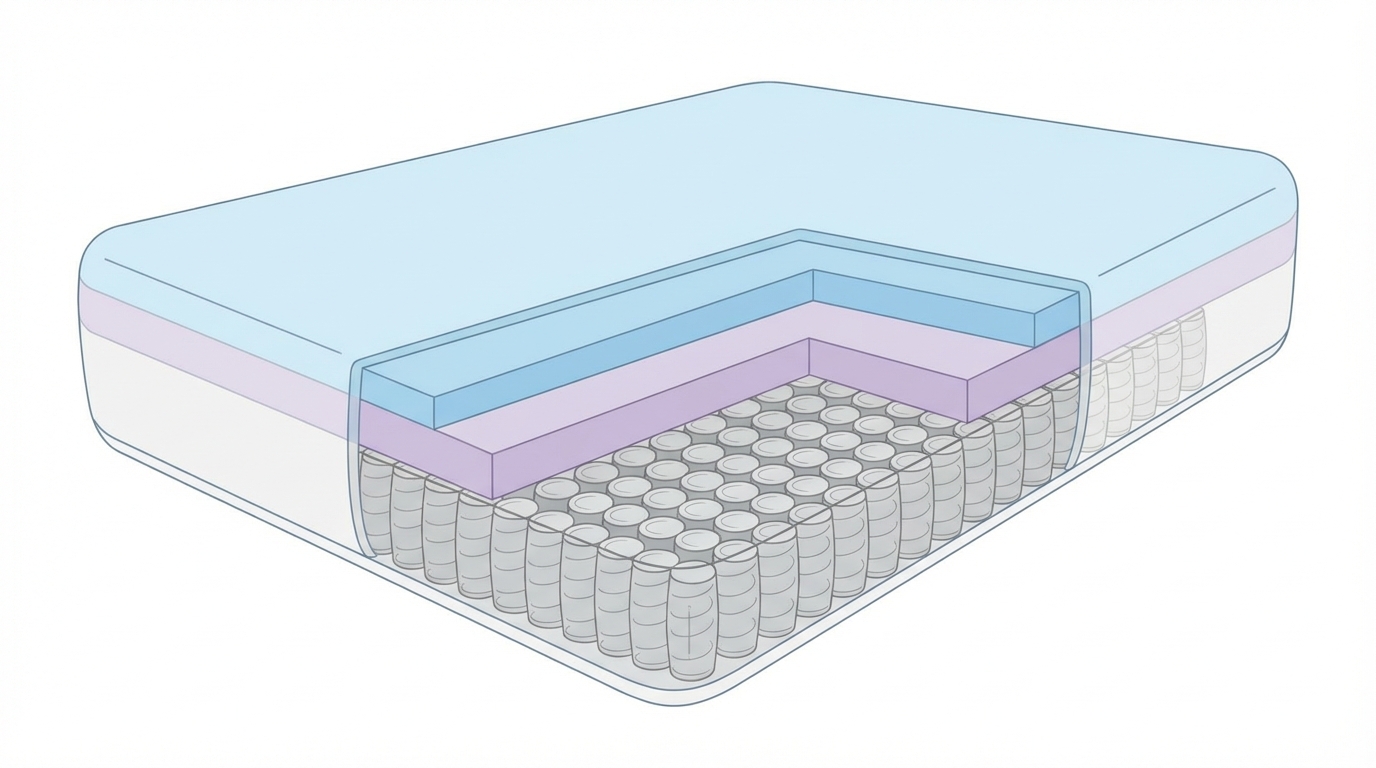
Hybrid king mattresses combine a pocketed coil core with layers of memory foam, latex, or other specialty foams. This design gives you the support and airflow of coils with the contouring comfort of foam, which is why hybrids have surged in popularity in . They typically occupy the mid to upper mid price bands, often between 1,200 and 2,500 dollars for a king, because you are paying for two full support systems integrated into one bed. Models like the Sealy Posturepedic Pro Medium Hybrid Mattress – Dupont II illustrate the benefits well, responsive support for multiple sleep positions, strong edges for couples sharing a king, and foams tuned for a balanced medium feel that suits a wide range of bodies.
Latex king mattresses, especially those made with natural or organic latex, sit at the higher end of the spectrum. Latex is resilient, breathable, and naturally supportive, but it costs more to source and manufacture. All latex or latex hybrid kings often start around 1,800 dollars and can run past 3,000 dollars depending on brand and certifications. They can be a strong value over time for people who prioritize durability and a buoyant, lifted feel, but they are not necessary for everyone. When you understand these typical ranges by type, you can align your budget with the construction that best fits your sleep style rather than chasing every sale you see.
| Mattress Type | Typical King Price Range | Common Feel Profile | Best For |
|---|---|---|---|
| Innerspring | 600 to 1,500 dollars | Bouncy, supportive, thinner cushioning | Back and stomach sleepers who like a firmer, traditional feel and strong airflow |
| Memory Foam | 500 to 1,800 dollars | Contouring, pressure relieving, motion isolating | Side sleepers, people with joint pain, couples sensitive to motion |
| Hybrid | 1,000 to 2,500 dollars | Balanced support and contouring with good edge strength | Couples, combo sleepers, those wanting a “best of both” feel |
| Latex | 1,800 to 3,500 dollars | Buoyant, responsive, highly durable | People wanting natural materials, heavier bodies, sleepers who dislike sinking |
“We were torn between all foam and hybrid. Mia explained how the coil support would help my husband’s lower back while the foam eased pressure on my shoulders. Spending a bit more for a hybrid king felt justified once we understood what we were getting.” _Laura D., October _
Pricing Differences Within King Size: Standard, Split King, And Accessories

When people ask how much a king mattress costs, they often mean a standard king. There are, however, a few related sizes and configurations that can change your total budget. Standard king, sometimes called Eastern king, measures approximately 76 inches wide by 80 inches long, and it is the most common choice for couples who want more personal space. This is the size you will see in most price tags labeled simply as king.
A split king, on the other hand, is essentially two Twin XL mattresses placed side by side on the same frame, often used with adjustable bases. The main advantage is that each sleeper can choose a different firmness and adjust their side independently without disturbing the other. This can be a game changer for couples with very different comfort preferences or medical needs. Because you are buying two separate mattresses, a split king setup usually costs more than a single standard king of the same model, though not quite double once promotional pricing is factored in. If you are price comparing, remember to check whether the listed split king price refers to one side or the full pair.
Accessories also add to your king size investment, and it is wise to plan for them up front. High quality pillows, mattress protectors, and sheets contribute significantly to how your bed feels and how long it lasts. For example, pairing a new king with a breathable, waterproof cover such as the TEMPUR-Adapt Mattress Protector – Waterproof Mattress Cover, Hypoallergenic can protect your warranty and keep spills, sweat, and dust mites from breaking down the comfort layers. Likewise, supportive pillows or a well chosen topper, like the Tempur-Pedic® Mattress Topper - Pillow Travel and Guest Bundle, can fine tune your comfort so you do not feel tempted to replace a good mattress prematurely.
Bed frames and bases are the last piece of the puzzle. A basic platform or metal frame that properly supports a king can be very affordable, while adjustable bases, storage beds, and decorative frames add to the bottom line. Some shoppers decide to allocate more of their budget toward the mattress itself and keep the frame simple, which is usually a smart move if funds are limited. Others who deal with snoring, reflux, or circulation issues may prioritize an adjustable base and choose a slightly simpler mattress, since head and foot elevation can significantly improve comfort in those situations.
What You Actually Get As You Spend More On A King
It is tempting to assume that a higher price tag automatically means better sleep, but that is not always the case. What really matters is what improves as you climb each pricing tier. Looking at specific performance areas helps you decide when a higher price is justified and when a mid range king will do just as well for you.
One of the biggest upgrades you get when you move from a budget king into a solid mid range is improved pressure relief and spinal alignment. Thicker, higher quality comfort layers distribute your weight more evenly so your shoulders and hips do not dig into the mattress. This is especially important for side sleepers, who the Sleep Foundation notes experience the highest pressure on joints without adequate cushioning. In the mid range, you also start to see more robust support cores that keep your spine from sagging, which can be critical for back and stomach sleepers. For many people, this step up is where morning stiffness and pinched nerves begin to resolve.
As you move further into the upper mid and luxury tiers, motion isolation, cooling, and edge support are the areas that usually improve the most. Couples who share a king often notice that premium hybrids and advanced foams dramatically cut down on feeling each other’s movements at night. Cooling technologies, such as phase change fabrics and ventilated foams, become more effective at this level as manufacturers have more budget to invest in performance materials rather than just marketing. Better edge support matters in a king because many couples use the full width of the bed, and strong edges prevent that “roll off” sensation and make it easier to sit comfortably on the side.
Durability and warranty support are the final major benefits of spending more within reason. Higher quality foams, coils, and quilting hold their structure longer, which means fewer body impressions and a more consistent feel over time. Consumer testing organizations like Consumer Reports have repeatedly found that better constructed mattresses retain comfort and support several years longer than cheaper options, which can make a higher upfront price more economical across the life of the bed. When you couple that with a true 10 year non prorated warranty from a reputable brand, you are effectively buying a decade of predictable sleep surface instead of rolling the dice on early breakdown or complicated warranty disputes.
Setting A Realistic Budget For Your King Mattress
Once you understand how prices and features relate, the next step is setting a budget that respects both your finances and your body. For most people shopping for a primary bed, a healthy starting target for a king is around 1,000 to 2,000 dollars before tax and delivery. That range typically opens up multiple high quality innerspring and hybrid options from trusted brands, as well as some upgraded memory foam models that balance comfort, support, and lifespan. From my experience working with thousands of shoppers, this is the band where satisfaction rates are highest and replacement rates are lower.
If your budget is below 1,000 dollars, it does not mean you cannot find a usable king, but it becomes even more important to prioritize support and quality over frills. Focus on models from established brands, skip the thick pillow tops that rely on lower density foams, and pay attention to edge support if you share the bed. An option like the Sealy Posturepedic Medium Mattress – Medina II Euro Pillow Top can sometimes fall into promotional pricing that makes it accessible in this zone, giving you brand backed support with a touch of extra cushioning.
If you are able to invest closer to or above 2,000 dollars, you gain access to more specialized feels, enhanced cooling, and more durable constructions. In this tier, it makes sense to be more selective and ensure that the extra cost is going toward features you will truly benefit from. For example, heavier body types, people with chronic back pain, or couples with very different preferences might find the engineering in a model like the Sealy Posturepedic Pro Medium Mattress – Dupont II Euro Pillow Top genuinely helpful. On the other hand, someone of average build without major pain issues may find that a well chosen mid range hybrid feels just as good as a pricier alternative.
It is also worth thinking about cost per night rather than just sticker price. A 1,600 dollar king mattress used by two people for eight years works out to roughly 27 cents per person per night. Framing the decision this way can make it easier to justify spending a bit more up front for the right model, especially when you consider the link between quality sleep and long term health, energy, and productivity. That said, no mattress is worth stretching your finances past a comfortable limit, and there are smart choices at several price points if you know what to prioritize.
“We walked into Sleepology thinking we would ‘just look’ because our budget was capped at 1,200 dollars. Mia helped us compare cost per year on a few options and we realized spending an extra 300 dollars for better support made sense. It still fit our budget, and we stopped waking up sore within a week.” _Amber R., December _
How Your Body Type And Sleep Style Influence What You Should Spend
Price ranges become much more useful once you layer in your body type and sleep position. Two people can buy the exact same king mattress at the same price and have completely different experiences depending on how they are built and how they lie on the bed. Matching construction and firmness to your body is one of the smartest ways to protect your investment.
If you primarily sleep on your side and have more pronounced curves at the shoulders and hips, you will usually benefit from a king mattress that offers deeper pressure relief on top of a strong support core. This often means leaning toward mid range or upper mid range hybrids and memory foam models, where comfort layers are thick and responsive enough to cradle those joints without letting your spine dip. Options with euro pillow tops or medium feels, such as the Sealy Posturepedic Elite Medium Mattress – Brenham II Euro Pillow Top, tend to perform very well here. Side sleepers who underspend in the budget tier frequently report numb arms and aching hips that eventually push them to upgrade sooner than planned.
Back and stomach sleepers often need a slightly firmer, more supportive feel to prevent the lower back from arching too much into the mattress. The Sleep Foundation and many spine specialists emphasize that keeping the natural curve of the lumbar region supported during sleep can reduce chronic back pain. Well built innersprings and firmer hybrids are excellent choices here. Investing in models with zoned coils that reinforce the middle third of the bed can be worth a modest price bump, especially for those with existing back issues. Sleepology’s collection of mattresses for back sleepers is curated with these principles in mind, so you can focus your budget on beds engineered for this alignment.
Body weight also matters. Heavier sleepers place more force on foams and coils, so they typically benefit from stepping up one pricing tier to access denser foams, thicker profiles, and sturdier coil units. These features resist early sagging and maintain support longer, which is critical when shopping for a king that both partners will share. Lighter sleepers can sometimes be more comfortable on slightly softer models within the same price band, since they do not sink as deeply and need the mattress to meet them where they are. Spending a little time at Sleepology working with a sleep expert to match your body type and position to specific king models often saves money in the long run by preventing an expensive mismatch.
Understanding King Mattress Deals, Sales, And “Too Good To Be True” Prices
One of the most confusing parts of pricing a king mattress is navigating constant sales. Holiday weekends, clearance events, and sitewide promotions can make it look like you are getting a huge discount, but the real question is whether the final price aligns with the build quality of the mattress. Recognizing a genuine value versus a marketing trick will save you time and stress.
In , most reputable retailers follow a fairly predictable promotional calendar, with larger discounts appearing around major holidays and seasonal transitions. These sales often provide meaningful savings on well built mid range and premium kings, especially when you combine manufacturer promotions with retailer incentives like free delivery or accessories. The key is to look not just at the percentage off but at the final price compared to the typical range for that construction type and brand. A hybrid king from a leading brand priced at 1,300 dollars during a sale is more likely a solid value than a no name king advertised as 70 percent off with a final price of 500 dollars.
Ultra low advertised prices deserve a closer look. Rock bottom king deals often achieve those numbers by cutting corners in foam density, coil count, or overall thickness, or by limiting warranty coverage. According to various industry surveys, many of these beds feel fine initially but begin to develop impressions or loss of support within a few years, especially for couples. When you see a king mattress that is dramatically below the usual 600 to 800 dollar floor, ask how thick it is, what the foam densities are, and whether it uses individually wrapped coils or a basic spring unit. If those details are vague, there is a good chance the low price will cost you comfort later.
At Sleepology, we prefer a transparent approach. Instead of inflating regular prices to create the illusion of massive discounts, we focus on offering consistent, competitive pricing and clear explanations of why certain kings cost more than others. During promotional periods, we highlight genuine savings on models that already meet our quality standards, not just the cheapest ticket in the room. If you ever feel overwhelmed while comparing sale ads, you can always call us at 877‑631‑8383, and a sleepologist will walk through line by line how a supposed deal stacks up against trustworthy options in your price range.
Hidden Costs To Factor Into Your King Mattress Budget
The price tag on the mattress itself is only part of the financial picture. When you upgrade to a king, there are a few additional costs that can sneak up on shoppers if they are not planning ahead. Including them in your budget from the start helps you avoid surprises and keeps your expectations realistic.
Delivery and setup can vary widely between retailers. Some include basic doorstep delivery in the mattress price, while others charge extra for in home setup or removal of your old mattress. If you live in an apartment building, have limited mobility, or simply do not want to wrestle a king up the stairs, it may be worth allocating some budget for white glove delivery. This service typically includes bringing the mattress into your room, setting it up on your frame, and hauling away packaging, and sometimes removal of your old bed. The peace of mind and back saving alone justify the cost for many customers.
Bedding is another line item. King size sheets, duvets, and blankets are often moderately more expensive than queen sets because of the larger fabric size. If you are moving up from a smaller bed, you will likely need at least one or two complete sheet sets and possibly a new comforter or duvet insert. Investing in breathable, higher quality bedding can also enhance the performance of your mattress, especially on models with cooling features. Sleepology’s collection of pillows, sheets, toppers, and protectors is curated to complement a wide range of king mattresses, so you do not have to guess which fabrics or fills will work best.
Finally, consider the cost of time and decision fatigue. Many people spend weeks or months reading conflicting reviews, ordering and returning multiple beds in a box, and still feeling unsure. Working with a knowledgeable guide in a showroom, or speaking with a sleepologist by phone, can compress that process into a couple of focused conversations. While that is not a line item on a receipt, it is very real value, especially when it helps you land on the right king the first time instead of paying shipping and restocking fees for returns.
How Long Should A King Mattress Last For The Money?
The lifespan of a king mattress is a crucial part of its true cost. A slightly cheaper bed that wears out in five years can end up costing more per night than a somewhat more expensive model that stays comfortable and supportive for a decade. Thinking in terms of durability and replacement timing helps you evaluate whether a price tag is genuinely fair.
As a general guideline, many sleep experts and organizations suggest replacing your mattress roughly every seven to ten years, depending on its condition and your body. The Sleep Foundation notes that materials like memory foam and innerspring coils naturally soften and compress over time, which can lead to reduced support and increased pain. That said, not all mattresses age at the same rate. Lower density foams and simple coil units tend to lose resilience faster than higher density foams and advanced pocketed coils. This is one reason mid range and upper mid range kings often provide better long term value.
In practical terms, a budget king might feel noticeably different after four to six years, especially under couples or heavier bodies. A well built mid range or premium hybrid or innerspring, on the other hand, can often deliver close to its original comfort for eight to ten years, particularly if it is properly supported and protected from moisture and stains. Using a quality mattress protector, rotating the mattress as recommended by the manufacturer, and ensuring your frame or base has adequate center support all contribute to extending lifespan. Warranties typically cover defects and deep body impressions, but they do not cover normal softening, so your comfort experience is the best indicator.
When you factor in lifespan, it often makes sense to stretch toward a better constructed king if your budget allows. For example, if a 1,200 dollar king lasts six years and a 1,800 dollar king lasts nine years with better comfort, the more expensive model actually costs less per year of use. This does not mean everyone needs to buy at the top end, but it does reinforce that quality and durability should matter just as much as upfront price, especially for a bed you plan to use every night.
When To Spend More On Your King Mattress (And When You Can Spend Less)

Not every sleeper needs a top of the line king mattress, but there are certain situations where it is wise to allocate more of your budget to the bed itself. Knowing where you fall on that spectrum can prevent both overspending and underspending.
If you live with chronic pain, arthritis, or significant spinal issues, investing in a higher quality king is often one of the most impactful things you can do for your daily comfort. In these cases, better pressure relief, targeted support zones, and consistent motion control from a premium hybrid or advanced innerspring can reduce nighttime awakenings and morning stiffness. It can also help you follow your healthcare provider’s recommendations about sleep posture. While a mattress is not a medical device and cannot replace professional care, it is part of your overall care plan. In my experience, people who fall into this category almost always benefit from stepping beyond the most basic options.
Couples with different body types or strong preference differences are another group who often see real benefits from a somewhat higher spend. Features like zoned coils, more nuanced foam layering, and stronger edge support help a king mattress serve two different sleepers without compromise. In some cases, a split king may be the best solution, and that configuration naturally comes with a higher price. If your main goal with a king is to finally stop waking each other up or fighting for space, it is reasonable to prioritize a model designed with couples in mind, even if that means targeting the 1,500 to 2,500 dollar range.
On the other hand, there are scenarios where a modestly priced king is perfectly sensible. Guest rooms, short term living situations, and bedrooms for teenagers who will likely change preferences or leave home in a few years do not always require premium builds. In those cases, a solid mid tier innerspring or foam mattress can offer a pleasant sleep surface without a major investment. Likewise, if you are of average weight, have no significant pain issues, and are primarily upgrading for space rather than for comfort problems, you may find that a carefully chosen mid range king feels just as wonderful as a far more expensive option.
Practical Steps To Get The Best King Mattress For Your Budget
Once you have a sense of how much a king mattress costs and what drives the price, it helps to have a simple, practical process for choosing your specific bed. This is where you can turn all the information you have absorbed into a clear decision.
Start by anchoring your budget range, not a single number. Decide on a comfortable target low and high, for example 1,200 to 1,800 dollars for the mattress alone, and keep accessories and delivery as a separate mini budget. This creates room to choose a slightly better option if the right one appears, without sending you into decision paralysis. From there, narrow down your preferred mattress type based on your sleep position and feel preferences. Combining body type, position, and budget usually points clearly toward one or two categories, like medium hybrid or firm innerspring.
Next, choose two or three specific models to compare up close. If you can visit a Sleepology showroom, spend real time lying on each option the way you actually sleep at home, not just sitting at the edge. Give yourself at least 10 to 15 minutes per mattress, allowing your body to relax and check for any pressure points or sagging. Pay attention to how easy it is to roll over and how the edges feel if you sit or lie near the side, which matters a lot on a king. If you are shopping remotely, a phone consultation with a sleepologist can accomplish something similar by matching your feedback with known feel profiles of different models.
Finally, consider the full package, not just the mattress price. Ask about delivery, old mattress removal, trial periods, and warranty details, and factor in a quality protector and appropriate pillows. Sleepology’s team is happy to help you choose accessories that support your new king without overselling unnecessary extras. When everything is looked at together, you can make a confident yes or no decision that feels good financially and physically, knowing you have covered both the short term comfort and long term value of your purchase.
Conclusion: Finding Your Just Right King Mattress Price
Understanding how much a king size mattress costs is about much more than chasing the biggest discount. It is about learning how construction, materials, and your own body all come together to shape both price and comfort over years of use. Once you see that a solid, supportive king from a trusted brand typically falls into the 1,000 to 2,000 dollar range, with room above and below for special circumstances, the market feels much less chaotic. Instead of wondering if a 600 dollar king can really be good or if you need to spend 3,000 dollars to sleep well, you can evaluate each bed on what it truly offers.
You now have a framework for matching your budget to mattress type, for recognizing when higher prices are justified, and for spotting deals that are more marketing than substance. Whether you lean toward a value focused innerspring, a pressure relieving memory foam, or a balanced hybrid like many of Sleepology’s Sealy Posturepedic options, you can approach your decision with clarity instead of guesswork. And when you remember that your king mattress will support thousands of nights of rest, it becomes easier to think in terms of cost per night, not just the number on the price tag.
If you would like help translating all of this into a specific recommendation, our Sleepology team is here to guide you. You can browse our curated king sized mattress collection online, visit us in person, or call 877‑631‑8383 to talk through your needs with a sleepologist. However you choose to shop, you deserve a king mattress that fits your life, your body, and your budget, and we are honored to help you get there.
Frequently Asked Questions
How much should I realistically budget for a king mattress for everyday use?
For a primary bedroom where the mattress will be used nightly, a realistic budget for a quality king is usually between 1,000 and 2,000 dollars. That range opens up solid innerspring, memory foam, and especially hybrid options from reputable brands that balance comfort, support, and durability. If you have chronic pain, higher body weight, or very different needs from your partner, it can be wise to aim toward the upper half of that range to access stronger support systems and enhanced pressure relief. For guest rooms or temporary setups, you can spend less, but for long term daily use, this is the zone where most people find the best value.
Are king mattresses really that much more expensive than queens?
King mattresses do cost more than queens, but the difference is often smaller than people expect when you look at similar quality levels. Because a king has roughly 16 inches more width, it requires more materials, which raises the price, but not necessarily by a huge amount. In many collections, the jump from a queen to a king in the same model is a few hundred dollars, which can be well worth it for couples who want more personal space or families with kids and pets who climb in. When you spread that additional cost over several years of use, the extra width can be one of the most cost effective comfort upgrades you make.
Is it safe to buy a very cheap king mattress online?
It is possible to find inexpensive king mattresses online that work fine for some sleepers, but extremely low prices often come with tradeoffs. Ultra cheap kings may use lower density foams or simple spring units that lose support faster, leading to body impressions and discomfort within a few years, especially for couples or heavier bodies. Warranties and quality control can also be more limited. If you do choose a budget option, look for clear information on foam density, coil type, thickness, and warranty terms, and consider buying from a retailer that offers a meaningful sleep trial so you can return it if it does not meet your needs.
When does it make sense to spend more than 2,000 dollars on a king mattress?
Spending above 2,000 dollars on a king can make sense if you have specific needs that benefit from premium materials and more complex construction. This might include chronic pain that requires precise pressure relief, heavier body weight that benefits from thicker, more durable support systems, or couples who want advanced motion isolation and cooling. In these cases, premium hybrids or specialty designs can offer noticeable improvements in comfort and longevity. However, if you are of average build, without major pain issues, and primarily upgrading for space, a well chosen mid range king often delivers all the comfort you need without entering the highest price tiers.
How do I know if a king mattress is worth the price being asked?
To judge whether a king mattress is worth its price, look beyond the marketing and focus on specific elements, such as type and quality of foams, coil design, edge support, thickness, brand reputation, warranty, and trial period. Compare the final sale price to typical ranges for that mattress type and brand, and consider how well its firmness and construction match your body type and sleep style. If a model offers durable materials, strong support, good pressure relief, and a trustworthy warranty in a price band that fits your budget, it is more likely to be a solid value than a similar price on a mattress built with vague or lower grade components.
Should I spend more on the mattress or on an adjustable base for my king bed?
The answer depends on your main goals and any health considerations you have. If your current mattress is unsupportive or uncomfortable, directing more of your budget toward a good quality king mattress is usually the first priority. Once you have a supportive surface, an adjustable base can add significant comfort for people who snore, experience acid reflux, or have circulation or back issues that improve with elevation. In some cases, pairing a solid mid range mattress with a well chosen adjustable base offers more overall benefit than putting your entire budget into the most expensive mattress alone.
How important are accessories like protectors, pillows, and sheets to my overall cost?
Accessories play a bigger role than many people realize, both in your total cost and in how your king mattress feels and lasts. A waterproof, breathable protector helps prevent stains, moisture damage, and allergens, which protects your warranty and extends mattress life. The right pillows support your neck and upper spine so that your mattress can do its job more effectively, and appropriate sheets influence temperature and overall comfort. While you do not need to buy the most expensive accessories, setting aside part of your budget for a good protector, pillows suited to your sleep position, and at least one quality sheet set is a smart investment in your new king mattress.