

How Much Does A Queen Mattress Weigh? A Real-World Guide To Weight, Moving, And Support
If you have ever tried to drag a queen mattress up a narrow staircase or wrestle with it alone in a small bedroom, you already know that mattress weight is not just a trivia question. It affects how you move, flip, rotate, clean, and even support your bed safely. When you are shopping, it can be surprisingly hard to get a clear, honest answer about how much a queen mattress actually weighs and what that weight means for your home and your body.
This topic matters more than most people realize. A mattress that is too heavy for your frame or floor can strain your bed foundation, while a mattress that is too light may feel flimsy or shift every time you turn over. Weight also affects whether you can manage setup yourself or need delivery help, which is a real cost and planning question. On top of that, weight is often a clue about mattress density and durability, which connects directly to your comfort and long term support.
Here, you will find straightforward ranges for how much a queen mattress typically weighs by type, what actually drives those numbers up or down, and how to decide what is right for your space and your body. You will also see how mattress weight intersects with sleep health research from credible sources, so the guidance is grounded in more than guesses and marketing language. By the end, you should feel prepared to choose a queen mattress you can live with, not just sleep on.
Most importantly, you are not going to be told that heavier automatically means better, or that weight does not matter at all. As someone who has watched hundreds of shoppers struggle with real staircases, real budgets, and real back pain, I can tell you that the truth is somewhere in the middle. Let us walk through it in a practical way so you can shop with confidence.
Average Queen Mattress Weight: Quick Ranges You Can Actually Use
When people ask "how much does a queen mattress weigh," they are usually looking for a simple, usable number they can plan around. The reality is that queen mattress weight is a range, because materials, thickness, and construction vary. Still, after twenty years working with everything from budget innersprings to ultra dense latex and hybrids, some realistic averages appear.
A typical queen mattress will usually weigh somewhere between 70 and 140 pounds. Lighter foam and basic innerspring designs tend to land toward the bottom of that range, while thicker hybrids and latex models sit closer to the top. Extremely dense latex or extra thick luxury hybrids can exceed 150 pounds, and very slim or budget all foam beds can dip a bit below 70. That means if you are planning to move the mattress with one additional person, a middle of the road queen around 90 to 120 pounds is usually manageable with care.
What surprises many shoppers is that two mattresses that feel similar on the showroom floor can have very different weights. For example, a softer feel often comes from thicker comfort layers, which means more material and more pounds. On the other hand, a firmer but simpler innerspring may actually weigh less, even though it feels more supportive. This is why looking only at firmness labels, like soft or firm, does not tell you much about the real world weight you will have to lift and support.
Mattress in a box models do not change the actual weight much either. Compression and roll packing makes the box easier to maneuver through a doorway, but the mattress inside weighs essentially the same once you cut it open and let it expand. So if a manufacturer lists a boxed queen at, for example, 95 pounds, you should assume you will still be working with roughly that amount of weight on delivery day and when you eventually move it.
From a practical perspective, the main takeaway is that a queen mattress is not something most adults should plan to move totally alone once it is fully expanded. Beyond pure numbers, mattresses are awkward, floppy rectangles without good handholds. When people injure themselves with mattresses, it is less about an extra 10 pounds and more about trying to twist, lift, and pivot at the same time. Planning realistically around the weight range you choose is as important as the comfort feel itself.
“I almost ordered a super thick hybrid online before talking with Sleepology. Once Mia walked me through the actual queen weight and my narrow staircase, I switched to a slightly lighter hybrid and skipped a big headache. It still feels plush, but at about 105 pounds my son and I managed the setup ourselves.” – Jordan P., 01/
Does Mattress Weight Really Matter For Sleep And Daily Life?
Many shoppers are told that mattress weight is just a technical detail and that comfort is all that matters. Comfort is crucial, but weight shows up in your day to day life more often than you might expect. It influences how easy it is to set up your bed, how you maintain it, how your bed frame holds up, and in some cases how stable and solid the bed feels when you move at night.
From a sleep health perspective, organizations like the Sleep Foundation and major medical centers emphasize support, pressure relief, and spinal alignment as core factors for high quality sleep, not weight by itself. According to the Sleep Foundation, adults generally need 7 to 9 hours of sleep per night, and uncomfortable or unsupportive bedding is a common reason people do not reach that target. When we look at real mattresses on real frames, the materials and design that create that support often correlate with a bit more weight, especially with hybrids and denser foams, but it is the construction quality that matters most, not just the number on a shipping label.
Weight matters a lot when you think about setup and ongoing care. If you live alone or you are dealing with tight hallways, older stairs, or small elevators, there is a big difference between maneuvering a 75 pound queen and a 140 pound one. I have seen plenty of people fall in love with a very heavy mattress on the showroom floor only to realize later that getting it to a third floor walk up will require paid delivery or a team of friends. Being honest with yourself about your space and your resources up front can save both money and frustration.
Mattress weight also interacts with your bed frame and foundation. A lightweight metal frame or aging wooden slats that did fine under a basic spring mattress may not be suited for a much heavier hybrid or latex design. Overloading a weak foundation can lead to sagging, squeaks, or in extreme cases structural damage that voids your warranty. On the flip side, pairing a moderate or heavier queen mattress with a sturdy, well designed base can feel incredibly stable and can help maintain proper alignment over time.
The goal is not to chase either the lightest mattress possible or the heaviest one on the market. It is to find a queen mattress whose weight makes sense for your body, your home, and your support system underneath. When those factors are balanced, you tend to forget about the weight entirely in daily life, because everything simply works.
What Affects How Much A Queen Mattress Weighs?

Understanding what drives queen mattress weight helps you predict how different models will behave before you ever touch them. Four core factors have the biggest impact: materials, thickness, mattress size format, and extra features like pillow tops or zoning. Once you understand those levers, product descriptions start to feel much clearer.
Materials sit at the top of the list. Dense latex foam is among the heaviest common mattress materials, followed by multi layer hybrids that combine foam and steel coils. Traditional innerspring designs with fewer or thinner coils tend to be lighter, and basic polyfoam or some memory foam models sit somewhere in the middle depending on density. As a rule of thumb, more dense material per cubic inch means more pounds on the scale, even if two mattresses are the same size.
Thickness or profile height is the next big factor. A queen mattress that stands 14 or 15 inches tall almost always weighs more than a queen that is 9 or 10 inches tall in the same material type. That extra height comes from additional comfort and transition layers, thicker coil systems, or both. While taller mattresses can feel more luxurious, especially for side sleepers who enjoy a deeper pillow top, they also bring additional mass that you will notice when rotating or moving the bed.
The size format also plays a role, even within the queen family. A standard queen is 60 by 80 inches. A split queen, where the mattress is divided into two pieces, or a queen that is part of an adjustable bed bundle may distribute weight differently or include additional components, like power bases, that affect the total system load on your floor or frame. The mattress itself, though, generally stays within that same 70 to 140 pound range, just split or layered in different ways.
Finally, extra design features add incremental weight. Euro pillow tops, densely quilted covers, reinforced edge support foams, and targeted lumbar zones all introduce more material. If you see a mattress described as ultra plush with multiple specialty layers, expect it to sit on the heavier end of that queen range. None of these features are inherently good or bad, but understanding that comfort add ons translate into actual pounds makes it easier to plan for delivery and set realistic expectations.
“I used to assume a thicker, taller mattress meant better support. At Sleepology they walked me through how the extra height added weight without really helping my back. We ended up with a slightly lower profile queen that still feels cushy, but I can actually rotate it myself every few months.” – Elena M., 11/
Queen Mattress Weight By Type
Once you reach the queen size, the type of mattress you choose is the strongest predictor of weight. Each construction style has distinct materials and layer designs that place it in a particular range. Knowing where memory foam, innerspring, latex, and hybrids land helps narrow your search to options you can comfortably manage.
Memory Foam Queen Mattresses
Memory foam queens tend to fall into the light to medium range, often between roughly 70 and 110 pounds depending on thickness and density. A simple 10 inch all foam queen with a medium density support core and a few inches of contouring foam on top will often be among the easier mattresses to move in this size. Denser support cores and very thick comfort layers bring the weight up, sometimes into the same ballpark as lighter hybrids.
From a comfort standpoint, memory foam is popular for its ability to contour closely around the body and reduce motion transfer. Sleep research from sources such as the Cleveland Clinic notes that reducing pressure on joints and maintaining neutral spinal alignment can improve comfort and reduce nighttime awakenings for many people. Memory foam can deliver that contouring without the metal coil system that adds weight to other designs, so you get a supportive feel in a relatively manageable package.
That said, not all memory foam queens are lightweight. High quality models often use denser foams in the support core, which increases both durability and mass. If you are interested in long term performance, a queen memory foam mattress closer to 90 to 100 pounds may be a better indicator of substantive materials than a very light option that compresses quickly over time. Checking both the foam density, when available, and the listed weight helps avoid flimsy builds.
At Sleepology, many shoppers who want a balance of contouring and easy manageability gravitate toward memory foam or memory foam hybrids in a moderate profile. If you love the feel of conforming foam but worry about maneuvering the mattress, choosing a queen around that 80 to 100 pound mark can be a smart compromise between comfort, durability, and practicality.
Innerspring Queen Mattresses
Traditional innerspring queen mattresses usually sit in the light to mid range. Basic models with open coil systems and thinner comfort layers may weigh 75 to 100 pounds, while more advanced pocketed coil designs with extra padding can push closer to 110 or 120 pounds. Coil count, coil gauge, and the overall build quality all play roles in where a specific model lands.
Innerspring designs rely on metal coils to provide support and a bit of bounce. The American Academy of Sleep Medicine highlights that personal preference, body weight, and sleeping position shape what "supportive" feels like, and many back and stomach sleepers appreciate the slightly firmer, springier feel of coils. Because the unit is mostly air and steel rather than thick foam, you often get a supportive surface at a somewhat lower weight than a comparable thick hybrid or latex build.
However, coil systems come in many variations. Pocketed coils, where each spring is encased in fabric, tend to be heavier than interconnected coil units, because there is more material involved and often more springs per square foot. Thicker gauge (sturdier) coils are also heavier than thin ones. So while "innerspring" often suggests lighter weight, the higher quality pocketed coil queens can still sit solidly in the middle of the overall queen weight range.
If you like a buoyant, easy to move mattress and you rotate or flip your bed frequently, a well made innerspring queen can be a very practical choice. Many people pair these with comfort upgrades like mattress toppers or high quality sheet sets. For example, adding a breathable set like the Tempur-Pedic TEMPUR Adapt Luxe Egyptian Cotton Sheet Set can soften the initial hand feel while keeping the mattress itself relatively light and easy to handle.
Latex Queen Mattresses
Latex queen mattresses are typically among the heaviest in their class. A full core natural latex queen, especially in a thicker profile, can easily exceed 120 to 140 pounds and sometimes more. The reason is simple: natural latex foam, produced from rubber tree sap, is intrinsically dense and resilient. Unlike some synthetic foams with more air content, latex packs a lot of supportive material into each inch.
From a sleep health perspective, latex has appealing traits. It provides responsive support, resists dust mites and common allergens more readily than some other materials, and tends to be quite durable over many years. The Mayo Clinic and other medical groups note that reducing nighttime pain and numbness is critical for maintaining consolidated sleep, and many people with back or joint issues find the buoyant support of latex especially comfortable. However, that durability and resilience come with significant weight.
Within latex, there are still variations. Mattresses that use a combination of latex and lighter foams, or that feature latex only in the comfort layer over a different core, may come in somewhat lower than a full latex core. Similarly, different production methods, such as Talalay versus Dunlop latex, influence weight slightly, with Dunlop often being denser and therefore heavier. Still, if you are shopping latex, planning for a heavier queen is wise.
Because of the weight, latex queens are usually a better choice for homes with sturdy frames and easier access, or for shoppers who plan to rely on professional delivery and setup services. If you love the feel of latex but are concerned about moving a very heavy mattress, a hybrid that uses a thinner latex comfort layer over a coil system can offer some of the same responsiveness with a bit less mass.
Hybrid Queen Mattresses
Hybrid queen mattresses, which combine coils with foam or latex layers, cover a wide middle band of the weight spectrum. Many popular models sit between 95 and 140 pounds, depending on the thickness, coil density, and the types of foam used on top. That range reflects the fact that hybrids try to offer "the best of both worlds", and in practice that often means more layers and more overall material.
The advantage of a hybrid is that you get the structure and airflow of a coil system with the contouring, pressure relief, or responsiveness of comfort foams. Industry surveys from mattress associations consistently show hybrids as one of the most popular categories for couples, because they can balance motion control with edge support and overall stability. All of that comes from real components that add weight, especially when you see descriptions like multiple foam layers, zoned coils, or reinforced edges.
Not all hybrids are bulky, though. Models that use a slightly lower profile, or that rely on fewer very high quality layers rather than multiple thinner ones, can keep the queen weight closer to 100 pounds while still performing well. Within Sleepology's assortment, for example, a queen size Sealy Posturepedic Elite Soft Hybrid Mattress, Brenham II is designed to offer deep pressure relief and strong coil support, and while it is solidly built, it remains within the practical range for professional delivery and long term use on a sturdy frame.
For many households, a hybrid queen is the sweet spot between comfort and stability. If you are comparing options, pay close attention to both the listed weight and the profile height. A 12 or 13 inch hybrid in the 100 to 120 pound window will usually be easier to manage than a 15 inch model pushing much higher, with only a modest difference in feel for most sleepers.
Comparison Table: Queen Mattress Types And Typical Weight
Sometimes it helps to see the differences side by side. While exact numbers vary by brand and build, these general ranges reflect what most shoppers will encounter for queen size mattresses of average thickness.
| Mattress Type | Typical Queen Weight Range | Feel And Performance Snapshot |
|---|---|---|
| Memory Foam | ~70 to 110 pounds | Close contouring, good motion isolation, less bounce |
| Innerspring | ~75 to 120 pounds | Bouncy, cooler feel, support from coils |
| Latex | ~110 to 150+ pounds | Very responsive, durable, heavier to move |
| Hybrid (foam + coils) | ~95 to 140 pounds | Balanced feel, sturdy, popular for couples |
These ranges are meant as planning tools, not rigid rules. When you compare individual products, you will often see weight fall somewhere within these bands once you factor in height and extra features. If you come across a queen mattress whose weight sits far outside what is typical for its category, that is a good moment to ask what specifically about the construction is driving that difference.
After exploring these options, many Sleepology customers end up gravitating toward queen hybrids or well built memory foam designs, because they deliver strong performance without becoming unmanageably heavy. As you browse, it can be helpful to keep this table in mind so you can quickly place each mattress in context and ask better questions.
How Mattress Thickness Changes Queen Mattress Weight
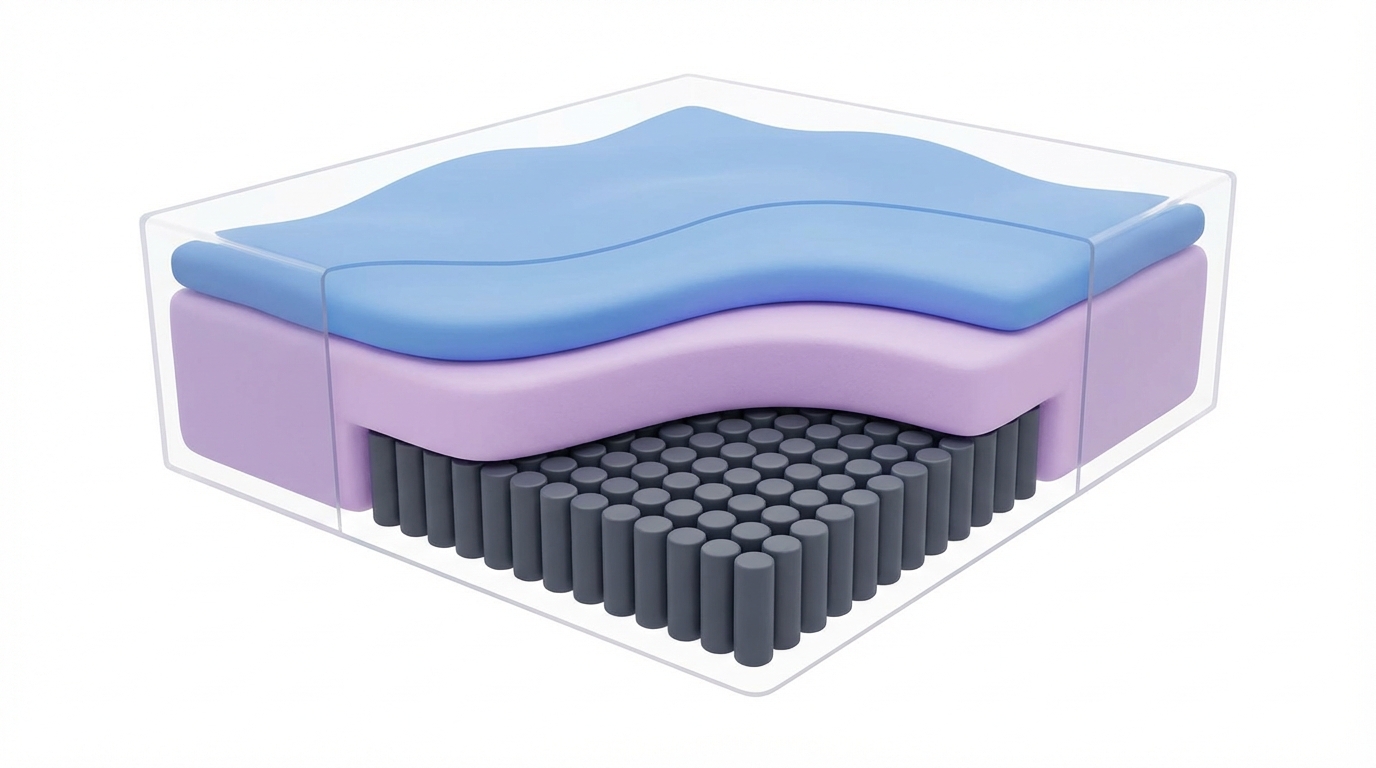
Whenever someone points to a mattress and says "that looks luxurious," they are often reacting to height. Taller mattresses appear more substantial, and for some people that higher surface makes getting in and out of bed more comfortable. But profile height is not just an aesthetic choice. Every inch you add to a queen mattress changes the weight you will live with for years.
Most modern queen mattresses fall somewhere between about 9 and 15 inches in height. A simpler 9 or 10 inch memory foam or innerspring mattress will usually sit at the lower end of the weight ranges for its type. Increase that to 12, 13, or 14 inches with more foam transitions, thicker comfort layers, or higher coil counts, and you add measurable pounds. A move from 10 to 14 inches can add anywhere from 15 to 30 pounds or more, depending on materials.
From a sleep science perspective, thicker is not automatically better. The Sleep Foundation and similar resources emphasize fit and support over height, noting that your body type and sleep position matter more than sheer inches. For example, side sleepers with more pronounced curves at the shoulders and hips may appreciate a slightly taller mattress with deeper comfort layers, because it allows better pressure distribution. In contrast, many back and stomach sleepers do very well on moderate profile beds that keep their spine aligned without excessive sink.
Where thickness can get tricky is in homes where lifting and rotating a mattress is part of regular care. A 10 inch queen mattress that weighs around 80 pounds may be rotated by many adults working alone with care, while a 14 inch queen that weighs 125 or 130 pounds often requires at least two people. When shoppers come back to me a year later complaining that they cannot maintain a mattress as recommended, it is almost always the very tall, heavy models that cause trouble.
If you like the look of a tall bed, remember that you can also add height with your base or foundation instead of only with the mattress itself. Pairing a moderate profile queen mattress with a quality adjustable base, such as one from the Adjustable Bed Frame and Base collection, lets you raise or lower your sleep surface and enjoy extra features like head elevation, without committing to the heaviest possible mattress profile.
Bed Frames, Foundations, And How Much Weight They Can Safely Handle
A queen mattress does not live in isolation. The frame or foundation underneath carries not only the mattress, but also you, your partner, and sometimes kids or pets. When you add those together, the total load on your bed system can be much higher than the mattress weight alone. Matching the weight of your queen mattress to an appropriate base is one of the most important safety and durability decisions you can make.
Every frame or foundation has a weight capacity, although not all manufacturers advertise it clearly. That capacity typically includes the mattress plus the sleepers, not just the mattress by itself. For example, if a basic frame is rated for 500 pounds, and your queen mattress weighs 110 pounds, that leaves 390 pounds for the combined sleepers and bedding. If you and your partner together weigh 350 pounds, you are suddenly quite close to the limit, especially when accounting for dynamic forces like sitting or shifting.
There is no one universal standard for foundation ratings, but medical organizations such as Mayo Clinic stress that consistent support is essential to keep the spine in a neutral position and reduce back pain. A sagging or flexing foundation undermines even a high quality mattress. This effect can be more pronounced with heavier mattresses like latex or thick hybrids, which concentrate more weight on each slat or support point.
If you are upgrading from a relatively light innerspring to a heavier queen hybrid or latex mattress, it is worth taking a fresh look at your base. Slatted platforms with closely spaced, solid wood slats often support heavier loads better than aging box springs or thin metal frames. Adjustable bases from reputable manufacturers are typically designed with higher weight capacities, which is one reason they pair well with sturdy hybrid models. Checking compatibility before you buy can prevent warranty issues and noisy, unstable beds later.
At Sleepology, when we recommend a more substantial queen mattress, we almost always talk about foundations in the same conversation. For instance, if a shopper chooses a queen size Sealy Posturepedic Elite Medium Mattress, Brenham II Euro Pillow Top, which is built with a deeper comfort system and robust coil support, we make sure they either have or select a matching base that can comfortably handle both the mattress weight and their household's needs.
Moving, Rotating, And Caring For A Queen Mattress Safely
Even if you choose the perfect queen mattress, its weight will come back into the picture every time you move, rotate, or clean it. Planning realistic strategies for handling your mattress helps protect your back and extend the life of your bed. Many injuries and premature sags trace back to rushed moves or skipped maintenance that seemed too hard because of weight.
When you first bring a queen mattress home, rolled, boxed models are often easier to maneuver into the room because the compressed package is smaller and more rigid. Once they are fully expanded, though, the work shifts to positioning and lifting. It is wise to clear the path ahead of time, measure tight corners, and recruit at least one other adult for any mattress heavier than about 80 or 90 pounds. Remember that mattresses bend and flex, so one person trying to pivot a queen through a doorway can easily twist awkwardly and strain muscles.
Rotation and, when appropriate, flipping also matter. Many modern mattresses are designed to be rotated head to foot several times a year to even out wear, even if they are not flippable. Sleep research often notes that consistent support reduces the risk of developing pressure points and discomfort over time, and keeping your mattress surface even is part of that. However, people often skip rotations when the mattress feels too heavy to tackle. Choosing a queen in a weight range you can realistically manage, or planning regular help, is more sustainable than hoping you will wrestle with a 140 pound bed alone every quarter.
Cleaning is another area where weight shows up. Lifting a corner to tuck fitted sheets, adding a mattress protector, or vacuuming the surface all become harder with very heavy mattresses. One workaround, especially for people who struggle with bending or lifting, is to invest in easier to handle bedding. For instance, using a high quality mattress protector and smooth, deep pocket sheets like the Tempur-Pedic TEMPUR Adapt Luxe Egyptian Cotton Sheet Set can cut down on how often you need to fully lift or adjust the mattress itself.
“Our old queen was so heavy that we stopped rotating it, and of course it ended up with a big dip on my husband’s side. When we bought our new hybrid at Sleepology, Mia helped us choose a model we could both lift. Now we actually keep up with rotations, and after almost two years it still feels brand new.” – Dana L., 10/
Mattress Weight, Body Type, And Comfort
While mattress weight does not directly tell you how a bed will feel, there is a subtle connection between weight, material density, and performance for different body types. Understanding this relationship is helpful, especially if you or your partner are in a higher body weight category or if one of you is significantly lighter than the other.
Heavier individuals generally compress a mattress more deeply. To maintain neutral spinal alignment, which sleep experts like those at the Sleep Foundation identify as a key factor in back comfort and sleep quality, you typically need a mattress that does not bottom out under that load. That usually points toward denser foams, robust coil systems, or latex, all of which tend to increase mattress weight. In practical terms, a queen mattress that weighs a bit more often contains more supportive material that can better handle higher loads without rapid sagging.
For lighter individuals, the calculus is slightly different. They may not need as much dense support material to prevent bottoming out, and an excessively firm, heavy mattress can feel unyielding. Lighter sleepers sometimes do quite well on slightly thinner profile or somewhat lighter queen mattresses, particularly in memory foam or hybrid constructions tuned for gentle contouring. The actual number on the scale still matters for moving and foundations, but from a comfort perspective lighter sleepers can often prioritize feel over extreme durability.
In couples, especially when there is a big weight difference, a medium weight queen hybrid is often a good compromise. The coil system shares the load and provides structure, while the foam layers can adapt to each person to some extent. Well designed hybrids in this category often carry a bit more weight than very basic foam beds, but that mass reflects underlying components that help the mattress perform fairly for both partners over time.
The goal is always to align mattress choice with your real body needs rather than chasing or avoiding weight for its own sake. When you look at a queen mattress spec sheet, consider weight as one signal among several that tell you whether the construction is substantial enough for your household while still being manageable for setup and care.
Queen Mattress Weight Versus Other Sizes

It can also help to understand how queen mattress weight compares to other sizes you may have owned. Many people underestimate the jump from a full to a queen, or from a queen to a king, because they look similar on the floor. In reality, those extra inches of surface area represent a significant increase in material and weight, especially in denser constructions.
A typical twin or twin XL mattress often weighs in the 40 to 60 pound range, depending on materials. A full size mattress, which adds width but keeps the same length as a twin, might sit around 50 to 80 pounds. That makes them relatively easy to move for one or two adults. Stepping up to a queen, you gain both width and length, and so the weight climbs into the 70 to 140 pound range we have discussed, with many mainstream models clustering around 90 to 120 pounds.
From queen to king, the increase can be more dramatic. Kings widen to 76 inches while keeping the 80 inch length, which adds a large amount of extra material. King mattresses that share similar constructions with their queen counterparts can weigh 20 to 40 pounds more in the same model line. That is one reason many shoppers who initially think they want a king decide a queen is a better fit after considering doorway widths, staircases, and who will help them move it.
If you are deciding between queen and king for a shared bed, remember that the weight and size will also affect your bedding and accessories. For example, if you already own a sturdy queen mattress but want more space, upgrading to a king may require not just a new mattress and frame, but also new bedding, potentially a new base, and additional floor space. For those ready to make that leap, exploring options within a curated assortment like King Sized Mattresses is a smart move, but it is equally valid to stay with a queen if its weight and footprint better match your current home.
How To Choose The Right Queen Mattress Weight For Your Situation
At this point, you have a sense of the numbers, but the more important question is how to translate that into a clear choice. Rather than trying to memorize exact weights, it helps to think in terms of matching three elements: your body and sleep needs, your home and logistics, and your support system under the mattress.
Start with your body and comfort preferences. If you are a side sleeper who likes deep cushioning at the shoulders and hips, a slightly thicker queen in memory foam or a soft hybrid may serve you well, even if it nudges the weight upward. For back or stomach sleepers who want a firmer, more level surface, a medium profile hybrid or innerspring that sits in the middle of the weight range can often provide the support you need without becoming overly bulky. Evidence from sleep research shows that matching firmness and construction to sleeping position can improve comfort and reduce nighttime awakenings, which is a more important outcome than shaving off 10 pounds of mattress weight.
Next, consider your home and how often you expect to move the bed. If you live in a long term home with good delivery access, strong floors, and you do not anticipate frequent moves, a heavier queen may be perfectly reasonable. If you are in a walk up apartment, move every year or two, or often rearrange furniture, staying within a more moderate weight band close to 80 to 110 pounds might save you a lot of strain. Many Sleepology shoppers in these situations appreciate queen models such as the Sealy Posturepedic Elite Medium Mattress, Brenham II Euro Pillow Top or Sealy Posturepedic Elite Soft Mattress, Albany II Euro Pillow Top, which offer robust support without creeping into the very heaviest category.
Finally, look at your frame or base. If you are pairing your new queen mattress with an adjustable base or a modern platform from a reputable brand, those systems are often designed with higher weight capacities in mind. That opens the door to slightly heavier, more feature rich mattresses without concern. If your current foundation is older, lightly built, or uses widely spaced slats, it may be safer to choose a somewhat lighter queen or plan to upgrade your base at the same time. Adding protective and comfort accessories from collections like Pillows, Sheets, Toppers, Protectors can fine tune feel without adding a large amount of structural weight.
When all three pieces line up, you usually end up with a queen mattress whose weight simply makes sense. You can move it when you need to, your frame supports it confidently, and your body feels supported through the night. That is the sweet spot we aim for with every Sleepology guest.
Conclusion: Putting Mattress Weight In Its Proper Place
Mattress weight sits at the intersection of comfort, practicality, and safety. For a queen size mattress, you are generally working in a range from about 70 to 140 pounds, with memory foam and simpler innersprings on the lighter end, and thick hybrids and latex models on the heavier end. Within that band, the right choice depends on who is sleeping on the mattress, where it will live, and what kind of support and longevity you need.
For your sleep health, credible sources consistently emphasize support, alignment, and pressure relief over weight by itself. A moderately heavy queen mattress that uses dense, well engineered materials can serve you better than a very light one that breaks down quickly, provided your frame and home can handle it. At the same time, there is no prize for owning the heaviest bed on the block. If a slightly lighter mattress makes it easier to rotate, clean, and manage day to day, that ease can help you take better care of both the mattress and your body.
If you are unsure where to start, it can help to talk through your specific scenario with an expert who knows both the products and the realities of moving and supporting them. At Sleepology, we look at your staircase, your frame, your sleep habits, and your budget before recommending a queen mattress that fits into your life instead of fighting against it. With the right information and a little planning, the number on the scale becomes just another helpful spec, not a source of stress.
Most importantly, trust that you can find a mattress that feels wonderful to sleep on and makes sense to live with. When mattress weight is understood and accounted for, it quietly supports the real goal: deeper, more restorative sleep that leaves you feeling better in the morning and more present during the day.
Frequently Asked Questions
How much does a typical queen mattress weigh compared to what I already own?
If you currently own a full size mattress, moving up to a queen usually means a noticeable increase in weight and bulk. Many full size mattresses weigh between about 50 and 80 pounds, while queen mattresses often range from 70 to 140 pounds. The jump from queen to king is even more significant because of the added width. If your current bed feels easy to handle and you are considering a queen upgrade, it is worth planning for at least 15 to 30 extra pounds, depending on the type and thickness you choose.
Is a heavier queen mattress always higher quality?
A heavier queen mattress often contains more or denser materials, which can be a sign of better support and durability, but weight alone is not a guarantee of quality. It is possible for a mattress to be heavy because of thick but low grade foams or unnecessary filler layers. Conversely, a well engineered innerspring or medium profile memory foam mattress can be relatively moderate in weight and still perform very well. Looking at material type, construction details, and brand reputation alongside weight gives a much clearer picture than focusing on the number alone.
Can my existing bed frame support a heavier queen mattress?
The answer depends on the design and condition of your frame. Sturdy platform beds with solid or closely spaced slats, quality adjustable bases, and well made metal frames with center support legs often handle the extra weight of heavier queen mattresses without issue. In contrast, older box springs, simple metal rails without center support, or frames with very wide slat spacing may struggle with a heavy hybrid or latex queen. When in doubt, check the manufacturer's weight capacity and remember that it must account for the mattress plus sleepers, not just the mattress itself.
How much does mattress weight matter for people with back pain?
For back pain, mattress weight matters indirectly, through its relationship to material density and support. Clinical resources like the Mayo Clinic suggest that medium firm, supportive mattresses often provide better spinal alignment and less pain for many people, and those models frequently use more substantial materials that can increase weight. However, you do not need the heaviest option to help your back. The key is choosing a queen mattress that keeps your spine in a neutral position in your preferred sleep posture, then ensuring your foundation supports that mattress evenly. If that mattress happens to be on the heavier side, planning a capable frame and help with setup is a wise step.
Are queen mattresses in a box lighter than traditional queen mattresses?
No, queen mattresses in a box are generally not lighter than traditional mattresses of a similar type and thickness. The compression and roll packing process reduces the box size, which makes the package easier to maneuver through doors and hallways, but it does not change the actual weight of the mattress. A boxed queen hybrid that weighs 110 pounds will still weigh roughly 110 pounds once it expands. The main benefit of a mattress in a box is convenience of delivery, not a reduction in pounds.
How can I make caring for a heavy queen mattress easier?
There are several strategies to make caring for a heavy queen mattress more manageable. First, commit to rotating the mattress on a realistic schedule and recruit help from another adult so you are not lifting alone. Second, use protective accessories like mattress protectors and high quality sheets to reduce how often you need to strip and deeply clean the mattress surface. Products from the Pillows, Sheets, Toppers, Protectors collection can add comfort and protection without adding much weight. Finally, consider an adjustable base or platform at a comfortable working height so you are not bending awkwardly when tucking sheets or inspecting the mattress.
Does a heavier queen mattress feel hotter at night?
Weight itself does not directly determine how hot a mattress feels, but some of the materials and constructions that add weight can influence temperature. Thick foam layers, especially very dense memory foam, can retain more heat for some sleepers than more breathable coil or latex constructions. On the other hand, many modern heavier mattresses incorporate cooling covers, gel infusions, or airflow channels to offset this. If you sleep warm, it is more important to look at the mattress's temperature regulation features and materials than its total weight, and then combine it with breathable bedding and possibly a cooling mattress protector for the best results.