

How Long Is a Twin XL Mattress? A Complete Guide To Size, Fit, And Real‑Life Use
If you are trying to choose between twin, twin XL, full, or even a queen, that extra 5 inches on a twin XL can feel weirdly stressful. You might be looking at dorm checklists, a growing teenager, or a very narrow guest room and thinking, if I get this wrong, I am stuck with the wrong size for years. That feeling is completely understandable. Mattress sizing sounds simple on paper, but when you are dealing with real people, real rooms, and real budgets, those inches really matter.
Twin XL is one of the most misunderstood mattress sizes. People often know it is “the dorm size,” but are not quite sure how long it is, who actually needs it, or whether it will fit in their space. You might be worried about finding sheets that fit, wondering if your existing bed frame will work, or asking if a twin XL can later be part of a bigger setup like a guest room or split king. Those are smart questions to ask before you swipe your card.
Here, we will unpack exactly how long a twin XL mattress is, how it compares to other sizes, and when that extra length genuinely improves sleep comfort. We will also talk about room layout, body height, sheet and bed frame compatibility, and how to future proof your purchase so you are not upgrading again in 2 years. Along the way, you will see examples from real shoppers and get product suggestions so you can connect the dots from “just researching” to a setup that actually works in your home.
By the end, you will not just know the dimensions of a twin XL. You will know whether it fits your life, how to measure for it, and what to pair it with so it feels comfortable, supportive, and worth the investment in .
Twin XL Mattress Dimensions: The Short Answer
For many shoppers, the primary question is beautifully simple: how long is a twin XL mattress, and how wide is it. In the United States, a standard twin XL mattress measures approximately 38 inches wide and 80 inches long. That length is the same as a queen or a king, so you are getting adult length in a compact, one person width. Many manufacturers list width as 38 or 39 inches, which is normal due to small production differences, but the length is consistently around 80 inches.
Compare that to a regular twin, which is about 38 inches wide and 75 inches long. The only difference is those 5 inches of length at the foot of the bed. According to the Sleep Foundation, both twin and twin XL share the same width and are designed for a single sleeper, not for couples, with twin XL recommended for taller people who would otherwise feel cramped on a standard twin. That extra length helps prevent your feet from hanging off the edge and allows a bit of room for your pillow without stealing space from your body.
A helpful way to visualize this is to think in feet. A twin mattress is roughly 6 feet 3 inches long. That sounds long until you put a pillow at the top that easily takes up 6 to 8 inches. Suddenly, anyone taller than about 5 feet 10 inches is fighting for legroom. A twin XL roughly equals 6 feet 8 inches, which gives tall sleepers more breathing room and helps keep the whole body supported along the length of the bed. The mattress itself is not thicker just because it is XL; the “XL” only describes the length.
You might see minor variations across brands, but reputable retailers will always label twin XL at about 80 inches long. The Cleveland Clinic and similar health organizations frequently remind people that proper spinal alignment depends on the entire body being supported, from head to heels. That is why length matters so much if you or your child is tall. A mattress that is “almost long enough” can quietly contribute to knee, hip, or lower back strain over time.
“Our son is 6'2" and he was constantly curled up on his old twin. Switching to a twin XL gave him the same footprint in his small room but he finally fits without bending his legs. I wish we had made the change two years earlier.” – Dana R., November
Twin vs. Twin XL vs. Full: How The Sizes Really Compare
Understanding the numbers is one thing, but it helps to see how twin XL stacks up next to other common sizes. If you are working with a small room or a tight budget, deciding between a twin, twin XL, and full can feel like a puzzle. The goal is to maximize comfort and longevity without overwhelming your space or overspending.
A standard twin, at roughly 38 by 75 inches, is often the first “big kid bed” after a crib or toddler bed. It is great for younger children, bunk beds, and very tight rooms. A twin XL keeps that same narrow width but extends to 80 inches, which is why it is the default in many college dorms. Full (sometimes called “double”) jumps to about 53 by 75 inches, so it is significantly wider than both twin and twin XL but keeps the shorter length. For many solo sleepers, full can feel more spacious without going up to a queen.
From a practical standpoint, this means twin XL shines in two scenarios. First, when you need adult length in a narrow footprint, such as a dorm, studio apartment, or compact guest room. Second, when you are planning ahead for growth. Since mattress lifespans often fall in the 7 to 10 year range according to the Sleep Foundation and Consumer Reports, buying a twin XL for a tall or fast growing child prevents the “too short bed” problem a few years down the line, which can save money over time.
A full mattress, on the other hand, works better if width is the main comfort issue, not length. If you are under about 5 feet 10 inches and simply want more elbow room, full might feel better than any twin variant. For teens over 6 feet, or adults with limited floor space who still need legroom, twin XL is almost always a smarter move than a full. Thinking in terms of height and room layout, rather than just price alone, helps you land on a size that will stay comfortable for more than a season.
Twin XL Compared To Larger Sizes
It also helps to look beyond the smaller sizes, especially if you are planning a longer term setup. Twin XL has the same length as a queen and king, which makes it uniquely useful for future upgrades. Two twin XL mattresses placed side by side create the sleeping surface of a king, which is often called a split king arrangement. This is a popular choice on adjustable bases because each sleeper can customize their side independently.
Queen size, at about 60 by 80 inches, is usually the go to for couples who want to share a bed without using too much floor space. King jumps to 76 by 80 inches, offering both sleepers a width similar to their own twin XL. While you may not be thinking about a split king now, choosing a twin XL today keeps that door open if your living situation changes, especially if you like the idea of separate firmness levels or personalized adjustability down the road.
Because twin XL shares its length with these larger sizes, accessories like mattress protectors, toppers, and some adjustable bases are often designed with twin XL and king combinations in mind. For example, if you decide to later build a split king, each side can be a twin XL with its own support level. That flexibility is part of what makes twin XL such a workhorse size for families and long term planners.
If you prefer a plusher, more cushioned feel and want to give a twin XL mattress a little luxury boost, pairing it with a high quality topper can be a simple solution. Something like the Tempur-Pedic® Mattress Topper, Pillow Travel and Guest Bundle works well in guest and dorm style setups, because it adds comfort without changing the underlying dimensions.
“We upgraded my daughter’s room from a twin to twin XL and added a memory foam topper. She is 5'11" now and actually stretches out. The best part was we did not have to rearrange her furniture to get it to fit.” – Carla M., October
Twin XL Mattress Size Comparison Table

When you are deep in measurements and floor plans, a quick side by side comparison can be grounding. The table below compares twin XL to a few common mattress sizes so you can see, at a glance, how that 80 inch length fits into the bigger picture.
| Mattress Size | Approx. Dimensions (W × L, inches) | Best For | Typical Room Size Fit |
|---|---|---|---|
| Twin | 38 × 75 | Younger kids, bunk beds, tight rooms under 6' sleepers | Small rooms around 7' × 10' |
| Twin XL | 38 × 80 | Taller kids and teens, college dorms, solo adults up to or over 6' | Rooms around 8' × 10' and larger |
| Full | 53 × 75 | Solo adults wanting more width, short to average height | Rooms around 10' × 10' |
| Queen | 60 × 80 | Most couples, guest rooms, taller solo sleepers | Rooms around 10' × 10' and up |
Keep in mind that these room size suggestions leave enough space to walk around the bed and accommodate basic furniture. The American Academy of Sleep Medicine reminds people that a clutter free bedroom environment supports better sleep, which includes making sure your mattress size does not overrun the room. Giving yourself adequate circulation space around the bed helps the room feel restful rather than cramped.
Who Is A Twin XL Mattress Really Best For?
Now that you know how long a twin XL mattress is, the next question is whether that length actually matters for you or your family. The answer depends on height, growth trends, and how long you plan to keep the mattress. Choosing the right size is less about hitting a perfect number and more about removing friction from nightly sleep so your body can relax without compensation.
Taller sleepers are the most obvious match for twin XL. Anyone around 6 feet or taller will usually feel more comfortable on an 80 inch long surface than on a 75 inch one, especially once a pillow takes up space at the head. This is true for adults and teens, and it is especially important for athletes or very active people who tend to sleep sprawled out. According to the Sleep Foundation, a mattress should support neutral alignment of the spine, which becomes harder if your legs routinely hang off the end or you are forced to curl into a position that does not feel natural.
Growing children and teens are another key group. If your child is already in the high percentiles for height, a twin XL can prevent the need to change sizes mid high school. Given that many mattresses perform well for at least 7 years when properly cared for, buying for the person your child is becoming rather than the one they are today often makes financial sense. It also supports better sleep, which is crucial for learning and mood regulation throughout adolescence, something the Mayo Clinic has emphasized in their discussions on teen sleep.
Twin XL is frequently the default choice for college students, and there is good reason for that. Dorm rooms are notoriously small, yet students come in all shapes and sizes. Twin XL strikes the balance between narrow width to preserve floor space and adult length that works for nearly anyone. If you are shopping for a college bound student, choosing twin XL at home can also make it easier to reuse their bedding when they move onto campus, which is one less item to juggle.
When Twin XL Is The Better Long Term Investment
Beyond height, there are some strategic reasons to choose twin XL even if no one in the house is exceptionally tall. One is future flexibility. If you suspect you might later convert two twin XL beds into a split king for a primary bedroom or guest suite, starting with twin XL opens that door. In a split king, each side is effectively a twin XL, which allows couples to choose different firmness levels or even different mattress constructions while still sharing one large bed.
Another benefit is how well twin XL can adapt to changing room layouts. If you move homes or reconfigure bedrooms, that extra 5 inches is often more forgiving than people expect. Many rooms that comfortably fit a twin will also handle a twin XL with a simple shift of a nightstand or dresser, especially in rooms at least 8 by 10 feet. When you compare that modest adjustment to the comfort gains for a tall sleeper, the tradeoff often feels more than worthwhile.
For sleepers who primarily rest on their back or stomach and need solid support in a smaller footprint, pairing a twin XL with a supportive mattress can also help with long term spinal health. Mattresses such as the Sealy Posturepedic Pro Firm Hybrid Mattress, Dupont II provide strong support through the middle of the body, which can be especially beneficial when you are using the entire 80 inch length and want consistent feel from head to toe.
“Our twin XL guest bed has hosted my 6'4" nephew, my dad after knee surgery, and plenty of friends. Everyone comments that it feels like a grown up bed, not a kid size. It takes up so much less room than a queen but still works for tall guests.” – Mark L., December
Will A Twin XL Mattress Fit In My Room?
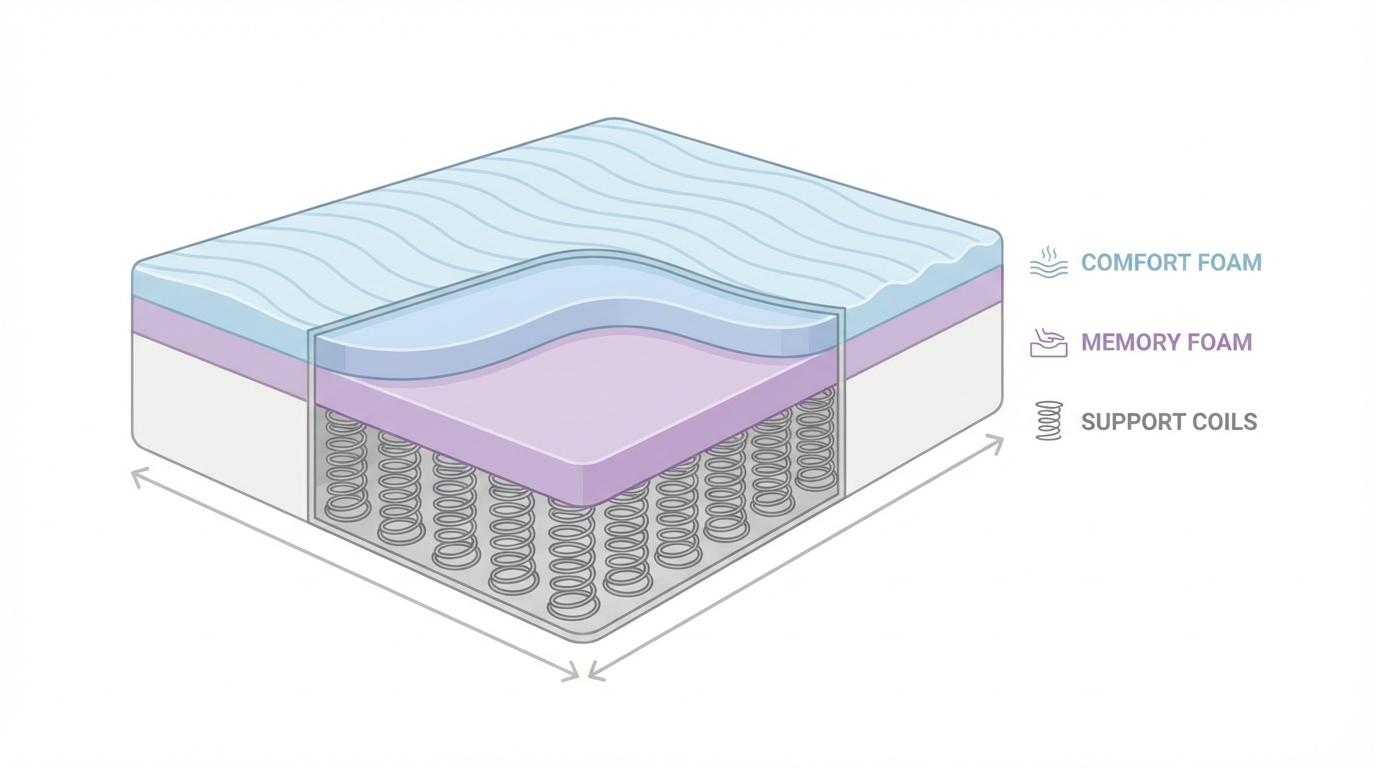
Even once you are convinced that the length of a twin XL makes sense, the practical reality of your room can still feel like a hurdle. The last thing you want is to bring home a mattress, wrestle it into position, and discover you cannot open a closet door or walk around the bed. With some quick measurements, you can avoid that headache entirely and feel confident in your choice.
Start by measuring the length and width of your room, then mentally “subtract” the footprint of a twin XL, which is 38 by 80 inches. Most people find it easiest to use painter’s tape on the floor to mark out the mattress perimeter where they think the bed will go. Then walk around that space, pretend to open doors and drawers, and imagine where a nightstand or small desk would sit. This low tech step immediately shows you whether twin XL length works comfortably or feels too tight.
A good rule of thumb is to leave at least 24 inches, and ideally 30 to 36 inches, of walkway space on the main sides of the bed. This gives you room to move without bumping your shins in the middle of the night and also keeps the room feeling more open. If your room is very narrow, you can place one long side of the twin XL against a wall and focus your walking space along the other side and foot of the bed. In that layout, an 8 by 10 foot room usually handles a twin XL well.
Ceiling height rarely affects mattress choice directly, but it does influence how “crowded” a room feels. Lower ceilings combined with a very tall headboard or bulky footboard may make the added length of a twin XL feel more dominant in the room. In those cases, a simpler, lower profile platform or metal frame can balance things out. Adjustable bases can also work with twin XL mattresses, just be sure to select a base truly designed for 80 inch length.
If your room can accommodate a slightly larger footprint and you are a back sleeper who values extra motion isolation, exploring a more generously sized bed can be worthwhile. However, when square footage is at a premium, twin XL often hits that practical sweet spot of usability and comfort. If you eventually decide you want more stretch out space and the room allows it, moving to a queen or even a king size and exploring options like king sized mattresses with robust support systems can be the next step.
Bed Frames, Box Springs, And Bases: What Works With Twin XL?
Another common worry is whether a twin XL mattress will work with the bed frame or foundation you already own. This is where the exact length of 80 inches is crucial. A regular twin frame is designed for a 75 inch mattress, so placing a twin XL on it typically leaves the last 5 inches unsupported. Over time that can lead to sagging, discomfort, and potentially voided warranties. To get the full benefit of the length you are paying for, you need a support system built for twin XL.
When shopping for a frame, look explicitly for “twin XL” in the size options, rather than assuming all twin sizes are interchangeable. Platform frames, metal bed frames, and adjustable bases are commonly made in twin XL because of their popularity in dorms and split king setups. Box springs or foundations should also match the 80 inch length. If you already own a queen or king adjustable base, you cannot safely use a twin XL mattress on it unless the base is designed to work as paired twin XLs in a split configuration.
If you are outfitting a room from scratch, think about storage and overall height while you shop for a frame. Many people prefer a slightly taller sleep surface because it is easier on knees and hips to sit and stand from a bed that is around mid thigh height. Pairing a supportive twin XL mattress with a sturdy foundation and medium profile headboard can offer a comfortable, grown up feel without visually overpowering a small space.
Some hybrid mattresses, like the Sealy Posturepedic Plus Medium Mattress, Paterson II Euro Pillow Top, can work well on both adjustable bases and standard platform frames when ordered in twin XL. The medium feel provides balanced support across the entire 80 inch length, which is especially important if the sleeper alternates between back and side positions and uses the full surface.
If you have any doubts, it is worth confirming compatibility before you buy. Many manufacturers and retailers outline which base types are approved for specific mattresses. Getting that pairing right protects your investment and helps ensure the comfort you felt in the showroom translates to your bedroom.
Bedding For Twin XL: Sheets, Toppers, And Protectors
Once you commit to a twin XL mattress, the next frontier is bedding that actually fits. Because the mattress is 80 inches long instead of 75, standard twin sheets will usually not be long enough to stay secure at the corners, especially if the mattress is on the thicker side. This is where using the correct labeled size saves a lot of frustration and midnight corner popping.
Look for sheet sets specifically sized for twin XL. The difference may not sound dramatic, but that extra length in the fitted sheet is what allows it to wrap properly under the mattress. Many college and dorm collections default to twin XL for this reason, and more mainstream bedding brands now carry twin XL as a regular size. If you are shopping online, double check product descriptions to ensure you are not accidentally buying standard twin.
The same rule applies to mattress protectors and fitted style toppers. A protector that is too short may leave part of the mattress exposed, which defeats the purpose if you are trying to guard against spills, dust mites, or allergens. Sleep experts, including those at the Sleep Foundation, often recommend using a breathable, well fitting protector to help extend the life of your mattress and maintain a cleaner sleep environment. For toppers, a twin XL size ensures the cushioning extends all the way to the foot of the bed instead of stopping short.
Accessories such as pillows, blankets, and comforters are more forgiving on sizing. Many people happily use a twin or even full/queen comforter on a twin XL mattress for extra drape. Where size becomes important is in support and alignment. If you are a side sleeper on a twin XL, for example, combining your mattress choice with the right pillow can keep your neck and shoulders in line even if you roll toward the edge. A product like The BodyPillow by Tempur-Pedic can be especially helpful on a narrow twin XL because it provides long, continuous support along the body without requiring more mattress width.
For those who are building out an entire bedroom setup, it can be convenient to choose coordinated accessories from one source. Collections such as pillows, sheets, toppers, and protectors curated together make it easier to ensure everything is sized correctly and works with the height and feel of your specific twin XL mattress.
Comfort, Support, And Sleep Position On A Twin XL
Knowing that a twin XL is 80 inches long tells you about space, not comfort. How that space actually feels at night depends on the mattress construction, firmness, and how your body lies on it. The goal is to match the length with consistent support from head to toe so you are not overloading your shoulders, hips, or lower back to compensate for a poor fit.
Back sleepers often do well on medium to medium firm twin XL mattresses that keep the spine in a neutral curve. The extra length gives tall back sleepers full contact along their legs, which helps distribute pressure more evenly and can reduce that “heels hanging off” sensation that some people experience on a shorter twin. Research referenced by sleep health organizations suggests that supportive surfaces that maintain alignment are associated with less morning pain and better sleep continuity, especially in people with existing back issues.
Side sleepers tend to drop more weight into the shoulder and hip, so they may prefer something with a bit more pressure relief. On a twin XL, this can be achieved either with a softer mattress or by using a plush topper on a more supportive core. Options like the Sealy Posturepedic Plus Soft Hybrid Mattress, Paterson II balance contouring comfort with substantial underlying support, which works well when your entire frame is stretched out across the longer surface.
Stomach sleepers are often better off leaning slightly firmer to avoid sinking too far through the midsection, which can strain the lower back. For them, the advantage of twin XL is primarily that they can stretch fully without hanging off the end, while firmness choice does the bulk of the alignment work. In all positions, pairing your twin XL mattress with an appropriate pillow height is important, since pillow thickness also influences neck and upper spine posture.
If you are not sure where to start, many seasoned sleep experts recommend focusing on your primary sleep position, your weight, and any specific pain points. Then look for twin XL options within that support range rather than chasing a specific brand name. High quality lines like the best mattresses for back sleepers or stomach focused options can provide helpful filters while you stay anchored on the size that matches your height and room.
Twin XL In Real Life: Dorms, Guest Rooms, And Split Kings
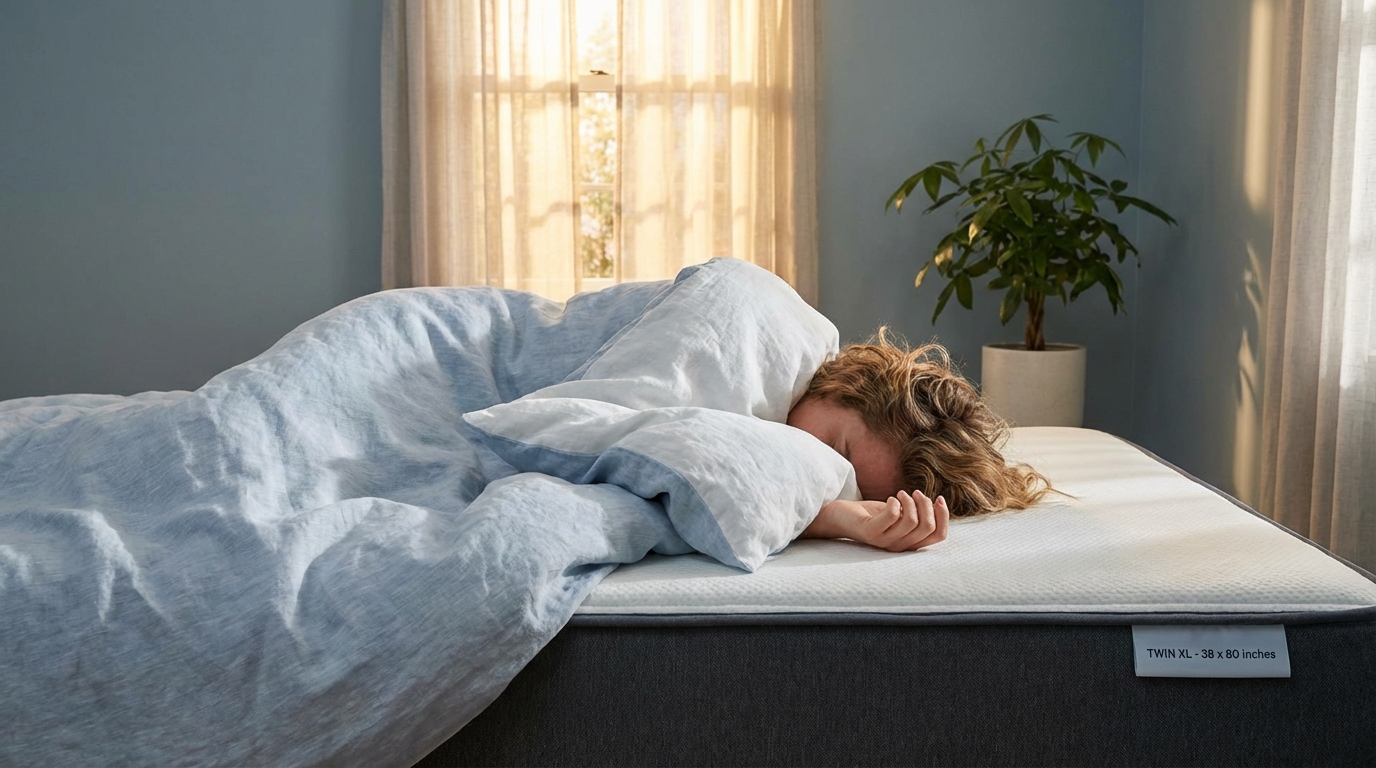
Understanding the exact length of a twin XL is most helpful when you imagine real life use cases. Three scenarios come up again and again at Sleepology: college dorms, flexible guest spaces, and split king primary beds. Each one takes advantage of the 80 inch length in a slightly different way.
In dorms, twin XL is practically universal in . Universities land on this size because it works for a broad range of heights within small, shared rooms. For students, that means the bedding you buy for freshman year almost certainly needs to be twin XL to fit the provided bed. If your student has a twin XL at home already, you can often reuse at least some of those linens, which eases both budget and transition. For very tall students or athletes, this also ensures that the move to campus does not suddenly shrink their sleeping space.
Guest rooms are another place where twin XL often outperforms a standard twin. Many hosts prefer to keep the room flexible enough for children and adults, which makes 80 inch length a safer bet. A single twin XL can comfortably sleep one tall adult, while two twin XLs can be pushed together with a connector to mimic a king when couples visit. This modular approach lets you serve multiple types of guests without committing to a permanent king footprint.
Finally, split king setups use twin XL as their building block. In a split king configuration, two twin XL mattresses sit side by side on an adjustable or platform base. Each sleeper gets their own mattress feel and can often adjust their half of the bed without disturbing their partner. This arrangement is particularly appealing for couples with different support needs or medical conditions that benefit from head or foot elevation. Knowing that each twin XL is 38 by 80 inches helps you picture the total king size footprint of 76 by 80 inches.
In every one of these situations, the key is that twin XL is truly adult length, just in a slimmer package. You are not compromising on legroom, only on width. For smaller bodies or solo sleepers who prefer to be more cocooned, that is a tradeoff that works beautifully.
Conclusion: Making Peace With Those Extra 5 Inches
Choosing a mattress size often feels deceptively simple until you are actually standing in a room with a tape measure. The question “how long is a twin XL mattress” is really about whether that 80 inch length supports the way you, your child, or your guests actually sleep. When height, growth spurts, and tight rooms all collide, it is comforting to know there is a size designed exactly for that challenge.
A twin XL mattress is about 38 inches wide and 80 inches long, the same length you would find in a queen or king, just narrower. That extra length compared to a standard twin can mean the difference between curled up knees and full body relaxation, especially for anyone nearing or passing the 6 foot mark. It is also what makes twin XL such a natural fit for dorms, teen bedrooms, flexible guest rooms, and split king arrangements.
If you are still weighing your options, start with the basics: the sleeper’s height, how long you want the mattress to last, and the real dimensions of your room. From there, you can layer in comfort preferences, support needs, and style. When you are ready, a Sleepology sleepologist can help you connect those dots to specific twin XL friendly mattresses and accessories so your final setup matches both the numbers and the way you live.
Frequently Asked Questions
How long is a twin XL mattress in feet?
A twin XL mattress is approximately 80 inches long, which works out to about 6 feet 8 inches. That extra length compared to a 75 inch twin gives taller sleepers more room to stretch out and helps ensure the pillow does not steal too much of the usable surface. Because queen and king mattresses are also about 80 inches long, a twin XL offers full adult length in a compact, one person width.
Is a twin XL too short for someone who is 6 feet tall?
For most people around 6 feet tall, a twin XL is a comfortable length, especially compared to a standard twin. There will still be space for a pillow at the top while keeping your feet fully supported on the mattress rather than hanging off the edge. If you are significantly taller than 6 feet 4 inches or prefer to sleep very stretched out, you may want to pay extra attention to pillow size and placement, but twin XL is generally considered suitable for tall teens and adults.
Can I put a twin XL mattress on a regular twin bed frame?
A regular twin frame is usually designed for a 75 inch long mattress, so a twin XL at 80 inches will extend beyond the end of the frame. That five inch overhang often means the foot of the mattress is not properly supported, which can lead to sagging or damage over time. To get the full benefit of your twin XL’s length and maintain warranty coverage, it is best to use a frame, foundation, or adjustable base specifically labeled twin XL.
Do twin XL sheets fit on a regular twin mattress?
Twin XL sheets are designed for an 80 inch long mattress. If you put them on a standard twin, which is 75 inches long, you will likely end up with some extra fabric at the head or foot of the bed, but they can usually still be used in a pinch. The reverse is where problems arise: standard twin sheets are often too short to stay securely on a twin XL. For a smooth, snug fit that does not pop off during the night, it is best to match your fitted sheet size to your mattress length.
Is a twin XL mattress big enough for two people?
Twin XL mattresses are intended for one sleeper. At about 38 inches wide, they provide similar personal space to what each person would get on a king, but only if they are alone. Two people sharing a twin XL would be extremely cramped, with very little room to change positions without disturbing each other. For couples, sizes like queen or king, or two twin XLs combined in a split king configuration, are more practical and comfortable.
How does a twin XL compare to a full size mattress for a teenager?
A full mattress is wider than a twin XL, at about 53 by 75 inches, but it is 5 inches shorter. For an average height teen who likes more elbow room, full can feel more spacious. For a taller teen, especially one who is still growing or already approaching 6 feet or more, twin XL usually makes more sense because of its 80 inch length. If both width and length matter and the room can handle it, some families opt for a queen, which combines generous width with twin XL length.
Can two twin XL mattresses really make a king size bed?
Yes. Two twin XL mattresses placed side by side together create the same sleeping surface as a standard king, which is 76 inches wide and 80 inches long. This setup, often called a split king, is popular with couples who want different firmness levels or adjustable bases where each side can be raised or lowered independently. It is one of the key reasons people choose twin XL when they are thinking ahead to a future primary bedroom upgrade.