

How Long Is A Twin Mattress? The Complete Twin Size Guide For Real Bedrooms And Real Sleepers
If you are squinting at a tape measure and wondering whether a twin mattress will actually work in your space, you are not alone. Parents debate twin versus twin XL for fast-growing kids, college students try to picture dorm layouts, and adults in small apartments are often torn between saving floor space and having room to stretch. When you search for dimensions, you get a simple number, but what you really need is context: will this size feel comfortable for you or your child and will it actually fit your room and lifestyle.
The length of a twin mattress may seem like a small detail, yet it has a big impact on nightly comfort. If the mattress is too short, feet end up hanging off the end, knees bend in awkward angles, or the pillow creeps halfway down the bed to make space. Over months and years, that can mean more tossing, more micro awakenings, and more morning stiffness. According to the Sleep Foundation, sleep quality is closely tied to physical comfort and body alignment, and your mattress size is a big part of that equation.
Here, you will get a clear answer to the question "How long is a twin mattress" and you will also see how that length compares with twin XL and larger sizes. You will learn how to match mattress length to your height, sleeping position, and room dimensions, and you will see real world scenarios that make the decision feel less abstract. We will also walk through when a twin is a smart long term choice and when moving up in size will save you from a second mattress purchase a year or two from now.
If you are feeling a bit nervous about choosing wrong, breathe. You are exactly the kind of thoughtful shopper we see every day at Sleepology. With some simple measurements, a clear understanding of twin dimensions, and a few honest guidelines from a sleepologist, you can feel confident that the size you choose will support both your sleep and your space.
Twin Mattress Dimensions: The Simple Answer
A standard twin mattress in the United States measures 38 inches wide and 75 inches long. You will sometimes see 39 inches quoted for width, but the widely accepted manufacturing standard is 38 by 75 inches. Organizations like the Sleep Foundation and major mattress brands reference this same dimension range, so you can treat 38 by 75 as the practical standard for shopping.
That 75 inch length equals 6 feet 3 inches. The number itself is straightforward, but the implications are important. If you or your sleeper are exactly 6 feet 3 inches tall, you will match the mattress from crown to heel with no extra room for pillows or natural sleep posture. Most people scoot a little toward the headboard and use a pillow that adds 3 to 6 inches of height, which reduces the usable length. This is why many sleep professionals suggest having at least 4 to 6 inches of extra mattress length beyond your height.
When manufacturers talk about twin mattresses, they often use the word "single," especially in older catalogs. These terms are interchangeable in the U.S. market. Whether you see "twin bed" or "single bed," you are looking at that same 38 by 75 inch footprint. Research from large bedding brands and retailers confirms that this is the smallest common adult mattress size available outside of crib and specialty youth dimensions.
Twin mattresses do vary in thickness, often from about 8 inches up to 14 or more, especially in premium pillow top and hybrid designs. Thickness does not change the 75 inch length, but it does affect how high the sleeper lies off the floor and how easy it is to get in and out of bed. For a child transitioning from a crib or toddler bed, a very tall twin might feel a bit intimidating, while for adults, a slightly taller profile can make standing up easier, especially if there are any back or knee concerns.
Finally, remember that mattresses are soft products, so there can be height and width variances of about half an inch or so. Bedding and bed frames are designed with this tolerance in mind. What matters is that you plan around the standard 38 by 75 inch size, leaving a bit of space around the bed for bedding, frames, and movement in the room. The better you understand this basic footprint, the easier it becomes to imagine how a twin will live in your space.
“I kept seeing '38 by 75' online, but I could not picture what that meant for my teenage son who is suddenly taller than me. Mia at Sleepology walked me through the math and showed how much room his pillow would take. That five minute explanation saved me from buying a mattress he would have outgrown in six months.” – Karen L., November
Twin vs Twin XL: Length Matters More Than You Think
How Long Is Twin XL Compared To Twin?
Once you know that a standard twin is 75 inches long, the next logical question is how that compares to a twin XL. A twin XL mattress keeps the same 38 inch width but extends the length to 80 inches. That extra 5 inches may seem modest on paper, but for a tall sleeper or a quickly growing child, it can be the difference between curling up to stay on the bed and fully stretching out without thinking about it.
In practical terms, a twin XL is 6 feet 8 inches long. That gives a 6 foot tall sleeper about 8 extra inches beyond their body length, even accounting for a pillow at the head. College dorms almost universally use twin XL mattresses because they need a compact width to fit smaller rooms, but they cannot have students' feet hanging off the end of the bed. Many residence life organizations and campus housing departments now specifically reference the 38 by 80 inch size in their move in guides for this reason.
From a sleep health perspective, both lengths can work as long as the sleeper fits comfortably within the mattress surface. Guidance from organizations like Mayo Clinic and Cleveland Clinic often emphasizes neutral spinal alignment and the ability to change positions freely. If someone is constantly tucking their legs or sliding down to stay within the mattress boundaries, that alignment is harder to maintain, especially for back and stomach sleepers who naturally extend their legs more fully.
You will also want to think about how your pillow and sleeping posture affect usable length. A very thick pillow or a habit of sleeping high on the pillow can steal several inches from the head end of the mattress. A body pillow, like The BodyPillow by Tempur-Pedic, can be a smart way to add support along the body without crowding the head and foot of a twin, but you still need the base mattress long enough for the sleeper themselves.
“My son is 5'10" already and still growing. We almost ordered a regular twin for his small room. After talking through the difference between 75 and 80 inches, we chose a twin XL. It fits his narrow room, and he actually stretches out instead of curling into a ball at the end of the night.” – David S., October
Who Is A Standard Twin Actually Right For?
Even with that extra length of the twin XL available, the standard twin is still incredibly useful. The key is matching it to the right sleeper profile. For younger children, especially between ages 3 and 10, a 75 inch length is usually more than enough, and the narrow width can make a small bedroom feel more open and accessible. It also gives parents space to add a little reading corner, a dresser, or storage solutions, which can be critical in smaller homes.
Standard twins shine in bunk beds and loft setups as well. When you stack beds vertically, ceiling height becomes a real factor. A twin XL can feel cramped on the top bunk, since the additional length often shifts the pillow end closer to the wall or leaves less room at the foot. A 75 inch twin is often the safest and easiest choice for bunk configurations, especially in older homes where ceiling height may be lower than modern construction.
Twins also work well for guest rooms when you want flexibility. Two twin beds can host siblings, friends, or visiting relatives without forcing anyone to share a mattress, and you have the option of pushing them together with a connector topper to create a larger sleeping surface when needed. For occasional use, the 75 inch length works for most adult guests, and because guest rooms see less nightly use, you are less likely to encounter long term comfort issues.
Finally, twins are a common choice in studio apartments, micro units, and accessory dwelling units where every square foot matters. For solo sleepers who are average height and prioritize floor space for a desk or small sofa, the compact length and width can be a smart compromise. The key is to be honest about your height and sleep posture rather than defaulting to a twin because it is the smallest standard option.
Room Size And Layout: Will A Twin Actually Fit Your Life?

Minimum Room Size For A Twin Mattress
Once you know how long a twin mattress is, the next step is picturing it in your actual room. A twin's 38 by 75 inch footprint equals about 19.8 square feet. On its own, that sounds tiny, but when you place it in a small bedroom, it can quickly dominate the space if you are not careful with layout and walking paths. Design professionals often recommend at least 24 to 36 inches of clearance on the sides where you walk, both for comfort and for safety during nighttime trips out of bed.
Practical guidelines from sleep and design experts suggest that a bedroom hosting a twin bed should be at least 7 by 9 feet to feel functional. That gives room for the bed, a narrow nightstand, and a bit of floor space around the bed. Some sources recommend an 8 by 10 foot room if you want to add a small desk or dresser. The exact layout will depend on door and window placement, but these ranges are a reliable starting point for visualizing how the bed fits in the overall footprint.
You can test this without buying anything. Use painter's tape to mark off a 38 by 75 inch rectangle on your floor in the potential bed position. Then walk around it at night with low lighting, imagining where your feet move and how you would reach for a lamp or get to the door. This simple exercise often reveals issues like a closet door that cannot open fully or a tight squeeze by a radiator, which are easy to overlook when you are just reading numbers on a screen.
Remember to factor in the bed frame as well. Platform frames, box springs, and headboards all add a little length or width. A basic metal frame might add an inch or two, while a frame with a thick headboard can push the bed out from the wall by several inches. If you are pairing your twin with an adjustable base, such as a compact version of a TEMPUR-ERGO EXTEND ProSmart Base, you will need to cross check the outer dimensions of the base, not just the mattress.
Layout Strategies For Small Rooms
Once you confirm that a twin will technically fit, the next consideration is whether the layout will support healthy sleep. The position of the mattress can influence noise levels, light exposure, and how easy it feels to relax when you get into bed. Sleep specialists often recommend placing the head of the bed against a solid wall to create a stable, secure feeling and to limit drafts or light from windows behind you.
In narrow rooms, placing the long side of the twin against a wall is common. This can create a daybed effect during the day, especially if you use bolsters or a sturdy headboard and footboard. The challenge is that the sleeper then has only one side to get in and out of bed, which may not be ideal for adults with mobility concerns. For children and agile teens, this setup is usually fine, and it can free up valuable space for play or study areas.
Corner placement often works best in very small spaces. By tucking the head of the bed into a corner away from the door, you reduce the sense of the bed dominating the room and create a cozy, protected sleeping nook. A well chosen mattress protector, along with layered bedding from a curated collection like pillows, sheets, toppers, and protectors, can make this nook both practical and inviting.
Do not forget vertical space. Lofting a twin bed or using a bunk bed can open up floor area underneath for a desk or storage. Just keep ceiling height and safety in mind. The top sleeper should be able to sit up without hitting the ceiling, and guardrails must be tall enough to contain both the mattress and any topper you plan to add. The Consumer Product Safety Commission has specific guidelines regarding bunk bed safety, and following them is an important part of protecting young sleepers.
Height, Age, And Sleep Position: Who Fits On A Twin?
Matching Mattress Length To Height
Now that you know a twin is 75 inches long, how tall can a sleeper be before that length becomes a problem. The usual guideline among sleep professionals is that the mattress should be at least 4 to 6 inches longer than the sleeper's height. This buffer allows for a pillow and natural variations in sleeping posture. For a 5 foot 6 inch person, a 75 inch mattress provides more than enough room. For someone who is 6 feet tall, the margin becomes slimmer but still workable if they tend to sleep more curled up.
For people approaching 6 feet 2 inches and above, a twin starts to feel constrained. Even if they technically fit when lying perfectly straight, there is little extra room for sliding up toward the headboard or tucking knees slightly. Research summarized by organizations like the National Sleep Foundation emphasizes the importance of avoiding cramped positions that can stress the lower back and hips over several hours. When height is close to the mattress length, the sleeper often compensates by bending joints unnaturally.
This is one reason twin XL mattresses have become so common for teens and young adults. That extra 5 inches of length supports growth spurts and reduces the chance of needing a new mattress during high school or college years. For a teenager currently at 5 feet 9 inches, it is realistic to expect additional growth. Choosing a twin XL from the beginning avoids an awkward mid semester mattress swap or a frustrated young adult trying to sleep diagonally on a narrow bed.
Of course, height is not the only variable. Arm and leg length relative to torso, preferred sleep positions, and even athletic build can affect how "long" a person feels on the bed. This is why trying a mattress in person, when possible, and literally lying down in a natural position can reveal more than numbers alone. If you are shopping online, measure your height, add 6 inches, and compare that total to 75 and 80 inches to get a realistic sense of fit.
Sleep Position And How It Uses Mattress Length
Different sleep positions use the mattress surface in different ways. Back sleepers generally require the least extra length, because their legs are extended but the body remains fairly centered. Side sleepers often draw their knees up slightly, which can shorten the space they need, though some like to extend the lower leg straight while bending the top leg over a pillow. Stomach sleepers typically use the most length because they often point their feet and stretch their arms overhead or to the sides.
If you sleep mostly on your back and are shorter than about 6 feet, a standard twin will almost always feel adequate in length, assuming you use a standard pillow and do not sleep unusually high on it. This is one reason many of the best mattresses for back sleepers are offered confidently in twin sizes. These sleepers tend to use the mattress surface very efficiently.
Side and combination sleepers may need a bit more margin. When you switch positions during the night, you might unconsciously scoot up or down on the bed, especially if your pillow shifts as well. Over several hours, this can bring your feet right to the edge. In that scenario, even an average height sleeper can feel cramped on a 75 inch mattress. A longer bed, combined with a mattress that supports good spinal alignment like a Sealy Posturepedic Elite Soft Hybrid Mattress, Brenham II, can reduce the urge to curl or contort to find comfort.
Stomach sleeping raises other concerns, since many medical organizations, including Mayo Clinic, note that it can overload the neck and lower back. When a stomach sleeper is also tall relative to the mattress length, the habit of pointing toes or stretching arms overhead can push their body even closer to the edges of the bed. If you or your child primarily sleeps on their stomach and is nearing 6 feet tall, a twin XL or larger size is usually the healthier choice.
Twin And Other Mattress Sizes: A Side By Side Comparison
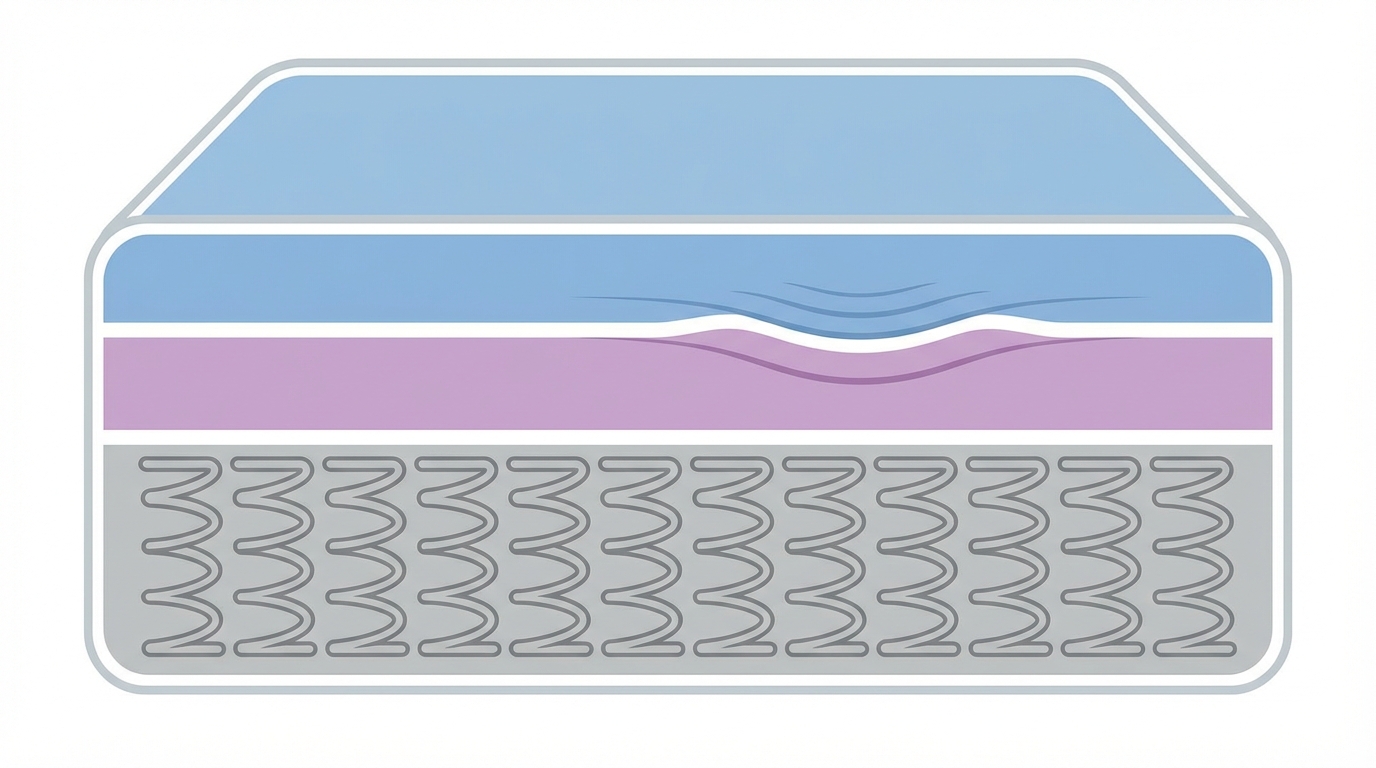
How Twin Length Compares To Full, Queen, And King
Understanding how long a twin is becomes more meaningful when you see it next to other common mattress sizes. While twin length is 75 inches, several other sizes share the same length or slightly longer dimensions. US mattress industry standards generally define full, queen, and king lengths as follows.
Here is a simple comparison table to put everything in perspective:
| Mattress Size | Width (inches) | Length (inches) | Typical Use Case |
|---|---|---|---|
| Twin | 38 | 75 | Kids, solo sleepers, bunk beds, small rooms |
| Twin XL | 38 | 80 | Teens, tall adults, college dorms |
| Full | 53 | 75 | Solo adults wanting more width |
| Queen | 60 | 80 | Most couples, main bedrooms |
| King | 76 | 80 | Couples wanting maximum width |
The key detail is that both full and twin share the same 75 inch length. The difference is that a full adds 15 inches of width, which is significant for solo adults who like more elbow room. If you fit comfortably lengthwise on a twin but feel constrained side to side, a full gives you more personal space without requiring a longer room. You still need approximately the same room length to accommodate the bed.
Queen and king mattresses extend length to 80 inches, the same as a twin XL, while increasing width to 60 and 76 inches respectively. For taller adults or couples, this 80 inch length is often the baseline for all long term primary beds. As Consumer Reports and other testing organizations have noted, queen sizes have become the most popular choice for couples because they balance space, cost, and room fit. Kings are ideal when both partners want freedom to spread out.
When thinking about future proofing, especially for a growing child, you might weigh a twin XL versus going straight to a full or queen if the room size allows. If the sleeper is likely to be tall and you plan for them to keep this bed into early adulthood, investing once in a longer and possibly wider mattress can avoid multiple purchases. Just be honest about how much floor space you can comfortably give up in the room.
When To Move Up From Twin Despite Room Constraints
Often the hardest conversations we have in the showroom are with families or individuals whose rooms technically fit a twin, but whose height or long term plans suggest a larger size. There is a natural tension between what fits on a floor plan and what supports restful sleep for years. In these cases, it helps to think about tradeoffs creatively rather than as a simple yes or no on size.
For example, you might be able to accommodate a full or queen by simplifying bedroom furniture. Can a separate nightstand and dresser be consolidated into a single storage piece. Could underbed storage bins replace a bulky chest. Many interior designers now encourage starting with the mattress size that best supports health and comfort, then designing storage around it, rather than the other way around.
Loft and Murphy style beds offer another path. If you move the mattress vertically, whether by lifting it to reveal storage or by folding it into a wall unit, you reclaim daytime floor space without sacrificing nighttime mattress area. If you do choose this route, pairing it with a supportive, durable mattress like a Sealy Posturepedic Elite Medium Mattress, Brenham II Euro Pillow Top helps ensure you are not compromising sleep quality in pursuit of clever storage.
In some cases, it genuinely makes sense to stick with a twin. For short term housing, like a one year lease during school, or for a child who is still several years away from a big growth spurt, the space savings can outweigh the potential need to upgrade later. There is no single right answer for everyone, which is why we always come back to three core questions: how tall is the sleeper now, how much more growth is likely, and how many years do you expect this mattress to serve as their primary bed.
“Our apartment bedroom is barely bigger than a walk in closet, and we thought a twin was our only option. Talking through layout ideas helped us realize we could fit a full size against one wall and use underbed drawers instead of a big dresser. It feels like we upgraded both our sleep and our storage at the same time.” – Jenna M., September
Real Life Twin Mattress Scenarios
Twins For Kids: Growing Room And Safety
For younger children, especially after a crib or toddler bed, a twin mattress often feels like the natural next step. At this stage, the 75 inch length is far more than they physically need, which gives you plenty of growth room. What matters more is choosing a mattress that supports their developing spine and creating a safe sleep environment. Pediatric sleep guidelines from organizations like the American Academy of Pediatrics emphasize firm, supportive surfaces and clear bed areas without excessive pillows or plush toys for very young children.
A twin allows you to keep the bed lower to the ground, especially if you choose a platform frame without a very tall foundation. This can make midnight potty trips or early morning wakeups safer. It also reduces the intimidation factor for kids who are excited about a "big kid bed" but a little nervous about falling. Adding a high quality mattress protector from a collection such as pillows, sheets, toppers, and protectors helps defend against spills and nighttime accidents without changing the mattress dimensions.
When thinking about how long your child will use the twin, estimate their likely adult height based on family patterns. If you expect them to be closer to 6 feet or taller, consider whether a twin XL might save you a replacement purchase in the late teen years. Because the width remains 38 inches, the floor space impact is minimal. Many parents pair a twin XL with a supportive hybrid mattress, like a softer Sealy Posturepedic Pro Soft Mattress, Dupont II Euro Pillow Top, to provide both pressure relief and long term support through growth.
Twins For Adults: Small Spaces And Specific Needs
Adults choosing a twin mattress are often doing so because of spatial constraints. Think micro studios, tiny homes, RVs, and narrow attic rooms. In these spaces, the 38 inch width and 75 inch length can be the difference between having a comfortable walkway and feeling like the bed is swallowing the entire room. Adults who live alone and prefer minimalism can genuinely thrive on a twin, as long as their height is compatible.
Comfort needs, however, are usually higher for adults than for children, simply because of body weight, joint history, and stress levels. An adult using a twin as a primary bed should prioritize high quality materials, solid edge support, and motion isolation. Mattresses like the Sealy Posturepedic Firm Mattress, Medina II offer the kind of reinforced support zones and stable surface that keep even a narrow bed feeling comfortably usable from edge to edge.
Adults with back issues may also benefit from pairing a twin mattress with an adjustable base. Being able to slightly elevate the head or feet can reduce pressure on the lumbar spine and improve circulation, which is especially helpful in smaller beds where shifting positions is more noticeable. A twin compatible adjustable frame from an adjustable bed frame and base collection can make a compact sleeping arrangement feel far more luxurious and personalized.
Bedding, Frames, And Accessories For Twin Mattresses
Fitting Sheets And Bedding To Twin Length
Once you have committed to a twin's 75 inch length, you need bedding that actually matches that dimension. Fitted sheets are cut for specific mattress sizes and depths. Using a twin XL sheet on a standard twin mattress will often leave excess fabric bunching at the corners, while trying to force a smaller sheet over a thicker mattress can pop off during the night. This may sound minor, but loose or ill fitting sheets can tangle around arms and legs and interrupt sleep.
Most bedding manufacturers label packages clearly as "Twin" or "Twin XL." Double check that you are selecting the standard twin size when your mattress is 75 inches long. Also note the pocket depth listed on the packaging, which should match or slightly exceed your mattress thickness, including any topper. For example, if your twin mattress is 12 inches thick and you add a 2 inch topper, you will want sheets with at least a 14 inch pocket.
Mattress protectors are equally specific. A protector that is too short in length will pull uncomfortably tight and may compress the mattress surface, while one that is too long will wrinkle and shift. High quality protectors in curated sets, like the Tempur-Pedic Mattress Topper, Pillow Travel and Guest Bundle, are designed to hug standard mattress lengths closely while still allowing for normal foam or hybrid compression.
Comforters and duvets offer a bit more flexibility, since many people prefer an oversized look that drapes further down the sides of the bed. Many brands size their comforters to work across both twin and twin XL, so you generally do not need to stress over those exact dimensions. What matters most is that the core layer that touches the mattress itself, especially fitted pieces and protectors, matches the 75 inch twin length.
Frames, Foundations, And Clearance
The length of your twin mattress will also interact with your choice of frame or foundation. A simple steel frame in a standard twin size is designed slightly larger than 75 inches to accommodate the mattress, but some decorative frames add more bulk at the head or foot. A curved metal or wood footboard, for instance, can extend several inches beyond the mattress, which may push the total bed length closer to 80 inches or more.
Platform beds and storage bases are also worth examining carefully. Drawers at the foot of the bed need clearance to open, which means you may require extra floor space beyond the nominal mattress length. If your room is already tight, consider side drawers or lift up storage rather than a foot drawer that could clash with a wall or doorway. Again, painter's tape can help you visualize how these features interact with a real world layout.
If you are pairing your twin with an adjustable base, like a smaller configuration of the TEMPUR-ERGO EXTEND ProSmart Base, note the outer dimensions in the product specifications. Many bases match the 75 inch mattress length closely, but some add a bit at the head for the mechanism. It is always better to check these details before purchase, especially if you are right against the minimum room size.
Finally, think about underbed clearance. Twin mattresses on higher frames provide valuable storage space for bins or rolling drawers, which can be a game changer in small rooms. Just ensure that this height still feels comfortable for the sleeper when getting in and out of bed. For children and shorter adults, a very tall bed can feel precarious, so a moderate frame plus gentle step stool might be more appropriate.
How To Decide: Is A Twin Long Enough For You?
A Simple Decision Checklist
You have a lot of information now about how long a twin mattress is and what that means. Turning that into a decision calls for a straightforward checklist. Start with the basics. First, measure the sleeper's height in inches. Add 6 inches to that number. If the total is less than or equal to 75, a twin is likely to work now. If it is between 75 and 80, you are in a gray zone where a twin could work short term but a twin XL is safer for long term comfort. If the total exceeds 80, a longer mattress is clearly needed.
Next, consider growth. For kids and teens, ask how much more height is likely to come in the next 2 to 5 years. For adults, you can usually treat current height as stable, unless there are specific orthopedic issues that affect posture or spinal curvature. Remember that children often have rapid growth spurts. A 13 year old at 5 feet 5 inches may be 5 feet 10 inches in only a couple of years, which shifts that length calculation.
Then factor in sleep position and habits. Do you or your child tend to curl up or sprawl out. Are toes usually pointed, or do you sleep with legs bent. Does the sleeper hug a pillow and slide up toward the headboard during the night. These details help refine the raw height number. Someone who rarely stretches fully may tolerate a slightly shorter mattress more comfortably than a tall, point toed stomach sleeper.
Finally, layer in room constraints. If you decide that a twin XL or full would be ideal but the room makes that impossible, think through creative layout or storage changes before defaulting to the smaller size. Use tape on the floor, mock furniture with cardboard boxes, and spend a bit of time physically walking around the suggested footprint. Often you will discover that a modest reconfiguration makes a longer bed workable after all.
When To Talk To A Sleep Expert
There are times when the decision still feels murky, even after careful measurements. Perhaps a child has special medical or sensory needs that affect how they sleep. Maybe you are managing chronic back or hip pain and want to know how mattress size interacts with firmness and support. This is when a conversation with a trained sleep specialist can save both time and money.
At Sleepology, we often combine size conversations with comfort profiling. For instance, if someone needs strong lumbar support and is debating a compact twin, we might show them how a mattress like the Sealy Posturepedic Pro Medium Mattress, Dupont II Euro Pillow Top performs under their body weight on a twin base. We can observe whether they are unintentionally sliding toward the foot for comfort or remaining comfortably within the supported zone.
Medical organizations like Cleveland Clinic often remind patients that sleep is a pillar of health on par with nutrition and exercise. Quality of sleep affects immune function, mood, and even pain perception. While mattress size may seem like a small detail compared to those bigger concepts, the reality is that a bed that is too short can subtly undermine all the other healthy habits you are working hard to maintain.
Even a brief phone call or in store visit with a sleepologist can clarify whether a twin's 75 inch length will work for your specific situation or whether stepping up in size is worth the investment. The goal is not to talk you into the biggest bed possible, but to help you avoid the frustration of sleep interrupted by something as preventable as a mattress that is a few inches too short.
Conclusion: Making Twin Length Work For Your Sleep And Your Space
Understanding that a twin mattress is 38 inches wide and 75 inches long is only the starting point. The real value comes from seeing how that length interacts with height, room size, and day to day comfort. For many children, teens under a certain height, and adults in compact spaces, a twin offers a smart balance of comfort and efficiency, especially when paired with supportive, well built mattress models and thoughtful room layouts.
For taller sleepers, active combination sleepers, or anyone expecting a major growth spurt, those 75 inches can begin to feel tight. In those scenarios, a twin XL or larger size can protect sleep quality and avoid the cost of upgrading sooner than expected. The extra 5 inches of a twin XL, or the shift to an 80 inch full or queen, can transform a "good enough" nightly experience into one where you climb into bed without thinking about where your feet will land.
As you weigh your options, remember that you are not choosing dimensions in isolation. You are picking the foundation for years of sleep, growth, and daily life. Taking a bit of time now to measure carefully, imagine room layouts honestly, and consider future needs is one of the kindest things you can do for your body and your peace of mind. If at any point the decision feels overwhelming, a conversation with a Sleepology sleepologist can turn a maze of numbers into a clear, confident choice.
Frequently Asked Questions
How long is a twin mattress in feet?
A standard twin mattress is 75 inches long, which equals 6.25 feet. When you imagine that in a room, remember that pillows take up some of that space at the head, so the usable length for your body is a bit less. For most children and adults up to around 6 feet tall, this length is workable, as long as their sleep posture does not extend far beyond the mattress edge.
How long is a twin XL compared to a twin?
A twin XL mattress is 80 inches long, while a standard twin is 75 inches. That 5 inch difference means a twin XL is 6 feet 8 inches long compared to the twin's 6 feet 3 inches. For teens, college students, and tall adults, that extra length provides more room to stretch out comfortably and is one reason twin XL is the norm in college dorms and many modern youth bedrooms.
Is a twin mattress long enough for a 6 foot person?
A 6 foot person can technically fit on a 75 inch twin mattress, since 6 feet equals 72 inches. However, the margin is only 3 inches, which disappears quickly once you account for a pillow and natural shifting during sleep. If a 6 foot sleeper primarily rests on their back and does not sleep high on the pillow, a twin can work short term, but a twin XL or an 80 inch long full or queen is a better long term option.
What is the difference in length between twin and full mattresses?
There is actually no difference in standard length between twin and full mattresses in the U.S. market. Both are typically 75 inches long. The difference is in width. A full is 53 inches wide, which is 15 inches wider than a twin. This extra width gives solo sleepers more room to move side to side without taking up additional length in the room.
Will twin XL sheets fit on a standard twin mattress?
Twin XL sheets are cut for mattresses that are 80 inches long, so when you place them on a standard 75 inch twin, there is usually excess fabric at the ends. You can sometimes tuck that extra length under the mattress, but it often leads to bunching or slipping, especially with smooth materials. For the most secure, comfortable fit, use sheets labeled specifically as "Twin" for a 75 inch mattress.
Can two twin mattresses make a king size bed?
Two standard twin mattresses placed side by side create a combined width of 76 inches, which matches a king's width, but the length will still be 75 inches, not the 80 inches of a standard king. To approximate a true split king, you would need two twin XL mattresses, each 38 by 80 inches. Those together produce a 76 by 80 inch sleeping surface, equal in dimensions to a standard king.
What room size do I need for a twin mattress?
Most people find that a room at least 7 by 9 feet can accommodate a twin mattress comfortably, allowing for safe walking space and at least one small nightstand. If you want room for additional furniture, like a dresser or desk, an 8 by 10 or larger footprint will feel more comfortable. Remember that bed frames and headboards can add to the total length, so always check the full bed dimensions, not just the mattress size.