

How Long Is A Queen Mattress? A Complete Guide To Queen Size Dimensions, Fit, And Comfort
If you are standing in your bedroom with a tape measure in one hand and a hundred browser tabs open, you are not alone. Queen mattresses are the most popular size for adults, but simple questions like how long a queen mattress is and whether it will actually fit your space can start to feel surprisingly complicated. You might find one source saying one thing, another saying something slightly different, and it becomes hard to feel confident before you spend real money.
Mattress size is not just a technical detail. It decides whether your feet hang off the edge, whether you and your partner wake up rested or resentful, and whether your bedroom feels like a calm retreat or an overcrowded storage unit. According to the Sleep Foundation, most adults need 7 to 9 hours of sleep per night for optimal health, and mattress fit plays a big role in how restorative those hours actually feel. When the mattress is the wrong size, your body usually tells you with aches, restlessness, or that familiar battle for the blanket in the middle of the night.
You are here because you want clarity, not jargon or sales pressure. You want to know exactly how long a queen mattress is, how that length compares to other sizes, how it feels for different heights and sleep positions, and how to match it to your room and lifestyle. You might also be wondering about extras like Olympic queen, split queen, or what happens when the “standard” dimensions do not quite line up with your old bed frame.
As a sleep retailer that helps shoppers through these questions every day, Sleepology’s goal is to make this simple and practical. You will get clear measurements, side by side comparisons, real world layout tips, and examples drawn from years of working with real sleepers, not just spec sheets. By the end, you should feel confident measuring your space, deciding if a queen is long enough for you, and knowing which queen friendly mattresses and accessories will support the kind of sleep you are actually chasing.
The Short Answer: How Long Is A Queen Mattress, Exactly?
For most shoppers, the quick answer is what you need first. A standard queen mattress measures 60 inches wide by 80 inches long. That 80 inch length is the key dimension when you are asking how long a queen mattress is, and it stays consistent across reputable brands in the United States.
Those numbers are not arbitrary. The queen size emerged to give adults more room than a full mattress without demanding as much floor space as a king. Compared to a full, which is typically 75 inches long, a queen adds 5 inches of length and a noticeable bump in width. That extra length matters if you are on the taller side or if you prefer to sleep more toward the middle of the bed and occasionally stretch your toes into the foot of the mattress.
It is worth knowing that manufacturers are allowed a small tolerance in their dimensions. The Sleep Products Section of the International Sleep Products Association notes that actual measurements can vary by about an inch in either direction because of foams, quilting, and compression. So your queen mattress might measure 79 or 81 inches long when you put a tape measure on it, but it will still be considered a standard 80 inch queen and will fit queen size foundations and frames.
In practice, that means you should treat 80 inches as your working number when you are planning your bedroom layout, ordering sheets, or deciding whether a queen is long enough for your height. Think of it the way you think of your shoe size. Different brands may feel slightly different, but the labeled size gives you a reliable starting point so you do not have to re learn everything each time you shop.
“We had no idea that 5 inches of extra length could make such a difference. I am 6 feet 1 inch, and I used to curl up on our old full mattress so my feet did not hang off. On our new queen from Sleepology, I can finally sleep stretched out without bumping the footboard.” – Dana K., November
How Queen Length Feels For Different Heights And Sleep Positions
Once you know that a queen mattress is 80 inches long, the next natural question is whether that is actually enough for your body. The answer depends on your height, your sleep position, and how far up on the pillow you tend to sleep.
Height, Foot Room, And The “Pillow Factor”
A useful rule of thumb from sleep ergonomics research is that your mattress should be at least 6 to 8 inches longer than your height so your head and feet are comfortably supported even when you use a pillow. For example, if you are 6 feet tall, that is 72 inches. With an 80 inch long mattress, you technically have 8 inches of extra length. However, because your head usually rests on a pillow that shifts your starting point toward the middle of the mattress, some of that extra length is “used up” at the head end.
Most people end up sleeping with the back of their head several inches away from the true top edge of the mattress. The result is that a 6 foot 2 inch person on a queen may feel fine if they sleep curled on their side, but might feel their toes brush the footboard if they sleep flat on their back and like to point their toes or wear thick socks. If you are under about 6 feet 2 inches, a queen length is usually sufficient. If you are taller than that, you are on the edge of the comfort envelope and may want to consider your sleep style more carefully.
Shorter sleepers tend to have the opposite experience. If you are 5 feet 6 inches or under, an 80 inch mattress usually feels luxuriously long. You might find that your concern shifts from “Is this long enough?” to “Is this mattress too big for my room?” which we will address later.
Sleep Position: Side, Back, And Stomach Sleepers On A Queen
Your primary sleep position also affects how that 80 inch length feels. Side sleepers tend to curl their legs, which shortens their effective height along the mattress. This is one reason side sleepers can be tall and still feel comfortable on a queen. Back sleepers, especially those who like to lie straight with their toes pointed, use nearly every inch of available length. Stomach sleepers can sometimes feel a little more pressure on their toes if the mattress is on the shorter side for their frame, simply because of the way the ankles rest against the mattress surface.
The American Academy of Sleep Medicine notes that neutral spine alignment is key for reducing morning pain, and part of that alignment comes from not having to contort your body simply to fit the bed. If you routinely sleep in a tight fetal position to avoid your feet touching the footboard, that is a sign your mattress length might be marginal for your height, regardless of the official dimensions.
Couples, Pets, And “Diagonal” Sleepers
Things get a bit more complex when you share the bed. Many couples find that they do not just sleep perfectly parallel to the edge of the mattress. One partner might drift diagonally, or a pet might claim the foot of the bed. Since the length of a queen is fixed at 80 inches, these patterns can expose limitations that a solo sleeper might not feel.
If one partner is significantly taller, they may slide down to avoid hitting the headboard with their shoulders, which can put their feet right at the foot edge. Some taller sleepers solve this by sleeping slightly diagonally, which effectively gives them a bit more room to stretch. However, that can reduce usable space for the other partner. If you both like to sprawl, it is worth asking not only how long a queen mattress is, but how that length interacts with your real world habits.
“My husband is 6 feet 4 inches and sleeps like a starfish. We tried to make a queen work, but he kept sleeping diagonal and I ended up curled in a corner. Our Sleepology specialist walked us through measurements, and we realized it was not just about width, it was about his height too. We ended up upgrading to a king and using an adjustable base, and our arguments over ‘who is hogging the bed’ basically disappeared.” – Alicia P., October
Queen vs Full vs King: How Length And Width Really Compare

Understanding how long a queen mattress is becomes more helpful when you compare it to neighboring sizes. Length tends to stay similar in the larger sizes, while width changes more dramatically, which can surprise many shoppers.
Standard Dimensions Side By Side
Here are the commonly accepted dimensions for the most popular adult mattress sizes in the United States. Remember that small variations of up to about an inch are normal from brand to brand.
| Mattress Size | Width (inches) | Length (inches) | Typical Sleeper Profile |
|---|---|---|---|
| Full | 54 | 75 | Solo sleepers, smaller rooms |
| Queen | 60 | 80 | Most couples, solo sleepers who like extra space |
| King | 76 | 80 | Couples who want maximum personal space |
| California King | 72 | 84 | Tall sleepers, long narrow rooms |
Notice that from full to queen you gain both width and length. From queen to king you gain width, but the length stays the same 80 inches. From king to California king, you trade some width for extra length, ending up with 84 inches in length. So if your core question is “How long is a queen mattress compared to a king?” the answer is that they are the same length. King only changes your width.
This is particularly important for taller sleepers who assume upgrading to a king will automatically give them more foot room. If your only concern is length and you do not have space for a California king, then a king will not solve that problem. It will, however, give you substantially more sideways room, which can still improve sleep if your main challenge is bumping shoulders with your partner.
Queen Length Compared To Twin XL And Specialty Sizes
People are often surprised to realize that a twin XL mattress is also 80 inches long, the same as a queen. The twin XL simply offers that length in a narrower, 38 inch wide package, which is why it is so common in college dorms according to multiple university housing guides. This is helpful to know if you or a child are “testing” length comfort in a dorm or guest room. If you feel cramped on a twin XL in terms of length, a queen will not feel longer, only wider.
Specialty sizes like Olympic queen or “RV queen” can complicate things a bit. An Olympic queen is typically 66 inches wide by 80 inches long, so it has the same length as a standard queen but adds width. Some RV queen mattresses, on the other hand, are shorter, often around 75 inches long, which is closer to a full or traditional double. If your question about how long a queen mattress is comes from buying for an RV or camper, be sure to check whether you are dealing with a standard 80 inch queen or a shortened RV variation.
How Width Interacts With Perceived Length
Psychologically, having more width can make a mattress feel longer, simply because you are not colliding with your partner or the edge rails as often. Research on sleep disturbance shows that bed partners can affect each other’s sleep quality through movement and temperature, and more space tends to reduce those disturbances. Consumer Reports has noted that couples often report improved comfort when moving from a queen to a king, even though the length is identical.
However, no amount of width can fix genuine length issues for very tall sleepers. Width is like having extra elbow room at a dining table, while length is like legroom under that table. Both matter, but they solve different problems. When you are choosing between queen, king, and California king, it helps to be clear about whether your main complaint is feeling cramped side to side, or having your feet at the edge.
“We almost ordered a king assuming it would be longer, then realized with Sleepology’s help that the length was identical to queen. My partner is 5 feet 5 inches and I am 5 feet 10 inches, so length was fine, it was our shoulders and my habit of rolling toward the middle that needed space. We stayed with a queen and invested in a higher quality Sealy Posturepedic Plus Medium Mattress – Paterson II Euro Pillow Top instead of maxing out the size, and it was the right call for our room.” – Marco L., November
Room Size, Layout, And Clearance: Making A Queen Actually Fit
Knowing that a queen mattress is 80 inches long is one thing. Making that length work in a real room with doors, closets, and furniture is another. This is where a lot of buyers end up frustrated, because the mattress fits the floor plan on paper, but the room feels cramped in daily life.
Minimum Room Sizes For A Queen Mattress
A common guideline used by interior designers is that a queen mattress fits best in a bedroom that is at least 10 feet by 10 feet. That measurement gives you enough length for the 80 inch mattress, plus walking space and some furniture. The Sleep Foundation and several housing experts recommend leaving at least 24 inches of walking clearance on each accessible side of the bed and more near the foot if it faces a door.
In a narrow room, length becomes critical. An 80 inch mattress is 6 feet 8 inches. If your room is only 9 feet long wall to wall and you have a door that swings inward or a radiator against one wall, the functional space is smaller than the raw dimensions. That is why it is helpful to sketch your room or use painter’s tape on the floor to map where an 80 inch by 60 inch rectangle would go, and then physically walk around it.
Accounting For Headboards, Footboards, And Frames
It is easy to forget that the mattress is only part of the total footprint. Many queen bed frames and headboards add several inches at both the head and foot. A sleigh bed or a frame with a substantial footboard may add 4 to 8 inches in overall length, which means you are effectively planning for 84 to 88 inches rather than 80.
Platform beds are often more compact, but if you are considering an adjustable bed frame and base, measure those dimensions as well. Adjustable bases in queen are still designed around an 80 inch mattress, but the metal base may extend slightly beyond the mattress at the head or foot. Knowing those numbers upfront helps you avoid the scenario where delivery day turns into a puzzle of trying to squeeze the bed between a wall and a closet door that will no longer open fully.
Doorways, Stairwells, And Delivery Path
While this guide focuses on how long a queen mattress is in the room, that same length matters in hallways and stairwells. Traditional, non compressed queen mattresses can be awkward to turn at tight landings, especially in older homes. Bed in a box styles compress the mattress so it is packaged shorter during delivery, which can be a big help if you live in a walk up or have narrow hallways.
Before you buy, measure the narrowest points along the delivery path, including door frames and any tight corners. If any of those are much smaller than 80 inches, talk with a Sleepology specialist about whether a boxed delivery style makes more sense or whether the frame and foundation can be assembled in the room. Doing this prep work now can save you the headache of trying to bend a rigid mattress through a space it physically cannot navigate.
Thickness And Height: How Mattress Depth Changes Queen Length Comfort
When we focus on length, it is easy to ignore the third dimension of a mattress, which is thickness. Mattress height does not change the official answer to how long a queen mattress is, but it does affect how your body and feet interact with the bed, especially if you are shorter or taller than average.
Total Bed Height And Getting In And Out Comfortably
Most adults are most comfortable when the top of the mattress sits around knee height, which averages about 24 to 26 inches from the floor, according to ergonomic design research. To find your ideal setup, you add your frame height, any foundation or box spring, and the mattress thickness. If your queen mattress is quite thick, say 14 to 16 inches, and you put it on a high profile frame, you might end up with the top of the bed at 28 to 30 inches. That can make it harder for shorter sleepers to sit and swing their legs comfortably.
While that might sound unrelated to mattress length, it actually changes how your feet meet the edge. If you are tall and your bed is too low, your knees will rise above your hips and you might slide down the mattress a bit in search of comfort, pushing your feet closer to the foot edge. If the bed is very high, shorter sleepers sometimes perch closer to the head of the bed so their feet can still touch the floor, effectively reducing their usable length when they lie down.
Edge Support, Foot Drop, And Taller Sleepers
Another underappreciated factor is edge support. On a mattress with strong, reinforced edges, you can use the full 80 inch length without feeling like you might roll off when your feet are near the end. On a softer mattress with weak edges, your feet may compress the end of the bed more, making it feel shorter. The Cleveland Clinic points out that good support at the edges of the bed also makes it easier for older adults to get in and out safely, reducing fall risk.
If you are a taller sleeper considering a queen, pay attention not only to the labeled length but to how firm the mattress feels near the head and foot. A medium or medium firm model like the Sealy Posturepedic Medium Mattress – Medina II Euro Pillow Top can offer a comfortable surface with better structure at the edges, which helps you fully use that 80 inch length, especially if you sleep on your back.
Queen Mattresses For Different Sleepers: Who A Queen Length Works Best For
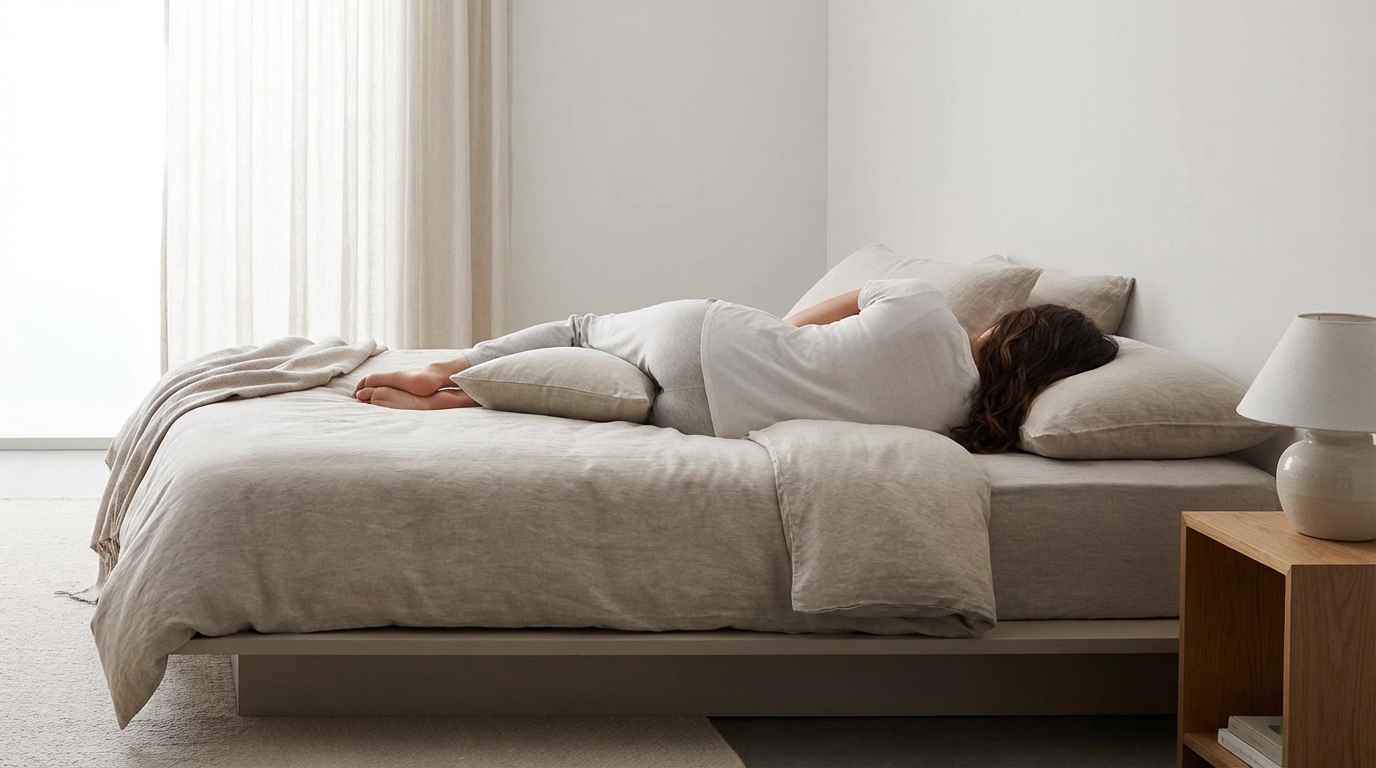
Now that the numbers are clear, the real question is whether a queen mattress is the right size for your particular situation. The good news is that for many adults and couples, a queen’s length and width hit a sweet spot between comfort and practicality.
Solo Sleepers: Stretching Out Without Overwhelming The Room
If you sleep alone and are under about 6 feet 2 inches tall, a queen mattress offers more than enough length. You gain space to stretch your arms and legs without having to negotiate with a partner, and you often still retain more floor space in your bedroom than you would with a king. This can be especially important in apartments or homes built with secondary bedrooms around 10 feet by 10 feet.
Solo sleepers who work from home or like to use their bedroom as a reading or yoga spot often prefer the queen length because it balances a feeling of luxury with room to move around. Pairing a supportive queen mattress like the Sealy Posturepedic Pro Soft Mattress – Dupont II Euro Pillow Top with breathable sheets such as the Tempur-Pedic TEMPUR Adapt Luxe Egyptian Cotton Sheet Set can create a sleep surface that feels spacious without overpowering a modest room.
Couples: Personal Space Within A Realistic Footprint
For couples, queen is often the first size that truly feels like “enough” space compared to full. Each partner gets about 30 inches of width and the full 80 inch length. According to multiple industry surveys, queen remains the most commonly purchased size for adult couples, in part because many homes and apartments are designed with queen friendly master bedrooms.
A queen’s length works particularly well when both partners are under 6 feet 2 inches and at least one prefers side sleeping or a slightly curled position. If you are both tall back sleepers, or one partner is closer to 6 feet 5 inches, you are more likely to bump into the limits of 80 inches. In those cases, king or California king may provide a better long term experience, especially considering most mattresses are designed to last 7 to 10 years.
Growing Teens, College Students, And Guest Rooms
For teens and young adults who are still growing, opting for an 80 inch queen instead of a shorter full can be a smart long term move if you have the room. A teenager at 5 feet 10 inches might be perfectly fine on a full today, but if they grow another 4 inches, that 75 inch full length will feel short quickly. A queen accommodates that growth without needing another replacement.
In guest rooms, a queen tends to be the most versatile choice. It is long enough for most adult guests, sleeps couples comfortably, and still fits nicely in a 10 by 11 foot room when you plan your layout. Choosing a medium feel mattress such as the Sealy Posturepedic Firm Mattress – Medina II or a bundle that includes a premium topper and travel pillow like the Tempur-Pedic Mattress Topper Pillow Travel and Guest Bundle can help you cover a wide range of body types and preferences without overthinking it.
One Strategic Checklist: How To Know If Queen Length Is Right For You
Once you understand the measurements and how they play out in daily life, making a decision comes down to a few key checks. Taking ten minutes to walk through them can save you years of “I wish we had gone bigger” or “This bed dominates the whole room” regret.
Start with your height. If both sleepers are under about 6 feet 2 inches, queen length is likely sufficient. If one or both are taller, ask how you typically sleep. Side sleepers who curl a bit can get away with slightly less length than back sleepers who stretch fully. Next, look at your room dimensions. Measure the wall where the bed will go and subtract 6 to 7 feet total to account for walking space and furniture. If the remaining usable width or length is less than 80 inches by 60 inches, you may need to rethink orientation or size.
Also consider future plans. Mattresses usually last the better part of a decade. If you are buying for a child or teen, will they likely grow taller? If you are moving into a starter home, will this bed need to work in multiple rooms over its lifespan? Planning ahead based on the fixed 80 inch length gives you more flexibility. Finally, layer comfort into the equation. The right size only feels right when the mattress itself supports you. If you are a back sleeper worried about alignment, browsing the best mattresses for back sleepers in queen size can help you align both fit and feel in one decision.
When A Queen Is Not Long Enough: Alternatives For Tall Sleepers
For many people, the 80 inch length of a queen mattress is perfectly fine. But if you consistently find that your toes sit on the edge, or your sleep doctor has recommended more room to maintain neutral posture, it is worth looking at alternatives.
California King: Extra Length Where It Counts
California king is the go to choice when length is the main issue. At 84 inches long, it gives you four extra inches compared to a queen, which is meaningful for sleepers over 6 feet 3 inches. As the name suggests, California king is narrower than a standard king at 72 inches wide, so you lose some shoulder room but gain legroom. For tall, lean couples or single sleepers with long legs, that trade off can be exactly right.
Room planning matters even more here. An 84 inch mattress plus a headboard can easily push your total footprint close to 90 inches. You will want at least a 12 by 12 foot room to allow comfortable clearance. If your current bedroom is smaller, but you are planning a move within the mattress’s lifespan, you can factor that into your decision.
King Size And Split King: When Width Helps More Than Length
If your frustration comes more from feeling crowded than literally running out of length, a standard king may solve your problem without changing the 80 inch length. Each partner gains an additional 8 inches of width compared to a queen, which means less bumping and more ability to move without waking each other. Studies on partner disturbance have found that larger beds tend to reduce awakenings tied to a partner’s movement or snoring, even when mattress quality stays the same.
Split king setups, which pair two twin XL mattresses side by side, also measure 80 inches long. They shine for couples who have very different comfort needs. You can put a firmer mattress on one side and a softer one on the other, or pair an adjustable base under each half. If that sounds appealing and you have the floor space, exploring king sized mattresses is a natural next step.
Specialty And Custom Lengths
In rare cases, standard sizes do not work, especially for sleepers well over 6 feet 6 inches or for custom bed frames in unique spaces. Some manufacturers offer extended length queens or bespoke dimensions at a premium cost. The National Institute of Standards and Technology does not regulate mattress lengths beyond crib safety, so custom sizes are a buyer beware situation. Always confirm the exact length and understand that you may need custom bedding as well.
Before you move into specialty territory, though, it is worth double checking whether a California king or a standard king placed differently in the room could give you the comfort you want. Most people find a solution within those standard 80 to 84 inch lengths without having to reinvent the wheel.
Bedding, Pillows, And Accessories That Fit Queen Length
Knowing how long a queen mattress is also helps you choose accessories that work properly. An 80 inch mattress needs sheets, protectors, and toppers designed for that exact length to avoid bunching or slipping.
Queen fitted sheets are cut for roughly 60 by 80 inches, with extra fabric to accommodate different depths. Investing in high quality sheets such as the Tempur-Pedic ProPerformance Sheet Set or the Tempur-Pedic TEMPUR Adapt Luxe Egyptian Cotton Sheet Set ensures the elastic, pocket depth, and fabric weight are up to daily use. A protector or topper that lists queen but uses a shorter 75 inch cut intended for RV mattresses will not fully cover your bed, so always confirm the 80 inch spec.
Pillows also interact with length. A standard pillow is around 20 by 26 inches. Two standard pillows side by side fit nicely across a queen and still leave some head clearance from the top edge so you are not pressed directly against your headboard. Body pillows, such as The BodyPillow by Tempur-Pedic, can be especially helpful for taller side sleepers. They let you support your knees and ankles, which helps your spine stay neutral within the 80 inch mattress length, instead of curling tightly just to stay on the bed.
You can find all of these supportive add ons in Sleepology’s curated collection of pillows, sheets, toppers, and protectors, so you are not piecing together a sleep system from random items that may not match your mattress dimensions.
How Mattress Construction Affects Perceived Length Comfort
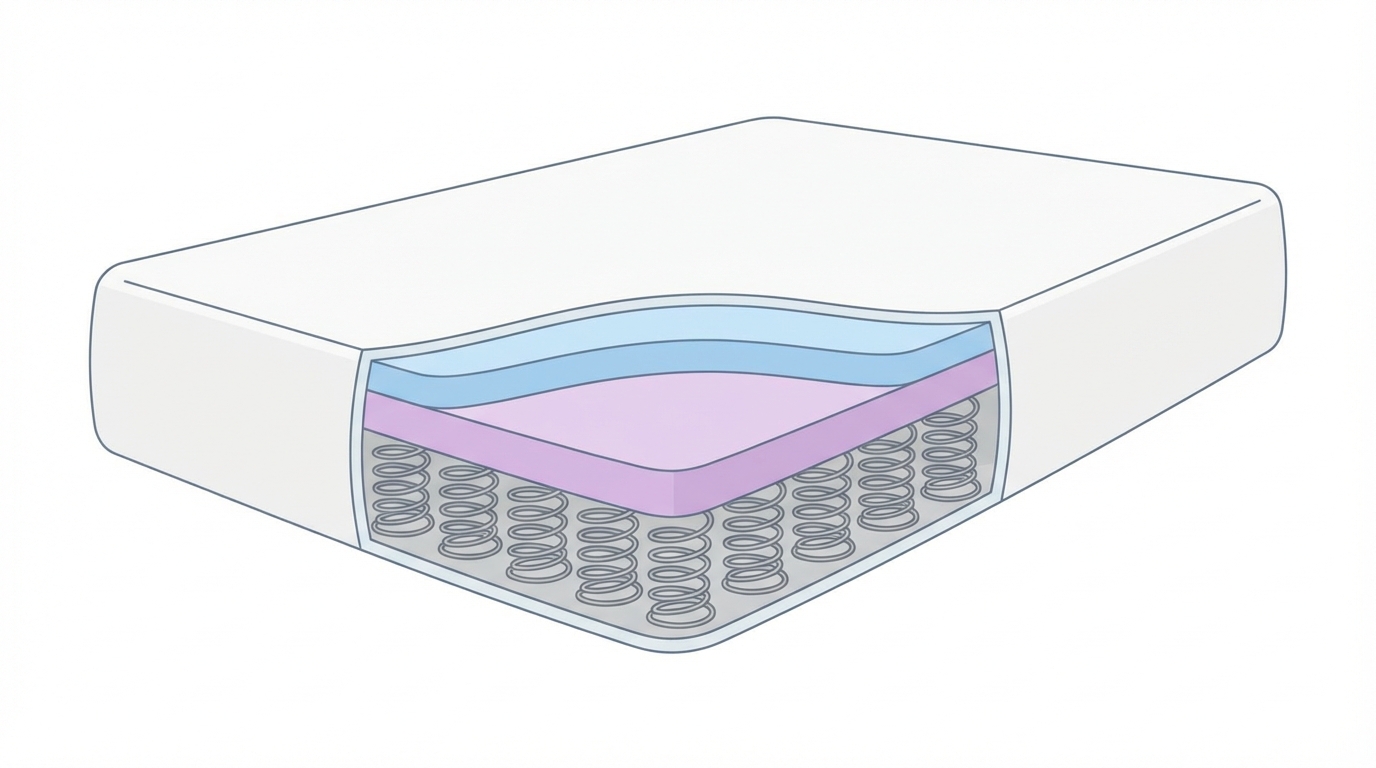
Even though the physical answer to “How long is a queen mattress?” is fixed at 80 inches, the way a mattress is built changes how that length feels. Support systems, comfort layers, and zoning can all influence whether you experience the full surface as usable space.
Innerspring and hybrid models often have a more defined edge because of perimeter coils or reinforced foam rails. That structure lets you sleep closer to the head or foot without the sensation of rolling off, effectively giving you every inch of length. Pure foam mattresses can vary. Higher density foams support better near the edges, while lower density foams may compress more dramatically when you lie near the end.
Zoned support, where the mattress is firmer in the middle and slightly softer near the shoulders and feet, can make it more comfortable to use the full 80 inches, particularly if you sleep on your back. Some Sealy Posturepedic models, for example, include targeted support under the lumbar region to keep your spine aligned while still being pressure relieving at the head and foot. That means you are less likely to slide down the bed in search of a comfortable angle, which preserves your foot room.
Finally, the type of pillow and your head position matter too. A very thick pillow can tilt your head forward, which in turn may encourage you to scoot down to find a better angle. A more adaptive pillow, like the BodyPillow by Tempur-Pedic paired with a standard head pillow, can help you maintain comfortable alignment at the top of the mattress so your whole body uses the length efficiently.
Putting It All Together: Making A Confident Queen Size Decision
By now, you know that a standard queen mattress is 60 inches wide and 80 inches long, and that the “how long” question connects to your height, room, and sleep style in more ways than a simple number suggests. You have seen how that length compares to full, king, and California king, why width does not change length beyond queen, and how details like edge support and pillow choice can subtly affect your comfort at the top and bottom of the bed.
More importantly, you have a clearer sense of who a queen mattress works best for. If you are a solo sleeper or a couple under about 6 feet 2 inches, and your bedroom is at least 10 by 10 feet, queen length is almost always a solid, livable choice. It gives you enough room to stretch without overwhelming most spaces. When you pair that right size with a mattress that matches your sleep position and firmness preference, like those in Sleepology’s best mattresses for back sleepers or our broader queen inventory, you set yourself up for many years of better rest.
You also have a realistic picture of where queen length falls short. Very tall back sleepers, couples who co sleep with kids or large dogs, or people in especially long and narrow rooms might be better served by a California king or a standard king. There is no shame in recognizing that your body and life simply need more inches. The right mattress is the one that fits you and your space, not just the one that looks the best on paper.
If you would like help translating all of this into a concrete choice, that is where Sleepology comes in. Our team talks people through these exact questions every day, with measurements, sample layouts, and product comparisons that keep your real life at the center. You bring your room dimensions and your sleep habits, and we help match you with a mattress that is the right length, width, and feel so you can stop worrying about numbers and start looking forward to going to bed.
Frequently Asked Questions
How long is a queen mattress compared to a full mattress?
A standard queen mattress is 80 inches long, while a standard full (also called a double) is typically 75 inches long. That 5 inch difference in length can be significant if you are over about 5 feet 10 inches or if you like to sleep fully stretched out rather than curled on your side. In addition to the extra length, a queen is 6 inches wider than a full, which is why many adults find a queen more comfortable for long term use, especially if they occasionally share the bed.
Is a queen mattress the same length as a king mattress?
Yes. In standard U.S. sizing, both queen and king mattresses are 80 inches long. The difference is in width. A queen is 60 inches wide, while a king is 76 inches wide, so each partner gains 8 additional inches of personal space in a king compared to a queen. If your main concern is length for your height, moving from queen to king will not change that. You would need to look at a California king, which is 84 inches long, if you truly need more legroom.
At what height is a queen mattress too short?
There is no strict cutoff, but for most people, a queen’s 80 inch length starts to feel tight once you are taller than about 6 feet 2 inches, especially if you sleep on your back with your legs straight. Many sleepers in the 6 feet 3 inches to 6 feet 5 inches range find they can make a queen work if they sleep mostly on their side or slightly curled. If you are much taller than that, or you strongly prefer back sleeping, a California king’s 84 inch length usually provides more consistent comfort.
Will a queen mattress fit in a 10 by 10 foot room?
In most cases, yes, a queen mattress will fit comfortably in a 10 by 10 foot room. An 80 inch long mattress leaves you with a little over 3 feet of space at the foot of the bed if you center it on one wall, assuming you do not have an oversized headboard or footboard. You will still need to account for other furniture, door swings, and walking clearance. A common rule of thumb is to leave at least 24 inches on each open side of the bed for movement. Using painter’s tape on the floor to outline a 60 by 80 inch rectangle is a helpful way to visualize the fit before you buy.
Do queen size sheets and toppers always fit an 80 inch mattress?
High quality queen size sheets and toppers are designed to fit the standard 60 by 80 inch queen dimension, with extra fabric solely for depth. However, some products labeled “RV queen” or “short queen” are cut for 75 inch long mattresses, which are common in campers and motorhomes but shorter than standard home queens. Always check the listed length, not just the size name. When in doubt, choose bedding from trusted brands and collections, such as Sleepology’s curated pillows, sheets, toppers, and protectors, which clearly state their dimensions.
Does mattress thickness change how long a queen mattress feels?
Mattress thickness does not change the official length of a queen, which stays 80 inches. However, a very thick or very thin mattress can affect how you position yourself on the bed and how your feet interact with the bottom edge. Thicker mattresses on high frames can make it harder for shorter sleepers to sit and lie down comfortably, sometimes causing them to perch closer to the head and reducing usable length. A very soft, thin mattress with weak edge support may compress more at the foot, which can make it feel shorter for taller sleepers. Choosing a well constructed queen mattress with good edge support helps you use the full 80 inch length confidently.