

How Long Is a Mattress Good For? A Clear, Honest Guide To Mattress Lifespan
You are not imagining it if you have been waking up a little more sore, noticing a dip in the middle of the bed, or sleeping better on the guest room mattress than in your own room. Most people hang on to a mattress several years longer than they should, often because it still looks “fine” or replacing it feels overwhelming. So you end up wondering quietly, how long is a mattress good for, really, and are you already past that point.
This question matters more than it might seem at first. Your mattress is the surface your body spends roughly one third of life on, which means it has a direct line to your back health, joint comfort, mood, and even long term disease risk. The Sleep Foundation notes that most adults need 7 to 9 hours of sleep a night, and that sleep quality is tightly linked to pain levels, cognitive performance, and immune function. When your mattress is past its prime, you can be doing everything else right and still wake up tired or uncomfortable because your sleep surface is quietly working against you.
You might have heard generic advice like “replace every 8 years,” then a friend says their latex mattress has lasted 15, while an inexpensive bed in a box started sagging after 4. It is confusing, and broad rules do not tell you what to do with the sagging queen in your bedroom right now. What you really need is a practical way to judge your own mattress by its type, age, how you use it, and the signals your body is sending you, along with realistic expectations about lifespan.
That is exactly what you will get here. You will learn how long different mattress types are typically good for, how to recognize performance red flags before they turn into full blown sleep problems, which care habits actually extend lifespan, and when it makes sense to repair, add a topper, or simply move on. Along the way, you will see specific product examples from Sleepology that match different needs, so that if you do decide your mattress has reached the end of its useful life, you already know what a smart next step can look like.
How Long Is A Mattress Good For, Really?
Most adults have heard some version of “a mattress lasts about 7 to 10 years,” and there is a good reason that range comes up often. For many quality innerspring, hybrid, and foam mattresses used nightly by two adults, 7 to 10 years is a reasonable expectation for strong support and comfort. After that point, materials start to fatigue even when there are no dramatic rips or broken coils. The National Sleep Foundation and similar organizations often use this range as a guideline because mattress performance tends to decline gradually rather than at a single clear cutoff.
However, a calendar age by itself does not tell the whole story. How long a mattress stays good for depends heavily on what is inside it, who is sleeping on it, and how it is cared for. A basic innerspring with thinner coils and low density foam in a busy household will likely feel “done” closer to year 6 or 7. A high quality hybrid built with stronger coils and denser foam, used by a single sleeper who rotates it and keeps a protector on, can still feel supportive into the 11 or 12 year mark. This is why you will see conflicting anecdotes online. The mattresses themselves are not equal.
Reputable sources like the Sleep Foundation and Cleveland Clinic emphasize that beyond age, the real question is whether your mattress still keeps your spine in neutral alignment and distributes pressure evenly. If you are waking with new or worsening back, hip, or shoulder pain that improves when you sleep elsewhere, those are stronger clues about mattress lifespan than the purchase date on your receipt. The Mayo Clinic also points out that chronic pain and poor sleep are often intertwined, so dismissing “just a little sag” can mean tolerating pain that is actually fixable with a better sleep surface.
When I work one on one with Sleepology clients, I encourage them to think of mattress lifespan in terms of usefulness instead of years. A mattress is “good” for as long as it supports healthy sleep without demanding workarounds such as layered toppers to cover dips or strategically avoiding the middle of the bed. Once you find yourself constantly adjusting to make the mattress work, rather than the mattress quietly working for you, its practical lifespan is coming to an end even if the manufacturer’s warranty still has time on it.
“I kept thinking I would tough it out one more year because our mattress was only eight years old. Mia walked me through how to check for sagging and alignment, and it was obvious once I looked at it that we were overdue. We replaced it through Sleepology and my morning back pain improved in under a week.” – Jordan H., November
Mattress Lifespan By Type: How Long Different Mattresses Stay Supportive
Different mattress constructions age in different ways. Understanding how your specific type tends to behave over time will help you understand how long it is likely to remain truly good, not just technically usable.
Innerspring Mattresses
Traditional innerspring mattresses use metal coils as the support core, typically topped with layers of fiber and foam for comfort. They are usually bouncier and more breathable than many foam beds, which is why some back and stomach sleepers continue to prefer them. Their lifespan largely comes down to the quality and gauge of the coils, the thickness and density of the comfort layers, and how well the mattress is supported by the bed frame or foundation.
In general, a decent quality innerspring mattress will feel supportive for about 6 to 8 years, while higher end models with stronger coils can last 8 to 10 years or a bit longer with good care. Industry testing groups such as Consumer Reports and mattress associations have found that cheaper innersprings with thinner coils lose support faster, often because those coils start to fatigue and stay compressed where your body lies most often. When this happens, you might notice a hammock effect, where your hips drop and your spine curves instead of staying neutral.
Innersprings also tend to show their age visually. You may see body impressions you can measure with a straight edge, frayed edges, or feel coils more prominently through the top layers. If you are someone who likes the feel of a classic innerspring and sleeps mainly on your back, a modern hybrid like the Sealy Posturepedic Elite Firm Hybrid Mattress – Brenham II can be a smart upgrade because it uses a coil core for support but adds more durable foam layers on top to slow that wear pattern.
Memory Foam Mattresses
Memory foam mattresses rose in popularity because of their ability to contour closely to the body and relieve pressure on the shoulders and hips. Memory foam is a viscoelastic material that softens with heat and pressure, then slowly returns to shape. The trade off is that low density memory foams are more prone to lasting body impressions and softening that does not bounce back, which shortens the time they are truly supportive.
On average, a memory foam mattress is good for about 7 to 9 years, with higher density foams on the upper end of that range and lower density foams sometimes showing significant wear by year 5 or 6. The Sleep Foundation and several sleep labs note that memory foam density, measured in pounds per cubic foot, is one of the best predictors of longevity. Denser foams tend to resist deep impressions better, especially under the hips and torso where most adults place the most pressure.
How you sleep also matters. Heavier individuals and couples put more stress on the foam than lighter single sleepers, so the same mattress can age very differently in two households. You might notice that your memory foam bed still feels comfortable when you first lie down, but you wake up in a deeper dip than you started, or that you have started to feel “stuck” in one position. These can be signs that the foam has lost resilience and is no longer holding your body in optimal alignment, even if there is no dramatic sag visible when the bed is empty.
This is an area where adding a topper can sometimes buy you time but cannot fully reset a mattress that has already lost its structural integrity. A topper is resting on that compromised surface. For Sleepology customers who like the hugged feel of memory foam but want better long term support, I often point them toward hybrids such as the Sealy Posturepedic Plus Medium Mattress – Paterson II Euro Pillow Top, which combines conforming comfort with a sturdier coil core.
Latex Mattresses
Latex mattresses, especially those made with natural latex, are the durability standouts of the mattress world. Natural latex is highly resilient, which means it compresses under weight but snaps back quickly once the weight is removed. Sleep research referenced by organizations like the European Bedding Industries Association often notes that natural latex maintains its support properties longer than many polyurethane foams used in other mattress types.
For a quality natural latex mattress, a realistic “good” period is 10 to 15 years, and in some cases up to 20 with excellent care and single sleeper use. Synthetic or blended latex tends to have a somewhat shorter lifespan, often closer to 8 to 12 years, because it does not have quite the same elasticity. Latex tends to resist deep body impressions better than most foams, though over a decade or more you can still see shallow impressions in very heavily used zones.
Latex is not the perfect match for everyone. It has a unique buoyant feel that some people love and others find a bit too springy compared with slow melting memory foam. It can also be heavier and more expensive up front. If you are someone who values long term value and wants a mattress that stays in a stable comfort range for many years, latex or a latex hybrid can be a strong choice. When we talk about total cost per year of comfort at Sleepology, a latex mattress that costs more initially but stays supportive for 15 years can absolutely be the lowest cost option in the long run.
Hybrid Mattresses: How Long Do They Last And Why They Often Age Best

Hybrid mattresses were created to combine the best traits of innersprings and foam. They use a coil support core, usually with individually wrapped pocketed coils, topped with comfort layers of memory foam, latex, or other specialty foams. When designed well, hybrids offer a mix of support, contouring, pressure relief, and temperature regulation that works for many body types and sleep positions.
A well built hybrid mattress is typically good for 8 to 12 years. The coil system carries much of the weight and helps prevent the excessive compression that can shorten the life of all foam mattresses. Meanwhile, having higher quality, thicker comfort layers on top of those coils helps the mattress avoid the “coil poking through” aging pattern you sometimes see in older innersprings with thin padding. Independent testing, including reports summarized by Consumer Reports, often finds that hybrids hold up especially well for couples and people over 200 pounds because the coil systems are designed to manage more load.
How long your hybrid stays good will depend on the type and density of the comfort layers and the quality of the coils. Lower density foams over a decent coil unit might still start to show deeper impressions around the 6 to 7 year mark, while high density foams or latex over strong pocketed coils can still feel stable well into year 10 and beyond. If motion isolation and edge support matter to you, hybrids often outperform traditional innersprings over time because those pocketed coils move more independently and are less likely to all fatigue in the same way.
At Sleepology, many of our “sweet spot” recommendations for mixed sleepers and couples are hybrids, because you get a very efficient blend of durability and comfort. For example, if you like a slightly plusher feel but cannot sacrifice support, a model like the Sealy Posturepedic Pro Medium Mattress – Dupont II Euro Pillow Top provides a coil base with a more cushioned top that is built to stand up to nightly use. For those who prefer a deep, cradling feel, the Sealy Posturepedic Pro Soft Mattress – Dupont II Euro Pillow Top offers more plushness while still relying on a robust support core that extends its comfortable lifespan.
“We switched to a hybrid on Mia’s recommendation after our pure foam mattress developed trenches in five years. The difference is night and day. Two years in, the Sleepology hybrid still looks and feels brand new, and my husband does not roll into the middle anymore.” – Alicia P., October
Comparison Table: Typical Mattress Lifespan By Type
To bring all of this together, here is a quick side by side look at how long different common mattress types tend to stay “good,” assuming normal nightly use by adults and reasonable care.
| Mattress Type | Typical “Good” Lifespan (Years) | Main Strengths | Common Aging Signs |
|---|---|---|---|
| Innerspring | 6 to 9 | Responsive, breathable, affordable | Sagging center, coil noise, uneven feel |
| Memory Foam | 7 to 9 | Deep pressure relief, motion isolation | Body impressions, soft spots, heat |
| Natural Latex | 10 to 15+ | Very durable, buoyant support | Shallow impressions over many years |
| Hybrid (coil + foam) | 8 to 12 | Balanced support and contouring | Mild sagging in top layers over time |
These ranges are averages, not hard rules. A high quality hybrid cared for well can outlast a low quality latex, and a lightly used guest mattress can remain comfortable longer than a hard working master bedroom bed. The key is to use lifespan ranges as a guide and then check regularly for the specific red flags discussed in the next sections.
Signs Your Mattress Is No Longer Good For You
Even if you know the typical lifespan for your mattress type, you still need a way to tell whether your specific bed is past its useful window. Bodies change, schedules shift, and a mattress that used to work well can become a quiet obstacle to healthy sleep. If you ask physicians at clinics like the Mayo Clinic or Cleveland Clinic which questions they ask patients with persistent insomnia or morning pain, mattress age and comfort nearly always come up.
One of the clearest signs your mattress is no longer good for you is that your body feels worse in the morning than at bedtime. That might show up as low back pain, hip aches, stiff shoulders, or even headaches from neck strain. If these symptoms ease after you have been up for a while or disappear when you sleep on a different surface, your mattress deserves serious suspicion. Chronic poor sleep can increase stress hormones and inflammation, which is why the American Academy of Sleep Medicine highlights sleep quality as a pillar of long term health.
Another important signal appears in your behavior at night. If you find yourself tossing and turning, constantly hunting for a comfortable spot, or migrating to the couch or guest room partway through the night and sleeping better there, your body is telling you the main bed is no longer supporting you. We often normalize this by blaming stress or age, but when you change only the sleep surface and the problem improves, the mattress was a major factor all along.
Persistent allergy or asthma flair ups at night can also suggest a mattress that is no longer a healthy environment. Over years, mattresses accumulate dust mites, pet dander, sweat, and in some cases mold if humidity has been an issue. The Asthma and Allergy Foundation of America notes that dust mites and their droppings are a major trigger for allergic rhinitis and asthma symptoms. Washing bedding and using a protector helps, but if you are experiencing itchy eyes, congestion, or wheezing that is worst at night or in the morning, a very old mattress can be part of the problem.
“I thought my snoring and stuffy nose were just part of getting older. After talking to Mia, I realized our over 12 year old mattress had never been protected and was probably a dust mite hotel. We upgraded through Sleepology, added a protector, and my nighttime congestion improved within a couple of weeks.” – Denise R., September
Visible Wear And Structural Changes
Beyond how you feel, your mattress will often tell its story if you take a close look. Strip off all bedding and look across the surface from the side. If you can see clear dips or valleys where your hips and shoulders rest, that is a sign the internal support has already broken down. You can also lay a straight edge or long yardstick across the mattress to spot measurable sagging. Many manufacturers consider a visible impression of 1.5 inches or more to be a defect, but your body may start to complain even before reaching that threshold.
Listen and feel for changes when you move around. Creaking or squeaking sounds on an innerspring or hybrid may be coming from the foundation or frame, but they can also indicate fatigued or broken coils. A mattress that used to be quiet and solid but now feels uneven, lumpy, or oddly loose in some areas is giving you a very real clue that its good years are behind it. If you can easily feel your partner’s every movement when that did not used to be the case, the comfort layers that once absorbed that motion may have thinned or softened to the point where they no longer do their job.
Surface appearance matters too. Stains, discoloration, and worn fabric do not automatically make a mattress unusable, but they are often markers of age and exposure to moisture or spills. If discoloration is accompanied by a musty odor, that raises concerns about mold or bacterial growth inside the mattress. There is no practical way to deep clean the interior of a very old mattress, and sleeping inches away from those contaminants for hours each night is not ideal for respiratory health or skin.
Factors That Speed Up Or Slow Down Mattress Aging
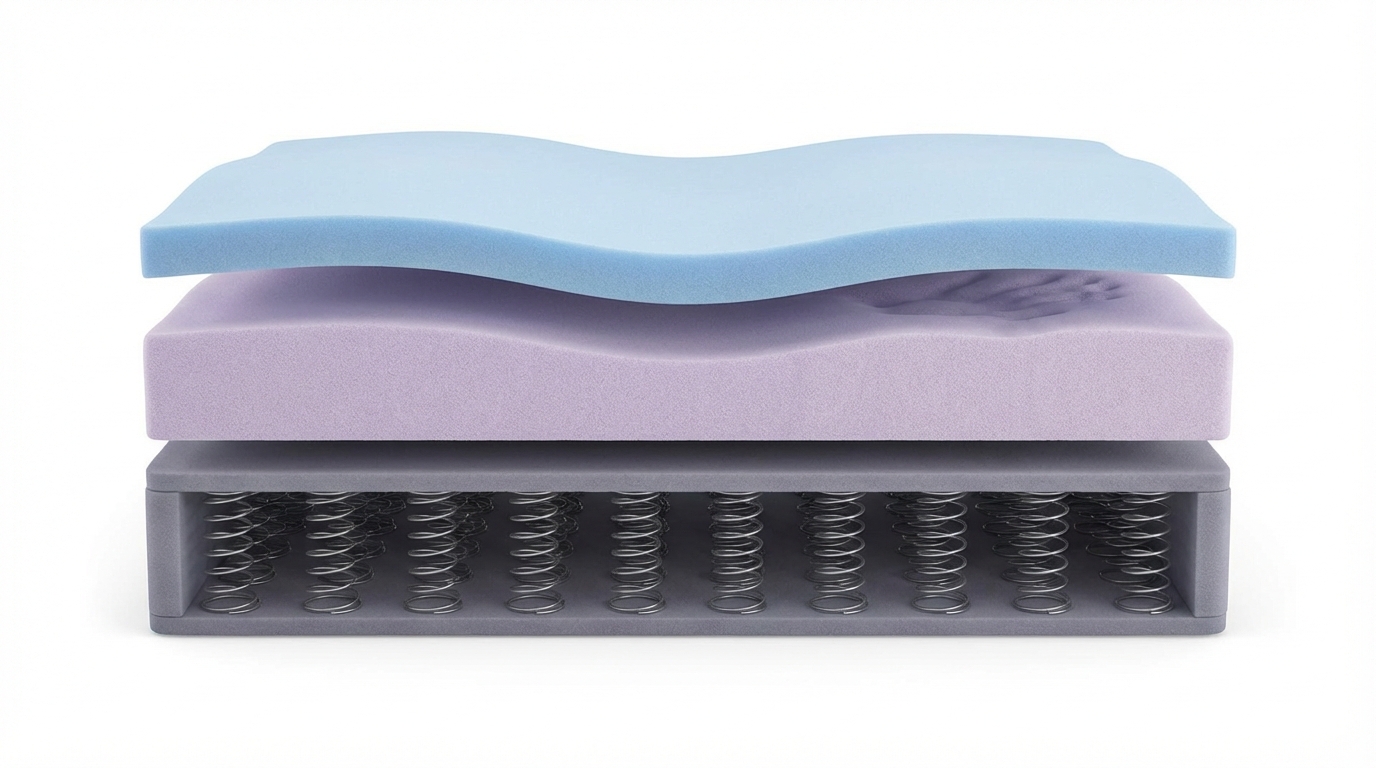
Two mattresses of the same model can have very different lifespans depending on how they are used and cared for. Understanding these factors gives you more control over how long your mattress stays in that “good” zone where you are getting full value from your investment.
Body Weight, Sleep Position, And Usage
Heavier bodies naturally put more pressure on the mattress materials. This is not a problem in itself, but it means that for adults over about 200 pounds or couples whose combined weight is higher, choosing a mattress with stronger coils and denser foams can be especially important. Otherwise, the materials under the hips and torso will fatigue faster, and what might be an 8 year mattress for a very light sleeper becomes a 5 to 6 year mattress under heavier load.
Your primary sleep position matters as well. Side sleepers concentrate pressure into smaller surface areas at the shoulders and hips, which can create deeper impressions in the top layers over time. Back sleepers distribute weight more evenly, often giving the mattress an easier workload. Stomach sleepers tend to stress the lumbar region, so even mild softening around the hips can cause the spine to arch uncomfortably. For side and stomach sleepers, keeping an eye on impressions and support under the hips is especially important.
Frequency of use also plays a big role in how long a mattress is good for. A mattress used nightly by two adults will age much faster than a guest bed used a few times per month. If you have a secondary mattress that was once your primary bed, it may have a shorter remaining life than its calendar age suggests because it has already seen many years of heavy use. When we talk about lifespan in the ranges above, we are usually talking about heavy daily use, not occasional sleeping.
Care Habits And Environment
Regular care can significantly extend how long your mattress performs well. Sleep health organizations typically recommend using a breathable, waterproof mattress protector to shield the mattress from sweat, skin oils, spills, and allergens. This not only keeps the sleep surface cleaner but also protects the internal materials from moisture that can accelerate breakdown. Rotating the mattress from head to foot a few times a year, if the design permits it, encourages more even wear rather than over stressing a single zone.
Your bedroom environment matters too. High humidity combined with poor ventilation can encourage mold growth in the mattress and foundation. Direct sunlight through a window can degrade some foams over time. Allowing pets in the bed may bring extra hair, dander, and in some cases accidents, all of which increase the “load” on the mattress materials. None of these are reasons to panic, but they are cues to be more consistent about protectors, bedding hygiene, and occasionally airing the mattress.
Finally, the support under your mattress makes a bigger difference than most people realize. A sagging box spring, broken slat, or frame that does not provide enough center support for larger sizes can cause the mattress to bow and wear prematurely. Organizations like the Better Sleep Council remind consumers that many mattress warranties require proper foundation support for exactly this reason. At Sleepology, we often pair new mattresses with a quality foundation or an adjustable bed frame and base to make sure the mattress has the stable base it needs to stay good for as long as possible.
One Strategic Checklist: When It Is Time To Replace Your Mattress
Sometimes it helps to put all the signs and factors into a simple checklist so you can evaluate your own situation without getting lost in the details. Use the following list as a quick self audit. If you find yourself checking off several items, your mattress is likely at or past the end of its “good for you” phase.
First, take a moment to think about how you feel when you wake up and how your bed looks and behaves. Do not just rely on habit or what you have gotten used to. Compare how you sleep elsewhere or how you felt a few years ago. Subtle changes are easy to overlook until you line them up.
If two or more of the following apply to your bed, it is a strong sign your mattress may be due for replacement:
- The mattress is 8 years old or more and is used nightly by one or two adults
- You wake with back, hip, shoulder, or neck pain that improves when you sleep elsewhere
- You see visible dips, valleys, or body impressions of about an inch or more
- You sleep better on a hotel bed, couch, or guest room mattress than on your own
- You or your partner feel each other’s movements more than you used to
- The surface looks worn, frayed, stained, or smells musty despite cleaning
- Allergy or asthma symptoms are worse at night or first thing in the morning
If you recognize your situation on this list, it does not mean you must rush to the store tomorrow, but it does mean you should start planning. Begin by clarifying what you need from your next mattress that your current one is not providing. That might be stronger lumbar support, better pressure relief for side sleeping, cooler materials, or simply more space. Having that clarity makes the shopping process calmer and more focused, and it also helps you weigh whether any interim solutions, such as a topper, are worth trying or would only be a temporary patch.
Extending How Long Your Mattress Stays Good
If your current mattress is still in decent shape or you have just invested in a new one, there is a lot you can do to make sure it stays in that “good for you” zone as long as possible. This is where small, consistent habits pay off in extra years of comfortable sleep.
Protecting, Rotating, And Supporting Your Mattress
Start with a high quality, breathable mattress protector. These are different from thick, cushioned toppers. A protector is a thin barrier designed to block liquids, sweat, dust mites, and allergens without noticeably altering the feel of the mattress. Many sleep health organizations recommend them because they keep the mattress cleaner and reduce allergen build up over time. At Sleepology, we often pair a new mattress with a protector from our pillows, sheets, toppers, and protectors collection as a default, not an add on.
Next, follow any rotation guidance in your mattress instructions. Many one sided mattresses are designed to be rotated 180 degrees a few times per year, so the head end becomes the foot end. This can help slow the development of body impressions in the most used spots. Old style two sided mattresses can also be flipped, but most modern designs are one sided, so always check the manufacturer’s tags or your Sleepology advisor’s recommendations first.
Make sure your mattress is on an appropriate, stable base. For queen and king sizes, that means center support so the middle does not sag between side rails. Slats should be close enough together to support the mattress surface evenly, and box springs should be intact without broken boards or coils. If you are ready to upgrade your base, a well built adjustable bed frame and base can both support the mattress properly and give you added comfort options like head elevation for snoring or reflux.
When A Mattress Topper Helps, And When It Does Not
Mattress toppers are a popular way to change the feel of a bed without replacing it entirely. They can genuinely extend the usefulness of a mattress that is still structurally sound but not quite the right comfort level. The key is knowing when a topper can help and when it is only disguising deeper problems temporarily.
A topper can be very helpful if your mattress is relatively new, flat, and supportive, but feels a bit too firm or lacks pressure relief for your shoulders and hips. In that case, adding a quality foam or latex topper from the pillows, sheets, toppers, and protectors collection can cushion pressure points and make the mattress feel “broken in” without sacrificing support. For couples with slightly different comfort preferences, a topper on one side of a king can also be a smart compromise.
On the other hand, if your mattress already has deep body impressions, sagging in the middle, or clear loss of support, a topper will simply follow those dips. It may feel nicer for a short time because you are lying on fresher foam, but your spine is still sinking into the same uneven surface. This is where people sometimes feel misled by toppers, expecting them to add years of life to a mattress whose support core is already exhausted. No topper can rebuild broken coils or re expand compressed foam in the layers below it.
As a rule of thumb, if your main complaint is “too firm” and your mattress is under about 5 or 6 years old with no visible sagging, a topper can be a cost effective way to fine tune comfort. If your main complaint is “sagging, dipping, or waking in pain,” especially on an older mattress, it is kinder to your body to direct that money toward a replacement. Sleepology advisors often help customers run this decision, comparing short term budget patches with longer term value and comfort, so you do not feel like you are throwing good money after bad.
Matching Mattress Lifespan To Your Sleep Style
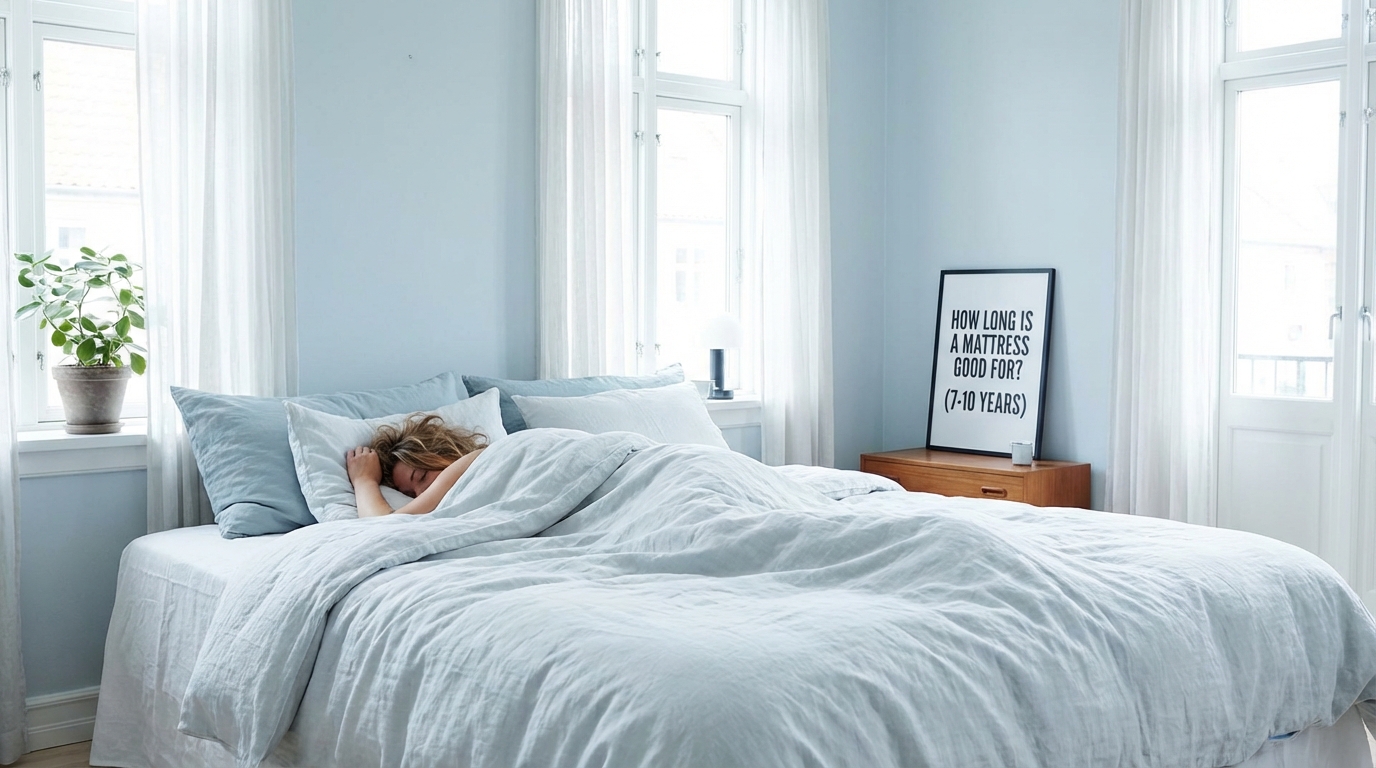
Once you have decided it is time to replace a worn out mattress, the next question is how to choose a new one that will serve you well for as long as possible. One of the smartest ways to approach this is to pair your sleep position and body type with a mattress type and firmness that is likely to age gracefully for you, not just feel good on a five minute showroom test.
Back sleepers generally do best on medium firm mattresses that keep the spine neutral without letting the hips sink too deeply. Many modern hybrids fit this description, which is why the Best Mattresses For Back Sleepers collection at Sleepology often includes coil based designs with reinforced lumbar zones. These tend to stay supportive through years of use because the supportive core is doing most of the heavy lifting.
Side sleepers need more pressure relief at the shoulders and hips, so they often gravitate toward slightly softer feels, though still with adequate support underneath. Beds that are too firm can lead to numb arms and sore hips, while beds that are too soft can let the midsection sag. Hybrids with plush tops or high quality memory foam layers can be a strong long term choice, as long as those foams are dense enough to resist deep impressions. The Best Mattresses For Stomach Sleepers collection will lean the other way, toward firmer surfaces that keep the torso lifted, which is especially important for preserving spinal alignment over many years for front sleepers.
If you share a bed with a partner, factor in both sets of needs and your combined weight. A sturdier hybrid with zoned support, such as the Sealy Posturepedic Plus Firm Mattress – Paterson II Euro Pillow Top, can be a smart way to get both durability and motion isolation. Couples often notice wear and motion transfer sooner on less robust foam mattresses, while better built coil based designs can stay stable longer even under shared use.
Budget, Warranties, And The “Cost Per Year Of Comfort” Mindset
It is natural to focus on sticker price when shopping for a mattress. These are meaningful purchases. At the same time, the best way to think about how long a mattress is good for is to translate the purchase into “cost per year of comfortable, healthy sleep.” A mattress that costs a bit more upfront but truly supports you for 10 or 12 years can end up costing less per year than a bargain bed that needs replacing after 4 or 5 years of sagging and restless nights.
Warranties can be confusing in this context. Many mattresses advertise 10, 15, or even 20 year warranties, but those warranties typically cover manufacturing defects such as broken coils or extreme sagging, not ordinary softening or changes in comfort over time. Organizations like Consumer Reports remind shoppers that comfort life and warranty length are not the same. A mattress can be technically under warranty but no longer feel good to sleep on. This is why listening to your body and watching for the signs discussed earlier is so important.
A practical, low stress way to balance budget and lifespan is to decide the minimum number of “good years” you want from your mattress, then let that guide how you invest. If you know your life stage or living situation might change in 5 or 6 years, a solid mid range mattress that is likely to feel good for 7 to 9 years can make sense. If you are furnishing a long term home and want to “buy once, buy right,” a higher quality hybrid or latex mattress built for a decade or more of use can be the better value. At Sleepology, we talk through these timelines with customers every day to keep decisions grounded in real life, not just specs.
Conclusion: How To Know When Your Mattress Has Done Its Job
A mattress does not suddenly flip from “good” to “bad” on a set birthday. Its usefulness winds down gradually, and it is easy to normalize those changes when they happen slowly under daily life. The clearest indicators that your mattress has finished its job are how your body feels in the morning, how the surface looks and behaves, and whether you are starting to work around it with toppers, extra pillows, or avoiding certain spots.
Most mattresses will give you 7 to 10 years of strong performance if they are well matched to your body and sleep style, built from quality materials, and cared for properly. Natural latex and well constructed hybrids can stretch that window, while cheaper foams and overworked innersprings may fall short. Protectors, rotation, and proper support can buy you extra time, but they cannot reverse structural breakdown once it has happened.
If you are reading this because you are seriously wondering how long your mattress is good for, there is a good chance you are already feeling some of the warning signs. You do not need to make a rushed decision, but you also do not need to wait for your sleep or comfort to get dramatically worse before you act. Start by honestly assessing your current bed using the checklist, then clarify what you want your next mattress to do better for you. When you are ready, a Sleepology advisor can help you map that wish list to specific models so your next mattress delivers not only comfort on night one, but many solid years of healthy, restorative sleep.
Frequently Asked Questions
How many years is a mattress usually good for before I should replace it?
For most adults using their mattress nightly, a typical “good” lifespan is about 7 to 10 years. Innerspring and hybrid mattresses often perform well in the 7 to 10 year range, while quality memory foam can be similar and natural latex can reach 10 to 15 years or more. These ranges assume normal use and care, but your body’s feedback and signs like sagging or morning pain are ultimately more important than the calendar.
Is my 10 year old mattress automatically bad even if it still looks okay?
Not necessarily, but it is in the range where you should take a closer look. Some well built mattresses, especially latex and strong hybrids, can still be comfortable beyond 10 years. The key is whether you are waking up without new pain, sleeping soundly through the night, and seeing no significant sagging or impressions. If your 10 year old mattress passes that test, you may have a bit more time, but it is wise to start planning for a replacement in the coming years.
How do I know if my mattress is causing my back pain or if it is something else?
Back pain can have many causes, so it is always important to discuss persistent or severe pain with your healthcare provider. That said, the mattress is a common culprit when pain is worst in the morning, improves after you get up and move around, and is noticeably better when you sleep on a different surface such as a hotel bed or a newer mattress. If your pain has developed gradually over the years as your mattress aged and coincides with visible sagging or soft spots, those are strong clues that the mattress is contributing.
Can a mattress topper make an old mattress good again?
A topper can improve comfort on a relatively new mattress that is a bit too firm, but it will not truly fix an old mattress that has lost support. If the underlying mattress already has deep body impressions or a sagging center, the topper will simply drape over those dips and you will still sink out of alignment. In that situation, it is more cost effective and kinder to your body to invest in a replacement rather than layering temporary patches on top of a worn out base.
Does flipping or rotating my mattress really make it last longer?
Rotating a one sided mattress from head to foot a few times a year can help distribute wear more evenly and delay the formation of deep impressions in high pressure areas like the hips. Older two sided mattresses that are designed to be flipped can benefit from both flipping and rotating. While these habits cannot stop natural material aging, they can add meaningful time to how long the mattress stays comfortably supportive. Always check the manufacturer’s guidance to see what is recommended for your specific model.
Are more expensive mattresses always good for longer?
Higher price often, but not always, reflects better materials and construction that can extend comfort life. For example, denser foams and stronger coil units cost more to produce but generally hold up better under years of use. However, some mattresses are expensive because of branding or extra features that do not necessarily add durability. The most reliable indicators of a longer “good” lifespan are the mattress type, material quality, and a good match to your body and sleep style, not price alone.
If I am buying now, what type of mattress is the best long term investment?
For many people, a well built hybrid or natural latex mattress offers the best balance of long term support, comfort, and durability. Hybrids with quality coils and dense comfort layers tend to hold up well for couples and a range of body types, while natural latex has an especially strong track record for lasting 10 to 15 years or more. The best long term investment is the mattress that keeps your spine aligned, relieves pressure for your preferred sleep position, and is supported by a good foundation and basic care habits.