

How Long Does A Tempur-Pedic Mattress Last? A Realistic Guide To Lifespan, Value, And When To Replace
If you are wondering how long a Tempur-Pedic mattress really lasts, chances are you are either sleeping on one that is starting to feel different, or you are about to make a big investment and want to know if it will truly go the distance. You are not being picky. A mattress is one of the few products you use for hours every single day, and when it stops supporting you well, your body lets you know with aches, stiffness, and groggy mornings. Getting a clear, honest picture of Tempur-Pedic longevity can help you avoid both premature replacement and hanging on to a mattress that is quietly sabotaging your sleep.
There is also a lot of confusing information out there. You might see a 10 year warranty and assume that means 10 perfect years, or read a story about someone using the same Tempur-Pedic for 18 years and wonder if that is normal. As someone who talks with shoppers face to face about this exact question, I can tell you that the truth sits between the marketing and the anecdotes. Lifespan depends not only on the foam, but also on your body, your sleep habits, and how you care for the mattress.
Here, you will get a practical, experience based answer to the question, "How long does a Tempur-Pedic mattress last?" You will also learn how to tell if yours is wearing out, what you can do to get more comfortable years out of it, and how Tempur-Pedic stacks up against hybrids and innersprings. Along the way, I will point you to Tempur-Pedic alternatives that might fit better if you are ready to replace what you have or choose your first premium mattress. By the end, you should feel calmer, more informed, and confident about your next move, whether that is keeping your current bed, tuning it up with accessories, or choosing a new model.
Tempur-Pedic Lifespan In Plain Language
Most people want a single number. The honest answer is a range, with some important context. For a well cared for Tempur-Pedic mattress used nightly by one or two adults, a realistic lifespan is usually 8 to 12 years of good, supportive comfort. With lighter sleepers and meticulous care, some models can feel comfortable for up to 15 years. Many retailers land on 8 to 10 years because that aligns with what most sleepers actually experience in everyday life.
Tempur-Pedic itself offers a 10 year limited warranty on current mattresses, which tells you how long the company expects the materials to hold up structurally under normal use. That warranty does not guarantee that you will feel just as supported and comfortable in year 9 as you did in year 1, but it does signal that the foams are engineered for longer life than the average budget memory foam mattress, which often feels tired after 5 to 7 years. According to organizations like the Sleep Foundation, most mattress types average 7 to 10 years, with high density memory foam and latex typically lasting on the longer side of that range compared with traditional innersprings.
What often surprises people is that "lasting" is not only about visible sagging or obvious defects. Over time, foams can slowly lose some of their resilience, so your body may sink a bit deeper than before even if the mattress looks fine to the eye. The first sign of that change is usually how you feel in the morning, not what you see. The Cleveland Clinic notes that sleep surface quality can contribute to back and joint discomfort, particularly if support around the spine changes subtly over time, and that discomfort can show up before anything looks "wrong" with the bed.
You will also see outliers. As a sleep consultant, I meet people who have slept on the same Tempur-Pedic for 17 years and still swear by it, and others who are uncomfortable after 6 or 7 years. They are not contradictions. They have different bodies, weights, health conditions, bedroom climates, and expectations. Lifespan is not just about the foam; it is about the match between that foam and you.
“I bought my first Tempur-Pedic back in 2010 and honestly never thought much about it again until my hips started aching this year. Mia helped me realize the mattress had done its job for over a decade and my body simply needed more support now. Once we compared the age and my new back issues, I felt much better about replacing it instead of trying to ‘fix’ it.” – Lauren S., October
Warranty Years Versus Real World Comfort
What The Tempur-Pedic Warranty Actually Means
A lot of confusion comes from blending warranty years with comfort life. Tempur-Pedic’s current 10 year limited mattress warranty is a promise to repair or replace the mattress if it develops qualifying defects from normal use in that time. That usually includes issues like deep, measurable body impressions beyond a set threshold and foam cracking, and it excludes normal softening, stains, and damage from misuse.
In other words, the warranty is like a guardrail for manufacturing defects, not a guarantee that your mattress will feel new for a full decade. Most major brands operate this way. Consumer Reports and similar organizations consistently remind shoppers that comfort life often ends before warranty coverage does, and advise using your body’s signals more than a date on a receipt when deciding whether to replace a bed.
Think of the warranty as a safety net rather than a timer. If your Tempur-Pedic develops a visible sag of three quarters of an inch or more, or the foam splits despite proper use, you may be eligible for help as long as you are the original owner and the mattress is clean and properly supported. If it feels too soft at 7 years, causes back pain, or no longer fits your body, that is a comfort issue, not a defect, and the warranty is not designed for that.
Why Comfort Life Can Be Shorter Or Longer Than The Warranty
Several factors make your experience shorter or longer than the neat 10 year window. Your body weight and shape play a big role. Heavier sleepers place more pressure on the foam layers, which can speed up softening and reduce that "floating" support feeling earlier. Couples who share a smaller mattress, like a full or queen, also concentrate more weight in a smaller area, which can age foam faster than a spacious king with the same sleepers.
Your health and sensitivity matter too. If you develop back, hip, or shoulder issues, the support that felt great at 45 might feel inadequate at 55 even though the mattress is technically fine. The Mayo Clinic points out that spinal alignment and pressure distribution become more important as we age or deal with arthritis and disc issues, which means a mattress that "lasts" structurally can still become a poor fit for your body earlier than the warranty would suggest.
Daily habits round out the picture. If the bed doubles as a home office, TV couch, and kid trampoline, it is going to reach the end of its comfortable life sooner. If you use a solid, supportive base, keep it clean and dry, and rotate it periodically, you give the foam the best chance to perform well into that 10th year and possibly beyond.
“I assumed our mattress had to last exactly as long as the warranty, so I kept blaming my sore lower back on my office chair. Mia walked me through how comfort and warranty are totally different and helped me test new beds side by side. Once I felt the difference, I realized I had been overworking an 11 year old mattress. I wish I had come in two years earlier.” – Daniel K., November
Key Factors That Influence How Long A Tempur-Pedic Mattress Lasts

Your Body, Sleep Style, And Weight
Every mattress ages faster under some sleepers than others. Tempur-Pedic uses high density viscoelastic foam that is generally more durable than the low density foams found in bargain memory foam beds, but that foam still has to respond thousands of times a night to your body weight and movements. Over years, that repeated compression can slowly change how firm or supportive the surface feels.
If you are a side sleeper with curvier hips and shoulders, you naturally create deeper pressure points in the foam than a lean back sleeper. That does not mean you should avoid Tempur-Pedic; in fact, its contouring is often fantastic for side sleepers. It does mean that the comfort layer under your hips may gradually soften a bit faster than it would under a lighter back sleeper. Stomach sleepers, who need more firmness to keep the spine aligned, may notice softening sooner because their comfort window is narrower.
Weight is one of the biggest real world variables. A 120 pound person and a 260 pound person can sleep on the same model and have very different timelines. Higher body weight compresses the foam more strongly and more deeply, often shortening the comfortable lifespan by a couple of years compared with lighter sleepers. That is one reason I often guide heavier or taller customers toward more supportive hybrids, such as a Sealy Posturepedic Pro Firm Hybrid Mattress – Dupont II, where dense coils and targeted zoning can better share the load with foam over time.
How You Use The Mattress Day To Day
The way the mattress is used has a quiet but powerful effect on longevity. If your bed is strictly for sleeping, with 7 to 8 hours of predictable use each night, the foam has a chance to rebound fully during the day and maintain its feel for longer. If it doubles as the primary hangout space for reading, laptop work, and movie nights, or hosts frequent roughhousing with kids or pets, those extra hours of pressure add up like extra miles on a car.
Foundation choice matters as well. Tempur-Pedic designs its mattresses to sit on solid, non flexing bases or properly made adjustable bases. Placing one on an old, bouncy box spring or a slatted frame with wide gaps can cause the mattress to flex more than intended, which may exaggerate body impressions or lead to premature softening in certain zones. A quality adjustable base, like those in our adjustable bed frame and base collection, lets the mattress articulate correctly while fully supporting the foam from underneath.
Bedroom environment plays a smaller but still relevant role. Memory foam is sensitive to temperature and moisture. Very hot, humid bedrooms can make the foam feel softer and may contribute to breakdown over a long timeframe, especially if the mattress never fully airs out. Using breathable bedding, keeping relative humidity in a healthy range, and occasionally letting the mattress air out with the sheets off can all help protect the foam.
Care, Maintenance, And Protection
Care does not have to be complicated, but it does need to be intentional. One of the simplest ways to extend the life of a Tempur-Pedic mattress is to use a waterproof, breathable mattress protector from day one. A good protector shields the foam from sweat, spills, and oils, all of which can slowly break down materials and, just as importantly, void your warranty if they leave stains. The Sleep Foundation and many allergists also recommend protectors for reducing dust mites and allergens, which is an extra bonus if you have allergies or asthma.
Rotating, not flipping, is another underused tool. Tempur-Pedic mattresses are designed with a specific top and bottom, so flipping them is not advised, but you can rotate them 180 degrees so your head is where your feet were. Doing this once or twice a year can redistribute wear more evenly, especially if you tend to sleep on the same side of the bed every night. For couples with a big height or weight difference, rotation is particularly helpful because it shares the heavier sleeper’s loading with the other half of the mattress over time.
Cleaning matters as well. Spot cleaning spills quickly, keeping bedding washed, and occasionally airing the mattress helps minimize moisture and buildup that can age fabrics and foams. Mayo Clinic guidance on healthy sleep environments highlights cleanliness and allergen control as foundations for better sleep quality, and a fresher mattress generally ages more gracefully than one exposed to repeated moisture and dirt.
How Tempur-Pedic Compares To Other Mattress Types For Durability
Memory Foam, Hybrid, And Innerspring Lifespan At A Glance
When people ask how long a Tempur-Pedic lasts, they often really want to know whether it lasts longer than other types of mattresses. Tempur-Pedic’s signature material is a high density memory foam originally inspired by pressure relieving foam developed for NASA. Compared with many generic memory foam mattresses, this material is more resilient and typically more durable, which is why so many owners report comfort well past the 8 to 10 year mark.
Industry wide, most sources, including the Sleep Foundation and independent testing organizations like Consumer Reports, estimate average lifespans roughly like this: traditional innersprings around 5 to 7 years, most hybrids about 7 to 10 years, and quality memory foam and latex about 8 to 12 years. Tempur-Pedic generally sits near the top of that memory foam range because of its density and manufacturing standards, though individual experiences still vary.
Hybrids, which combine coils with foam, deserve a special look. Many modern hybrids use sturdy pocketed coils with reinforced center zones for lumbar support, topped with comfort foams or gels. These coils can carry part of the workload that would otherwise fall entirely on foam, which sometimes leads to a slightly different aging pattern and, for some sleepers, a more consistent feel over time. Quality hybrids, such as the Sealy Posturepedic Elite Medium Hybrid Mattress – Albany II, often deliver durability that rivals or exceeds pure foam models while also offering a bit more bounce and airflow.
Comparison Table: Tempur-Pedic, Hybrid, And Innerspring Longevity
Below is a simple comparison to help you see how Tempur-Pedic style memory foam stacks up against other common mattress categories in terms of durability and feel. These are general patterns rather than hard rules, and specific models can perform above or below these norms.
| Mattress Type | Typical Comfortable Lifespan (Years) | Durability Strengths | Durability Watchouts |
|---|---|---|---|
| High density memory foam (Tempur-Pedic style) | 8 to 12 | Excellent pressure relief, good motion isolation, resilient foam | Heat sensitivity, softening under higher weights if not rotated |
| Hybrid (coils + foam) | 7 to 12 | Strong support from coils, good airflow, stable edge support | Lower quality foams in comfort layers can age faster |
| Traditional innerspring | 5 to 7 | Lower cost, familiar bouncy feel | Coils can fatigue, more sagging and noise over time |
If you have loved the cradling feel of Tempur-Pedic but are now heavier, sharing the bed with a partner, or simply want a bit more "underneath" support, a well built hybrid can be a smart evolution. For example, back and combination sleepers often appreciate the firmer, lifted feel of a Sealy Posturepedic Firm Mattress – Medina II, which is engineered to maintain spinal alignment while still offering pressure relief at the surface. The right choice balances durability with your preferred feel and support level.
After looking at this comparison, many people realize that "how long it lasts" is partly about the category and partly about choosing the right construction for your body. A Tempur-Pedic you love is a worthwhile long term investment. A Tempur-Pedic that is too soft or too firm for you will feel like it wore out early, when in reality it was not the best match from the beginning.
Signs Your Tempur-Pedic Mattress Is Wearing Out
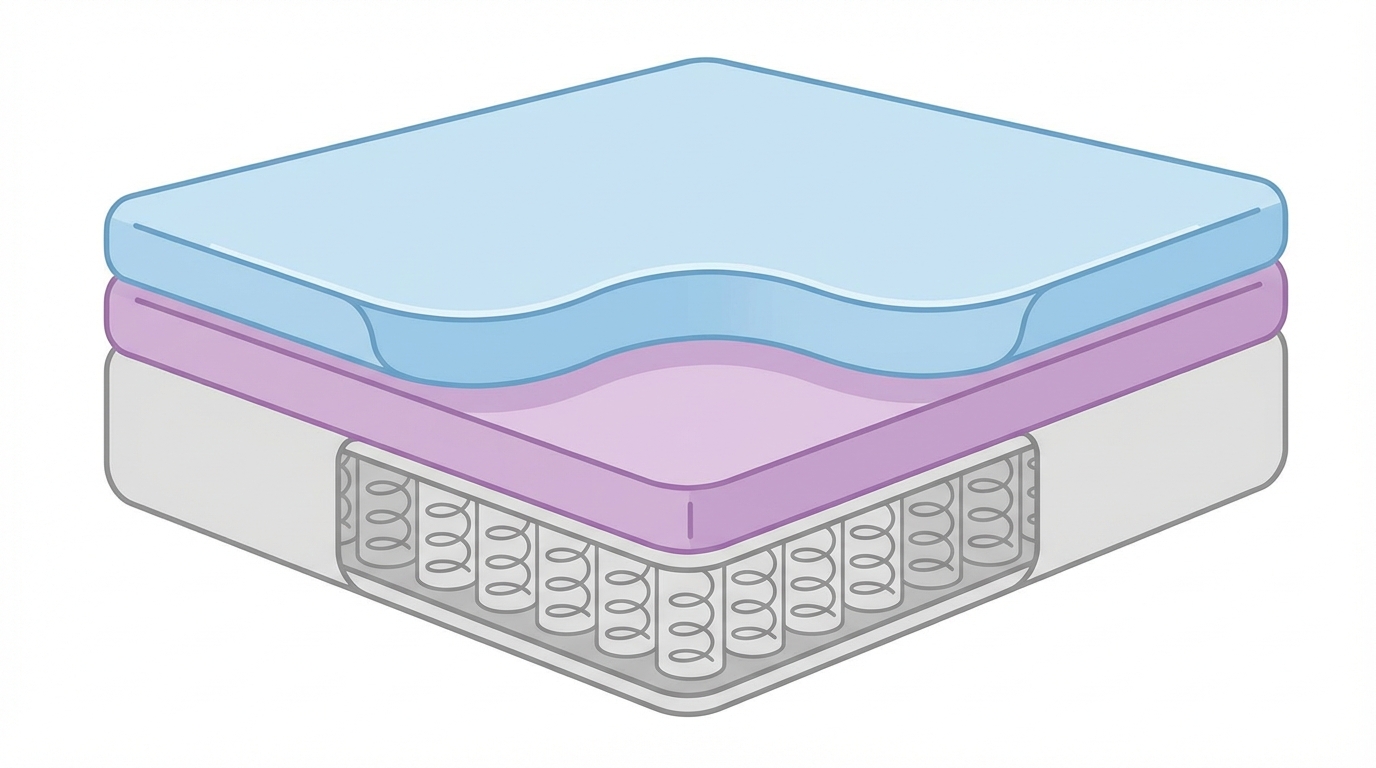
How Your Body Tells You It Is Time
The clearest clue that your mattress is nearing the end of its comfortable life is not what you see when the bed is made. It is how you feel when you wake up. If you consistently wake with new or worsening back, neck, or hip pain that eases as you move around during the morning, that is often a sign that your mattress is not supporting you the way it used to. The Mayo Clinic notes that chronic morning pain should prompt a look at your sleep surface, especially if symptoms improve once you are out of bed.
Another important sign is restlessness. If you find yourself waking frequently at night to change positions, or if you feel like you are fighting the mattress to get comfortable, the contouring and support may have changed more than you realize. With Tempur-Pedic, which is known for its ability to reduce tossing and turning, a noticeable increase in restlessness after years of good sleep often points to foam that has softened or compressed enough to alter spinal alignment.
Pay attention to differences between nights at home and nights away. Many customers tell me they sleep better on a hotel bed or guest bed than on their expensive older mattress. That contrast matters. If your back feels better after a weekend away, your body is revealing that your usual bed is working harder than it should.
Visual And Touch Based Checks You Can Do
Beyond your own comfort, there are several simple ways to assess your Tempur-Pedic’s condition. First, strip the bed completely and look across the surface from the side, at eye level. Do you see any noticeable dips where you tend to sleep? Minor body impressions are normal, especially with contouring foam, but deeper valleys that remain even when no one is on the bed are a sign that the foam has lost some resilience.
Next, press firmly with your hand into different zones, particularly where your hips and shoulders rest. When you release, notice how quickly and fully the foam rebounds. Fresh Tempur material recovers slowly but completely. If some areas feel much softer or take noticeably longer to come back than less used regions, that can indicate uneven aging.
It is also worth checking the edge. Sit on the side of the bed and see how much support you feel. While Tempur-Pedic is not an innerspring with rigid border rods, the perimeter should still feel reasonably stable. If you slide toward the floor or feel like you are rolling off when you sleep near the edge, the support layers are likely tiring.
Finally, listen to your partner, if you share the bed. If they are complaining of aches, sagging, or feeling your movements more than before, the mattress may be transmitting more motion because the foam layers are not absorbing it as effectively. Tempur-Pedic is known for great motion isolation when new, so increased disturbance over time can be another quiet sign of wear.
How To Help Your Tempur-Pedic Mattress Last Longer
Smart Setup From Day One
A longer lasting mattress experience starts with the right foundation literally. Tempur-Pedic mattresses are designed to live on solid, supportive bases or purpose built adjustable foundations. If you already own a Tempur-Pedic, it is worth double checking that your current frame supports the mattress well. Slats should be close enough together to prevent sagging between them, and the center of the frame should have a leg or beam for queen sizes and above.
Upgrading your base can both protect your investment and enhance comfort. A quality adjustable base, like those in Sleepology’s adjustable bed frame and base collection, allows you to fine tune head and foot positions. That can reduce strain on your back and joints, which means your body gets more out of the mattress throughout its lifespan. Importantly, these bases are engineered to distribute weight evenly, which can support foam performance over the long term.
Protecting the top surface is just as critical. A breathable, waterproof mattress protector acts like armor against spills, sweat, and skin oils, all of which gradually seep into foam and fabrics. Many manufacturers, including Tempur-Pedic, can deny warranty claims if a mattress is stained, because stains signal exposure to fluids that may have damaged the internal materials. Using a protector from day one is an easy way to avoid that issue and maintain a cleaner, more hygienic sleep environment.
Ongoing Habits That Extend Comfort Life
Once your mattress is properly set up, a few ongoing habits can keep it feeling supportive longer. Rotating the mattress 180 degrees every 6 to 12 months helps balance wear, especially for couples or individuals who tend to sleep in the same “groove.” Since Tempur-Pedic mattresses are not flippable, rotation is your main tool for evening out compression.
Ventilation is another overlooked helper. Every so often, especially on dry, sunny days, strip the bed and let the mattress breathe for a few hours. Pointing a ceiling fan or small floor fan at the surface can accelerate moisture evaporation. This simple ritual can help maintain a fresher feel and reduce the chance of odors and microbial growth inside the foam.
Be mindful of how much extra load you put on the bed. The occasional movie night is no problem, but regularly using the mattress as a trampoline, home gym, or workbench will inevitably shorten its comfortable life. Encourage kids to jump on more forgiving surfaces, and avoid sitting in the exact same spot on the edge every evening if possible.
Accessories can also play a role in extending comfort life, especially near the tail end of a mattress’s lifespan. A high quality topper or travel pillow bundle, such as the Tempur-Pedic Mattress Topper – Pillow Travel and Guest Bundle, can add surface comfort for guests or help you bridge a year or two before a full replacement, particularly if your core support is still adequate but the surface feels a bit firmer or less plush than you prefer.
When To Replace Versus When To Refresh
Situations Where Replacement Is The Healthier Choice
There comes a point where refreshing an older Tempur-Pedic with new bedding, toppers, or bases is like putting new tires on a car with a worn out engine. The biggest indicator that it is time to replace rather than patch is persistent, mattress specific discomfort. If you have tried different pillows, adjusted your sleeping position, and perhaps even added a thin topper, and you still wake up sore or exhausted, it is likely that the mattress no longer supports your spine properly.
Another clear replacement trigger is age combined with changing health. If your Tempur-Pedic is 10 years old or more and you have developed new back, hip, or shoulder issues, your support needs may have outgrown what that foam can provide, even if it is technically intact. Medical sources like the Cleveland Clinic emphasize that people with chronic pain often benefit from more targeted zoning or firmer support than they did earlier in life. Clinging to an older mattress out of guilt over the original cost can quietly work against your pain management plan.
Visible, deep impressions, obvious sagging, or damaged foam layers are also strong signs that replacement is due. If the mattress no longer lies flat when unweighted, or if you can feel yourself being pulled into a valley every night, no accessory can truly restore the original support profile. You may be able to mask the feel for a short period with a topper, but your spine will still reflect the underlying hollow.
If you find yourself in any of these situations, it can be helpful to try a few current models side by side. Many customers are surprised at how much more advanced and supportive newer designs feel compared with beds that were state of the art a decade ago. Examples include modern hybrids like the Sealy Posturepedic Elite Medium Mattress – Brenham II Euro Pillow Top, which pairs cushioning comfort with reinforced center support for the lower back.
When A Refresh Or Accessory Is Enough
On the other hand, there are plenty of scenarios where you can comfortably extend the life of your Tempur-Pedic without replacing it right away. If the mattress is under 8 to 10 years old, has no deep impressions, and still supports you well in most positions, but you simply want a bit more softness or a cooler feel, a high quality topper can help dial in comfort. In that case you are layering preference, not compensating for structural failure.
If most of your concern is around cleanliness or allergies rather than support, focusing on protectors, washable encasements, and bedding may give you the outcome you want. The Sleep Foundation notes that regularly washing sheets, using dust mite resistant encasements, and maintaining a clean sleep environment can significantly improve perceived sleep quality and comfort even when the mattress itself is unchanged.
Small aches that coincide with a new pillow, new work setup, or a recent workout routine may not be the mattress at all. In those situations, it is wise to adjust other variables while keeping an eye on how you feel in bed. If you are a back sleeper on a Tempur-Pedic that feels a touch too soft but still structurally sound, you might find that switching to a more supportive pillow and considering a firmer mattress for your next purchase, such as one from our best mattresses for back sleepers collection, gets you closer to a long term solution.
“We were convinced we had to throw out our 6 year old Tempur-Pedic because my shoulders were aching. Mia asked a bunch of questions, watched how I lay down, and suggested we try a different pillow and rotate the mattress before deciding. Within a week the pain calmed down, and we got two more comfortable years before upgrading. I really appreciated that she did not push an immediate replacement.” – Erica M., November
Tempur-Pedic Versus Other Options If You Are Shopping Now
When Staying With Tempur-Pedic Makes Sense
If you love the slow melting, deeply cradled feel of Tempur-Pedic’s foam and it has served you well for many years, replacing like for like is a perfectly reasonable choice. Many long term owners are simply ready for a fresh version of what they already know works for their body. In those cases, the main questions are which firmness level and which line best fit your current needs for cooling, pressure relief, and budget.
Side sleepers and people with chronic joint pain often continue to favor medium to plush Tempur-Pedic styles because they distribute weight so evenly and relieve pressure at shoulders and hips. According to research summarized by the Sleep Foundation, medium firm mattresses tend to offer the best overall support for most adults, but softer memory foam can work especially well for lighter bodies that do not compress the foam as deeply. Matching your Tempur-Pedic model to your current weight, sleep position, and any pain conditions is the key to maximizing its comfortable lifespan again.
If you are happy with the feel but more concerned about protecting your investment this time around, you might also budget for a high quality protector and a supportive base from the beginning. That way you are giving the new mattress every chance to perform well for a full 8 to 12 years or more.
When A Hybrid Or Different Construction Is A Better Fit
There are also situations where pivoting away from pure foam, or away from Tempur-Pedic specifically, can give you a better long term outcome. If you or your partner are heavier, very tall, or prefer a bit more bounce and ease of movement, a hybrid can offer a stronger support core with familiar contouring on top. This combination often ages gracefully because the coils and foam share the workload.
Back sleepers in particular tend to appreciate mattresses that keep their hips from sinking too far while still cushioning the natural curve of the spine. For these shoppers, I often suggest trying firm to medium firm hybrids alongside Tempur-Pedic upgrades. Models like the Sealy Posturepedic Plus Firm Mattress – Paterson II Euro Pillow Top or Sealy Posturepedic Pro Firm Mattress – Dupont II are engineered to maintain alignment and resist sagging, which can translate to a longer perceived lifespan, especially for people with back concerns.
If you tend to sleep hot, newer cooling foams, phase change covers, and hybrid designs can also help keep the surface more temperature neutral over years of use. While Tempur-Pedic has made strides in cooling technology, some sleepers find that more breathable hybrids or latex hybrids stay closer to their ideal sleep temperature as materials age. Since body heat and moisture can affect foam performance, staying cooler may indirectly support longevity as well.
Conclusion: Making Peace With Lifespan And Investing Wisely
Tempur-Pedic mattresses are designed to be long term sleep partners, not short term purchases. When cared for and matched properly to your body, many deliver 8 to 12 years of comfortable, supportive rest, and some continue to feel good even longer. The key is understanding that "how long it lasts" is not a magic number printed on a warranty card, but a relationship between your body, your habits, and the materials under you.
If there is one takeaway to hold onto, it is this: listen more to your mornings than to the calendar. If you wake up rested, relatively ache free, and feel supported all night, your mattress is still serving you, whether it is 4 or 11 years old. If you hurt, toss, or dread going to bed even though the mattress looks fine, you are not being dramatic. Your comfort needs may have changed, and your mattress may have quietly aged to a point where replacement is a form of self care, not indulgence.
When you are ready to explore next steps, it can help to try a range of updated options in person, from fresh Tempur-Pedic style foam to supportive hybrids and back friendly designs in our best mattresses for back sleepers collection. With the right guidance, you can choose a bed that not only feels wonderful now, but is also built to feel that way for as many years as your body and lifestyle allow. Your sleep is worth a thoughtful investment, and you do not need to navigate that decision alone.
Frequently Asked Questions
How long does a Tempur-Pedic mattress usually stay comfortable?
Most Tempur-Pedic mattresses stay comfortably supportive for about 8 to 12 years for average weight adults who use them nightly and care for them properly. Some lighter sleepers or singles may get up to around 15 years of good comfort, while heavier sleepers or very active beds may reach the end of their comfort life closer to 7 to 9 years. The warranty is 10 years, but your body is the best judge of when the mattress has truly worn out for you.
Does the 10 year Tempur-Pedic warranty mean my mattress will feel new for 10 years?
No, the 10 year warranty covers structural defects such as deep body impressions or foam cracking that occur under normal use, not ordinary softening or changes in feel. It is similar to other major mattress brands in that way. If your mattress starts to feel too soft or unsupportive at 7 years, that is considered normal wear rather than a defect, even though the warranty period has not expired.
Can I make my older Tempur-Pedic mattress last longer with a topper?
A high quality topper can improve comfort on an older Tempur-Pedic that still has decent underlying support but feels a bit too firm or slightly uneven. However, a topper cannot fix a mattress that has deep sagging, major soft spots, or a broken support core. In those cases, it may briefly mask discomfort, but your spine will still reflect the worn structure underneath, and replacement is usually the healthier long term choice.
How do I know if my Tempur-Pedic is causing my back pain?
If your back pain is worst in the morning, improves as you move around, and is noticeably better when you sleep away from home on a different mattress, your Tempur-Pedic may be contributing. You can also do a quick check by lying on your back and having someone see whether your spine looks neutral or if your hips are sinking too far. If you are unsure, it is wise to talk with your healthcare provider about your pain and then test newer, well supported mattresses in person to feel the difference.
Is a hybrid mattress more durable than a Tempur-Pedic?
A well built hybrid can be at least as durable as a Tempur-Pedic, and sometimes more so for heavier sleepers, because the coil system provides strong underlying support and shares the load with the foam. That said, cheap hybrids with low density foams may wear out faster than quality memory foam beds. Durability depends more on material quality and design than on category alone, which is why we often recommend proven hybrids like the Sealy Posturepedic Pro Medium Mattress – Dupont II Euro Pillow Top when long term support is a priority.
Should I rotate my Tempur-Pedic mattress, and how often?
Yes, rotating your Tempur-Pedic 180 degrees so the head becomes the foot once or twice a year is a good idea. Rotation helps distribute wear more evenly, especially if one person is heavier or if you tend to sleep on the same side. You should not flip a Tempur-Pedic mattress, because it is designed with specific comfort layers on top and support layers on the bottom.
What can I do with my old Tempur-Pedic mattress when it is time to replace it?
Depending on where you live, you may be able to recycle your old Tempur-Pedic through a local mattress recycling program or municipal service. Some retailers also offer haul away and recycling options with new mattress delivery. If recycling is not available, you can contact your waste management provider for guidelines, but donating is only appropriate if the mattress is clean, structurally sound, and still reasonably comfortable for someone else.