

How Do You Clean A Mattress? A Sleepologist’s Guide To A Fresher, Healthier Bed
You spend about a third of your life on your mattress, so it is completely understandable if you pause for a second and think, “What exactly is living in there with me?” Whether you are noticing a musty smell, a few mysterious yellow spots, or you are simply feeling itchy and congested at night, you are not alone. Many people are meticulous about washing sheets but have never actually cleaned the mattress itself. The good news is that with the right approach, you can clean and protect your bed without damaging it or voiding a warranty.
A clean mattress is about much more than appearances. According to the Sleep Foundation, dust mites, pet dander, and accumulated sweat in bedding can worsen allergies and sleep quality, especially for people with asthma or sensitive skin. A neglected mattress can also break down faster, meaning you pay to replace it sooner than you should. When you understand what your mattress actually needs, you can extend its life, improve your sleep, and feel better about what you are lying on every night.
Many guides jump straight to baking soda and vacuuming, but they rarely pause to address real world issues like kid accidents, pet stains, musty odor in humid climates, or how to handle memory foam versus innerspring. As a sleep specialist, I also see people unknowingly void mattress warranties by using the wrong cleaners or saturating the foam. You deserve a step by step process that protects both your health and your investment.
You are in the right place if you are asking “How do you clean a mattress?” and want a clear, science informed routine you can actually stick to. You will learn how to do a safe deep clean, how to handle specific stains and smells, how cleaning changes by mattress type, and how to prevent future messes with the right protectors and toppers. Along the way, I will show you small upgrades, including a few Sleepology recommendations, that can turn a clean mattress into a truly comfortable, supportive sleep system.
Why Mattress Cleaning Matters More Than Most People Think
Many people only think about mattress cleaning when something dramatic happens, like a spilled coffee, a bedwetting episode, or a pet accident. In reality, a lot of what affects your mattress is invisible. Every night, your body sheds skin cells, releases sweat and oils, and stirs up dust that settles into the surface of your bed. Over time, this creates a cozy habitat for dust mites, bacteria, and odors. You might not see it, but your nose, skin, and lungs are often feeling it.
Health organizations such as the Mayo Clinic highlight that dust mite allergens can trigger symptoms like sneezing, runny nose, itchy eyes, and even asthma flares, especially in the bedroom where exposure is prolonged. When those allergens build up in your mattress, even freshly laundered sheets cannot fully compensate. If you wake up stuffy or with a sore throat that improves by midday, it is often a clue that your sleep environment needs attention.
There is also a comfort and longevity story here. A mattress that is regularly vacuumed and protected from spills tends to keep its materials more stable and resilient. Moisture and body oils can soften foam, rust coils, or cause fiber padding to clump, all of which shorten the usable life of the bed. Consumer testing groups often note that people who use protectors and maintain their mattresses report better performance over time than people who ignore basic care. In practical terms, that can mean getting an extra two or three comfortable years before replacement.
From an emotional standpoint, your mattress is where you recover from long days, illness, and stress. It is where many people read with their kids or cuddle pets. When it feels clean, dry, and supportive, you relax more deeply. When you suspect there are stains or smells hiding underneath, there is often a subtle layer of discomfort that makes it harder to fully unwind. Cleaning your mattress is not about perfection. It is about creating a sleep space that feels genuinely safe and cared for.
“We had no idea how much our old mattress smell was bothering us until we followed a deep cleaning routine Mia outlined. After vacuuming, treating a few stains, and adding a protector, our room just felt fresher. We put off buying a new mattress for another 18 months and probably saved at least $1,000.” – Sarah L., November
Step One: Get To Know Your Mattress Before You Clean It
Before you grab a bottle of cleaner, it helps to understand what you are actually working with. Different mattress types respond differently to moisture, scrubbing, and heat. The care tag or law label on the side or bottom of your mattress is your first stop. It often includes materials, specific cleaning warnings, and whether the mattress can be rotated or, in older models, flipped.
Innerspring and hybrid mattresses usually have quilted fabric tops with layers of foam or fibers over coil systems. These surfaces can tolerate light moisture and gentle cleaners, but they are still vulnerable to saturation. Memory foam and all foam beds are especially sensitive, because foam acts like a sponge. Once liquid soaks in, it can be very hard to dry fully, and trapped moisture can lead to mildew or an ongoing musty smell. Latex mattresses tend to be dense and naturally resistant to dust mites, but their covers may still stain and absorb odors if not protected.
You will also want to consider age and condition. If your mattress is older than eight to ten years, sagging, or has a history of severe spills that were never properly dried, you will get some benefit from cleaning, but it may not restore the mattress to like new status. Organizations such as the National Sleep Foundation point out that even well cared for mattresses typically need replacement within about a decade, or sooner if there are clear comfort issues. Cleaning is about hygiene and comfort, not turning an old, worn mattress into a brand new one.
If you are unsure which type you have, you can usually tell by feel. All foam mattresses compress more evenly when you press down and tend not to have a bouncy response. Innerspring mattresses feel springy, and hybrids often feel plush on top with some gentle bounce underneath. This matters because your cleaning technique will be lighter and drier on foam, and a bit more forgiving on traditional coil based beds. Once you understand your materials, the rest of the process becomes much easier and less stressful.
How To Do A Safe, Deep Clean Of Your Mattress
A deep clean does not have to be complicated or harsh. The goal is to remove loose debris, treat stains carefully, and freshen odors without soaking the bed or damaging the materials. Think of it as a “spa day” for your mattress that you repeat twice a year, with smaller touch ups as needed.
The ideal time to deep clean is in the morning on a dry day so the mattress has maximum time to air out. Start by stripping all bedding, including sheets, blankets, and any mattress topper or protector. Launder those items according to their care labels, using the warmest water that is safe for the fabric. This first step removes a huge amount of sweat, oils, and allergens that would otherwise re deposit on the mattress surface. Many allergy specialists, including those quoted by the Cleveland Clinic, recommend hot water for bedding when possible to help reduce dust mite populations.
Once the bed is bare, vacuum the entire surface thoroughly using an upholstery attachment. Move slowly over the top, sides, and along the seams where dust and skin cells collect. If your vacuum has a HEPA filter, even better, because it helps capture fine particles instead of blowing them back into the room. Take your time here. People often rush this part, but mechanical removal of debris is the foundation of every other cleaning step.
After vacuuming, you can lightly deodorize with baking soda if your mattress tolerates it. Sprinkle an even layer of baking soda across the top and gently work it into the fabric with your hand. Give it at least an hour, and ideally several, to absorb odors. Then vacuum again slowly to remove as much powder as possible. If your vacuum manual warns against fine powders, you can choose a shorter contact time, use less baking soda, and focus more on ventilation and fresh air by opening windows and running a fan.
“I followed Mia’s suggestion to vacuum slowly and use baking soda as a deodorizer, and it made a bigger difference than any spray I had tried. The mattress went from vaguely ‘old house’ to neutral and clean. It honestly felt like a small professional service, but it only cost a few dollars.” – Jason M., October
How Often Should You Clean Your Mattress?

The right cleaning schedule depends on your home environment, who is sleeping on the mattress, and whether you use protective layers. As a baseline, most households do well with a full deep clean about every six months. That aligns with what many cleaning experts and mattress manufacturers recommend and is frequent enough to keep dust and odors under control without being overwhelming.
If you have allergies, asthma, pets who sleep in the bed, or a very humid climate, you may benefit from more frequent light maintenance. The Sleep Foundation notes that allergy sufferers often improve when they wash bedding weekly and maintain a dust controlled bedroom. In those cases, vacuuming the mattress surface every one to three months and spot treating any fresh spills right away is a smart habit. You can still save the full baking soda and ventilation routine for two to three times per year.
Households with young children or aging adults may have more frequent biological spills such as urine or vomit. Those situations call for immediate spot cleaning whenever accidents occur, followed by a thorough deep clean schedule. Using a high quality waterproof protector significantly reduces how far liquids can penetrate, which in turn reduces how intense each cleaning session needs to be.
On the other side of the spectrum, if you have a lightly used guest bed that is fully protected with a cover, you can stretch deep cleans to once a year or after a long stretch of visitors. Just remember that even unused mattresses collect dust over time, especially in homes near busy roads or with open windows. A quick vacuum of the surface every so often goes a long way toward keeping that guest room feeling inviting instead of stale.
Spot Cleaning: How To Treat Common Mattress Stains Safely
Most mattress stains fall into a few categories: drinks and food, sweat and body oils, urine, and blood. Each one responds best to slightly different approaches, and the main rule across the board is simple. Do not soak the mattress. Work with small amounts of cleaner and focus on blotting instead of scrubbing or pouring.
For fresh liquid spills, the priority is to act quickly. Use clean, dry, white towels or paper towels to blot up as much of the liquid as possible. Press firmly to draw moisture out of the fabric, but avoid rubbing, which can push the stain deeper and spread it across a wider area. Once the surface feels just slightly damp, you can move on to a mild cleaning solution.
For many food or drink stains, a small amount of gentle dish soap mixed with cool water works well. Dip a clean cloth into the solution, wring it out thoroughly so it is only lightly damp, and dab the stained area. Rinse your cloth in clean water, wring it out, and blot again to remove any soap residue. Always finish by pressing a dry towel onto the area to pull out excess moisture. If the stain is large or dark, you may need to repeat the process once or twice.
Biological stains such as urine, sweat, and blood respond better to enzymatic cleaners that break down proteins and organic compounds. Many laundry stain removers and pet accident cleaners fall into this category. Check the label for suitability on upholstery or mattresses, and always test a tiny, hidden area first. Apply a light amount of cleaner to your cloth rather than spraying heavily onto the mattress, then blot and follow up with a damp cloth to reduce residue. Enzyme based cleaners are especially helpful for odor control because they address the source, not just the visible mark.
Dealing With Tough Odors, Allergens, And “Old Mattress” Smell
Sometimes your mattress does not look particularly stained, but it smells a bit musty or stale. That odor usually comes from a combination of sweat, humid air, and time. In some cases, especially in humid regions, it can also be an early sign of mildew inside the mattress if it has been repeatedly saturated. While you cannot fully sanitize the interior of a mattress at home, you can often improve surface odor and reduce allergens substantially.
Ventilation is your first ally. Whenever you deep clean, try to open windows and doors to create a cross breeze and let the mattress air out. If the weather is damp or you live in a basement level room, a dehumidifier or a fan pointed across the mattress surface can be very helpful. Reducing moisture in the air makes it harder for mildew and dust mites to thrive. Allergy organizations often recommend keeping bedroom humidity under about 50 percent for this reason.
Baking soda, as mentioned earlier, is a simple and inexpensive odor absorber. For persistent smells, you can leave a thin layer on the mattress for several hours or even most of a day before vacuuming. Just be sure your vacuum can handle fine particles and that you go slowly to remove as much as possible. You can repeat this process a few times over several weeks if needed. Some people like to mix a small amount of dry, unscented laundry booster such as borax with baking soda, but always check that it is safe for your specific mattress fabric and avoid using anything gritty that could damage the surface.
If there is a lingering “old” smell even after cleaning and airing, consider whether the mattress has been repeatedly exposed to heavy spills, damp environments, or smoking. At a certain point, no amount of surface cleaning can fully reverse deep internal odor. In those cases, it can be more realistic and hygienic to invest in a new mattress, especially if you are also experiencing sagging, body impressions, or pain. When you do replace it, plan to use a high quality protector from day one so you never have to battle that level of odor again.
“Our coastal home stays humid most of the year, and our mattress started to smell vaguely swampy. Mia walked us through a combination of deep vacuuming, slow drying with a fan, and a breathable waterproof protector. The smell is gone, and my husband’s morning sniffles are dramatically better.” – Dana P., September
A Quick Comparison: Which Mattress Types Are Easiest To Keep Clean?
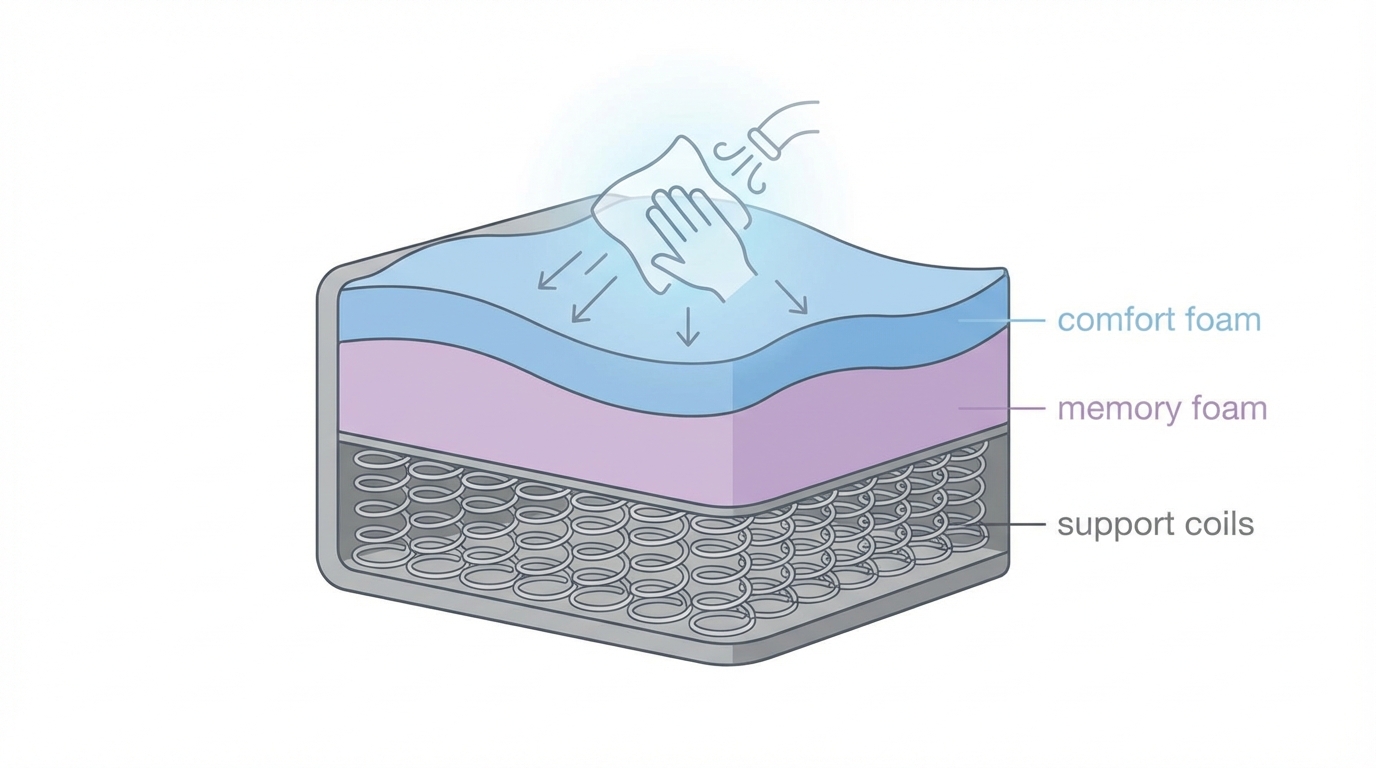
Different mattress designs naturally collect and release moisture and dust in their own ways. Understanding these differences allows you to set realistic expectations and choose the right cleaning strategy and protective layers. Here is a simple comparison of common mattress types, focused on how they handle cleaning and hygiene.
| Mattress Type | Ease Of Cleaning | Odor & Allergen Tendency | Special Care Notes |
|---|---|---|---|
| Traditional Innerspring | Moderate, responds well to vacuuming and light spot cleaning | Can harbor dust in pillow top or fiber layers, but tends to air out fairly well | Avoid soaking pillow tops, rotate regularly to reduce body impressions |
| Hybrid (Foam + Coils) | Moderate to challenging depending on thickness of foams | Top foam layers can trap moisture and odors if not protected | Always use a waterproof yet breathable protector, be very conservative with liquids |
| All Foam (Memory Foam / Polyfoam) | More challenging because foam absorbs liquid easily | Can hold onto odors and stains if accidents soak in | Spot clean very lightly, never saturate, allow extra drying time with good airflow |
| Latex | Generally easier due to natural resistance to dust mites and mold when kept dry | Less prone to allergens internally, but cover can still stain or smell | Protect the cover, follow manufacturer instructions, avoid harsh chemicals or solvents |
If your current mattress is a plush hybrid or thick foam model that you are constantly fighting to keep clean, you are not doing anything wrong. Those constructions are simply more sensitive to moisture and benefit most from preventive measures like protectors and regular vacuuming. If you ever decide it is time to upgrade, exploring options in the best hybrid mattresses collection can give you a sense of which models balance comfort layers with smart, breathable covers that are easier to maintain.
Mattress Cleaning And Warranties: What You Need To Know Before You Start
One of the most overlooked aspects of mattress cleaning is how it can affect your warranty. Manufacturers typically cover defects such as significant sagging or broken coils, not damage from spills, stains, or misuse. However, obvious stains and signs of liquid saturation often void coverage completely because they can indicate contamination or improper care.
Before using any cleaner, take a moment to read your mattress warranty and any care guide that came with it. Many brands specifically advise against steam cleaning, applying harsh chemicals, or saturating the mattress with water. They may also caution against removing the cover on certain foam models, because doing so can disturb fire barrier layers or compromise the structure. If you no longer have the paperwork, you can usually find the information on the manufacturer’s website.
As a rule, stick to gentle, water based cleaners used in very small quantities, and avoid products that contain chlorine bleach or strong solvents. While powerful disinfectants are great on hard surfaces, they are too aggressive for most mattress fabrics and foams and can cause discoloration or breakdown. Research from organizations like the American Cleaning Institute emphasizes that soft furnishings should be cleaned with products designed for textiles, not universal disinfectants.
If your mattress has already suffered a major incident, such as being soaked by flood water, that is unfortunately a different situation. Public health agencies and brands like Clorox note that mattresses heavily contaminated with flood water cannot be safely salvaged, and they should be discarded through regular trash services or local recycling programs where available. Routine spills and household stains are one thing. Extensive water damage, especially when it might carry bacteria or sewage, is another.
A Simple, Repeatable Mattress Cleaning Routine
Once you understand the principles, it helps to have a concrete, repeatable checklist. This gives you confidence that you are doing enough without going overboard. Here is a practical twice a year routine many Sleepology customers follow successfully.
First, choose a dry day and plan on a few hours when your bed can be unmade. Strip the mattress completely and start your laundry. Rotate the mattress head to foot if the manufacturer recommends it. This rotation spreads out body weight, which can help reduce the appearance of impressions over time and is especially helpful on pillow top and euro top designs like the Sealy Posturepedic Pro Soft Dupont II Euro Pillow Top.
Next, vacuum the entire surface slowly, including sides and seams. Treat any visible stains using the spot cleaning techniques we covered earlier, keeping liquids minimal and blotting between steps. If odors are present or you simply want a refresh, sprinkle a moderate layer of baking soda, let it sit for at least an hour, then vacuum again thoroughly.
At this point, allow the mattress to air out for as long as your schedule allows, ideally with a window open or fan running. Once it feels fully dry and fresh, add a protective layer before remaking the bed. If you do not have a protector yet, this is the perfect time to add one so your newly cleaned mattress stays that way as long as possible.
- Strip all bedding and launder in warm or hot water according to care labels
- Rotate the mattress head to foot if recommended by the manufacturer
- Vacuum top, sides, and seams with an upholstery attachment, moving slowly
- Spot treat individual stains with mild solutions and light blotting
- Deodorize with baking soda if needed, then vacuum again after at least an hour
- Let the mattress air dry fully with good ventilation or a fan
- Apply a quality waterproof protector before replacing sheets and bedding
Once this routine feels familiar, it usually takes far less time than people expect. Many of my clients combine it with seasonal tasks such as changing out summer and winter bedding. When you tie mattress care to a predictable point in your year, you are more likely to stay consistent, and your mattress will age much more gracefully.
Preventing Future Messes: Protectors, Toppers, And Everyday Habits
Cleaning a mattress is helpful, but preventing stains and deep moisture in the first place is even more powerful. The single best tool for that is a well designed mattress protector. A good protector acts like a washable, breathable raincoat for your bed, blocking spills and sweat from reaching the mattress while still allowing heat and vapor to escape.
If you tend to sleep warm or live in a hot climate, a cooling waterproof design is ideal. The TEMPUR Breeze Mattress Protector is a strong example, because it combines a waterproof layer with fabrics engineered to stay cool to the touch and promote airflow. For many hot sleepers, that combination solves two problems at once, keeping the mattress surface drier and more comfortable.
For households focused on allergy control, a snug, fully encasing protector can help reduce exposure to dust mites living in older mattresses. Encasements zip completely around the mattress, sealing off its surface. They are often recommended by allergy specialists and organizations like the American Academy of Allergy, Asthma & Immunology as part of a comprehensive dust control plan. Just remember that encasements should still be paired with regular vacuuming and bedding laundering for best results.
Toppers can also play a protective role, adding a sacrificial comfort layer that you can more easily replace if it becomes stained or worn. A portable option like the Tempur Pedic Mattress Topper Pillow Travel and Guest Bundle is especially handy for guest beds, RVs, or temporary setups where you want extra comfort and a removable surface that is easier to manage than a full mattress. Combined with basic habits like avoiding food and dark drinks in bed and addressing spills immediately, these simple tools can dramatically cut down your future cleaning workload.
Cleaning By Mattress Type: Tailored Tips For Foam, Hybrid, Latex, And Innerspring
While the overall principles of light moisture and thorough drying remain the same, there are nuances to cleaning different mattress constructions. Applying the right approach for your specific type will protect your investment and keep you from unintentionally damaging sensitive materials.
For memory foam and other all foam mattresses, the key is moderation. Foam acts like a sponge, so any cleaner that reaches beyond the surface can be difficult to remove. Stick to vacuuming at least a few times a year and using as little liquid as possible for spot treatments. Work at the very top layer of the fabric and never spray cleaner directly onto exposed foam. If your mattress has a removable, washable cover, follow the manufacturer’s instructions carefully and avoid hot water or high heat drying unless explicitly allowed.
Hybrid mattresses combine foam or latex comfort layers with coils underneath. They often feel plush and luxurious, but they share the same sensitivity to moisture as foam models. Vacuuming is safe and highly recommended. When treating stains, assume you are dealing with foam just below the fabric and behave accordingly. If your hybrid has a pillow top, spend a little extra time around the tufting and seams, because crumbs and dust tend to hide there. A supportive model like the Sealy Posturepedic Elite Soft Albany II Euro Pillow Top becomes far easier to maintain when paired with a good protector that limits how deep spills can go.
Latex mattresses are naturally more resistant to dust mites and mold when kept dry, which makes cleaning relatively straightforward. Vacuuming and light, damp cloth spot cleaning on the cover are usually all that is needed. Harsh chemicals, including bleach and strong oxidizers, can degrade latex, so stay with mild soap and water or approved textile cleaners. Some latex models have zip off covers that can be washed separately, which is a bonus for hygiene as long as you follow the label instructions.
Traditional innerspring mattresses with minimal foam and fiber layers tend to be the most forgiving of the group. You can usually clean them with the same vacuum, baking soda, and gentle spot treatment routine without worrying as much about deep saturation. That said, older pillow tops can trap liquids more easily than flat tops, so the same rule of “less is more” with moisture still applies. Rotating these mattresses regularly also helps redistribute wear, which means your cleaning efforts are focused on different zones over time instead of the same deeply compressed area.
When Cleaning Is Not Enough: Knowing When To Replace Your Mattress

Even the best cleaning routine cannot restore structure to a mattress that has truly worn out. Recognizing when you are dealing with a hygiene issue versus a support problem will save you frustration and back pain. A mattress may be technically clean but still a poor surface for your body if it sags, has broken coils, or simply no longer provides enough pressure relief.
You might notice that you wake up with more stiffness in your lower back, shoulders, or hips, and that it improves when you sleep elsewhere, such as on a hotel bed or a newer guest mattress. You may also see visible valleys or dips where you normally lie. Many sleep experts, including those cited by Consumer Reports and the Sleep Foundation, note that comfort and support tend to decline noticeably after seven to ten years, even if the mattress looks outwardly fine.
Smell can also be a clue. If you have thoroughly cleaned, aired, and protected the mattress but it still carries an unpleasant or musty odor that returns quickly, that often signals deeper contamination. Repeated liquid accidents that were never fully dried, smoking in bed, and long term high humidity can all create issues that no surface cleaner can fully resolve. At that point, continuing to sleep on the mattress may not be the healthiest choice.
When you do decide it is time to upgrade, you can carry all of your cleaning and protection knowledge forward. Choosing a new mattress from curated collections like the best foam mattresses or the best hybrid mattresses gives you a starting point of modern materials, supportive designs, and quality covers. Adding a good protector from day one, such as the TEMPUR Adapt Waterproof Hypoallergenic Mattress Protector, sets you up for an easier, cleaner decade of sleep.
Don’t Forget The Rest Of Your Sleep System: Bedding, Pillows, And Bases
A truly clean, comfortable sleep environment is about more than just the mattress. Your pillows, sheets, mattress protector, and even your base or foundation all contribute to how fresh your bed feels and how easy it is to maintain. If your mattress smells neutral but your pillows are musty or your sheets trap heat, the overall experience will still fall short.
Pillows should typically be washed or replaced more frequently than mattresses. Synthetic and down pillows can often be laundered at home, while many memory foam pillows require spot cleaning. Following manufacturer instructions is essential here as well. If your current pillows are flat, stained, or older than two years, it might be time to refresh them. Exploring options within Sleepology’s curated pillows, sheets, toppers, and protectors collection can help you build a layered system that is both washable and comfortable.
Sheets and duvet covers should be washed weekly in most households, or every two weeks at the longest. Using breathable natural fibers such as cotton, Tencel, or linen can lessen night sweats, which in turn keeps the mattress and protector drier. For hot sleepers, pairing cooling sheets with a breathable protector creates a more comfortable microclimate. Over time, this combination may reduce the amount of odor and staining you have to fight at the mattress level.
Your bed base also matters. Slatted frames, platform beds, or quality adjustable bases that allow air circulation under the mattress help prevent moisture buildup. Adjustable foundations such as the TEMPUR ERGO Smart Base Adjustable Mattress Foundation or the TEMPUR ERGO EXTEND ProSmart Adjustable Mattress Foundation add the bonus of customizable positions that can ease snoring or reflux. When a mattress is well supported and ventilated from below, it tends to stay structurally sound and fresher for longer.
Conclusion: A Cleaner Mattress, Better Sleep, And Less Guesswork
Cleaning a mattress can feel intimidating at first, especially if you are worried about damaging the foam or making stains worse. Once you understand the basics, though, it becomes a straightforward, manageable routine. Light, targeted cleaning, regular vacuuming, and plenty of drying time will take you much further than aggressive scrubbing or heavy duty chemicals. Your goal is not to disinfect every fiber. It is to reduce allergens, remove surface soils, and keep the mattress dry and supportive.
The biggest shift happens when you move from a reactive mindset to a preventive one. Instead of waiting until a spill happens or an odor becomes obvious, you build twice a year deep cleans and consistent protector use into your normal home rhythm. Trusted sources like the Sleep Foundation and Mayo Clinic consistently show that a clean, comfortable sleep environment supports better rest and overall health. By taking care of your mattress, you are really taking care of yourself.
If you are still feeling unsure about your specific mattress type, existing stains, or whether it is time to replace your bed altogether, that is exactly what Sleepology is here for. You can bring your questions to a local advisor or call for guidance before you experiment. With a little knowledge and the right tools, you can turn “How do you clean a mattress?” into “I know exactly what to do and when to do it,” and enjoy a fresher, healthier night’s sleep for years to come.
Frequently Asked Questions
How do I clean a memory foam mattress without damaging it?
Memory foam mattresses require a gentle, low moisture approach. Start by vacuuming the surface with an upholstery attachment to remove dust and debris. For stains, use a small amount of mild soap mixed with cool water on a barely damp cloth, and dab the surface instead of scrubbing. Avoid soaking the foam or using steam cleaners, because foam holds onto moisture and can grow mildew inside if it does not dry fully. Always allow extra drying time with good ventilation before putting bedding back on.
What is the best way to remove urine from a mattress?
Urine stains are easiest to handle when they are fresh. Blot as much liquid as possible with clean, dry towels, pressing firmly to lift moisture. Then apply a small amount of an enzymatic cleaner designed for pet or biological stains to a clean cloth and dab the affected area, working from the outside of the stain inward. Follow with a cloth dampened with plain water to reduce residue, then press dry towels on top to draw out liquid. Once the mattress is only slightly damp, allow it to air dry completely, using a fan if possible, before replacing bedding.
How do I get rid of sweat stains and yellowing on my mattress?
Sweat stains appear over time as yellow or beige patches on the mattress surface. You can often improve their appearance with a mixture of mild dish soap and cool water or a gentle upholstery cleaner. Apply the solution with a barely damp cloth and dab the stained area, then rinse with a clean, damp cloth and blot dry. While you may not erase severe discoloration completely, you can reduce its intensity and associated odor. To prevent new sweat stains, use a waterproof yet breathable protector and, if possible, open windows or use a fan to keep the bedroom from becoming overly humid at night.
Can I steam clean my mattress to disinfect it?
Most mattress manufacturers advise against steam cleaning, especially for memory foam and hybrid models. Steam introduces a large amount of heat and moisture deep into the mattress, which can soften adhesives, damage foams, and create ideal conditions for mold if the interior does not dry thoroughly. While steam can disinfect hard surfaces effectively, mattresses are thick, porous products that are not designed to be fully saturated. It is safer to focus on vacuuming, spot treating with mild solutions, and using protectors, reserving strong disinfectants for non porous areas like bed frames.
How do I know if it is time to replace my mattress instead of cleaning it again?
Cleaning can help with odors, surface stains, and allergens, but it will not fix structural issues. If your mattress is older than eight to ten years, shows visible sagging or deep body impressions, or leaves you waking up sore even after cleaning and rotating, it is likely nearing the end of its useful life. Persistent musty smells that return quickly after thorough cleaning can also indicate internal contamination that cannot be fully resolved. In these situations, replacing the mattress and starting fresh with a quality protector is usually better for both comfort and hygiene.
Is it safe to use baking soda on every type of mattress?
Baking soda is generally safe for most mattress types, including innerspring, hybrid, foam, and latex, as long as you use a moderate amount and vacuum thoroughly afterward. It is important to check your vacuum manual to ensure it can handle fine powders, because some units can be damaged by them. If you are concerned, you can use a lighter sprinkle and focus the baking soda on localized odor areas rather than the entire surface. Always keep baking soda dry and avoid mixing it directly on the mattress with liquid cleaners, which can form a paste that is harder to remove.
How often should I replace my mattress protector?
Mattress protectors typically last several years, depending on their quality and how often they are washed. Signs that it is time to replace yours include peeling or cracking of the waterproof backing, persistent odors that do not wash out, or visible thinning or fraying. If you notice that spills are starting to reach the mattress despite having a protector on, that is a clear signal that the barrier has failed. Replacing a worn protector is much more affordable than dealing with permanent mattress stains, so err on the side of upgrading when you see clear wear.