

How Big Is A Twin Mattress, Really? And Is It Big Enough For You?
If you are squinting at a tape measure, trying to picture a bed in a small room, you are not alone. People often hear "twin mattress" and think "kids' bed" or "too small for anyone over 10," but the reality is more nuanced. The exact size of a twin mattress, and how that size translates into real life, can make the difference between a room that feels cramped and one that finally breathes.
Mattress size is not just a numbers question. It affects how well you sleep, how your body feels in the morning, and how usable your bedroom actually is. According to the Sleep Foundation, most adults need 7 to 9 hours of quality sleep, and mattress comfort and support play a major role in whether you actually get that rest. When the mattress is too short, too narrow, or awkwardly placed, you feel it in your sleep and in your day.
Here, you will get clear, practical answers to the core question "how big is a twin mattress" and the equally important follow ups. You will see how a twin compares to other sizes, how much space you really need around it, and when it makes sense to choose a twin versus a twin XL, full, or larger option. You will also find guidance rooted in both sleep science and decades of hands on experience helping shoppers like you find the right mattress for real bedrooms and real budgets.
By the end, you should have a concrete picture of whether a twin mattress is the right size for your child, teen, guest room, or even yourself, along with ideas for building a complete, comfortable setup using the space you already have.
Twin Mattress Dimensions: The Exact Numbers You Need
When people ask "how big is a twin mattress," they are usually looking for two things. First, the actual measurements so they can pull out a tape measure and test their space. Second, some context around what those numbers feel like in everyday use. Both matter, because the numbers are standard across most brands, but your experience in your own room is personal.
A standard twin mattress is typically 38 inches wide and 75 inches long. You may occasionally see 39 inches listed as the width, because some manufacturers round up by an inch, but you can safely plan around 38 by 75. This makes the twin the smallest standard mattress size commonly sold in mattress stores in 2026, aside from crib and toddler beds. It is designed for one sleeper and offers roughly the same length as a full size mattress with significantly less width.
In square footage terms, a twin mattress covers a little under 20 square feet of surface area. Compare that to a full mattress at 54 by 75 inches, which offers about 28 square feet, and you start to see why twins work so well in tight rooms. That smaller footprint can free enough space for a desk, dresser, or play area that would not fit with a wider bed. For many families, that extra floor space matters as much as the bed itself.
From a comfort perspective, most children, many teens, and adults under about 6 feet tall can sleep comfortably on a twin as long as they do not need to spread out widely. The Cleveland Clinic notes that spinal alignment and pressure relief are key to waking up without pain, and you can absolutely achieve both on a properly supportive twin mattress with a suitable pillow and base. The size itself is not inherently "less healthy," as long as it matches the sleeper's body and habits.
“We moved our 9 year old from a full to a twin to make room for a small desk, and I was worried she would feel cramped. Mia helped us choose a supportive twin and showed us how much space we would get back. Now she has an actual homework corner and still sleeps like a rock.” – Rachel H., November
How Twin Size Compares To Other Standard Mattress Sizes
To really understand how big a twin mattress is, it helps to see it in the family of standard sizes. Many shoppers get confused at this stage, especially between twin, twin XL, and full, because the names do not clearly tell you what grows, length or width.
Twin mattresses share their 75 inch length with full mattresses. The difference is in the width. A twin is 38 inches wide, while a full is 54 inches wide, so you gain 16 inches of extra elbow room after moving up from a twin to a full. If you sleep solo and tend to stay in one position, that extra width might feel like a luxury more than a necessity. If you toss and turn, you will likely notice the difference.
Compared with a queen at 60 by 80 inches or a king at 76 by 80 inches, a twin is dramatically narrower and slightly shorter. A queen offers almost twice the surface area of a twin, which is why couples generally find twins impractical for shared sleeping. Larger beds also change the feel of a room. A queen or king can visually dominate a small bedroom, while a twin tends to recede and make the space feel more open.
In , hybrid and foam mattresses are widely available in every size, including twin. Many of the best foam mattresses at Sleepology are offered in twin for kids, teens, and adults who want contouring support in compact rooms. The key is to look at both size and construction at the same time, so you get dimensions that fit your room plus materials that match your comfort needs.
Twin vs Twin XL: The 5 Inch Difference That Matters More Than You Think
One of the biggest pain points I see in small spaces is the question of "should we choose a twin or twin XL." On paper, 5 inches of extra length does not sound life changing. In practice, it can be the line between feet hanging off the end and full body support, especially for teens and taller adults.
A twin XL mattress typically measures 38 inches wide by 80 inches long. The width is the same as a standard twin, but the added length matches that of queen and king mattresses. Those 5 extra inches help accommodate sleepers who are closer to or above 6 feet tall, people who sleep on their back or stomach with legs extended, and anyone who simply dislikes feeling close to the end of the mattress.
The Sleep Foundation notes that mattress length should generally exceed your height by a few inches to maintain comfortable posture and avoid cramping. For an adult who is 6 feet tall, that means a standard twin at 75 inches is technically right on the edge, while a twin XL at 80 inches gives a safer buffer. That difference shows up when you point your toes, stretch during sleep, or lie on your back watching TV before bed.
There are trade offs to consider. Twin XL bedding is slightly less common than standard twin bedding, so you will want to double check sheet and comforter sizes. If you are outfitting a guest room or dorm style space, you might decide the comfort benefits outweigh the minor shopping inconvenience. In many college dorms in 2026, twin XL is actually the default size because it strikes that balance between compact footprint and adult friendly length.
From a room layout standpoint, adding 5 inches of length changes where the bed can sit relative to doors, closets, or windows, especially in very small or oddly shaped rooms. This is where measuring is essential. If a twin mattress allows you to fully open a closet door or walk around the bed without shuffling sideways, but a twin XL would block that movement, the standard twin might be worth the height compromise for a shorter sleeper.
“Our son is already 5'10" at 14, so Mia steered us gently away from a standard twin and into a twin XL hybrid. We still fit the bed along his wall, and now I am not worrying about buying yet another mattress in two years when he shoots up again.” – Mark S., October
Is A Twin Mattress Big Enough For You Or Your Child?

Once you know the exact dimensions, the next question is practical: "Is a twin mattress enough for how we actually live and sleep." This is where age, height, sleep position, and whether the bed will ever be shared all come into play. The mattress itself does not know who is sleeping on it, so you have to size it for the person and their routine.
For young children making the move out of a crib or toddler bed, a twin mattress is almost always sufficient in both width and length. It provides plenty of growth room, and kids usually feel secure on the smaller footprint. Pediatric sleep specialists often recommend creating a cozy, consistent sleep environment that does not feel too vast or different from what the child is used to, and a twin fits that purpose well.
For preteens and teenagers, things get more variable. Growth spurts can be unpredictable, and you may not want to replace the mattress again in just a few years. If your teen is already nearing 5 feet 6 inches or more, or if tall stature runs in your family, it can be wise to consider either a twin XL or even jump to a full size mattress if the room allows it. According to the Mayo Clinic, adolescents need about 8 to 10 hours of sleep per night for healthy development, and they often spread out more during deeper sleep cycles. That can create a stronger case for more width or length as they get older.
For adults who sleep alone, a twin can be adequate if three conditions are met. First, your height is within a comfortable range for the 75 inch length. Second, you tend to sleep in one primary position without dramatic tossing and turning. Third, your room configuration or budget makes a larger mattress impractical. Many small city apartments, studio layouts, and home offices that double as guest rooms fit this description. A supportive twin, paired with the right pillow and base, can absolutely deliver restorative sleep in those scenarios.
Bed sharing changes the calculation completely. Two adults sharing a twin mattress will almost always feel cramped, and sleep quality will suffer as you bump into each other or brace to avoid falling off the edge. Even an adult and a regularly co sleeping child may find a twin tight. The American Academy of Sleep Medicine emphasizes the importance of undisturbed sleep cycles for cognitive function and mood, and constantly adjusting for lack of space tends to disrupt those cycles. If two people will share the bed more than occasionally, it is time to consider at least a full size, and ideally a queen or king if the room allows it.
How Much Room Do You Need Around A Twin Mattress?
Knowing the size of a twin mattress is only half the story. The real world question is whether you will be able to move comfortably around the bed, open doors and drawers, and live in the room without feeling like you are climbing over furniture. This is where good measuring and a bit of planning pay off.
Designers often recommend leaving at least 24 to 30 inches of clear walking space on the sides and foot of a bed. If you imagine that buffer around a 38 by 75 inch twin mattress, the minimum comfortable room size tends to come out around 7 by 10 feet, assuming you also want space for a small dresser or nightstand. That said, smaller rooms can still work if you tuck the bed into a corner and accept that one side will be against the wall.
Rectangular rooms give you a straightforward choice. You can place the twin lengthwise along the longer wall, which opens more floor space, or center it on the shorter wall if you prefer to have space on both sides. Square rooms are more flexible. A twin can sit centered or in a corner, and either way you should have room for a desk, toy storage, or a reading chair, depending on the overall dimensions.
Foundation height also influences how the bed feels in the room. A lower profile base can keep sight lines more open and make smaller rooms feel less crowded, while a standard height foundation creates a more traditional bed look and can make it easier to get in and out of bed, especially for older relatives or guests. At Sleepology, many shoppers pair twin mattresses with a lower Sealy Mattress Base Boxspring Foundation | Low Profile 5 inch height to keep kids' rooms feeling airy and accessible.
In guest rooms where the bed shares the space with a desk, treadmill, or storage, it can be helpful to tape off the footprint of a twin mattress on the floor, including the frame, and then walk through typical movements. Open the closet, sit on the bed, pretend to make the bed, and see if you can easily move without shuffling sideways. Sometimes that exercise makes it clear that a twin will keep the room usable, whereas a full would tip it into cramped territory.
“Our guest room doubles as my home office, and I assumed we needed a full size bed. When Mia had us tape out the footprint, I realized a full would leave almost no walkway. We chose a twin with a slim low profile base, and the room suddenly felt like a real office again while still being comfortable for guests.” – Denise K., December
Twin Mattress Setup: Foundation, Height, And Accessories
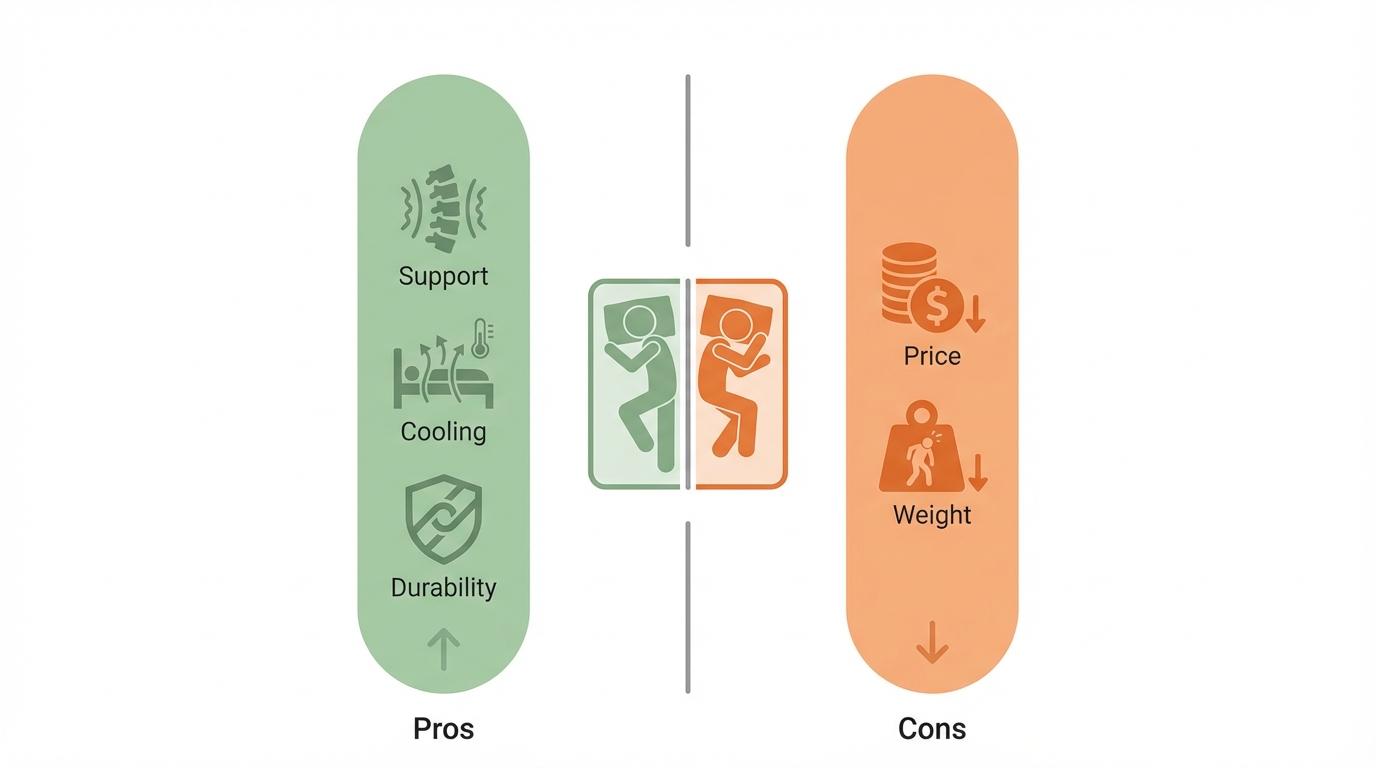
Once you settle on a twin mattress size, the next layer of comfort and practicality comes from the way you support and dress the bed. Foundation height, mattress protection, and bedding choices all change how the bed feels and how long it lasts. These details matter as much for kids and teens as they do for adults.
A proper foundation or base keeps the mattress stable, preserves its support system, and can even adjust the overall bed height to make it easier to get in and out. For kids' rooms and tight spaces, a sturdy box foundation is often more than enough. If you want a slightly lower, more modern profile, a low base such as the Sealy Mattress Base Boxspring Foundation | Low Profile 5 inch height keeps the bed closer to the floor while still giving the mattress the support it needs. For traditional setups or when you want more storage space under the bed, a Sealy Mattress Base Boxspring Foundation | Standard 9 inch height creates a classic bed height.
Mattress protection is critical, especially on kids' twin beds or guest beds that may see spills, pet accidents, or surprise sleepovers. A waterproof, breathable protector helps guard against moisture, dust mites, and allergens so the mattress interior stays clean and supportive for many years. The TEMPUR and Sealy lines offer advanced fabrics that protect without trapping heat. Products like the TEMPUR Adapt Mattress Protector, waterproof and hypoallergenic are designed to fit closely without changing the feel of the mattress underneath.
Soft goods such as pillows, sheets, and toppers also scale naturally with twin sizes. A high quality pillow matched to your sleep position can make almost as much difference as the mattress itself. Side sleepers usually need a thicker, more supportive pillow to keep the neck aligned, while back and stomach sleepers often feel better with a slightly flatter option. For guest rooms or kids' sleepovers, a bundle like the Tempur Pedic Mattress Topper and Portable Pillow Travel and Guest Bundle can turn a basic twin into a genuinely plush, hotel like sleep experience.
Because twin mattresses are more affordable than larger sizes, you may find it easier to invest in better quality accessories without stretching your budget. A breathable set of sheets, a soft but supportive pillow, and a protective cover can transform a simple twin into a cozy retreat that feels far more luxurious than the size label suggests.
Twin Mattresses In Different Room Types
Twin mattresses shine in certain types of rooms more than others. When people wonder whether a twin will be big enough, they are often planning for a specific space: a kids' room, teen room, guest room, dorm, or small studio. Each of these has unique needs that go beyond dimensions alone.
In children's bedrooms, a twin mattress often becomes the anchor around which the rest of the room grows. Its compact footprint leaves more space for toys, bookshelves, and floor play. For many families, this is also the first "real bed" a child remembers. Choosing a supportive but not overly firm twin helps young bodies grow with proper spinal alignment while still feeling cushioned and secure. Foam or hybrid constructions in twin sizes can be very effective for this age group because they contour to lighter bodies while still providing support.
Teen rooms are where questions about moving up in size really intensify. Teens need space to stretch out and often use their beds for more than just sleeping. It is the place they read, study, scroll on their phones, and talk with friends. If the room is large enough, a full or even a queen may feel more age appropriate, especially if friends often hang out there. If the room is small, a well chosen twin or twin XL can still feel "grown up" when paired with stylish bedding, a good headboard, and supportive comfort layers such as a quality topper.
Guest rooms are perhaps the most flexible use case for twins. If your goal is to accommodate occasional visitors, and you mostly host solo guests, a twin can be perfectly adequate and leave more space for luggage, a work area, or a reading chair. If you want the option to host couples, you might consider two twin mattresses on separate bases, which can be pushed together to form a larger sleeping surface when needed. In some homes, twins also serve as overflow beds for grandkids or sleepovers, which makes their small size doubly useful.
In dorms and studio apartments, the twin or twin XL often pulls double duty as both bed and sofa. Here, the ability to arrange furniture around the bed, use under bed storage, and keep sight lines open becomes as important as actual sleep comfort. Pairing a supportive twin with a low base and a well chosen topper can help it function as a lounging surface by day and a restorative sleep surface at night, without consuming the entire room.
How Twin Mattresses Compare To Larger Beds
At some point, every shopper considering a twin mattress ends up weighing it against larger sizes. It is one thing to know the measurements. It is another to understand how those measurements play out in comfort, space usage, and budget. A simple comparison framework can help you see where a twin stands relative to full, queen, and king options.
Below is a quick reference table that compares a twin mattress to three larger sizes across a few key attributes. Use this as a guide while you measure your room and think about how you actually sleep.
| Mattress Size | Dimensions (approx.) | Typical Use | Room Fit & Space Feel |
|---|---|---|---|
| Twin | 38 x 75 inches | Kids, teens, solo adults in small rooms, bunks | Best for tight rooms, leaves most floor space, not ideal for couples |
| Full | 54 x 75 inches | Solo adults wanting extra width, teens, occasional couples | Requires a bit more width, still workable in many small bedrooms |
| Queen | 60 x 80 inches | Most couples, solo adults who spread out | Needs moderate sized room, can dominate very small spaces |
| King | 76 x 80 inches | Couples wanting maximum personal space, families co sleeping with kids or pets | Best in larger master bedrooms, visually and physically dominant |
It is important to remember that the jump from twin to full gives you 16 extra inches of width but no extra length. This is great if your primary complaint is feeling squeezed side to side but your height is not an issue. Moving from twin to queen adds both width and length, which benefits couples and taller sleepers who fully extend their legs.
The budget differences also follow a clear pattern. Larger mattresses require more materials and engineering, which increases the price. Bedding and accessories scale with size as well. For shoppers balancing a set budget, starting with a twin can free up funds for higher quality materials. You may decide to invest in a well built hybrid such as a Sealy Posturepedic model, for example, instead of stretching to a larger but less supportive mattress in the same price bracket. Models like the Sealy Posturepedic Pro Medium Mattress, Dupont II Euro Pillow Top or Sealy Posturepedic Pro Soft Mattress, Dupont II Euro Pillow Top are available in multiple sizes, so you can choose the size that fits your room without giving up on support and pressure relief.
For households where at least one bed needs to be large, such as a primary suite, it can make sense to choose a generous mattress in that room and then use twins in secondary spaces. Many Sleepology customers opt for a spacious option from the king sized mattress collection for their own room and twin mattresses elsewhere, creating a balance between indulgent comfort and efficient space use.
When A Twin Mattress Is The Right Choice, And When It Is Not
Despite its smaller footprint, a twin mattress is not automatically the "starter" or "budget only" option. In many situations, it is the most strategic size you can choose. The key is to match the mattress size to your needs across five main factors: sleeper body size, number of sleepers, room dimensions, lifestyle, and budget.
First, consider body size and growth. For young children and most preteens, a twin provides enough space to sleep comfortably and move through active growth years. For rapidly growing teens or tall adults, the math changes, and a twin XL or larger may be a better long term investment. As a general rule, if someone is approaching 6 feet tall or already surpassing 5 feet 9 inches and sleeps fully stretched out, the 75 inch length of a twin can begin to feel restrictive.
Second, think about how many people will occupy the bed regularly. A twin is almost always a one person mattress. Occasional cuddling with a small child or pet is fine, but if two people will sleep in the bed most nights, even a very close couple, the width will eventually feel tight. Sleep researchers have observed that limited personal space in bed can lead to more frequent micro awakenings as sleepers unconsciously adjust to avoid falling off or bumping into each other, and those micro awakenings can reduce deep, restorative sleep time over the long term.
Third, look at room dimensions and traffic patterns. If a twin is the difference between being able to fully open a closet door, walk around the bed, or maintain a workspace in the same room, that often tips the decision in its favor. On the other hand, if you have plenty of room and can easily fit a larger bed with comfortable clearance, there is usually no need to restrict yourself to a twin unless budget dictates it.
Lifestyle questions can be surprisingly important. If your teen often has friends over who crash on the bed, if you anticipate older relatives staying with you who might appreciate more space, or if you work from the bedroom and use the bed as a daytime seating area, a slightly larger mattress could make daily life easier. On the flip side, if the room serves mostly as a dedicated sleep space for one person, the efficiency of a twin often wins.
Lastly, budget plays a real role. Twin mattresses generally cost less than their larger counterparts, and accessories like sheets and protectors follow suit. If you are furnishing multiple bedrooms at once, twins may allow you to buy better quality mattresses across the board without overspending. For many families, that trade off between size and quality is worth a thoughtful conversation.
Simple Measuring Checklist For Choosing A Twin Size
At this point, you know the numbers and how they function in everyday life. The final step before committing is to physically confirm that a twin mattress will work in your specific room with your specific furniture. A basic measuring checklist can help you avoid surprises on delivery day.
Begin by measuring the length and width of your room from wall to wall. Next, note the placement of doors, closets, windows, and heating vents. Be sure to measure how far doors swing into the room, as that can affect where a bed can safely sit. Once you have those numbers, mark out a 38 by 75 inch rectangle on the floor using painter's tape to represent the footprint of a twin mattress, then add a few inches around it for a frame.
With the "mattress" taped out, walk around the room as you normally would. Pretend to make the bed, open drawers, and sit down at any desk or vanity. If you can move freely and nothing feels cramped, a twin likely fits well. If you find yourself squeezing or a door barely opens, consider rotating the planned bed orientation or evaluating whether a smaller nightstand or alternate layout would help.
Think about vertical space as well. If you plan to use a traditional or taller base, that raises the overall bed height, which might matter if the bed sits under a window or if a young child will be climbing in and out. Choosing a low foundation or platform can keep the bed height manageable while still preserving support and under bed storage, especially if you are using storage bins or drawers.
Once you are confident in the twin layout, remember to plan for accessories. Leave room in your budget and storage for a breathable mattress protector, at least one set of quality sheets, and a pillow suited to your or your child's primary sleep position. Coordinating accessories from the pillows, sheets, toppers, and protectors collection can simplify this process and ensure everything fits the twin size properly.
After all that, you should feel ready to say "yes, a twin mattress is the right fit," or "no, we need to size up," with much more confidence instead of guessing based on names alone.
Conclusion: Turning Twin Mattress Dimensions Into Better Sleep
Knowing that a twin mattress is about 38 inches by 75 inches is useful, but what really matters is how that size works for your body, your bedroom, and your budget. You have seen how those dimensions compare to larger beds, how to factor in height and sleep position, and how to plan a room layout that feels open instead of cluttered. You have also seen where a twin mattress shines: kids' rooms, small guest rooms, dorms, and tight urban spaces where every inch matters.
A twin mattress can absolutely support healthy, restorative sleep when it is matched to the right person and paired with a supportive base, a quality protector, and suitable bedding. For younger children and many teens, it offers a comfortable space to rest and grow. For solo adults in small rooms, it can be the difference between feeling boxed in and actually enjoying your bedroom again. Where it falls short is in long term use for tall adults who need more length or for anyone regularly sharing the bed with another adult.
Your next step is simple. Measure your room, think honestly about who will sleep in the bed now and in a few years, and decide whether the twin footprint fits both your space and your lifestyle. If you discover that a twin makes sense but you are unsure about firmness or mattress type, a Sleepology sleepologist can help you match specific twin models from trusted lines like Sealy and Tempur to your exact needs, so you are not just picking a size, you are choosing a complete sleep solution that feels good on night one and for years to come.
Frequently Asked Questions
How big is a twin mattress compared to a full size bed?
A standard twin mattress is typically 38 inches wide by 75 inches long, while a full size mattress is about 54 inches wide by 75 inches long. That means a full gives you the same length as a twin but adds 16 inches of extra width. For a solo sleeper, that added width can feel more spacious, especially if you move around a lot in your sleep, but it also takes up more floor space and usually costs more, including the price of sheets and comforters.
Is a twin mattress long enough for a teenager?
A twin mattress can be long enough for many teenagers, especially if they are under about 5 feet 9 inches tall or tend to sleep curled on their side. However, for rapidly growing teens or those already approaching 6 feet, the 75 inch length of a standard twin may feel short over time. In those cases, a twin XL at 38 by 80 inches, or even a full or queen if the room allows, can be a better long term choice so you are not replacing the mattress again in just a couple of years.
Can two adults sleep comfortably on a twin mattress?
Two adults will almost always feel crowded on a twin mattress. With only about 38 inches of width, each person would have less than 19 inches of personal space, which is less than most airplane seats. That limited width usually leads to disrupted sleep as you bump into each other or brace yourself to avoid falling off the edge. For couples, sleep experts generally recommend at least a full size mattress, and more often a queen or king, so each person has enough room to move and maintain healthy sleep posture.
What is the minimum room size for a twin bed?
There is no single official minimum room size, but a practical guideline is that a room around 7 by 10 feet can usually accommodate a twin bed, a small dresser, and some walking space. Designers often aim for at least 24 to 30 inches of clear space around the sides and foot of the bed for comfortable movement. If your room is smaller, you can still make a twin work by placing it in a corner and choosing appropriately sized furniture, but you may have to accept tighter walkways or reduced storage.
Is a twin XL mattress much bigger than a twin?
A twin XL is the same width as a twin at about 38 inches, but it is 5 inches longer, measuring around 80 inches in length. That extra length can make a noticeable difference for taller teens and adults, especially those who sleep on their back or stomach and stretch their legs straight. Twin XL mattresses and bedding may be slightly harder to find than standard twin sizes, but they are common in dorms and many mattress lines, and they provide adult friendly length while still fitting in most twin friendly rooms.
Do I need a special foundation for a twin mattress?
You do not necessarily need a special foundation, but you do need a supportive base that matches your twin mattress and frame style. Many people use a standard height box foundation around 9 inches tall for a traditional bed height or a low profile base around 5 inches tall to keep the bed closer to the floor and make small rooms feel more open. Options like the Sealy Mattress Base Boxspring Foundation in low profile 5 inch or standard 9 inch height work well with most twin mattresses and help preserve their comfort and support over time.
Are twin mattresses good for adjustable bases?
Yes, many twin mattresses are compatible with adjustable bases, as long as the mattress is designed to flex without damaging its materials. An adjustable foundation can be a smart way to add comfort and versatility in a small room, especially for readers, gamers, or people with snoring or circulation concerns. If you want the ability to raise the head or foot of a twin bed, pair it with a compatible adjustable base, such as a model from the TEMPUR Ergo family, like the TEMPUR ERGO EXTEND ProSmart Base Adjustable Mattress Foundation, and confirm that your chosen mattress is rated for adjustable use.