

How Big Is A Queen Size Mattress? A Complete, Real-World Guide To Space, Comfort, And Fit
Choosing a mattress size sounds simple until you pull out a tape measure and realize how many details actually matter. If you are wondering how big a queen size mattress is, you are probably balancing a few competing needs. You might want enough space to spread out, a bed that fits your room without swallowing it, and something that works for you now and for a few years of life changes ahead. That is a lot of pressure for one decision, especially when you cannot easily return a mattress that feels too cramped or oversized once everything is set up.
The good news is that queen size is the most popular mattress size in the United States, which means there is a reason so many people land there after comparing all their options. At the same time, not every queen will feel the same in every bedroom or for every sleeper. A queen that works beautifully for a solo sleeper in a small primary bedroom might feel tight for a couple with a big dog and nightstand storage on both sides. The mattress size is fixed, but how it feels in your actual life is more nuanced.
As a sleepologist who has watched hundreds of people move from “I have no idea what size I need” to “this feels just right” over the past 20 years, I can tell you that understanding the true size and footprint of a queen is one of the most useful starting points you can give yourself. When you pair that with honest reflection about how you sleep, who shares the bed, and how your room is laid out, the decision becomes much clearer. You stop guessing and start making a choice grounded in numbers, space planning, and your own comfort.
You are in the right place if you want more than a quick dimensions chart. You will learn how big a queen size mattress really is, how it compares to other sizes in both inches and usable personal space, how it behaves in different bedroom sizes, and how to avoid the most common size regrets we see from shoppers. Along the way, you will see practical setups, expert tips from sleep research, and specific product ideas from Sleepology that can help you build a comfortable, realistic queen-sized sleep setup.
Queen Size Dimensions: The Simple Answer (And The Not-So-Simple Reality)
The straightforward part is the raw measurement. A standard queen size mattress is 60 inches wide by 80 inches long. That is 5 feet by 6 feet 8 inches of sleeping surface. Compared with a full size, you gain 6 inches of width and 5 inches of length. Compared with a king, you keep the same 80 inch length but lose 16 inches of width. Those numbers are consistent across reputable brands, which makes comparing mattresses easier once you know your baseline.
Where things get less simple is how that rectangle behaves in your space. The 60 by 80 measurement only covers the mattress itself. Most bed frames, headboards, and footboards add at least 1 to 5 inches on each side. A simple metal frame might only add about an inch to the width and length, while an upholstered frame with a thick headboard and footboard can make the real footprint closer to 66 to 68 inches wide and 86 to 90 inches long. That is a meaningful difference if you are working with a small room or tight doorway.
Mattress depth also matters more than many people expect. A queen mattress can range from about 8 inches deep to 18 inches or more. Deeper mattresses, especially those with plush pillow tops, can make your overall bed height significantly taller once you add a foundation or an adjustable base. The Sleep Foundation notes that mattress height can affect how easy it is to get in and out of bed comfortably, especially for people with joint issues or mobility concerns, so it is smart to think about total bed height, not just floor space.
On top of that, real-world manufacturing tolerances mean your queen might be a hair smaller or larger than the exact 60 by 80 measurement. Foam and hybrid mattresses can vary by 1 to 2 inches in either direction as they expand fully at home. This is usually not a problem, but you may see a little extra wiggle room in a tightly fitted sheet or bed frame. When you plan for your room layout, it is best to give yourself a small margin instead of relying on dimensions down to the exact quarter inch.
“I always thought a queen was ‘one size fits all,’ but Mia walked me through how the frame and headboard changed the footprint. We almost bought a bed that would have made our room feel cramped. Measuring with her guidance saved us from a really expensive mistake.” – Jordan P., November
How A Queen Compares To Other Mattress Sizes
Understanding how big a queen is becomes clearer when you put it side by side with other common sizes. People often know they “want more space” or “do not want something huge,” but it helps to translate that into actual inches and personal sleeping area. That way, you are not just guessing that a queen is the right compromise; you are confirming it.
A twin mattress measures about 38 by 75 inches, and a full (or double) is about 53 by 75 inches. You can think of a queen as a stretched and widened full, adding 7 inches of length and 6 inches of width compared with a full. Meanwhile, a standard king measures 76 by 80 inches, and a California king is 72 by 84 inches. So a queen gives you the same length as a king, but each sleeper gets 8 inches less width than on a king if you share the bed.
From a comfort perspective, the American Academy of Sleep Medicine and other sleep experts emphasize that adults need about 7 to 9 hours of sleep per night and that sleep quality is just as important as duration. A mattress that feels cramped can increase tossing and turning, which reduces sleep efficiency even if you are technically in bed long enough. For many couples, a queen is the smallest size that avoids “bumping elbows all night,” while still fitting well in a typical 10 by 10 or 10 by 12 bedroom. According to survey data cited by several mattress industry groups, queen remains the most commonly purchased size for this reason.
People also tend to underestimate how much width each person actually has when sharing the bed. On a queen, two people share 60 inches of width, which averages 30 inches per person. That is slightly more than a twin’s 38 inches, but far less than the 38 inches per person you get on a king. If you or your partner are broad-shouldered, move a lot during sleep, or share space with pets, those extra inches on a king can feel enormous. On the other hand, if you are both moderate movers who prefer to sleep near each other, queen can feel perfectly roomy and cozy.
Finally, remember that mattress size impacts not just sleep space, but also your ability to walk around the bed and use the rest of the room. The Cleveland Clinic has pointed out that a calm, uncluttered, and well organized bedroom environment supports better sleep hygiene. If a king turns your room into a tight maze, you may feel more stressed and less relaxed, even if the mattress itself is larger. In many average bedrooms, a queen strikes a balance where you have enough bed and enough breathing room.
Comparison Table: Queen vs Other Common Sizes
Here is a quick visual comparison that brings these differences into focus. Dimensions are approximate, in inches.
| Mattress Size | Width x Length (in) | Typical Use Case | Space Per Sleeper (if 2 people) |
|---|---|---|---|
| Full | 53 x 75 | Solo adults, guest rooms | About 26.5 inches each (tight) |
| Queen | 60 x 80 | Most couples, small primary bedrooms | 30 inches each |
| King | 76 x 80 | Couples wanting extra room, families with kids or pets | 38 inches each |
| California King | 72 x 84 | Tall sleepers, long narrow rooms | 36 inches each |
This table does not tell the whole story, but it does highlight how a queen sits right in the center of common adult mattress sizes. It offers a step up in comfort from a full for couples, without the large footprint of a king. If you look at your own height, build, and room size alongside these numbers, you will usually start to see which column feels “like you.”
After you understand these differences, the next step is to see how a queen interacts with your actual bedroom measurements, doorways, and furniture. That is where you can turn a good idea into a confident decision.
How Much Room Do You Need For A Queen Size Mattress?

Once you know that a queen is 60 by 80 inches, the next question is whether it will actually work in your bedroom. This is where a tape measure becomes your best friend. A queen will physically fit in many rooms, but fitting on paper is not the same as living comfortably around it every day.
Most designers and sleep experts recommend at least 24 to 36 inches of clearance on each accessible side of the bed. That includes the sides and the foot if you plan to walk there. This clearance makes it easy to get in and out without bumping your shins or squeezing sideways around corners. For a queen, that leads to a practical minimum room size of around 9 feet 6 inches by 10 feet, and a more comfortable range of 10 by 12 or 10 by 14 feet if you have additional furniture like dressers and desks.
Remember that you also need to account for your bed frame. If you have your eye on a substantial upholstered frame, or if you plan to pair your queen mattress with an adjustable base like the Tempur-Pedic ERGO Adjustable Mattress Base, add a few inches in your calculations for both width and length. Adjustable and platform bases can make the bed slightly longer than a standard metal frame, especially with a headboard attached.
Doorways, hallways, and stairs are another factor that can surprise people. A queen mattress can bend enough to navigate most standard doors, but some tight staircases or sharp hallway turns can turn delivery day into a challenge. It is wise to measure the narrowest points your mattress will travel through, including angled turns. Most mattress retailers, including Sleepology, can talk through these details with you before you buy so you are not stuck with a delivery that cannot get past the front door.
Finally, think about how you use your room beyond sleeping. Do you like to stretch for yoga beside the bed, use a bench at the foot of the bed, or have a pet bed in one corner? A queen mattress will set the scale for everything else. If you want maximum open floor, a full may be enough. If you are willing to have a little less open space in exchange for extra sleeping surface, queen typically hits the sweet spot.
“We brought our room measurements into Sleepology and Mia literally sketched where our queen would sit with our dresser and desk. Seeing it laid out made me stop obsessing over ‘should we force a king in here.’ The queen fits perfectly and the room feels calm instead of crowded.” – Alicia R., October
Is A Queen Size Mattress Big Enough For You?
Even if a queen will fit in your bedroom, you still want to know whether it will feel big enough for the way you actually sleep. This is where personal habits matter just as much as the raw dimensions. Two couples with identical room layouts might come to totally different conclusions once they consider how they move and share space at night.
If you are a solo sleeper, a queen usually feels generous unless you are very tall or like to sleep completely diagonally. The extra length to 80 inches works well for most adults up to about 6 feet 6 inches tall. Anything taller, or anyone who really pushes their feet into the bottom of the bed, might be more comfortable on a longer option like a California king. For most single sleepers, a queen provides enough width to roll from side to side, hug a body pillow, and share the bed with a small pet without feeling boxed in.
For couples, the answer depends on how close you like to sleep and how much you move. On a queen, each person’s “slice” is roughly 30 inches of width. That is slightly wider than a crib mattress and less than a twin, but it is still very workable for many people. If both of you like to sleep more in the center and do not mind being fairly close, queen is often ideal. If, however, one partner is a “starfish sleeper” while the other guards their space, a queen can feel small, especially if a pet joins the mix.
Body type can also shape your experience. Broader shoulders and hips take up more space, so two larger adults may simply feel more relaxed with the added width of a king. That extra 16 inches divided between two people can mean fewer accidental nudges, fewer covers tug-of-wars, and a more peaceful night. On the other hand, if at least one of you is on the smaller side and you actually prefer sleeping within arm’s reach of each other, a queen might feel pleasantly snug without being cramped.
It is worth considering future flexibility too. If you are buying a mattress while single but imagine a partner sharing the bed within the life of this mattress, a queen is often the best long-term size. It offers enough space for two in the future, while still fitting nicely into smaller bedrooms today. That “future proofing” can prevent you from needing to upsize again in just a few years.
Queen Size Variations: Olympic Queen, California Queen, And Split Queen
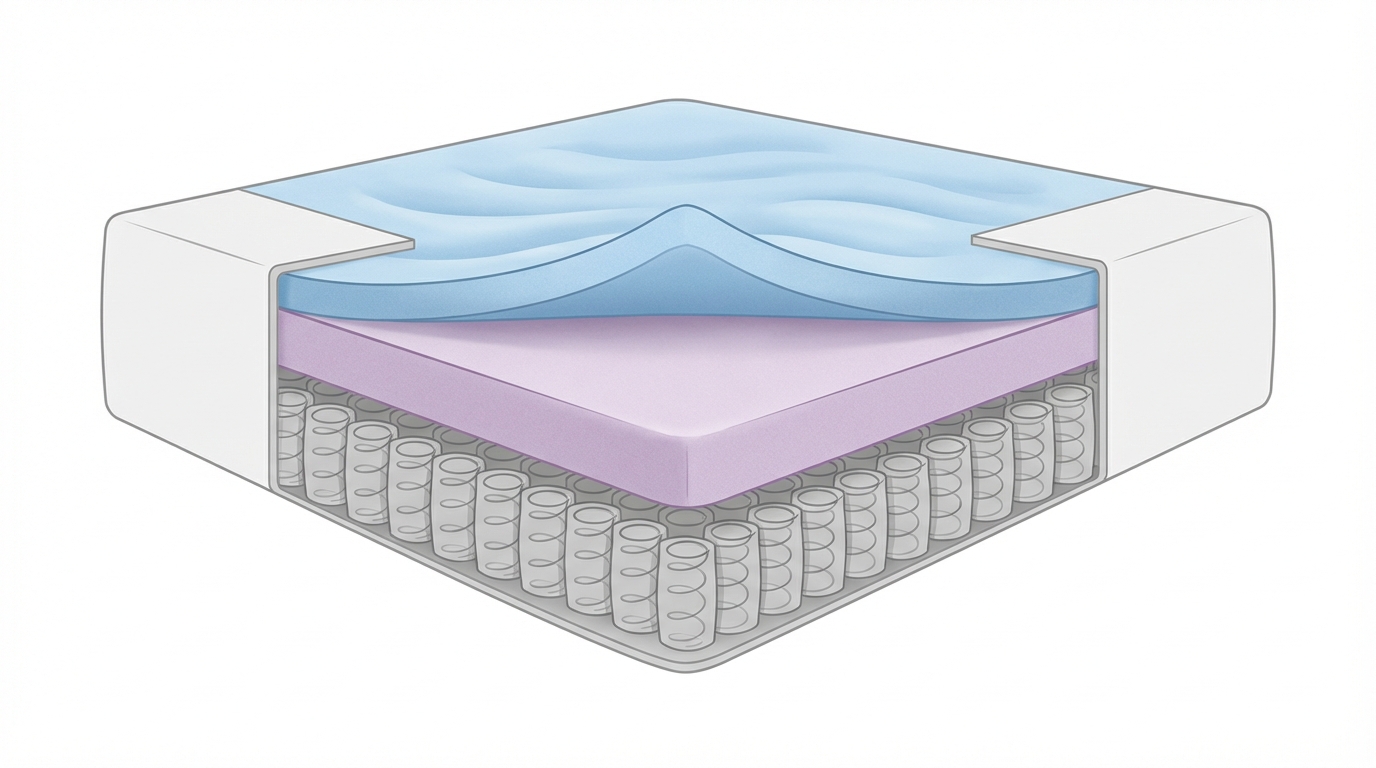
Once you start researching queen mattresses, you may run into less common variations that add to the confusion. Names like Olympic queen or California queen sound any queen bedding will fit, but these sizes actually change the mattress footprint. Since they are niche sizes, accessories and foundations can be harder to find, so it is important to understand what you are choosing.
A California queen typically measures about 60 inches wide by 84 inches long, which adds 4 inches of length compared with a standard queen but keeps the same width. This size is designed for tall sleepers who need a bit more legroom but do not have the width for a king or California king. If you are around 6 feet 4 inches or taller, or you find yourself sliding down the bed, a California queen can offer meaningful extra space at the foot.
An Olympic queen, sometimes called an expanded queen, usually measures about 66 inches wide by 80 inches long. Here you get 6 extra inches of width while keeping the standard queen length. This is aimed at couples who want more elbow room but whose bedroom cannot quite handle the full 76 inch width of a king. It can also be helpful if kids regularly join you for morning snuggles and you want a bit more breathing room across the bed.
Split queen is a slightly different concept. A split queen bed still has the overall dimensions of a standard 60 by 80 inch queen, but the mattress is divided into two separate pieces, often 30 by 80 inches each, placed side by side. This split design pairs well with adjustable bases, since each side can move independently. For example, a couple might partner a split queen setup with two synced sections of a TEMPUR-ERGO EXTEND ProSmart Base so one person can elevate their head for snoring or reflux while the other stays flatter.
Before you commit to any non standard queen size, think through bedding and replacement options. Fitted sheets and mattress protectors for Olympic or California queens are not as widely available as standard queen, and some local stores may not stock those sizes at all. If you love a particular sheet brand or already own a set of queen bedding, sticking with standard queen will keep your life simpler and your options wider.
Room Planning Checklist: Making A Queen Work Beautifully In Your Space
Room planning is where the decision about a queen size mattress stops being theoretical and becomes real. This is also where a small amount of effort up front can save you from years of “I wish we had positioned that differently.” A queen can feel airy and intentional, or it can feel crammed and awkward, depending on how you plan around it.
Start by sketching your room on paper or using a simple room planning app. Mark the location of doors, windows, closets, radiators, and any architectural quirks. Then outline a 60 by 80 inch rectangle where you think the bed might go, and expand that slightly to approximate your frame. Try at least two placements: one with the headboard on the longest wall, and one where the bed is centered under a window if your room layout encourages that. Notice how your traffic flow changes with each layout.
Next, layer in your nightstands, dressers, and any seating. Aim to leave at least 24 inches of free space around the sides you plan to use regularly. If you are pairing your queen with an adjustable base like the TEMPUR-ERGO Smart Base Adjustable Mattress Foundation, remember that you will want space at the head of the bed to accommodate the movement of the base and any headboard mounting. Also make note of electrical outlets if you plan to plug in base controls or bedside lamps.
This planning stage is also a good time to think about vertical space. If your ceilings are low, a tall bed frame and thick mattress can make the room feel closed in, even if the floor plan technically works. In that case, choosing a slightly lower profile queen mattress, and pairing it with a simpler platform or adjustable base, can keep the bed feeling appropriately scaled. Conversely, if you have high ceilings, a deeper plush mattress such as the Sealy Posturepedic Elite Medium Mattress – Brenham II Euro Pillow Top can help anchor the room without visually disappearing.
Once you feel good about the layout, take your tape measure and physically “tape out” the bed footprint using painter’s tape on the floor. Live with that for a day or two if you can. Walk around it as if the bed were there. Sit where your pillows would be and look around. This is one of the simplest ways to catch anything that feels too tight or awkward before you spend money or move heavy furniture.
“We taped out a queen and then a king on our bedroom floor like Mia suggested. After walking around both for a day, the queen size was clearly better. We still have room for a chair by the window and the closet doors open fully. It made us feel completely confident when we ordered.” – Sean T., November
Quick Measurement Checklist Before Buying A Queen
If you like having a single place to confirm the details, use this checklist as a final pass before you commit. Take actual measurements with a tape measure rather than estimating.
- Bedroom length and width, wall to wall
- Distance from planned headboard wall to nearest door trim and window trim
- Clearance on each side of the queen (aim for 24 to 36 inches)
- Clearance at the foot of the bed to any dresser, wall, or desk
- Doorway widths and hallway turns mattress must pass through
- Height from floor to window sill if the bed will sit under a window
- Outlet locations for lamps, phone chargers, and adjustable bases
Once you have these numbers, compare them to the real footprint of the queen mattress and frame you like. If everything checks out with at least a small safety margin, you can move forward with confidence. If measurements are tight, bring them into a Sleepology showroom or call for guidance so we can suggest frames and layouts that make the most of your exact space.
Sleep Position, Body Type, And How A Queen Actually Feels At Night
The way a queen size mattress feels is not only about square inches. It is about how your body uses that space through the night. Two people can lie on the same queen and have very different experiences depending on sleep positions, body type, and sensitivity to motion. Thinking about these factors early helps you decide whether queen truly fits your sleep style.
Side sleepers often take up more horizontal space because knees and arms tend to bend forward or up toward the chest. If you are a side sleeper who curls up, a queen may feel generous even if you share the bed. If you are a side sleeper who sprawls with an arm overhead or a leg kicked out, you may find yourself pushing closer to your partner’s half of the bed. In those cases, choosing a queen mattress with strong edge support, such as the Sealy Posturepedic Elite Soft Hybrid Mattress – Brenham II, can help you use the full surface without feeling like you are sliding off.
Back sleepers tend to be more compact in terms of width but are more aware of lumbar support quality. The Mayo Clinic has emphasized that good spinal alignment and lumbar support can reduce back strain and improve sleep comfort. In a queen, back sleepers usually have plenty of personal space, so the focus becomes choosing the right firmness and support system rather than worrying about size. Collections like The Best Mattresses For Back Sleepers are designed to support the natural curve of the spine, which lets the queen size itself do its job without fighting misalignment.
Stomach sleepers, while less common, may feel more exposed to partner movement because their head often faces sideways toward the middle of the bed. On a queen, two stomach sleepers can still be comfortable, but it helps to choose a mattress with strong motion isolation. Research summarized by the Sleep Foundation notes that minimizing motion transfer can significantly improve sleep quality for people who share a bed, especially if one partner is more restless. Modern foams and hybrids usually outperform traditional spring-only beds in this area.
If your household includes pets or kids who like to join you at night, factor that in honestly. A queen can absolutely work for “occasional visitor” scenarios. If a toddler crawls in at 5 a.m., or a cat curls up at your feet, you will still have plenty of room most of the night. If, however, your large dog sleeps between you every single night, those 60 inches will feel much narrower. That is where many families step up to king size, using our King Sized Mattresses collection to find something that feels realistic for their full nighttime cast of characters.
Bedding, Accessories, And Making A Queen Feel Luxurious
Once you have confirmed that a queen will work in your room and for your sleep style, the next step is making it feel as comfortable and functional as possible. One advantage of standard queen size is that it is deeply supported by the bedding and accessories market. You will find the widest variety of sheet sets, mattress protectors, and comforters in queen, which makes it easier to dial in your setup over time.
Start with protection and feel. A good mattress protector sized correctly to your queen will prolong the life of your investment by guarding against spills, dust, and sweat. On top of that, premium sheets and a topper can dramatically change the feel of your mattress without changing its size. For example, if you love your mattress support but want a bit more plushness, a high quality topper from our Pillows, Sheets, Toppers, Protectors collection can add that cushioning layer without affecting how your queen fits in the room.
Pillows are another key part of how “big” a queen feels experientially. The width of the mattress gives you room to shift positions, but your pillow determines whether your neck and shoulders are supported in each position. Body pillows in particular can help side sleepers feel cradled and grounded on a queen. A supportive option like The BodyPillow by Tempur-Pedic can provide full length support so your legs and torso feel held, even if your partner is sleeping fairly close beside you.
Do not forget about travel and guest setups, especially if your queen lives in a guest room or you host often. Having flexible accessories like the Tempur-Pedic Mattress Topper – Pillow Travel and Guest Bundle can help you fine tune the comfort for different guests without changing the mattress size. This is particularly helpful when older parents or friends with back issues come to stay and need a softer or firmer feel than your everyday setup.
Lastly, consider how your bedding affects visual scale. A slightly oversized comforter can make a queen feel more luxurious and hotel like without changing its actual footprint. Coordinating shams, throws, and bed skirts can also help the bed feel like an intentional centerpiece rather than a rectangle filling available space. The psychological sense of “enough bed” often comes as much from how it looks and feels as from the ruler measurements.
When A Queen Is The Right Choice (And When It Is Not)
By now, you might already have a sense of whether a queen feels like “the one” for your situation. To bring it all together, it helps to step back and look at the patterns we see most often among Sleepology shoppers, along with what research tells us about healthy sleep environments.
A queen size mattress is usually the right choice when you are a solo sleeper who wants room to grow, or a couple who likes sleeping relatively close but not cramped, and your bedroom is at least around 10 by 10 or 10 by 12 feet. It is especially smart when you are balancing long term flexibility with current constraints, such as living in an apartment now but planning to move to a slightly larger home later. You get the comfort upgrade and broad bedding selection today, while keeping your options open for future layouts.
A queen may not be ideal when both sleepers are broad-shouldered or plus sized, when one person thrashes a lot at night, or when you share the bed nightly with more than one child or a large dog. In those situations, even if a queen technically fits your room, a king often yields better sleep quality. The National Sleep Foundation has highlighted that reduced partner disturbance is one of the biggest benefits of a larger mattress, because fewer awakenings per night add up to more restorative deep sleep. So if you are already on the edge with stress, health, or fatigue, giving yourself extra width can be a worthwhile investment.
There are also times when a queen is simply too big. Smaller secondary bedrooms, especially those less than about 9 by 9 or 9 by 10 feet, often work better with a full size to preserve walking space and storage. In a child’s room or a dedicated guest room that doubles as a home office, a queen can overwhelm the space to the point where it no longer functions well during the day. In those cases, it is better to choose a smaller mattress that allows the room to serve multiple roles effectively.
If you find yourself stuck between sizes, remember that you are not alone in that feeling. Many shoppers worry about making the wrong call because this is not something you casually replace every year. Talking through your specific room dimensions, sleep habits, and future plans with a sleep expert can remove a lot of that anxiety. At Sleepology, we do this every day and can help you translate “this is what my life looks like” into “this is the size that fits it best.”
Conclusion: Turning Measurements Into Better Sleep
A queen size mattress is more than a 60 by 80 inch rectangle. It is the space where you decompress at the end of the day, read, connect, and hopefully get the deep, restorative sleep that bodies and minds need. When you understand how big a queen actually is, how it compares to other sizes, and how it behaves in your specific room with your specific habits, the choice becomes less about guessing and more about alignment with your real life.
You have seen how queen stacks up against full, king, and California king in both raw dimensions and personal space. You have walked through room planning, traffic flow, and delivery considerations that people often overlook until it is too late. You have also explored how sleep position, body type, and household members affect how “big enough” feels, along with the role of accessories, adjustable bases, and bedding that make a queen setup truly comfortable.
If your measurements, habits, and instincts are all pointing toward queen, you can move forward with confidence knowing it is not just the most popular size in 2026, but likely the best fit for you. From there, the fun part begins: choosing the right mattress construction and feel, pairing it with supportive foundations like our Adjustable Bed Frame and Base collection, and finishing it with pillows and bedding that support healthy sleep. And if you are still weighing queen against other sizes, that is exactly what Sleepology is here for. A short conversation with a knowledgeable guide can save you years of wondering if you should have gone bigger or smaller.
Wherever you land, remember that the goal is not to own a particular size, but to create a sleep space that lets you rest deeply, wake up refreshed, and feel good in your own home. The tape measure is just the starting point. Your comfort, your routines, and your future plans complete the picture.
Frequently Asked Questions
How big is a queen size mattress in feet?
A standard queen size mattress measures 60 inches wide by 80 inches long, which translates to 5 feet wide by 6 feet 8 inches long. When you include a typical bed frame or headboard, the real footprint can increase to roughly 5 feet 4 inches to 5 feet 8 inches wide and about 7 to 7.5 feet long, depending on the design. Always check the frame’s listed dimensions in addition to the mattress size so you know exactly how much floor space you will need.
Is a queen size mattress big enough for two adults?
For most couples, a queen is big enough, especially if both sleepers are reasonably average in build and like sleeping fairly close together. With 60 inches of width, each person has about 30 inches of personal space, which is similar to or slightly more room than a crib mattress width. If one or both of you are broader, move a lot during sleep, or share the bed with a large dog or child every night, you may find a king more comfortable. For occasional pet or child visitors, a queen usually provides enough flexibility.
What size room do I need for a queen bed?
A queen will physically fit into many rooms, but for a comfortable layout you will want a bedroom that is at least about 9 feet 6 inches by 10 feet. In that space, you can usually maintain around 24 inches of walking clearance on the accessible sides of the bed. If your room is closer to 10 by 12 or 10 by 14 feet, a queen typically feels well balanced, leaving room for nightstands, a dresser, and possibly a chair or desk without making the room feel crowded.
What is the difference between a full and a queen mattress?
A full mattress is about 53 inches wide by 75 inches long, while a queen is 60 by 80. That means a queen is 6 inches wider and 5 inches longer than a full. For a solo adult, a full can work in tight spaces, but a queen offers noticeably more space to spread out, particularly if you are taller or like a body pillow or pet in the bed. For couples, a full is usually quite tight, while a queen provides a more realistic amount of room to sleep without constantly bumping into each other.
Are queen and Olympic queen the same size?
No, a standard queen and an Olympic queen are not the same size. A standard queen is 60 inches wide by 80 inches long. An Olympic queen, also called an expanded queen, is typically 66 inches wide by 80 inches long. That extra 6 inches of width can feel significant for couples who want more elbow room but cannot accommodate a king. However, bedding and accessories for Olympic queens are not as widely available as standard queen, so you will need to be more intentional about where you shop.
Can I put a queen mattress on a full size frame?
You should not put a queen mattress on a full size frame. A full frame is built for a 53 inch wide mattress, while a queen mattress is 60 inches wide. Trying to place a queen on a too small frame will leave the mattress unsupported at the edges, which can cause sagging, void warranties, and feel unstable and unsafe. Always match the frame size to the mattress size, whether you are using a platform, box spring, or adjustable base.
Is a queen a good choice for a guest room?
A queen is an excellent choice for a guest room in many homes. It offers enough space for couples, gives solo guests a sense of luxury, and takes advantage of the broad availability of queen-sized bedding. If your guest room is also a small office or has limited floor space, you may choose a full instead to keep the room functional. In a reasonably sized spare bedroom, a queen tends to feel inviting and versatile for different types of guests.