

How Big Is A Queen Mattress? Your Complete Size, Space, And Comfort Guide For
Choosing a mattress size seems simple until you start measuring your room, thinking about your partner, and wondering if the dog will claim the foot of the bed again. Many people come to Sleepology thinking, “A queen sounds right, but how big is a queen mattress actually, and will it really fit my life?” If that is where you are right now, you are not alone, and you are exactly who this guide is written for.
The size of your mattress silently shapes your sleep quality, how rested you feel in the morning, and even how comfortable your bedroom feels. Too small, and you wake up cramped, bumped, or clinging to the edge. Too large, and you feel crowded in your own room, bumping into corners in the dark or sacrificing storage space you really need. Since most mattresses are kept for 8 to 10 years, getting the size right is a big deal, not a minor detail.
You will come away from this guide with a clear understanding of how big a queen mattress is, how that compares with other sizes, and exactly what room dimensions and sleeper types a queen really works best for. You will also see how mattress thickness, frames, and bedding interact with queen dimensions, so you do not make an avoidable “it looks huge in here” mistake on delivery day. Along the way, we will connect what you are learning to specific mattress and accessory options from Sleepology, so you can move from research to confident action when you are ready.
My goal as a Sleepologist is to help you think through this decision the way a seasoned consultant would: with your real space, real budget, and real sleep needs in mind. So take a breath, grab a tape measure if you can, and let us unpack what “queen size” really means for you in .
Queen Mattress Dimensions: The Numbers That Actually Matter
The starting point is straightforward. A standard U.S. queen mattress measures 60 inches wide by 80 inches long. In feet, that is 5 feet wide and about 6.7 feet long. In terms of surface area, you get right around 33 square feet of sleeping space. Those are the official dimensions most major brands follow, and they are what your bed frame, sheets, and mattress protectors are designed to match.
In the real world, though, you may see minor variations of about 1 inch in width or length. The foam density, quilting, and how plush the top is can all shift the finished measurements a bit. That is normal and within industry tolerances. According to mattress size guides summarized by Consumer Reports and several leading manufacturers, a variation of plus or minus 1 inch is considered acceptable for standard sizes as long as products are labeled correctly for category. That is why you might see a queen mattress that measures 59 by 79 inches or 61 by 80 inches and it is still sold as a queen.
Thickness is a different dimension that people often forget to factor in. Queen mattresses in tend to range from about 8 inches thick on the budget side to 15 or 16 inches for plusher, high end or pillow top models. The Sleep Foundation notes that most adults find mattresses at least 10 to 12 inches thick offer a good balance of support and comfort, especially for side and combination sleepers who need more cushioning around the shoulders and hips. When you add that thickness to your frame and any foundation or adjustable base, you get the total bed height, which affects how easy it is to get in and out of bed.
For example, a queen model like the Sealy Posturepedic Plus Medium Mattress – Paterson II Euro Pillow Top combines generous comfort layers with a supportive core, which usually puts it in that 12 to 14 inch range. Paired with a typical low profile foundation, you end up with a bed height many adults find ideal because you can sit with your knees close to a 90 degree angle instead of “climbing” into bed or dropping down onto it.
So when someone asks, “How big is a queen mattress?” the complete answer is more than 60 by 80. The practical answer is 60 inches by 80 inches of surface area, typically 10 to 14 inches thick, and usually sitting 24 to 26 inches off the floor once you add the frame and foundation. Those numbers are what you will want to compare against your height, room dimensions, and comfort preferences as you keep reading.
“I had always heard a queen was ‘standard’ but never really understood the actual measurements. The consultant at Sleepology walked me through the 60 by 80 size, then helped me figure out how tall the bed would be with my existing frame. That five minute conversation saved me from buying a mattress that would have sat way too high. I ended up with a queen that feels custom made for my room.” – Lauren H., November
Queen Size Compared To Other Mattress Sizes
Once you know that queen equals 60 by 80, the next smart step is to put that into context. A number on its own does not tell you how that will feel if you are switching from a full, considering a king, or planning for a guest room that doubles as a home office. Thinking in terms of differences in width and length makes the decision much clearer.
Relative to a full mattress, a queen gives you noticeably more room in both directions. A standard full measures about 54 inches wide and 75 inches long. That means a queen is about 6 inches wider and 5 inches longer. For a solo sleeper, those extra inches translate into more “sprawl room” and more usable legroom, which can help you avoid curling up just to keep your feet off the edge. The Sleep Foundation notes that while full mattresses can technically fit two adults, most couples sleep more comfortably on at least a queen because they have roughly 30 inches of personal width each instead of about 27 inches.
Compared to a king, a queen is more compact yet still very usable for two adults. A standard king measures 76 inches by 80 inches, so the length is the same as a queen, but you gain 16 inches of extra width. Some couples love that extra space, especially if they share the bed with kids or pets on a regular basis. Others find the tradeoff in room space and cost is not worth it. A queen usually fits comfortably in a 10 by 10 foot bedroom, while a king often feels best in a room at least 12 by 12 feet or larger, which aligns with typical room size guidance from furniture and sleep retailers.
It can also help to visualize your own body on these measurements. If you and your partner each take up about 20 to 22 inches in your natural sleep positions, a 60 inch wide queen gives both of you some wiggle room without forcing you to sleep rigidly straight. A 76 inch king offers more luxury space, but many people find that a queen hits the sweet spot of enough room to turn and stretch without crowding the bedroom itself. For shoppers who want to see the difference in person before upgrading, spending a few minutes lying on both a queen and a model from the King Sized Mattresses collection at Sleepology often makes the decision incredibly clear.
At the smaller end, twins and twin XLs are in a different category. A twin is about 38 by 75 inches, and a twin XL is about 38 by 80 inches. For children, teens, and narrow guest rooms, these sizes make sense, but once you are an adult sharing a bed or simply wanting real stretch out space, a queen quickly becomes the most practical minimum size. Mayo Clinic and similar health organizations emphasize that quality sleep depends heavily on reducing nighttime disturbances, and constantly bumping into a partner on a too small mattress is a common and preventable source of fragmented sleep.
Non Standard Queen Variations You Might See
On top of the standard queen, there are a few offshoots that pop up enough that people get confused: Olympic queen, split queen, and California queen. These are not as widely available as the standard queen, but they can be helpful in very specific scenarios.
An Olympic queen is still 80 inches long but about 66 inches wide, which makes it roughly 6 inches wider than a standard queen. Some manufacturers market this as a way to get closer to king width in a slightly smaller footprint. In reality, accessories like sheets and frames for Olympic queens can be harder to find, so you want to be sure you are committed to the format if you go in that direction. Similarly, a California queen is typically 60 inches wide and 84 inches long, keeping the standard queen width but adding 4 inches of length for taller sleepers.
Split queen refers to a configuration that uses two separate 30 by 80 inch mattresses set side by side on an adjustable or split compatible base. When placed together, they create the same 60 by 80 footprint as a regular queen, but each side can often be adjusted or replaced independently. This is ideal for partners with different firmness preferences or for those who want some of the flexibility of an adjustable base without committing to a king footprint. Many couples like pairing a split friendly mattress with an adjustable bed frame and base so each person can raise their head or legs independently.
The main lesson here is to read the product specifications carefully and confirm whether you are looking at a standard queen or a specialty variant. Standard queens are far easier to shop for and dress, which is why most shoppers end up choosing them unless they have a very specific need like extra length for height over 6 feet 2 inches.
How Much Space Do You Need For A Queen Mattress?

A queen mattress might be 60 by 80 on paper, but what matters for your home is how that rectangle lives inside your room. It is one thing to slide a tape measure across bare floor. It is another to remember that you also have nightstands, dressers, closet doors, and space you need to walk comfortably. This is where a lot of sizing mistakes happen, especially if you are upgrading from a smaller bed.
A commonly used guideline is that a queen mattress works best in bedrooms that are at least about 10 by 10 feet, or roughly 100 square feet. That size allows room for the bed itself plus at least 24 to 30 inches of walking space on the sides and at the foot in most layouts. Several furniture retailers and sleep experts echo a similar minimum, with some suggesting that around 10 by 12 feet gives even more breathing room if you have larger furniture pieces. If your room is smaller than 10 by 10, a queen can sometimes still work, but you will be trading away traffic flow or storage space.
The Sleep Foundation recommends leaving at least 2 to 3 feet of clearance around the sides of the bed when possible, so you can move freely and open drawers without bumping into corners. That freedom of movement is not just about convenience. A cluttered or cramped room can subtly raise stress levels and make it harder for your brain to fully “power down” at night. Think of it as giving both your body and your bedroom room to breathe.
Door swings and windows also matter more than people think. If the only way to fit a queen is to push one side directly against a wall and squeeze the other between the bed and a door that barely opens, your daily experience of getting in and out of bed will not feel good. It can also create friction if one partner regularly has to climb over the other. In my consultations, I often have people sketch their room on paper or use painter’s tape on the floor to trace a 60 by 80 rectangle. Then we walk around it together and see how “liveable” that layout feels.
Finally, remember vertical space. A tall, thick mattress on a high frame can dominate a smaller room visually even if it technically fits. If you are working with a modest bedroom but want the comfort of a plush queen model like the Sealy Posturepedic Elite Medium Mattress – Brenham II Euro Pillow Top, pairing it with a low profile foundation such as the Sealy Mattress Base Boxspring Foundation | Low Profile 5-inch height can keep the bed from feeling visually overwhelming.
“We were sure a queen would be ‘too big’ for our 10 by 11 room, but Mia showed us how to tape out 60 by 80 on the floor and rearrange the furniture on paper. Once we saw it, the layout made sense. The actual room now feels more pulled together, not smaller, and we still have room to walk around the bed comfortably.” – Carlos V., October
Practical Measuring Tips For Your Bedroom
When you are ready to get concrete about whether a queen will fit, a simple step by step approach makes the process much easier. Grab a tape measure, a pencil, and if you have it, some painter’s tape you can lay on the floor temporarily.
Start by measuring the length and width of your bedroom from wall to wall. Write those numbers down. Then mark where doors, closets, and windows sit, including how far doors swing into the room. If you already own key furniture pieces like a dresser or desk that must stay, measure those too. Then, either on graph paper or in a basic room planning app, draw your room to scale and drop in a 60 by 80 rectangle to represent the queen mattress.
If you prefer to “feel” the space instead of drawing it, use painter’s tape directly on the floor. Measure 60 inches for width and 80 inches for length and tape out the rectangle where you think the bed will go. Stand at different points in the room, pretend to open drawers, and walk around that taped shape. Ask yourself whether you feel squeezed anywhere, and whether the layout would be frustrating to live with every day.
Do not forget to consider bed height. If you plan to use an adjustable base from our Adjustable Bed Frame and Base collection under your queen mattress, those units typically add both length and height to the footprint. Many have head and foot sections that move, so you also want clearance from walls for the motion and any nightstand lamps that sit beside the bed. Taking five extra minutes at this stage can prevent the disappointment of a beautiful setup that ends up blocking half a closet.
Once you have worked through these steps, you will usually know in your gut whether a queen feels realistic in your specific room. That clarity is invaluable before you start trying to compare individual mattresses and price points.
Is A Queen Mattress Big Enough For Couples?
The most common question I hear about queen mattresses is very simple: “Is a queen big enough for two?” The honest answer is that it depends on your bodies, how you sleep, and how much you like to move around at night. For many couples, a queen is both practical and comfortable. For others, a king is worth the extra footprint for the sake of peace and space.
From a pure numbers standpoint, a queen gives each partner about 30 inches of personal width. A twin bed is about 38 inches wide, so you are each sharing slightly less room than a child has on a twin. For couples who sleep relatively close together, maintain fairly consistent positions, or are smaller framed, that can feel cozy but not cramped. For couples who tend to sprawl, toss, or have larger body types, that same space can feel tight, especially over an entire night.
Sleep medicine specialists often talk about minimizing sleep fragmentation. If you frequently wake up because you or your partner rolled over on top of the other person or pushed them toward the edge, your sleep cycles get interrupted, and you spend less time in deep and REM stages. The Cleveland Clinic notes that fragmented sleep, where you are looping through lighter stages without long stretches of deeper sleep, can leave you feeling unrefreshed even when you spend enough total time in bed. Mattress size is one of the simplest things you can control to reduce this kind of disruption.
In daily life, you can use an easy at home test. Make your existing bed, lie down next to each other in your usual positions, and imagine the mattress is only 60 inches wide. If you currently sleep on a full, that means imagining 3 inches less space on each side than you have now. If one of you already feels like you are guarding the edge, upgrading to a queen will help. If you currently have a king, try placing pillows or rolled blankets to mark off a 60 inch span in the middle. Lie within that boundary for a few minutes. If it feels fine, a queen could be a real option. If you find yourselves constantly brushing or bumping into the “boundary pillows,” you may be better suited to stick with a king.
Couples with different sleep positions often have the strongest opinions. If one of you sleeps curled on your side and the other starfish stretches out, the side sleeper may feel pinned. In these cases, a queen can still work if you choose a mattress with very strong motion isolation and edge support, such as the Sealy Posturepedic Pro Soft Mattress – Dupont II Euro Pillow Top. That kind of design allows someone to sleep closer to the edge without feeling like they will roll off, while minimizing how much their movements travel across the surface.
“We were debating between a queen and a king because my husband moves a lot. Mia suggested we lie on a queen in the showroom and actually roll into our usual positions. We realized that with the right mattress, the queen gave us enough space and saved us several hundred dollars compared to a king setup. Two months in, we both sleep through the night and the room feels more open.” – Denise R., December
When A King Might Be Worth It Instead
Even though a queen is the most popular mattress size for couples, there are very real situations where a king makes more sense. If one or both of you are over 6 feet 2 inches tall, wider framed, or you regularly co sleep with a child or pet, the additional 16 inches of width in a king can dramatically improve comfort. In this case, the question becomes less “Is a queen big enough?” and more “Do we have the room and budget for the size we really need?”
Families who bed share with toddlers or pets often benefit from the sprawling room a king provides. With 76 inches of width, you can think of the surface as roughly equivalent to two twin XL mattresses side by side. That gives sleep partners more personal space, and it gives kids and pets their own “zone” that does not intrude as much into your space. For those who want that flexibility, looking at a model from Sleepology’s King Sized Mattresses collection can be a smart move, especially if you can give the bed a full 12 by 12 foot room to live in.
Budget wise, a queen mattress itself is typically less expensive than a comparable king, sometimes by a few hundred dollars. However, over the life of the bed, the real cost difference comes from bedding. King sheets, comforters, and protectors usually cost significantly more than queen versions. If you are on the fence and budgeting carefully, this is worth adding into your thinking. A queen often represents a sweet spot where you gain a comfortable amount of space without committing to the ongoing cost of king sized everything.
If you are still unsure after walking through these factors, know that the “regret” pattern I hear most often from long term customers is not that they chose a queen instead of a king. It usually shows up when couples squeeze into a full for years. Most who finally move up to at least a queen say they wish they had done it sooner. That alone is a powerful clue that a queen is a very reasonable target for most two person households.
How A Queen Mattress Fits Different Sleeper Types
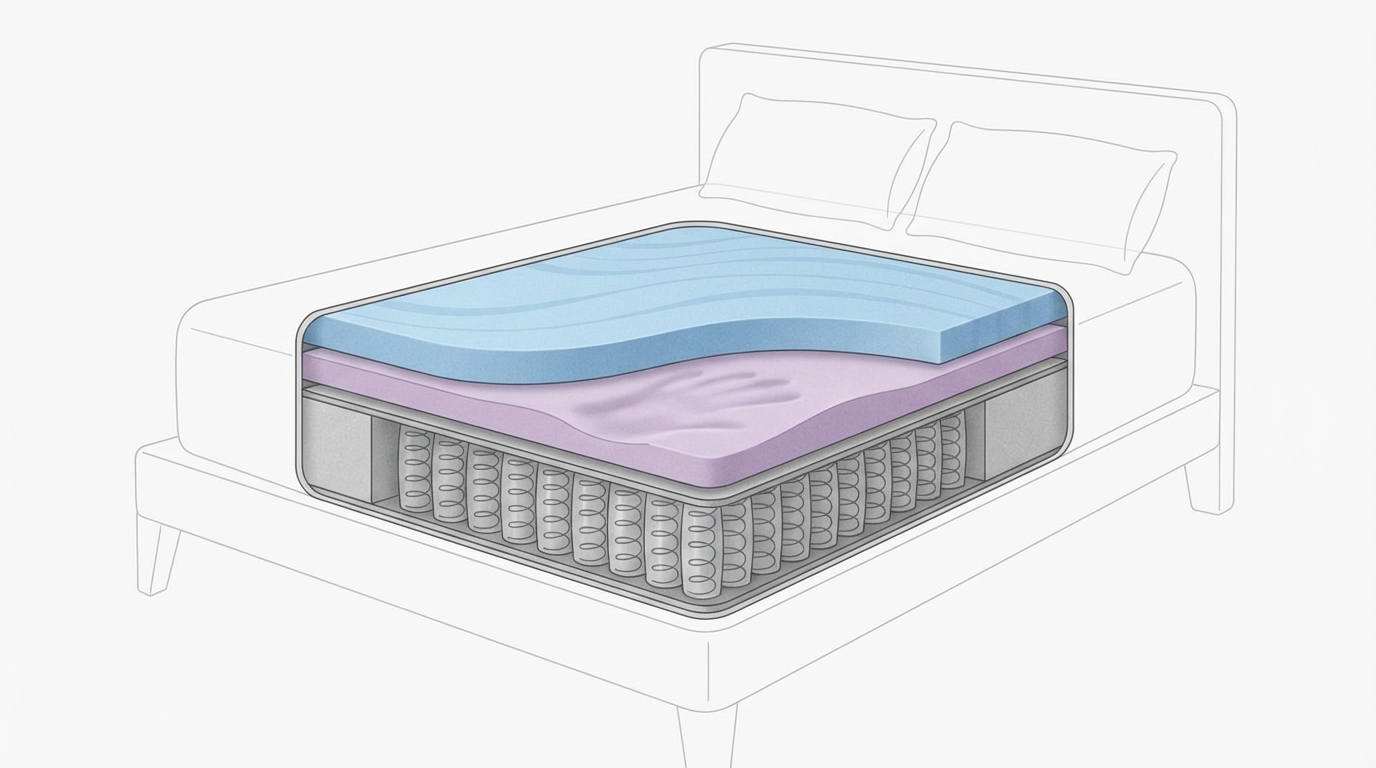
Thinking about who will actually be sleeping on the mattress is just as important as thinking about room size. A queen can be a fantastic fit for a wide range of sleeper profiles, especially if you match it thoughtfully with the right construction and firmness. Getting the size right is half the equation, getting the feel right is the other half.
For solo adults, a queen is often the ideal blend of comfort and practicality. It gives enough room to stretch fully in any direction and change positions during the night without worrying about running out of space. If you are someone who likes to read in bed, share the surface with a pet, or simply enjoy the feeling of extra room, the queen size gives you that without demanding a huge bedroom. Many of my clients who work from home and use their bedroom as a semi retreat appreciate that a queen lets them relax without turning the whole space into an oversized bed area.
For back sleepers in particular, pairing a queen footprint with the right support system can be transformative. Back sleepers often do well on medium to medium firm options that keep the spine aligned and prevent the hips from sinking too deeply. A model from our curated Best Mattresses For Back Sleepers collection in a queen size gives enough surface area to shift and adjust your legs or arms without having to worry about crowding an edge.
Side sleepers, who typically need more contouring around the shoulders and hips, may prefer a slightly softer feel to remove pressure in those key areas. In a queen size, that softer surface still gives you room to draw your top leg up or extend it without feeling boxed in. This is where body pillows can also shine. A long support like The BodyPillow by Tempur-Pedic on a queen bed can support your knees and ankles while still leaving plenty of space for you to move during the night.
Stomach and combination sleepers should pay attention both to space and to firmness. If you tend to rotate between your back, side, and stomach, having the extra width of a queen over a full can reduce the sense of “falling off” when you roll from one side to the other. At the same time, health organizations like Mayo Clinic remind stomach sleepers to be especially mindful of lower back stress, since this position naturally pulls the spine into more extension. Choosing a queen mattress that stays supportive across its surface, not just in the center, helps keep your spine more neutral, even when you travel closer to the edges in certain positions.
Sleep Habits, Height, And Body Size
Beyond simple “back, side, or stomach,” your nightly habits and body type influence how comfortable a queen will feel over time. Taller sleepers need to consider length first. At 80 inches long, a queen works well for most people up to about 6 feet 2 inches tall. If you are significantly taller, you may find your feet brushing the end of the bed unless you sleep slightly diagonal. In those cases, some people still prefer a queen and accept the diagonal positioning, while others move to a California king for a more straightforward fit.
Body weight and build matter too because they determine how much you use the surface area at any given time. Heavier sleepers or those with broader shoulders and hips may prefer the additional width of a king for pressure distribution. However, if your room or budget points clearly toward a queen, this is where mattress quality really matters. A well constructed queen with strong edge support and robust internal materials can maintain its support and comfort far better than a larger but lower quality mattress.
Couples with very different body sizes or firmness preferences sometimes do better with a split queen or with specific zoning within the mattress. While split configurations are more common in king sizes, a queen paired with an adjustable base or customized pillows can still accommodate many differences. For example, one partner might use a slightly higher loft pillow to support broader shoulders while the other uses a flatter profile pillow, both on the same queen mattress.
The bottom line is that “Is a queen big enough?” is not just a math question. It is a lifestyle and body question. When you take a few minutes to think about how tall you are, how far your arms and legs tend to extend, and whether you like to sleep curled up or stretched out, the answer becomes much clearer.
Queen Mattress Size, Room Function, And Layout
Bedrooms are not only for sleeping. For many people, they double as reading nooks, home offices, or mini living rooms. The role your bedroom plays in your daily life affects how much space a queen mattress can realistically claim without making the room feel one dimensional or cramped.
If your bedroom is primarily a sleep space with minimal additional furniture, a queen will often feel just right in the typical 10 by 10 to 12 by 12 foot range. You can center the bed on one wall, place two modest nightstands, and still have enough walking space and visual balance. In these rooms, a queen often gives the whole space a feeling of comfort and proportion, avoiding the “tiny bed floating in the middle” issue that can happen with a twin or full in a larger room.
If your bedroom doubles as a home office or workout space, the calculation shifts. You might need to accommodate a desk, chair, and perhaps some shelving. In that case, a queen can still work, but you may need to be more strategic about layout. Placing the bed in a corner rather than centered can free up more floor area, at the cost of one partner having less direct access to their side. That is often an acceptable compromise for solo sleepers, and sometimes for couples where one partner does not mind climbing in from the foot of the bed.
Guest rooms offer another interesting case. A queen is often the best all purpose choice because it works for individual guests and couples alike. It signals hospitality without assuming everyone who stays will be a couple. If your guest room is modest in size, you might choose a slightly lower profile queen mattress and a compact frame to keep the room feeling multi functional. For example, a versatile medium feel queen mattress combined with a slimmer platform frame can give guests a comfortable stay while leaving enough space for a pull out desk or reading chair.
Whatever your situation, remember that the mattress size sets the anchor for the whole room. Once you commit to a 60 by 80 footprint, everything else needs to play nicely with that rectangle. Taking a moment to imagine where hamper, chair, and even laundry baskets will live can prevent you from feeling hemmed in once the bed arrives.
Queen Mattress And Bed Height: Getting In And Out Comfortably
We have already touched on mattress thickness, but it deserves more attention because it interacts directly with size and room feel. The total height of your sleep surface matters more than most people realize, especially for older adults, people with joint issues, or anyone who simply wants getting in and out of bed to feel easy instead of like a mini workout.
Total bed height is the sum of your frame, foundation or adjustable base, and mattress. For many adults, a total height of about 24 to 26 inches from the floor to the top of the mattress feels most natural. At that height, when you sit on the edge, your feet rest flat on the floor and your knees are close to 90 degrees, which places less strain on hips and knees. Some health resources suggest that if you find your feet dangling or your knees significantly above your hips when sitting, you may want to adjust the bed height for comfort and safety.
For example, if you choose a plush queen mattress with a 14 inch profile and place it on a 9 inch traditional box spring on a 7 inch frame, your total bed height will be about 30 inches. That might look elegant in a large room, but for a shorter person or someone with mobility challenges, it can feel too tall. In those cases, using a low profile foundation like the Sealy Mattress Base Boxspring Foundation | Low Profile 5-inch height under your queen mattress can make a significant ergonomic difference while keeping all the benefits of the queen footprint.
On the other side, very low platform frames combined with thinner mattresses can sit too close to the floor, making it harder for some people to stand up. When you are evaluating queen mattresses in a showroom or online, look not only at the surface dimensions but also at how that thickness will work with the base you plan to use. A queen is supposed to make your sleep feel more spacious, not make your movements to and from bed more difficult.
Comparison Table: Queen Versus Other Common Mattress Sizes
To pull all of these details together, it can help to see queen dimensions side by side with a few other common options. This table focuses on surface size, typical bedroom fit, and best use cases.
| Mattress Size | Dimensions (W x L) | Typical Minimum Room Size | Best For |
|---|---|---|---|
| Twin | 38" x 75" | 7' x 10' | Kids, teens, narrow guest rooms, bunk beds |
| Full | 54" x 75" | 9' x 10' | Solo adults who want more space than a twin, smaller primary bedrooms or guest rooms |
| Queen | 60" x 80" | 10' x 10' | Most couples, solo sleepers who like extra room, versatile guest rooms |
| King | 76" x 80" | 12' x 12' | Couples who want maximum personal space, families who co sleep with kids or pets |
When you read across this table, the queen stands out as the size that best balances versatility and space demands. It fits in the majority of standard bedrooms while still accommodating one or two sleepers comfortably. That is a big part of why queen mattresses continue to hold their spot as the most popular size in across many mattress retailers.
Bedding, Accessories, And A Queen Mattress
Once you commit to a queen, the rest of your sleep setup needs to match the size. Sheets that are too small will pop off the corners. Comforters that are too short will leave cold toes, and protectors that do not fit properly will bunch uncomfortably. Fortunately, queen sized bedding is extremely common, so you will have many options at different price points and material types.
Standard fitted queen sheets are designed around the 60 by 80 inch footprint, with pocket depths that can accommodate various mattress thicknesses. When you are shopping, pay attention to both the stated pocket depth and your mattress thickness. If your queen mattress is on the taller side, you may want deep pocket queen sheets, often labeled for 14 to 18 inch mattresses. A high quality set such as the Tempur-Pedic TEMPUR Adapt Luxe Egyptian Cotton Sheet Set in queen size can provide a snug fit that stays in place while adding a soft, breathable feel that complements your mattress choice.
For comforters and duvets, queen sizes typically run wider and longer than the mattress itself, sometimes overlapping into king territory depending on the brand. That extra drape is intentional, giving you coverage when you move and a more finished look on the bed. If you are a cold sleeper, layering with a breathable but insulating set of sheets and a properly sized queen comforter helps you maintain a steady body temperature, which organizations like the Sleep Foundation identify as a key factor in sleep quality.
Mattress protectors are another critical accessory that should be sized correctly. A good, waterproof yet breathable protector sized for a queen will guard against spills, sweat, and dust mites without changing the feel of your mattress. This is particularly important given that most mattresses are expected to last close to a decade. Adding a quality topper for extra comfort, such as the queen compatible Tempur-Pedic Mattress Topper – Pillow Travel and Guest Bundle style products for supplementary cushioning, can tweak the surface feel without altering the underlying 60 by 80 dimensions.
Finally, pillows and additional support items pair differently with a queen than with smaller sizes simply because you have more lateral space. Many people enjoy using two standard or queen size pillows side by side on a queen bed, and some add a long body pillow to support alignment. The key is to think of your queen mattress as a platform that supports an integrated system of mattress, protector, sheets, blankets, and pillows that all work together at the same size.
One Strategic Checklist For Queen Size Success
To pull a lot of this information into something you can act on, it helps to have a quick checklist to run through before or during your purchase decision. Use this as a final pass to make sure a queen truly fits your life.
- Measure your bedroom and confirm you can place a 60" x 80" bed with at least 24" of walking space on the usable sides
- Note door swings, closet access, windows, and outlets that might conflict with bed placement
- Consider who will sleep on the bed, how tall they are, and whether they tend to sprawl or curl
- Decide if your bedroom will serve additional functions like office or workout space and plan layout accordingly
- Calculate total bed height by adding frame, foundation, and mattress thickness to ensure comfortable entry and exit
- Confirm that your existing or chosen frame is designed to support a queen mattress properly, including center support
- Budget for queen sized sheets, protector, and comforter so the whole system works together from day one
Once you have checked through these items, you will have done more homework than most mattress shoppers ever do. That preparation directly translates into better satisfaction once your queen mattress is in place.
How A Queen Mattress Supports Long Term Sleep Health
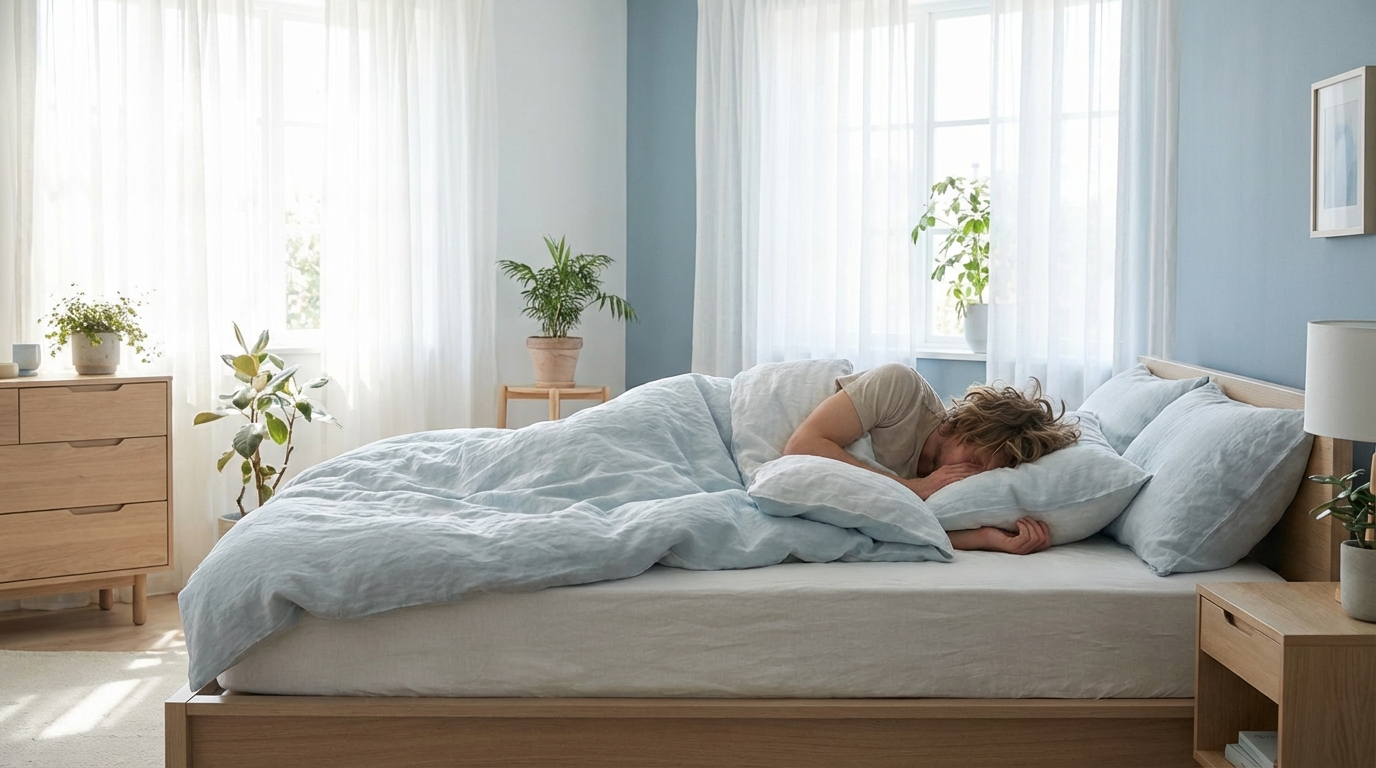
A mattress is not just a piece of furniture. It is an important part of your long term health routine. Sleep research consistently shows that both how long you sleep and how well you sleep affect everything from cognitive function and mood to blood pressure and immune strength. According to the Sleep Foundation, most adults need 7 to 9 hours of sleep per night, and regular shortfalls can contribute to daytime sleepiness, irritability, and higher risk for chronic conditions.
Mattress size might seem like a small detail in that bigger health picture, but it has very practical ripple effects. If you are constantly waking because you do not have enough room to change positions, or because your partner’s movements jostle you on a too small surface, your brain spends more time in lighter sleep stages and less time in the deep, restorative phases that repair tissues and consolidate memories. Over months and years, that pattern can leave you feeling chronically “tired but wired.”
A queen mattress can be an effective corrective step, especially when you are upgrading from a twin or full. Moving to a 60 by 80 surface increases your ability to find and maintain comfortable positions that reduce pressure points. Mayo Clinic and other medical organizations emphasize that people with joint issues, arthritis, or back pain often sleep better when they can adjust positions freely without bumping into a partner or sliding off an edge. In other words, having enough personal space plays a quiet but steady role in pain management and sleep continuity.
From a stress and mental health perspective, a queen can also contribute to a bedroom that feels more like a retreat. When you have a mattress that fits your room proportionally and supports your sleep posture well, your brain receives subtle environmental cues that this is a place for rest. That positive association can be part of a healthy bedtime routine, especially when paired with habits like reducing screen time and keeping a consistent wind down period.
None of this replaces medical care when you are dealing with serious sleep disorders or pain conditions, of course. But if you suspect your current bed is crowding you or leaving you and your partner tangled and restless, moving to a well chosen queen mattress and supportive setup can be a meaningful piece of your overall sleep health strategy.
Conclusion: Is A Queen Mattress The Right Size For You?
By now, “How big is a queen mattress?” should feel like more than just a trivia question. You know that a queen measures 60 inches by 80 inches, typically with a 10 to 14 inch profile, and that it usually lives most comfortably in bedrooms of about 10 by 10 feet or larger. You have seen how that size compares with twin, full, and king options, and how it can support everything from solo sleep to most couples’ needs when paired with the right frame and bedding.
More importantly, you have walked through how a queen fits into real life. You have considered your room’s layout, your height and build, your sleep position, and how your bedroom functions beyond sleep. You have seen how a queen interacts with accessories like low profile foundations, adjustable bases, and quality queen sized sheets and protectors. That fuller picture helps you move from “I think a queen is standard” to “I understand exactly why a queen does or does not make sense for me right now.”
If you are leaning toward a queen, the next step is to match that size with a specific mattress that fits your body, preferences, and budget. Exploring options like the Sealy Posturepedic Plus Medium Mattress – Paterson II Euro Pillow Top or other curated models at Sleepology can help you translate your new size knowledge into a complete sleep system. And if you are still unsure, that is perfectly normal. A quick conversation with a Sleepology expert can bring your measurements and questions together into a personalized recommendation.
Above all, remember that this is an investment in your daily well being for many years. When you respect both the numbers and your lived experience, the decision about whether a queen is right for you becomes much clearer. You deserve a sleep space that feels just right, and getting the size dialed in is a powerful place to start.
Frequently Asked Questions
How big is a queen mattress in inches and feet?
A standard queen mattress in the United States measures 60 inches wide by 80 inches long. In feet, that is 5 feet wide and about 6.7 feet long. Those dimensions refer to the usable sleep surface of the mattress itself, not including any frame, headboard, or footboard. Thickness can vary, typically from about 8 to 16 inches depending on design and materials, but the 60 by 80 footprint is the consistent standard most frames and bedding are built around.
What is the minimum room size for a queen mattress?
Most people find that a bedroom of at least 10 by 10 feet works well for a queen mattress, especially if you want space for two nightstands and a dresser. That size allows for the 60 by 80 mattress plus at least 2 feet of walking space on the sides and at the foot in common layouts. In slightly smaller rooms, a queen can still fit, but you may need to sacrifice one nightstand, push the bed against a wall, or reduce other furniture. If your room is closer to 12 by 12 feet or larger, a queen typically feels well proportioned and leaves plenty of room to move around.
Is a queen mattress big enough for two people to sleep comfortably?
For many couples, yes, a queen is big enough to sleep comfortably. Each person gets about 30 inches of personal width, which is slightly less than the full width of a twin bed but often adequate when partners sleep relatively close together. Comfort depends on your body sizes, sleep positions, and how much you move at night. Couples who are taller, broader, or who co sleep with children or pets sometimes prefer a king for the extra 16 inches of width, while others find a queen offers a good balance between comfort and room space.
How does a queen mattress compare to a full and a king?
A full mattress is about 54 by 75 inches, while a queen is 60 by 80 inches. That means a queen is 6 inches wider and 5 inches longer than a full, which makes a noticeable difference for both solo sleepers and couples. Compared to a king at 76 by 80 inches, a queen has the same length but is 16 inches narrower. So a queen falls squarely in the middle: significantly roomier than a full, more compact and easier to fit into average bedrooms than a king, but not as expansive for couples who want maximum space.
Do queen mattresses come in different variations like Olympic queen or California queen?
Yes, there are a few non standard queen variations. An Olympic queen typically measures around 66 by 80 inches, making it 6 inches wider than a standard queen for extra shoulder and elbow space. A California queen often measures 60 by 84 inches, adding 4 inches of length for taller sleepers while keeping the standard queen width. There are also split queens, which use two 30 by 80 inch mattresses side by side on a compatible base. These variations are less common than standard queens, and bedding or frames can be harder to find, so most shoppers opt for the traditional 60 by 80 size unless they have a specific need.
What bed height should I aim for with a queen mattress?
For most adults, a total bed height between 24 and 26 inches from the floor to the top of the mattress is comfortable. At that height, when you sit on the edge, your feet can rest flat on the floor and your knees are roughly at a 90 degree angle. To get there with a queen mattress, add the height of your frame, foundation or adjustable base, and mattress thickness. If the total is much higher than that range, a low profile foundation can bring the bed down. If it is much lower, a higher frame or thicker mattress can raise the sleep surface to a more ergonomic height.
Do I need special sheets or bedding for a queen size mattress?
You do not need anything unusual, but you do need queen specific bedding. Fitted sheets, protectors, and quilts or comforters should all be labeled for queen size and designed to fit the 60 by 80 inch footprint. The main extra step is matching pocket depth on fitted sheets and protectors to your mattress thickness, especially if your queen mattress is on the thicker, more luxurious side. High quality options like the TEMPUR Breeze Cooling Sheet Set or the Tempur-Pedic TEMPUR Adapt Luxe Egyptian Cotton Sheet Set in queen size are designed to hug the corners securely and enhance comfort without shifting during the night.