

How Big Is A King Size Mattress? A Real‑World Guide To Space, Comfort, And Fit
If you are trying to picture whether a king size mattress will actually fit in your bedroom, you are not alone. Many people know a king is “the big one,” but they are less sure what that means in real life. Will the frame overwhelm the room, will there be space for nightstands, and will your partner finally stop sleeping on your side of the bed?
These questions matter more than they seem at first glance. The right mattress size affects how well you sleep, how your body feels during the day, and how comfortable your bedroom is to live in. According to the Sleep Foundation, adults who get enough high quality sleep report better mood, focus, and long term health, and mattress size and comfort are important contributors to that quality. When your bed is cramped, every toss, turn, and midnight dog jump becomes a bigger event than it should be.
Here, you will get a clear answer to “How big is a king size mattress,” but you will also see how that size plays out in everyday life. You will learn how much room each person really gets on a king, how it compares to queen and California king, what room size you need, and how your sleep style and body size should guide your choice. Along the way, you will see how specific mattresses and bases from Sleepology can help you build a setup that fits your space and your body.
Most importantly, you will walk away able to look at your bedroom, grab a tape measure, and make a confident decision about whether a king mattress is truly right for you or whether another size will serve you better.
The Straight Answer: How Big Is A King Size Mattress?
A standard king size mattress in the United States measures 76 inches wide and 80 inches long. In simple terms, that is a little over 6 feet wide and 6 feet 8 inches long. If you lay two adult shoulders side by side across the width, a king gives most couples noticeably more elbow room than a queen.
To put that in perspective, a queen mattress is 60 inches wide and 80 inches long. The length is identical, but a king adds 16 extra inches in width. That extra width is where the comfort difference shows up. In a king, each person effectively has the same width as a twin mattress, about 38 inches per sleeper, which is one reason families and pet parents often migrate to this size once they experience it.
The footprint matters for your room as well as your body. A 76 by 80 inch mattress covers about 42.2 square feet of floor space. When you place that in a room, you also need to account for the frame, headboard, and walking paths around the bed. The Cleveland Clinic often reminds patients that sleep quality is affected not only by the mattress but by the entire sleep environment. If your bed dominates the space so much that you must sidestep around it, the room can feel more stressful than restful.
So when you hear “king size,” think about two things: the generous shoulder room across the width and the very real chunk of floor space it occupies. If you keep both in mind from the start, you are less likely to end up with buyer’s remorse.
“We upgraded from a queen to a king after Mia walked us through the actual measurements. Seeing that each of us would get twin like space was the lightbulb moment. Our Sealy Posturepedic Medium Mattress – Medina II fits perfectly and we finally stopped elbowing each other all night.” – Rachel T., November
King Vs Other Sizes: How Much Bigger Is It Really?
Many shoppers know the numbers but still struggle to visualize the difference between a king and other common sizes. Numbers on paper do not always translate into how the room will feel at midnight when everyone is actually in bed.
King Vs Queen: A Surprisingly Big Leap
As noted, a queen is 60 by 80 inches, while a king is 76 by 80. That 16 inch difference in width is the main reason couples switch to a king. On a queen, each person gets about 30 inches of personal space. On a king, each person gets 38 inches. Eight extra inches per person sounds small until you realize that is more than the width of a sheet of printer paper on each side of your body.
For couples who like to sprawl, sleep with a large dog, or have kids wander in overnight, that extra width makes it easier for everyone to stay on the mattress without hugging the edge. The Mayo Clinic notes that frequent awakenings and disturbed sleep, often caused by partner movement, are common drivers of daytime fatigue. A larger mattress does not guarantee perfect sleep, but it can lower the chances that normal movement will wake you up.
At the same time, a king looks and feels significantly larger in a small bedroom. Where a queen can work in a 10 by 10 foot room, a king usually feels best in a room that is at least 12 by 12 feet, especially if you want full sized nightstands on both sides. If your room is narrow, you may find a queen plus good pillows and a supportive mattress gives you a better overall experience than squeezing in a king just for bragging rights.
King Vs California King: Wider Or Longer Space
A lot of confusion comes from the assumption that a California king is simply “bigger.” In reality, it is just shaped differently. A California king usually measures 72 inches wide and 84 inches long. That makes it 4 inches narrower than a standard king, but 4 inches longer. The total surface area is actually slightly smaller than a standard king.
The main benefit of a California king is foot room, not overall size. Taller sleepers, especially those over about 6 feet 3 inches, may prefer the 84 inch length so their feet stay comfortably on the mattress. For couples with average height who like to spread out shoulder to shoulder or share the bed with kids, the extra width of a standard king often feels better.
Room shape matters here too. In a long, narrow bedroom, a California king can visually fit better than a standard king, because the slightly reduced width leaves more walking space at the sides. In a more square room, the standard king often looks more balanced and fills the space nicely without feeling cramped.
King Vs Split King: Same Size, More Flexibility
Another option that comes up often at Sleepology is the split king. A split king is two Twin XL mattresses, each 38 by 80 inches, placed side by side on a king compatible base. Together, they create the same 76 by 80 inch footprint as a one piece king mattress.
The key difference is control and motion isolation. On an adjustable base like an adjustable bed frame and base, a split king lets each partner raise or lower their side independently. If one of you watches TV sitting up or needs their head elevated for reflux or snoring, while the other prefers to lie flat, a split king solves that conflict without forcing anyone to compromise.
Split king setups also work well when partners have very different firmness preferences. One person can choose a firmer model such as the Sealy Posturepedic Firm Mattress – Medina II, while the other chooses a softer option like the Sealy Posturepedic Elite Soft Hybrid Mattress – Brenham II. The Sleep Foundation notes that individual comfort and spinal alignment are critical to reducing pressure points and back pain, so honoring each person’s needs can make a real difference.
“We were stuck between a king and a split king until Mia explained that the actual floor space is identical. Going with two Twin XLs on an adjustable base let my husband keep his side firmer and elevated for his snoring, while I stayed flat on a plusher top. We both sleep better than we have in 20 years.” – Jason L., October
How Much Room Does Each Sleeper Really Get On A King?

When you are standing in a showroom or scrolling online, it is easy to think in terms of the mattress as a single rectangle. At night, it is much more about personal space: how much room you actually have to move, roll, and change positions without bumping into someone or something.
On a standard king, the 76 inch width divided by two sleepers gives each person 38 inches of space. That is nearly identical to a standard twin, which is usually 38 inches wide. In practice, a king is like having two separate twin beds pushed together, yet still sharing the same sleep surface.
For many couples, that twin like personal space is the turning point. If you have ever slept on a twin and noticed how comfortable it feels for one person, imagine each of you having that, but with the emotional connection of sharing a bed. This is especially valuable if one partner is larger, runs hot, or moves often throughout the night.
Sleep position also changes how this space feels. Side sleepers typically need the most width, because their knees and arms tend to drift forward and back. Stomach sleepers often splay their legs and arms wider than they realize. Back sleepers are usually the most compact, but even they can end up diagonally across the bed at 3 a.m. when the dog has claimed the lower corner.
Room for movement matters for sleep health. Research cited by organizations like the American Academy of Sleep Medicine indicates that micro awakenings, the tiny wake ups you may not remember in the morning, are often triggered by discomfort or external disturbance. A mattress that allows each person to move without constant contact can quietly reduce these disruptions.
If you are evaluating whether a king feels excessive, picture yourself lying on a twin. If that amount of width feels right for just you, and you currently share a queen, upgrading to a king is often less of a luxury and more of a sensible step.
Will A King Size Mattress Fit In My Room?
Knowing the exact size of a king mattress is only half the story. The other half is how it interacts with your walls, doors, furniture, and daily life. A bed that technically fits can still feel wrong if it leaves no space for movement.
Recommended Room Dimensions For A King
Most designers and sleep experts agree that a king mattress feels most comfortable in a bedroom that is at least 12 feet by 12 feet. This allows you to center the bed on a wall, add side tables, and still have about 2 to 3 feet of walking space around the sides and foot.
If your room is slightly smaller, you may still make a king work by making careful choices about furniture scale. For example, slim nightstands, a wall mounted sconce instead of a bulky lamp, or a narrower dresser can all help the room breathe. The key is avoiding a setup where you must turn sideways to reach your closet or squeeze past the foot of the bed.
It is also important to consider the path into the room. King mattresses do not bend, and many older homes have tight stairwells, sharp turns, or low ceilings. Some people choose a split foundation, such as a pair of Sealy mattress base boxspring foundations, precisely because they are easier to maneuver into older homes. If you have any doubts, measure door widths and stair landings before you order.
Mapping Your Space Before You Buy
A simple way to visualize a king in your room is to use painter’s tape on the floor. Measure out a 76 by 80 inch rectangle where you think the bed should go, then live with that outline for a few days. Walk around it, open doors, and imagine where nightstands and lamps would sit.
Doing this will quickly reveal issues such as a closet door that barely opens, a window partially blocked by a headboard, or a tight pinch point near the entrance. It will also settle any lingering question of whether the bed will feel “too big.” Some people find the taped outline reassuring, while others realize a queen truly is a better fit for their lifestyle.
If you are close to the margin on space, mattress height is another consideration. A tall mattress plus a tall foundation can raise the sleep surface significantly, which can visually dominate a small room and make getting in and out of bed harder, especially for shorter sleepers. Foundations like the Sealy Mattress Base Boxspring Foundation | Standard 9 inch height can be paired with different bed frames to fine tune your final height.
“Our bedroom is just shy of 12 by 12, so I was nervous a king would overwhelm it. Mia had us tape out the dimensions at home. Once we walked around it, we saw that a slightly slimmer nightstand on one side would solve everything. The room still feels open and the new Sealy Posturepedic Pro Medium Mattress – Dupont II Euro Pillow Top looks like it was meant to be there.” – Elena M., January
King, Queen, And California King: A Quick Size Comparison
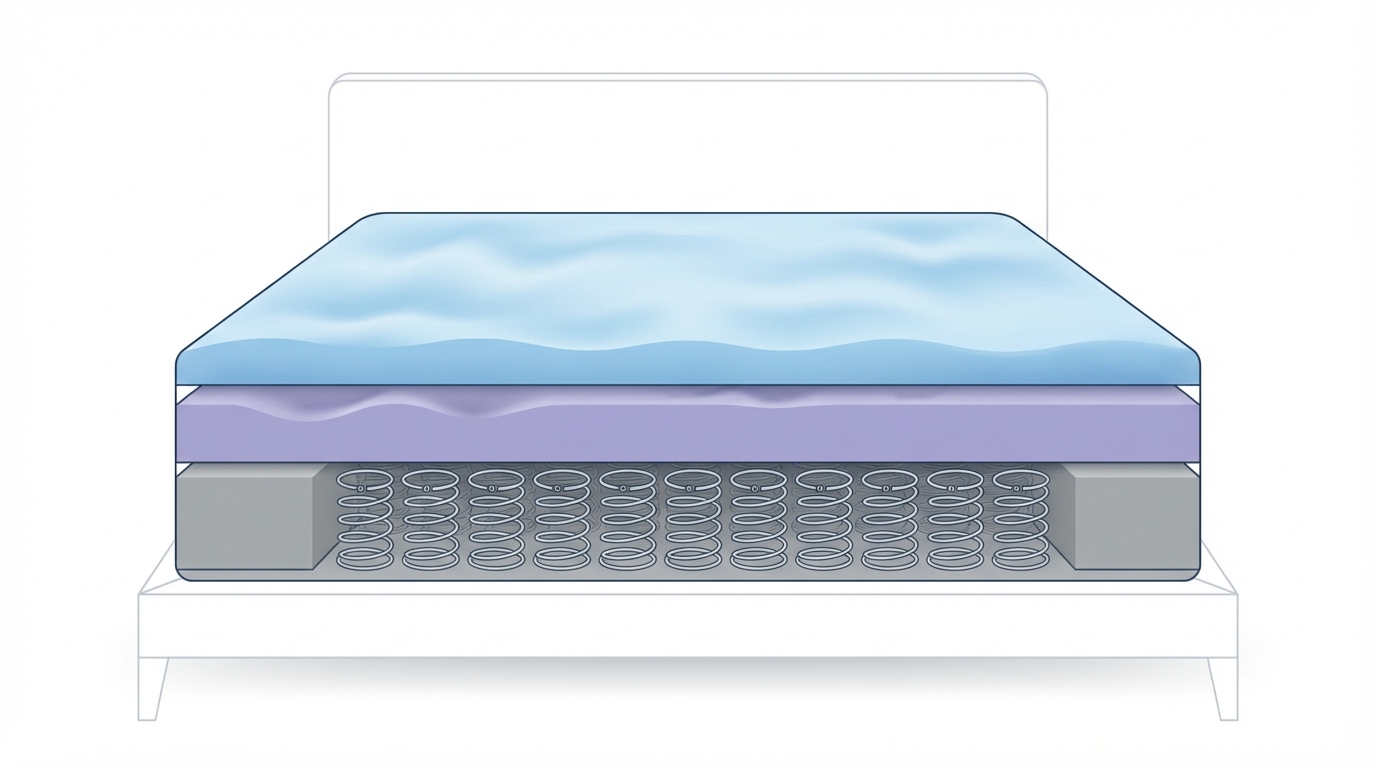
When you are choosing a mattress size, it helps to compare the most common options side by side. Below is a simple table that focuses specifically on king, queen, and California king, since that is where many shoppers are deciding.
| Mattress Size | Dimensions (W x L) | Best For | Typical Minimum Room Size |
|---|---|---|---|
| Queen | 60" x 80" | Most couples, single sleepers who like extra room | 10' x 10' |
| King | 76" x 80" | Couples who want maximum width, families with pets or kids | 12' x 12' |
| California King | 72" x 84" | Tall sleepers who need extra legroom, long narrow rooms | 12' x 12' |
This side by side view highlights a few key truths. First, queens and kings share the same length, so if your concern is legroom rather than width, you may want to consider mattress type and support more than size. Second, California kings are not automatically “bigger.” They simply trade 4 inches of width for 4 inches of length.
Your best choice will depend on your body, your partner, your room, and how you actually sleep. Once you are clear on those factors, the numbers in the table tend to point toward the right answer fairly quickly.
How Your Body Size And Sleep Style Affect King Mattress Comfort
Knowing that a king size mattress is large is one thing. Knowing whether it is the right size for your specific body and sleep habits is another. Two people of the same height can have very different experiences on the same mattress based on how they like to sleep.
Height, Build, And Personal Space
Taller sleepers, generally those over 6 feet 2 inches, often feel most comfortable on mattresses that are at least 80 inches long. This includes queen, king, and Twin XL. Very tall sleepers, approaching or exceeding 6 feet 6 inches, may feel cramped unless they move to a California king with its 84 inch length. The Sleep Foundation notes that feet hanging off the end of the bed can contribute to poor circulation and discomfort, especially in people with vascular issues.
Body build also influences how much width feels comfortable. Broader shoulders, wider hips, or a naturally larger frame all require more room to change positions without feeling confined. In a queen, two larger adults who both sleep on their sides may end up touching much of the night. In a king, they have the option to move without constant contact, which can lead to cooler, more restful sleep.
At the same time, not every couple needs a king. Smaller framed partners who like to snuggle or sleep in close contact may be perfectly happy in a queen, especially in a smaller room. In those cases, investing in a supportive mattress such as the Sealy Posturepedic Elite Soft Hybrid Mattress – Brenham II can deliver greater comfort without the extra width.
Sleep Position And Motion Sensitivity
Your primary sleep position is another piece of the decision. Side sleepers often benefit from more surface area because they tend to curl, extend, and change positions more frequently. Combination sleepers, who move between side, back, and stomach during the night, similarly benefit from extra width so they can roll without encountering an edge.
Back sleepers, especially those who stay relatively still, may not fully use the extra width of a king. In that case, a queen may offer enough space, as long as it provides proper support for spinal alignment. If you are a back sleeper shopping for comfort, exploring options from Sleepology’s curated best mattresses for back sleepers collection can be more beneficial than automatically jumping to the largest size.
Motion sensitivity also plays a role. If you are easily disturbed by your partner’s movements, the combination of a larger surface and a mattress that isolates motion can be a game changer. Hybrid and memory foam models, such as the Sealy Posturepedic Pro Soft Mattress – Dupont II Euro Pillow Top, often excel here. According to Consumer Reports testing, many modern hybrids outperform traditional innerspring designs for motion isolation, which means you can combine the physical space of a king with technology that keeps that space peaceful.
For stomach sleepers, support is more critical than size, but width can still help. Stomach sleeping tends to put pressure on the lower back and neck. The right mattress from a focused collection like the best mattresses for stomach sleepers will do more to protect your spine than a few extra inches of width, though both matter when you are trying to create an ideal setup.
What About Bedding, Foundations, And Accessories For A King?
Choosing a king is not just about the mattress itself. It also affects every accessory you buy, from sheets and protectors to bed frames and pillows. Planning for these details early will help you avoid surprises on price and fit.
Foundations And Frames
A king mattress needs consistent support underneath to perform well and last. That usually means either a solid platform frame, a supportive slatted base with appropriate spacing, or a quality boxspring or foundation. Many shoppers prefer the look and feel of a traditional set, pairing the mattress with a foundation like the Sealy Mattress Base Boxspring Foundation | Standard 9 inch height. This type of foundation works with a wide range of king frames and helps raise the mattress to a comfortable sitting height.
If you are interested in zero gravity positions, anti snore settings, or adjusting your head and feet independently, pairing a king mattress with an adjustable bed frame and base may be worth exploring. Research highlighted by organizations such as the American Academy of Sleep Medicine suggests that elevating the head of the bed can provide relief for some people with snoring or mild sleep apnea, although it is not a medical treatment. An adjustable base gives you more tools to find a comfortable sleep posture.
Remember that king foundations are often split into two pieces for easier delivery, even when the mattress itself is one piece. This usually does not affect feel, but it can make navigating staircases or tight corners much simpler.
Sheets, Protectors, And Pillows
King size bedding costs slightly more than queen size, and you will want to budget for that if you are upgrading. Deep pocket fitted sheets are particularly important if you choose a plush or pillow top king mattress, because many modern models are taller than older designs.
A breathable, waterproof mattress protector is a smart investment for any size, but especially for a king, given the higher mattress cost and the number of years you plan to keep it. Sleepology offers options within our pillows, sheets, toppers, and protectors collection that are designed to fit king mattresses snugly without trapping heat. Protectors help guard against spills, sweat, and allergens, extending the life of your mattress.
Pillows also play into overall comfort and spinal alignment. While pillow size is more about shoulder width and sleep position than mattress size, many people enjoy the look and feel of king pillows on a king bed. Specialty pillows, such as The BodyPillow by Tempur-Pedic, can be helpful if you are a side sleeper who wants full body support across a larger surface. For travel or guest situations, compact options like the Tempur-Pedic Mattress Topper – Pillow Travel and Guest Bundle let you carry some of that comfort with you.
Caring for a king setup is similar to any mattress, but the larger surface area means rotating the mattress, washing bedding, and changing protectors can take a bit more time. Building a simple routine, such as rotating the mattress seasonally, washing sheets weekly, and laundering the protector monthly, goes a long way toward keeping the sleep surface fresh.
A Simple Checklist Before You Commit To A King
Once you know the size of a king mattress and how it compares to other options, it can be helpful to run through a quick checklist before you buy. This helps translate all the information into a real decision. Use a tape measure and a few minutes of honest reflection to walk through each point.
First, confirm your room dimensions. Measure wall to wall, then subtract the 76 by 80 inch footprint of a king plus at least 24 to 36 inches of clearance on the sides you need to walk. If the numbers do not work without serious compromises, a queen may be more appropriate.
Next, consider who regularly sleeps in the bed. Is it just you, you and a partner, or a whole family including kids and pets? The more bodies and movement you have, the more value you are likely to find in the extra width of a king. If you or your partner often escape to the couch for more space, that is a strong signal a larger mattress could help.
Finally, think through your total budget, not just the mattress price. Factor in a frame or foundation, sheets, a protector, and any new pillows you might need. Giant mattresses in undersupported frames or covered in ill fitting sheets rarely feel as good as they should, so planning for the whole system gives you the best chance of truly better sleep.
Conclusion: Is A King Size Mattress Right For You?
Now that you know a king size mattress is 76 by 80 inches, you can see that the real question is not just “How big is it,” but “How will this size change my sleep and my space.” A king gives each sleeper twin like personal width, room for kids or pets to join, and a generous surface that encourages deeper, less disturbed rest. For many couples, especially in primary bedrooms that are at least 12 by 12 feet, that combination feels life changing in the best way.
At the same time, a king affects every part of your bedroom, from how doors swing and lamps sit to how easily you can make the bed. Choosing the right mattress within that size, whether a supportive model like the Sealy Posturepedic Medium Mattress – Medina II or a plush hybrid from our curated collections, is just as important as the dimensions themselves. When size and support work together, you get both comfort and healthy alignment, and your bedroom becomes a place you genuinely look forward to at the end of the day.
If you are still unsure, that is completely normal. Mattress sizing is a big decision, not just a measurement on a tag. A Sleepology sleepologist can walk through your room layout, body type, sleep preferences, and budget, then help you compare real world options. Whether you ultimately choose a queen, king, or split king, the goal is simple: a bed that fits your space, honors your body, and supports the kind of deep, restorative sleep that makes everything else in life easier.
Frequently Asked Questions
How big is a king size mattress compared to a queen?
A standard king mattress measures 76 inches wide by 80 inches long, while a queen measures 60 inches wide by 80 inches long. That means a king is the same length as a queen but 16 inches wider. When two people share the bed, that translates into about 8 extra inches of personal space per person, which can make a noticeable difference for couples who feel cramped on a queen or who share the bed with kids or pets.
Is a king size mattress too big for a 12 by 12 bedroom?
In most cases, a 12 by 12 foot bedroom is a good size for a king mattress. You will usually be able to center the bed on a wall, place nightstands on both sides, and maintain at least 2 to 3 feet of walking space around the bed. The exact feel depends on your other furniture and the placement of doors and windows, which is why using painter’s tape to outline a 76 by 80 inch rectangle on your floor is such a helpful visualization step.
Do I need a special foundation for a king size mattress?
You do not necessarily need a special foundation, but you do need one that can properly support the weight and dimensions of a king. Many people pair their mattress with a sturdy boxspring or foundation like the Sealy Mattress Base Boxspring Foundation | Standard 9 inch height, which distributes weight evenly and raises the mattress to a comfortable height. If you are using a platform or slatted frame, make sure the slats are close enough together and rated for a king, or consider adding a bunkie board for additional support.
Should couples choose a king or a split king?
The floor space is the same either way, so the decision comes down to flexibility. A one piece king is simpler, uses a standard fitted sheet, and has no gap in the middle. A split king uses two Twin XL mattresses side by side, which allows each person to choose their own firmness and adjust their side independently if you pair it with an adjustable bed frame and base. If you and your partner have very different comfort needs or one of you has snoring, reflux, or back issues that improve with elevation, a split king is often the better long term solution.
Is a California king bigger than a king size mattress?
A California king is not larger overall, it is just a different shape. A standard king is 76 inches wide and 80 inches long, while a California king is 72 inches wide and 84 inches long. That means the California king is 4 inches narrower but 4 inches longer. It can be a great choice for taller sleepers or long, narrow rooms, but couples who prioritize shoulder and elbow room often prefer the extra width of a standard king.
What mattress thickness is best for a king size bed?
There is no single “best” thickness, but many quality king mattresses fall in the 10 to 14 inch range. Thicker mattresses often have more comfort and transition layers, which can help with pressure relief for side sleepers or larger bodies. The key is to match thickness with support quality, not just height. A well constructed 11 inch model like the Sealy Posturepedic Firm Mattress – Medina II can easily outperform a poorly made 15 inch mattress. You should also factor in your bed frame and foundation height so the final sleep surface is easy for you to get in and out of comfortably.
Do I really sleep better on a king mattress, or is it just a luxury?
For some people, a king is mostly a luxury, but for many couples it can genuinely improve sleep quality. When each person has as much space as a twin bed, there is less unintentional bumping, fewer awakenings from partner movement, and more options for finding a comfortable position without rolling toward the center. Combined with a supportive, well matched mattress from collections like the best mattresses for back sleepers or the best mattresses for stomach sleepers, the extra width of a king can shift sleep from “good enough” to consistently restorative, especially for restless or light sleepers.