

How Big Is A Full Size Mattress, Really? A Complete Space & Comfort Guide
You would think mattress sizes would be straightforward, yet here you are, trying to visualize inches, room layouts, and whether your partner, dog, and pile of pillows will actually fit on a full. If you have stared at a tape measure and still cannot picture what 53 by 75 inches feels like at 2 a.m., you are not alone. Most people only buy a few mattresses in their lifetime, so it is completely normal to feel unsure about the right size, especially when every inch of bedroom space matters.
The size you choose affects much more than how your bed looks. It changes how well you sleep, how easily you can move around the room, and even how much you spend on frames and bedding over time. According to the Sleep Foundation, mattress size and comfort play a direct role in sleep quality, and most adults need 7 to 9 hours of restful sleep to function well. That is very hard to achieve if you are cramped, hanging off the edge, or bumping your shin on the corner of the bed every morning.
Here, you will get a clear, no-drama understanding of how big a full size mattress really is, how it compares to other sizes, and when it makes sense for your life, your body, and your budget. You will also see how full works in real rooms, how it feels for one person versus two, and how to future proof your choice so you are not upgrading again in a year. Along the way, you will see practical product ideas from Sleepology that can make a full size setup more comfortable and efficient.
By the time you reach the end, you will not just know the measurements on paper. You will be able to picture the bed in your room, understand exactly who a full is best for, and feel confident about your next step, whether that is staying with full or moving up to a queen or king.
Full Size Mattress Dimensions: The Numbers Made Simple
A standard full size mattress measures 53 inches wide by 75 inches long. You might also hear it called a "double" mattress. Those two names refer to the same dimensions, which is important because some older headboards and marketing materials still use "double." Width is measured from side to side, and length is measured from head to toe, so you can grab a tape measure and map that rectangle out on your floor to see it in real space.
For context, a twin mattress is 38 by 75 inches. That means a full is 15 inches wider than a twin, but the same length. Those 15 inches can feel like a big upgrade if you are a solo sleeper moving up from a twin, because you gain more shoulder and hip room. At the same time, a full is both narrower and shorter than a queen, which is 60 by 80 inches. That difference is exactly why a full can be a smart choice in a smaller bedroom where a queen would feel overwhelming.
If you like to think in floor space, multiplying the length and width can help. A full size mattress has a surface area of 3,975 square inches, or about 27.6 square feet. A queen, by comparison, has 4,800 square inches, or 33.3 square feet. That means a full gives you noticeably more room than a twin, but takes up significantly less real estate than a queen, which can be the sweet spot for studio apartments, guest rooms, and multipurpose spaces.
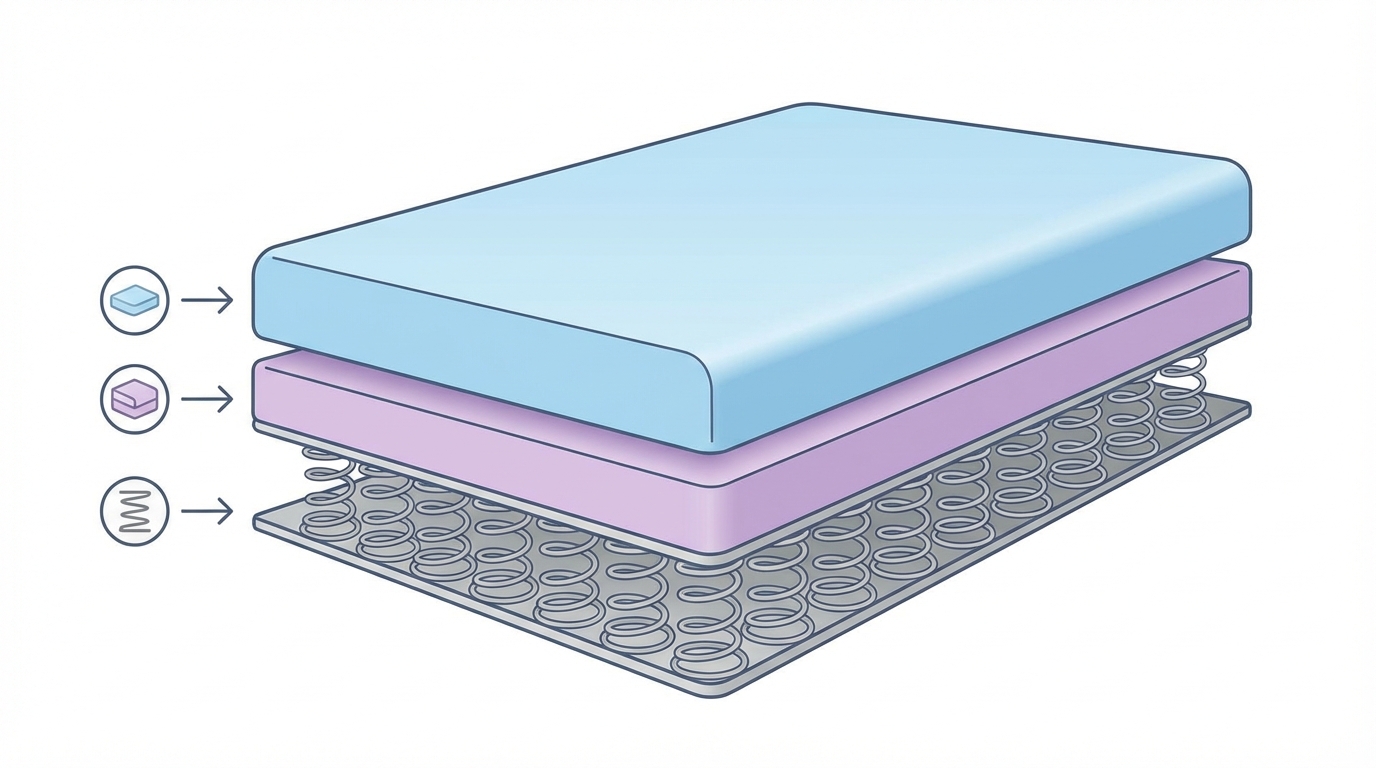
One detail many people forget is mattress thickness. While "size" usually refers to width and length, most modern full size mattresses range from about 10 to 14 inches tall, sometimes more for plush pillow tops. This matters because thicker mattresses sit higher off the ground and may require deeper fitted sheets. At Sleepology, full size options like the Sealy Posturepedic Firm Mattress – Medina II offer that more modern profile, which can make getting in and out of bed easier for many adults.
“I had no idea what 53 by 75 really meant until Mia helped me tape it out on my bedroom floor. Once I saw the footprint, a full made perfect sense for my 10 by 10 room. It feels roomy to sleep on, but I still have space for a desk and dresser.” _Amy R., November_
Is A Full Size Mattress Big Enough For You?
Whether a full size mattress is "big enough" depends more on who is sleeping on it and how they sleep than on the numbers alone. For a single adult who enjoys stretching out but does not need massive space, a full often feels generous. You get those extra 15 inches of width compared to a twin, so you can bend your knee, roll onto your side, or cuddle a body pillow without constantly flirting with the edge.
For couples, the story changes. When two people share a full, each person effectively gets 26.5 inches of width. That is actually less room than each person would have on a twin. Research on sleep disturbance from bed sharing, including work discussed by the Mayo Clinic, notes that when partners do not have enough space, they are more likely to wake each other with movements, which can reduce sleep quality over time. If you both sleep very still and prefer to stay close, a full can work, but it is usually not ideal for two adults long term.
Height is another key part of the equation. A full mattress is 75 inches long, which is 6 feet 3 inches. That sounds like plenty on paper. In reality, people over about 5 feet 10 often prefer a longer surface because pillows and postures eat up some of that space. If you are tall and find your feet hanging off the bottom of the bed now, a full will not fix that problem. In those cases, a queen, king, or even an upgraded base like an adjustable bed frame can create better comfort and alignment.
Finally, think about what you do in bed beyond sleeping. If you read, work on a laptop, or share the bed with a pet, that space gets used quickly. A full can still work beautifully here, especially paired with supportive bedding and a good pillow setup. Options like The BodyPillow by Tempur-Pedic can help you feel more cradled and supported on a full, especially if you are a side sleeper who likes something to hug.
“My partner and I started on a full size when we were in a tiny apartment. It was doable, but we constantly elbowed each other. When we upgraded to a queen through Sleepology, the extra width made a huge difference. I wish we had gone bigger from the start.” _Daniel M., October_
Full Size vs Twin, Queen, And King: A Practical Comparison

Comparison is where full size starts to come into focus. On a spec sheet, the changes look small, but in daily life they are substantial. Understanding how full stacks up against twin, queen, and king sizes can clarify what you gain or give up with each step.
Moving from a twin to a full, the key difference is width. The length remains 75 inches, but the 15 additional inches across make the bed feel more adult and more forgiving if you are an active sleeper. That is why many teens and college students see full as their first "grown up" mattress. Full also tends to be more forgiving for people with broader shoulders or hips who feel constrained on a twin.
Comparing full to queen, you add 7 inches of width and 5 inches of length when you move up to queen. For a solo sleeper, that extra space feels luxurious rather than strictly necessary, although people who toss and turn can benefit. For couples, those 7 extra inches per bed mean each person gets about 3.5 additional inches of personal space, which is often the difference between tolerable and comfortable. According to Consumer Reports, queen remains the most popular mattress size in the United States, largely because it balances couple space with room size.
Full versus king is another dramatic step. A king mattress is 76 by 80 inches, making it 23 inches wider and 5 inches longer than a full. That is why king is typically reserved for couples who value personal space or share with children or larger pets. The Sleep Foundation notes that larger mattress sizes can reduce motion transfer impact simply because there is more surface area to distribute movement. If you are currently on a full and constantly waking when your partner moves, the jump to a larger size is often more impactful than any single "motion isolation" feature.
Below is a quick visual comparison of how full fits into the standard size family:
| Mattress Size | Dimensions (W x L) | Best For | Typical Minimum Room Size |
|---|---|---|---|
| Twin | 38" x 75" | Children, narrow rooms, bunk beds | About 7' x 10' |
| Full | 53" x 75" | Solo adults, teens, snug guest rooms | About 10' x 10' |
| Queen | 60" x 80" | Most couples, primary bedrooms | About 10' x 10' or larger |
| King | 76" x 80" | Couples who want maximum space, co sleeping family | About 12' x 12' |
Keep in mind these room sizes are guidelines, not rules. If you have built ins, oddly placed doors, or large furniture, your practical space may be different. This is where mapping things out on the floor with painter's tape, or talking with a Sleepology advisor, can help you see whether a full will feel cozy or cramped in your real layout.
How A Full Size Mattress Fits In Different Room Sizes
Many people start with the wrong question, which is "What is the biggest mattress I can fit in this room?" A better question is "What size mattress lets me sleep comfortably without making the room feel tight or awkward to move around in?" A full size mattress often shines here because it preserves more walking and storage space while still offering a grown up sleep surface.
In a 10 by 10 foot bedroom, for example, a full typically leaves enough clear space for nightstands, a dresser, and a small desk, as long as you plan your layout carefully. You will want at least 24 to 30 inches of walking space on the sides you use most. If you push the bed against one wall, which is common in smaller rooms, a full still allows an adult to get in and out comfortably from one side without feeling pinned in. This is one reason full is popular for older kids and teens transitioning out of twin beds.
In narrow rectangular rooms, a full can be placed lengthwise against the longer wall to create an almost daybed style setup during the day. You can add pillows against the wall to make it feel like a sofa for reading or working, which maximizes versatility in small apartments. Pairing your full with a lower profile base or an adjustable bed frame and base can also shift the visual weight of the bed and help the room feel more open, especially if ceiling height is modest.
Guest rooms are another place where full size often shines. Guests get more space than a twin, especially couples who are visiting, but you preserve floor area for luggage, a chair, or even a fold out workstation. If the room doubles as a home office or playroom, the smaller footprint of a full means you are less likely to resent the bed on days you are not hosting. A medium feel hybrid option, like the Sealy Posturepedic Plus Medium Mattress – Paterson II Euro Pillow Top, can be a smart full size choice here, because it suits a wide range of body types and sleep positions.
“We turned our 9 by 11 spare room into a combo office and guest room. A queen would have blocked the closet doors, but the Sleepology team showed us how a full would leave room for my desk. Our guests still tell us the bed is way more comfortable than they expected for a small room.” _Jasmine K., December_
Who A Full Size Mattress Is Best For
When I work one on one with customers, I do not start with size. I start with who is actually using the bed, how they sleep, and what their room and lifestyle look like. Over 20 years, I have seen some clear patterns in who tends to love a full size mattress and who outgrows it quickly.
Full size is particularly well suited to solo adults who want more space than a twin but are limited by room size or budget. Young professionals in city apartments, people in shared housing, and anyone furnishing their first "real" bedroom often find full to be a smart middle ground. You get a comfortable amount of personal space without the higher cost and larger footprint of queen or king.
Teens and college age sleepers are also great candidates. Many are taller, more active in their sleep, and want a bed that feels more adult than a twin. At the same time, dorms and shared spaces rarely allow for queen or king mattresses. A full gives them room to sprawl and study without dominating the room, especially when paired with smart accessories like a compact Tempur-Pedic Mattress Topper and pillow travel bundle that can soften a firm surface or make campus moves easier.
Couples can make a full work, but the fit is more specific. It is usually best for smaller framed partners who primarily cuddle or sleep very close together and do not mind a tighter fit. It can also work as a short term solution in a small bedroom or while you are saving up for a larger mattress. However, for most couples, especially if either person is a restless sleeper or if pets share the bed, a full can begin to feel constrained within a year or two.
Full also makes sense for multipurpose or transitional spaces, such as a room that alternates between a guest room and a future nursery. You might not be ready to commit to a queen or king in that space yet, and a full lets you cover the next few years comfortably while you see how your household changes. Sleep is incredibly personal, and the American Academy of Sleep Medicine reminds us that comfort and environment are core to healthy rest, so matching size to your specific season of life is more important than any hard rule.
When A Full Size Mattress Might Be Too Small
As useful as a full size mattress can be, it is not the right long term choice for everyone. Knowing when it will likely be too small can save you from buying twice or trying to resell a barely used bed in a year. A few red flags tend to come up again and again in consultations.
The first is height. If you or your partner is taller than about 6 feet, a mattress that is only 75 inches long can feel limiting, especially once you account for pillows and the natural tendency to slide down a bit overnight. Taller sleepers often feel their feet brushing or hanging off the edge, which may lead to curling up and can even affect spinal alignment. In those cases, I generally recommend moving at least to a queen or exploring king options, such as the selection in Sleepology's king sized mattresses.
The second is true co sleeping. If two adults share a bed most nights, especially with a child or pet joining occasionally, a full is almost always a compromise. As mentioned earlier, each person gets less space than they would on a twin. The Sleep Foundation and Cleveland Clinic have both highlighted that crowding and frequent awakenings can meaningfully reduce deep sleep and REM sleep over time, which affects mood, focus, and cardiovascular health. If one or both of you already struggle with sleep quality, a full is unlikely to be a supportive long term choice.
Body size and movement patterns are also important. Broader shoulders and hips simply take up more width, and if you both like to sleep on your back or side, you need more personal space to prevent bumping into each other. Active sleepers, those with conditions like restless legs, or anyone who changes position often in the night can unintentionally disturb a partner on a full. Even with good motion isolation in the mattress itself, the smaller surface area amplifies every shift.
Budget can complicate these decisions, especially if you are choosing between a higher quality full and a lower quality queen or king. In clinical and industry research, including work summarized by the Sleep Foundation, mattress support and pressure relief often matter more for pain and sleep quality than size alone. If your budget is fixed and you must choose, a supportive, well built full may be better than a larger but poorly made mattress. In that case, you can soften or fine tune comfort with quality bedding from collections like pillows, sheets, toppers, and protectors while you plan for a size upgrade down the road.
The Comfort Experience On A Full: Sleep Positions And Body Types
Size is only part of the story. How a full size mattress feels in daily life depends a lot on your sleep position and body type. Two people of the same height can have very different experiences, simply because one sleeps curled on their side and the other likes to starfish on their back.
Side sleepers typically take up more width, because the knees bend and the shoulders broaden the body's profile. On a full, a solo side sleeper usually feels comfortable, especially with the right contouring and a supportive pillow. For side sleepers sharing a full, however, the limited width can become an issue quickly, particularly if you shift sides during the night. If you are a side sleeper shopping specifically for support, it can be worth exploring full size options within curated collections like The Best Mattresses For Back Sleepers, which often balance spinal alignment and pressure relief that works well for side and back sleepers alike.
Back sleepers tend to distribute weight more evenly, and many need less width to feel comfortable. A single back sleeper on a full generally has plenty of room, and a medium firm to firm model like the Sealy Posturepedic Firm Mattress – Medina II can provide the kind of lumbar support that organizations like the Mayo Clinic often recommend for managing low back discomfort. Two back sleepers sharing a full can technically fit, but as soon as one rolls to the side, shoulders and elbows can encroach on each other's space.
Stomach sleepers, especially taller or heavier individuals, can run into both width and length challenges on a full. Stomach sleeping already increases strain on the lower back for many people, and if you hang slightly off the end of the bed or contort to stay within the shorter length, those stresses can increase. In practice, many stomach sleepers who start on a full eventually move up to queen for the additional length and width, even when they sleep alone.
Body weight plays a role too. Heavier bodies compress the comfort layers more, which can make a full feel smaller than it would for a lighter person, since you are more likely to notice edge support and roll off risk. Hybrid constructions, like the Sealy Posturepedic Elite Soft Hybrid Mattress – Brenham II, can help maintain a stable, usable surface all the way across a full, especially if you like to sleep near the edge.
Planning Your Room Layout Around A Full Size Bed
Once you know the raw dimensions, the next step is making sure a full size bed actually works in your room without turning it into an obstacle course. A thoughtful layout can make a full look intentional and spacious instead of "the only thing that fit."
Start with the bed placement. In most standard rooms, centering the full on the main wall with the head of the bed against it creates a balanced look and allows for nightstands on one or both sides. Aim for at least 24 inches of clearance around the sides you use daily. If your room is narrower, you might push one long side against the wall. In that case, think about who is using the bed. If it is for a guest room or child, access from one side is usually fine. For two adults, someone will be climbing over the other, which gets old quickly.
Think about door swings, closets, and windows too. I always recommend opening every door in the room while your tape outline of the bed is on the floor. Make sure the door does not hit where the mattress will be, and that you can still open closet doors fully. If you plan to use an adjustable base, factor in a bit of extra clearance at the foot of the bed, since the motion can slightly change where the mattress rests.
Storage is another piece of the puzzle. One advantage of a full is that it frees up wall and floor space for dressers, bookshelves, or a desk. Under bed storage can also be a lifesaver in small rooms. Simple risers, storage frames, or a higher profile foundation can give you room for bins beneath the mattress. Just keep the total height comfortable, especially for shorter people or anyone with knee or hip issues, so getting in and out of bed does not become a strain.
Lighting and outlets often get overlooked. Once you know where the full will live, check that you have access to outlets on at least one side for lamps and chargers. If you are using a taller, plush mattress like the Sealy Posturepedic Elite Soft Mattress – Albany II Euro Pillow Top, you might want slightly taller nightstands to keep your lamp and water glass within easy reach. Small ergonomic details like this can make a full feel as luxurious as any larger size in daily use.
Bedding, Accessories, And Sleep Setup For Full Size Mattresses
Choosing the right bedding for a full size mattress is about more than making it look pretty. The wrong sheets or pillows can undo a lot of the comfort you gained by choosing the right mattress size in the first place. Fortunately, because full is a standard size, it is easy to find well fitting sheets, mattress protectors, and blankets.
Sheet depth is a common pain point. Many modern full mattresses are thicker than older models, especially if they are pillow top or plush. When you shop for "full" sheets, look at the pocket depth and compare it to your mattress height. If your mattress is, for example, 13 inches tall, you will want sheets that list at least a 14 or 15 inch pocket to ensure a snug but not overly tight fit. A mattress protector from a curated collection like pillows, sheets, toppers, and protectors is also a smart investment, since it can extend the life of your full by guarding against spills and allergens.
Pillows and toppers can refine the comfort of a full size mattress significantly. If you bought a slightly firmer model for support but want a more plush feel, a high quality full size topper can add that without sacrificing alignment. Specialty pillows, such as The BodyPillow by Tempur-Pedic, are especially helpful for side sleepers on a full, since they support your knees and spine while keeping you from rolling off the edge easily.
Blanket and comforter sizing can be a bit counterintuitive. Many people prefer to size up their comforter, choosing a queen comforter for a full bed, to get more drape and coverage. This is particularly useful if two people are sharing a full, since it reduces "blanket battles." Just keep in mind the overall scale. In a very small room, a dramatically oversized comforter can make the bed look visually heavy.
Finally, think about temperature and materials. The Cleveland Clinic and other medical organizations note that a cooler sleep environment often improves sleep quality, and your bedding plays a major role. Breathable cotton or moisture wicking technical fabrics can help maintain a comfortable sleep climate on a full, especially if you are sharing the bed and naturally generating more warmth in a smaller space.
Budgeting For A Full Size Mattress: Where It Saves You Money
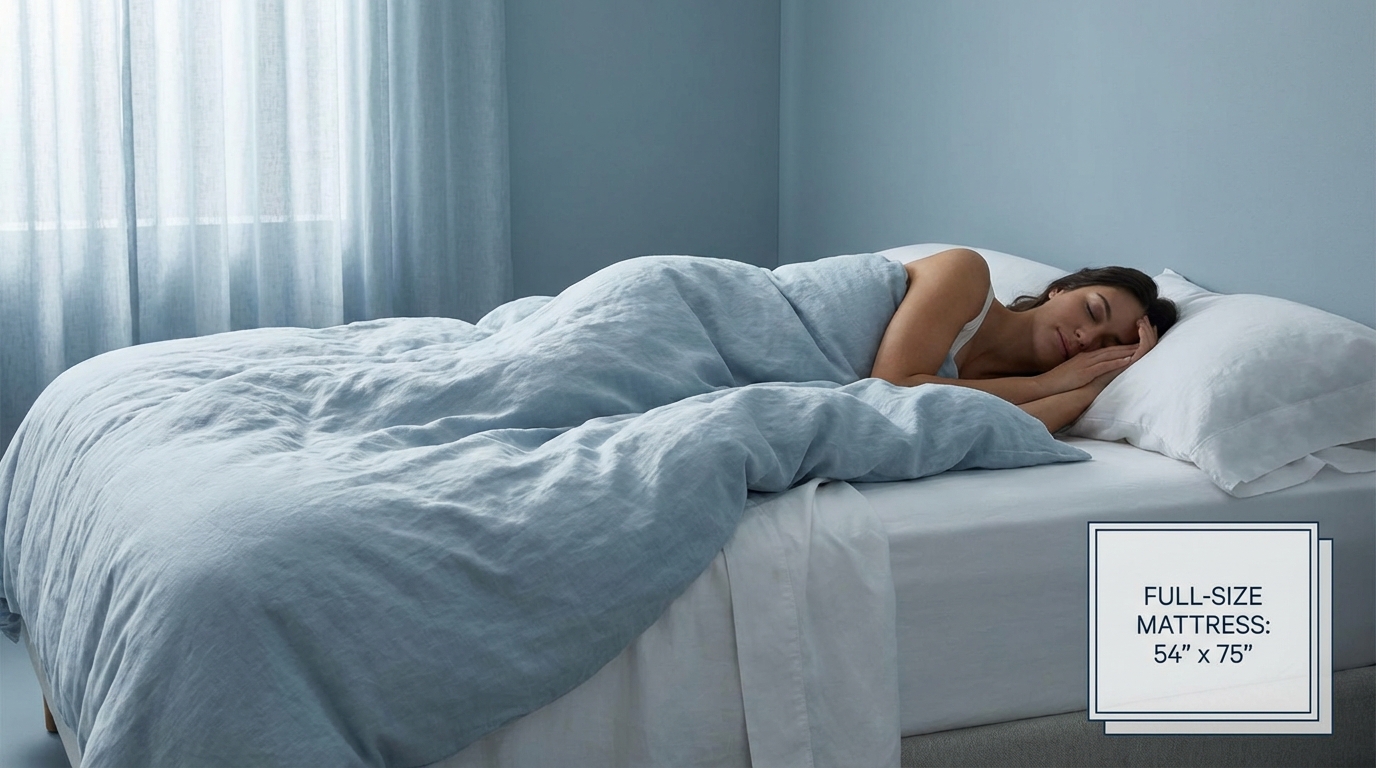
From a financial standpoint, full size mattresses often hit a nice midpoint between price and comfort. They usually cost more than twins but less than queens, and certainly less than kings. This difference is not just in the mattress itself but runs through almost every part of the setup, from frames to sheets.
If you are working with a defined budget, it can be tempting to stretch for the largest size you can technically afford. In practice, though, many people sleep better on a slightly smaller mattress that is higher quality. Full size can free up enough budget to invest in better materials, such as durable coils, quality foams, or enhanced edge support, all of which have been linked in industry testing to improved comfort and longer mattress lifespans. Investing in a well built full rather than a bargain queen is often a smarter move, particularly for solo sleepers.
Accessories follow the same pattern. Full frames, headboards, and bedding generally cost less than their queen or king counterparts. Over time, this can add up, especially if you like to swap out looks or refresh your bedding seasonally. A solid, supportive full combined with a few carefully chosen upgrades, like a breathable protector and supportive pillows from Sleepology's pillows, sheets, toppers, and protectors, can deliver excellent comfort without overshooting your budget.
That said, it is important not to buy a full solely because it is cheaper if you already know it will be too small for your body, your partner, or your long term plans. Replacing a too small mattress in two or three years is almost always more expensive than buying the right size once. If you are truly on the fence between a full and a queen and plan to share the bed long term, it is worth carefully mapping your room and, if possible, lying down on both sizes in person before deciding.
From an investment perspective, think about how long you want the mattress to serve you and what might change in that time frame. Are you planning to move, live with a partner, or grow your family within the next five years? Factoring in those possibilities now helps ensure your choice fits both your current life and the life you are building.
How To Decide: A Simple Framework For Choosing Full Or Going Bigger
With all of these details in mind, it helps to have a simple decision framework. When I guide Sleepology customers, I often walk them through a checklist of considerations, in order, so we are not making the decision purely on emotion or a single feature.
First, we clarify who will be sleeping on the mattress most of the time and how that might change within the next three to five years. If the answer is one adult, with no planned partner or co sleeper and a relatively modest room, full often rises to the top. If the answer involves two adults, even if one is only part time, we take a hard look at queen and king, and full becomes more of a short term or guest solution.
Next, we look at body size and sleep style. This includes height, weight, and how much you move at night. If either sleeper is taller than 6 feet or significantly broader, full begins to fall down the list. If both are smaller framed and mostly still sleepers, full can stay in the conversation longer. We also talk honestly about whether anyone currently feels crowded on their bed and what they wish were different.
Then we walk through room layout and lifestyle. We measure the actual usable space, doors, windows, and furniture. If a queen or king would fundamentally disrupt the room, block doors, or remove all usable floor space, that weighs in favor of full, especially if you value having a balanced room. We also consider whether the space needs to double as an office, studio, or playroom, where a full might be more practical.
Finally, we align all of this with budget and quality goals. We consider whether the budget allows for a supportive, durable mattress in the preferred size. If we would have to sacrifice too much in material quality to afford a larger size, and the sleepers can realistically be comfortable on a full, then a full can become the best overall choice. If quality and size can both be met in a queen or king, then moving up makes sense, especially for partners.
Using a step by step thought process like this takes a lot of the stress out of the decision. Instead of wondering "Am I making a mistake?" you can see clearly how full size stacks up against your real life needs.
Conclusion: Making Peace With The Tape Measure
Choosing a mattress size is not just a math problem. It is about your body, your room, your routines, and your budget all intersecting in one important piece of furniture that you will use every single day. A full size mattress, at 53 by 75 inches, offers a genuinely practical middle ground for many solo adults, teens, and smaller rooms. It gives more breathing room than a twin without overwhelming your space or your wallet the way larger sizes sometimes can.
If you sleep alone and have a modest bedroom, or you are furnishing a guest room or multiuse space, full size is very likely worth serious consideration. If you regularly share your bed with a partner, children, or pets, or if you are tall and already feel constrained on your current mattress, moving up to a queen or king will probably serve you better in the long run. Balancing size with quality, and thinking a few years ahead, will help you make a decision that feels good both now and later.
If you are still uncertain, you do not have to figure it all out by yourself with a tape measure and guesswork. Talking through your space, sleep habits, and future plans with a knowledgeable advisor can make the right choice feel obvious instead of overwhelming. At Sleepology, that is exactly what we love to do, whether you end up on a full or decide that something larger fits you best. Your sleep is too important to leave to chance, and you deserve a mattress size that truly fits your life.
Frequently Asked Questions
How wide and long is a full size mattress in inches and feet?
A standard full size mattress is 53 inches wide and 75 inches long. In feet, that translates to about 4 feet 5 inches wide by 6 feet 3 inches long. When you are measuring your room, it can help to round slightly up and also allow a few extra inches around the bed for the frame or headboard. Mapping those dimensions on your floor with painter's tape is one of the easiest ways to visualize how a full will actually feel in your space.
Is a full size mattress big enough for two adults every night?
For most couples, a full size mattress is on the small side for nightly use. Each person effectively gets 26.5 inches of width, which is less personal space than each would have on a twin bed. If both of you are smaller framed, sleep very still, and like to stay close, you may be able to make a full work for a while. However, if either of you moves a lot, is broader shouldered, or prefers more personal space, a queen or king will almost always be a more comfortable long term choice.
What is the minimum room size for a full size mattress?
A common guideline is that a full size mattress works best in rooms that are at least 10 by 10 feet. This typically allows for the bed, one or two nightstands, and enough walking space to move around comfortably. That said, layout matters as much as square footage. Narrow or oddly shaped rooms can sometimes handle a full better than a queen, especially if you are willing to place the bed against a wall on one side or choose smaller scale furniture.
How does a full size mattress compare to a queen for a single adult?
For a single adult, a full size mattress usually provides enough space to stretch out, change positions, and sleep comfortably, particularly if the person is under about 6 feet tall. A queen adds 7 inches of width and 5 inches of length, which feels more spacious but is not strictly necessary for everyone. If you value extra sprawling room or anticipate sharing your bed in the near future, a queen might be a better investment. If your room is smaller or you want to keep costs down without compromising quality, a full can be a very comfortable and practical choice.
Is a full the same as a double mattress?
Yes. In modern bedding language, "full" and "double" refer to the same standard size, which is 53 by 75 inches. Older furniture, especially vintage headboards and frames, might still use the term "double," but if they are labeled appropriately, they are usually designed for full size mattresses. When pairing a full mattress with an older frame, it is still wise to measure the interior dimensions to confirm a proper fit.
What size bedding should I buy for a full size mattress?
You will want sheets and protectors specifically labeled as "full" to match the 53 by 75 inch footprint. Pay attention to the pocket depth on fitted sheets and protectors so they can accommodate your mattress height, especially if your mattress is 12 inches thick or more. For comforters and duvets, some people choose full size for a tailored look, while others prefer sizing up to a queen for extra drape and coverage, particularly if two people share the bed.
When should I upgrade from a full to a queen or king?
Common triggers for upgrading from a full to a larger size include starting to share your bed regularly with a partner, noticing that your feet hang off the end of the mattress, gaining a larger bedroom, or feeling consistently crowded and unrested. If you often wake up at the edge of the bed, get jostled awake by a partner's movements, or hesitate to let a pet on the bed because there is no room, those are strong signs you may benefit from moving to a queen or king. Planning ahead for moves, relationships, and family changes also helps you choose a size that will serve you well for many years.