

How Big Is A Full Mattress, Really? A Practical Guide To Size, Space, And Sleep Comfort
If you are squinting at a tape measure, trying to picture whether a full mattress will actually work in your room, you are not alone. Many people hear terms like twin, full, double, and queen, then feel stuck between what fits their space, their budget, and the way they actually sleep. The wrong call can leave you feeling cramped, crowded by furniture, or waking up sore because you could not stretch out comfortably.
Mattress size is not just a technical detail. It affects how deeply you sleep, how easy it is to move around your bedroom, and whether sharing the bed with a partner, child, or pet feels cozy or chaotic. According to the Sleep Foundation, most adults need 7 to 9 hours of sleep per night, and mattress comfort and space are key pieces of that puzzle. When you only have about 27 inches to yourself, even a small change in size makes a real difference in how rested you feel.
You are here because you want a clear, honest answer to the question, "How big is a full mattress, and is it big enough for me or my family?" You will get precise dimensions, real world examples of how a full fits different body types and rooms, and straightforward comparisons to twin, queen, and king. You will also see how mattress type and accessories can help a full feel more supportive and luxurious, even if you choose not to size up.
By the end, you will be able to look at your room, your sleeping habits, and your budget and say with confidence, "A full makes sense for me" or "I really do need to jump to a queen." As a sleepologist who has watched thousands of people wrestle with this exact decision, I will walk you through it step by step in simple, practical language.
Full Mattress Dimensions: The Short Answer With Real Context
The full mattress, often called a "double," is one of the most misunderstood sizes on the market. Many people assume "double" means it is naturally designed for two adults, when in reality it is usually more comfortable for a single sleeper who wants extra room to sprawl.
A standard full mattress in the U.S. measures about 54 inches wide and 75 inches long. Some manufacturers list 53 inches by 75 inches, but functionally you can think of it as 54 by 75. That gives you 4,050 square inches of sleeping surface. For context, a twin mattress is 38 by 75 inches, or 2,850 square inches. So, compared with a twin, a full gives you 16 extra inches of width and roughly 42 percent more surface area.
Length is often the hidden issue. At 75 inches long, a full will technically fit someone up to about 6 feet 2 inches, but it will be close. If you are 6 feet tall and like to sleep with your toes pointed or curl near the edge, you may notice the limit. Organizations like the Cleveland Clinic point out that body alignment and freedom of movement are key to avoiding back and joint pain, which is difficult if you feel forced to curl to keep your feet off the edge.
If you share a full mattress with a partner, you each get only about 27 inches of width. For comparison, a standard crib is about 28 inches wide. That does not mean a full cannot work for couples, but you should be honest about how close you like to sleep and whether you or your partner tend to move a lot at night. For most modern couples, a queen or larger is more realistic for nightly use.
“My husband and I tried to use our old full mattress in the new house and we were bumping into each other all night. Our Sleepology specialist walked us through the measurements and once we upgraded to a queen, the difference was immediate. I wish we had done it years earlier.” – Laura S., October
Is A Full Mattress Big Enough For You?
Your Height, Build, And Sleep Style
The starting point is your body and the way you naturally sleep. Even the most beautiful bedroom layout will not matter if the mattress feels too short or too narrow for your frame. Research summarized by the Mayo Clinic notes that neutral spine alignment and the ability to change positions freely during the night reduce morning pain and stiffness. That is difficult on a mattress that feels like a tight box.
If you are under about 5 feet 10 inches, a full will usually give you adequate length, assuming you do not sleep like a starfish or hang your feet off the end. If you are between 5 feet 10 inches and 6 feet 2 inches, a full can still work, but you need to be more careful about your pillow height and where you position yourself on the bed. Taller than 6 feet 2 inches, and I generally recommend going to at least a queen, which is 80 inches long, the same as a twin XL.
Your shoulder and hip width matter too. Broader framed sleepers or those with athletic builds tend to notice the limits of a full more quickly. If you are a side sleeper with wide shoulders, for instance, you may feel like you are constantly about to roll off the edge when you turn over. In these cases, choosing a mattress with strong edge support, such as a hybrid like the Sealy Posturepedic Elite Soft Hybrid Mattress – Brenham II, can help you use every inch of the sleep surface without feeling unstable.
Sleep position also changes how roomy a full feels. Back and stomach sleepers often fit more easily because their bodies stay more centered and elongated. Side sleepers, combination sleepers, and people who spread out their arms and legs typically feel more cramped. If you are a dedicated back sleeper, a full can be totally comfortable, especially when paired with a supportive back friendly design like the models we feature in our best mattresses for back sleepers collection.
“I am 5’4” and sleep alone, so I assumed a twin was fine. Mia talked me through how much more breathing room a full gives, and she was right. I ended up with a full size Sealy pillow top and I finally have room for my dog at my feet without feeling squished.” – Denise R., November
Room Size And Layout: Will A Full Actually Fit Comfortably?

You might assume that if the dimensions technically fit on your floor, you are good to go. In reality, a mattress that overwhelms your room can make it harder to relax. A cluttered space can raise stress levels, and chronic stress is strongly linked to sleep disruption according to multiple studies summarized by the Sleep Foundation.
A full mattress is a sweet spot for smaller rooms because it offers personal comfort without demanding the footprint of a queen or king. Most designers recommend a minimum of about 10 by 10 feet for a full to work comfortably in an adult bedroom. That allows space on at least one or two sides for walking, plus essential furniture like a dresser or nightstands. You can make it work in a 9 by 10 room if you are very strategic with storage and skip large nightstands.
Think about traffic paths as you picture the layout. You want to be able to walk to your closet, open drawers, and move around the bed without turning sideways. If the bed takes up so much width that you are left with only a narrow walkway, it might be time to consider clever furniture placement or stick with a full instead of jumping to a queen. A full also offers more flexibility if you want to add an adjustable base later, such as something from our adjustable bed frame and base collection, without overpowering the room.
One often overlooked detail is door swing and window placement. Before you commit to a full, use painter's tape on your floor to outline 54 by 75 inches, plus a bit of extra length if you plan on a thick headboard. Open your bedroom door, closet door, and any drawers to make sure nothing collides with the taped area. If everything clears and you can still walk around, a full should be a practical choice.
Full Mattress Compared To Other Mattress Sizes
A full mattress only makes sense when you see it next to your other options. While brand guides often stop at simple dimensions, it helps to translate those inches into personal space and the way your room will actually feel.
Full vs Twin And Twin XL
A twin mattress measures 38 by 75 inches, and a twin XL is 38 by 80. Compared with a twin, a full gives you an extra 16 inches of width, which is a dramatic difference for teens and adults. If you have been sleeping on a twin through high school or college, moving to a full often feels like stepping into a completely different category of comfort, even though the length is the same.
Twin XL adds 5 inches in length but no extra width. Taller teens, dorm sleepers, and adults over 6 feet who live in narrow spaces often choose twin XL because it fits where a full would feel too wide. For everyday adult use in a typical bedroom, however, a full is usually the better choice because your shoulders and hips finally have room to move.
If you are upgrading a child’s room, many families move from twin to full around middle school or high school. This gives your child room to grow without completely reconfiguring the bedroom. A full can also double as a guest bed later, where a twin often feels like a temporary solution for adults.
Full vs Queen
A queen mattress is 60 by 80 inches. That is 6 inches wider and 5 inches longer than a full, and on paper that might not sound huge. In real life, it is the difference between "we can technically fit two adults" and "we can actually sleep through the night together." If two adults share a queen, each person gets about 30 inches of width, which is closer to the width of a standard office chair than a crib.
From a floor plan perspective, the decision between full and queen often hinges on room width. You need a bit more space around a queen to avoid that cramped feeling. For rooms that are roughly 10 by 10 or a little smaller, a full will leave more walking space, while a queen may require you to sacrifice nightstands, storage, or general breathing room.
Budget is another factor. A full is often more affordable than a queen, not only for the mattress, but also for bedding and bed frames. If you are furnishing your first apartment and watching every dollar, a full can deliver a grown up sleeping experience without the cost of jumping straight to queen. Then, when you are ready, you can upgrade to something larger, such as one of our king sized mattresses for a future primary bedroom.
Full vs King
Although it is less common to weigh a full against a king, it comes up when someone is moving from a small space to a larger home and considering skipping right past queen. A king mattress measures 76 by 80 inches. That gives a couple about 38 inches of personal width each, which is essentially twin beds pushed together.
If you know you will be co sleeping with children or large pets, a king may be worth planning for. Still, there is a big gap in price, room size needs, and overall footprint between a full and a king. For most people, the more realistic progression is full now, queen later, and king when space and budget allow.
Here is a simple comparison to put the sizes in perspective.
| Mattress Size | Width x Length (inches) | Typical Best Use |
|---|---|---|
| Twin | 38 x 75 | Kids, narrow rooms, bunk beds |
| Twin XL | 38 x 80 | Tall teens, dorms, narrow spaces |
| Full / Double | 54 x 75 | Solo adults, older kids, guest rooms |
| Queen | 60 x 80 | Most couples, primary bedrooms |
| King | 76 x 80 | Couples with kids or large pets |
When you look at it this way, a full really is the bridge between "kid or dorm" sizes and the classic couple sizes like queen and king. The question is whether that bridge fits your life stage and room right now.
When A Full Mattress Is The Right Choice
A full mattress is not only about compromise. In many situations, it is the smartest and most comfortable option. Understanding those use cases helps you avoid overbuying or underbuying for your reality.
Solo Adults Who Want Space Without A Massive Bed
If you sleep alone and enjoy a bit of elbow room but do not want your bed to dominate the room, a full is often ideal. It allows you to roll from side to side, change positions, and even share the bed occasionally without feeling like you are perched on a tiny island.
In my experience, single adults in studio apartments or older homes with modest bedrooms often feel happiest with a full. It gives them the "adult bed" feeling, especially when paired with quality construction and comfort features, without crowding the space. Choosing the right mattress type matters here. A plush yet supportive option such as the Sealy Posturepedic Pro Soft Mattress – Dupont II Euro Pillow Top in full size can transform a small room into a cozy retreat where you genuinely look forward to turning in.
Teens, Young Adults, And Transitional Spaces
As kids grow, their sleep needs shift both physically and emotionally. They want more space, more privacy, and a bedroom that feels less like a childhood room and more like their own mini apartment. A full mattress gives them room to spread out with laptops, textbooks, or weekend sleepovers, while still leaving plenty of wall and floor space for desks and storage.
For college students or recent grads, a full can carry over from a childhood home to a first apartment, then on to a guest room later. That flexibility can save a lot of money in those early adult years when constant moves and changing spaces make frequent upgrades impractical.
Guest Rooms And Multi Use Spaces
A dedicated guest room does not always need a queen or king. If your typical visitor is a solo friend, parent, or sibling, a full can offer perfectly adequate comfort without overcrowding the room. That leaves space for a desk, exercise equipment, or storage, allowing the room to function well when it is not hosting guests.
To make a full sized guest bed feel more luxurious, focus on comfort layers and bedding. Adding a breathable topper and high quality sheets can make guests forget they are not in a hotel. For example, topping a supportive mattress with the Tempur Pedic Mattress Topper – Pillow Travel and Guest Bundle and pairing it with TEMPUR Adapt Luxe Egyptian Cotton Sheets can create a plush, welcoming feel without changing the mattress size.
“We turned our home office into a combo office guest room with a full mattress on a simple frame. Mia suggested splurging a bit on the topper and sheets instead of going up to a queen, and it was the right call. Our guests keep commenting on how comfortable the ‘little bed’ is.” – James K., November
When A Full Mattress May Be Too Small
There are also clear situations where a full is likely to leave you wishing for more space. Recognizing those early can save you from an expensive mistake.
Couples Who Sleep Together Every Night
Two adults can physically fit on a full, and for some couples who love to cuddle and rarely move around, it might be workable. In practice, though, most couples eventually feel cramped. Shared beds already come with potential sleep disruptions from movement, snoring, or different schedules. According to the Sleep Foundation, motion transfer and partner disturbance are among the most common reasons couples report poor sleep quality.
On a full mattress, you have almost no buffer from each other's movements. If one of you gets up earlier, comes to bed later, or tosses and turns, the other person feels it immediately. That can chip away at deep sleep over time and contribute to daytime fatigue, irritability, and even more arguments about the bed.
If you know you like physical closeness but also want space to move, a queen or king is usually the better investment for long term comfort. If you must choose a full for space reasons, at least prioritize motion isolating construction, such as high quality foam or hybrid designs, and strong edge support so you can take full advantage of the surface.
Tall Sleepers And Athletes
If you or your partner is over about 6 feet 2 inches, I almost always recommend avoiding standard full and twin sizes. That 75 inch length simply runs out quickly. Taller sleepers already need to pay extra attention to spinal alignment and hip support, since longer limbs can magnify pressure points. Many sports medicine and sleep clinics highlight how important it is for athletes and active individuals to recover on surfaces that actually support their full frame.
A queen, king, or even a twin XL if you sleep alone will respect your height more effectively. The added 5 inches of length means your feet are not pressed into the edge, and you can use pillows strategically without losing usable space.
Co Sleeping With Kids Or Pets
If you routinely have a child, toddler, or medium to large dog joining you at night, a full quickly becomes crowded. Even a cat can make a full feel tight if you are already sharing it with another adult and you tend to move a lot in your sleep. The extra width of a queen or king is not just a luxury in this case, it is often a sanity saver.
If you are in a small room and cannot go larger than a full, think about boundaries. Maybe the full is reserved for adults only, and children get a separate space for occasional co sleeping, like a twin daybed or a floor mattress. That way you are not stacking three bodies onto a surface intended for one or two in very snug conditions.
Comfort, Support, And Materials: Making The Most Of A Full
Even when the size is right, the wrong mattress construction can keep you from getting the restorative sleep your body needs. According to clinical guidance from organizations like the Mayo Clinic, a mattress that supports the natural curve of your spine reduces back pain and nighttime awakenings. That is true whether the mattress is a full, queen, or king.
When you choose a full, you want every inch to work hard for you. Material and build quality become even more important because there is less wasted space to hide flaws.
Foam, Hybrid, Or Innerspring On A Full?
All three common mattress types are available in full size: innerspring, all foam, and hybrid. Each behaves a bit differently when space is limited.
All foam mattresses often shine in small sizes because they excel at motion isolation and contouring. If you are a solo sleeper who wakes easily, a good foam full mattress will cradle your body and absorb your movements so you do not feel like you are bouncing. A model like the Sealy Posturepedic Medium Mattress – Medina II Euro Pillow Top blends cushioning foams with targeted support, which is particularly helpful in a full for maintaining alignment when you change positions.
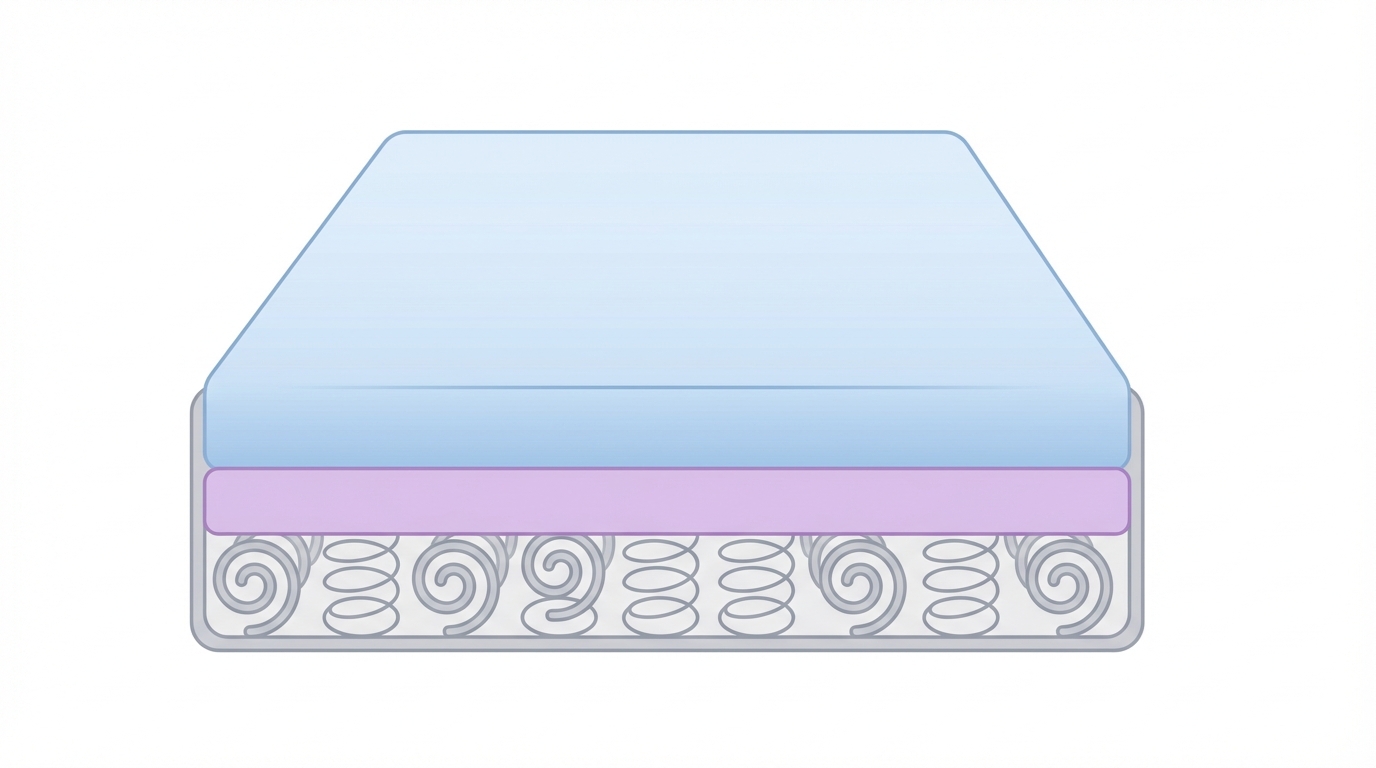
Hybrid mattresses combine coils with foam layers. The coils provide a more buoyant, traditional feel and better airflow, while the foam supports and cushions your curves. On a full, hybrids are excellent for people who want strong edge support, since higher quality hybrids usually reinforce the perimeter. The Sealy Posturepedic Plus Medium Mattress – Paterson II Euro Pillow Top is an example of a hybrid that balances responsiveness with contouring, which can be a game changer on a smaller surface where you use every square inch.
Traditional innersprings can still work beautifully on a full if you prefer a firmer, springier surface and sleep primarily on your back or stomach. Just make sure the coil system and comfort layers are well designed so you do not feel pressure spots in your shoulders, hips, or lower back. Cheaper coil systems in full size mattresses can sometimes feel bouncy and uneven when you get close to the edge.
The Role Of Pillows, Toppers, And Bedding On A Full
When space is limited, fine tuning your comfort with accessories matters. Good pillows and bedding help you make the most of a full mattress without upgrading in size.
Pillows are your first tool. An unsupportive or too thick pillow can push your neck out of alignment and steal valuable length from a full mattress. High quality ergonomic options like The BodyPillow by Tempur Pedic can support your whole side sleeping posture on a full without hogging the entire bed. Body pillows work especially well for solo sleepers who want the cozy feel of a larger surface without actually buying a bigger mattress.
Toppers are your second tool. They do not change the dimensions of the bed, but they can dramatically improve pressure relief and temperature regulation. If you love your full size footprint but wish it felt a bit plusher, adding a breathable topper from our pillows, sheets, toppers, protectors collection can soften firm coils or firm up a sagging surface, depending on what you choose.
Finally, pay attention to sheets and protectors. Well fitting, smooth, breathable bedding helps you move easily across the sleep surface without bunching or tugging. On a full mattress, this makes turning over or sliding to the edge feel effortless instead of like a wrestling match.
A Quick, Practical Checklist Before You Choose A Full

When you are close to a decision, it helps to run through a simple, honest checklist. Think of this as your sanity check before you click "add to cart" or schedule a showroom visit.
Spend a few minutes answering these questions:
- How tall is the tallest person who will regularly sleep on this mattress, even occasionally?
- Will this bed be used mostly by one person, two adults, or adults plus kids or pets?
- What are the exact dimensions of the room, and how much walking space will remain on each side and at the foot of the bed?
- Do you or your partner tend to move a lot at night, or do you mostly stay in one position?
- How long do you realistically expect to keep this mattress size, given likely moves, relationships, or family changes?
- What is your total budget including mattress, frame, bedding, and any topper or protector you want from our curated accessories?
If you find yourself answering, "It is just me for at least the next few years," "My room is closer to 10 by 10 than 12 by 12," and "I sleep fairly still," a full is probably a very reasonable and comfortable choice. If you keep running into answers like "We always end up with a toddler in the bed," "I am 6 feet 4 inches," or "We plan to stay in this house for 10 years," it makes sense to consider sizing up so you are not forced to replace the mattress prematurely.
Whenever you are uncertain, talking with a knowledgeable sleep specialist can help you see blind spots. At Sleepology, we regularly walk customers through mock layouts, measure doorways, and compare specific mattress models in full and queen so you can trust your decision before you bring anything home.
Conclusion: Deciding If A Full Mattress Is Your Best Fit
Choosing a mattress size is part science, part self awareness. You now know that a full mattress is roughly 54 by 75 inches, significantly wider than a twin but shorter and narrower than a queen. You have seen how that translates into personal space, particularly that 27 inches of width per person if you share the bed with a partner. You have also seen how height, sleep position, and room size all intersect to make a full either a perfect fit or a little too tight.
The most important thing is to match the size to your real life, not just the ideal you have in your head. For many solo adults, teens, and guest rooms, a full is a smart, comfortable, and budget friendly choice that feels luxurious when paired with a quality mattress, supportive pillows, and breathable bedding. For taller sleepers, couples who share the bed every night, or families who co sleep with kids and pets, it may be worth planning ahead for a queen or even a king so you are not fighting for space.
If you are still uncertain, that is okay. Measure your room, picture your ideal sleep setup, and write down your top three non negotiables, whether that is "my dog sleeps on the bed," "I need room to stretch," or "this room must also hold a desk." With those in hand, a Sleepology sleepologist can guide you toward the right size and specific models that respect both your space and your body. You deserve a sleep setup that feels calm, comfortable, and sustainable for the next several years, not just the next few months.
Frequently Asked Questions
Is a full mattress big enough for two adults every night?
A full mattress can technically fit two adults, but for nightly use, most couples find it too tight. Each person gets about 27 inches of width, which is less than the width of many office chairs. That limited space magnifies every movement and can lead to more awakenings. If you and your partner are both petite, sleep very still, and like to cuddle, a full may work for a while, but for long term comfort a queen or king is usually the better choice.
How tall can you be and still sleep comfortably on a full mattress?
A full mattress is 75 inches long, so it is workable up to about 6 feet 2 inches, depending on your preferred sleep position and pillow height. If you are 6 feet tall and sleep on your back with a low profile pillow, you might be fine. If you are over 6 feet or use a thick pillow, you may feel constrained, especially if you like to point your toes or sleep near the edge. Anyone taller than about 6 feet 2 inches is usually more comfortable on an 80 inch long mattress like a queen, king, or twin XL.
What size room do I need for a full mattress?
Most people are happiest with a full mattress in a room that is at least around 10 by 10 feet. That allows enough space to walk around the bed, open closet doors or drawers, and fit essential furniture. You can squeeze a full into a slightly smaller room, such as 9 by 10 feet, but you may need to skip large nightstands or bulky dressers. A good rule of thumb is to leave at least 24 inches of walking space on at least one side and at the foot of the bed whenever possible.
Is there a difference between a full and a double mattress?
In the U.S., full and double refer to the same size mattress. Both are approximately 54 inches wide and 75 inches long. Some brands and retailers prefer "full," while others still use "double," often in older catalogs or hotel descriptions. When you see either term, check the listed inches to confirm, but you can safely assume they are the same standard size unless otherwise noted.
Are full mattresses good for teens and growing kids?
Yes, full mattresses are often an excellent choice for older kids and teens. They provide more width than a twin, which gives growing bodies room to move and stretch. A full also transitions well into early adulthood, so your teen can take the mattress to a first apartment or you can repurpose it into a guest room later. Just keep height in mind. If you have a very tall teen or anticipate rapid growth past 6 feet 2 inches, you may want to consider a queen or twin XL instead.
How can I make a full mattress feel more spacious and comfortable?
You cannot make a full physically larger, but you can help it feel more open and supportive. Choose a mattress with good edge support so you can sleep closer to the sides without feeling like you might roll off. Use a well fitted topper from our pillows, sheets, toppers, protectors collection to fine tune cushioning without adding bulk that eats into usable length. Select just one or two well chosen pillows, such as The BodyPillow by Tempur Pedic, instead of a pile of decorative pillows that crowd the surface, and keep bedside clutter to a minimum so the bed feels like a clear, inviting space.
Does mattress quality matter as much on a full as it does on a queen or king?
Absolutely. Your body spends the same number of hours on the mattress regardless of size. On a full, you may actually notice quality issues more, because you use more of the surface area and spend more time near the edges. Investing in a well built full mattress, whether that is an all foam model like the Sealy Posturepedic Medium Mattress – Medina II Euro Pillow Top or a hybrid like the Sealy Posturepedic Plus Medium Mattress – Paterson II Euro Pillow Top, can give you years of better sleep and often delays the need to size up until your lifestyle truly calls for it.