

Have you ever wondered why some nights you wake up feeling completely refreshed while others leave you groggy and unrested, even after a full eight hours? The answer might be right beneath you. Your mattress plays a far more significant role in achieving deep sleep than most people realize, and the debate between memory foam vs innerspring isn't just about comfort—it's about the quality of rest your body needs to function at its peak. When you're shopping for a new mattress, you'll quickly find yourself facing a fundamental choice: the conforming embrace of a memory foam mattress or the responsive bounce of an innerspring mattress. But here's what makes this decision so important: the type of mattress you choose directly impacts how deeply you sleep, how well your body recovers during the night, and how you feel when morning arrives.
The relationship between mattress firmness and sleep quality is more complex than simply choosing between plush and firm options. Your body needs proper support throughout the night to maintain healthy spinal alignment, reduce pressure points, and allow your muscles to fully relax. A memory foam mattress achieves this through body-conforming materials that respond to your weight and temperature, while an innerspring mattress uses a system of coils to provide support with more traditional bounce and airflow. Neither option is inherently better—what matters is finding the best deep sleep mattress for your specific needs, sleep position, body type, and personal preferences.
At Sleepology Mattress Shop, I've helped countless customers make this important decision, and I've seen firsthand how the right mattress can transform someone's sleep experience. The memory foam vs innerspring question isn't one with a universal answer, but it is one that deserves thoughtful consideration. The mattress support your body receives each night affects everything from back pain and joint stiffness to how quickly you fall asleep and how often you wake up during the night. When you're lying on a firm mattress that doesn't match your needs, your body stays tense, preventing you from reaching those deeper stages of sleep where true restoration happens. Conversely, a plush mattress that's too soft can leave your spine misaligned, creating discomfort that disrupts your rest.
What I find most interesting about the evolution of mattress technology is how both memory foam and innerspring designs have improved dramatically over the years. Today's memory foam mattresses address many of the early concerns about heat retention and that "stuck in the mattress" feeling, while modern innerspring mattresses offer far more sophisticated support systems than the squeaky spring beds of decades past. The sleep quality you experience depends not just on choosing between these two categories, but on understanding the nuances within each one—from the density and type of foam to the coil count and spring design in innerspring models.
This comprehensive guide will walk you through everything you need to know about how memory foam vs innerspring mattresses affect your sleep depth. We'll look at the science behind mattress support, explore how different firmness levels impact your rest, and help you identify which option aligns best with your sleep needs. Whether you're a side sleeper who needs pressure relief for your shoulders and hips, a back sleeper seeking firm support, or a combination sleeper who changes positions throughout the night, understanding these differences will empower you to make a confident decision about your next mattress purchase.
Key Takeaways
- Memory foam and innerspring mattresses provide fundamentally different types of support and feel
- Mattress firmness directly impacts sleep depth, spinal alignment, and overall sleep quality
- Your sleep position and body type should guide your choice between plush and firm options
- Both memory foam and innerspring technologies have evolved to address previous limitations
- The best deep sleep mattress matches your individual needs rather than following general trends
Understanding the Key Differences: Memory Foam vs Innerspring Mattresses
When you're standing in a mattress showroom or browsing online, the memory foam vs innerspring decision can feel overwhelming. These two mattress types represent fundamentally different approaches to supporting your body during sleep, and understanding how they work helps you make a choice that will serve you well for years to come. The core distinction lies in how each mattress type responds to your body weight and distributes support across your pressure points.
A memory foam mattress uses layers of viscoelastic foam that compress and conform to your body's unique contours. When you lie down, the foam softens in response to your body heat and weight, creating a custom cradle that supports you exactly where you need it most. This body-conforming property makes memory foam particularly effective at reducing pressure points—those areas where your body's weight concentrates, like your shoulders, hips, and heels. For many sleepers, especially those with joint pain or pressure sensitivity, this conforming quality translates directly into better sleep quality and fewer nighttime disturbances.
In contrast, an innerspring mattress builds its support system around a core of metal coils or springs. These coils compress when you apply weight, but they maintain a more consistent surface that pushes back against your body rather than molding around it. This creates a sleeping experience with more bounce and responsiveness—when you move or shift position, an innerspring mattress responds quickly, making it easier to change positions during the night. The space between coils also promotes airflow throughout the mattress, which helps regulate temperature and keeps the sleeping surface cooler.
The mattress support each type provides works through completely different mechanisms. Memory foam distributes your weight across a larger surface area by conforming to your body's shape, which can reduce pressure on any single point. This even distribution of weight helps maintain proper spinal alignment by allowing your body to rest in its natural position. Innerspring mattresses, particularly those with advanced coil systems, provide support through the resistance and structure of the spring network. Many modern innerspring designs feature individually wrapped coils that can respond independently to different areas of your body, offering a middle ground between the uniform support of traditional spring systems and the targeted conforming of memory foam.
At Sleepology Mattress Shop, we carry both memory foam options like the Sealy Medina Firm Gel Foam Mattress and innerspring choices such as the Stearns & Foster Estate Ultra Firm Tight Top Mattress, because we recognize that different sleepers have genuinely different needs. The choice between these mattress types isn't about which is objectively better—it's about which better matches your sleep style, physical needs, and personal preferences.
One consideration that often surprises customers is how mattress firmness can feel different between memory foam and innerspring models. A firm mattress in memory foam will still conform to your body to some degree, creating a sensation of being supported by a mattress that adapts to you. A firm innerspring mattress, on the other hand, maintains more of its shape and provides a flatter, more resistant surface. Similarly, a plush mattress in memory foam will have significant sink and conform, while a plush innerspring will feel softer but maintain more bounce and responsiveness.
The best deep sleep mattress for you depends on how these characteristics align with your needs. If you sleep hot, wake up frequently to change positions, or prefer a traditional mattress feel with more bounce, an innerspring mattress might serve you better. If you struggle with pressure points, want motion isolation to minimize partner disturbance, or prefer that "hugged" feeling of conforming support, a memory foam mattress could be your path to better sleep depth and quality.
What Sets a Memory Foam Mattress Apart?
Memory foam technology has transformed the mattress industry since its introduction, and for good reason. The defining characteristic of a memory foam mattress is its viscoelastic properties—the material both compresses under pressure and slowly returns to its original shape once that pressure is removed. This "memory" of the foam creates a sleeping surface unlike anything traditional mattress materials can provide.
When you first lie down on a memory foam mattress, you might notice it feels slightly firm. But within moments, as your body heat warms the foam, it begins to soften and mold around your contours. This temperature-sensitive response is key to how memory foam provides such personalized support. The areas bearing more weight—typically your shoulders, hips, and heels—sink deeper into the foam, while areas needing less support, like the curve of your lower back, receive lighter contact. This creates a neutral spinal alignment that helps reduce the tossing and turning that fragments sleep depth.
- Exceptional pressure relief: Memory foam excels at distributing your body weight evenly across the mattress surface, significantly reducing pressure points that can cause discomfort and disrupt sleep quality during the night.
- Superior motion isolation: The dense, conforming nature of memory foam absorbs movement rather than transferring it across the mattress surface, meaning your partner's movements are far less likely to disturb your rest.
- Reduced allergen accumulation: The dense cell structure of memory foam makes it more difficult for dust mites and other allergens to penetrate and establish themselves within the mattress, creating a healthier sleep environment.
- Custom body contouring: Unlike mattresses with uniform surfaces, memory foam adapts to your unique body shape, providing support exactly where you need it based on your individual weight distribution and sleep position.
- Minimal partner disturbance: When someone gets in or out of bed, or shifts position during the night, the localized response of memory foam means these movements won't create the ripple effect common with innerspring mattresses.
The evolution of memory foam technology has addressed many early concerns about this mattress type. Traditional memory foam had a reputation for sleeping hot because its dense structure restricted airflow. Modern memory foam mattresses, including gel-infused options like the Sealy Paterson Medium Gel Foam Mattress or the Sealy Lacey Soft Gel Foam Mattress, incorporate cooling technologies that help dissipate heat and maintain a more comfortable sleeping temperature throughout the night.
Memory foam mattresses also come in varying densities and firmness levels, which significantly impacts their feel and performance. Higher-density foams typically provide better support and durability, maintaining their shape and supportive properties for more years. Lower-density foams tend to feel softer and more conforming initially but may develop body impressions more quickly over time. At Sleepology Mattress Shop, we help customers understand these density differences because they directly affect both the sleep experience and the longevity of your investment.
Another advantage of memory foam is its versatility in mattress firmness options. Whether you're seeking a firm mattress that still contours to your body or a plush mattress with deep conforming, memory foam can be engineered to deliver that specific feel. The Sealy Lacey Firm Gel Foam Mattress, for example, provides substantial support for back and stomach sleepers who need to keep their spine aligned, while still offering the pressure relief that makes memory foam so popular.
For sleepers dealing with chronic pain, arthritis, or recovery from injury, the pressure-relieving properties of memory foam can make a meaningful difference in sleep quality. The mattress support provided by conforming foam reduces the strain on sensitive joints and allows muscles to fully relax, which is essential for reaching the deeper stages of sleep where your body performs its most important restoration work. Many of my customers report that switching to a memory foam mattress significantly reduced their nighttime pain and helped them achieve more consistent, uninterrupted rest.
Unpacking Innerspring Mattresses: How They Work
Innerspring mattresses have been the dominant mattress type for over a century, but don't let their long history fool you into thinking they're outdated. Modern innerspring designs bear little resemblance to the squeaky, sagging spring beds your grandparents might have owned. Today's innerspring mattresses incorporate sophisticated coil systems, comfort layers, and edge support technologies that create a sleep experience vastly superior to traditional spring beds.
The heart of any innerspring mattress is its coil support system. These metal springs compress when you lie down, providing resistance that supports your body weight. The quality and design of these coils varies significantly between mattresses and directly impacts the mattress support and durability you'll experience. Bonnell coils, the oldest and most economical design, are hourglass-shaped springs that connect to each other throughout the mattress. While these provide adequate support, they tend to transfer motion across the entire sleep surface. Continuous coils use a single piece of wire shaped into many coils, creating a more stable and durable system. Offset coils feature a squared-off design that better conforms to body contours while maintaining responsive support.
The most advanced innerspring systems use individually wrapped or "pocketed" coils—springs that are each encased in fabric pockets and work independently from their neighbors. This design provides the best of both worlds: the supportive, responsive feel of an innerspring mattress with improved motion isolation and contouring that approaches what you'd expect from memory foam. The Stearns & Foster Lux Estate Firm Euro Top Mattress uses this type of advanced coil technology to deliver exceptional support while minimizing motion transfer between sleep partners.
"After years on memory foam, I switched to the Stearns & Foster innerspring mattress and immediately noticed the difference. I sleep cooler, move more easily during the night, and wake up with better support for my back. The bounce and responsiveness were exactly what I needed for better sleep quality."
One of the standout advantages of an innerspring mattress is temperature regulation. The open structure of coil systems allows air to circulate freely throughout the mattress core, carrying away body heat and preventing the heat buildup that some sleepers experience with memory foam. If you're someone who sleeps hot or lives in a warm climate, this natural airflow can significantly improve your comfort and sleep depth throughout the night.
Innerspring mattresses also excel in edge support—the ability of the mattress perimeter to support weight without excessive compression. Strong edge support makes it easier to get in and out of bed, provides a more stable surface when sitting on the mattress edge, and gives you more usable sleeping surface across the entire mattress. This is particularly important for couples who want to use the full width of their mattress without feeling like they might roll off the side. Premium innerspring models like the Stearns & Foster Reserve Firm Euro Top Mattress feature reinforced edge systems that maintain their shape and support even when you're near the mattress perimeter.
The responsiveness of innerspring mattresses makes them particularly appealing to combination sleepers—those who change positions frequently during the night. The bounce and quick response of coil systems make it easier to shift from your back to your side or adjust your position, without feeling like you're fighting against the mattress. This ease of movement can reduce sleep disruptions caused by getting "stuck" in one position and needing to work harder to change it.
Modern innerspring mattresses also incorporate comfort layers above the coil system—materials like foam, fiberfill, or even small amounts of memory foam that provide initial cushioning and pressure relief. These comfort layers work in combination with the coil support to create mattresses that feel plush initially but maintain firm, responsive support underneath. The Sealy Spruce Cushion Firm Mattress exemplifies this approach, combining comfort with the reliable support of Sealy's Posturepedic technology.
When customers ask me about choosing between a plush mattress and a firm mattress in innerspring designs, I explain that the feel can vary dramatically based on the comfort layer thickness and materials. A plush innerspring provides that immediate cushioning sensation while maintaining the supportive core of coils beneath, while a firm innerspring minimizes the comfort layer thickness to provide a more directly supportive feel. Both can be excellent choices for achieving deep sleep—the right one depends on your preferred sleep position, body weight, and comfort preferences.
The best deep sleep mattress in the innerspring category will combine a high-quality coil system with appropriate comfort layers for your needs, strong edge support, and durable construction that maintains its supportive properties for years. At Sleepology Mattress Shop, brands like Sealy, Sealy Posturepedic, and Stearns & Foster represent the pinnacle of innerspring engineering, incorporating decades of research into what creates optimal mattress support and sleep quality for different types of sleepers.

Mattress Firmness: Finding Your Ideal Support for Deep Sleep
When you're lying in bed at night, the firmness of your mattress plays a bigger role in your sleep quality than you might think. The debate between memory foam vs innerspring often comes down to how each type handles firmness levels, and understanding this can be the key to achieving truly restorative deep sleep.
Mattress firmness isn't just about personal preference—it's about finding the right balance between comfort and support that works with your body type, sleep position, and specific health needs. A plush mattress might feel luxurious when you first lie down, but if it doesn't provide adequate support for your spine, you could wake up feeling more tired than when you went to bed. On the flip side, a firm mattress might seem like the answer for back support, but if it's too rigid, it can create pressure points that prevent you from reaching those deeper stages of sleep.
The relationship between mattress firmness and sleep quality is backed by real science. Your body needs to maintain proper spinal alignment throughout the night to allow your muscles to fully relax. When your mattress is too soft, your hips and shoulders sink too deeply, creating an unnatural curve in your spine. When it's too firm, your body can't conform to the mattress surface, leaving gaps that force your muscles to work overtime to maintain your position. Both scenarios interrupt the natural sleep cycle and prevent you from spending enough time in the deep sleep stages where your body does its most important restoration work.
Memory foam mattresses and innerspring mattresses approach firmness in fundamentally different ways. Memory foam provides a gradual, contouring support that responds to body heat and pressure. This means a memory foam mattress rated as "firm" will still offer some give and adaptation to your body shape. Innerspring mattresses, by contrast, derive their firmness from the coil system and the comfort layers on top. A firm innerspring option typically provides more pushback and bounce compared to its memory foam counterpart.
What makes finding the right mattress firmness even more interesting is how it interacts with your sleep position. Side sleepers generally need a softer surface to accommodate the natural curves of their shoulders and hips, while back and stomach sleepers typically benefit from firmer support to prevent their midsection from sagging. This is where the variety in both memory foam and innerspring options becomes valuable. Whether you're considering a ultra-firm traditional mattress or a softer gel foam option, understanding how firmness affects your specific sleep needs is essential for making the right choice.
The Science Behind Mattress Firmness and Sleep Quality
Sleep researchers have spent years studying how mattress firmness directly impacts the different stages of sleep, particularly deep sleep. When we talk about deep sleep, we're referring to Stage 3 of non-REM sleep, also known as slow-wave sleep. This is when your brain waves slow down significantly, your blood pressure drops, and your body focuses on physical restoration and repair. Getting enough deep sleep is critical for everything from immune function to memory consolidation.
The connection between mattress support and deep sleep comes down to something called "sleep fragmentation." Every time your body experiences discomfort during the night—whether from a pressure point on your shoulder, an aching lower back, or the need to shift positions—your sleep becomes lighter. You might not fully wake up, but your brain pulls you out of that deep, restorative sleep stage. Even if you're spending eight hours in bed, poor mattress support can mean you're only getting a fraction of the deep sleep your body needs.
Studies on mattress firmness have revealed some interesting findings. Contrary to what many people assume, the firmest mattress isn't always the best for back pain or sleep quality. Research shows that medium-firm mattresses tend to provide the best outcomes for most sleepers in terms of both comfort and spinal alignment. However, this is where the memory foam vs innerspring distinction becomes important, because "medium-firm" feels different across these two mattress types.
| Firmness Level | Best For | Deep Sleep Impact | Pressure Point Relief |
|---|---|---|---|
| Soft/Plush (1-3) | Side sleepers, lighter weight individuals | Good if proper alignment is maintained | Excellent for shoulders and hips |
| Medium (4-6) | Combination sleepers, average weight individuals | Optimal for most people | Good balance of relief and support |
| Firm (7-10) | Back and stomach sleepers, heavier individuals | Good if alignment needs are met | Limited, focuses on support over contouring |
When your mattress provides the right firmness level for your body, several things happen that promote deeper sleep. First, your muscles can fully relax because they're not working to maintain your position or compensate for poor alignment. Second, pressure points are minimized, which means fewer micro-awakenings throughout the night. Third, your breathing and circulation remain optimal because your body isn't compressed in ways that restrict blood flow or airway function.
The type of mattress construction also influences how firmness translates to sleep quality. A memory foam mattress at a medium-firm level will distribute your weight evenly across the surface, creating a cradling effect that many people find helps them fall asleep faster and stay asleep longer. An innerspring mattress at the same firmness rating will provide more surface-level support with less contouring, which some sleepers prefer because it makes changing positions easier during the night. Both can deliver excellent deep sleep, but they do it through different mechanisms.
Choosing Between Plush and Firm Mattress Options
The choice between a plush mattress and a firm mattress often feels overwhelming, especially when you're standing in a showroom or browsing online and everything seems like it could be "the one." I've found that the best approach is to think about this decision in terms of your body's specific needs rather than trying to guess what might feel comfortable.
Let's start with plush mattresses. These are typically rated between 1-4 on the firmness scale, where 1 is the softest. A plush mattress offers significant cushioning and conforms closely to your body shape. When you lie down on a plush surface, you'll notice immediate pressure relief, especially on your shoulders, hips, and other bony areas. For side sleepers, this can be exactly what's needed to maintain proper spinal alignment. When your shoulder and hip sink into the mattress at the right depth, your spine stays straight rather than curved, which is essential for both comfort and long-term back health.
However, plush doesn't mean the same thing across all mattress types. A plush memory foam mattress will envelop your body with a slow, gradual sink that some people describe as sleeping "in" the mattress rather than "on" it. A plush innerspring mattress still has that coil system underneath, so while the top comfort layers are soft, you'll feel more bounce and responsiveness. This difference matters when you consider factors like ease of movement, temperature regulation, and overall sleep experience.
"After switching to a medium-firm memory foam mattress, I noticed I was waking up less during the night. My shoulders don't hurt anymore, and I feel like I'm getting much deeper sleep than I did on my old innerspring mattress that was way too firm for me." – Jennifer M., verified customer review
Firm mattresses, rated 7-10 on the firmness scale, take a different approach to support. Instead of contouring closely to your body, a firm mattress keeps you more "on top" of the surface. This can be beneficial for back and stomach sleepers because it prevents the midsection from sagging, which is a common cause of lower back pain. Heavier individuals also tend to find better support with firm mattresses because there's enough resistance to prevent excessive sinking.
But here's where things get interesting: the memory foam vs innerspring question affects firm mattresses just as much as plush ones. A firm memory foam mattress still offers some pressure relief and body contouring—it just does so at a more moderate level than a softer version would. You get support where you need it while still experiencing that characteristic memory foam feel. A firm innerspring mattress delivers a more traditional sleep experience with greater bounce and a sleeping-on-top sensation that many people grew up with and prefer.
When choosing between plush and firm options, consider these practical factors: Do you wake up with pain in specific areas? Back and neck pain often suggests you need more support, while hip and shoulder pain typically means you need more cushioning. How much do you move during the night? If you're an active sleeper who changes positions frequently, you might prefer the responsiveness of a firmer surface or an innerspring construction. What's your preferred sleep temperature? Plush memory foam can sleep warmer because you sink into it more, while firmer mattresses and innerspring options typically allow better airflow.
The middle ground—medium to medium-firm mattresses—often ends up being the sweet spot for many people precisely because it attempts to balance these competing needs. You get enough contouring for pressure relief but sufficient support to maintain alignment. Whether that comes from a gel foam construction or a hybrid innerspring design depends on your personal preferences and how you respond to different materials.
Types of Mattress Comfort Layers for Enhanced Sleep Experience
The comfort layer of your mattress is where the magic happens—it's the first thing your body touches and the primary component that determines how your mattress feels. When we compare memory foam vs innerspring mattresses, the comfort layers reveal some of the most significant differences in how these two mattress types deliver sleep quality and support.
Think of the comfort layer as the personality of your mattress. Two mattresses might have similar support cores, but completely different comfort layers will make them feel like entirely different sleep surfaces. This is especially important when you're trying to find the best deep sleep mattress for your needs, because the comfort layer directly affects how quickly you fall asleep, how often you wake up during the night, and how refreshed you feel in the morning.
In memory foam mattresses, the comfort layer typically consists of one or more layers of specialized foam. These foams are engineered to respond to your body heat and pressure, creating that characteristic contouring effect. Modern memory foam comfort layers often incorporate additional technologies—gel infusions for cooling, open-cell structures for better airflow, or variable-density designs that provide different levels of support in different zones of the mattress.
Innerspring mattresses approach comfort layers differently. Here, you'll usually find a combination of foams, fibers, or other cushioning materials on top of the coil system. These layers can range from thin quilted covers to substantial foam or padding systems that rival the comfort layers in all-foam mattresses. The key difference is that no matter how plush these comfort layers are, they're sitting on top of a responsive spring system rather than additional foam layers, which fundamentally changes how the mattress feels and performs.
The thickness and composition of comfort layers directly impact sleep quality and mattress support. Thicker comfort layers generally provide more pressure relief but can also create that "sleeping in" sensation that some people find confining. Thinner comfort layers keep you closer to the support core, which can feel more responsive but might not offer enough cushioning for sensitive pressure points. Finding the right balance depends on your body type, sleep position, and personal comfort preferences.
What's particularly interesting about comfort layers is how they interact with firmness ratings. A mattress with a substantial pillowtop comfort layer might have a firm support core but still provide a plush sleeping surface. Similarly, a tight-top construction with minimal comfort layers will deliver a firmer feel even if the underlying support system is similar.
Exploring Different Foam Types and Their Benefits
When you start looking at memory foam mattresses, you'll quickly realize that not all foam is created equal. The foam type in the comfort layer can dramatically affect everything from how the mattress feels to how well it supports deep sleep and manages temperature. Understanding these different foam types helps you make a more informed decision in the memory foam vs innerspring debate.
Traditional memory foam, also called viscoelastic foam, is what started the memory foam revolution. This material was originally developed by NASA in the 1960s and later adapted for mattresses. Traditional memory foam is temperature-sensitive, meaning it softens when it warms up from your body heat and becomes firmer in cooler conditions. This creates that slow, gradual sink and the impression that the mattress is "memorizing" your shape. The main benefits include excellent pressure relief and motion isolation, though some people find it sleeps too warm or feels too slow to respond when changing positions.
Let me break down the most common foam types you'll encounter and what each brings to your sleep experience:
- Gel Memory Foam: This variation infuses memory foam with gel beads or swirls gel throughout the foam structure. The gel helps pull heat away from your body, addressing one of the main complaints about traditional memory foam. Gel memory foam still provides that conforming support and pressure relief but with better temperature regulation. Many people find this offers the best of both worlds—the comfort of memory foam without the heat retention.
- Open-Cell Memory Foam: Traditional memory foam has a closed-cell structure that can trap heat. Open-cell memory foam features a more porous internal structure that allows air to flow through more easily. This promotes better breathability and temperature regulation while maintaining the pressure-relieving properties of memory foam. The material also tends to respond a bit faster than traditional memory foam, which some sleepers prefer.
- Plant-Based Memory Foam: Instead of being made entirely from petroleum-based materials, plant-based memory foam incorporates natural oils (often from soy or other plants) into its composition. This type typically sleeps cooler than traditional memory foam, responds more quickly to pressure, and has less of that characteristic "chemical" smell when new. It still provides good contouring and pressure relief, just with a slightly different feel.
- High-Density Memory Foam: Foam density measures how much foam material is packed into each cubic foot. High-density memory foam (typically 5 pounds per cubic foot or higher) is more durable and provides more support, though it can feel firmer and potentially sleep warmer. Lower-density foams are softer and more budget-friendly but may not last as long or provide the same level of support.
- Polyurethane Foam (Poly Foam): Often used in combination with memory foam, poly foam is less expensive and doesn't have the same slow-response characteristic. It's commonly used in transition layers between the comfort layer and the support core. Poly foam provides cushioning and some contouring but bounces back more quickly than memory foam, which can help with ease of movement.
The benefits of these different foam types extend beyond just how they feel when you first lie down. For deep sleep specifically, the right foam type can minimize sleep disruptions by reducing pressure points and maintaining consistent support throughout the night. Gel-infused or open-cell foams can prevent the sleep disruptions that come from overheating, while higher-density foams can provide better support for heavier individuals or those with back pain.
When comparing memory foam vs innerspring options, it's worth noting that many modern innerspring mattresses incorporate these same foam types in their comfort layers. You might find a cushion-firm innerspring mattress with gel foam comfort layers or a hybrid design that combines memory foam with a coil support system. This blending of technologies is becoming more common as manufacturers recognize that many sleepers want the contouring benefits of foam with the support characteristics of springs.
The Role of Springs/Coils in Comfort Layers
While springs are primarily considered part of the support system in innerspring mattresses, they actually play a significant role in the overall comfort experience too. The type, arrangement, and quality of the coil system affects everything from how the mattress responds to your movements to how well it supports different parts of your body to promote deep sleep.
Let's start with the basic types of coil systems you'll encounter. Bonnell coils are the oldest and most traditional type—they're hourglass-shaped and connected with a wire framework. These coils provide a bouncy, responsive feel and are generally found in more budget-friendly mattresses. They offer good support but don't contour as well to individual body shapes, and because the coils are interconnected, motion transfer can be an issue if you share your bed.
Continuous wire coils use a single wire that runs through the entire mattress in an S-pattern. This creates a very sturdy structure that some people prefer for firm support. Like Bonnell coils, continuous wire systems provide good durability and support but limited contouring ability. The interconnected nature means what happens on one part of the mattress is felt throughout, which can be either a benefit (if you like firm, consistent support) or a drawback (if you want motion isolation).
Offset coils represent a step up in sophistication. These coils are hinged together in a way that allows them to conform more closely to your body shape while still providing firm support. They're often found in higher-quality innerspring mattresses and provide a good balance between traditional innerspring feel and modern comfort expectations. The hinged design allows for better contouring than Bonnell or continuous wire systems while maintaining the responsive, supportive feel that innerspring advocates prefer.
Pocketed coils, also called individually wrapped or encased coils, represent the most advanced coil technology. Each coil is wrapped in its own fabric pocket and functions independently from its neighbors. This design dramatically improves motion isolation—when your partner moves, you're much less likely to feel it on your side of the bed. Pocketed coils also provide superior contouring because each coil can respond individually to pressure. Many premium innerspring and hybrid mattresses use pocketed coil systems precisely because they deliver benefits similar to memory foam (good pressure relief and motion isolation) while maintaining the responsive, supportive feel of springs.
The gauge or thickness of the coils also matters for both support and comfort. Coil gauge is measured in numbers, and somewhat counterintuitively, lower numbers mean thicker wire. A 12-gauge coil is thicker and firmer than a 15-gauge coil. Thicker coils provide firmer support and better durability, while thinner coils can offer more give and a softer feel. Many mattresses use different gauge coils in different zones—firmer coils in the center third to support your hips and lower back, softer coils under your shoulders and legs for pressure relief.
Coil count is another specification you'll see, though it's not quite as straightforward as it might seem. More coils generally means better support and durability, but the type of coil matters more than the number. A mattress with 800 pocketed coils in a queen size will likely provide better contouring and support than one with 400 Bonnell coils, but a mattress with 300 high-quality pocketed coils might outperform one with 600 lower-quality pocketed coils. The key is that the coils are properly designed and distributed to support your body.
What's particularly relevant for the memory foam vs innerspring comparison is how these coil systems interact with comfort layers to affect sleep quality. An innerspring mattress with pocketed coils and substantial foam comfort layers can feel quite similar to a memory foam mattress in terms of pressure relief and contouring, but with added responsiveness and bounce. Some sleepers find this combination ideal because they get the pressure relief needed for deep sleep but don't feel "stuck" in the mattress when they want to change positions.
Temperature regulation is another area where coil systems contribute to comfort. The space between and around coils allows for significant airflow through the mattress, which helps dissipate body heat. This is one of the traditional advantages of innerspring mattresses over memory foam, though modern foam technologies have narrowed this gap considerably. Still, if you're someone who sleeps hot, the natural ventilation of a coil system might be worth considering, even if you're drawn to the pressure relief of foam comfort layers.
For achieving the best deep sleep, the coil system's role in maintaining spinal alignment can't be overstated. The right coil system—whether it's firm Bonnell coils for stomach sleepers who need to prevent sagging, or responsive pocketed coils for combination sleepers who change positions throughout the night—works in concert with the comfort layers to keep your spine properly aligned. This alignment is critical for allowing your muscles to fully relax and for enabling your body to move through all the sleep stages, including that restorative deep sleep that's so important for feeling refreshed.
Signs Your Mattress May Be Impacting Your Sleep Depth
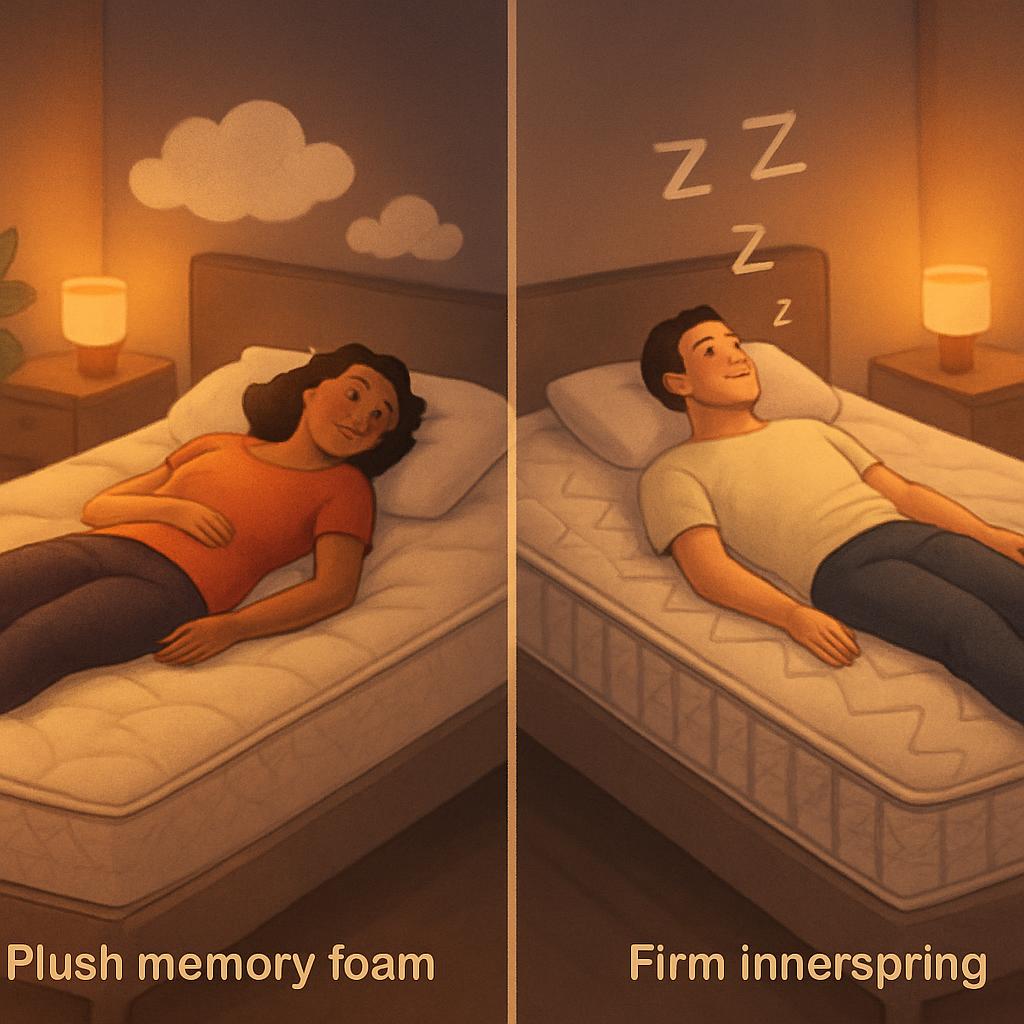
Your mattress plays a bigger role in your sleep quality than you might realize. If you're struggling to reach deep sleep or waking up feeling tired and achy, your mattress could be the culprit. The battle between memory foam vs innerspring isn't just about personal preference—it's about finding the right mattress support and firmness level that allows your body to truly rest and recover during the night.
When you're lying on the wrong mattress, your body can't properly align, which prevents you from cycling through the essential sleep stages. Deep sleep is when your body repairs tissues, builds bone and muscle, and strengthens your immune system. If your mattress isn't providing adequate support, you'll spend more time in lighter sleep stages, tossing and turning, and you'll miss out on that restorative deep sleep your body desperately needs.
The relationship between mattress firmness and sleep depth is straightforward: when your spine maintains its natural curve and your pressure points aren't screaming for relief, your nervous system can relax. This is where the memory foam mattress versus innerspring mattress debate becomes personal. Memory foam excels at pressure relief and contouring, while innerspring mattresses offer more bounce and airflow. Neither is inherently better—what matters is which type supports your body properly.
I've found that many people don't realize their mattress is the problem until they start paying attention to how they feel in the morning. Are you waking up with a stiff neck or lower back pain? Do you sleep better in hotels or at a friend's house? These are red flags that your current mattress isn't giving you the support you need for quality deep sleep. Whether you need a plush mattress that gently cradles your body or a firm mattress that keeps your spine aligned depends on your sleep position, body weight, and personal comfort preferences.
Another tell-tale sign is how often you wake during the night. If you're constantly shifting positions trying to get comfortable, your mattress isn't doing its job. A proper memory foam mattress or innerspring mattress should keep you comfortable enough that you stay in one position for longer periods, allowing you to reach and maintain those deeper sleep stages. If you're considering an upgrade, exploring options like the Stearns and Foster Lux Estate Medium Euro Top can show you what proper mattress support feels like and how it transforms your sleep quality.
Temperature regulation is another factor many people overlook when considering how their mattress affects sleep depth. Memory foam mattresses have come a long way with cooling technologies, but some older models can trap heat, causing you to wake up sweaty and uncomfortable. Innerspring mattresses typically sleep cooler due to better airflow between the coils. If you're constantly throwing off the covers or waking up hot, your mattress type might not be working with your body's temperature regulation needs.
The age of your mattress is also critical. Even the best deep sleep mattress won't last forever. Most mattresses should be replaced every 7-10 years, though this varies based on the quality and type. As mattresses age, they lose their ability to provide proper support and pressure relief. You might not notice the gradual decline, but your sleep quality certainly does. If your mattress is sagging, has visible indentations, or is more than eight years old, it's probably time to consider whether a memory foam mattress or innerspring mattress would better serve your current sleep needs.
Identifying Issues with Your Current Mattress
Figuring out exactly what's wrong with your current mattress requires a bit of detective work, but I can help you narrow down the issues. The symptoms you're experiencing can point directly to specific mattress problems, whether you're dealing with a memory foam mattress that's lost its support or an innerspring mattress with worn-out coils.
Physical pain is usually the most obvious indicator. Where you feel pain tells you what's wrong with your mattress support. Lower back pain often means your mattress is too soft and not keeping your spine aligned, or too firm and creating pressure points. Shoulder and hip pain typically means you need better pressure relief—something memory foam mattresses excel at. Neck pain can indicate your mattress isn't working well with your pillow, or the overall firmness level isn't right for your sleep position.
| Sleep Issue | Possible Mattress Problem | Memory Foam Solution | Innerspring Solution |
|---|---|---|---|
| Waking with back pain | Inadequate spinal support | Medium-firm memory foam with proper contouring | Firm innerspring with reinforced lumbar support |
| Pressure point discomfort | Too firm or no cushioning | Plush memory foam layers for pressure relief | Pillow-top innerspring with comfort layers |
| Sleeping hot | Poor airflow or heat retention | Gel-infused or breathable memory foam | Traditional innerspring with natural airflow |
| Frequent night waking | Lack of comfort or support | Responsive memory foam that adapts to movement | Individually wrapped coils that reduce motion |
| Sagging or visible indentations | Worn out materials and lost support | Replace with higher density memory foam | Replace with quality coil system and support core |
| Partner disturbance | Poor motion isolation | Memory foam absorbs movement effectively | Pocketed coils with motion isolation technology |
Sleep position matters tremendously when identifying mattress issues. Side sleepers need more cushioning for shoulders and hips, which means a plush mattress or medium-firm memory foam mattress works best. Back sleepers require mattress firmness that maintains spinal alignment without creating pressure points. Stomach sleepers need a firmer surface to prevent their hips from sinking too deeply. If you're a combination sleeper who changes positions throughout the night, you need a mattress that responds well to movement—something both quality memory foam and innerspring mattresses can provide, though in different ways.
The edge support test is simple but revealing. Sit on the edge of your mattress and notice how much it compresses. If you feel like you might roll off or the edge collapses significantly, your mattress has lost its structural integrity. Innerspring mattresses traditionally offer better edge support than memory foam, but newer memory foam designs have improved in this area. Poor edge support reduces your usable sleep surface and can make getting in and out of bed more difficult.
Check for visible signs of wear and tear. Look for sagging in the middle where you sleep—any depression deeper than 1.5 inches is a problem. Feel for lumps or uneven areas, which indicate the internal structure has broken down. If you have an innerspring mattress, listen for squeaking or creaking noises when you move. These sounds mean the coils are worn out and rubbing against each other. For memory foam mattresses, press down firmly and see how quickly it bounces back. If it stays compressed for several seconds or doesn't fully recover its shape, the foam has lost its responsiveness.
Your allergy symptoms might also be mattress-related. Older mattresses accumulate dust mites, dead skin cells, and allergens that can trigger sneezing, congestion, and breathing difficulties. If you notice your allergies are worse at night or first thing in the morning, your mattress could be harboring allergens that affect your sleep quality and overall health.
Upgrading for Better Sleep Quality
Making the switch to a new mattress is an investment in your health and well-being. Once you've identified that your current mattress is the problem, the real question becomes: should you go with a memory foam mattress or an innerspring mattress? The answer depends on your specific sleep needs, preferences, and physical requirements.
If pressure relief is your top priority—especially if you're a side sleeper or deal with joint pain—a memory foam mattress typically provides superior pressure point relief. The way memory foam contours to your body distributes your weight evenly, reducing stress on shoulders, hips, and other sensitive areas. This contouring effect helps you reach deeper sleep stages because your body isn't constantly sending pain signals to your brain. For folks who need that cradling sensation, options ranging from plush mattress choices to medium-firm varieties can accommodate different comfort preferences while still delivering excellent pressure relief.
On the other hand, if you sleep hot, prefer a more traditional mattress feel with bounce, or tend to change positions frequently during the night, an innerspring mattress might be your best bet. The coil structure allows air to circulate freely, keeping you cooler throughout the night. The responsive feel of innerspring mattresses makes it easier to move around and change positions, which some people find essential for comfortable sleep. Modern innerspring designs have come a long way, with individually wrapped coils offering better motion isolation than older spring systems.
Your body weight plays a significant role in determining the right mattress firmness and type. Lighter individuals (under 130 pounds) often do better with softer mattresses because they need less resistance to experience proper contouring and pressure relief. A plush mattress or softer memory foam mattress allows lighter sleepers to sink in just enough for comfort without feeling like they're sleeping on top of the mattress. Medium-weight individuals (130-230 pounds) have the most flexibility and can usually choose based on personal preference and sleep position. Heavier individuals (over 230 pounds) typically need firmer mattresses with robust support cores to prevent excessive sinking and maintain proper spinal alignment.
When you're ready to upgrade, consider hybrid options that combine the best of both worlds. Hybrid mattresses feature a coil support system like traditional innerspring mattresses, topped with memory foam or other comfort layers. This design offers the pressure relief and contouring of memory foam with the support, bounce, and cooling properties of innerspring. Many people find hybrids provide the balanced feel they've been searching for in the memory foam vs innerspring debate.
Think about your partner's needs too. If you share your bed, you're not just shopping for one person's perfect mattress—you're finding a compromise that works for both of you. Memory foam mattresses excel at motion isolation, meaning you won't feel your partner's movements as much during the night. This can be a game-changer if one person is a restless sleeper or has a different sleep schedule. Some innerspring mattresses with pocketed coils also offer good motion isolation, though generally not quite as effective as memory foam.
Don't forget about mattress support beyond just firmness. The support core—whether it's high-density foam in a memory foam mattress or the coil system in an innerspring mattress—is what provides long-term durability and consistent support. A quality support core ensures your mattress won't sag prematurely and will continue to promote deep sleep for years to come. This is where investing in a well-constructed mattress pays off, as cheaper options often use lower-quality materials in the support core that break down quickly.
Finally, consider any health conditions or special needs you have. If you have chronic pain conditions like fibromyalgia or arthritis, the pressure-relieving properties of a memory foam mattress might provide significant relief. If you have mobility issues, you might prefer the firmer surface and better edge support of an innerspring mattress, which makes it easier to get in and out of bed. People with respiratory issues or allergies might benefit from the naturally hypoallergenic properties of certain memory foam mattresses, or the breathability of innerspring designs that don't trap allergens as easily.
Remember that upgrading to the best deep sleep mattress for your needs is about more than just the mattress type. It's about finding the right combination of mattress firmness, support, and comfort features that align with your body and sleep habits. Whether you choose memory foam, innerspring, or a hybrid, the goal is the same: creating the optimal sleep environment that allows you to reach and maintain deep, restorative sleep night after night.
Support Core Comparisons: Understanding Mattress Support Systems
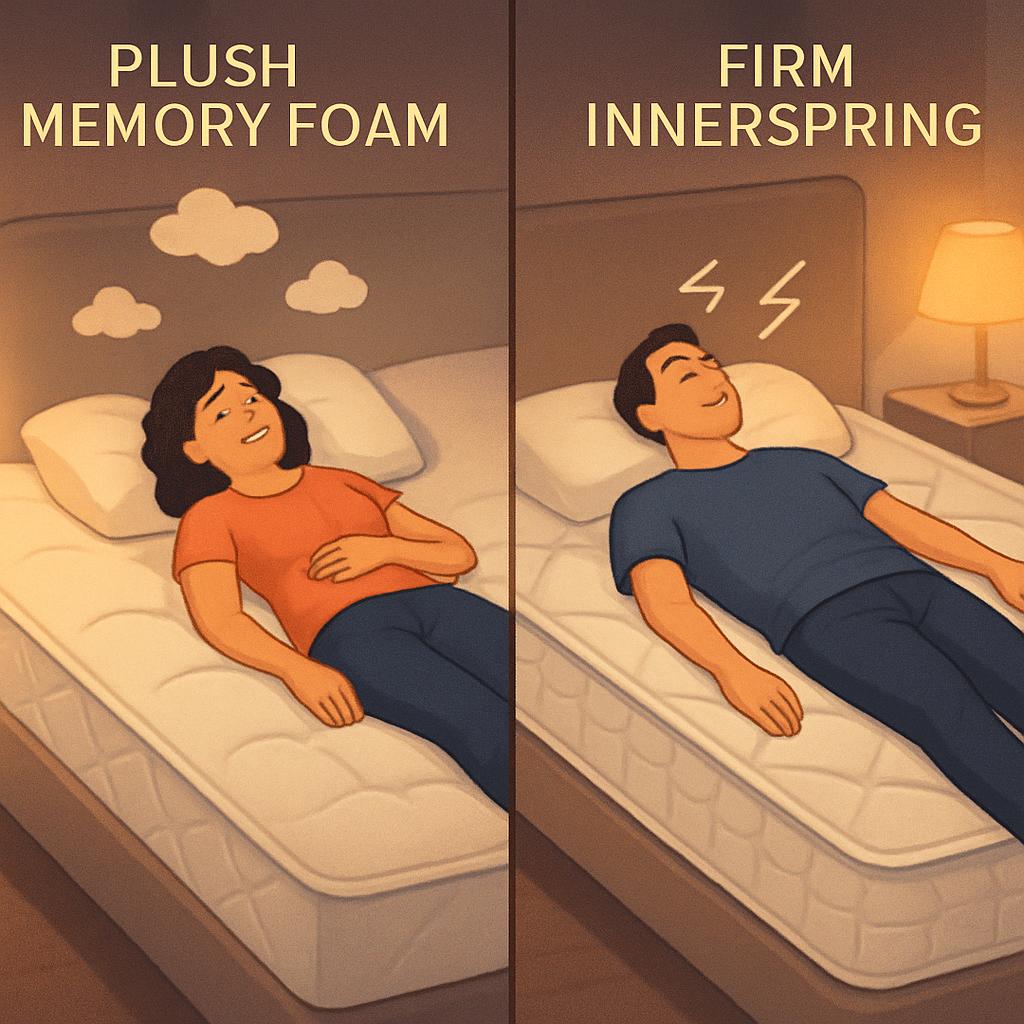
When you're lying in bed at night, the support core of your mattress is working behind the scenes to maintain proper spinal alignment and distribute your body weight evenly. This foundational layer is what truly separates a memory foam vs innerspring mattress in terms of how they cradle your body and promote deep sleep. The support core is essentially the backbone of your mattress, and understanding how each type functions can help you make a smarter choice for your sleep quality.
Memory foam mattresses build their support core using high-density polyurethane foam that responds to your body heat and weight. This dense base layer doesn't compress as easily as the comfort layers above it, providing a stable foundation that prevents you from sinking too deeply into the mattress. The support core in a memory foam mattress typically makes up about 50-70% of the mattress's total height, creating a firm platform that works in harmony with the softer top layers to balance comfort with proper mattress support.
Innerspring mattresses, on the other hand, rely on a network of steel coils or springs as their support core. These coils are engineered in various configurations—from traditional Bonnell coils to more advanced pocketed coil systems—each offering different levels of responsiveness and support. The gauge (thickness) of the wire used in these coils, along with the number of coils and how they're arranged, directly impacts the mattress firmness and overall support you'll experience. A higher coil count generally means better weight distribution and more consistent support across the entire sleep surface.
The way these two support systems interact with your body during sleep is fundamentally different. Memory foam's support core creates a more uniform, enveloping feel that reduces motion transfer—meaning you're less likely to feel your partner tossing and turning throughout the night. This characteristic makes memory foam particularly appealing for couples or light sleepers who are easily disturbed. The Sealy Lacey Firm Gel Foam Mattress exemplifies this technology, combining a supportive foam core with gel-infused layers for temperature regulation—addressing one of the common concerns people have about memory foam mattresses.
Innerspring support cores offer more bounce and responsiveness, which some sleepers prefer because it makes changing positions easier during the night. The coil system allows for better airflow through the mattress, which can help regulate temperature—a significant advantage for hot sleepers. The support from an innerspring mattress tends to be more "on top of" the mattress rather than cradled within it, which can be beneficial for heavier individuals or those who need firmer support for back or stomach sleeping positions.
Another important distinction lies in how these support cores age over time. Memory foam support layers maintain their structure more consistently over the years, though they can develop body impressions in areas where you sleep most frequently. Innerspring coils can eventually lose their tension and begin to sag, particularly in mattresses with lower coil counts or thinner gauge wire. However, high-quality innerspring mattresses with reinforced coil systems can maintain excellent support for many years when properly cared for.
How Memory Foam Provides Support and Pressure Relief
Memory foam has revolutionized the way we think about mattress support and pressure relief, and for good reason. The unique cellular structure of memory foam allows it to respond directly to your body's heat and weight, softening in areas where you need more give while maintaining firmness where support is critical. This adaptive quality is what sets a memory foam mattress apart when it comes to achieving deep sleep and reducing those frustrating pressure points that can wake you up throughout the night.
The pressure relief mechanism in memory foam works through a process called viscoelastic response. When you lie down on a memory foam mattress, the foam cells compress under pressure and redistribute your body weight across a larger surface area. This means that instead of your shoulders, hips, and heels bearing the brunt of your weight—as they might on a traditional innerspring mattress—the load is spread more evenly. The result is significantly reduced pressure on your joints and soft tissues, which promotes better blood circulation and helps you stay in deeper sleep stages for longer periods.
"I used to wake up with hip pain every morning on my old innerspring mattress. After switching to a memory foam mattress, I noticed the difference within the first week. The way it cushions my pressure points while still supporting my back has completely changed my sleep quality. I'm finally getting that deep, restful sleep I'd been missing for years."
For side sleepers especially, memory foam provides superior pressure relief at the shoulders and hips—the two areas that typically need the most cushioning in this sleep position. The foam contours precisely to these curves, maintaining proper spinal alignment while preventing the uncomfortable pressure buildup that can lead to tossing and turning. Back sleepers benefit from memory foam's ability to support the natural curve of the lumbar region without creating gaps where the lower back doesn't make contact with the mattress. Even stomach sleepers can find suitable memory foam options, though they typically need a firmer memory foam mattress to prevent their hips from sinking too deeply.
The density of the memory foam plays a huge role in how effectively it provides support and pressure relief. Higher-density memory foam (5 pounds per cubic foot or higher) offers better support and durability, maintaining its pressure-relieving properties longer than lower-density alternatives. This denser foam also responds more slowly to pressure, creating that classic "hug" feeling that many people love about memory foam. Lower-density foams respond more quickly and provide less of that sinking sensation, which some sleepers prefer but may not offer the same level of pressure relief.
Temperature sensitivity is another factor that affects how memory foam provides support. Traditional memory foam softens with body heat, which enhances its contouring abilities but can sometimes make sleepers feel too warm. Modern memory foam mattresses often incorporate gel infusions, open-cell technology, or copper-infused foams to address this concern while maintaining excellent pressure relief. These innovations help dissipate heat while preserving the supportive, pressure-relieving qualities that make memory foam so effective for deep sleep.
The support system in a memory foam mattress also helps reduce motion transfer, which indirectly contributes to better sleep quality. When your partner moves during the night, the memory foam absorbs that movement rather than transferring it across the mattress surface. This isolation of motion means fewer sleep disruptions, allowing you to maintain those crucial deep sleep cycles that are so important for physical recovery and mental refreshment. The combination of pressure relief, proper support, and motion isolation makes memory foam particularly effective at promoting the kind of uninterrupted, restorative sleep that leaves you feeling truly rested in the morning.
Evaluating the Support Offered by Innerspring Mattresses
Innerspring mattresses have been the standard for comfortable sleep for over a century, and their enduring popularity speaks to the reliable support they provide. The coil system at the heart of every innerspring mattress creates a responsive, supportive foundation that many sleepers find ideal for maintaining proper alignment throughout the night. When you're comparing memory foam vs innerspring options, understanding the specific support characteristics of innerspring construction can help you determine if this traditional approach is the right fit for your sleep needs.
The type of coil system used in an innerspring mattress dramatically affects the quality of support you'll receive. Bonnell coils, the oldest and most economical design, are hourglass-shaped springs that compress easily and provide a bouncier, more traditional mattress feel. While they offer decent support for average-weight sleepers, they don't conform as closely to your body's contours as more advanced systems. Offset coils are similar but have a flattened top and bottom, allowing them to hinge together and provide better contouring while maintaining strong support. These coils are often found in mid-range innerspring mattresses and offer a good balance of support and comfort.
Continuous wire coils use a single piece of wire to form all the coils in a row, creating a very durable and supportive structure. This design is particularly good at distributing weight evenly across the mattress surface, making it a solid choice for heavier individuals who need consistent mattress support. However, continuous wire systems don't isolate motion as well as other coil types, which can be a drawback if you share your bed with a restless sleeper.
Pocketed coils, also called individually wrapped coils or Marshall coils, represent the most advanced innerspring technology available today. Each coil is encased in its own fabric pocket, allowing it to move independently from its neighbors. This independent movement creates exceptional contouring and significantly reduces motion transfer—addressing one of the main criticisms historically leveled at innerspring mattresses. Pocketed coil systems can have coil counts ranging from around 800 in a queen size to well over 2000 in luxury models, with higher counts generally providing more precise support and better conforming to your body's shape.
The gauge of the wire used in the coils is another critical factor in evaluating innerspring mattress support. Wire gauge is measured on an inverse scale, meaning lower numbers indicate thicker, firmer wire. A 12-gauge coil will be firmer than a 15-gauge coil. Mattresses designed for firm support typically use 12 to 13.5-gauge coils, while plush mattress options often feature 14 to 15.5-gauge coils that compress more easily. The gauge you need depends on your body weight, preferred sleep position, and personal preference for mattress firmness.
One of the inherent advantages of innerspring support is the responsive feel it provides. When you move during the night, innerspring coils push back immediately, making it easier to change positions without feeling stuck or like you're fighting against the mattress. This responsiveness can be particularly beneficial for combination sleepers who frequently switch between sleeping on their back, side, and stomach throughout the night. The springy support also makes it easier to get in and out of bed, which can be important for older adults or anyone with mobility concerns.
The edge support in innerspring mattresses is typically superior to that of memory foam alternatives. Because the coil system extends all the way to the perimeter of the mattress, you can sit or sleep near the edge without experiencing excessive compression or feeling like you might roll off. Many quality innerspring mattresses feature reinforced edge coils or foam encasements that further enhance this perimeter support, effectively increasing the usable sleep surface of your mattress. This is especially valuable if you share your bed with a partner or pet and need to maximize your sleeping space.
Breathability is another area where innerspring mattresses excel in their support function. The open structure of the coil system allows air to circulate freely throughout the mattress, helping to regulate temperature and prevent heat buildup during the night. For hot sleepers or those who live in warmer climates, this natural ventilation can contribute significantly to sleep quality by maintaining a more comfortable sleep temperature. While the comfort layers on top of the springs can affect overall temperature regulation, the support core itself remains naturally cooling compared to dense foam alternatives.
The Cost Factor: Investing in Your Best Deep Sleep Mattress
Let's talk about what you'll actually spend when shopping for a new mattress, because the cost difference between memory foam vs innerspring options can be substantial—and understanding where your money goes can help you make a smarter investment in your sleep quality. The price of a mattress isn't just about the materials used; it reflects the engineering, durability, and the specific sleep benefits that different constructions provide. When you're trying to find the best deep sleep mattress for your needs, looking beyond the price tag to understand the value you're receiving is important.
Memory foam mattresses generally span a wide price range, from budget-friendly options starting around $300 for a queen size to luxury models exceeding $3,000. The variation in price typically corresponds to the foam density, the number and types of comfort layers, cooling technologies incorporated, and the brand reputation. A basic memory foam mattress might use a simple two-layer construction with a support foam base and a memory foam comfort layer, while premium models feature multiple specialized layers—each engineered to address specific aspects of sleep quality like temperature regulation, pressure relief, or edge support.
Innerspring mattresses also cover a broad price spectrum, though their pricing structure works a bit differently. Entry-level innerspring mattresses with basic Bonnell coil systems and minimal padding can start around $200 to $400 for a queen size. Mid-range innerspring options with better coil systems (like offset coils or lower-count pocketed coils) and more substantial comfort layers typically fall in the $600 to $1,500 range. High-end innerspring and hybrid mattresses featuring advanced pocketed coil systems, luxury comfort materials, and sophisticated edge support can easily reach $2,000 to $5,000 or more.
Hybrid mattresses—which combine innerspring coils with memory foam or latex comfort layers—often represent the higher end of the pricing spectrum because they aim to deliver the best attributes of both worlds. These mattresses incorporate the support and breathability of springs with the pressure relief and motion isolation of foam. The Stearns & Foster Lux Estate Firm Euro Top Mattress is an excellent example of this hybrid approach, featuring precision support coils paired with layers of memory foam and other premium materials designed to deliver exceptional deep sleep quality. While the initial investment is higher, many sleepers find that hybrids offer the optimal combination of features for their specific needs.
Brand reputation and warranty coverage also factor significantly into mattress pricing. Established brands like Tempur-Pedic, Sealy, Sealy Posturepedic, and Stearns & Foster command premium prices partly because of their extensive research and development, quality control standards, and comprehensive warranty programs. These companies have spent decades perfecting their mattress designs and typically offer warranties ranging from 10 to 25 years, providing peace of mind that your investment is protected. Lesser-known brands or direct-to-consumer companies might offer lower prices but may not have the same track record of durability or customer support.
The size of the mattress obviously affects the price, with larger sizes costing proportionally more. A twin memory foam or innerspring mattress might cost 40-50% of what you'd pay for a king size in the same model. If you're shopping on a budget, you might find better quality in a smaller size from a premium brand than you would in a larger size from a budget manufacturer. However, compromising on size when you need the space can negatively impact your sleep quality, so it's worth carefully considering your actual space requirements versus your budget constraints.
Sales, promotions, and holiday deals can significantly impact what you actually pay for a mattress. Major holidays like Memorial Day, Labor Day, Presidents' Day, and Black Friday typically bring substantial discounts—sometimes 20-50% off retail prices. If your current mattress is still serviceable but you know you'll need to replace it soon, timing your purchase around these sales events can stretch your budget considerably. However, I'd caution against letting a sale push you toward a mattress that isn't right for your needs just because it's discounted. A cheaper mattress that doesn't support your sleep requirements isn't actually a good value, regardless of the sale price.
Budgeting for Quality: Memory Foam vs Innerspring Costs
Creating a realistic budget for your mattress purchase requires understanding not just the upfront cost but also the cost per night of use over the mattress's lifespan. This perspective can help justify spending more initially if it means better sleep quality and longer durability. When I'm helping someone think through their mattress budget, I encourage them to consider both the immediate financial impact and the long-term value they'll receive from their investment in better sleep.
Here are the key cost considerations you should factor into your mattress budget:
- Initial purchase price: This is obviously your primary cost, and it varies widely based on mattress type, size, and brand. Budget memory foam mattresses typically range from $300-$800 for a queen, while quality innerspring options in the same price range will generally have lower coil counts or less sophisticated comfort layers. Mid-range options ($800-$1,500) offer significantly better materials and construction in both categories. Premium mattresses ($1,500-$3,000+) feature advanced technologies, luxury materials, and comprehensive warranties.
- Delivery and setup costs: Some mattress retailers charge for delivery, old mattress removal, and setup, while others include these services. Budget an extra $50-$200 for these services if they're not included in your purchase price. Mattress-in-a-box options often ship free, but you'll need to handle setup yourself, which can be challenging with heavier mattresses.
- Foundation or base requirements: Your new mattress may require a specific type of foundation. Memory foam mattresses typically need a solid, flat surface or a foundation with closely-spaced slats (no more than 3 inches apart). Some innerspring mattresses can work with existing box springs, but many newer models also require platform-style support. Budget $100-$500 for a new foundation if needed, or more if you're considering an adjustable base.
- Mattress protector: This is an expense I always recommend because it protects your investment from spills, stains, and allergens that could void your warranty. A quality waterproof, breathable mattress protector costs $50-$150 depending on size and features. This relatively small investment can extend your mattress's life significantly and keep it cleaner and more hygienic.
- Trial period costs: Many mattress companies offer sleep trials, but read the fine print carefully. Some charge return shipping fees ($50-$200) if you decide to return the mattress during the trial period. Others have fully free trials. Factor this potential cost into your budget if you're considering a mattress you haven't tried in person.
- Warranty considerations: While warranties are typically included in your purchase price, understand what they do and don't cover. Most warranties are prorated after the initial period, meaning you'll pay an increasing percentage of the replacement cost as the mattress ages. Some warranties require you to pay shipping costs for warranty claims. Knowing these potential future costs helps you budget more accurately over the long term.
When comparing memory foam vs innerspring costs, remember that price alone doesn't tell the whole story. A $600 memory foam mattress and a $600 innerspring mattress represent different value propositions based on the materials and construction involved. The memory foam option at this price point likely features decent-quality foam with moderate density, while the innerspring mattress might offer a higher coil count but thinner comfort layers. Your body type, sleep position, and personal preferences should guide which represents better value for you specifically.
One budgeting strategy that works well is to determine your absolute maximum budget first, then focus on finding the best mattress support and sleep quality you can get within that range. If you're working with a tighter budget (under $800), you'll need to prioritize which features matter most to you. Do you overheat at night? Prioritize cooling features or innerspring breathability. Do you have significant pressure point pain? Focus on memory foam or hybrid options with good pressure relief, even if it means accepting a smaller size or fewer bells and whistles.
For those with more flexible budgets ($1,000-$2,000), you can afford to be less compromising and find options that check most of your boxes in terms of mattress firmness, materials, cooling, and motion isolation. This price range opens up quality options from reputable brands with proven track records. If your budget extends beyond $2,000, you're shopping in the luxury category where you can expect premium materials, advanced technologies, and excellent warranties. At this level, the differences between options often come down to personal preference rather than objective quality differences.
Long-Term Benefits of a Well-Chosen Mattress
The true value of investing in the right mattress extends far beyond the price you pay upfront. When you find a mattress that properly supports your body and promotes deep sleep, you're making an investment that pays dividends in your health, productivity, and overall quality of life for years to come. This long-term perspective is what transforms a mattress from a simple bedroom furniture purchase into a crucial investment in your wellbeing.
The most immediate long-term benefit of a well-chosen mattress is improved sleep quality and the cascade of health benefits that follow. Quality deep sleep is when your body does its most important repair work—consolidating memories, producing hormones, repairing tissues, and strengthening your immune system. When your mattress provides proper support and pressure relief, you spend more time in the deeper stages of sleep rather than tossing and turning in lighter sleep or waking up repeatedly. Over months and years, this difference in sleep quality accumulates, affecting everything from your cognitive function to your cardiovascular health.
Pain reduction and management is another significant long-term benefit of choosing the right mattress. Whether you're dealing with chronic back pain, arthritis, fibromyalgia, or simply the general aches that come with aging, your mattress plays a huge role in either alleviating or exacerbating these conditions. A memory foam mattress that properly relieves pressure points can dramatically reduce morning stiffness and pain for many people. Similarly, an innerspring mattress with the right mattress firmness level can maintain proper spinal alignment that prevents pain from developing in the first place. Over the lifespan of your mattress—potentially 7 to 10 years or more—these daily improvements in pain levels can significantly enhance your quality of life.
The financial return on investment might not be as obvious as the health benefits, but it's equally real. Consider that Americans spend approximately one-third of their lives sleeping. If you purchase a quality mattress for $1,500 and it lasts 10 years, you're spending just $0.41 per night for better sleep. Compare this to the costs associated with poor sleep: decreased work productivity, increased sick days, higher healthcare costs for stress-related conditions, and even the seemingly small expenses like extra coffee and energy drinks to compensate for fatigue. The National Sleep Foundation estimates that sleep disorders and sleep deprivation cost the U.S. economy hundreds of billions of dollars annually in lost productivity and medical expenses. Your personal share of avoiding these costs through better sleep can easily exceed your mattress investment.
Durability and longevity themselves represent important long-term benefits of choosing quality over price. A cheap mattress might save you money upfront, but if it sags, develops body impressions, or loses its support within 3-4 years, you'll need to replace it much sooner than a higher-quality option. This means more frequent purchases, more disposal hassles, and more time spent shopping for replacements. A well-constructed memory foam mattress or innerspring mattress from a reputable manufacturer can maintain its supportive properties for 8-10 years or longer with proper care, delivering consistent sleep quality throughout its lifespan.
The mental health benefits of consistent, restorative sleep on a comfortable, supportive mattress shouldn't be underestimated either. Chronic sleep deprivation is strongly linked to depression, anxiety, and mood disorders. When you regularly achieve deep sleep on a mattress that meets your needs, you're more emotionally resilient, better able to manage stress, and generally more optimistic about life. These psychological benefits affect your relationships, your work performance, your creative thinking, and your overall life satisfaction. While it's difficult to put a dollar value on these improvements, their impact on your long-term happiness and success is undeniable.
For couples, a well-chosen mattress can even strengthen your relationship in subtle but meaningful ways. Poor sleep due to an uncomfortable or motion-transferring mattress can create irritability, reduce patience, and decrease intimacy. When both partners are sleeping well on a mattress with good motion isolation and appropriate support for different body types and sleep positions, you both wake up more rested and better able to engage positively with each other. Over years together, this foundation of quality rest contributes to relationship satisfaction in ways that are easy to overlook but difficult to overstate.
The environmental impact of choosing a durable, long-lasting mattress also represents a long-term benefit worth considering. Mattresses that end up in landfills too soon contribute to waste management challenges and environmental degradation. By investing in a quality mattress that lasts longer, you're reducing your environmental footprint. Some premium mattress manufacturers are also incorporating more sustainable materials and production methods, allowing you to align your purchase with your environmental values without sacrificing sleep quality.
Making the Right Choice for Deep Restful Sleep
Choosing between a memory foam mattress and an innerspring mattress doesn't have to feel overwhelming once you understand how each one affects your sleep depth and overall sleep quality. Throughout this guide, I've walked you through the fundamental differences between these two popular mattress types, explored how mattress firmness influences your rest, and examined the support systems that make each option unique.
The truth is, there's no single "best deep sleep mattress" that works perfectly for everyone. What matters most is finding the mattress that aligns with your specific sleep needs, body type, preferred sleeping position, and comfort preferences. If you're someone who enjoys that cradling sensation and wants excellent pressure relief, a memory foam mattress might be your ideal match. On the other hand, if you prefer more bounce, better airflow, and traditional mattress support, an innerspring mattress could be the perfect fit for achieving those deep sleep cycles you're after.
Remember that mattress firmness plays a critical role in determining your sleep quality. Whether you lean toward a plush mattress that offers gentle contouring or a firm mattress that provides more robust support, your choice should support proper spinal alignment while keeping you comfortable throughout the night. Side sleepers often benefit from softer surfaces that cushion pressure points, while back and stomach sleepers typically need firmer support to maintain healthy posture during sleep.
I encourage you to pay attention to the signs your current mattress might be showing. Waking up with aches and pains, tossing and turning throughout the night, or feeling unrested despite spending enough time in bed are all indicators that your mattress may be compromising your sleep depth. Don't ignore these signals—your body is telling you something important about your sleep environment.
When you're ready to make your purchase, take advantage of mattress trial periods offered by retailers. These trial periods give you the opportunity to test your new mattress in your own home, in your own bed frame, with your own pillows and bedding. This hands-on experience is invaluable because what feels comfortable in a showroom for ten minutes might feel completely different after sleeping on it for several weeks. Most quality mattress retailers understand this and want you to be completely satisfied with your investment.
The cost factor shouldn't be your only consideration, but it's certainly an important one. While memory foam vs innerspring mattresses can vary widely in price, think of your mattress as an investment in your health, productivity, and overall well-being. When you consider that you'll spend roughly one-third of your life sleeping, spending a bit more for a mattress that truly supports deep sleep and improves your sleep quality makes financial sense in the long run. A better mattress can mean fewer health issues, improved mental clarity, better mood regulation, and more energy throughout your day.
As you move forward with your mattress shopping experience, trust your own comfort preferences above everything else. Read reviews, do your research, and educate yourself about mattress support systems and comfort layers, but ultimately, listen to what your body tells you when you lie down on different options. Visit Sleepology Mattress Shop to explore a wide selection of both memory foam and innerspring mattresses from trusted brands like Tempur-Pedic, Sealy, Sealy Posturepedic, and Stearns & Foster.
Your journey to better sleep starts with understanding your options and making an informed decision. Whether you choose the conforming comfort of memory foam or the responsive support of innerspring coils, the right mattress is out there waiting to transform your nights and energize your days. Sweet dreams and restful sleep are within your reach—you just need to take that first step toward finding your perfect match.
Frequently Asked Questions (FAQs)
Which mattress type is better for side sleepers: memory foam or innerspring?
Memory foam mattresses are generally better for side sleepers because they contour to your body shape and relieve pressure on your shoulders and hips. Side sleeping creates concentrated pressure points, and the conforming nature of memory foam helps distribute your weight more evenly. However, some hybrid innerspring mattresses with thick comfort layers can also work well for side sleepers who prefer a bit more bounce.
Do memory foam mattresses sleep hot compared to innerspring mattresses?
Traditional memory foam mattresses can trap heat, but modern memory foam mattresses often include cooling technologies like gel infusions, open-cell foam, or breathable covers. Innerspring mattresses naturally allow more airflow between the coils, which helps with temperature regulation. If you tend to sleep hot, look for memory foam options with cooling features or consider an innerspring mattress with good breathability.
How long do memory foam and innerspring mattresses typically last?
High-quality memory foam mattresses usually last between 7 to 10 years, while innerspring mattresses typically last 6 to 8 years. The lifespan depends on the quality of materials, how well you maintain your mattress, and your body weight. Premium brands like Tempur-Pedic and Stearns & Foster often come with longer warranties that reflect their durability and quality construction.
Can a mattress really affect how deeply I sleep?
Yes, your mattress significantly impacts your sleep depth and overall sleep quality. An uncomfortable mattress can cause you to toss and turn throughout the night, preventing you from reaching and maintaining the deep sleep stages your body needs for recovery and restoration. The right mattress support and comfort level help minimize sleep disruptions and promote longer periods of restorative deep sleep.
What firmness level should I choose for back pain relief?
Most people with back pain benefit from a medium-firm mattress that provides both support and pressure relief. A mattress that's too soft won't support your spine properly, while one that's too firm can create uncomfortable pressure points. The ideal mattress firmness for back pain depends on your sleeping position, body weight, and the specific location of your pain. Testing different firmness levels during a trial period is the best way to find what works for you.
Are innerspring mattresses noisier than memory foam mattresses?
Innerspring mattresses can develop squeaks and creaks over time as the coils and springs age, especially with lower-quality models. Memory foam mattresses are virtually silent because they don't have any moving parts or metal components. If noise is a concern for you or your partner, a memory foam mattress or a high-quality innerspring with individually wrapped coils would be your best options.
How much should I expect to spend on a quality mattress?
Quality mattresses typically range from $800 to $3,000 or more for a queen size, depending on the brand, materials, and features. Memory foam mattresses and innerspring mattresses both span this price range. While budget options exist, investing in a higher-quality mattress from reputable brands like Sealy Posturepedic or Tempur-Pedic often means better materials, longer lifespan, and improved sleep quality over time.
Do I need a special bed frame for a memory foam mattress?
Memory foam mattresses need proper support but don't require a special bed frame. They work well on platform beds, slatted frames with slats no more than 3 inches apart, box springs, or adjustable bases. The key is ensuring the mattress has adequate support across its entire surface to prevent sagging. Many memory foam mattress owners actually prefer adjustable bases because memory foam easily conforms to different positions.
Which mattress type is better for couples?
Memory foam mattresses excel at motion isolation, meaning you won't feel your partner's movements during the night. This makes them ideal for couples where one person is a restless sleeper. However, some couples prefer the bounce and ease of movement that innerspring mattresses provide. If you and your partner have different preferences, a hybrid mattress that combines memory foam comfort layers with innerspring support might be your best compromise.
What's the difference between a plush mattress and a firm mattress?
A plush mattress has softer comfort layers that create a cushioned, hugging feel when you lie down. It offers more sink-in and contouring, which many side sleepers prefer. A firm mattress has thinner comfort layers and provides a more supportive, less yielding surface. Firm mattresses keep you "on top" of the bed rather than sinking in, which back and stomach sleepers often find more comfortable for maintaining proper spinal alignment.
How do I know when it's time to replace my mattress?
Signs that you need a new mattress include waking up with aches and pains, visible sagging or indentations, increased allergies or asthma symptoms, sleeping better in other beds, and your mattress being older than 7-8 years. If you're tossing and turning more than usual or your sleep quality has noticeably declined, your mattress may no longer be providing the mattress support you need for deep sleep.
Can I flip a memory foam mattress like an innerspring mattress?
Most memory foam mattresses are not designed to be flipped because they have a specific construction with comfort layers on top and a support core on the bottom. Flipping them would put you on the firm support layer, which isn't comfortable. However, you should rotate your memory foam mattress 180 degrees every 3-6 months to promote even wear. Some innerspring mattresses can be flipped, but many modern ones are also one-sided, so always check your manufacturer's guidelines.
What's a hybrid mattress and how does it compare?
A hybrid mattress combines the pressure relief and contouring of memory foam comfort layers with the support and bounce of an innerspring coil system. This design aims to give you the best of both worlds—the conforming comfort of memory foam with the responsiveness and breathability of innerspring mattresses. Hybrids are becoming increasingly popular because they address common complaints about both traditional mattress types.
How long does it take to adjust to a new mattress?
Most people need between 30 to 90 days to fully adjust to a new mattress, especially when switching between memory foam vs innerspring types. Your body needs time to adapt to the different feel and support system. This adjustment period is why many mattress retailers offer trial periods of at least 90 days. If you're still uncomfortable after this break-in period, the mattress firmness or type may not be right for your sleep needs.
Does mattress weight matter when choosing between memory foam and innerspring?
Yes, your body weight significantly influences which mattress type and firmness level will work best for you. Heavier individuals often need firmer mattresses or innerspring mattresses with stronger coil systems to prevent excessive sinking and maintain proper support. Lighter individuals typically prefer softer memory foam mattresses or plush innerspring options because they need less firmness to achieve proper contouring and pressure relief. Consider your weight when evaluating mattress support and comfort options.