

Does a Nectar Mattress Have Fiberglass? A Clear, Calm Guide From a Sleep Expert
If you have been googling “does Nectar mattress have fiberglass,” you are probably feeling a mix of curiosity and anxiety. Maybe you saw a scary TikTok of fiberglass particles all over someone’s bedroom, or you read a forum thread that left you wondering if your own bed is secretly unsafe. When you are just trying to get a decent night of sleep, the last thing you want is to worry that your mattress could irritate your skin, your lungs, or your home.
You are not overreacting by asking this question. Fiberglass is real, it is used in some mattresses as a fire barrier, and it can become a problem if it escapes. At the same time, a lot of what you see online is incomplete, outdated, or focused on worst case scenarios. The truth is more nuanced, and understanding that truth can help you make a calm, confident decision about whether Nectar, or another mattress, is right for you.
Here at Sleepology, we talk to shoppers every day who want three things at once: comfort, value, and safety. If you are looking at Nectar because of its price point and pressure relief, you are not alone. In , foam and hybrid mattresses like Nectar remain some of the most popular beds on the market, but questions about fiberglass, off gassing, and chemical safety are rising too. You deserve accurate information that cuts through the noise.
You are in the right place. We will walk through what fiberglass actually is, how Nectar’s fire barrier works, what has changed in Nectar’s construction over time, and how to protect yourself if you already own or are considering a Nectar. We will also compare fiberglass free alternatives and share practical shopping tips so you can move from worry to a clear next step, whether that means keeping your current bed, upgrading to a new Nectar model, or choosing a different brand altogether.
What Fiberglass Is, And Why Mattresses Used It In The First Place
Fiberglass can sound mysterious or even sinister, but it is essentially very fine strands of glass woven into a fabric or mixed into yarn. The reason it shows up in mattresses has nothing to do with comfort. It is about meeting federal flammability standards in the most cost effective way possible.
In the United States, all mattresses sold to consumers have to pass open flame tests defined by federal regulations, often referred to as 16 CFR Part 1633. These tests are not optional. Manufacturers have to show that their mattresses resist ignition and slow the spread of fire. According to the Consumer Product Safety Commission, these rules were put in place to reduce fire related injuries and deaths, and they have been effective at that goal.
Historically, mattress brands had three main options to pass these tests. They could use chemical flame retardants directly in the foam, rely on natural materials like wool, or wrap the interior of the mattress in an internal “fire sock.” Fiberglass became popular in that fire sock role because it is naturally noncombustible, relatively inexpensive, and does not rely on some of the controversial chemical flame retardants that have been phased out over time. Many low and mid priced memory foam mattresses adopted fiberglass socks for that reason.
The problem is not fiberglass itself when it stays where it belongs. The problem is what happens if those glass fibers escape into your sleeping environment. The Sleep Foundation notes that certain mattress materials and finishes can irritate the respiratory system and skin if they shed particles into the air, which is why proper containment and good product design are so important. When a fiberglass fire sock is sealed and never disturbed, it can technically be safe. When a cover is removable, torn, or washed incorrectly, fibers can leak, becoming incredibly hard to clean up.
You will see horror stories online of fiberglass particles covering furniture, clothes, and HVAC systems. Those situations usually involve someone unzipping a cover, peeling back layers to “wash” or inspect the foam, then releasing fibers unintentionally. That is why many brands, including Nectar, now explicitly warn you not to remove your mattress cover. It is also one of the main reasons many manufacturers have shifted away from fiberglass in recent years in favor of alternative fire barrier materials that do not carry the same risk if a cover is opened by mistake.
Does The Nectar Mattress Have Fiberglass Today?
This is the question that likely brought you here, so let us tackle it head on and then unpack the nuance.
Publicly available information, independent testing, and statements from Nectar’s parent company Resident indicate that current Nectar mattresses manufactured from 2023 forward in the U.S. are designed to be fiberglass free. Instead of fiberglass, Nectar uses rayon based or rayon blend fire barriers to meet U.S. flammability standards. Several independent reviewers and retailers who have worked directly with Nectar have confirmed that modern Nectar models are marketed and tested as fiberglass free.
At the same time, there are two key nuances that matter for you as a shopper.
First, older Nectar mattresses, especially those made before 2022, may have used fire socks that contained silica or glass fiber in the yarn or knit fabric. Some of those socks technically fall under “fiberglass” even if the company language sometimes used broader terms like “glass fiber” or “silica infused.” As one independent testing site has noted, Nectar’s own language acknowledges that prior models could include these fibers within the protective sock layer while still being covered by the outer fabric.
Second, while modern Nectar marketing emphasizes that there is no fiberglass in newly manufactured mattresses, there is no practical way for a consumer to look at a specific older Nectar and know the exact month that production shifted. Resident has said that the transition away from fiberglass based socks happened starting in 2022, with all new production by 2023 using rayon, but they also note that at the SKU level, exact changeover dates are difficult to pin down. That means you could see conflicting claims in reviews written at different times.
If you are buying a brand new Nectar mattress directly from Nectar or from a reputable retailer in 2026, you can reasonably expect it to be fiberglass free and built around a rayon based fire barrier. If you are buying a used Nectar, receiving a hand me down, or unsure of the manufacturing date, it is safer to assume that a fiberglass containing fire sock may be present inside, even though it is fully enclosed and not designed to be accessed.
The bottom line is that the current direction of Nectar as a brand is away from fiberglass and toward alternative fire barrier materials. If fiberglass is a nonnegotiable concern for you, it is still wise to confirm with the seller that you are buying newly produced stock rather than old inventory that has been sitting in a warehouse.
How Nectar’s Fire Barrier Works And Where Fiberglass Might Live

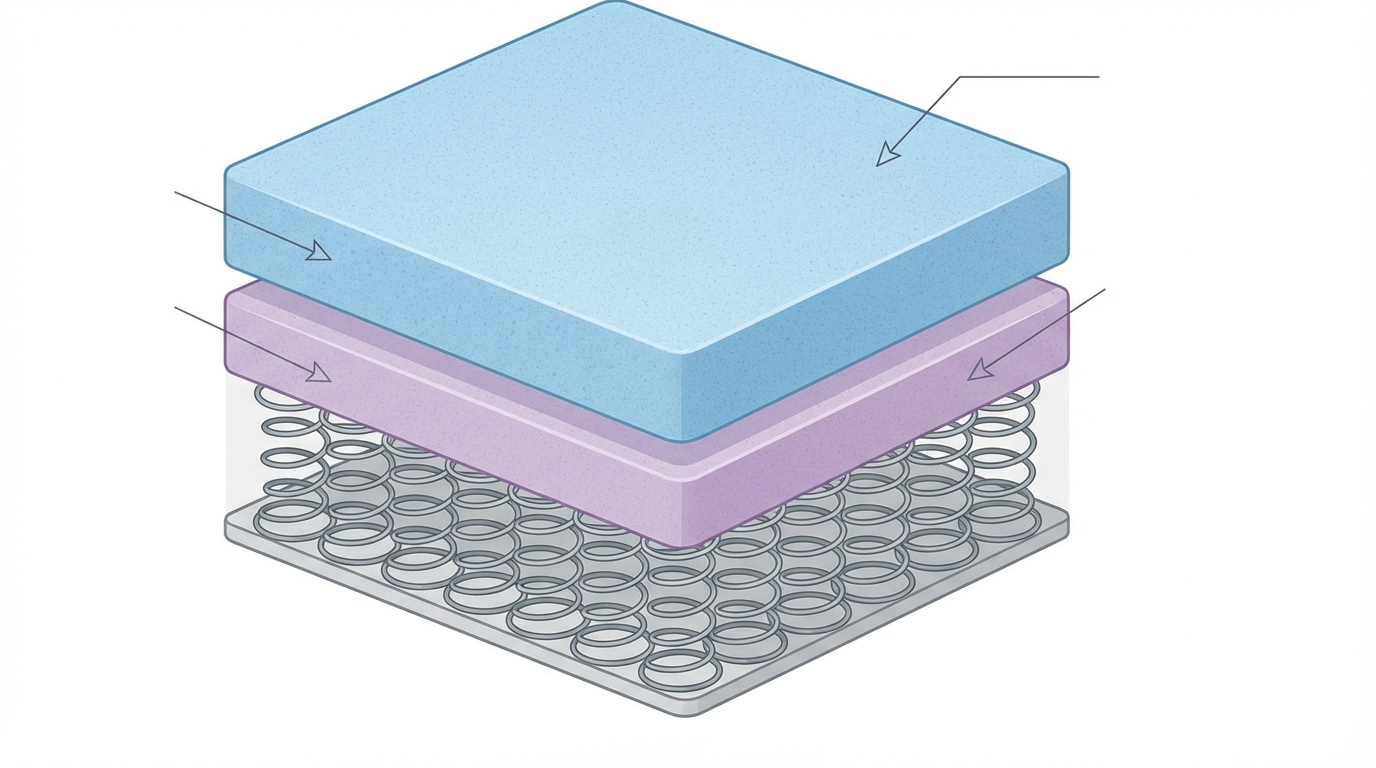
Understanding where a fire barrier sits inside the mattress makes the fiberglass conversation easier to visualize. In a typical all foam Nectar mattress, you have a top fabric cover, a few layers of different foam densities, and a bottom cover or base fabric. The fire barrier, whether fiberglass based or rayon based, is not the outer cover you touch. It is a separate inner “sock” or layer that wraps around the foam core, hidden between the outer cover and the internal foam.
When Nectar talks about a “fire sock,” they are describing this inner protective tube. The idea is that in a fire, that sock shrinks and chars, forming a barrier that slows the foam from igniting. In older constructions that used glass fiber infused yarn, those glass strands were woven into that sock. You would never see them if the mattress cover remained sealed and intact.
This is why Nectar is so firm about not removing the mattress cover and why they consider cover removal to void the warranty. They know that tampering with the outer fabric could disturb the fire sock beneath. In newer, fiberglass free models that use rayon and polyester blends, the same fire sock structure is there, just with different fibers doing the fire resistance work. The safety principle is the same. The sock does the job in a fire, and your outer cover forms an additional layer of separation from the fire barrier itself.
From a user experience standpoint, what you feel is the quilted or knit cover on top, then the comfort foam layers beneath. You will not feel or see the fire barrier, and you should not try to. That is part of why, for everyday use, the bigger safety variables are actually air quality and off gassing, not the fire sock material, as long as everything is sealed and undisturbed.
According to the Cleveland Clinic, people sensitive to airborne irritants can experience symptoms from volatile organic compounds in new products, including mattresses, especially in the first few days while foams are off gassing. Choosing a mattress with low VOC certifications such as CertiPUR US, which Nectar foams carry, is one part of staying comfortable and safe. Ventilating your room well when a new bed arrives is just as important regardless of whether the fire sock uses fiberglass, rayon, wool, or another material.
“I spent two weeks doom scrolling about fiberglass before stepping into Sleepology. Mia broke down where fire barriers actually sit inside a mattress and helped me understand the difference between older and newer Nectar models. I walked out feeling informed instead of scared, and ended up choosing a non Nectar hybrid that fits my back issues better anyway.” – Laura P., November
Health And Home Risks: When Fiberglass Becomes A Problem
To understand why fiberglass has become such a hot topic, it helps to separate two different realities. One is the regulatory side, where fiberglass in a sealed sock can be a simple way to pass stringent fire tests. The other is what happens in real people’s homes when that containment fails.
Fiberglass filaments are rigid and very fine. When they escape into your living space, they can cause skin irritation, eye irritation, and, for some people, respiratory symptoms. The Mayo Clinic notes that glass fibers can trigger similar irritation responses as other airborne particles, especially in people with asthma or sensitive airways, even though fiberglass itself is considered chemically inert. The bigger issue is mechanical irritation, not toxicity.
When fiberglass leaks from a mattress, it rarely happens in tiny, controlled amounts. More often, it occurs when someone unzips or cuts the cover, strips it off to machine wash, or when a defective seam opens. That sudden release can turn the inside of the cover into a kind of glitter bomb, only with sharp fibers instead of sparkles. Those fibers cling to fabric, carpet, and soft surfaces. They can get drawn into HVAC systems, making cleanup difficult and sometimes expensive.
Many of the most viral fiberglass stories come from people who did not realize that their mattress cover was not designed to be removed or laundered. Some brands added decorative zippers that look like a normal removable case, even when the care instructions warned against removal. Others did not communicate clearly at all, which has understandably led to anger and mistrust.
It is worth pointing out that mattresses with non fiberglass fire barriers are not perfect objects either. Wool based fire barriers can be an issue for people with wool allergies, and some chemically treated barriers raise their own questions. The difference is that if a rayon or wool barrier is exposed when someone opens a cover, you are not dealing with the same persistent, hard to clean particulate problem that fiberglass creates.
Sleep researchers and clinicians tend to focus less on fiberglass specifically and more on overall sleep environment health. The Sleep Foundation emphasizes that a clean, allergen reduced bedroom, including high quality bedding and a well maintained mattress, supports better sleep quality and fewer nighttime awakenings. If your bed is leaking irritants into the air, or if you are sleeping in a state of chronic worry about your mattress materials, that anxiety alone can undermine your rest.
When we work with shoppers at Sleepology, our goal is to find the intersection between regulation required fire safety and your personal comfort and peace of mind. For some people, understanding that a modern Nectar is fiberglass free and meets safety standards is enough. For others, past experiences or health histories mean they want to avoid fiberglass entirely, including the possibility that an older, second hand mattress might contain it, even if it is sealed. Both positions are reasonable. The key is matching the product to your comfort level.
How To Tell If Your Specific Nectar Mattress Might Have Fiberglass
Now we get into the more practical, detective style questions. Maybe you already own a Nectar, or you are about to buy one second hand, and you want to know what is actually inside. You cannot see through the cover, and product labels are not always clear. So what can you realistically do?
The first clue is the manufacture date or purchase date. If you bought your Nectar new in or later from an authorized retailer and it was not old stock, it is likely part of the fiberglass free production era that uses rayon based fire barriers. Many Nectar mattresses sold from 2023 onward are specifically marketed as fiberglass free. On the other hand, if your Nectar is from 2018 through roughly 2021, it is much more likely that its fire sock includes glass fiber or silica based reinforcement.
The second clue is the law tag sewn to the seam, often near the head or foot of the mattress. This white tag lists materials. You may see phrases like “glass fiber,” “glass filament,” or generic references to “fiber barrier.” Not every tag will spell out fiberglass in plain language, but if glass fibers are mentioned in any form, that typically indicates a fiberglass or glass based fire sock. If the tag is vague or worn, it may not help much, but it is worth checking.
The third approach is to contact Nectar or the retailer with your order number or serial information. Ask directly what fire barrier material is used in that specific model and size, and whether it is fiberglass free. Be aware that front line support may give general brand wide answers rather than SKU specific ones, but some retailers and reviewers have been able to get more detailed information by pressing for clarification. If you do not get a clear answer and fiberglass is a serious concern for you, that uncertainty alone may be enough to steer you elsewhere.
What you should not do is cut the cover open or start pulling back layers to “check” visually. The only way fiberglass in a fire sock can hurt you is if you release it. The safest path is to gather information from tags, purchase dates, and the manufacturer, not to perform your own surgery on the mattress. Remember that removing or cutting the cover will almost always void any remaining warranty, regardless of which fire barrier material is inside.
“I had a four year old Nectar and was terrified after reading about fiberglass online. Mia walked me through finding the law tag and helped me contact the manufacturer with the exact model info. Once I learned my specific bed predated the rayon change, I decided to replace it with a hybrid from Sleepology. They even helped me choose a Sealy Posturepedic Elite Soft Hybrid that feels more supportive and has the kind of fire barrier I’m comfortable with.” – Daniel R., October
What If You Already Own A Nectar And You Are Worried?
If you are sleeping on a Nectar right now and feeling uneasy, you have a few paths, and none of them involve panicking or immediately dragging your mattress to the curb. The right choice depends on three main things: the age of the mattress, the condition of the cover, and your personal comfort level with potential risk.
If your Nectar is from the more recent fiberglass free era, and the cover is intact with no tears or failed seams, the simplest approach is often to keep sleeping on it while adding a high quality mattress protector and monitoring your own peace of mind. A breathable, snug fitting protector creates an extra physical barrier and also guards against spills, sweat, and dust mites, which are far more common sleep disrupters. According to research summarized by the Sleep Foundation, bedroom allergens and moisture buildup can worsen sleep quality and breathing, so protectors can pay off in several ways even when you are not worried about fiberglass.
If your Nectar is older and plausibly contains fiberglass, but the outer cover is still in perfect shape, you can still reduce practical risk by leaving the cover completely alone, taping over any decorative zipper pulls so nobody is tempted to open them, and using a high quality, zippered protector that you wash regularly. This does not change what the fire sock is made of, but it significantly reduces the chance that anything inside will escape.
Where things get trickier is when you see visible damage. If your Nectar’s cover is ripped, fraying, or showing foam through the seams, or if you have already opened the cover and noticed strange fibers or irritation, it may be time to think about replacement rather than repair. Trying to DIY patch a damaged cover over a potentially fiberglass based sock can create more disturbance than it prevents. In that scenario, moving to a new mattress that clearly states “fiberglass free” in its specs can provide both a safety improvement and real peace of mind.
You might choose a new Nectar, now that construction has shifted, or you might decide to go with a mattress that never used fiberglass at all. At Sleepology we see a lot of customers in this situation fall in love with supportive hybrids that use reinforced edge coils and specialty foams, such as the Sealy Posturepedic Plus Medium Pillow Top, which balances pressure relief with strong lumbar support and does not rely on fiberglass in its barrier.
If you are not in a position to replace your mattress immediately, focus on stabilizing the situation. Avoid moving or bending the mattress more than necessary, vacuum the surrounding area carefully with a HEPA filter if you suspect any particles, and consider an interim topper plus protector covering the existing surface. A breathable foam topper combined with a snug protector from Sleepology’s pillows, sheets, toppers, and protectors collection can buy you time while you plan your next purchase.
Safer Fire Barriers: What Nectar And Other Brands Use Instead Of Fiberglass
The good news is that fiberglass is not the only way to meet fire standards, and more brands, including Nectar, are putting real effort into alternative solutions. Understanding these alternatives makes it easier to shop based on material transparency instead of fear.
One of the most common replacements for fiberglass is rayon, often blended with polyester or other fibers. Rayon is a semi synthetic fiber derived primarily from wood pulp. When treated or woven in specific ways, it can char and form an insulating layer under high heat, similar to how fiberglass socks behave, without the sharp, brittle characteristics of glass filaments. Nectar has stated that its current U.S. mattresses use rayon or rayon blend fire barriers to satisfy flammability regulations while avoiding both fiberglass and more aggressive chemical flame retardants.
Another path is to use natural wool as the fire barrier. Wool has an inherently high ignition temperature and tends to self extinguish because of its high nitrogen and water content. Brands that focus on organic or eco friendly construction often wrap their foam or spring cores in a thick layer of wool quilted into the cover. This can be an excellent solution if you do not have wool allergies and if you appreciate a bit of extra breathable loft near the surface. Academic work on wool’s flame properties, including research cited by safety organizations, has long supported its use as a fire safety textile.
Some manufacturers use specialized silica based fabrics that are not technically fiberglass in the classic sense but still rely on mineral glass like components. These designs aim to keep fibers more stable and less prone to shedding. Others use treated cotton or inherent flame resistant fibers that do not involve glass at all. The key pattern is that the industry at large is moving toward more consumer friendly fire barriers as awareness of fiberglass risks grows.
When we guide shoppers at Sleepology, we often pair material preferences with feel and support needs. If you want a plush yet supportive surface, for instance, a hybrid like the Sealy Posturepedic Elite Firm Pillow Top can be an excellent match. It uses advanced coil zoning and dense comfort foams while relying on modern, non fiberglass barriers that support both safety and durability. If you want a more classic memory foam feel with contouring, we might steer you to carefully vetted foam beds in our best foam mattresses collection, many of which clearly list their fire barrier compositions.
“I was set on ordering a Nectar online until I realized my chemical sensitivities made me nervous about any unknown barrier fabrics. The Sleepology team walked me through wool, rayon, and different fire socks in plain English, then suggested a medium hybrid with a more transparent materials list. I ended up spending about $400 more than I planned, but I have zero regrets and no more late night itchiness.” – Renee M., December
Comparison: Nectar Versus Other Popular Fiberglass Free Mattress Options
Once you know that current Nectar models are fiberglass free, the next logical question is how they stack up against other fiberglass free options in terms of feel, support, and value. While Nectar is an all foam brand first and foremost, many shoppers compare it to hybrids and more traditional coil beds when they visit Sleepology showrooms.
Here is a high level comparison to give you a sense of where Nectar lands relative to a few representative alternatives you can find at Sleepology.
| Mattress / Category | Likely Fire Barrier Type* | Feel & Support Profile | Best For |
|---|---|---|---|
| Current U.S. Nectar foam models | Rayon or rayon blend sock | Medium to medium firm contouring foam, strong motion isolation | Budget to mid range shoppers who like a “hugging” foam feel and sleep mostly on their side or back |
| Fiberglass free foam beds in The Best Foam Mattresses | Typically rayon or silica blend socks, often CertiPUR US foams | Wide range from plush to firm, with some beds tuned for cooling | People prioritizing body contouring and pressure relief, often with joint or back discomfort |
| Sealy Posturepedic Elite Soft Hybrid | Non fiberglass barrier, often rayon based | Plush top with coil support underneath, better edge stability | Side sleepers, couples, and those wanting a softer surface without losing support |
| Sealy Posturepedic Plus Medium Pillow Top | Non fiberglass barrier | Balanced medium feel, strong lumbar support and motion control | Combination sleepers, mild back pain, and people migrating from older innersprings |
| High end latex or wool rich hybrids (via Sleepology showrooms) | Wool quilted fire barrier, no fiberglass | Buoyant, “on the bed” feel with great airflow and durability | Shoppers wanting natural materials, strong temperature control, and long lifespans |
\*Exact fire barrier compositions can vary by model and production run. Check the current specifications and law tags for the most accurate information.
Nectar’s main strength in this landscape is value for pressure relief. For the price, it offers a deep contouring feel that many side sleepers love, along with long trials and warranties. Where it cannot quite compete with something like a Sealy Posturepedic hybrid is in edge stability, bounce for easier movement, and tailored lumbar zoning. Hybrids with coil cores do a better job of supporting heavier body types and stomach sleepers over the long term.
If fiberglass avoidance is your main priority, all of the mattress categories listed in the table can work. Most modern big brand mattresses have migrated to fiberglass free designs, especially at mid and higher price points. The differentiator becomes how each bed feels, how long it will last for your weight and sleeping style, and how transparent the brand is about its material choices. This is where an in person consultation or phone call with a Sleepologist can save you from expensive trial and error.
A Simple Safety And Shopping Checklist For Fiberglass Conscious Buyers
By this point you may feel like you have absorbed a semester’s worth of mattress chemistry. Let us simplify your next steps into a practical checklist you can use whether you choose Nectar or not. These are not theoretical best practices. They are the exact steps we walk through with safety conscious clients.
First, always read the law tag and materials list, even if it feels tedious. Look for explicit mentions of “fiberglass,” “glass fiber,” or “glass filament.” If a mattress proudly says “fiberglass free” in marketing copy, you should still confirm on the tag that another fiber is listed in the barrier section. Transparency is a sign you are dealing with a serious manufacturer, not just a trend chaser.
Second, make sure the outer cover is non removable or that the manufacturer clearly states what parts are safe to launder. If a zipper is present, check whether it is strictly for factory use. If a brand tells you that removing the cover voids the warranty, treat that as a firm boundary. Plan to use a separate mattress protector that you can wash instead of relying on the cover as your only line of defense against spills and allergens.
Third, tie in general sleep health factors. According to the Sleep Foundation, adults do best with 7 to 9 hours of sleep per night, and mattress comfort and support significantly affect how many of those hours are truly restorative. A bed that is safe but unsupportive will not help your daytime energy. Look for proper spinal alignment, good pressure relief, and minimal motion transfer if you share your bed, along with the material safety boxes you want to check.
Fourth, budget for accessories that complete the system. A high quality protector, properly sized base, and breathable sheet set often matter more than small differences in fire barrier chemistry when it comes to how you feel in bed. If you choose a deeper or more luxurious mattress, pairing it with a solid foundation like the Sealy low profile base can improve support and longevity. Layer that with cool, natural fiber sheets, such as a Tempur quality set like the TEMPUR Adapt Luxe Egyptian Cotton sheets, and a protector from Sleepology’s bedding collection so you are not tempted to ever remove the mattress cover itself.
Finally, remember that you do not have to figure this out alone. Bringing your concerns to a trained sleep specialist, whether in a showroom or over the phone, can save you hours of second guessing and conflicting blog posts. In my two decades in the industry, I have rarely seen a safety or comfort concern that could not be addressed through thoughtful product selection and clear information.
Conclusion: Making A Calm, Informed Decision About Nectar And Fiberglass
Fiberglass in mattresses has become a lightning rod topic, and for good reason. Nobody wants microscopic glass fibers in their bedroom, and many of the viral stories are genuinely upsetting. At the same time, not every mention of “glass fiber” in a fire sock equals an immediate disaster, and not every bed with a rayon barrier is automatically perfect. The reality is that regulations require some kind of fire protection, and brands are gradually getting better at providing that protection in safer, more transparent ways.
For Nectar specifically, the important takeaway is this. Today’s U.S. Nectar mattresses, manufactured from roughly 2023 onward, are designed with rayon based fire barriers and marketed as fiberglass free. Older Nectar models may still contain glass fiber in their fire socks, even though those socks are fully enclosed and never meant to be accessed. If you are buying new from a trusted retailer in 2026, you can shop Nectar knowing that you are not inviting fiberglass into your bedroom. If you are dealing with an older or used Nectar, you will want to be more cautious and consider your comfort level with the unknown.
More broadly, your safety and sleep quality depend on a constellation of factors: fire barrier material, foam chemistry, room ventilation, support level, and how you care for your bedding over time. Paying attention to all of these, rather than fixating on a single word on a tag, will serve you best. If your mattress is keeping you awake with pain, heat, or worry, it may be time to consider a change, whether that is a modern Nectar or a different brand that aligns even more closely with your health and comfort priorities.
If you are unsure where to go next, reach out. At Sleepology we live in the details so you do not have to. Bring your questions about Nectar, fiberglass, fire barriers, or anything else, and we will help you translate complex product specs into a clear path toward a bed that feels safe, supportive, and genuinely restful for years to come.
Frequently Asked Questions
Are all Nectar mattresses completely fiberglass free now?
Modern Nectar mattresses manufactured from at least 2023 onward in the United States use rayon based fire barriers instead of fiberglass, according to statements from Nectar’s parent company and independent reviewers. If you are purchasing a brand new Nectar from a reputable retailer in 2026, it is reasonable to expect that it does not contain fiberglass. However, older Nectar models may have used glass fiber within the fire sock, and there is no way to change that after the fact. When in doubt, verify the production date and ask the seller to confirm that you are receiving current fiberglass free stock.
How can I check if my existing Nectar mattress contains fiberglass without opening it?
Start with the law tag near the mattress seam and look for terms like “glass fiber,” “glass filament,” or similar language in the material breakdown. Next, consider when and where you bought it. Nectar mattresses purchased new in the earlier years of the brand are more likely to contain glass fibers than those bought in or after . If you still are not sure, contact Nectar or the original retailer with your order or serial number and ask specifically about the fire barrier materials in your model. Do not cut or unzip the cover to inspect the layers, since that is the very action that can release fibers and void your warranty.
Is a fiberglass free mattress automatically safer for my health?
Fiberglass free mattresses remove one specific risk: the potential for glass fibers to escape into your living environment if a cover is damaged or misused. That is an important improvement, but it does not tell you everything about the bed’s overall health profile. You still want to look for low VOC foam certifications such as CertiPUR US, pay attention to any chemical flame retardants used in the barrier, and consider your sensitivities to materials like wool or latex. Reputable sources like the Sleep Foundation and medical centers such as Mayo Clinic emphasize that a healthy sleep environment is about minimizing irritants, supporting good spinal alignment, and maintaining a clean, well ventilated bedroom, not just avoiding one specific ingredient.
I opened my Nectar mattress cover before I knew about fiberglass. What should I do?
First, do not panic. If you opened the cover briefly and did not see unusual fibers, it is possible that nothing significant escaped, especially if your mattress is a newer, rayon based model. If you did notice itchy particles or irritation after handling the interior, step back and limit further disturbance. Change and wash your bedding, vacuum surrounding surfaces carefully using a HEPA filter, and avoid peeling the cover back again. At that point, you may want to contact Nectar about warranty status and consider whether replacing the mattress with a clearly labeled fiberglass free model would give you more peace of mind.
Are hybrids like Sealy Posturepedic a better choice than Nectar if I am worried about safety?
They can be, depending on what you value most. Many current Sealy Posturepedic hybrids use non fiberglass fire barriers and combine supportive coil systems with specialty foams that are CertiPUR US certified. They also tend to offer better edge support and zoned lumbar reinforcement than all foam beds, which can benefit back and combination sleepers. For example, the Sealy Posturepedic Plus Firm Pillow Top and Sealy Posturepedic Elite Soft Hybrid both pair robust coil cores with plush or firm tops, giving you options for different comfort preferences without relying on fiberglass. That said, a modern Nectar can still be a safe and comfortable option if you prefer a pure foam feel and verify that you are buying a current model.
Do I need to replace my Nectar mattress right away if it might have fiberglass inside?
Not necessarily. If your Nectar is older and may contain fiberglass, but the outer cover is intact and you have never opened it, you can reduce practical risk by leaving the cover completely alone, adding a snug, washable protector, and monitoring both your comfort and the condition of the fabric. Replacement becomes a more urgent consideration if the cover is damaged, if you or someone in your household has significant respiratory or skin sensitivities, or if the worry itself is impacting your ability to sleep. In many cases, planning a thoughtful upgrade over the next several months, possibly to a fiberglass free hybrid or foam bed, is a reasonable path.
What should I ask a salesperson to be sure I am getting a fiberglass free mattress?
Ask directly, “What material is used in the fire barrier on this mattress, and does it contain any fiberglass or glass fiber?” Follow up by asking to see written specifications or the law tag so you can confirm the answer in writing. A knowledgeable, trustworthy retailer should be comfortable walking you through the barrier composition along with foam certifications like CertiPUR US. At Sleepology we welcome these questions and use them as a springboard to talk through other aspects of safety and comfort so you leave with a mattress that feels good in every sense of the word.