

Have you ever wondered why you wake up feeling stiff, achy, or unrested even after a full eight hours of sleep? The answer might not lie in how long you sleep, but rather in how you sleep. While most people focus on finding the perfect mattress or pillow, there's another game-changing element that often gets overlooked: the position of your bed itself. Adjustable beds have been quietly revolutionizing the way people sleep for years, yet many of their most impressive benefits remain hidden from the average person. These aren't just hospital beds or luxury items for the wealthy anymore. Modern adjustable beds offer a wealth of health advantages and comfort features that can transform your entire sleep experience and even improve your daily life in ways you might never have imagined.
Think about how much time you spend in bed throughout your life. It's not just about sleeping anymore. We read, watch television, work on laptops, and spend quality time with loved ones all from the comfort of our beds. Yet most of us are doing all of this while lying completely flat or propped up awkwardly with pillows that shift and lose their support throughout the night. This one-size-fits-all approach to sleeping and lounging simply doesn't make sense when you consider how different our bodies are and how varied our needs can be from one day to the next. Adjustable beds offer a personalized solution that adapts to you, not the other way around.
The benefits of adjustable beds extend far beyond simple comfort, though that alone would be reason enough to consider one. These innovative sleep systems can address specific health concerns like adjustable bed back pain relief, help reduce snoring that disrupts both your sleep and your partner's rest, provide relief from acid reflux symptoms that make lying flat uncomfortable, improve circulation in your legs and feet, and even help with breathing difficulties associated with sleep apnea. The adjustable bed health benefits are backed by research and recommended by healthcare professionals for patients dealing with various conditions. But you don't need to have a medical condition to enjoy the adjustable mattress benefits that come with being able to customize your sleep position at the touch of a button.
What makes adjustable beds particularly appealing in today's world is how they've evolved from simple mechanical bases to sophisticated pieces of bedroom furniture with features that enhance both sleep quality and lifestyle. Modern adjustable bed features include massage functions, USB charging ports, under-bed lighting, wireless remotes, and preset positions like the zero gravity adjustable bed setting that distributes your body weight evenly and creates a feeling of weightlessness. The adjustable bed comfort level you can achieve with these customizable positions is simply not possible with a traditional flat bed frame, no matter how high-quality your mattress might be. Whether you're dealing with chronic pain, recovering from surgery, pregnant and struggling to find a comfortable position, or simply want to improve your overall sleep quality and wake up feeling more refreshed, adjustable beds offer solutions that might surprise you. Let's explore the hidden advantages of adjustable beds that go beyond what most people know.
Key Takeaways
- Adjustable beds provide targeted relief for back pain and chronic discomfort
- Elevation features reduce snoring and improve sleep apnea symptoms
- Customizable positions enhance circulation and reduce swelling in extremities
- Raised head positions help alleviate acid reflux and digestive issues
- Multiple adjustable bed features create personalized comfort for sleep and daily activities
Discover the Hidden Advantages of Adjustable Beds
When most people think about adjustable beds, they imagine something you'd find in a hospital or nursing home. This outdated perception couldn't be further from the truth. Today's adjustable beds are sleek, stylish, and packed with features that make them appealing to people of all ages and health statuses. The adjustable bed benefits extend into nearly every aspect of your sleep health and daily comfort, yet many of these advantages remain unknown to the average consumer who's shopping for a better night's rest.
One of the most significant adjustable bed health benefits is the ability to find your optimal sleep position for your body's unique needs on any given night. Unlike a traditional flat bed that forces you into one position, adjustable beds allow you to elevate your head, raise your feet, or find that perfect angle that takes pressure off your spine and joints. This customization is particularly valuable because our bodies' needs change. After a long day of standing at work, you might need to elevate your legs to reduce swelling. After a heavy meal, you might need your head elevated to prevent acid reflux. The flexibility of adjustable beds means you're never stuck in a position that's less than ideal for your current physical state.
The adjustable mattress benefits become even more apparent when you pair a quality mattress with an adjustable base. Many people don't realize that most modern mattresses are designed to work beautifully with adjustable bases. Memory foam, latex, and hybrid mattresses all flex and conform as the base moves, creating a seamless sleep surface that maintains its supportive properties at any angle. When you visit Sleepology Mattress Shop, our sleep experts can help you find the perfect mattress and adjustable base combination that works for your specific needs and preferences.
Another often-overlooked advantage of adjustable beds is their impact on your overall quality of life beyond just nighttime sleep. These versatile pieces of furniture transform your bedroom into a multi-functional space where you can comfortably read, work, watch television, or simply relax in a position that feels good for your body. Instead of stacking pillows behind your back and constantly readjusting them as they slip and shift, you can raise your bed to the perfect angle with the touch of a button. This convenience might seem minor, but it adds up to hours of improved comfort over the course of weeks and months.
The zero gravity adjustable bed position deserves special mention as one of the most beneficial features available. This position, inspired by the posture astronauts assume during liftoff to minimize stress on their bodies, elevates your head and feet to create a neutral body position where your weight is evenly distributed. In this position, pressure is taken off your spine, your heart doesn't have to work as hard to circulate blood throughout your body, and many people report feeling a sense of weightlessness and deep relaxation. It's an ideal position for reading, watching television, or simply decompressing after a stressful day. Many users of adjustable beds report that the zero gravity position has become their favorite setting for both sleep and relaxation.
The adjustable bed comfort factor also plays a crucial role in helping couples with different sleep preferences share a bed more harmoniously. Many adjustable bed models come with split configurations where each side of the bed can be adjusted independently. This means one partner can have their head elevated while the other sleeps flat, or one can use the massage feature while the other remains still. This customization helps reduce the sleep disruptions that often occur when couples have different comfort needs, leading to better rest for both people and potentially improving relationship satisfaction.
Uncover Enhanced Sleep Quality and Comfort
The connection between adjustable beds and improved sleep quality goes deeper than you might initially think. While the ability to adjust your position is the most obvious benefit, the ways this impacts your actual sleep architecture and overall rest quality are profound. When we talk about adjustable bed comfort, we're really talking about creating optimal conditions for your body to fully relax, repair, and rejuvenate during those precious hours of sleep.
Quality sleep isn't just about duration; it's about achieving the right stages of sleep in the right proportions. Deep sleep and REM sleep are the most restorative stages, and anything that disrupts these stages reduces the quality of your rest. Physical discomfort is one of the primary disruptors of deep sleep. When you're lying in a position that puts pressure on painful areas, causes your muscles to strain, or restricts your breathing, your body can't fully relax into those deeper sleep stages. Adjustable beds address this by allowing you to find positions that minimize physical discomfort and promote the kind of full-body relaxation that leads to truly restorative sleep.
The enhanced sleep quality that comes from using adjustable beds manifests in several specific ways that users consistently report:
- Reduced tossing and turning throughout the night. When you start the night in a comfortable position that properly supports your body, you're less likely to wake up multiple times trying to find a better position.
- Fewer sleep interruptions from pain or discomfort. Pressure points that develop when lying flat for extended periods are minimized when you can adjust your position to distribute weight more evenly.
- Easier time falling asleep initially. The ability to find your most comfortable position right away means less time lying awake waiting for sleep to come, which can be particularly valuable for people who struggle with insomnia.
- More refreshed feeling upon waking. Higher quality sleep naturally leads to feeling more rested and energized in the morning, with less of that groggy, unrefreshed feeling that comes from poor sleep.
- Better sleep for partners sharing the bed. When each person can customize their side of the bed independently, both people sleep better without compromising their individual comfort needs.
The adjustable bed benefits for sleep quality are particularly noticeable for people who have specific physical conditions that make sleeping flat uncomfortable or even painful. Conditions like arthritis, fibromyalgia, sciatica, and degenerative disc disease all benefit from the ability to adjust sleeping positions to minimize pain and pressure on affected areas. But even people without diagnosed conditions often find that slight adjustments to their sleeping position can dramatically improve how they feel in the morning. Something as simple as elevating your head a few degrees or raising your knees slightly can make the difference between waking up with a stiff back and waking up feeling limber and ready for the day.
Temperature regulation is another sleep quality factor that adjustable beds can influence. When you elevate your upper body, air can circulate more freely around your torso, which can help prevent overheating during the night. Many adjustable bed models also include additional features like massage functions that can help relax tense muscles before sleep, or under-bed lighting that makes nighttime bathroom trips safer without fully waking you up. These supplementary adjustable bed features work together with the core positioning capabilities to create an optimal sleep environment tailored to your needs.
Transform Your Mornings with a Good Night's Sleep
The true test of any sleep solution isn't how comfortable you feel when you first lie down at night, but rather how you feel when you wake up in the morning. This is where the adjustable bed health benefits really shine. Users of adjustable beds consistently report transformative changes in how they feel upon waking and throughout their days. The difference between starting your morning feeling achy, tired, and unrested versus feeling refreshed, energized, and ready to take on the day cannot be overstated. Quality sleep quite literally changes your entire life experience.
When you sleep in positions that properly support your body's alignment and take pressure off sensitive areas, your muscles can fully relax during the night. This complete relaxation allows your body to focus its energy on repair and restoration rather than maintaining tension to compensate for uncomfortable positioning. You'll notice the difference immediately when you wake up without the usual stiffness in your neck, shoulders, or lower back. Your joints feel more mobile, your muscles feel looser, and that overwhelming urge to stay in bed just a little longer because your body feels too heavy and tired to move becomes a thing of the past.
The morning transformation that comes from better sleep extends beyond just physical feelings. Your mental clarity and emotional state are profoundly affected by sleep quality. When you've achieved truly restorative sleep, you wake up with better focus, improved memory function, more stable mood, and greater emotional resilience to handle the stresses of daily life. The cognitive fog that often accompanies poor sleep lifts, and you find yourself able to think more clearly and make better decisions throughout your day. This mental sharpness is one of the most valuable but often underappreciated adjustable bed benefits.
"After years of waking up with back pain every single morning, I finally invested in an adjustable bed. The difference has been life-changing. I can actually get out of bed without needing fifteen minutes to stretch and loosen up. My mornings are so much better now, and I have energy throughout the day that I haven't felt in years. I only wish I had made this change sooner." – Sarah M., verified customer review
For people who suffer from conditions like adjustable bed back pain or other chronic discomfort issues, the morning benefits of adjustable beds can be particularly dramatic. Imagine waking up and being able to immediately stand and start your day rather than needing to carefully roll out of bed, stretch for several minutes, and take pain medication just to function. This isn't an exaggeration for many people dealing with chronic pain conditions. The proper support and positioning that adjustable beds provide during sleep can mean the difference between starting your day in pain management mode versus starting your day ready to be productive and engaged with life.
The transformation in your mornings also affects your sleep patterns in a positive feedback loop. When you wake up feeling good, you're more likely to be physically active during the day, which promotes better sleep the following night. You're also more likely to maintain healthy sleep habits because you've experienced firsthand how good quality sleep feels. This creates a virtuous cycle where better sleep leads to better days, which lead to even better sleep. Breaking the cycle of poor sleep and exhausting days is one of the most valuable gifts you can give yourself, and adjustable beds provide the tool to make that break possible.
The morning benefits extend to your relationships as well. When both you and your partner are sleeping better thanks to the customizable comfort of adjustable beds, you both wake up in better moods and with more patience and energy for each other. Morning conflicts often stem from tiredness and discomfort, and eliminating these factors can create a more harmonious household. Additionally, if one partner's snoring has been disrupting both people's sleep, the elevation features that reduce snoring mean both people wake up more rested and less resentful about disrupted sleep.

Reduce Pain and Discomfort with Adjustable Beds
Living with chronic pain can feel like carrying a heavy weight that never quite lifts. Whether you're dealing with persistent back pain, joint discomfort, or general body aches, the struggle to find relief often extends into the bedroom. That's where adjustable beds come into play as a game-changing solution that many people haven't fully explored yet.
The adjustable bed health benefits go far beyond simple comfort. When you can customize your sleeping position, you're giving your body the opportunity to rest in ways that reduce pressure on painful areas. Think about it: a traditional flat mattress forces your body into one position all night, which can aggravate existing pain or create new discomfort. An adjustable bed, on the other hand, lets you find that sweet spot where your body feels supported exactly where it needs it most.
One of the most significant adjustable bed benefits is the ability to reduce pressure points throughout your body. By raising the head or foot of your bed, you can redistribute your body weight more evenly. This means less strain on your lower back, hips, and shoulders—areas that commonly bear the brunt of poor sleeping positions. The Sealy Ease Power Base offers precise adjustability that allows you to fine-tune your position until you find exactly what works for your body.
For those dealing with arthritis or joint pain, adjustable bed comfort becomes even more important. Elevating certain parts of your body can reduce inflammation and improve overall comfort during rest. Many people find that slightly elevating their legs helps reduce hip and knee pain, while a gentle incline at the head can ease shoulder tension. These small adjustments make a world of difference when you're trying to get quality sleep despite chronic discomfort.
What surprises many people is how adjustable beds can help with recovery after injury or surgery. When your body is healing, staying in one position for hours can actually slow down the recovery process. Adjustable bed features let you change positions throughout the night without having to stack pillows or struggle to get comfortable. This flexibility means better rest, which translates to faster healing and less overall discomfort during your recovery period.
Another often-overlooked benefit is how adjustable beds can help prevent new pain from developing. By maintaining proper spinal alignment and reducing pressure on sensitive areas, you're not just addressing existing discomfort—you're actively working to prevent future problems. This preventative approach to sleep health is one of the most valuable aspects of investing in an adjustable bed.
Target Back Pain for a Pain-Free Lifestyle
Back pain is one of those universal experiences that brings people from all walks of life to their knees—sometimes literally. Whether your back pain stems from an old injury, poor posture, years of physical labor, or simply the wear and tear of daily life, it has a way of making every activity more challenging. But here's something you might not know: the way you sleep could be either your greatest ally or your worst enemy in the fight against adjustable bed back pain.
The relationship between sleeping position and back health is more important than most people realize. When you lie flat on a traditional mattress, your spine doesn't maintain its natural curve. This misalignment puts stress on your vertebrae, muscles, and ligaments throughout the night. Over time, this nightly strain can worsen existing back problems or create new ones. Adjustable beds solve this problem by allowing you to position your body in ways that support your spine's natural alignment.
Let me break down exactly how different adjustable positions can target specific types of back pain. The beauty of adjustable mattress benefits is that you can customize your setup based on where you're experiencing discomfort. Lower back pain sufferers often find relief by elevating their legs, which reduces pressure on the lumbar spine. Upper back pain might respond better to a slight incline at the head, which helps keep your shoulders and neck in a more neutral position.
| Type of Back Pain | Recommended Position | How It Helps |
|---|---|---|
| Lower Back Pain | Elevate legs 15-30 degrees | Reduces lumbar pressure and maintains natural spine curve |
| Upper Back Pain | Slight head elevation 10-20 degrees | Relieves shoulder tension and neck strain |
| Sciatica | Legs elevated with slight head incline | Takes pressure off sciatic nerve and reduces inflammation |
| General Spine Support | Zero gravity position | Distributes weight evenly and minimizes pressure points |
One position that deserves special attention is the zero gravity adjustable bed setting. Originally developed by NASA for astronauts, this position elevates both your head and legs to create a neutral body posture where your weight is distributed as evenly as possible. In this position, your spine experiences minimal stress, and many people report significant relief from chronic back pain. It's not just about feeling weightless—it's about giving your back the break it desperately needs after supporting you all day long.
The adjustable bed health benefits for back pain extend beyond nighttime sleep too. Many people use their adjustable beds throughout the day for reading, watching television, or simply resting. This means you can give your back multiple opportunities to recover and relax in supportive positions. Instead of hunching over your phone in bed or propping yourself up with pillows that shift and flatten, you have consistent, reliable support exactly where you need it.
What makes adjustable beds particularly effective for back pain is the ability to make micro-adjustments. Your pain might change from day to day or even throughout the night. With adjustable bed features, you're not locked into one position. If your lower back starts aching at 2 AM, you can adjust your position without getting out of bed or disrupting your sleep cycle. This flexibility is something you simply cannot get with a traditional flat mattress setup.
Experience Relief from Chronic Discomfort
Chronic discomfort is exhausting in ways that people who haven't experienced it often struggle to understand. It's not just about the physical sensation of pain—it's the mental and emotional toll of never getting a break from it. When discomfort follows you into bed and steals your rest, it creates a vicious cycle where poor sleep makes pain worse, and pain makes sleep nearly impossible. Breaking this cycle requires more than just willpower or pain medication; it requires addressing the root cause of nighttime discomfort.
Adjustable beds offer a comprehensive approach to managing chronic discomfort that goes beyond any single solution. The adjustable mattress benefits work together to create an environment where your body can truly rest and begin to heal. This isn't about masking symptoms—it's about creating conditions where your body experiences less stress and more support throughout the night.
People dealing with fibromyalgia, chronic fatigue syndrome, or other conditions that cause widespread pain often find that traditional beds aggravate their symptoms. The inability to find a comfortable position leads to tossing and turning, which disrupts sleep quality and increases overall discomfort. With adjustable bed comfort features, you can experiment with different positions until you find what works for your specific condition. Some people need elevation to reduce swelling, while others need specific angles to minimize pressure on tender points throughout their body.
"After years of struggling with chronic pain and barely getting three hours of sleep each night, I finally invested in an adjustable bed. The difference was immediate and honestly life-changing. Being able to adjust my position throughout the night means I wake up feeling rested instead of exhausted. My pain hasn't disappeared, but it's so much more manageable now that I'm actually sleeping. I wish I had made this change years ago."
The psychological benefits of better sleep cannot be overstated when you're dealing with chronic discomfort. When pain constantly interrupts your rest, it affects your mood, cognitive function, and overall quality of life. Getting consistent, quality sleep helps your body regulate pain signals more effectively. The adjustable bed health benefits include this mental health component, which is just as important as the physical relief you'll experience.
Temperature regulation is another factor that affects chronic discomfort, and many people don't realize how their mattress contributes to this issue. When you're stuck in one position all night on a traditional mattress, heat builds up in pressure points, which can increase inflammation and worsen pain. Adjustable beds promote better air circulation around your body, and the ability to shift positions easily means you're not trapped in hot spots that make discomfort worse.
For those dealing with conditions like rheumatoid arthritis or lupus, morning stiffness can be particularly debilitating. The way you sleep directly impacts how stiff and painful you feel when you wake up. Adjustable bed features help maintain better circulation throughout the night, which can reduce the severity of morning stiffness. Many people find that they can start their day with less pain and more mobility when they've slept in a position that supports their body's needs.
The independence that comes with adjustable beds is also worth mentioning. When you're dealing with chronic discomfort, simple tasks like getting in and out of bed can be challenging. Adjustable beds can raise to a position that makes it easier to stand up without straining your back or putting excessive pressure on painful joints. This might seem like a small thing, but for someone dealing with daily discomfort, these small improvements add up to significant quality of life changes.
Breathe Easier: Adjustable Beds for Snoring and Sleep Apnea
If you've ever shared a bed with someone who snores, you know how disruptive it can be—not just for the person listening, but also for the person doing the snoring. What many people don't realize is that adjustable bed snoring solutions can make a dramatic difference in sleep quality for both partners. Beyond the social awkwardness and relationship strain that snoring can cause, it often signals underlying breathing issues that affect health in significant ways.
Snoring happens when airflow through your mouth and nose is partially blocked during sleep. This blockage causes the tissues in your throat to vibrate, creating that familiar sound that ranges from gentle buzzing to full-on chainsaw territory. While occasional snoring might not be cause for concern, chronic snoring often indicates that you're not getting enough oxygen during sleep. This is where adjustable beds come in as a practical, non-invasive solution that addresses the root cause rather than just the symptoms.
The connection between sleep position and breathing is straightforward but important. When you lie completely flat, gravity pulls your tongue and soft tissues backward, narrowing your airway. This is why snoring often gets worse when people sleep on their backs. An adjustable bed allows you to elevate your upper body, which keeps your airway more open throughout the night. This simple adjustment can reduce or even eliminate snoring for many people.
Sleep apnea takes the problem of restricted breathing to a more serious level. People with sleep apnea experience repeated episodes where their breathing actually stops during sleep, sometimes hundreds of times per night. These interruptions prevent deep, restorative sleep and can lead to serious health problems over time, including high blood pressure, heart disease, and stroke. While severe sleep apnea requires medical treatment, adjustable bed features can complement other therapies and provide significant relief for people with mild to moderate cases.
The Sealy Lacey Soft Hybrid Mattress paired with an adjustable base creates an ideal setup for people concerned about breathing issues during sleep. The responsive support of a quality mattress combined with the adjustability of the base means you can maintain proper alignment while also keeping your airways open. This combination is especially important because you need both positional support and pressure relief to sleep comfortably in an elevated position all night.
Discover How Elevation Reduces Snoring
The mechanics of how elevation reduces snoring are actually pretty fascinating when you break them down. Your respiratory system is a complex network of passages that need to stay open for air to flow freely. When you're lying flat, several things happen that make snoring more likely, and adjustable beds counteract each of these factors in specific ways.
First, let's talk about the tongue. When you're upright, gravity naturally keeps your tongue forward in your mouth. As you lie down flat, gravity pulls your tongue backward toward your throat. For some people, this backward movement is enough to partially block their airway. By elevating the head of your bed even just a few degrees, you reduce this gravitational pull and keep your airway more open. It's a simple physics problem with a simple solution.
Here's what happens when you use an adjustable bed to reduce snoring:
- Improved airway positioning. Elevating your upper body by 30 to 45 degrees keeps your airways in a more natural, open position. This angle prevents your tongue and soft palate from collapsing backward, which is the primary cause of snoring for most people.
- Reduced nasal congestion. When your head is elevated, mucus drains more effectively from your nasal passages instead of pooling in your sinuses. This means clearer breathing and less snoring caused by nasal obstruction.
- Better jaw alignment. Sleeping with your head elevated encourages your jaw to stay in a forward position, which helps keep your airway open. This is similar to how dental devices work to prevent snoring, but without the discomfort of wearing something in your mouth all night.
- Decreased soft tissue vibration. With better airflow comes less vibration of the soft tissues in your throat. Less vibration means less noise, which means better sleep for everyone in the room.
- Minimized acid reflux interference. Many people don't realize that acid reflux can contribute to snoring by irritating throat tissues. Elevation helps prevent reflux, which indirectly reduces snoring caused by inflamed airways.
The adjustable bed benefits for snoring go beyond just elevation angle. Modern adjustable beds let you fine-tune your position to find the exact angle that works best for your body. Some people need more elevation than others, and your ideal position might change based on factors like whether you've had alcohol, your congestion level, or how tired you are. Having the ability to make these adjustments means you can adapt your sleeping position to your current needs.
Many couples find that adjustable beds save their relationships in addition to improving their health. When one partner's snoring keeps the other awake night after night, resentment builds. Being relegated to separate bedrooms isn't anyone's ideal solution. Split adjustable beds offer a compromise where each person can adjust their side independently. The snoring partner can elevate their head to reduce snoring, while the other partner can sleep in whatever position feels most comfortable to them.
It's worth noting that adjustable bed snoring solutions work best when combined with other healthy sleep habits. Maintaining a healthy weight, avoiding alcohol before bed, staying hydrated, and sleeping on your side all contribute to reduced snoring. However, adjustable beds provide a foundation that makes all of these other interventions more effective. When your body is positioned optimally, everything else you do to reduce snoring has a better chance of working.
Improve Sleep Apnea Symptoms with Adjustable Features
Sleep apnea is more than just severe snoring—it's a serious medical condition that requires proper diagnosis and treatment. However, adjustable beds can play an important supporting role in managing sleep apnea symptoms and improving overall sleep quality for people dealing with this condition. Many sleep doctors now recommend adjustable beds as part of a comprehensive treatment plan for their patients with sleep apnea.
There are three main types of sleep apnea, but the most common is obstructive sleep apnea (OSA). This occurs when the muscles in your throat relax too much during sleep, causing your airway to become blocked. Central sleep apnea involves your brain not sending proper signals to your breathing muscles, while complex sleep apnea syndrome is a combination of both. Adjustable beds primarily help with obstructive sleep apnea by keeping airways more open, though the improved sleep quality can benefit people with any type of sleep apnea.
CPAP machines are the gold standard treatment for moderate to severe sleep apnea, but many people struggle with CPAP compliance. The masks can be uncomfortable, the machines can be noisy, and some people feel claustrophobic wearing them. Adjustable bed features can make CPAP therapy more tolerable by allowing you to find positions where the mask fits more comfortably and doesn't pull or leak. Some people find that using both an adjustable bed and a CPAP machine allows them to use a lower pressure setting on their CPAP, which makes the therapy more comfortable overall.
For people with mild sleep apnea, some doctors suggest trying positional therapy before moving to CPAP treatment. This means training yourself to sleep in positions that keep your airway open—primarily on your side with your head elevated. Adjustable beds make positional therapy much easier to maintain throughout the night. Instead of relying on uncomfortable devices or pillows that shift during sleep, you have consistent, reliable positioning that stays put all night long.
The zero gravity adjustable bed position deserves special mention when discussing sleep apnea. This position, where both your head and legs are elevated to distribute your weight evenly, can reduce the severity of sleep apnea episodes for many people. By taking pressure off your diaphragm and keeping your airways optimally positioned, the zero gravity position allows for easier breathing throughout the night. Many people report fewer apnea episodes and better overall sleep quality when using this position.
Research has shown that even a modest elevation of 7 to 10 degrees can reduce the apnea-hypopnea index (AHI)—the measure used to diagnose sleep apnea severity—by a significant amount for some patients. While this isn't a cure for sleep apnea, it represents meaningful improvement in breathing during sleep. Better breathing means more oxygen reaching your brain and body, which translates to feeling more rested and alert during the day.
The adjustable bed health benefits extend to the cardiovascular system, which is particularly important for people with sleep apnea. Sleep apnea puts enormous stress on your heart because the repeated drops in oxygen levels trigger your body's stress response over and over throughout the night. By reducing the frequency and severity of apnea episodes, adjustable beds help reduce this cardiovascular strain. Better sleep positioning means more stable oxygen levels, which means less stress on your heart.
Morning headaches are a common complaint among people with sleep apnea, caused by carbon dioxide buildup and oxygen deprivation during the night. When you sleep in a position that promotes better breathing, you wake up with fewer headaches and less of that foggy, groggy feeling that plagues many sleep apnea sufferers. The ability to breathe more easily throughout the night means your brain gets the oxygen it needs, and you wake up feeling more refreshed and clear-headed.
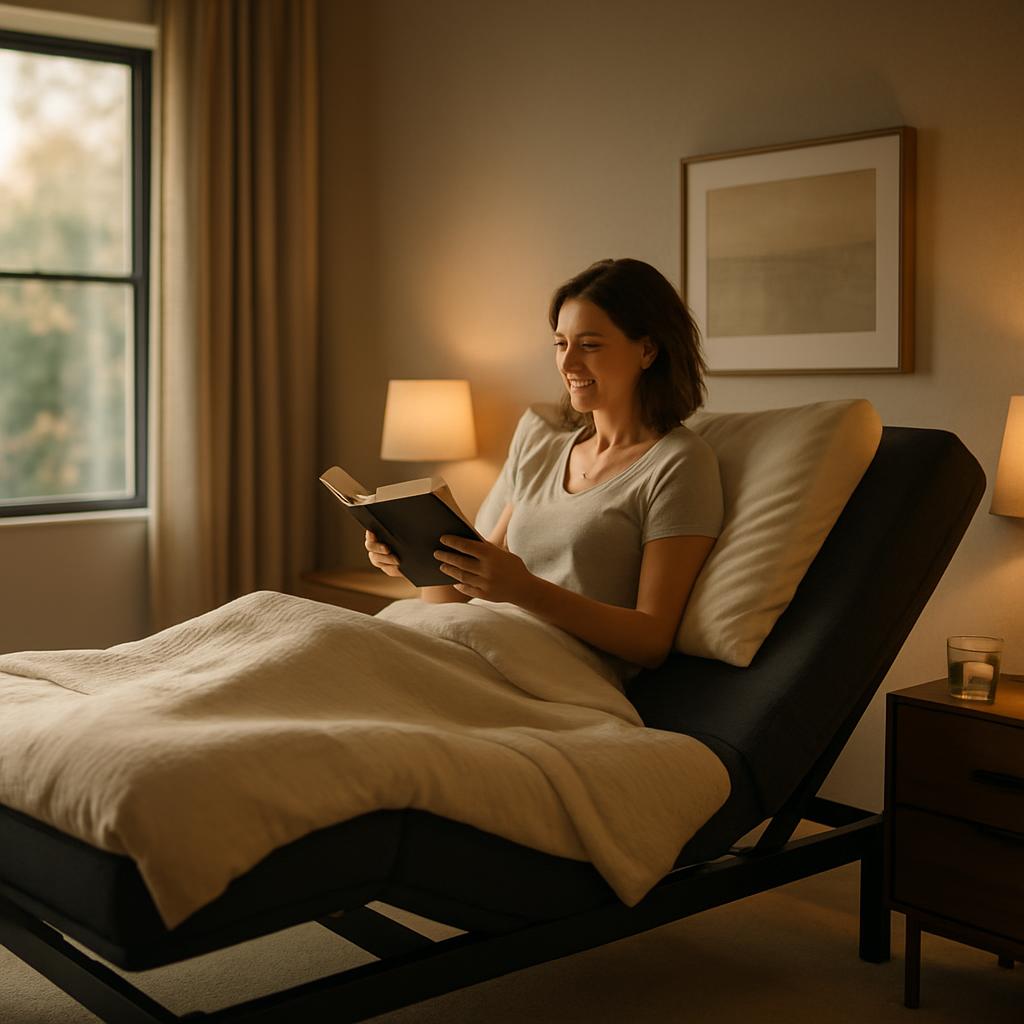
Boost Circulation and Reduce Swelling with Adjustable Beds
When most people think about adjustable bed benefits, they usually consider comfort or adjustable bed back pain relief. However, one of the most significant yet often overlooked adjustable bed health benefits involves improving circulation and reducing swelling throughout your body. If you've ever woken up with puffy ankles, swollen legs, or that uncomfortable tingling sensation in your feet, an adjustable bed might be the solution you didn't know you needed.
Poor circulation during sleep affects millions of Americans, but many don't realize their sleeping position plays a crucial role. When you lie flat for hours, gravity makes it harder for blood to flow back to your heart from your lower extremities. This can lead to fluid accumulation in your legs, ankles, and feet, causing swelling and discomfort that can last well into the next day.
Adjustable beds offer a practical solution by allowing you to elevate different parts of your body while you sleep. This elevation works with your body's natural systems rather than against them. By raising your legs above heart level, you help gravity assist blood flow back toward your heart instead of fighting it. This simple adjustment can make a remarkable difference in how you feel when you wake up.
The adjustable bed comfort features make it easy to find the perfect position for promoting healthy circulation. You don't need to prop pillows under your legs or try to maintain an uncomfortable position throughout the night. With just the touch of a button, you can adjust your sleeping position to support better blood flow. Many of our customers who use a Sealy Ease Power Base adjustable foundation report noticeable improvements in morning swelling and overall leg comfort.
People with certain health conditions stand to gain even more from these adjustable bed health benefits. If you have diabetes, varicose veins, or chronic venous insufficiency, proper leg elevation during sleep becomes even more important. Pregnant women frequently experience swelling in their lower extremities, and adjustable beds can provide much-needed relief during those uncomfortable months. Even athletes and people who spend long hours on their feet during the day find that elevating their legs at night helps reduce inflammation and speeds recovery.
The zero gravity adjustable bed position deserves special mention when discussing circulation benefits. This position, inspired by NASA research on astronauts, distributes your body weight evenly across the mattress while slightly elevating your legs above your heart. This optimal positioning reduces pressure points and promotes the most efficient circulation possible while you rest. Many users report that sleeping in this position helps them wake up feeling more refreshed and less stiff.
Beyond just elevating your legs, adjustable bed features allow you to experiment with different positions throughout the night. If you wake up feeling uncomfortable, you can adjust your position without getting out of bed or disturbing your partner. This flexibility means you can respond to your body's needs in real-time, ensuring you get the adjustable bed comfort you deserve every single night.
Learn About Enhanced Blood Flow Benefits
Understanding how adjustable beds improve blood flow can help you appreciate why they're more than just a luxury item—they're an investment in your health. Your circulatory system works hard every minute of every day, and the position you sleep in can either help or hinder this vital process. Let me break down exactly how adjustable mattress benefits extend to your cardiovascular health.
When you elevate your legs using an adjustable bed, you're essentially giving your veins a helping hand. Your veins have one-way valves that prevent blood from flowing backward, but when you're lying flat, these valves have to work harder against gravity. Elevation reduces this workload, making it easier for blood to return to your heart. This improved venous return means your heart doesn't have to work as hard to circulate blood throughout your body, which can be especially beneficial for people with heart conditions.
The benefits of improved circulation extend far beyond just reducing swelling. Better blood flow means more oxygen and nutrients reach your tissues and organs while you sleep. This supports your body's natural healing and regeneration processes that occur during rest. Your muscles recover more efficiently, your skin cells regenerate more effectively, and your organs function more optimally when they receive proper blood flow.
| Sleeping Position | Primary Circulation Benefit | Best For |
|---|---|---|
| Legs Elevated 6-12 Inches | Reduces leg and ankle swelling | Varicose veins, edema, pregnancy |
| Zero Gravity Position | Optimal full-body circulation | Overall health, recovery, general comfort |
| Upper Body Slight Elevation | Improved breathing and heart function | Heart conditions, respiratory issues |
| Head and Feet Elevated | Balanced pressure distribution | Back pain combined with circulation issues |
Many people don't realize that poor circulation during sleep can contribute to that groggy, sluggish feeling when you wake up. When your body doesn't circulate blood efficiently overnight, you may wake up feeling tired even after eight hours of sleep. Your muscles might feel stiff, your joints may ache, and you might struggle to get moving in the morning. These symptoms often improve dramatically once circulation is addressed through proper sleep positioning.
The adjustable bed health benefits for circulation are particularly important for older adults. As we age, our circulatory system naturally becomes less efficient. Blood vessels lose some of their elasticity, and valves in our veins may not work as well as they once did. This makes proper sleep positioning even more critical for maintaining good health and quality of life. I've heard from numerous customers who wish they'd invested in an adjustable bed years earlier once they experienced the circulation benefits firsthand.
Temperature regulation is another often-overlooked aspect of circulation benefits. When blood flows properly, your body can regulate its temperature more effectively. This means you're less likely to wake up with cold feet or experience those uncomfortable hot flashes that disrupt sleep. Better circulation helps maintain an even body temperature throughout the night, contributing to deeper, more restful sleep.
The mental clarity benefits shouldn't be ignored either. Your brain requires approximately 20% of your body's blood supply to function properly. When you improve overall circulation with an adjustable bed, you're also ensuring your brain receives optimal blood flow during sleep. This supports the critical processes of memory consolidation and toxin removal that occur while you rest. Many users report feeling more mentally sharp and focused after switching to an adjustable bed, though they often don't initially connect this improvement to better circulation.
Combat Swelling with Ergonomic Adjustments
Swelling in your extremities can range from a minor annoyance to a serious health concern, but adjustable bed comfort features offer practical solutions for people at every point on that spectrum. The key lies in understanding how to use your adjustable bed's ergonomic capabilities to address your specific swelling issues. Let me share what I've learned about using these adjustable bed features effectively.
The beauty of modern adjustable beds is their precision. You're not limited to just two or three preset positions—you can fine-tune your sleeping angle to find exactly what works for your body. For most people dealing with leg swelling, elevating the feet between six and twelve inches above heart level provides optimal results. This angle is steep enough to promote drainage without being so extreme that it becomes uncomfortable or causes you to slide down the bed during the night.
Timing matters when you're using elevation to combat swelling. While sleeping with your legs elevated all night provides benefits, you might find even greater relief by elevating your legs for 30 minutes before bed as well. This pre-sleep elevation gives accumulated fluid a head start on draining before you settle in for the night. Many people incorporate this into their evening routine, elevating their legs while reading or watching television before sleep.
If you experience swelling in your hands or arms, adjustable beds can help with that too. While it's less common, some people do wake up with swollen hands or that pins-and-needles sensation in their arms. You can address this by slightly elevating your upper body or by using pillows to support your arms while taking advantage of the leg elevation for lower body swelling. The adjustable bed features let you create a multi-angled position that addresses swelling throughout your entire body.
Consistency is absolutely critical when you're using an adjustable bed to manage swelling. You won't see dramatic results after just one night. However, most people notice significant improvement within one to two weeks of consistently sleeping with proper elevation. Your body needs time to adjust to this new sleeping position and to catch up on draining the accumulated fluid that's been building up over months or years of flat sleeping.
The adjustable mattress benefits extend to choosing the right mattress firmness for your adjustable base. A mattress that's too soft may not provide adequate support when elevated, while one that's too firm might create pressure points that actually impede circulation. Medium to medium-firm mattresses typically work best with adjustable bases when your goal is improving circulation and reducing swelling. The mattress should conform to your body's contours while still maintaining proper spinal alignment in various positions.
Don't forget about your partner's needs when adjusting your bed for swelling relief. If you share your bed, consider a split adjustable base that allows each person to control their side independently. This way, you can elevate your legs to combat swelling while your partner maintains whatever position works best for them. The adjustable bed comfort doesn't have to come at the expense of your partner's sleep quality.
Keep in mind that while adjustable beds provide excellent support for managing swelling, they work best as part of a comprehensive approach to circulatory health. Staying hydrated, reducing salt intake, exercising regularly, and wearing compression socks during the day can all complement the benefits you gain from sleeping on an adjustable bed. Think of your adjustable bed as a powerful tool in your wellness toolkit rather than a standalone solution.
One practical tip I always share is to keep a journal for the first few weeks after getting your adjustable bed. Note how much swelling you experience each morning and which position you slept in the night before. This record helps you identify your optimal sleeping position and provides concrete evidence of the adjustable bed health benefits you're experiencing. It's also useful information to share with your doctor if you're managing swelling as part of a medical condition.

Aiding Digestion: Adjustable Beds for Acid Reflux Relief
If you've ever woken up in the middle of the night with that burning sensation in your chest or throat, you know how miserable acid reflux can be. I've talked to countless customers who tell me they dread lying down at night because they know what's coming. The discomfort from acid reflux and heartburn doesn't just interrupt sleep—it can leave you feeling exhausted and frustrated the next day. That's where adjustable beds come in as a real game-changer for digestive health.
Adjustable bed acid reflux relief works through a simple but effective principle: gravity. When you sleep flat on a traditional mattress, stomach acid can easily flow back up into your esophagus, causing that painful burning sensation. An adjustable bed allows you to raise the head of your bed, keeping your upper body elevated at an angle that helps prevent acid from moving upward. Medical professionals often recommend sleeping with your head elevated between 6 to 8 inches to manage acid reflux symptoms, and adjustable beds make this positioning effortless.
The adjustable mattress benefits for digestion go beyond just acid reflux. Many people experience better overall digestive comfort when they sleep in a slightly elevated position. This positioning supports your body's natural digestive process and can reduce the likelihood of nighttime indigestion. If you pair an adjustable foundation with a quality mattress, you're setting yourself up for significantly better sleep and fewer digestive disruptions.
What I find really interesting is how quickly people notice the difference. Most customers report feeling relief from acid reflux symptoms within just a few nights of sleeping on an adjustable bed. They wake up without that sour taste in their mouth or that scratchy throat feeling. Some tell me they've been able to reduce their reliance on antacids and other medications, though you should always consult with your doctor before making any changes to your treatment plan.
Adjustable bed comfort extends to multiple health concerns, but the digestive benefits are among the most immediate and noticeable. The ability to adjust your sleeping position throughout the night means you can find that sweet spot where your body feels comfortable and your digestive system can work properly. Unlike propping yourself up with pillows—which often shift during the night and leave you sliding down the bed—an adjustable bed maintains your chosen position consistently.
The adjustable bed health benefits for people with chronic acid reflux or GERD (gastroesophageal reflux disease) are well-documented. Studies have shown that sleeping with the upper body elevated can significantly reduce nighttime reflux episodes. This isn't just about comfort—it's about protecting your esophagus from the damaging effects of repeated acid exposure and getting the restorative sleep your body needs to stay healthy.
Explore Zero Gravity Adjustable Bed Features
You might have heard the term "zero gravity" thrown around when people talk about adjustable beds, and I'll admit it sounds a bit like science fiction at first. But zero gravity adjustable bed positioning is actually based on research from NASA and has some remarkable benefits for your body, including improved digestion. Let me break down what this means and why it matters for your health.
The zero gravity position was originally developed by NASA to reduce the stress on astronauts' bodies during rocket launches. In this position, your legs are elevated slightly above your heart level, and your back is angled in a way that evenly distributes your body weight. When you press the zero gravity preset on modern adjustable beds, the bed automatically moves to this optimal angle. The result? Your body feels almost weightless, with minimal pressure on any single point.
For digestion specifically, the zero gravity position offers some surprising advantages. This angle helps reduce pressure on your abdominal area while still keeping your upper body elevated enough to prevent acid reflux. The slight elevation of your legs also promotes better blood circulation throughout your entire body, which indirectly supports healthy digestive function. I've had customers tell me they feel less bloated and uncomfortable when they sleep in this position, especially after eating a larger meal in the evening.
"I was skeptical about the zero gravity feature at first, but it's become my favorite position for reading before bed and sleeping. My acid reflux has improved so much, and I just feel more comfortable overall. It's like floating on a cloud!" – Customer review from November 2024
Adjustable bed features like zero gravity positioning work hand-in-hand with other comfort settings to create a truly personalized sleep experience. Most quality adjustable beds come with programmable presets, so you can save your favorite positions—including zero gravity—and switch between them with the touch of a button. This means you're not fumbling with controls in the middle of the night when you want to adjust your position.
The beauty of zero gravity adjustable bed technology is that it addresses multiple health concerns simultaneously. While you're getting relief from acid reflux and supporting better digestion, you're also reducing pressure on your lower back, improving circulation to your extremities, and potentially reducing snoring. It's a holistic approach to sleep that considers your entire body's needs rather than just one isolated issue.
Many people use the zero gravity position not just for sleeping but for other activities too. It's perfect for reading, watching television, or working on a laptop in bed because it supports your spine in a neutral position while keeping you comfortable. The adjustable bed comfort you experience in zero gravity can make your bedroom feel more like a versatile living space rather than just a place where you sleep.
When shopping for adjustable beds, I always recommend testing out the zero gravity feature in person if possible. Every manufacturer calibrates their zero gravity position slightly differently, and what feels perfect to one person might need tweaking for another. The good news is that even if the preset zero gravity position isn't quite right for you, most adjustable beds allow you to fine-tune the angle to find your personal sweet spot. That's the real magic of adjustable bed features—complete customization to match your unique body and needs.
Position Matters: How Elevation Affects Digestion
The angle at which you sleep has a much bigger impact on your digestive system than most people realize. I've spent years helping customers understand the connection between sleep position and digestive health, and it always comes back to one fundamental principle: elevation matters. Let me walk you through exactly how adjustable bed positioning influences your digestion and why finding the right angle can make such a dramatic difference in how you feel.
When you lie completely flat, your esophagus and stomach are at the same level. This horizontal position makes it incredibly easy for stomach acid to flow backward into your esophagus, especially if you have a weakened lower esophageal sphincter—the muscle that normally keeps acid where it belongs. Even people without diagnosed acid reflux can experience occasional heartburn when sleeping flat, particularly after eating spicy foods or having a late dinner. This is where adjustable bed back pain relief and digestive benefits overlap, because the same elevation that helps your spine also protects your digestive system.
Research shows that elevating your head and upper body by just 6 to 8 inches can reduce acid reflux episodes by up to 67%. That's a huge improvement for something as simple as changing your sleeping angle. Adjustable beds make achieving this elevation effortless and consistent throughout the night. Unlike stacking pillows or using bed risers—which can create awkward angles and slip out of position—an adjustable bed maintains the precise elevation you need from the moment you get into bed until you wake up.
The ideal angle for reducing acid reflux typically falls between 15 and 30 degrees of elevation. This range keeps your head and chest elevated enough to let gravity work in your favor while still being comfortable for sleep. Some people need more elevation, especially those with severe GERD, while others do fine with a gentler incline. The adjustable mattress benefits really shine here because you can experiment with different angles until you find what works best for your body. One night you might need more elevation, another night less—and your adjustable bed adapts to meet those changing needs.
Beyond acid reflux, proper elevation affects other aspects of digestion too. When your upper body is slightly elevated, it can help reduce pressure on your stomach and intestines, promoting more efficient digestion overnight. Some people find that sleeping at an incline helps reduce bloating and that uncomfortable "too full" feeling that can linger after dinner. The gentle angle also supports the natural movement of food and waste through your digestive tract, working with your body's processes rather than against them.
Timing plays a role too. Ideally, you want to avoid eating large meals within three hours of bedtime, but I know that's not always realistic with busy schedules. When you do eat later in the evening, sleeping on an adjustable bed with your upper body elevated becomes even more important. This positioning gives your body the best chance to digest food properly while you sleep, reducing the likelihood of nighttime discomfort that disrupts your rest.
I often explain to customers that adjustable bed comfort for digestion isn't just about avoiding problems—it's about actively supporting your body's natural functions. Your digestive system doesn't shut down when you sleep; in fact, a lot of important digestive processes happen overnight. By sleeping at the right angle, you're creating an environment where your body can do this work efficiently. Better digestion leads to better nutrient absorption, more restful sleep, and feeling more energized when you wake up.
The connection between elevation and digestion extends to other health conditions too. People with hiatal hernias often find significant relief when sleeping elevated because it reduces pressure on the affected area. Those dealing with gastroparesis—a condition where the stomach empties slowly—may also benefit from the gravity-assisted positioning that adjustable beds provide. Even pregnant women, who frequently experience heartburn and reflux due to hormonal changes and physical pressure on their digestive organs, find that sleeping with elevated upper bodies brings welcome relief.
Personalize Your Sleep Experience with Adjustable Bed Features
One of the most exciting aspects of modern adjustable beds is how they put you in complete control of your sleep environment. Gone are the days when you had to make do with a flat surface and a pile of pillows. Today's adjustable beds offer an incredible range of features that let you customize every aspect of your sleeping experience. I love showing customers all the possibilities because their eyes light up when they realize just how much more comfortable sleep can be.
Adjustable bed features have come a long way in recent years. What used to be a simple "head up, feet up" mechanism has transformed into sophisticated systems with dozens of positioning options, programmable presets, and even massage functions. The beauty of these features is that they work together to create a sleep experience that's uniquely yours. Whether you're dealing with specific health concerns like acid reflux and back pain, or you simply want to be more comfortable while reading or watching TV in bed, there's a combination of settings that will work perfectly for you.
The level of personalization available with adjustable beds goes far beyond basic positioning. Many modern adjustable foundations come with dual controls if you're sharing a bed with a partner, meaning each person can adjust their side independently. This is a relationship saver when one person needs elevation for acid reflux or snoring while the other prefers to sleep flat. You're no longer forced to compromise on comfort just because you share a bed. Both of you can wake up feeling rested instead of one person sacrificing their comfort for the other.
Adjustable bed comfort starts with finding the right base and mattress combination. Not all mattresses work well with adjustable bases, so it's important to choose options that are designed to flex and bend without losing their supportive properties. At Sleepology, we carry mattresses specifically engineered to work beautifully with adjustable bases, ensuring you get the full benefit of both products. The right pairing can last for years and continue providing excellent support night after night.
Remote controls for adjustable beds have become incredibly user-friendly. Most feature backlit buttons for easy nighttime adjustments, and some even offer wireless connectivity so you can control your bed through a smartphone app. Imagine being able to adjust your bed position without having to sit up or fumble for a remote in the dark. These technological improvements make adjustable beds accessible and convenient for everyone, including older adults who might have struggled with earlier, more complicated systems.
The health benefits of adjustable beds multiply when you take advantage of all their features working together. For instance, you might use a slightly elevated position to manage acid reflux early in the night, then adjust to zero gravity if you wake up with back stiffness, and finally raise your feet if you notice swelling or poor circulation. This kind of responsive positioning throughout the night addresses whatever your body needs in the moment. It's dynamic comfort that adapts to you rather than forcing you to adapt to your bed.
Many customers tell me they didn't realize how much they were missing until they experienced an adjustable bed. The ability to find that perfect position—the one where everything just feels right—makes such a difference in sleep quality. Adjustable bed benefits extend to your daytime life too. When you sleep better, you have more energy, better focus, and improved mood during the day. You're not dragging yourself through the afternoon or relying on multiple cups of coffee just to stay alert. Better sleep really does improve your overall quality of life.
The investment in an adjustable bed pays dividends over time. Yes, they cost more upfront than traditional box springs, but consider what you're getting: a sleep surface that can help manage multiple health conditions, reduce pain and discomfort, improve your sleep quality, and last for many years with proper care. When you calculate the value over the lifetime of the bed, the cost per night becomes very reasonable. Plus, can you really put a price on waking up feeling refreshed and pain-free instead of stiff and tired?
Customizable Positions for Maximum Comfort
The real power of adjustable beds lies in their ability to adapt to virtually any position you can imagine. I've seen customers get creative with their positioning in ways that solve problems they've lived with for years. Let me share some of the most popular positions and how they can transform your comfort level, whether you're sleeping, reading, or just relaxing in bed.
First, let's talk about all the different ways you can configure an adjustable bed for maximum comfort. The options are nearly endless, but here are the positions I see providing the most benefit:
- The Classic Elevated Position: Raising your head between 30 and 45 degrees creates a comfortable angle for reading, watching TV, or working on a laptop. This position takes pressure off your lower back and can help with acid reflux even when you're awake. It's perfect for those evenings when you want to relax in bed before actually going to sleep.
- The Anti-Snore Position: Elevating your head just 15 to 20 degrees can significantly reduce snoring by keeping your airways more open. This subtle angle is often enough to make a big difference without feeling like you're sleeping at an uncomfortable incline. Partners of snorers particularly appreciate this adjustable bed feature because everyone sleeps better.
- Zero Gravity Position: As I mentioned earlier, this NASA-inspired position elevates both your head and feet to create a weightless feeling that evenly distributes pressure across your body. It's excellent for reducing back pain, improving circulation, and just feeling incredibly relaxed. Many people use this position for meditation or deep breathing exercises too.
- The Leg Elevation Position: Raising just your feet and legs above heart level helps reduce swelling, improves circulation, and can ease restless leg syndrome. This position is especially helpful after a long day of standing or for people who deal with varicose veins or edema. The relief can be almost immediate.
- The Flat-Back Position with Leg Lift: Keeping your back flat while elevating your knees slightly can take pressure off your lower back. This creates a gentle curve in your spine that many people with chronic back pain find incredibly soothing. It's a position physical therapists often recommend for recovery.
- The Lounge Position: This is a moderate elevation of both the head and feet, creating a comfortable lounging angle that's perfect for reading, eating breakfast in bed, or using a tablet. It's casual and relaxed while still providing good support for your back and neck.
The adjustable bed benefits of having all these position options become clear when you realize you can switch between them as your needs change throughout the day and night. Maybe you start the evening reading in an elevated position, then move to zero gravity for actual sleep, and wake up with some leg elevation to reduce morning stiffness. Your bed works with you, not against you.
What really impresses me about modern adjustable bed features is how smoothly they transition between positions. The motors are quiet enough that you won't wake a sleeping partner when you make adjustments, and the movement is gradual and controlled. You're not being jolted from one position to another—it's a gentle, comfortable transition that maintains your relaxation.
Programming your favorite positions into the bed's memory settings is a feature I encourage everyone to use. Most adjustable beds let you save three to five custom positions that you can recall with a single button press. This means you don't have to fiddle with adjustments every time you want to move to your preferred reading position or your optimal sleep angle. One touch, and the bed moves to exactly where you want it. This convenience makes you much more likely to actually use all the positioning features rather than just leaving the bed in one position all the time.
Adjustable bed comfort reaches its peak when you experiment with positions and find what works specifically for your body. We're all built differently, with different pressure points, pain issues, and comfort preferences. What feels perfect to your friend might not work for you at all. That's why the customization options are so valuable—they let you be your own comfort expert and create positions tailored to your unique needs.
Enhance Daily Activities with Adjustable Options
Here's something people don't always consider when thinking about adjustable beds: they're not just for sleeping. The ability to adjust your bed position transforms your bedroom into a more versatile, comfortable space for all kinds of daily activities. I've had customers tell me their adjustable bed has become their favorite spot in the house, and I completely understand why.
Let's start with reading, which is one of the most common activities people do in bed. How many times have you propped yourself up with pillows to read, only to have them gradually shift and flatten until you're sliding down or your neck is at an awkward angle? It's frustrating and uncomfortable. With an adjustable bed, you can set the perfect reading angle and maintain it for hours without any adjustment. Your back is supported, your neck is at a comfortable angle, and you can focus on your book instead of constantly repositioning yourself. The consistent support means you can read longer without developing neck pain or shoulder tension.
Watching television in bed becomes infinitely more comfortable with adjustable positioning. Instead of stacking pillows and trying to find a sustainable viewing angle, you simply raise the head of your bed to the height that works best for your TV placement. The adjustable bed features that support good sleep also create the perfect home theater seating. You can stay comfortable for an entire movie without feeling like you need to shift positions every fifteen minutes.
For people who work from home or like to use laptops in bed, adjustable beds offer proper ergonomic support that traditional beds simply can't match. You can create a workspace that supports your back and reduces strain on your neck and shoulders. While I generally recommend working at a desk when possible, I know there are times when working in bed is necessary or just preferred. An adjustable bed makes this much healthier for your body by providing proper support rather than forcing you into hunched or twisted positions.
Eating breakfast in bed is a luxury that feels even more special when you have an adjustable bed. You can create a comfortable upright position that makes eating easy and dignified—no more awkwardly hunching over a tray or worrying about spilling because you're at an odd angle. This is particularly meaningful for people recovering from surgery or dealing with mobility issues who might need to spend more time in bed. The adjustable bed comfort extends to all these practical daily activities, making bed rest feel less restrictive and more livable.
For parents, adjustable beds can make bedtime routines with kids more comfortable. You can elevate your position to read bedtime stories without straining your back or create a cozy spot where children can snuggle in comfortably. The flexibility means your bed can adapt to family time as easily as it does to sleep time. This versatility adds real value to your daily life, not just your nightly sleep.
People recovering from injuries or surgeries find that adjustable beds make their recovery period significantly more bearable. Physical therapists often recommend specific positioning for different types of recovery, and an adjustable bed makes following those recommendations much easier. Whether you need to keep your legs elevated to reduce swelling, maintain a certain back angle to protect healing tissue, or just find positions that don't aggravate pain, adjustable bed features give you the tools to manage your recovery at home comfortably.
Hobbies like knitting, crocheting, or doing puzzles can be enjoyed more comfortably in an adjustable bed. You can create ergonomic positions that support focused activities without causing strain. The ability to adjust lighting and position means you can pursue your interests while staying comfortable for extended periods. Your bedroom becomes more than just a place to sleep—it becomes a comfortable sanctuary for the activities you enjoy.
The adjustable mattress benefits extend to intimacy as well. Couples find that adjustable beds can help when physical limitations make certain positions uncomfortable or difficult. The ability to adjust angles and elevation can reduce pain and make intimate moments more enjoyable for both partners. It's a sensitive topic, but it's an important aspect of quality of life that adjustable beds can genuinely improve.
Morning routines become easier with adjustable beds too. Instead of struggling to sit up from a flat position—which can be particularly difficult for people with back pain or mobility issues—you can gradually raise the head of your bed to ease yourself into a sitting position. This gentle transition is much easier on your body than the jarring motion of pulling yourself up from flat. Getting out of bed becomes less of a challenge and more of a smooth, comfortable process that sets a positive tone for your day.
Unlock a Better Night's Sleep with Adjustable Beds
After exploring all these remarkable benefits, it's clear that adjustable beds offer far more than just a comfortable place to rest your head at night. These innovative sleep solutions bring together practical health advantages, enhanced comfort, and personalized features that can genuinely transform how you sleep and wake up each day. Whether you're dealing with adjustable bed back pain issues, struggling with adjustable bed snoring problems, or simply looking for a way to make your bedroom more comfortable, an adjustable bed might be exactly what you need to improve your overall quality of life.
The adjustable bed health benefits we've covered extend well beyond what most people initially expect. From helping manage adjustable bed acid reflux symptoms to improving circulation and reducing swelling, these beds address real health concerns that affect millions of Americans every single night. I've seen firsthand how the right sleep setup can make a difference in someone's daily life, helping them wake up feeling refreshed rather than stiff and uncomfortable. The ability to customize your sleeping position means you're not settling for a one-size-fits-all solution that might work for some people but leaves others tossing and turning all night.
What really sets adjustable beds apart is their versatility. The adjustable bed features available today go far beyond simple head and foot adjustments. Modern bases come with massage functions, USB charging ports, under-bed lighting, and programmable memory settings that let you save your favorite positions. A zero gravity adjustable bed position can make you feel weightless while reading, watching TV, or simply relaxing before sleep. These aren't luxury features that only add cost without value—they're practical additions that enhance your daily routine and make your bedroom a true retreat from the stresses of everyday life.
The adjustable mattress benefits work hand in hand with the base itself. When you pair a quality mattress with an adjustable base, you're creating a sleep system that adapts to your body rather than forcing your body to adapt to it. This combination addresses the root causes of many sleep disturbances, whether they're related to physical discomfort, breathing difficulties, or digestive issues. The adjustable bed comfort you experience comes from being able to fine-tune your position until it feels just right for your unique needs and preferences.
If you've been on the fence about whether an adjustable bed is right for you, consider how many nights you've spent struggling to get comfortable, propping pillows behind your back, or waking up with aches and pains. Think about the mornings when you've felt exhausted despite spending eight hours in bed, or the times when your partner's snoring kept you both awake. These common problems don't have to be your reality. The adjustable bed benefits we've discussed throughout this post represent real solutions to real problems that affect your health, your relationships, and your daily energy levels.
Investing in your sleep is one of the most important decisions you can make for your overall wellbeing. Good sleep affects everything from your immune system to your mood, your cognitive function to your physical recovery. When you choose an adjustable bed, you're not just buying a piece of furniture—you're making a commitment to better health, improved comfort, and more restful nights. The right adjustable bed becomes a partner in your wellness routine, supporting your body night after night and helping you wake up ready to take on whatever the day brings. Your future self will thank you for making sleep the priority it deserves to be.
Frequently Asked Questions (FAQs)
What are the main adjustable bed benefits for people with back pain?
Adjustable beds help with back pain by allowing you to adjust the angle of your spine, which reduces pressure on your lower back. The adjustable bed back pain relief comes from finding positions that support the natural curve of your spine and take weight off problem areas. Many people find that slightly elevating their head and knees creates a neutral spine position that minimizes discomfort throughout the night.
Can adjustable beds really help reduce snoring?
Yes, adjustable bed snoring reduction is one of the most noticeable benefits for many users. When you raise the head of your bed by 20 to 30 degrees, you help keep your airways more open, which reduces the vibrations that cause snoring sounds. This simple adjustment can make a significant difference for both the person snoring and their partner trying to sleep beside them.
How does a zero gravity adjustable bed position work?
A zero gravity adjustable bed position raises both your head and feet to create a slight angle that distributes your weight evenly across the bed. This position was originally developed by NASA and reduces pressure on your spine while improving circulation. Many people find this position incredibly comfortable for reading, watching TV, or just relaxing before sleep.
Will my current mattress work with an adjustable bed base?
Most modern mattresses work with adjustable bases, but the adjustable mattress benefits are best experienced with flexible mattress types like memory foam, latex, or hybrid designs. Traditional innerspring mattresses with rigid coils may not flex properly. Check with your mattress manufacturer or visit our showroom to test your mattress with an adjustable base before purchasing.
How do adjustable beds help with acid reflux?
Adjustable bed acid reflux relief works by using gravity to keep stomach acid where it belongs. When you sleep with your head elevated at least 6 to 8 inches, stomach acid is less likely to flow back into your esophagus. This natural approach to managing reflux symptoms can help you sleep more comfortably without relying solely on medication.
What adjustable bed features should I look for?
Important adjustable bed features include wireless remote controls, programmable memory positions, massage functions, USB charging ports, under-bed lighting, and quiet motors. More advanced models offer smartphone app controls, voice activation compatibility, and separate adjustments for each side of the bed. Consider which features match your lifestyle and budget when shopping.
Are adjustable beds difficult to set up?
Most adjustable beds come with straightforward assembly instructions and can be set up in under an hour with basic tools. Many retailers, including Sleepology Mattress Shop, offer white glove delivery service that includes professional setup in your bedroom. This takes all the work off your shoulders and ensures your new adjustable bed is installed correctly from day one.
Can two people with different comfort needs share an adjustable bed?
Absolutely! Split king adjustable beds are perfect for couples with different adjustable bed comfort preferences. Each person gets their own adjustable base and mattress that they can position independently. This means one partner can elevate their head to reduce snoring while the other stays flat, or each can find their perfect reading position without compromise.
Do adjustable beds require special sheets?
You don't necessarily need special sheets, but deep pocket fitted sheets work best with adjustable beds. Regular sheets can pull loose when you adjust the bed position, while deep pocket sheets (at least 15 inches) stay tucked in better. Some companies make sheets specifically designed for adjustable beds with extra stretch and deeper pockets for a perfect fit.
How much weight can adjustable beds support?
Most quality adjustable beds support between 600 and 850 pounds combined weight (including the mattress). This capacity is more than sufficient for most couples and their mattress. Heavy-duty models are available if you need higher weight capacity. Always check the manufacturer's specifications to ensure the base you choose meets your needs.
Are adjustable beds noisy when they move?
Modern adjustable beds use quiet motors that produce minimal noise during adjustment. You'll hear a soft hum when moving the bed, but it's usually quiet enough that it won't disturb a sleeping partner on the other side of a split base. Higher-quality models tend to have quieter motors, so this is worth considering when comparing options.
What is the warranty coverage for adjustable beds?
Warranty coverage varies by manufacturer and model, but most quality adjustable beds come with warranties ranging from 10 to 25 years. These typically cover the frame, motors, and electronic components. Some parts may have shorter warranty periods, like remotes or massage motors. Always read the warranty details and keep your purchase documentation in a safe place.
Can adjustable beds help with circulation problems?
Yes, adjustable bed health benefits include improved circulation, especially when you elevate your legs. This position helps blood flow back toward your heart more easily and can reduce swelling in your feet, ankles, and legs. People who stand or sit for long periods during the day often find relief by elevating their legs at night on an adjustable bed.
How do I choose the right adjustable bed for my needs?
Start by identifying your main concerns—whether that's adjustable bed back pain, snoring, acid reflux, or general comfort. Then consider which adjustable bed features matter most to you, like massage, memory settings, or smart home integration. Your budget and bedroom space also play a role. Visiting a showroom to test different models helps you experience the adjustable bed comfort options before making your final decision.
Will an adjustable bed fit my existing bed frame?
Adjustable beds are designed to replace your existing box spring and typically sit inside your bed frame, as long as the frame has enough clearance for the base to move. However, many people choose to use just the adjustable base without a frame since modern bases include legs and look attractive on their own. Measure your frame's interior dimensions and check them against the base specifications before purchasing.